 Скачать презентацию Integrated Municipal Energy Services Committee EESE Board Statute
f31eccb152976ef93dd4235547f15dff.ppt
- Количество слайдов: 13



Integrated Municipal Energy Services Committee EESE Board Statute: Encourage Municipalities to increase investments in energy efficiency and sustainable energy through financing tools, and to create local energy Committees (or commissions) Purpose: To facilitate an increased investment in energy efficiency and sustainable energy by municipalities and counties through identification, development and promotion of the necessary practices, financing tools and technical resources (including the engagement of local energy committees).
Vision Reduce municipal fossil fuel energy consumption by 50% below 2005 levels by 2025. Insulate the municipal energy budget from price volatility in the global energy market. Ensure that critical government services will continue in the event of short- or long-term energy supply disruptions Stimulate local economic development through job creation in the energy field and reinvestment of avoided energy
Specific Goals for Municipal Energy Working Group The integration of energy efficiency and sustainable energy in all municipal business practices The provision of a clearing house and tool kit to serve municipalities in EE/SE procurement
Specific Goals for Municipal Energy Working Group The identification of policies and programs that are needed to encourage widespread adoption of energy efficiency and renewable/sustainable energy practices and technologies Support the development of effective local energy committees
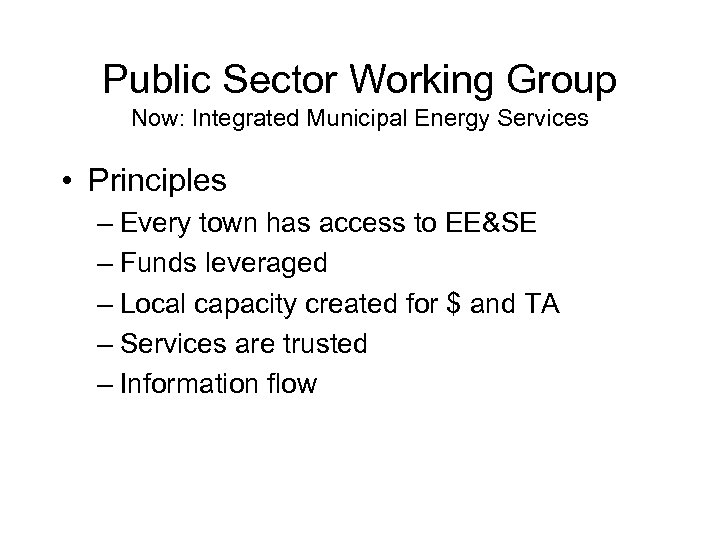
Public Sector Working Group Now: Integrated Municipal Energy Services • Principles – Every town has access to EE&SE – Funds leveraged – Local capacity created for $ and TA – Services are trusted – Information flow
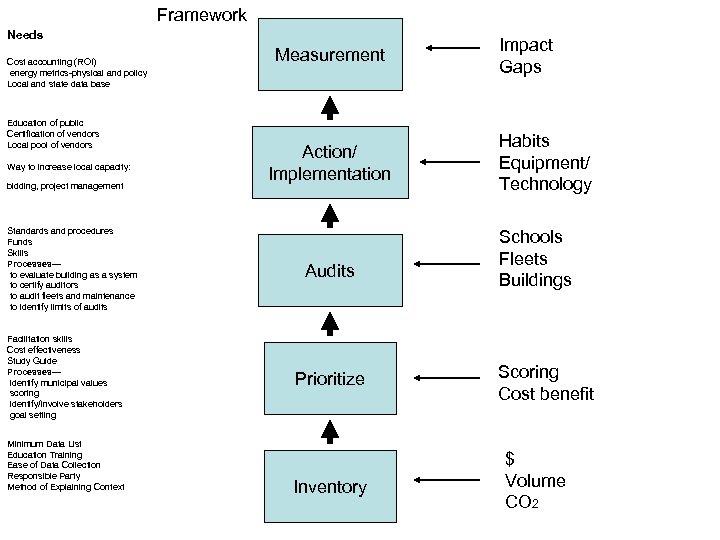
Framework Needs Cost accounting (ROI) energy metrics-physical and policy Local and state data base Education of public Certification of vendors Local pool of vendors Way to increase local capacity: bidding, project management Standards and procedures Funds Skills Processes— to evaluate building as a system to certify auditors to audit fleets and maintenance to identify limits of audits Facilitation skills Cost effectiveness Study Guide Processes— identify municipal values scoring identify/involve stakeholders goal setting Minimum Data List Education Training Ease of Data Collection Responsible Party Method of Explaining Context Measurement Action/ Implementation Audits Prioritize Inventory Impact Gaps Habits Equipment/ Technology Schools Fleets Buildings Scoring Cost benefit $ Volume CO 2
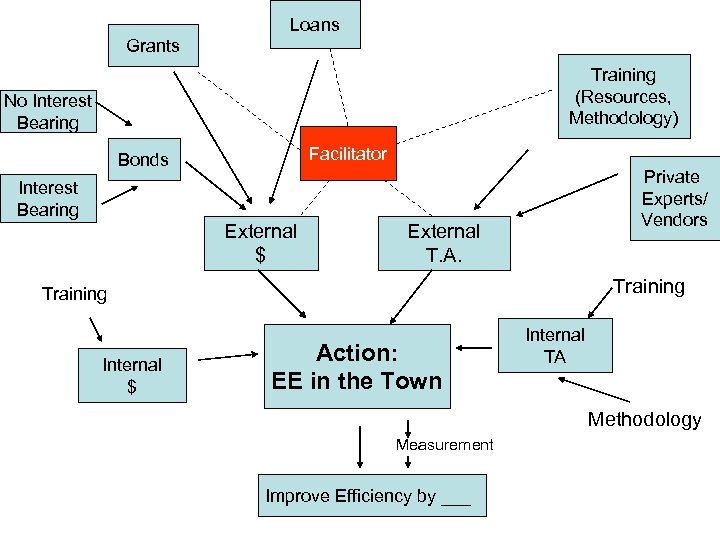
Loans Grants Training (Resources, Methodology) No Interest Bearing Facilitator Bonds Private Experts/ Vendors Interest Bearing External $ External T. A. Training Internal $ Action: EE in the Town Internal TA Methodology Measurement Improve Efficiency by ___
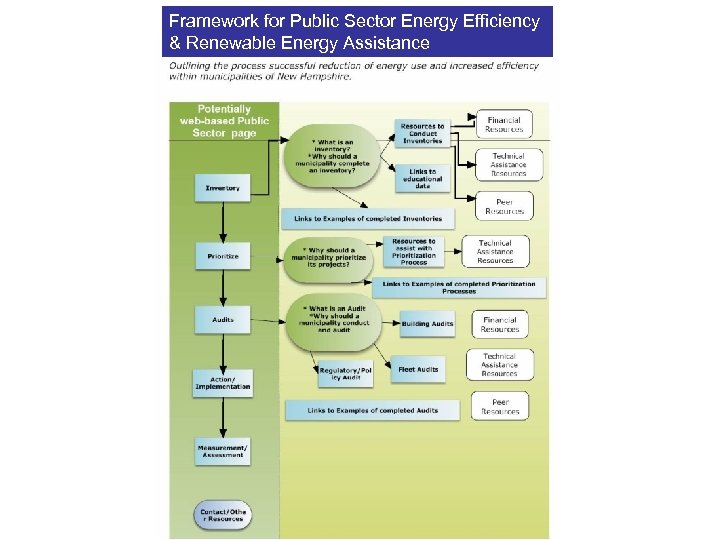
Framework for Public Sector Energy Efficiency & Renewable Energy Assistance

2010 EESE Board Working Groups • • • Enhanced Delivery of EE&SE Integrated Municipal Energy Services Beacon Communities Education and Outreach Job Training and Workforce Development
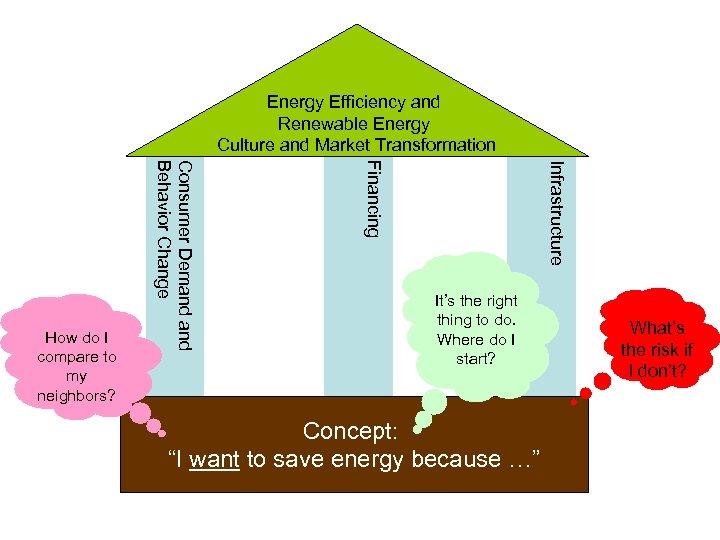
Energy Efficiency and Renewable Energy Culture and Market Transformation Infrastructure Financing Consumer Demand Behavior Change How do I compare to my neighbors? It’s the right thing to do. Where do I start? Concept: “I want to save energy because …” What’s the risk if I don’t?
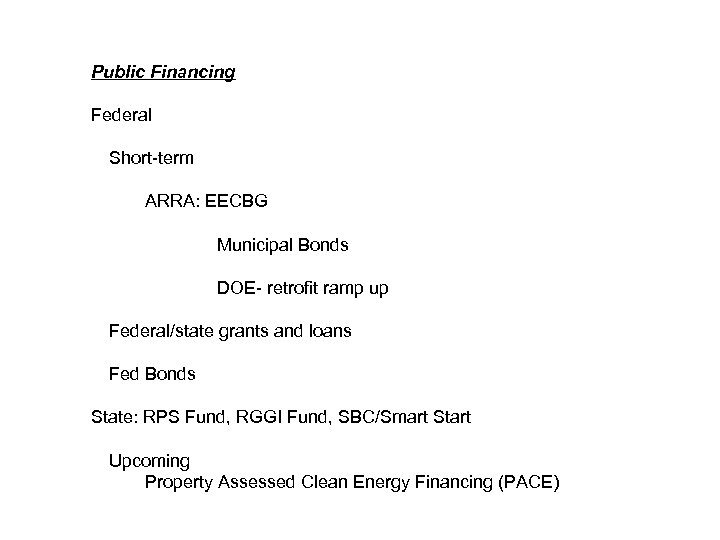
Public Financing Federal Short-term ARRA: EECBG Municipal Bonds DOE- retrofit ramp up Federal/state grants and loans Fed Bonds State: RPS Fund, RGGI Fund, SBC/Smart Start Upcoming Property Assessed Clean Energy Financing (PACE)
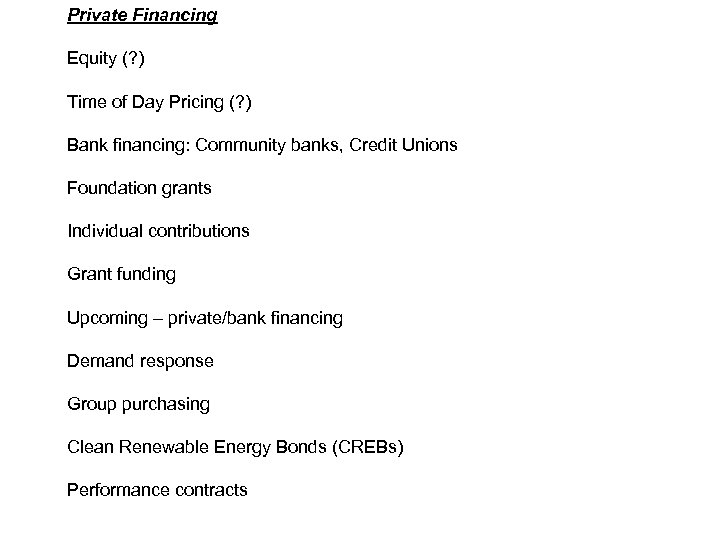
Private Financing Equity (? ) Time of Day Pricing (? ) Bank financing: Community banks, Credit Unions Foundation grants Individual contributions Grant funding Upcoming – private/bank financing Demand response Group purchasing Clean Renewable Energy Bonds (CREBs) Performance contracts
Скачать презентацию Integrated Municipal Energy Services Committee EESE Board Statute
f31eccb152976ef93dd4235547f15dff.ppt