 Скачать презентацию Integrated Marketing Communications Prepared by Don E Schultz
8c8bf89c8cedc267eaa1e1f946593b60.ppt
- Количество слайдов: 120



Integrated Marketing Communications Prepared by Don E. Schultz, Ph. D. Presented by Ilchul Kim, Ph. D. 1
Why this class? Fall 2014, ICKim for IMC Class 2
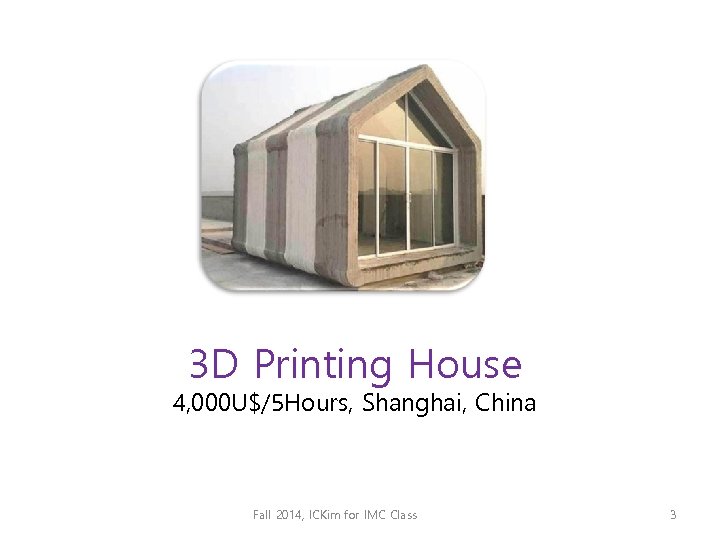
3 D Printing House 4, 000 U$/5 Hours, Shanghai, China Fall 2014, ICKim for IMC Class 3
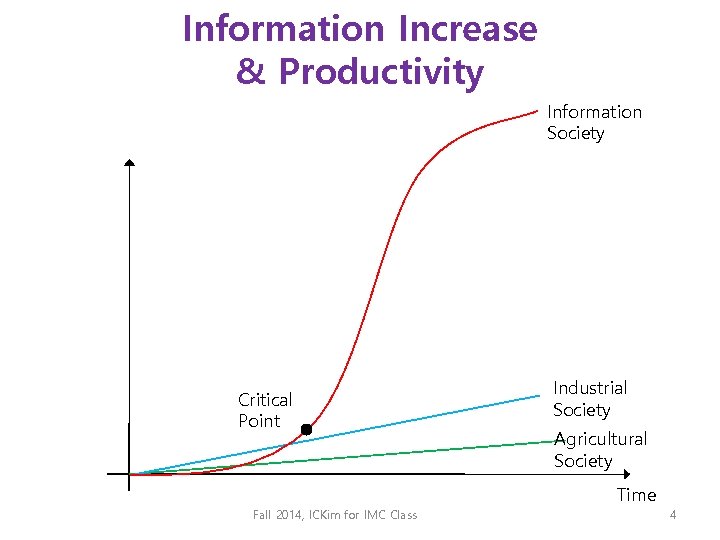
Information Increase & Productivity Information Society Critical Point Industrial Society Agricultural Society Time Fall 2014, ICKim for IMC Class 4
안정이라는 ‘병’에 걸린 나라 …. As in Japan, being a salaryman (or woman) is far more respectable than running one's own firm. “In Korea, stability is everything, ” says one such parent. …. -Economist (May 12 th. 2011) - ü 항구에 정박한 배는 제 역할을 하는가? ü 산소 마스크를 쓰고 침대에 누워있는 환자는 과연 살았다고 할 수 있는가? Fall 2014, ICKim for IMC Class 5
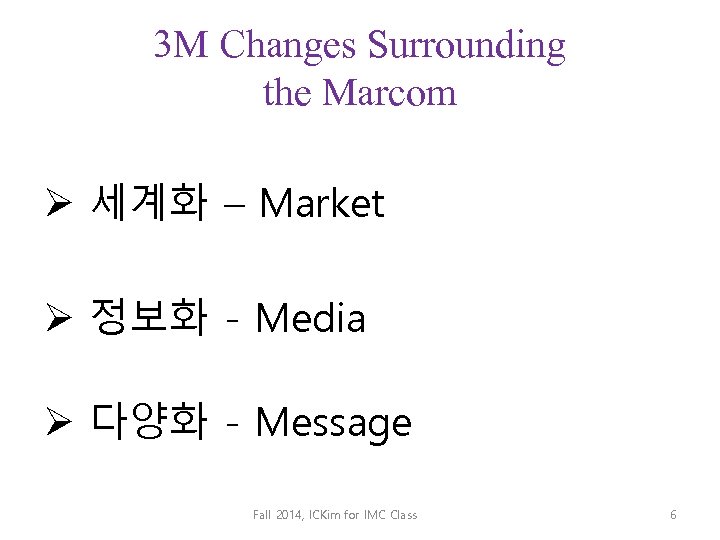
3 M Changes Surrounding the Marcom Ø 세계화 – Market Ø 정보화 - Media Ø 다양화 - Message Fall 2014, ICKim for IMC Class 6
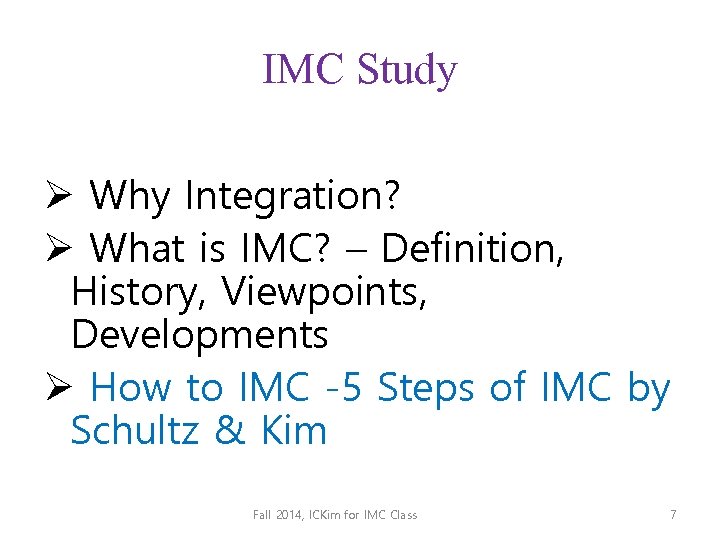
IMC Study Ø Why Integration? Ø What is IMC? – Definition, History, Viewpoints, Developments Ø How to IMC -5 Steps of IMC by Schultz & Kim Fall 2014, ICKim for IMC Class 7
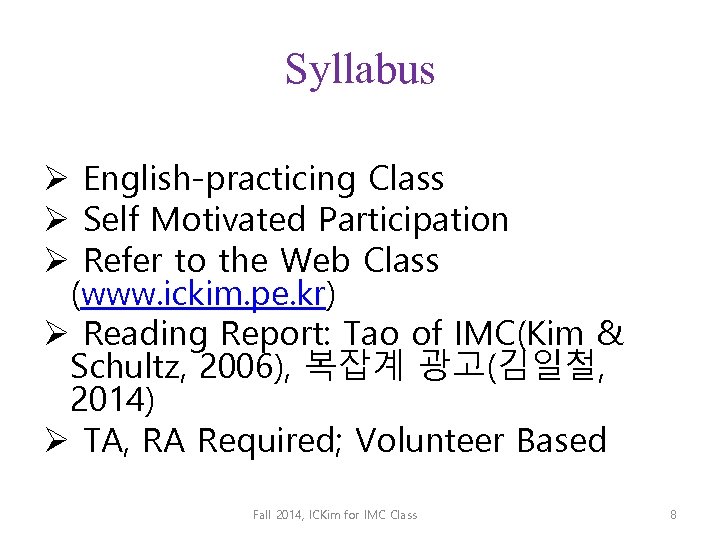
Syllabus Ø English-practicing Class Ø Self Motivated Participation Ø Refer to the Web Class (www. ickim. pe. kr) Ø Reading Report: Tao of IMC(Kim & Schultz, 2006), 복잡계 광고(김일철, 2014) Ø TA, RA Required; Volunteer Based Fall 2014, ICKim for IMC Class 8
Building Effective Integrated Marketing Communication Programs Korea Institute of Science & Technology Information COEX – Seoul, Korea 25 to 29 August, 2003 9
Six Goals of This Seminar: 1. Provide a method for analyzing the 2. 3. Korean, Asian and global marketplaces and their rapid transitions Understand the evolution and revolution occurring in marketing and marketing communication created by information technology Discuss the role and value of brands and branding for government and nonprofit organizations 10
Goals (continued) 4. Demonstrate a 5 -Step Integrated 5. 6. Marketing Communication planning and implementation process Explain methods to evaluate returns on marketing communication programs and activities Provide a framework for aligning internal and external marketing communication activities 11
Session #1 Managing Businesses in the 21 st Century 12
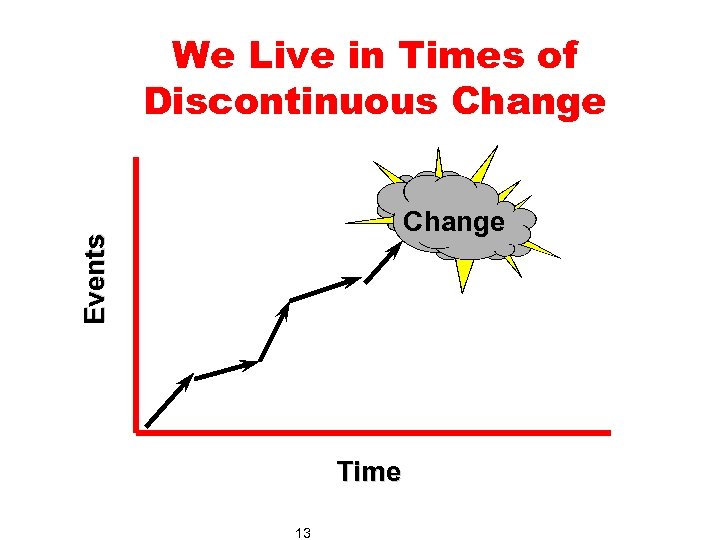
We Live in Times of Discontinuous Change Events Change Time 13
Macro Issues Facing All Organizations § Increasing competition § Growing customer expectations § Impact of technology § Changing social systems § Shifting political/legal/commercial § infrastructure Transformation to a global economy 14
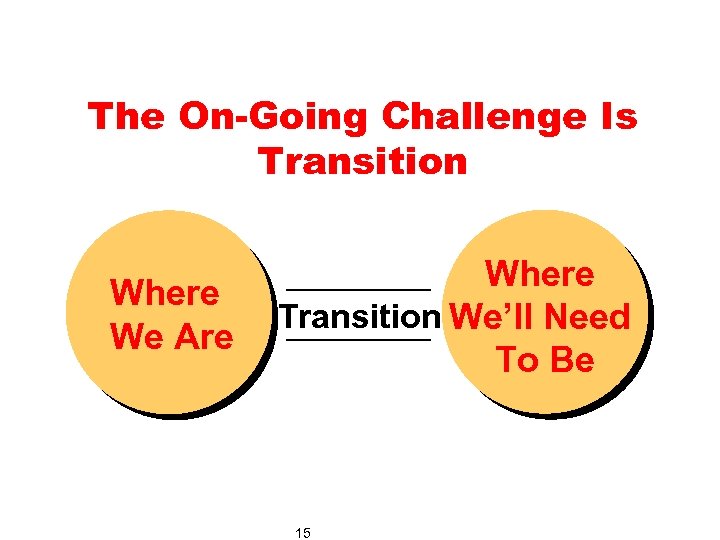
The On-Going Challenge Is Transition Where We Are Where Transition We’ll Need To Be 15
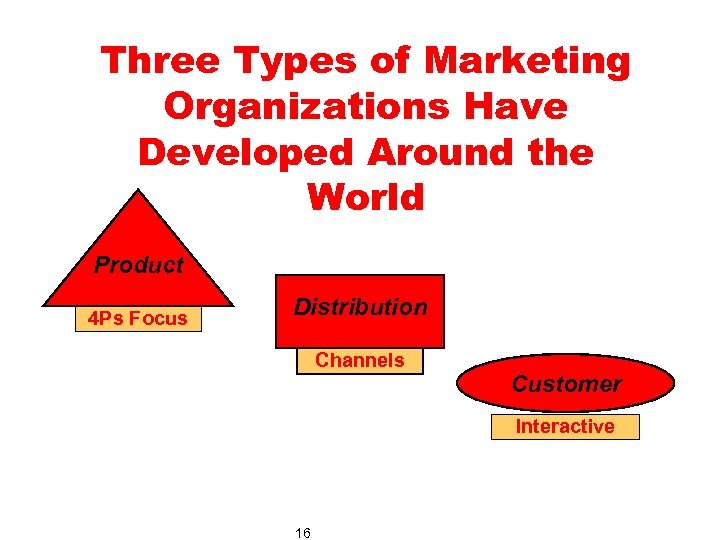
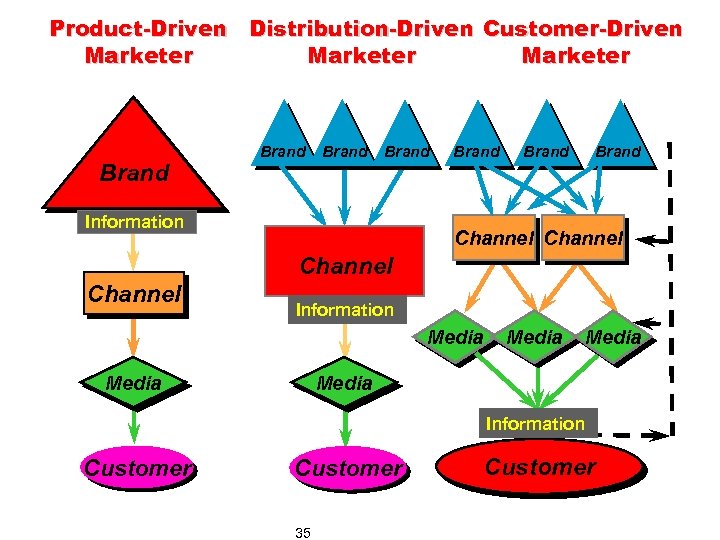
Three Types of Marketing Organizations Have Developed Around the World Product 4 Ps Focus Distribution Channels Customer Interactive 16
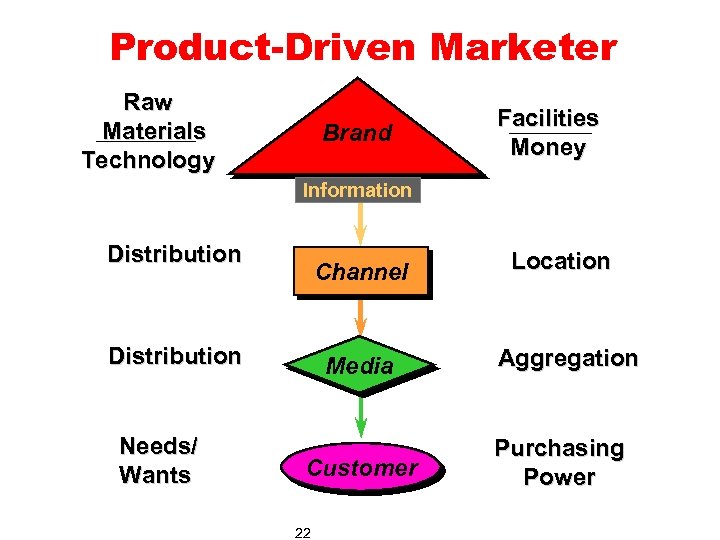
Product-Driven Firms Focus on 4 Ps and Sales Push § Product § Price § Place (Distribution) § Promotion 17
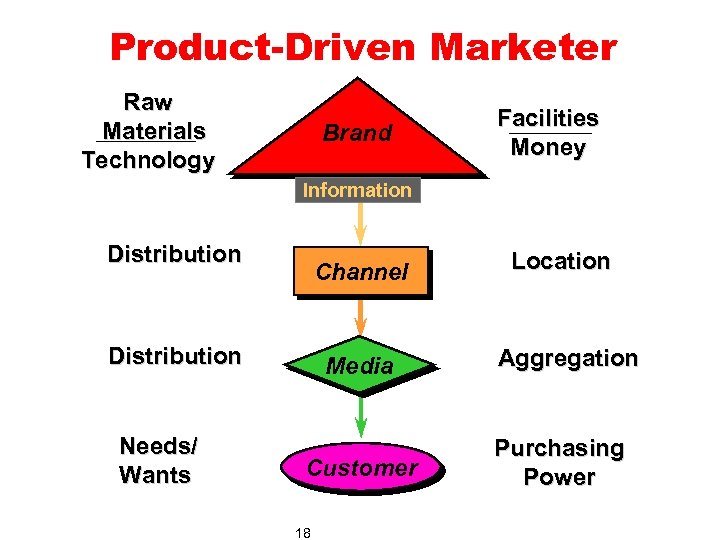
Product-Driven Marketer Raw Materials Technology Brand Facilities Money Information Distribution Channel Distribution Needs/ Wants Media Customer 18 Location Aggregation Purchasing Power
Product-Driven Markets Succeed By Getting Customers to Buy What They Have to Sell – “Field of Dreams” 19
In a Product-Driven Environment, Marketing Communication and Branding Are Considered Nice to Have, But, Not Very Important To Success 20
They Succeed Based on Efficiency, Economies-of. Scale and Volume Outputs 21
Product-Driven Marketer Raw Materials Technology Brand Facilities Money Information Distribution Channel Distribution Needs/ Wants Media Customer 22 Location Aggregation Purchasing Power
23
Distribution-Driven Marketer Brand Distribution Concentration Brand Channel Information Media Customer 24 Locations Technology
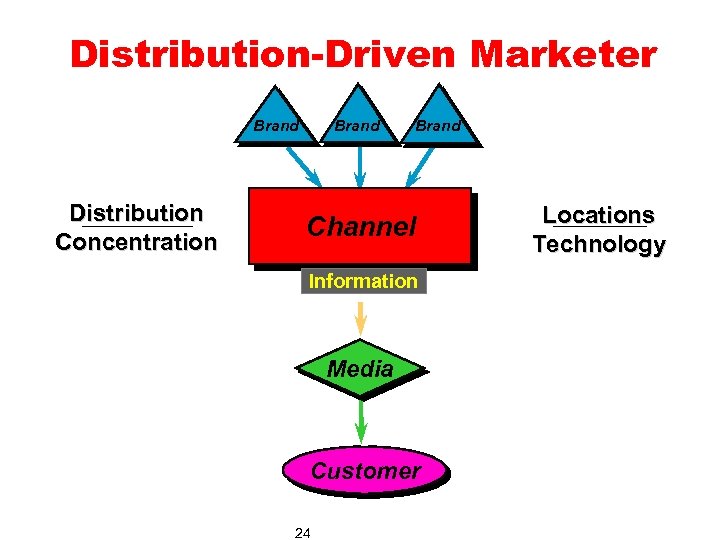
If We Make It Easy to Obtain, Everyone Will Want to Buy One or Some 25
In Distribution-Driven Firms, Marketing Communication and Branding Are Focused On Short-term Returns Through Various Channels 26
27
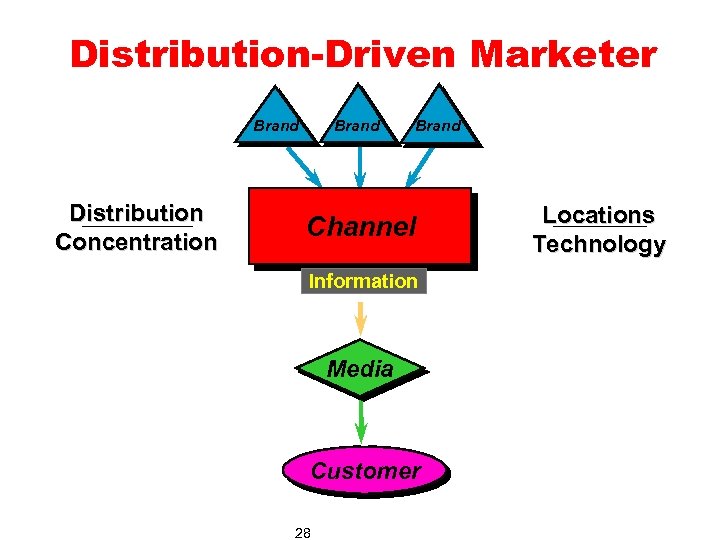
Distribution-Driven Marketer Brand Distribution Concentration Brand Channel Information Media Customer 28 Locations Technology
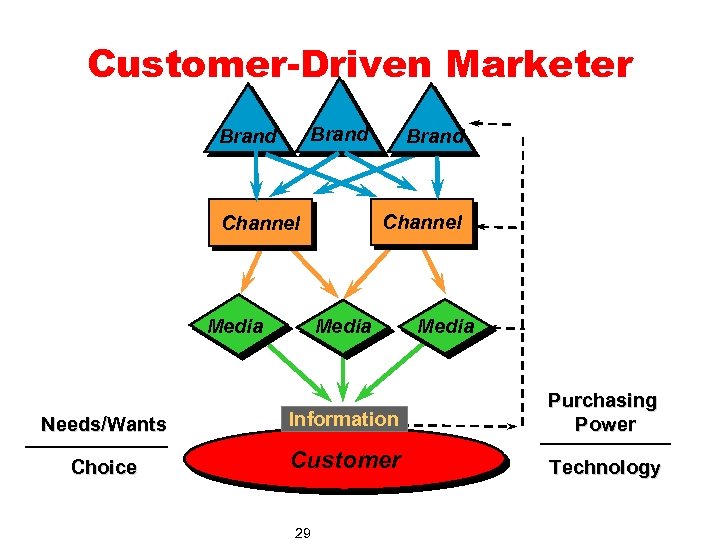
Customer-Driven Marketer Brand Channel Media Brand Media Needs/Wants Information Purchasing Power Choice Customer Technology 29
Marketing Communication and Brands Are Key Elements in Their Overall Business Strategy 30
They See Marketing Communication and Branding as the Primary Differentiators in Commoditized or Commoditizing Markets 31
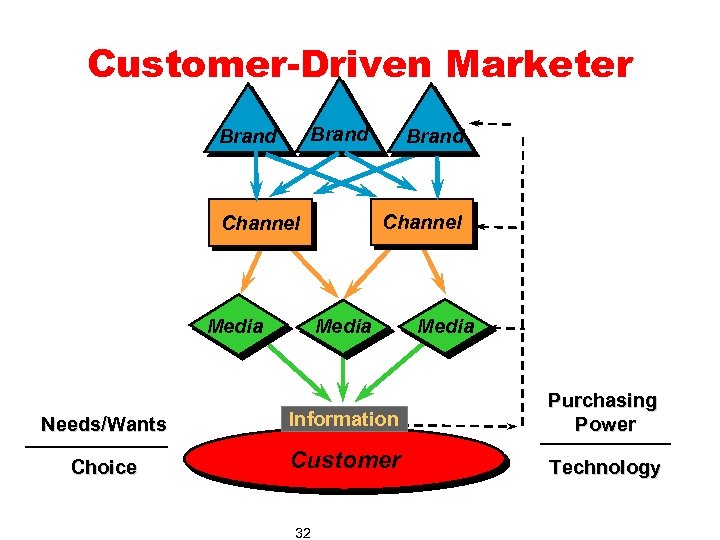
Customer-Driven Marketer Brand Channel Media Brand Media Needs/Wants Information Purchasing Power Choice Customer Technology 32
33
They Succeed Based on Continuing Income Flows From Satisfied Customers 34
Product-Driven Distribution-Driven Customer-Driven Marketer Brand Information Brand Channel Information Media Media Information Customer 35 Customer
Today, Increasingly, It Is The End-User Customers Who Have The Power……. § Historical constraints are disappearing…. . Ø Time Ø Lack of alternatives Ø Geography Ø Information Ø Technology 36
Technology Has “Commoditized” the Marketplace 37
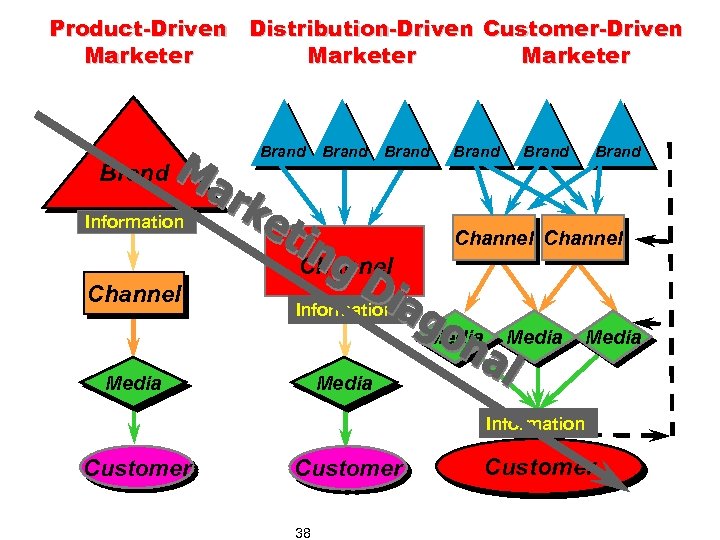
Product-Driven Distribution-Driven Customer-Driven Marketer Brand Information Brand Channel Information Media Media Information Customer 38 Customer
Corporate Interests in Marketing, Communication, Branding and CRM, Are Attempts by the Firm to Re. Capture Some of Their Lost Marketplace Power 39
The Challenge: § Can marketing and marketing communication provide a sustainable competitive advantage for KISTI in the 21 st century? 40
In 1997, We Found Four Stages of Integrated Marketing Communication 41
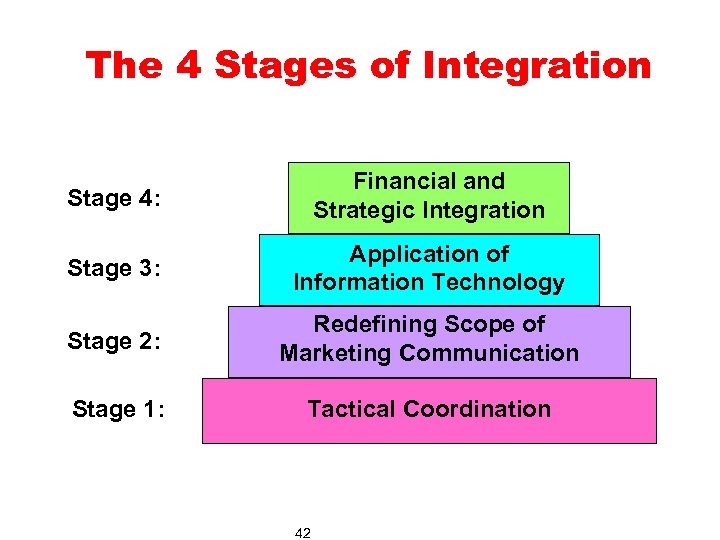
The 4 Stages of Integration Stage 4: Financial and Strategic Integration Stage 3: Application of Information Technology Stage 2: Redefining Scope of Marketing Communication Stage 1: Tactical Coordination 42
Stage 1: Tactical Coordination § Providing a coherent, consistent communication program to customers using consistent communication across all media forms Ø Focused on a single concept or theme Ø Delivered consistently by all business units Ø Synergy from multi-media, multidimensional communication efforts 43
Stage 2: Redefining Scope of Marketing Communication § Seeing communication from the customer’s point of view Ø Understanding all points of brand contact Ø Fostering feedback through dynamic and interactive communication Ø Creating dialogue with customers at all relevant points of contact § Combining internal as well as external communication 44
Stage 3: Application of Information Technology § Harnessing the power of information technology to shape marketing communication objectives and capabilities Ø Reliance on behavioral versus attitudinal data Ø Differentiating customers by unique wants/needs Ø Sophisticated segmentation/ aggregation concepts based on customer value Ø Integration of “islands” of customer data 45
Stage 4: Financial and Strategic Integration § Pro-active, strategic role for marketing § § § and communication Identifying ROI on marketing and communication activities Integrating organization around customers Aligning business practices with brand promises 46
Session #6 Introduction to the IMC 5 -Step Process & Step One: Customer Identification from a Behavioral Database 47
To Develop Demand-Chain Driven Programs, We’ll Need an Integrated Marketing Communication Process 48
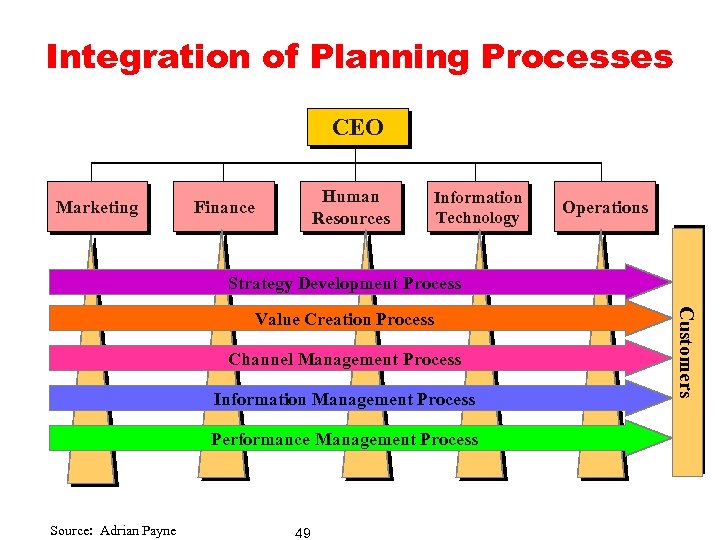
Integration of Planning Processes CEO Marketing Human Resources Finance Information Technology Operations Strategy Development Process Channel Management Process Information Management Process Performance Management Process Source: Adrian Payne 49 Customers Value Creation Process
To Simplify the Application, We’ve Created a Specific IMC Process and Methodology 50
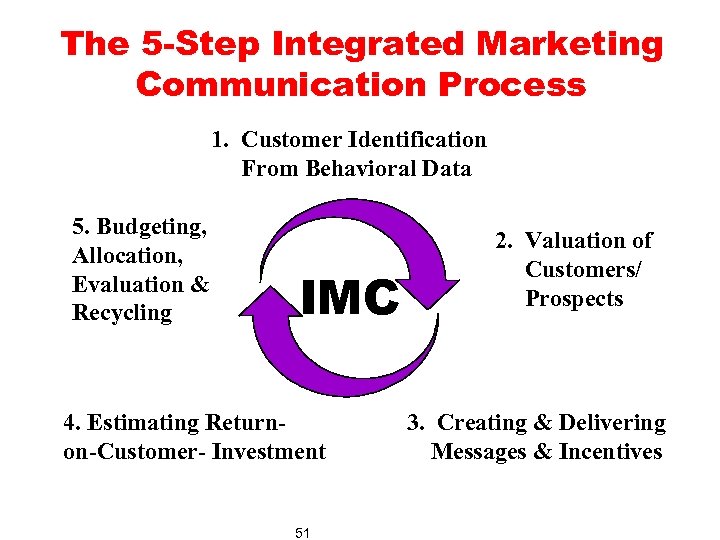
The 5 -Step Integrated Marketing Communication Process 1. Customer Identification From Behavioral Data 5. Budgeting, Allocation, Evaluation & Recycling IMC 4. Estimating Returnon-Customer- Investment 51 2. Valuation of Customers/ Prospects 3. Creating & Delivering Messages & Incentives
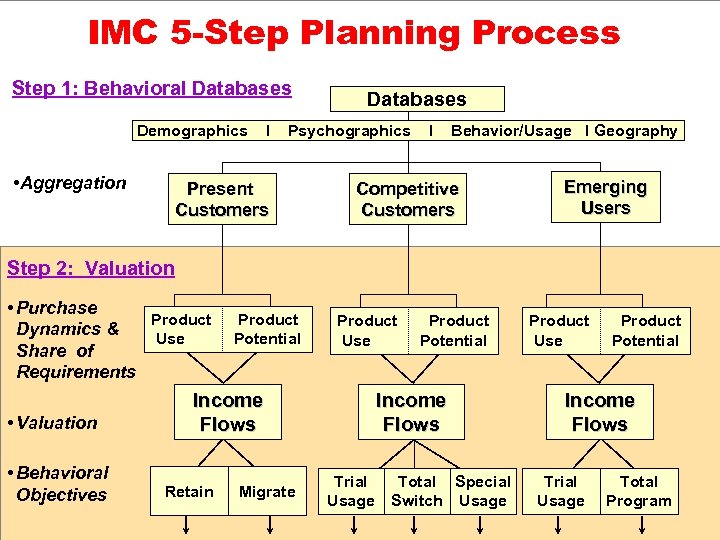
IMC 5 -Step Planning Process Step 1: Behavioral Databases Demographics • Aggregation I Databases Psychographics Present Customers I Behavior/Usage I Geography Competitive Customers Emerging Users Step 2: Valuation • Purchase Product Dynamics & Use Share of Requirements • Valuation • Behavioral Objectives Product Potential Product Use Income Flows Retain Product Potential Income Flows Migrate 52 Trial Usage Total Special Switch Usage Product Use Product Potential Income Flows Trial Usage Total Program
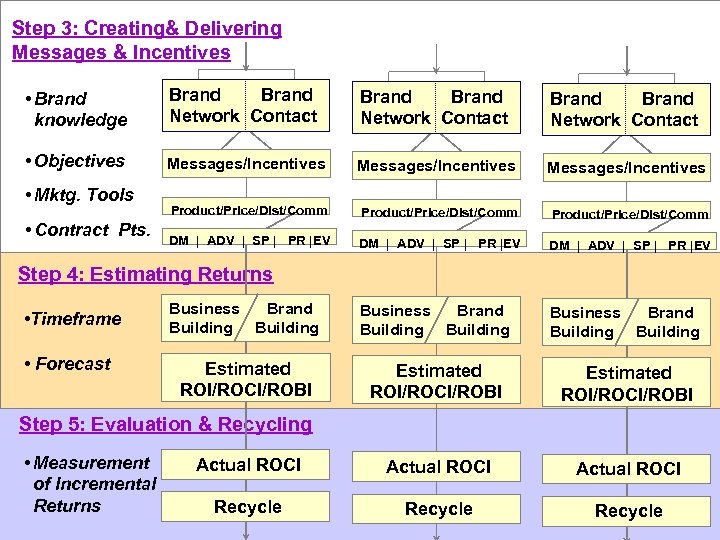
Step 3: Creating& Delivering Messages & Incentives • Brand knowledge Brand Network Contact Brand Network Contact • Objectives Messages/Incentives Product/Price/Dist/Comm DM | ADV | SP | PR |EV Business Brand Building Business Brand Building Estimated ROI/ROCI/ROBI Actual ROCI Recycle • Mktg. Tools • Contract Pts. Step 4: Estimating Returns • Timeframe • Forecast Step 5: Evaluation & Recycling • Measurement of Incremental Returns 53
This Is the Process We Will Be Following for the Balance of the Seminar 54
Let’s Start by Asking…. What Is Thing Called “Integrated Marketing Communication” 55
IMC: Next Generation Definition of IMC Integrated Marketing Communication is a strategic business process used to plan, develop, execute and evaluate coordinated, measurable, persuasive marketing communication programs over time with consumers, customers, prospects, employees and other targeted, relevant external and internal audiences. Schultz & Schultz 56
Basics of IMC § Achieving customer focus § Developing a closed-loop process § Aligning internal and external activities and elements § Based on investments and returns 57
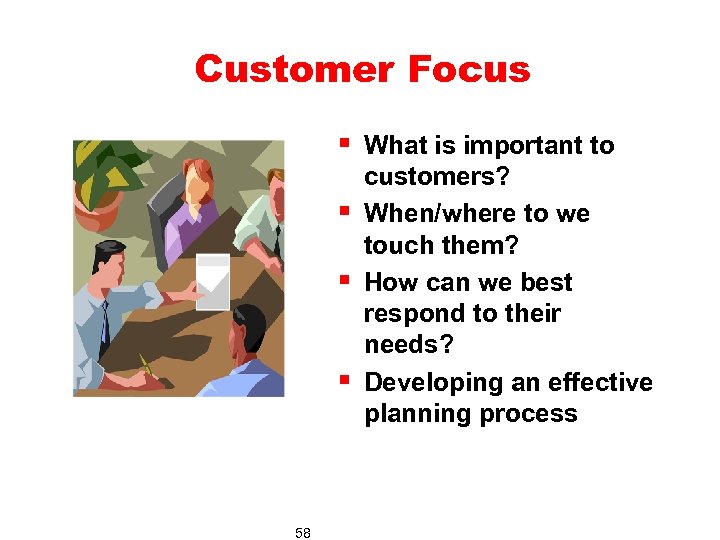
Customer Focus § What is important to § § § 58 customers? When/where to we touch them? How can we best respond to their needs? Developing an effective planning process
Developing a Financial Approach to Communication Investments and Returns 59
Let’s Start the IMC Process 60
Step One: Customer Identification From Behavioral Database 61
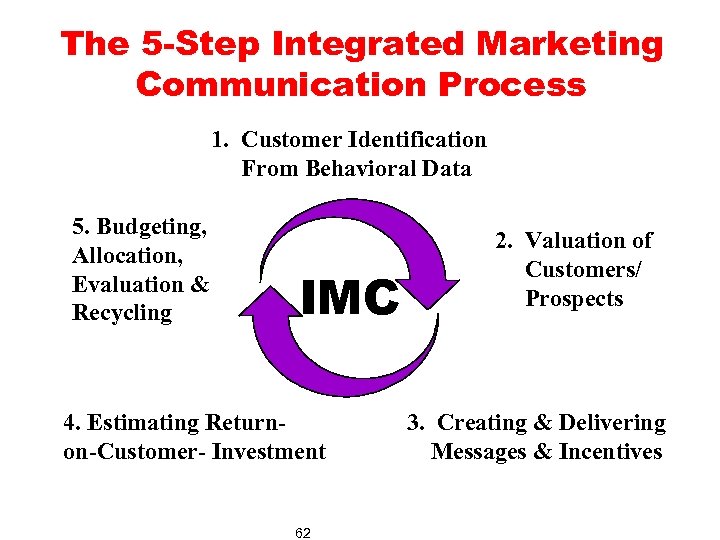
The 5 -Step Integrated Marketing Communication Process 1. Customer Identification From Behavioral Data 5. Budgeting, Allocation, Evaluation & Recycling IMC 4. Estimating Returnon-Customer- Investment 62 2. Valuation of Customers/ Prospects 3. Creating & Delivering Messages & Incentives
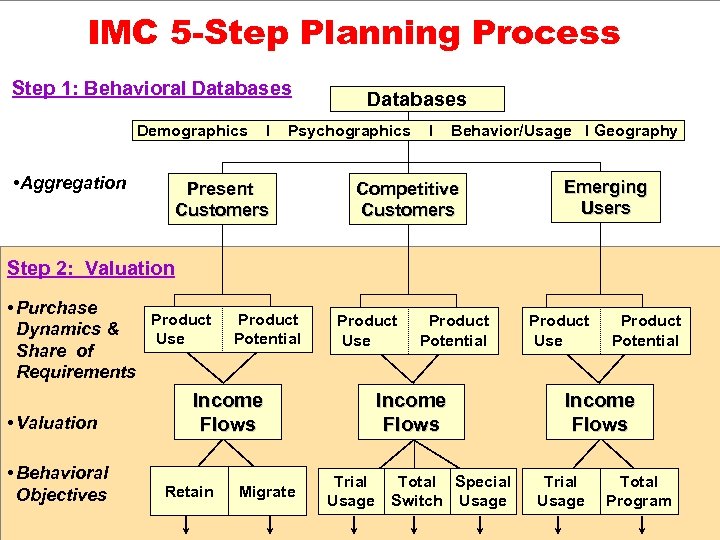
IMC 5 -Step Planning Process Step 1: Behavioral Databases Demographics • Aggregation I Databases Psychographics Present Customers I Behavior/Usage I Geography Competitive Customers Emerging Users Step 2: Valuation • Purchase Product Dynamics & Use Share of Requirements • Valuation • Behavioral Objectives Product Potential Product Use Income Flows Retain Product Potential Income Flows Migrate 63 Trial Usage Total Special Switch Usage Product Use Product Potential Income Flows Trial Usage Total Program
Customer Identification Depends on How You Define “Customer” or “Prospect” 64
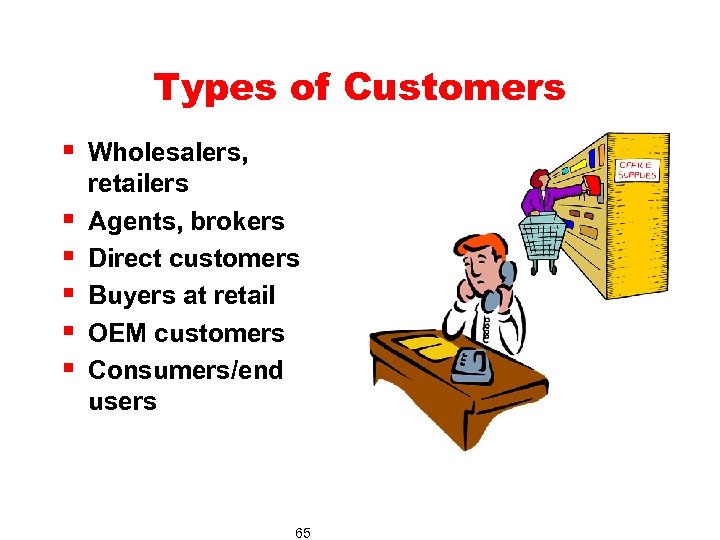
Types of Customers § Wholesalers, § § § retailers Agents, brokers Direct customers Buyers at retail OEM customers Consumers/end users 65
Is Your Goal to…. . § Acquire new customers? § Maintain or retain present customers? § Grow present customers? § Migrate present customers through your product portfolio? 66
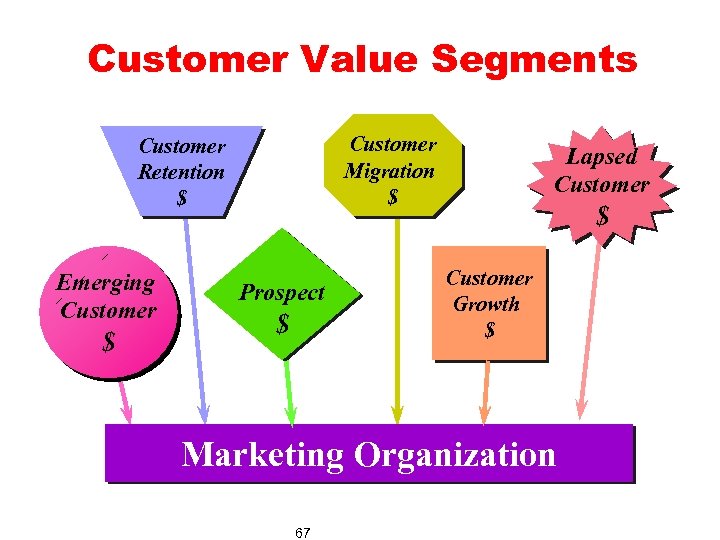
Customer Value Segments Customer Migration $ Customer Retention $ Emerging Customer $ Prospect $ Lapsed Customer $ Customer Growth $ Marketing Organization 67
We Start by Identifying Customers and Their Problems § Recall SIVA? Ø What solutions are customers seeking, not what products KISTI has available § Does KISTI really have a solution to their problem? Ø That will require research and understanding 68
Two Types of Data Are Needed § Acquisition –data to § § identify who would be looking for the solutions KISTI can provide Retention/growth/ migration – current customer knowledge to identify, classify and influence based on solution KISTI can offer Both types are needed to develop an IMC program 69
Acquiring New Customers § Basic questions Ø What is present behavior that would indicate they would be interested in a KISTI solution? Ø What would indicate they would be worth acquiring – generate returns? Ø Can we reach them? Ø Can we motivate them? Ø Can we serve them? 70
Retaining, Growing or Migrating Present Customers § Internal records, external sources and databases on current customers Ø Who they are? Ø What solutions are we presently providing them? Ø Where they are located? Ø What type of relationship do we have now? Ø What details about them? 71
Whatever the Solution KISTI Can Provide and Whomever You Want to Serve, You’ll Need Some Type of Database or Information Repository 72
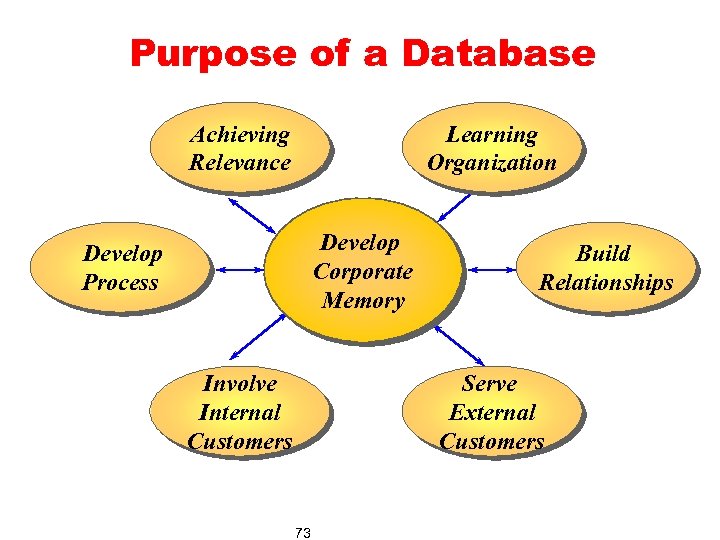
Purpose of a Database Achieving Relevance Learning Organization Develop Corporate Memory Develop Process Involve Internal Customers Build Relationships Serve External Customers 73
Using the IMC Approach, We Move Away From Traditional Methods of Segmentation to Customer Aggregation Based on Behavioral Data § Marketing on the averages vs. marketing on the differences 74
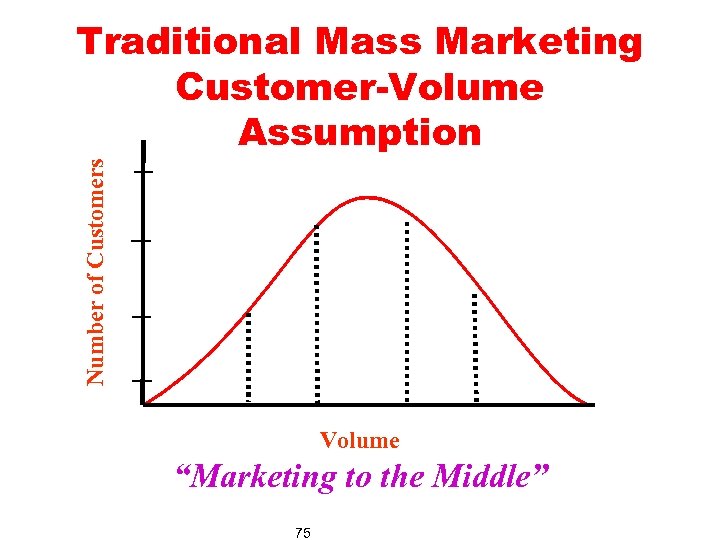
Number of Customers Traditional Mass Marketing Customer-Volume Assumption Volume “Marketing to the Middle” 75
Using The IMC Approach § We define consumer/prospect groups § first by their the solutions they are seeking or are currently using and their value We describe them by overlaying descriptors such as industry codes, number of employees, geographic locators, demographics and other organizational data to help understand them 76
The Role of Marketing in Gaining Customer Insight and Understanding § Understand customers and prospects better than competition Ø Solutions to customer problems Ø Benefits customers are seeking Ø Buying behaviors customers use Ø Capacity of customer to acquire or use 77
§ Continuously track customer purchases and satisfaction Ø Determine perceived product quality Ø Identify perceived service quality § Communicate, based on the customers and prospect’s perspective Ø To every employee Ø To every distributor Ø To every supplier § Cross organizational lines quickly and effectively to provide solutions 78
All These Insights and Understanding Must Be Captured, Saved and Distributed Within the Organization 79
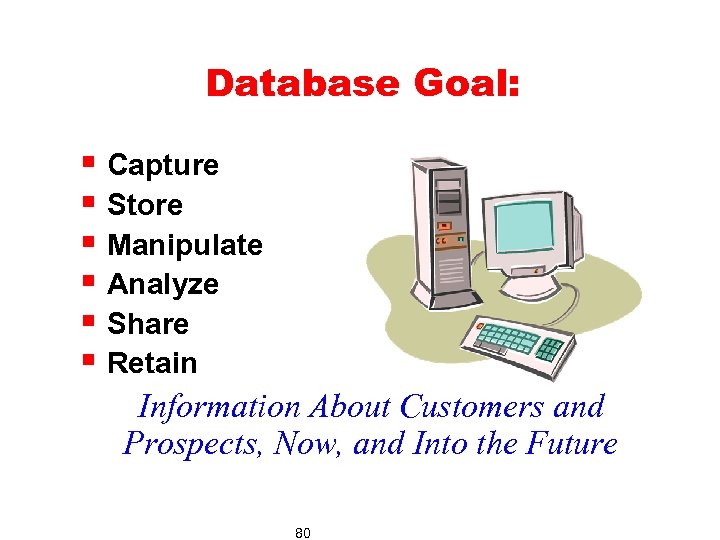
Database Goal: § Capture § Store § Manipulate § Analyze § Share § Retain Information About Customers and Prospects, Now, and Into the Future 80
Does Data Analysis Mean the End of Traditional Segmentation? § Customer groups or groupings based on behaviors or behavioral surrogates § Aggregate them into groups for efficiency § Explain their behaviors using attitudinal data overlays 81
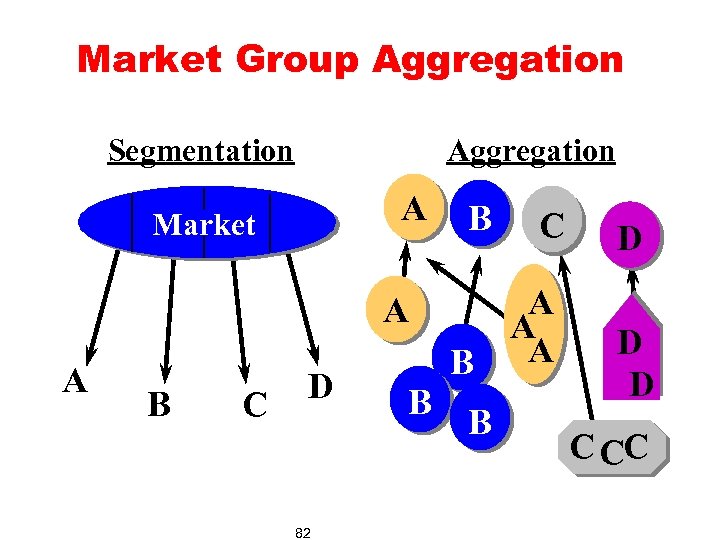
Market Group Aggregation Segmentation Aggregation A Market A A B C D 82 B B C A A A B B D D D C CC
A Useful Fact: Most Organizations Have Most of the Data They Need. They Commonly Don’t Have It Organized and/or Available for Use 83
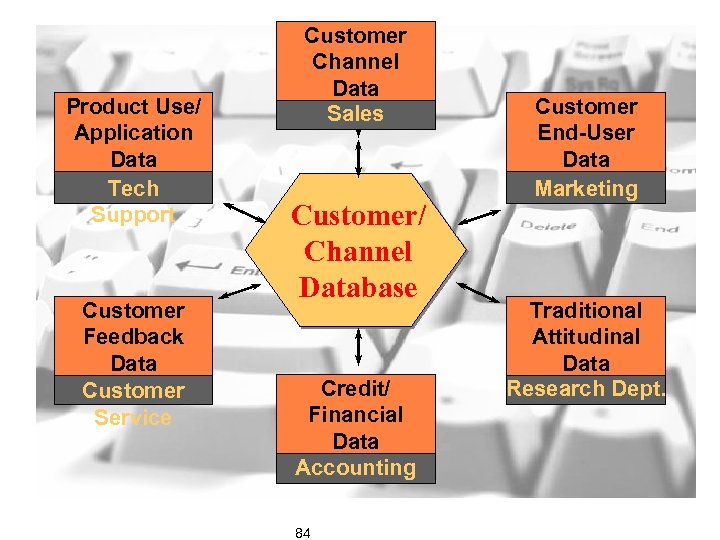
Product Use/ Application Data Tech Support Customer Feedback Data Customer Service Customer Channel Data Sales Customer/ Channel Database Credit/ Financial Data Accounting 84 Customer End-User Data Marketing Traditional Attitudinal Data Research Dept.
The Key Task in Step One? § Finding and organizing all the customer data KISTI presently has inside the organization 85
Three Key Questions the Database Must Answer: § Who are your best customers and why? § Who are your best prospects and why? § What information do you need to be more relevant to them? 86
We’ll be Moving on to Step Two after Lunch, so… Any Discussion or Questions on Step One? 87
Session #7 Step Two: Identifying and Valuing Customers and Prospects 88
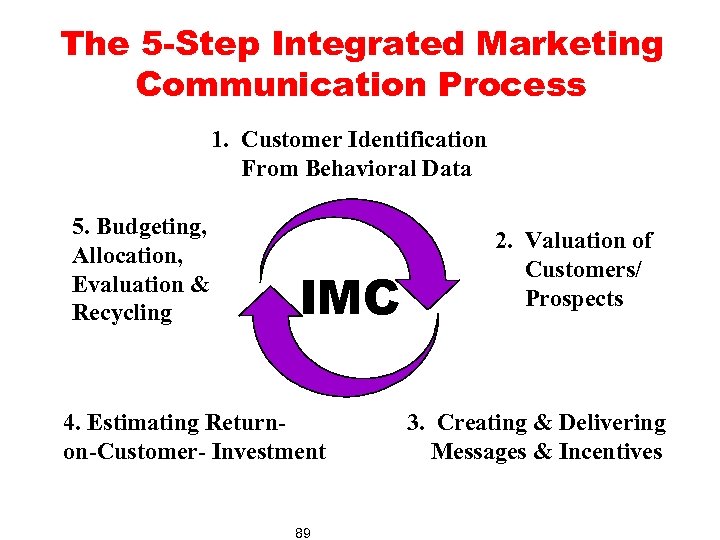
The 5 -Step Integrated Marketing Communication Process 1. Customer Identification From Behavioral Data 5. Budgeting, Allocation, Evaluation & Recycling IMC 4. Estimating Returnon-Customer- Investment 89 2. Valuation of Customers/ Prospects 3. Creating & Delivering Messages & Incentives
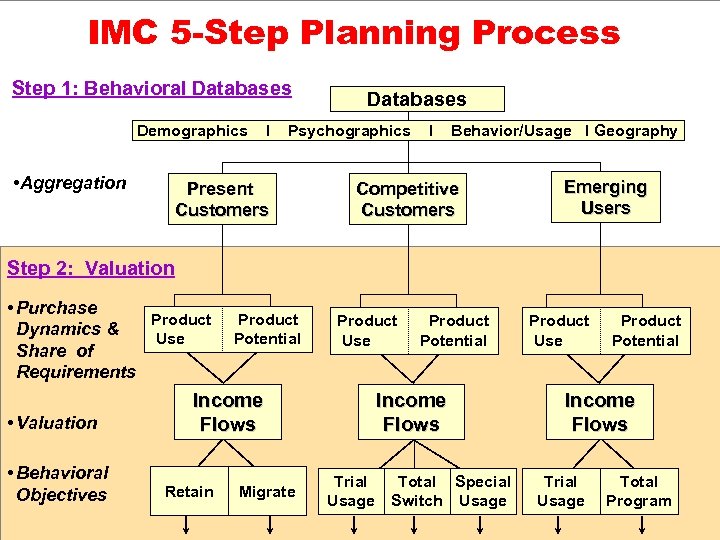
IMC 5 -Step Planning Process Step 1: Behavioral Databases Demographics • Aggregation I Databases Psychographics Present Customers I Behavior/Usage I Geography Competitive Customers Emerging Users Step 2: Valuation • Purchase Product Dynamics & Use Share of Requirements • Valuation • Behavioral Objectives Product Potential Product Use Income Flows Retain Product Potential Income Flows Migrate 90 Trial Usage Total Special Switch Usage Product Use Product Potential Income Flows Trial Usage Total Program
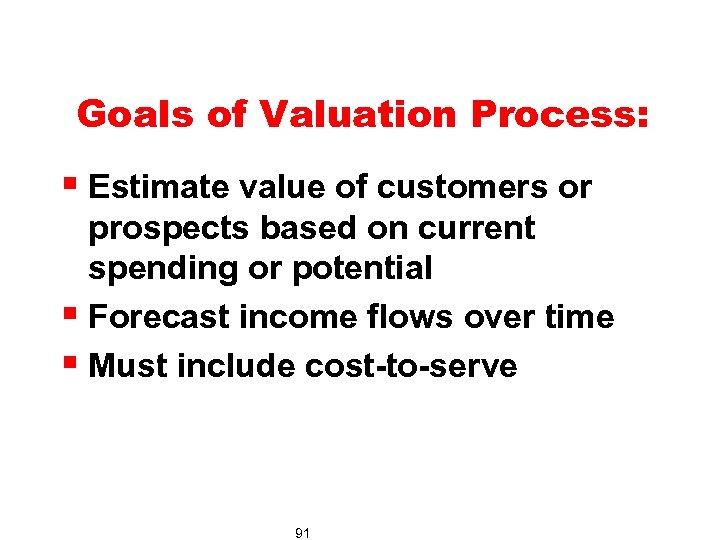
Goals of Valuation Process: § Estimate value of customers or prospects based on current spending or potential § Forecast income flows over time § Must include cost-to-serve 91
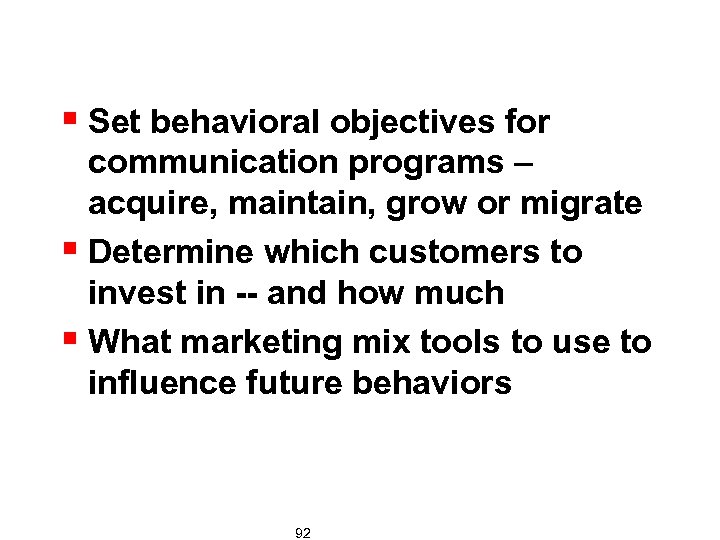
§ Set behavioral objectives for communication programs – acquire, maintain, grow or migrate § Determine which customers to invest in -- and how much § What marketing mix tools to use to influence future behaviors 92
Present and Potential Customer Income Flows Determine Customer Value 93
Why Do We Need to Value Customers and Prospects? 94
In the IMC Approach, We Invest in Customers and Customer Income Flows, Not in Marketing Communication Activities 95
§ We invest in communication to get returns from customers in the form of income flows § Goal is to grow or maintain income flows over time 96
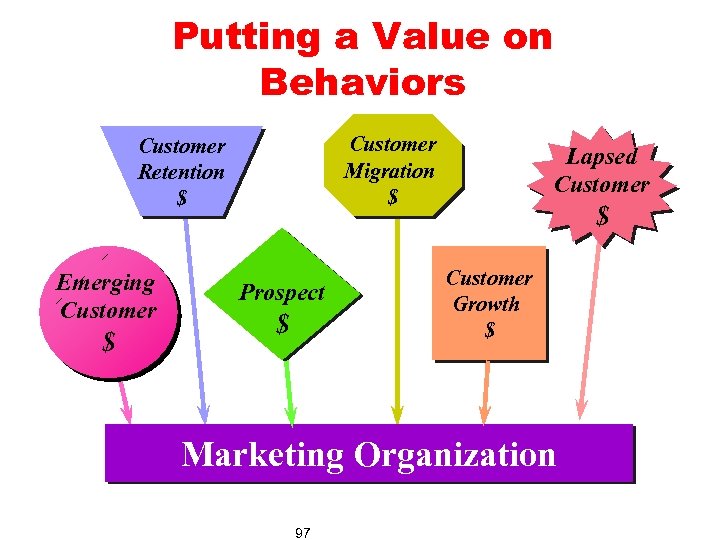
Putting a Value on Behaviors Customer Migration $ Customer Retention $ Emerging Customer $ Prospect $ Lapsed Customer $ Customer Growth $ Marketing Organization 97
The Goal Is to Treat Customers and Prospects As Assets…. . § That means we invest in them, like any asset, but, we also expect returns from them, like any asset § Communication investments to generate financial returns 98
The IMC Goal: To Invest in Customers And Prospects, Not in Communication Programs! 99

That Raises the Question Of Customer Financial Value. How to Calculate or Estimate That Value? 100
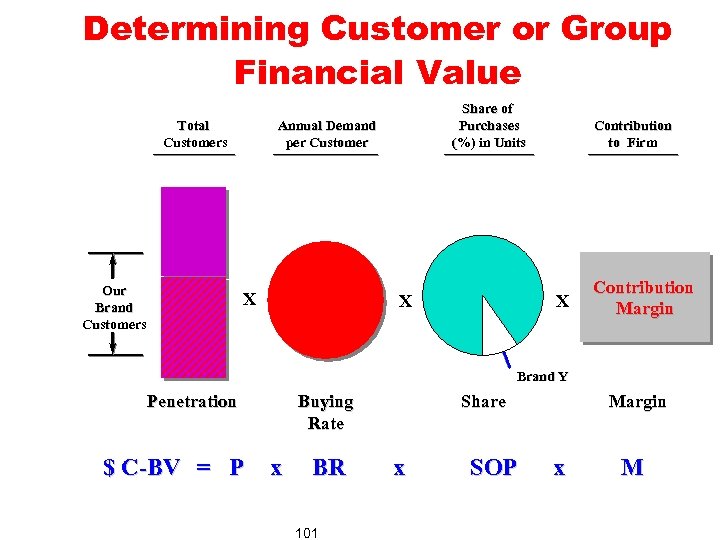
Determining Customer or Group Financial Value Total Customers Our Brand Customers Share of Purchases (%) in Units Annual Demand per Customer X X Contribution to Firm X Brand X Contribution Margin Brand Y Buying Rate Penetration $ C-BV = P x BR 101 Share x SOP Margin x M

Here’s an Example of This Type of Financial Valuation in the Office Products Market in the US 102
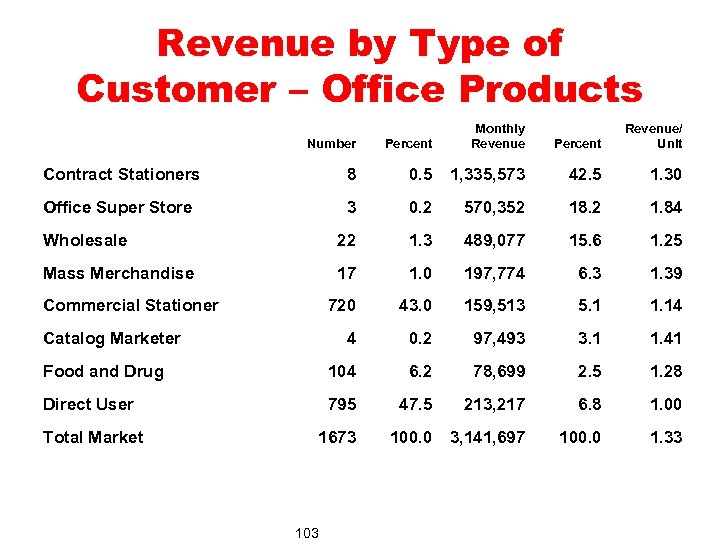
Revenue by Type of Customer – Office Products Number Percent Monthly Revenue Contract Stationers 8 0. 5 1, 335, 573 42. 5 1. 30 Office Super Store 3 0. 2 570, 352 18. 2 1. 84 Wholesale 22 1. 3 489, 077 15. 6 1. 25 Mass Merchandise 17 1. 0 197, 774 6. 3 1. 39 720 43. 0 159, 513 5. 1 1. 14 4 0. 2 97, 493 3. 1 1. 41 Food and Drug 104 6. 2 78, 699 2. 5 1. 28 Direct User 795 47. 5 213, 217 6. 8 1. 00 Total Market 1673 100. 0 3, 141, 697 100. 0 1. 33 Commercial Stationer Catalog Marketer 103 Percent Revenue/ Unit
We Must Find Ways to Put a Financial Value on a Customer or Prospect. We Invest KRW in Marketing Communication. We Must Measure KRW as a Return 104

Session #8 Putting the Valuation Methodology Into Practice 105
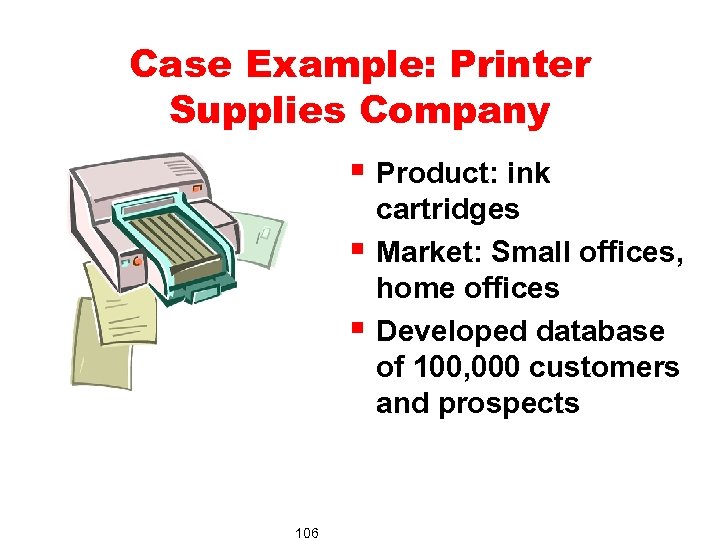
Case Example: Printer Supplies Company § Product: ink § § 106 cartridges Market: Small offices, home offices Developed database of 100, 000 customers and prospects
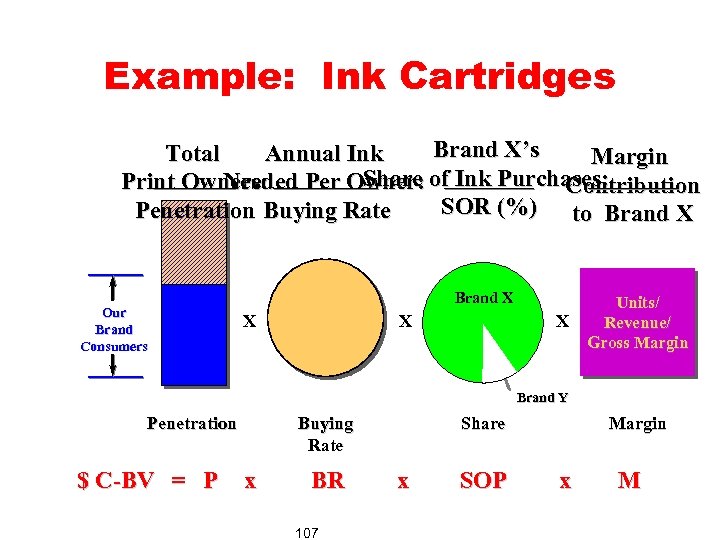
Example: Ink Cartridges Brand X’s Total Annual Ink Margin Share Print Owners: Needed Per Owner: of Ink Purchases: Contribution SOR (%) to Brand X Penetration Buying Rate Our Brand Consumers Brand X X Units/ Revenue/ Gross Margin Brand Y Penetration $ C-BV = P Buying Rate x BR 107 Share x SOP Margin x M
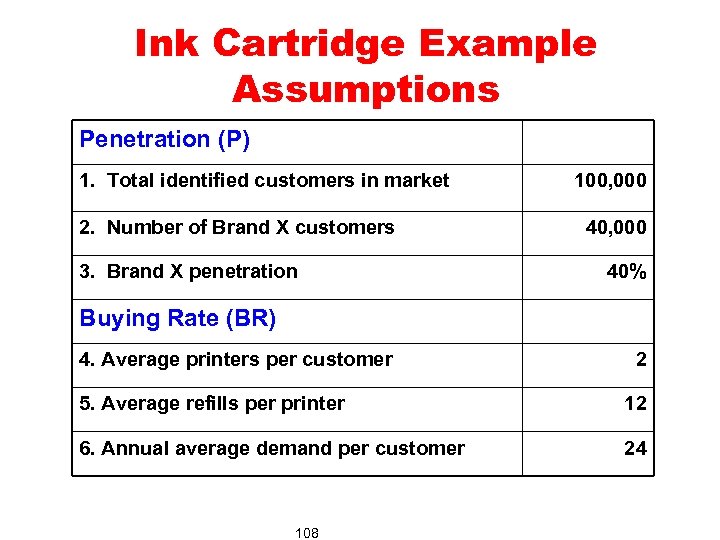
Ink Cartridge Example Assumptions Penetration (P) 1. Total identified customers in market 2. Number of Brand X customers 3. Brand X penetration 100, 000 40% Buying Rate (BR) 4. Average printers per customer 2 5. Average refills per printer 12 6. Annual average demand per customer 24 108
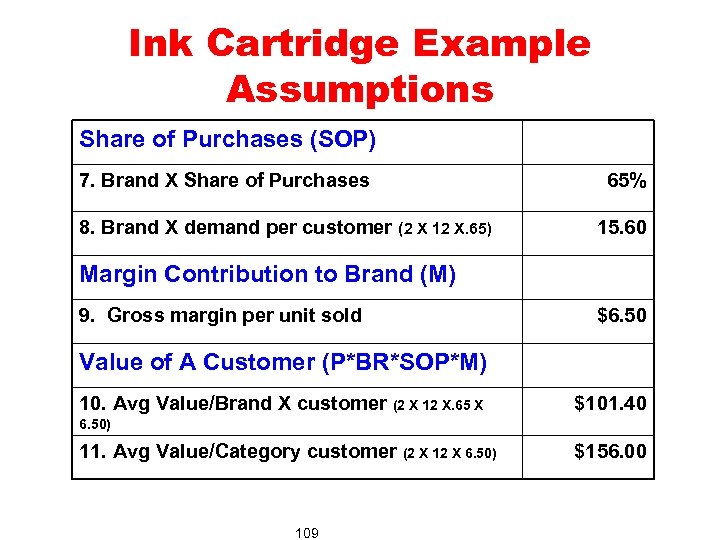
Ink Cartridge Example Assumptions Share of Purchases (SOP) 7. Brand X Share of Purchases 8. Brand X demand per customer (2 X 12 X. 65) 65% 15. 60 Margin Contribution to Brand (M) 9. Gross margin per unit sold $6. 50 Value of A Customer (P*BR*SOP*M) 10. Avg Value/Brand X customer (2 X 12 X. 65 X $101. 40 6. 50) 11. Avg Value/Category customer (2 X 12 X 6. 50) 109 $156. 00
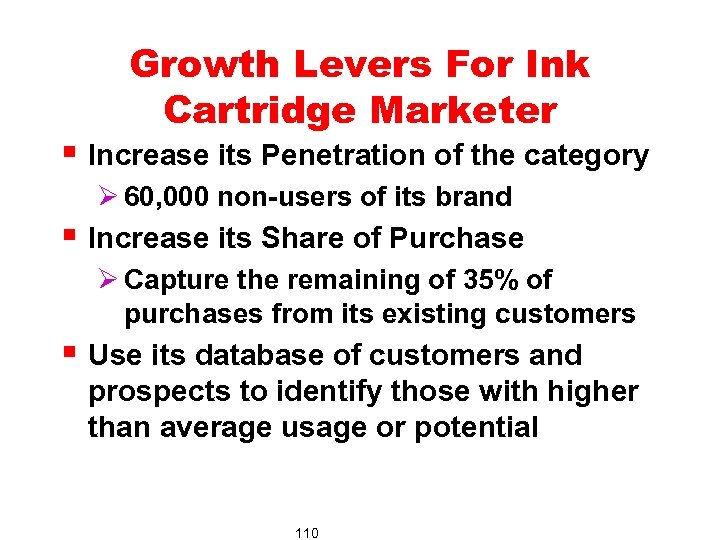
Growth Levers For Ink Cartridge Marketer § Increase its Penetration of the category Ø 60, 000 non-users of its brand § Increase its Share of Purchase Ø Capture the remaining of 35% of purchases from its existing customers § Use its database of customers and prospects to identify those with higher than average usage or potential 110
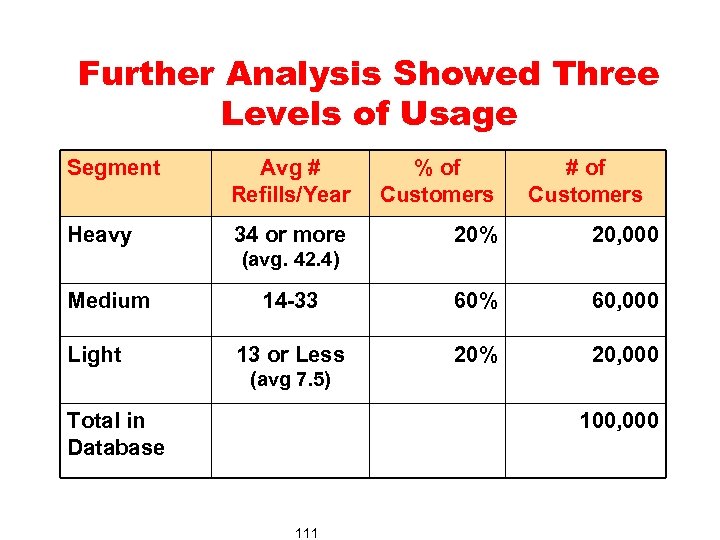
Further Analysis Showed Three Levels of Usage Segment Avg # Refills/Year % of Customers # of Customers Heavy 34 or more 20% 20, 000 14 -33 60% 60, 000 13 or Less 20% 20, 000 (avg. 42. 4) Medium Light (avg 7. 5) Total in Database 100, 000 111
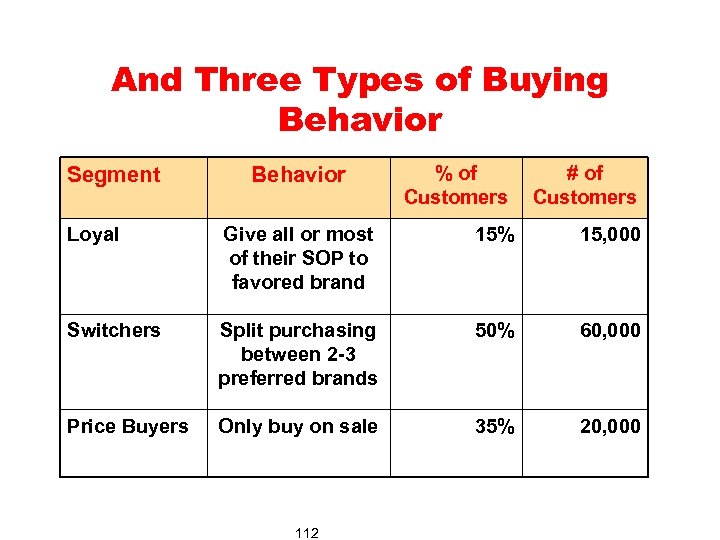
And Three Types of Buying Behavior Segment Behavior % of Customers # of Customers Loyal Give all or most of their SOP to favored brand 15% 15, 000 Switchers Split purchasing between 2 -3 preferred brands 50% 60, 000 Price Buyers Only buy on sale 35% 20, 000 112
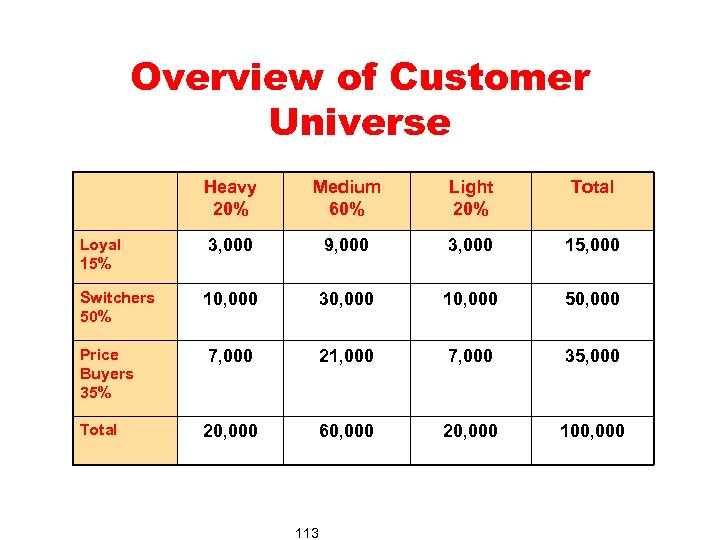
Overview of Customer Universe Heavy 20% Loyal 15% Switchers 50% Price Buyers 35% Total Medium 60% Light 20% Total 3, 000 9, 000 3, 000 15, 000 10, 000 30, 000 10, 000 50, 000 7, 000 21, 000 7, 000 35, 000 20, 000 60, 000 20, 000 100, 000 113
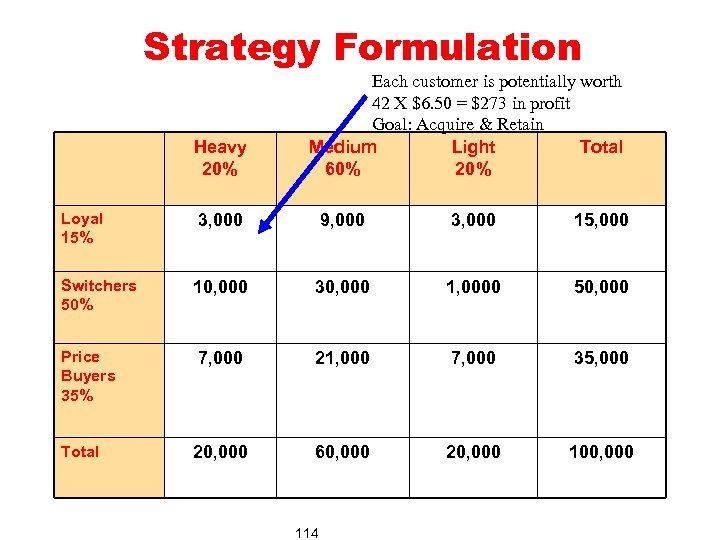
Strategy Formulation Heavy 20% Loyal 15% Switchers 50% Price Buyers 35% Total Each customer is potentially worth 42 X $6. 50 = $273 in profit Goal: Acquire & Retain Medium Light Total 60% 20% 3, 000 9, 000 3, 000 15, 000 10, 000 30, 000 1, 0000 50, 000 7, 000 21, 000 7, 000 35, 000 20, 000 60, 000 20, 000 100, 000 114
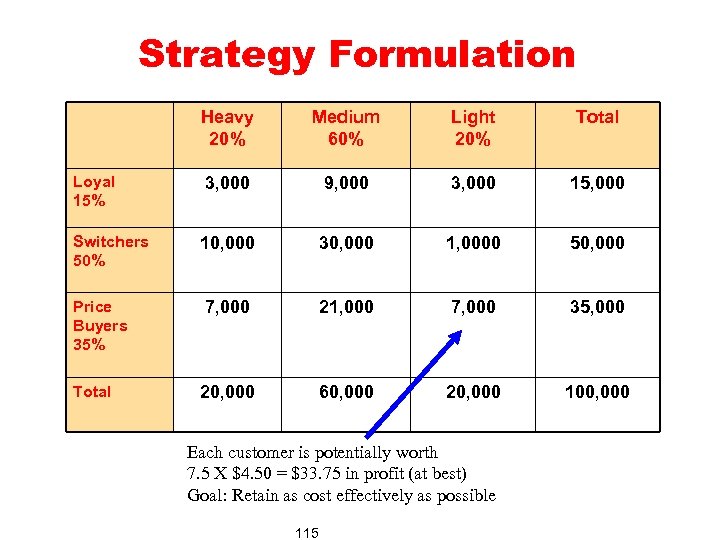
Strategy Formulation Heavy 20% Loyal 15% Switchers 50% Price Buyers 35% Total Medium 60% Light 20% Total 3, 000 9, 000 3, 000 15, 000 10, 000 30, 000 1, 0000 50, 000 7, 000 21, 000 7, 000 35, 000 20, 000 60, 000 20, 000 100, 000 Each customer is potentially worth 7. 5 X $4. 50 = $33. 75 in profit (at best) Goal: Retain as cost effectively as possible 115
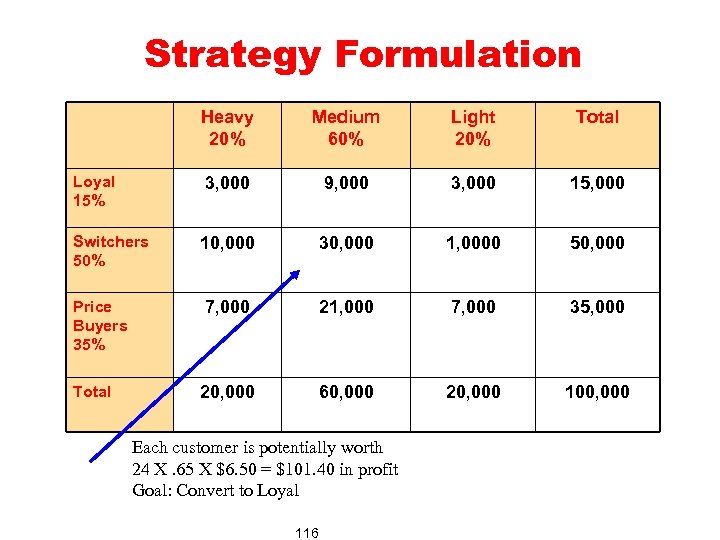
Strategy Formulation Heavy 20% Price Buyers 35% Total 9, 000 3, 000 15, 000 10, 000 30, 000 1, 0000 50, 000 7, 000 21, 000 7, 000 35, 000 20, 000 Switchers 50% Light 20% 3, 000 Loyal 15% Medium 60% 60, 000 20, 000 100, 000 Each customer is potentially worth 24 X. 65 X $6. 50 = $101. 40 in profit Goal: Convert to Loyal 116
Here Is a Worksheet to Help in the Analysis 117
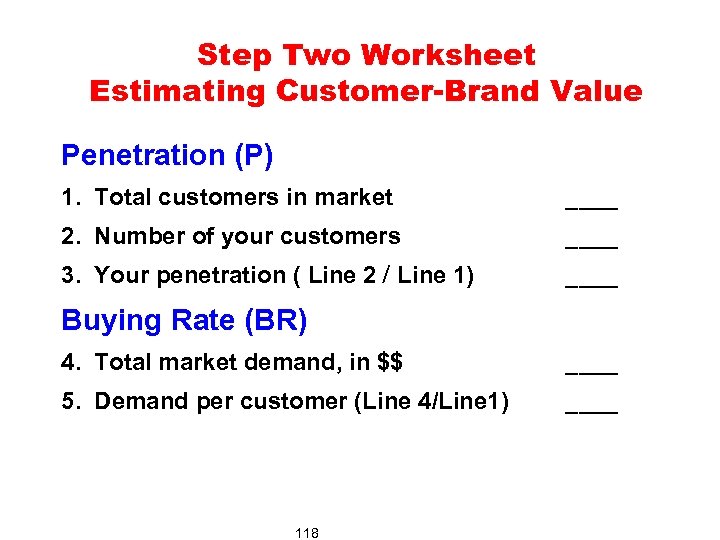
Step Two Worksheet Estimating Customer-Brand Value Penetration (P) 1. Total customers in market ____ 2. Number of your customers ____ 3. Your penetration ( Line 2 Line 1) ____ Buying Rate (BR) 4. Total market demand, in $$ ____ 5. Demand per customer (Line 4/Line 1) ____ 118
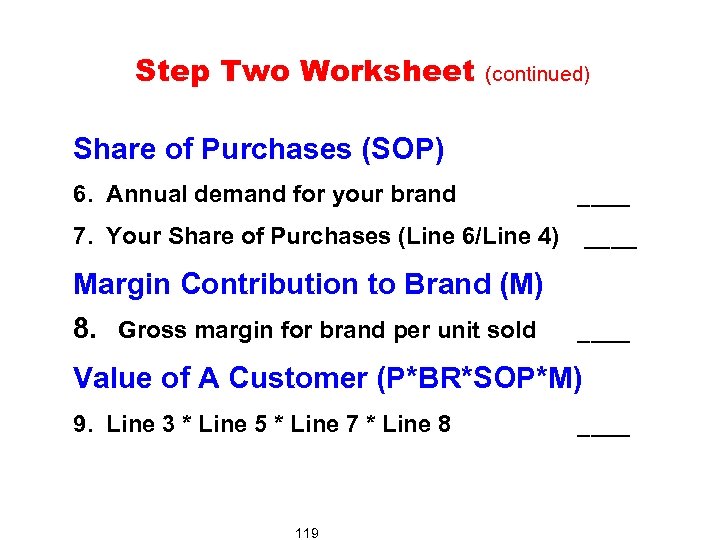
Step Two Worksheet (continued) Share of Purchases (SOP) 6. Annual demand for your brand ____ 7. Your Share of Purchases (Line 6/Line 4) ____ Margin Contribution to Brand (M) 8. Gross margin for brand per unit sold ____ Value of A Customer (P*BR*SOP*M) 9. Line 3 * Line 5 * Line 7 * Line 8 119 ____
Using This Valuation Approach, We Can Now. . § Determine how much we could afford to invest in customers and thus, in brand marketing communication § Estimate some level of financial response we might expect from our communication investment 120
Скачать презентацию Integrated Marketing Communications Prepared by Don E Schultz
8c8bf89c8cedc267eaa1e1f946593b60.ppt