


 Скачать презентацию Integrated Management of Phytoplasma Epidemics in Different Crop
181241754d48923146294e7bc71aa67e.ppt
- Количество слайдов: 22
 Integrated Management of Phytoplasma Epidemics in Different Crop Systems oc-2007 -2 -1367
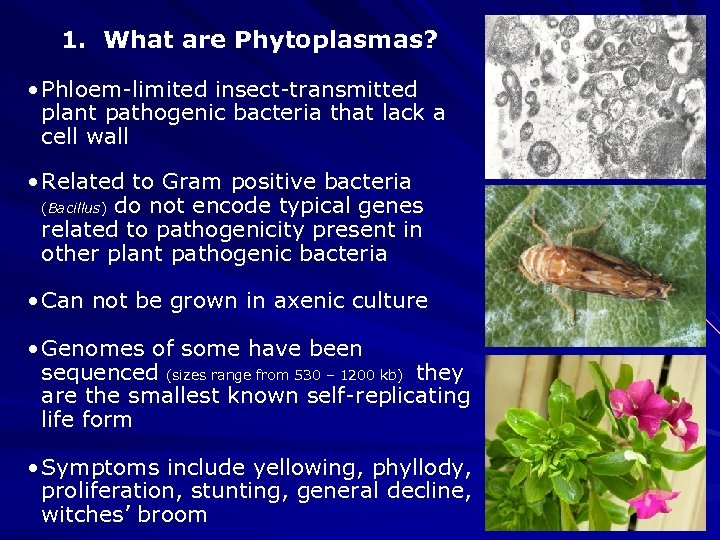 1. What are Phytoplasmas? • Phloem-limited insect-transmitted plant pathogenic bacteria that lack a cell wall • Related to Gram positive bacteria (Bacillus) do not encode typical genes related to pathogenicity present in other plant pathogenic bacteria • Can not be grown in axenic culture • Genomes of some have been sequenced (sizes range from 530 – 1200 kb) they are the smallest known self-replicating life form • Symptoms include yellowing, phyllody, proliferation, stunting, general decline, witches’ broom
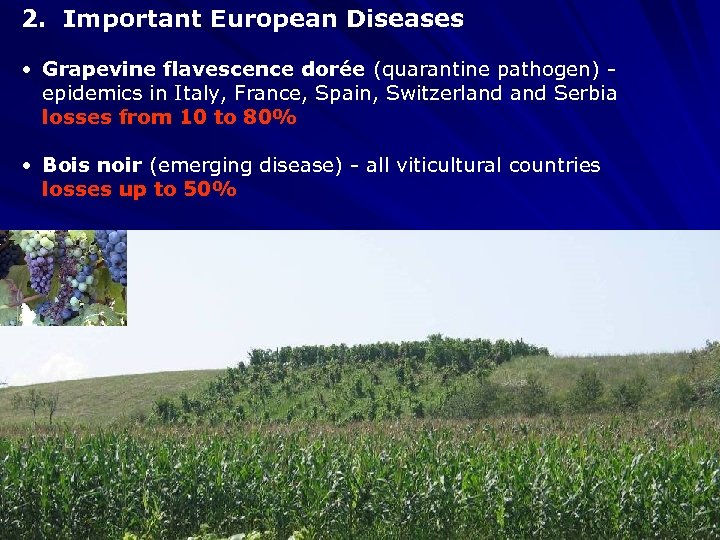 2. Important European Diseases • Grapevine flavescence dorée (quarantine pathogen) epidemics in Italy, France, Spain, Switzerland Serbia losses from 10 to 80% • Bois noir (emerging disease) - all viticultural countries losses up to 50%
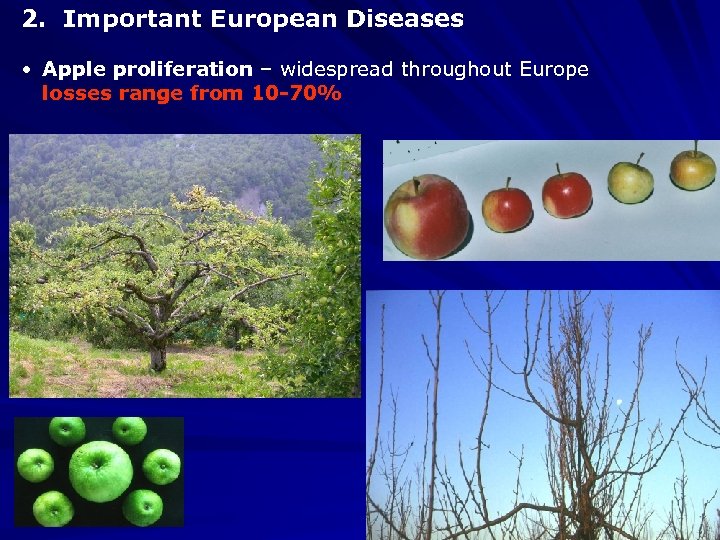 2. Important European Diseases • Apple proliferation – widespread throughout Europe losses range from 10 -70%
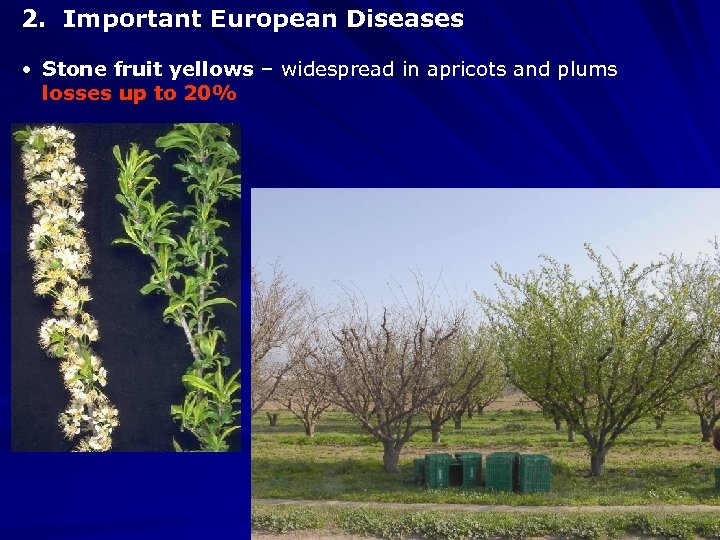 2. Important European Diseases • Stone fruit yellows – widespread in apricots and plums losses up to 20%
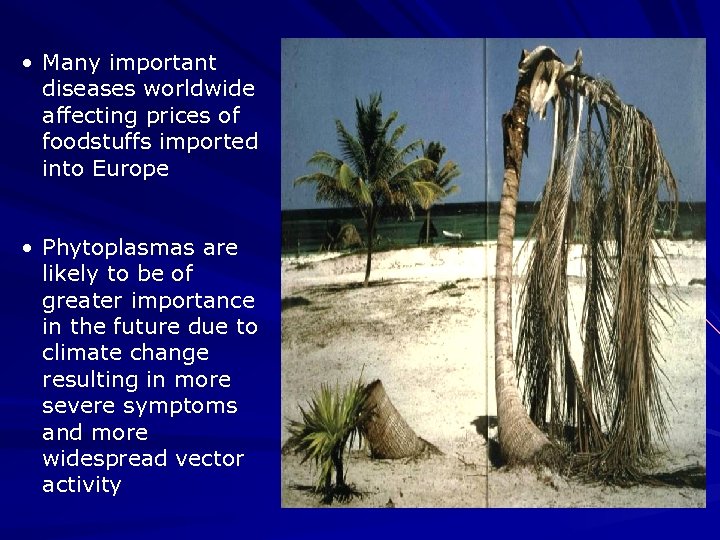 • Many important diseases worldwide affecting prices of foodstuffs imported into Europe • Phytoplasmas are likely to be of greater importance in the future due to climate change resulting in more severe symptoms and more widespread vector activity
 3. Objectives of this Action Enhancement and exchange of scientific knowledge and technologies related to phytoplasma diseases, through establishment of a multidisciplinary scientific European Network, aimed at developing strategies to detect and prevent biological invasion and the spread of phytoplasma diseases of plants
 4. Timeliness of this Action Phytoplasma diseases are spreading across Europe through insect vectors and transport of infected plant material There is a well established phytoplasma research community in Europe (including in new EU member states), which has been at the forefront of many recent scientific advances There is a need for research coordination to consolidate national funding resources, reduce duplication of effort and co-ordinate management of essential European resources such as in planta and in vitro reference collections There is a need for improved training and transfer-oftechnology to EU countries with limited knowledge of phytoplasma diseases and with limited resources
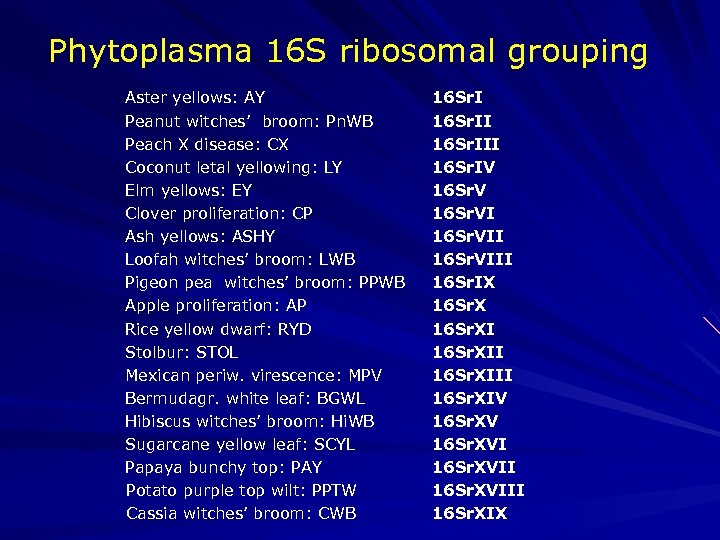 Phytoplasma 16 S ribosomal grouping Aster yellows: AY 16 Sr. I Peanut witches’ broom: Pn. WB Peach X disease: CX Coconut letal yellowing: LY Elm yellows: EY Clover proliferation: CP Ash yellows: ASHY Loofah witches’ broom: LWB Pigeon pea witches’ broom: PPWB Apple proliferation: AP Rice yellow dwarf: RYD Stolbur: STOL Mexican periw. virescence: MPV Bermudagr. white leaf: BGWL Hibiscus witches’ broom: Hi. WB Sugarcane yellow leaf: SCYL Papaya bunchy top: PAY Potato purple top wilt: PPTW Cassia witches’ broom: CWB 16 Sr. III 16 Sr. IV 16 Sr. VIII 16 Sr. IX 16 Sr. XIII 16 Sr. XIV 16 Sr. XVIII 16 Sr. XIX
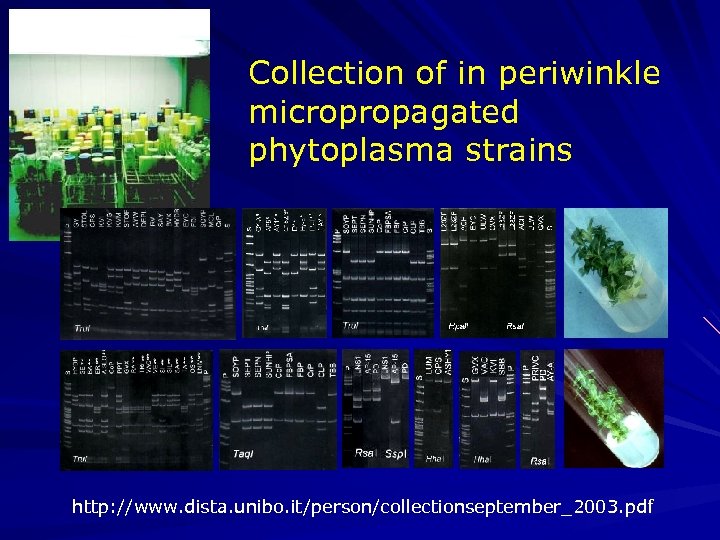 Collection of in periwinkle micropropagated phytoplasma strains http: //www. dista. unibo. it/person/collectionseptember_2003. pdf
 5. Who will benefit from this Action? Research scientists from a wide range of disciplines in both developed and developing EU regions enhancing worldwide competitiveness of EU research scientists The improvements to detection and vector monitoring systems will aid plant health inspectors and quarantine services to reduce the risk of spread of these diseases into and within EU Co-ordinated use of control methods will improve crop management and provide financial benefit to the farming and agricultural industries both in the EU and in developing countries driving down the costs to the consumer foodstuffs Improvements to disease control, including reduced use of insecticides, will benefit the environment The Short-Term Scientific Missions (STMSs) will benefit young scientists and scientists from the less-developed regions
 6. How will the Action be organised? The Action will be co-ordinated by a Management Committee (MC) which will manage the overall activities Meetings of the MC will take place once a year to ensure efficient co-ordination of the activities and discussion of the objectives at critical points of the programme Four working groups (WG) will be established according to the four main tasks, each of the WGs will be managed by a WG co-ordinator Annual 3 -day meetings of the WGs will be organized at different partner locations
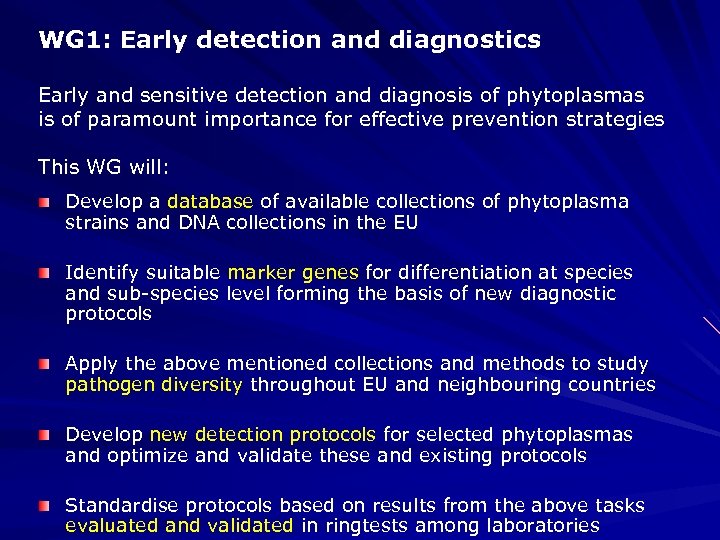 WG 1: Early detection and diagnostics Early and sensitive detection and diagnosis of phytoplasmas is of paramount importance for effective prevention strategies This WG will: Develop a database of available collections of phytoplasma strains and DNA collections in the EU Identify suitable marker genes for differentiation at species and sub-species level forming the basis of new diagnostic protocols Apply the above mentioned collections and methods to study pathogen diversity throughout EU and neighbouring countries Develop new detection protocols for selected phytoplasmas and optimize and validate these and existing protocols Standardise protocols based on results from the above tasks evaluated and validated in ringtests among laboratories
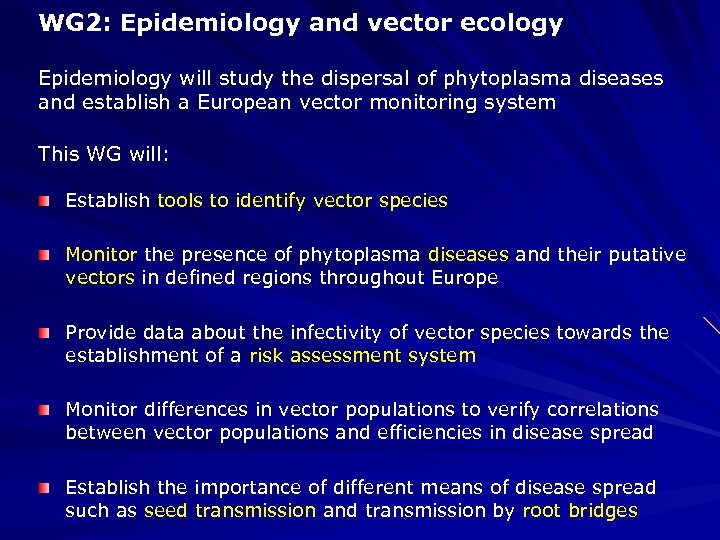 WG 2: Epidemiology and vector ecology Epidemiology will study the dispersal of phytoplasma diseases and establish a European vector monitoring system This WG will: Establish tools to identify vector species Monitor the presence of phytoplasma diseases and their putative vectors in defined regions throughout Europe Provide data about the infectivity of vector species towards the establishment of a risk assessment system Monitor differences in vector populations to verify correlations between vector populations and efficiencies in disease spread Establish the importance of different means of disease spread such as seed transmission and transmission by root bridges
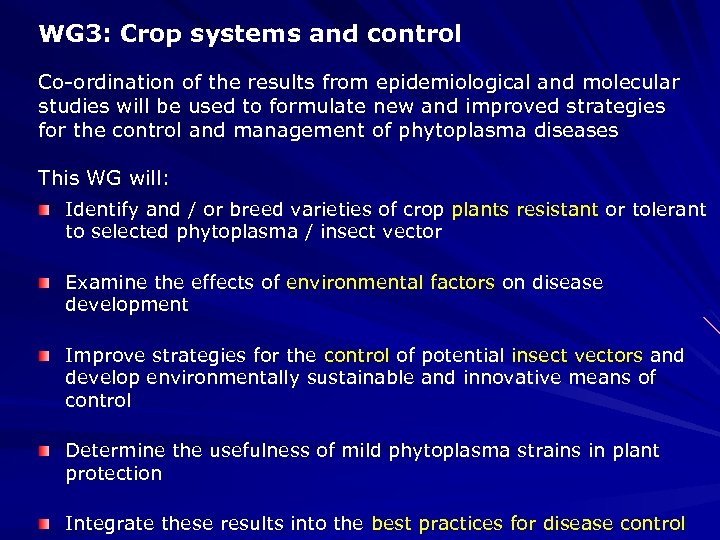 WG 3: Crop systems and control Co-ordination of the results from epidemiological and molecular studies will be used to formulate new and improved strategies for the control and management of phytoplasma diseases This WG will: Identify and / or breed varieties of crop plants resistant or tolerant to selected phytoplasma / insect vector Examine the effects of environmental factors on disease development Improve strategies for the control of potential insect vectors and develop environmentally sustainable and innovative means of control Determine the usefulness of mild phytoplasma strains in plant protection Integrate these results into the best practices for disease control
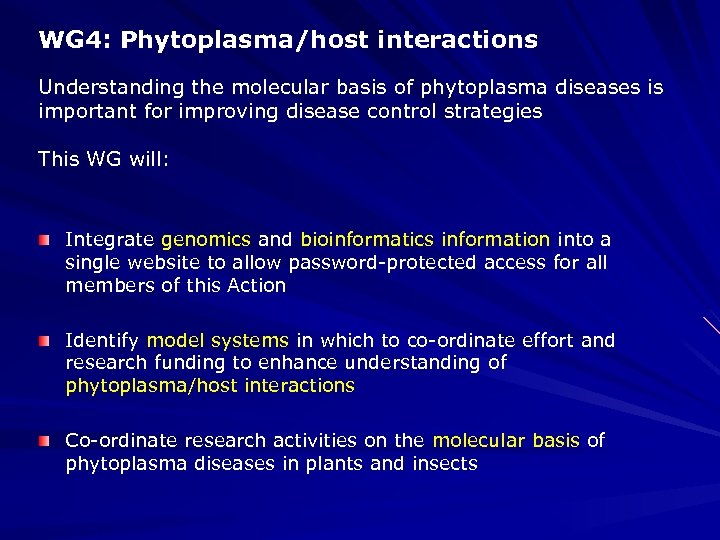 WG 4: Phytoplasma/host interactions Understanding the molecular basis of phytoplasma diseases is important for improving disease control strategies This WG will: Integrate genomics and bioinformatics information into a single website to allow password-protected access for all members of this Action Identify model systems in which to co-ordinate effort and research funding to enhance understanding of phytoplasma/host interactions Co-ordinate research activities on the molecular basis of phytoplasma diseases in plants and insects
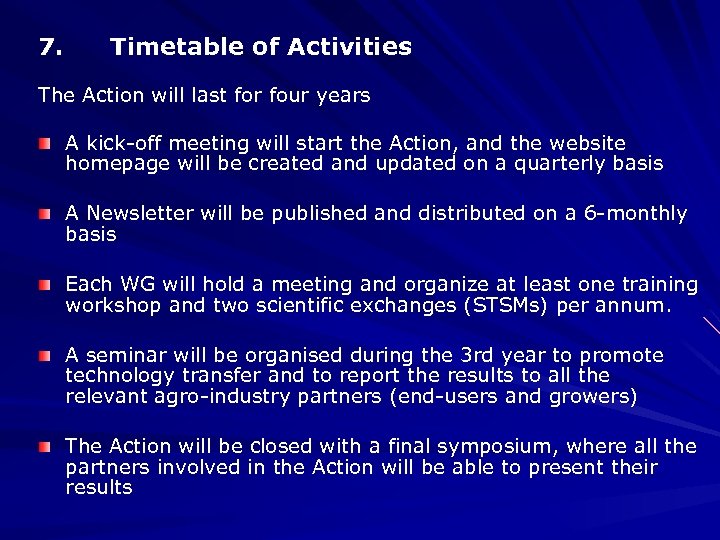 7. Timetable of Activities The Action will last for four years A kick-off meeting will start the Action, and the website homepage will be created and updated on a quarterly basis A Newsletter will be published and distributed on a 6 -monthly basis Each WG will hold a meeting and organize at least one training workshop and two scientific exchanges (STSMs) per annum. A seminar will be organised during the 3 rd year to promote technology transfer and to report the results to all the relevant agro-industry partners (end-users and growers) The Action will be closed with a final symposium, where all the partners involved in the Action will be able to present their results
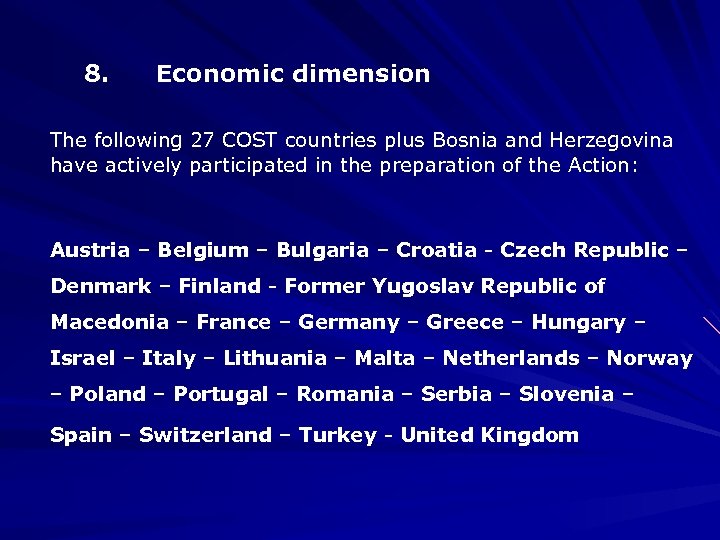 8. Economic dimension The following 27 COST countries plus Bosnia and Herzegovina have actively participated in the preparation of the Action: Austria – Belgium – Bulgaria – Croatia - Czech Republic – Denmark – Finland - Former Yugoslav Republic of Macedonia – France – Germany – Greece – Hungary – Israel – Italy – Lithuania – Malta – Netherlands – Norway – Poland – Portugal – Romania – Serbia – Slovenia – Spain – Switzerland – Turkey - United Kingdom
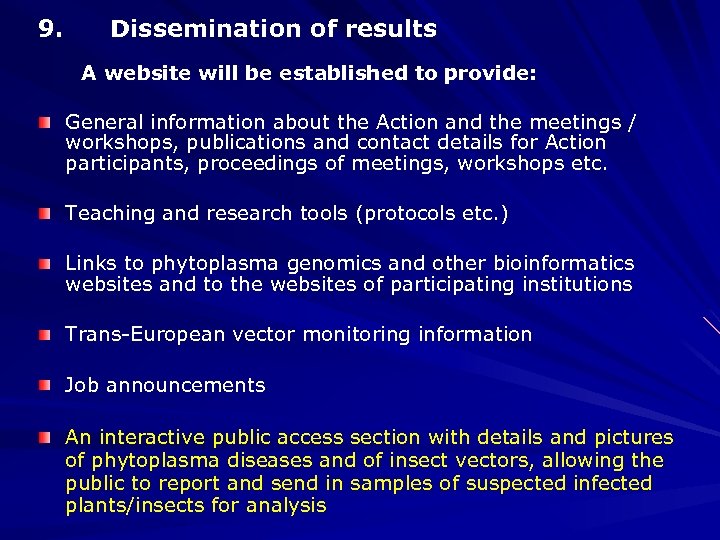 9. Dissemination of results A website will be established to provide: General information about the Action and the meetings / workshops, publications and contact details for Action participants, proceedings of meetings, workshops etc. Teaching and research tools (protocols etc. ) Links to phytoplasma genomics and other bioinformatics websites and to the websites of participating institutions Trans-European vector monitoring information Job announcements An interactive public access section with details and pictures of phytoplasma diseases and of insect vectors, allowing the public to report and send in samples of suspected infected plants/insects for analysis
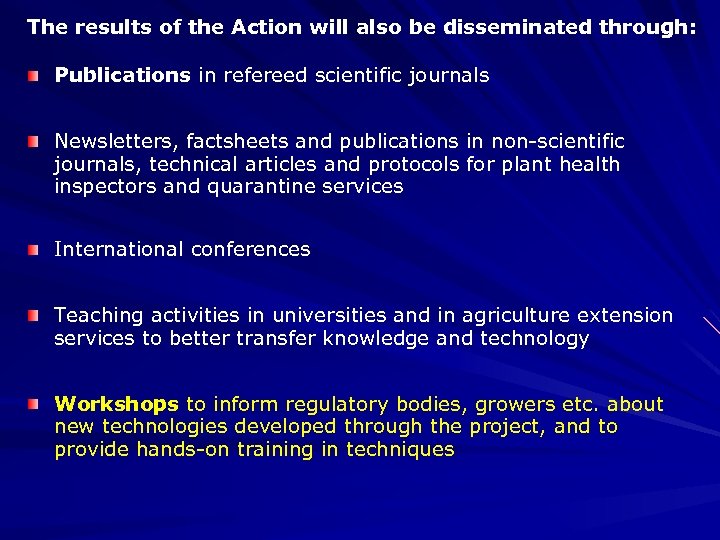 The results of the Action will also be disseminated through: Publications in refereed scientific journals Newsletters, factsheets and publications in non-scientific journals, technical articles and protocols for plant health inspectors and quarantine services International conferences Teaching activities in universities and in agriculture extension services to better transfer knowledge and technology Workshops to inform regulatory bodies, growers etc. about new technologies developed through the project, and to provide hands-on training in techniques
 Summary Phytoplasmas cause serious diseases in important crops such as grapevine, vegetables, sugar beet, oil-seed crops and fruit trees throughout Europe Recent advances in phytoplasma genomics have generated an impetus for research into control and management of these diseases This Action will integrate European phytoplasma research, enabling research funds to be used more efficiently New approaches for disease management will be achieved There will be improved diagnostic methods; reduction of disease spread; improvement of insect-vector monitoring and a reduction in the pesticides used for control Knowledge-transfer will be enhanced through meetings, workshops for agroindustry, a website, newsletters and scientific publications Young scientists and scientists from new EU member states will be encouraged to participate in lab exchanges, and public understanding of phytoplasma diseases will be increased
 p: / htt og y. o rg/ ec tol ns ofi tin lle bu ww. /w