


 Скачать презентацию Institutional Repositories a national perspective and the work
1b7be2ef0eb8a586bd55d1d95d6cf84e.ppt
- Количество слайдов: 54
 Institutional Repositories a national perspective and the work of SHERPA Bill Hubbard SHERPA Project Manager University of Nottingham
 Open Access solutions D Open Access Journals D Open Access Repositories
 Open Access Journals D D D Publication charges Not “author-pays” Same pot of money as before DOAJ - now 1375 journals Bio. MEd Central, PLo. S
 Open Access Repositories D Document service – storage, search, access, preservation D D D Duplicates of journal articles – eprints Post-prints, pre-prints, working papers Supplementary to current publishing practice No access barriers Institutionally based Cross-searchable - OAI-PMH
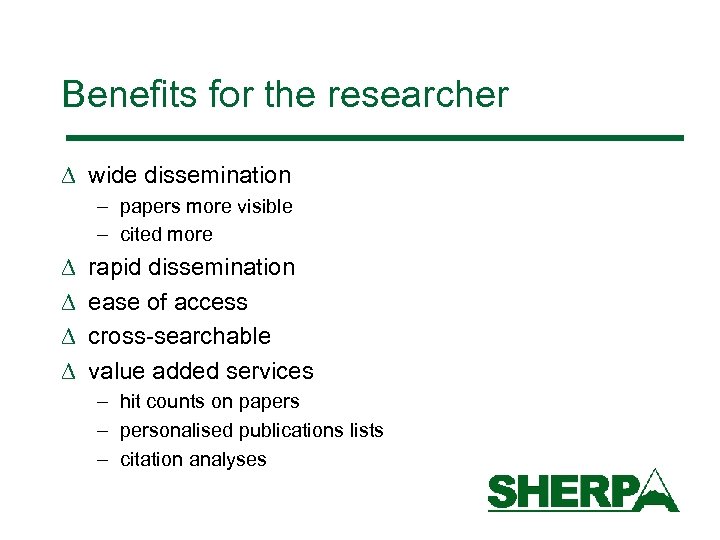 Benefits for the researcher D wide dissemination – papers more visible – cited more D D rapid dissemination ease of access cross-searchable value added services – hit counts on papers – personalised publications lists – citation analyses
 publication & deposition
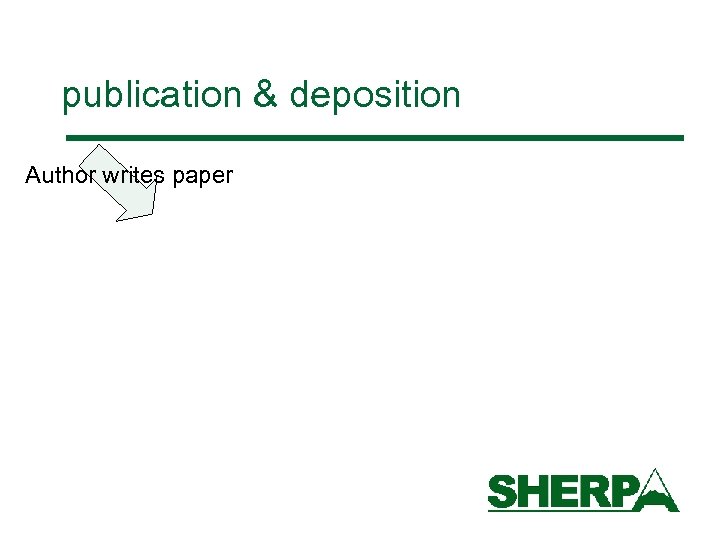 publication & deposition Author writes paper
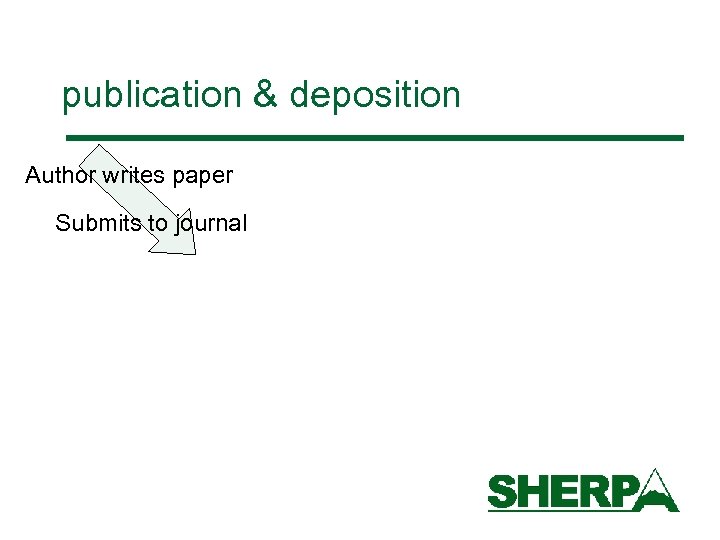 publication & deposition Author writes paper Submits to journal
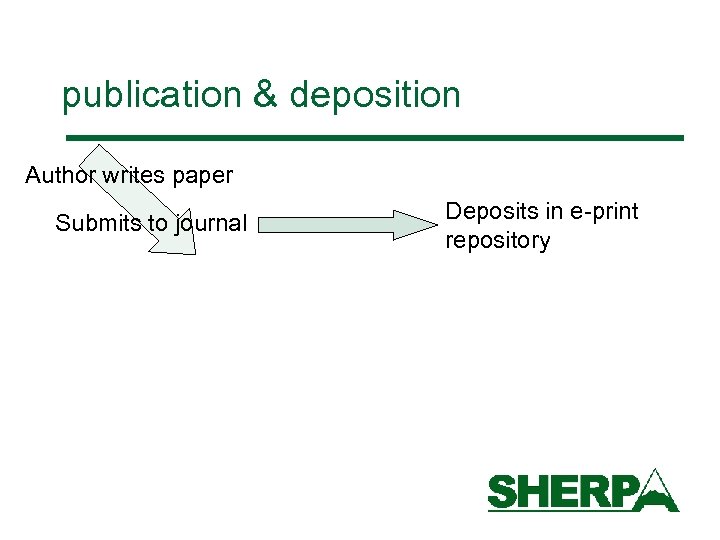 publication & deposition Author writes paper Submits to journal Deposits in e-print repository
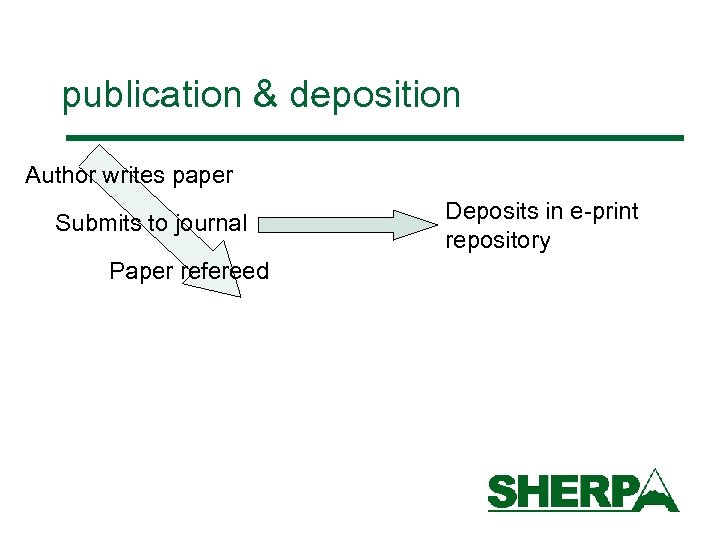 publication & deposition Author writes paper Submits to journal Paper refereed Deposits in e-print repository
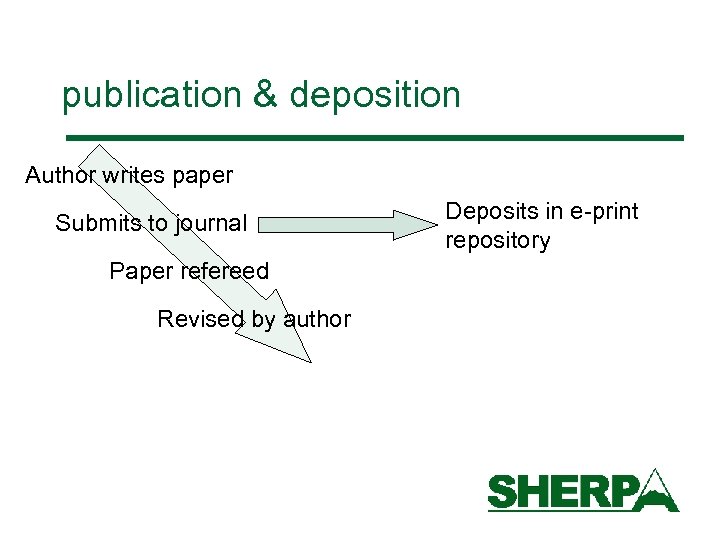 publication & deposition Author writes paper Submits to journal Paper refereed Revised by author Deposits in e-print repository
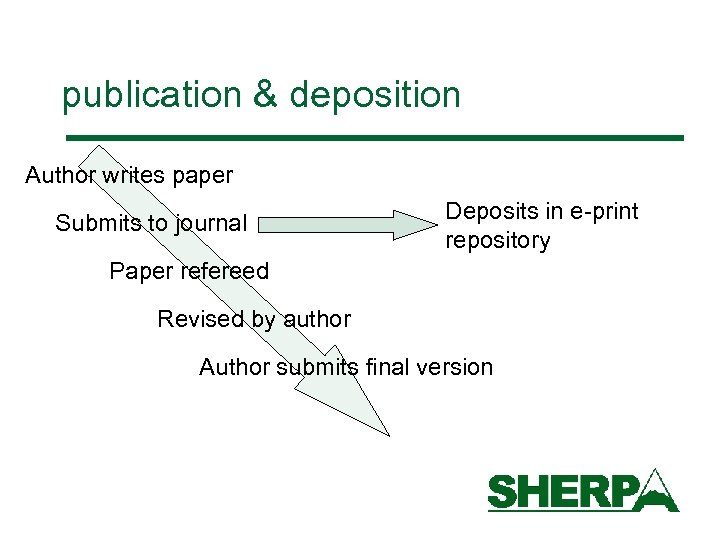 publication & deposition Author writes paper Submits to journal Deposits in e-print repository Paper refereed Revised by author Author submits final version
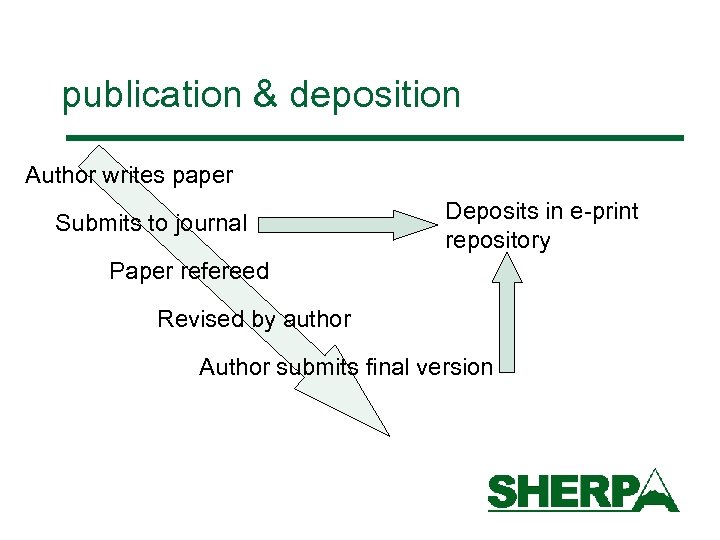 publication & deposition Author writes paper Submits to journal Deposits in e-print repository Paper refereed Revised by author Author submits final version
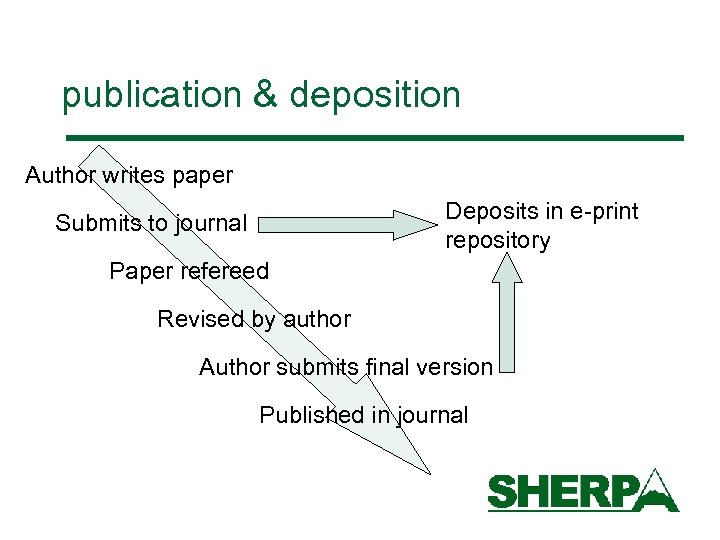 publication & deposition Author writes paper Deposits in e-print repository Submits to journal Paper refereed Revised by author Author submits final version Published in journal
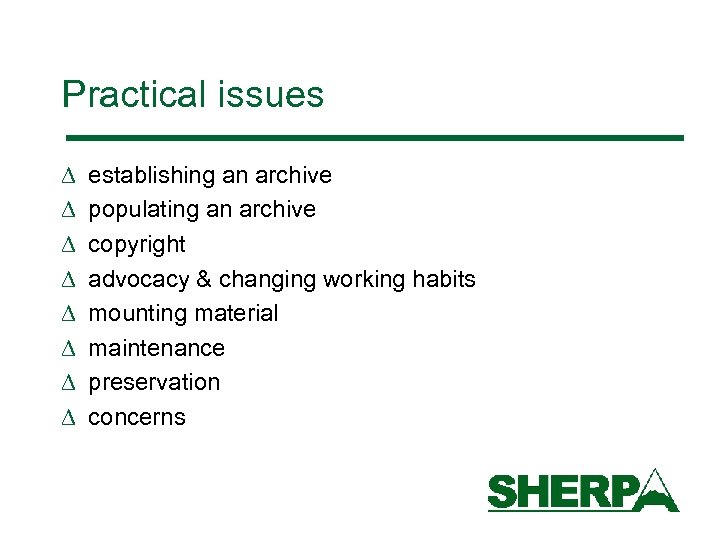 Practical issues D D D D establishing an archive populating an archive copyright advocacy & changing working habits mounting material maintenance preservation concerns
 SHERPA D Securing a Hybrid Environment for Research Preservation and Access D Partner institutions – Birkbeck College, Birmingham, Bristol, Cambridge, Durham, Edinburgh, Glasgow, Imperial College, Kings College, Leeds, LSE, Newcastle, Nottingham, Oxford, Royal Holloway, School of Oriental and African Studies, Sheffield, University College London, York; the British Library and AHDS D www. sherpa. ac. uk
 Practical issues addressed D D D D establishing an archive populating an archive copyright advocacy & changing working habits mounting material maintenance preservation concerns. . .
 Concerns D subject base more natural ? – institutional infrastructure, view by subject D quality control ? – peer-review clearly labelled D version control – which is definitive version - will repositories fill this role? D plagiarism – old problem - and easier to detect D threat to journals? – evidence shows co-existence possible - but in the future. . . ?
 Futures D repositories can work in tandem with – – traditional journals OA journals overlay journals peer-review boards D possibilities to enhance research outputs – multimedia outputs – data sets – developing papers
 A selection of recent progress D D D D Scottish Declaration of Open Access 32 Italian Rectors and the Messina Declaration Austrian Rectors sign the Berlin Declaration Russian Libraries launch the St Petersburg Declaration Wellcome Trust’s repository National Institutes for Health proposal Widespread publicity and support. . . and India, Africa, Australia. . .
 National progress D 18 of 20 repositories in SHERPA are now live: – Birkbeck, Birmingham, Bristol, Cambridge, Durham, Edinburgh, Glasgow, Kings, Leeds, LSE, Nottingham, Oxford, Royal Holloway, SOAS, Sheffield, UCL, York and the British Library D Other institutions are also live: – Bath, Cranfield, Open University, Southampton, St Andrews D Other institutions are planning and installing IBERs D approx. 93% (of Nottingham’s) journals allow their authors to archive
 http: //www. sherpa. ac. uk bill. hubbard@nottingham. ac. uk
 NOTTINGHAM EPRINTS EXAMPLE PAGES
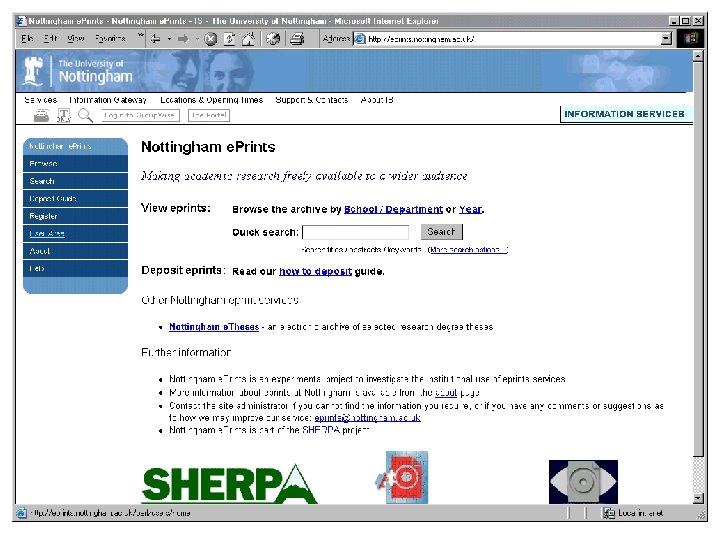 Nottingham eprints - home
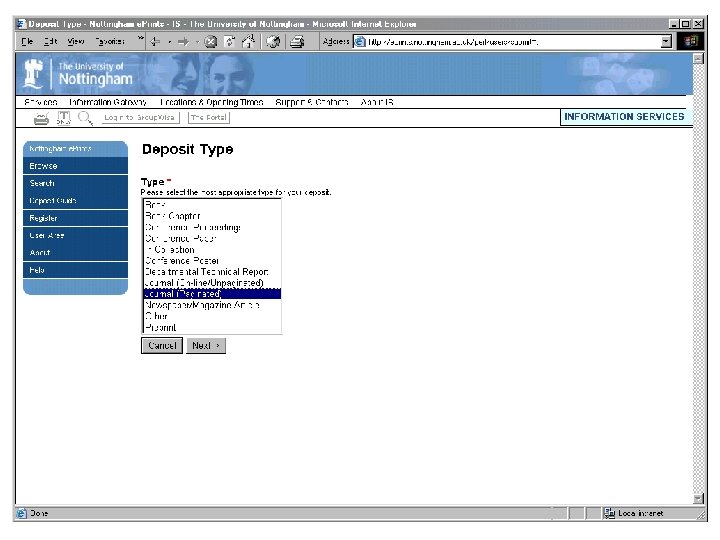 Nottingham eprints - deposit
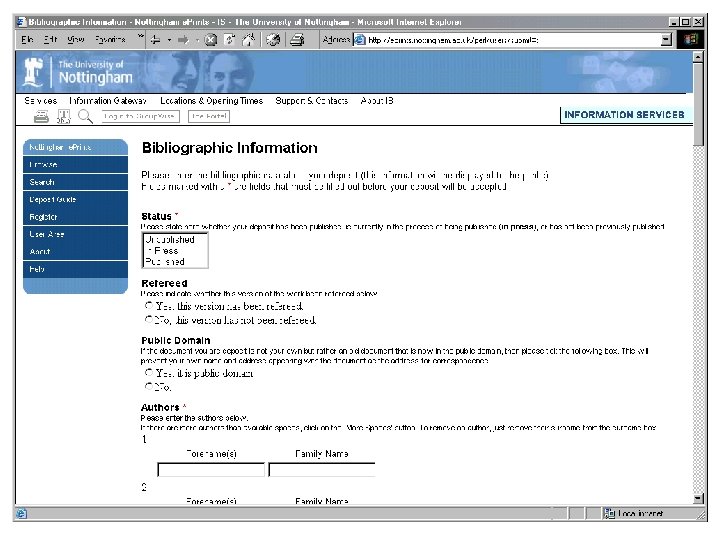 Nottingham eprints - bibliographic
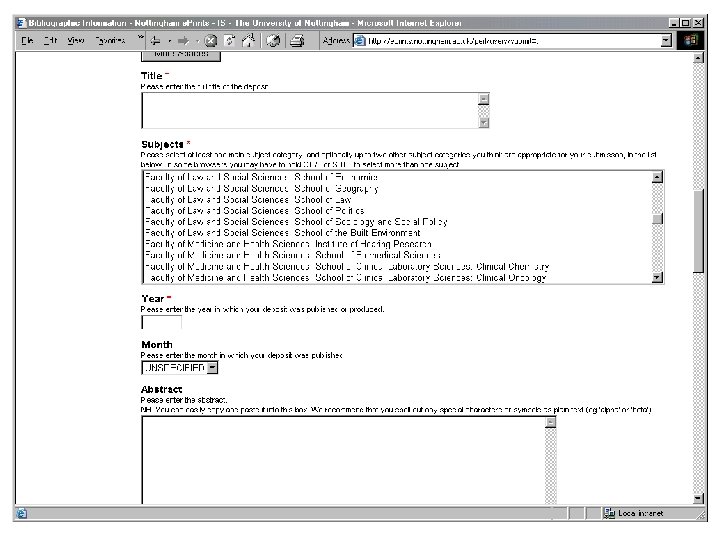 Nottingham eprints - keywords
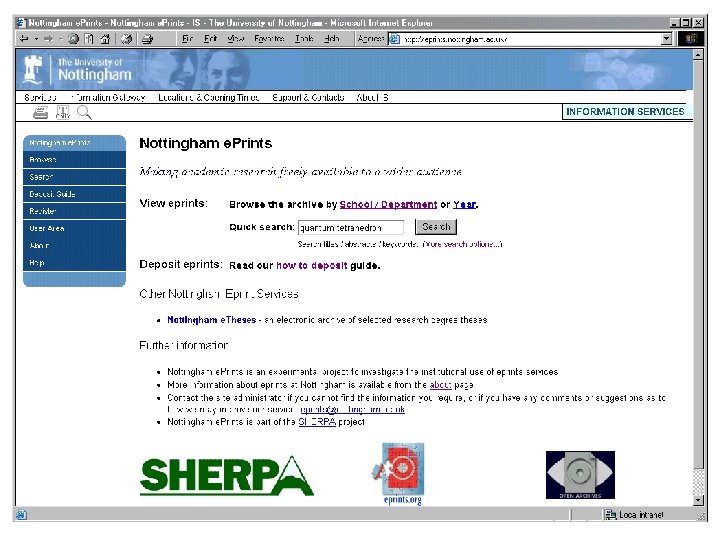 Nottingham eprints - simple search
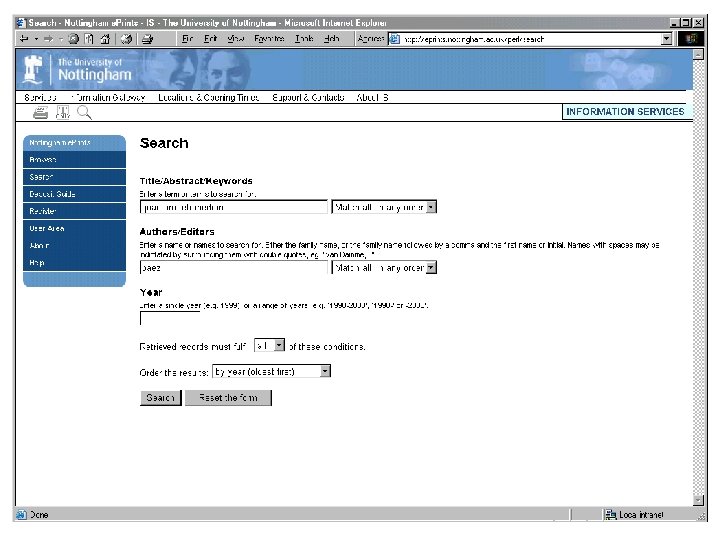 Nottingham eprints - search
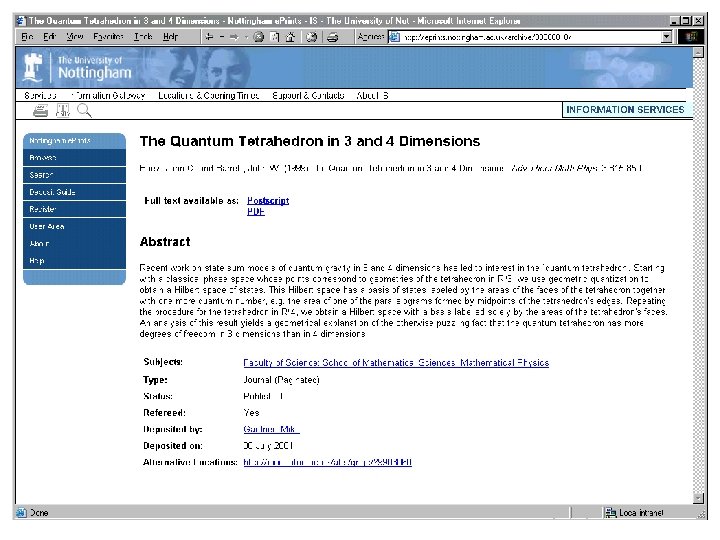 Nottingham eprints - record
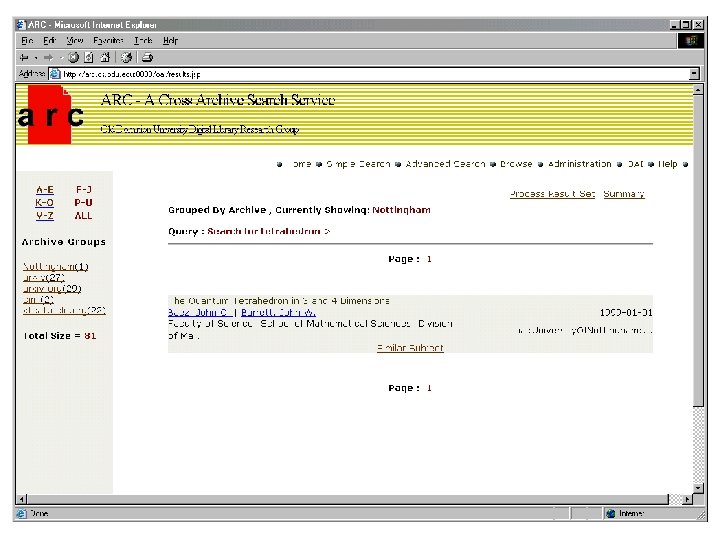 Arc
Arc
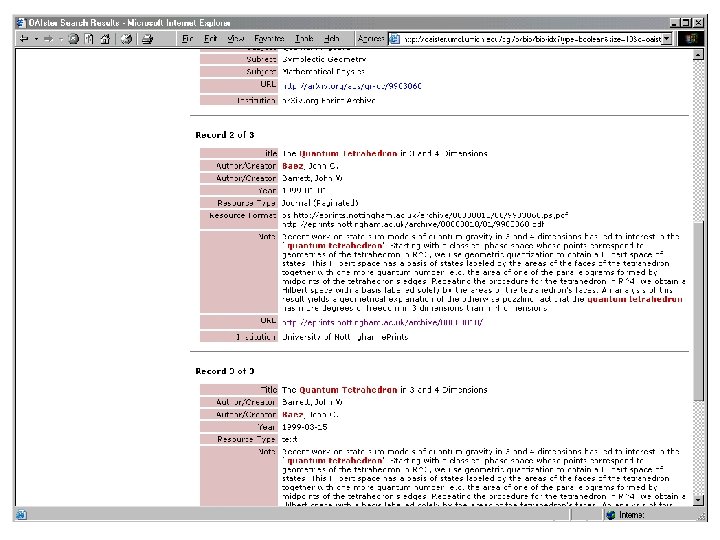 Oaister
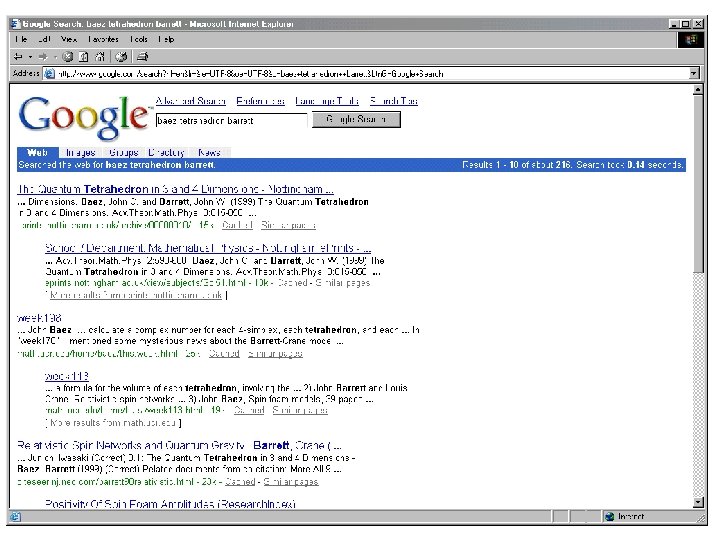 Google search
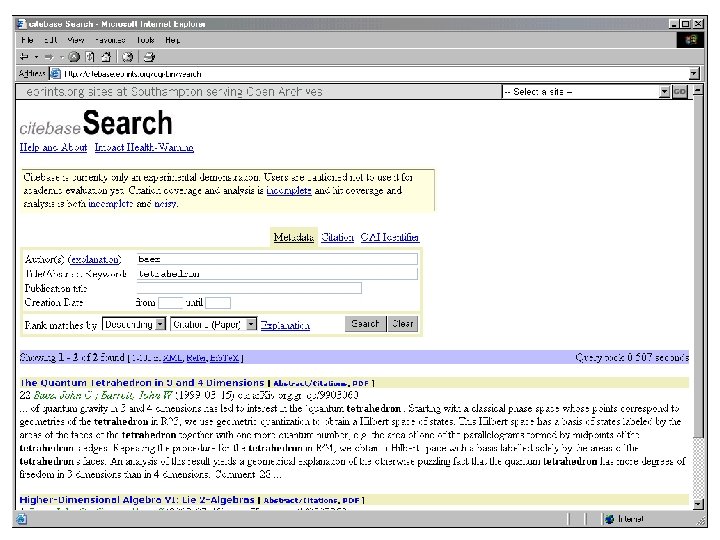 Citebase
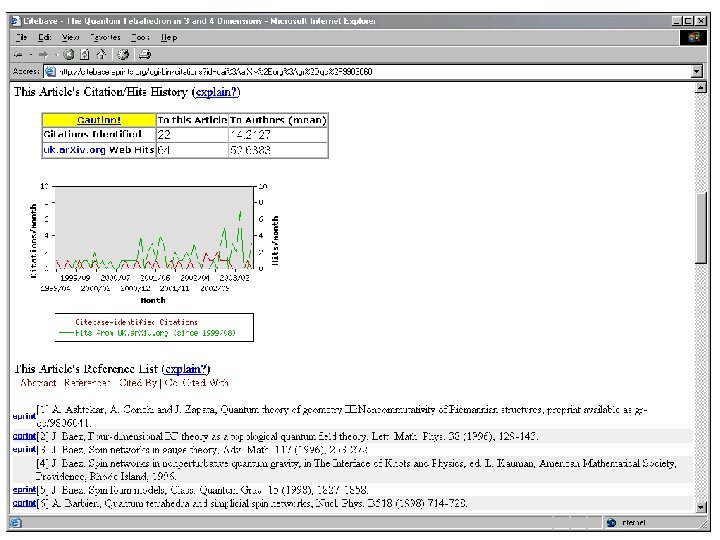 Citebase - citation analysis
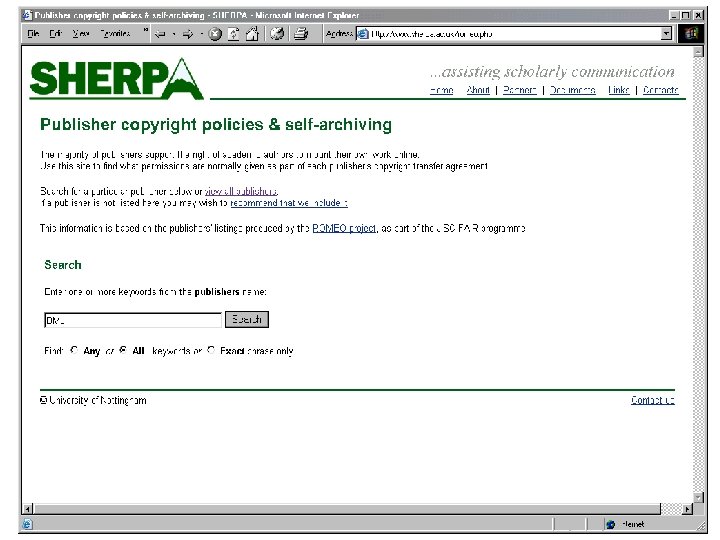
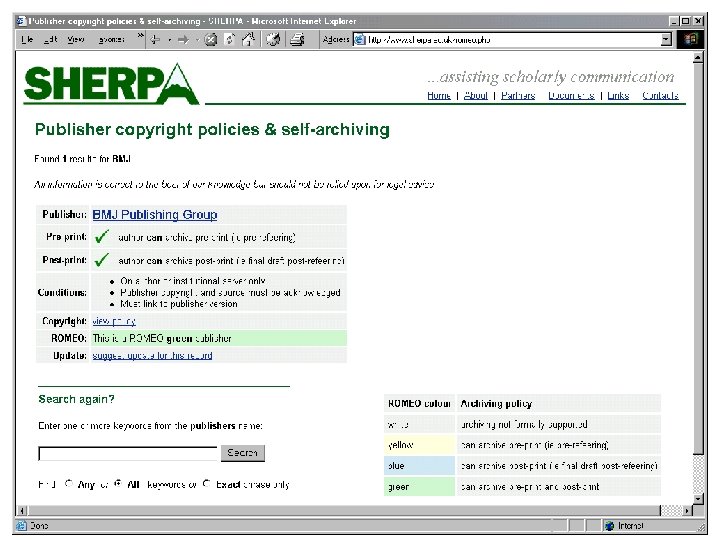
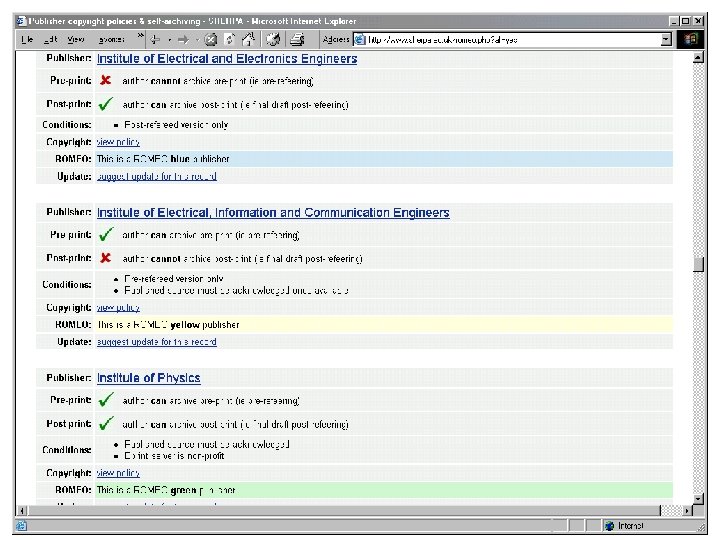
 SHERPA/Ro. MEO SAMPLE PAGES
 SELECT COMMITTEE INQUIRY
 Select Committee Inquiry D House of Commons Science and Technology Committee: – to examine expenditure, administration, and policy of OST – to examine science and technology policy across government D Inquiry into scientific publications - 10 December 2003 D Written evidence: 127 submissions (February 2004) D Oral evidence (March – May 2004) – Commercial publishers, Society publishers, Open access publishers, Librarians, Authors, Government officials D Report published, 20 July 2004 D Government response November 2004
 Outline D Background on the Select Committee Inquiry D Report - Problems – – – Impact and Access barriers Price rises, Big Deal, VAT Competition Digital Preservation Disengagement of academics from process D Report - Solutions – Improving the current system – Institutional repositories – ‘Author-pays’ publishing model
 Solutions D 82 recommendations in three main areas: D Improving the existing system D Institutional repositories D ‘Author pays’ economic model
 Improving the existing system D D D D JISC to develop independent price monitoring JISC to press for transparency on publishers’ costs Office of Fair Trading to monitor market trends Funding bodies to review library budgets VAT problem to be addressed JISC, NHS and HE purchasing consortia JISC to improve licences negotiated with publishers BL to be supported to provide digital preservation
 Changing the system D Principle: D Publicly-funded research should be publicly available
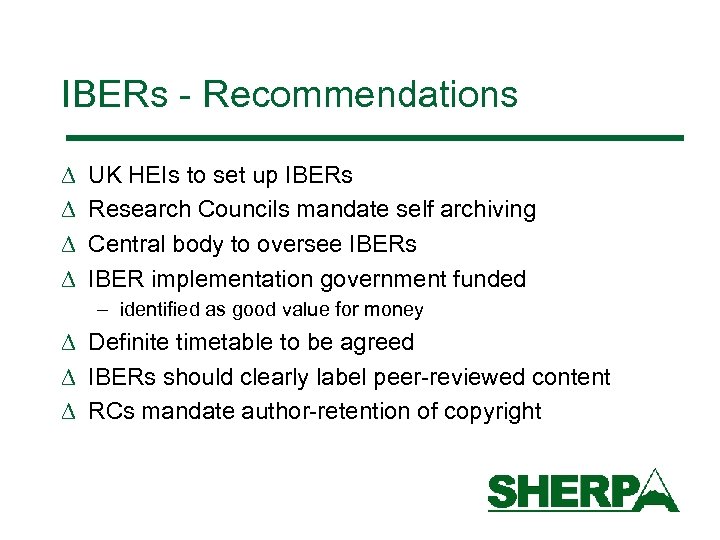 IBERs - Recommendations D D UK HEIs to set up IBERs Research Councils mandate self archiving Central body to oversee IBERs IBER implementation government funded – identified as good value for money D Definite timetable to be agreed D IBERs should clearly label peer-reviewed content D RCs mandate author-retention of copyright
 Further issues D “Joined-up” Government strategy required D International action required
 PROBLEMS
 Latest information D In 2002, Reed Elsevier made adjusted profit before taxation of £ 927 million (€ 1, 474 million) on turnover of £ 5, 020 million (€ 7, 982 million). D “Journal costs soar by up to 94%” (THES, 15 October, 2004, p. 2) D Quoting Loughborough study of 2000 -2004 – – – price increases range from 27% (CUP) to 94% (Sage) median journal prices range from £ 124 (CUP) to £ 781 (Elsevier) Elsevier highest median price in every subject price per page ranged from 31 p (OUP) to 98 p (Taylor and Francis) little relationship between impact factor and price
 Overall. . . D D D Universities generate research output Give it free of charge to publishers Give services to publishers as referees Give services to publishers as editors Have to buy back the results
 Problems with the current system D D D D Limited access to research Limited impact of research Rising journal prices Competition issues ‘Big Deal’ Threat to Learned Society publishers Disengagement of academics
 Open Access D The internet allows world-wide dissemination of information to anyone with a connection, with no restrictions D Academics do not make money from journal articles, but want the widest dissemination and recognition D - so why not put them on the web and just give them away for free?
 OPEN ACRONYMS
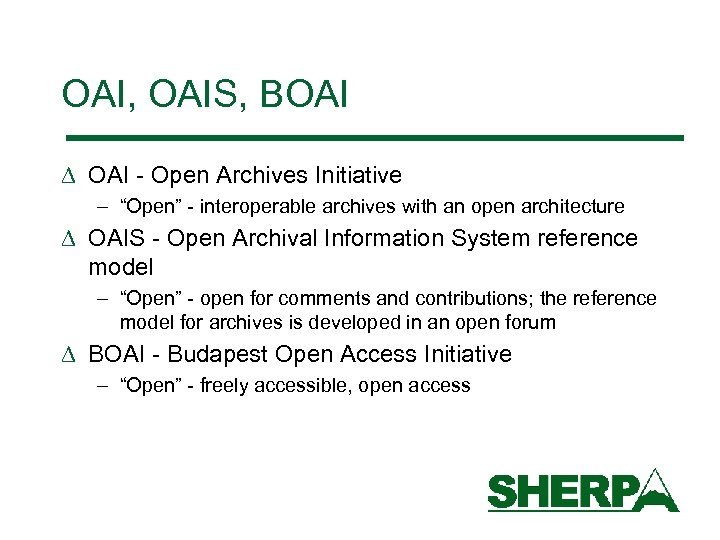 OAI, OAIS, BOAI D OAI - Open Archives Initiative – “Open” - interoperable archives with an open architecture D OAIS - Open Archival Information System reference model – “Open” - open for comments and contributions; the reference model for archives is developed in an open forum D BOAI - Budapest Open Access Initiative – “Open” - freely accessible, open access