


 Скачать презентацию Institute of Occupational Safety and Health Safety Training
efd5a9f543f7388b38fde43e70f31877.ppt
- Количество слайдов: 25
 Institute of Occupational Safety and Health Safety Training Presentations Lightning Safety Awareness
 FY-11 OSHA Susan Harwood Grant Program This material was produced under grant number SH 22297 -SH 1 from OSHA. It does not necessarily reflect the views or policies of the U. S. Department of Labor, nor does mention of trade names, commercial products, or organizations imply endorsement by the U. S. Government.
 Objectives: Participants will: l l Define facts associated with lightning Describe ways lightning can kill Illustrate how to protect yourself and co-workers against lightning hazards Analyze and discuss case studies
 Lightning Facts l l l Lightning is a real risk; an average of ten deaths and forty injuries from lightning occur in Florida each year. 9 out of 10 people struck do survive the event; 100 people killed in US/year 25% of the survivors have long-term psychological or physiological trauma The under-rated killer
 Lightning Facts l Lightning strikes earth a 100 times each second l Average flash will light a 100 watt bulb for 3 months l Lightning is the second largest killer due to storms, exceeded only by floods l Some areas are struck by lightning more often than others. Florida's “Lightning Alley” is a prime example.
 Lightning Facts l Heat exceeds 50, 000 degrees F (3 times hotter than the surface of the sun); 90, 000 miles/second; bolt is 1 -2 in wide l Thunder (shock wave created by super heated air in the lightning channel) is always associated with lightning
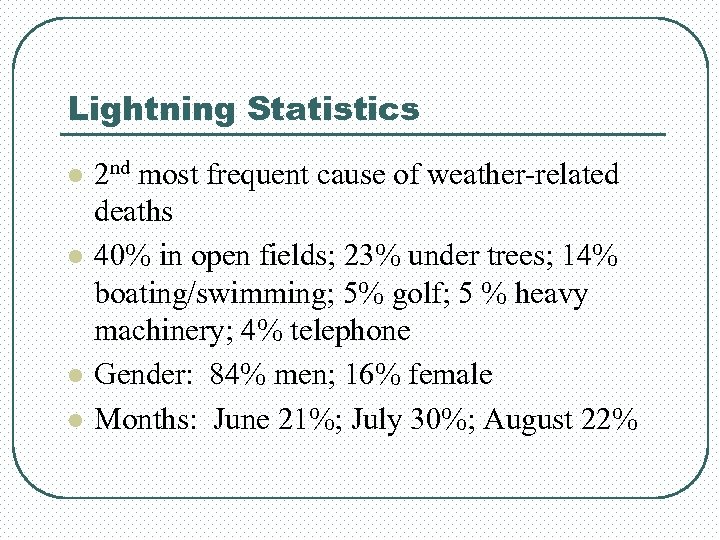 Lightning Statistics l l 2 nd most frequent cause of weather-related deaths 40% in open fields; 23% under trees; 14% boating/swimming; 5% golf; 5 % heavy machinery; 4% telephone Gender: 84% men; 16% female Months: June 21%; July 30%; August 22%
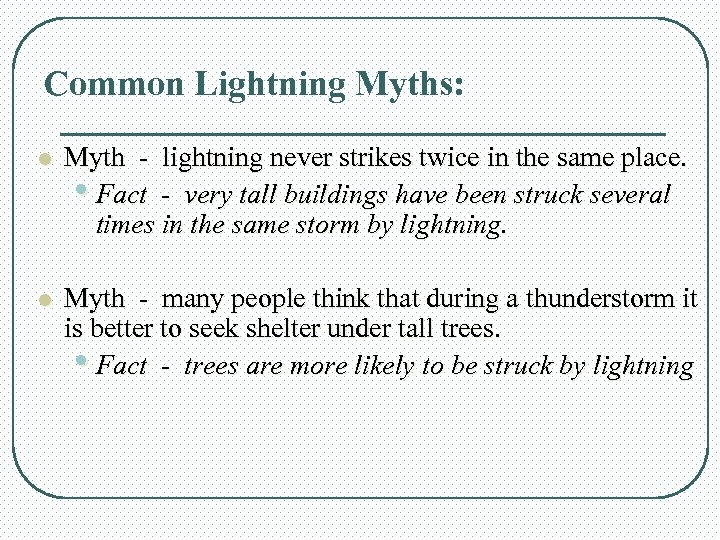 Common Lightning Myths: l Myth - lightning never strikes twice in the same place. • Fact - very tall buildings have been struck several times in the same storm by lightning. l Myth - many people think that during a thunderstorm it is better to seek shelter under tall trees. • Fact - trees are more likely to be struck by lightning
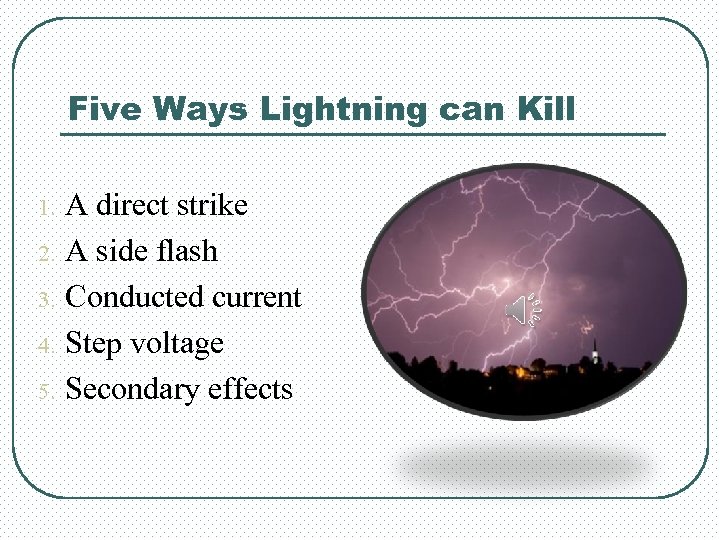 Five Ways Lightning can Kill 1. 2. 3. 4. 5. A direct strike A side flash Conducted current Step voltage Secondary effects
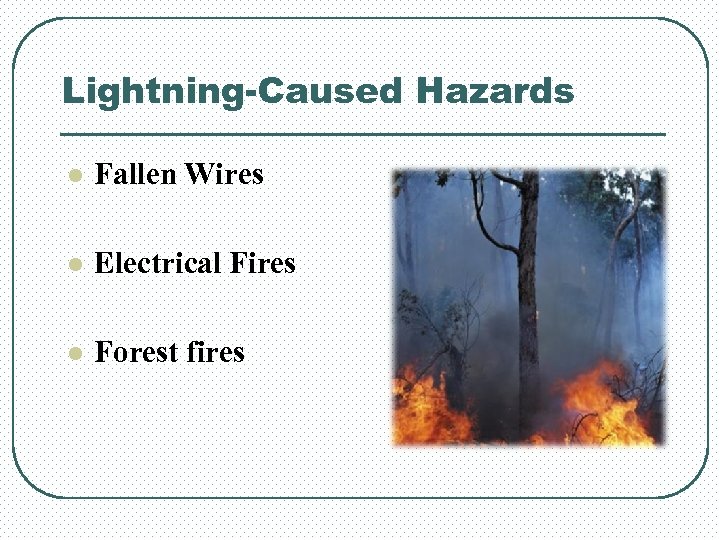 Lightning-Caused Hazards l Fallen Wires l Electrical Fires l Forest fires
 Safety Measures l l Have a plan Postpone activities Sensitive electronics should be unplugged Keep away from electrical equipment, wiring and water pipes
 Outdoor Worker Safety Measures l l Plan in advance your evacuation/safety measures (look for dark clouds and increased wind and/or you hear thunder) Avoid water, high ground, open spaces, metal objects; find shelter in a substantial building • Primary source of shelter • Facility with plumbing • Secondary source of shelter • Vehicle
 Outdoor Worker Safety Measures l Avoid: OPEN AREAS such as fields, construction sites, recreation areas WATER such as ocean, lakes, swimming pools, rivers HIGH PLACES TREES SMALL OPEN STRUCTURES such as bus stops, rain shelters, picnic shelters, dugouts, gazebos TALL STRUCTURES such as communications towers, flag or light poles
 Outdoor Worker Preventive Measures l Avoid: • BLEACHERS (metal or wood) METAL FENCES OR METAL OBJECTS such as carts, agricultural or construction equipment, golf carts, telephone lines or power lines, pipelines, or steel fabrications LEANING AGAINST CARS OR METAL OBJECTS, GET OFF OF BICYCLES AND MOTORCYCLES HOLDING METAL OBJECTS such as fishing rods, golf clubs, ski poles, tennis rackets, tools
 Outdoor Worker Safety Measures l Check Weather channel or NOAA weather radio (at the jobsite—especially in summer months) l Safe shelters include: fully enclosed metal vehicles with windows up, large permanent buildings, low ground l Unsafe areas include: near flag poles, fences, light poles, trees, open fields, golf carts, picnic pavilions, bus stops
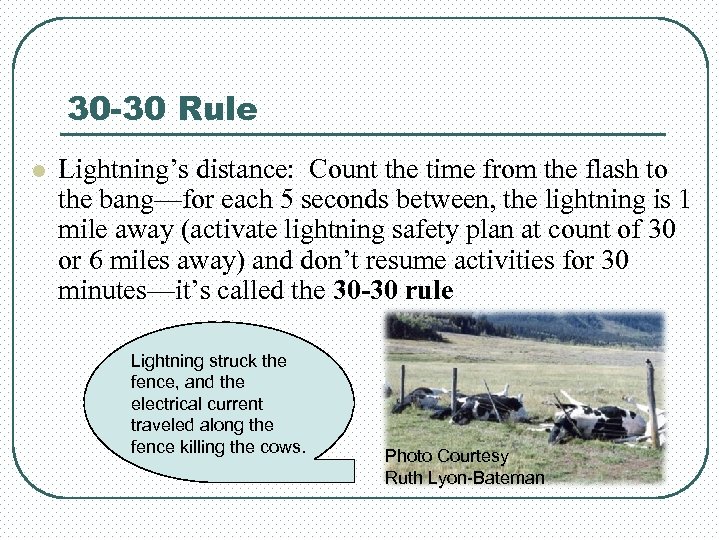 30 -30 Rule l Lightning’s distance: Count the time from the flash to the bang—for each 5 seconds between, the lightning is 1 mile away (activate lightning safety plan at count of 30 or 6 miles away) and don’t resume activities for 30 minutes—it’s called the 30 -30 rule Lightning struck the fence, and the electrical current traveled along the fence killing the cows. Photo Courtesy Ruth Lyon-Bateman
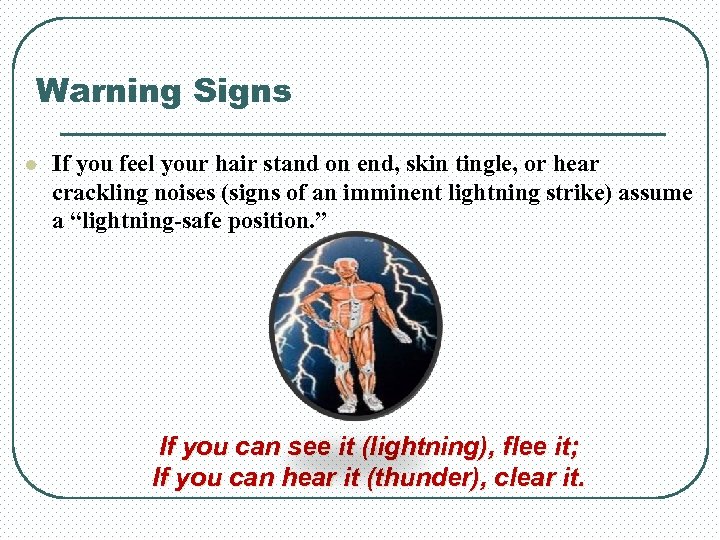 Warning Signs l If you feel your hair stand on end, skin tingle, or hear crackling noises (signs of an imminent lightning strike) assume a “lightning-safe position. ” If you can see it (lightning), flee it; If you can hear it (thunder), clear it.
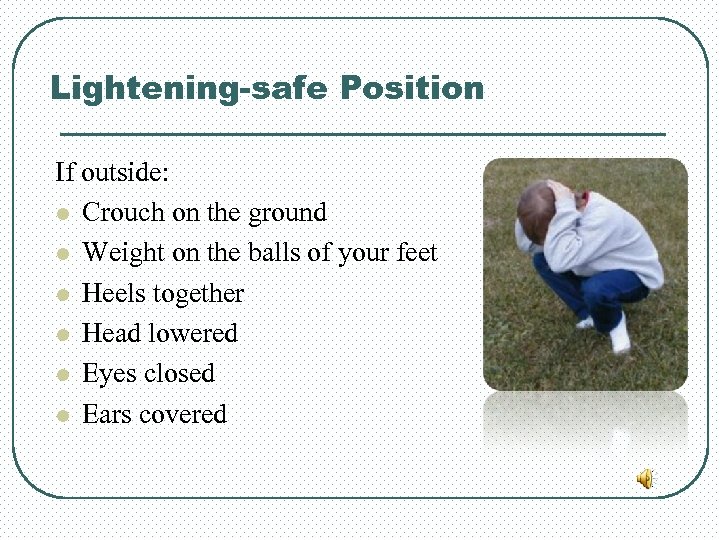 Lightening-safe Position If outside: l Crouch on the ground l Weight on the balls of your feet l Heels together l Head lowered l Eyes closed l Ears covered
 First aid for Lightning Victims l Injured persons do not carry an electrical charge; apply first-aid (if trained) & call 911 • Administer first aid as quick as possible • If unconscious: Check breathing and pulse • Person has a pulse, but not breathing: Begin CPR • Check for other injuries • Most die from heart attacks/stop breathing
 First Aid for Lightning Victims l If not CPR qualified: • Call EMS immediately • Keep them calm • Stay with them until help arrives When Thunder Roars, Go Indoors!
 Survivor Stories • • Working on a dock Installing plumbing inside house 911 dispatcher on duty in Southern Florida Inside his garage, repairing the exhaust system of his car • Hit while on cell phone attached by a cord to a charger. l http: //www. lightningsafety. noaa. gov/survivors. htm
 OSHA Resources l OSHA has many helpful programs, including assistance about safety and health programs, state plans, workplace consultations, voluntary protection programs, strategic partnerships, training and education, and more.
 Summary l l l Understand the basics of lightning Discuss lightning injury preventative measures Discuss immediate actions to assist lightning strike victims
 OSHA Contact Numbers To report Unsafe Working Conditions, Safety and Health Violations Contact OSHA @: 1 -800 -321 -OSHA (6742) / TTY 1 -877 -889 -5627 To File a Complaint Form: To file an OSHA-7 report online, see how to file a complaint with OSHA (www. osha. gov) For more information regarding your rights, see Worker Rights
 References ELCOSH Lightning Safety. Retrieved from: http: //www. elcosh. org/en/document/143/d 000149/ lightning-safety. html National Weather Service: Retrieved from: http: //www. lightningsafety. noaa. gov/myths. htm