Скачать презентацию Institute for Plasma Research India OUTLINE
d2af3fe227b231dc52b8f99cbca541fa.ppt
- Количество слайдов: 37
 Institute for Plasma Research, India OUTLINE : • Past work on ADITYA and proposal for joining ITPA experiments • Data analysis of ITPA work on other tokamaks • SST-1 tokamak, engineering commissioning experience and present status
 Past work on ADITYA and proposal for joining ITPA experiments
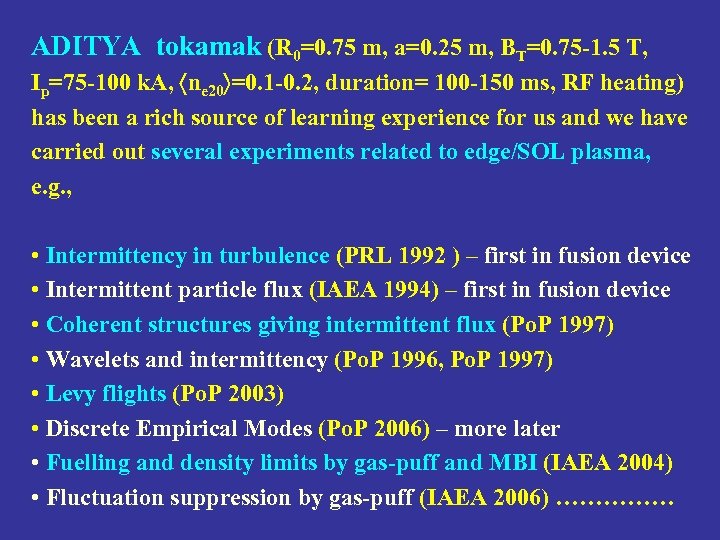 ADITYA tokamak (R 0=0. 75 m, a=0. 25 m, BT=0. 75 -1. 5 T, Ip=75 -100 k. A, ne 20 =0. 1 -0. 2, duration= 100 -150 ms, RF heating) has been a rich source of learning experience for us and we have carried out several experiments related to edge/SOL plasma, e. g. , • Intermittency in turbulence (PRL 1992 ) – first in fusion device • Intermittent particle flux (IAEA 1994) – first in fusion device • Coherent structures giving intermittent flux (Po. P 1997) • Wavelets and intermittency (Po. P 1996, Po. P 1997) • Levy flights (Po. P 2003) • Discrete Empirical Modes (Po. P 2006) – more later • Fuelling and density limits by gas-puff and MBI (IAEA 2004) • Fluctuation suppression by gas-puff (IAEA 2006) ……………
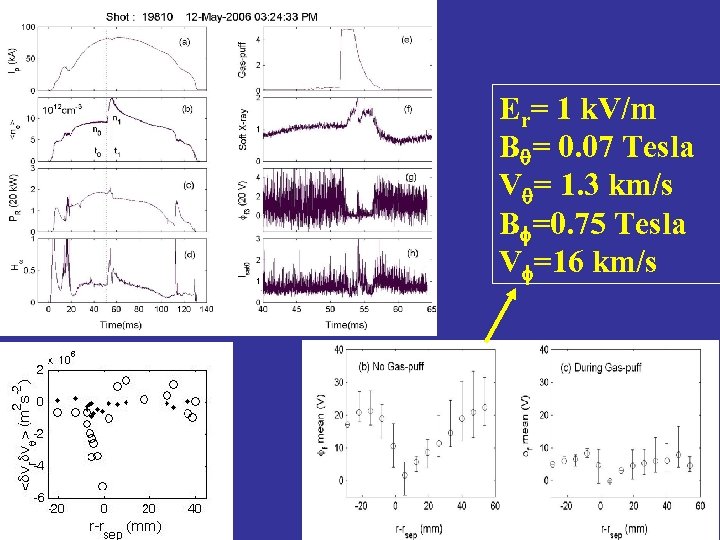 Er= 1 k. V/m B = 0. 07 Tesla V = 1. 3 km/s B =0. 75 Tesla V =16 km/s
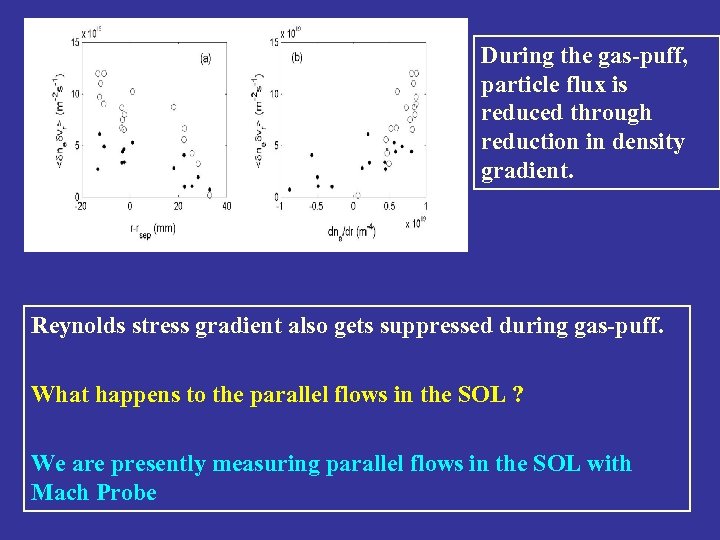 During the gas-puff, particle flux is reduced through reduction in density gradient. Reynolds stress gradient also gets suppressed during gas-puff. What happens to the parallel flows in the SOL ? We are presently measuring parallel flows in the SOL with Mach Probe
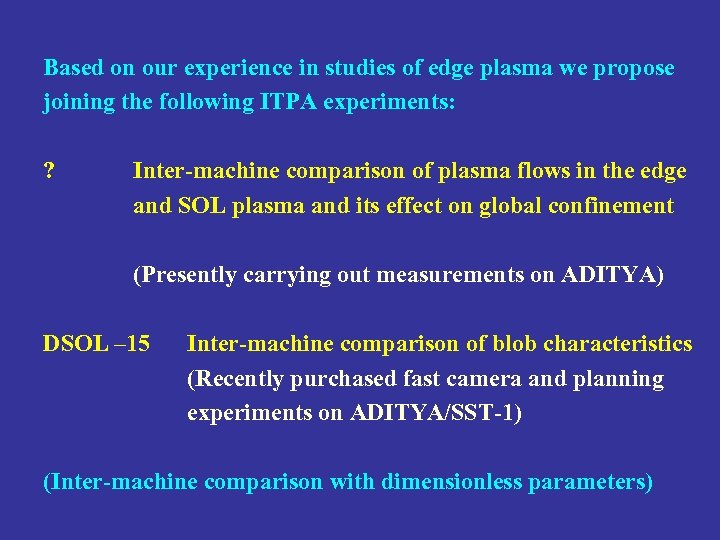 Based on our experience in studies of edge plasma we propose joining the following ITPA experiments: ? Inter-machine comparison of plasma flows in the edge and SOL plasma and its effect on global confinement (Presently carrying out measurements on ADITYA) DSOL – 15 Inter-machine comparison of blob characteristics (Recently purchased fast camera and planning experiments on ADITYA/SST-1) (Inter-machine comparison with dimensionless parameters)
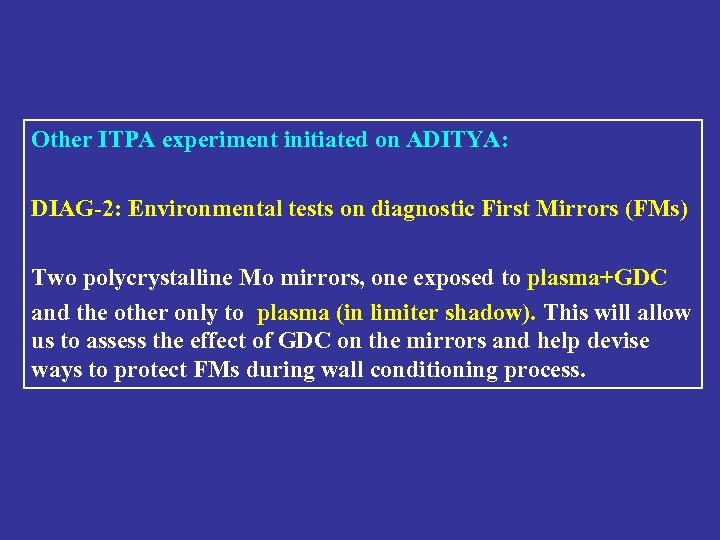 Other ITPA experiment initiated on ADITYA: DIAG-2: Environmental tests on diagnostic First Mirrors (FMs) Two polycrystalline Mo mirrors, one exposed to plasma+GDC and the other only to plasma (in limiter shadow). This will allow us to assess the effect of GDC on the mirrors and help devise ways to protect FMs during wall conditioning process.
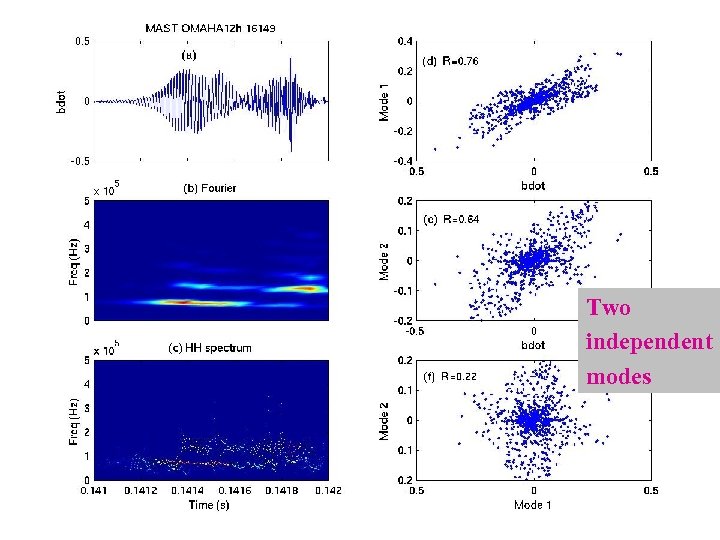
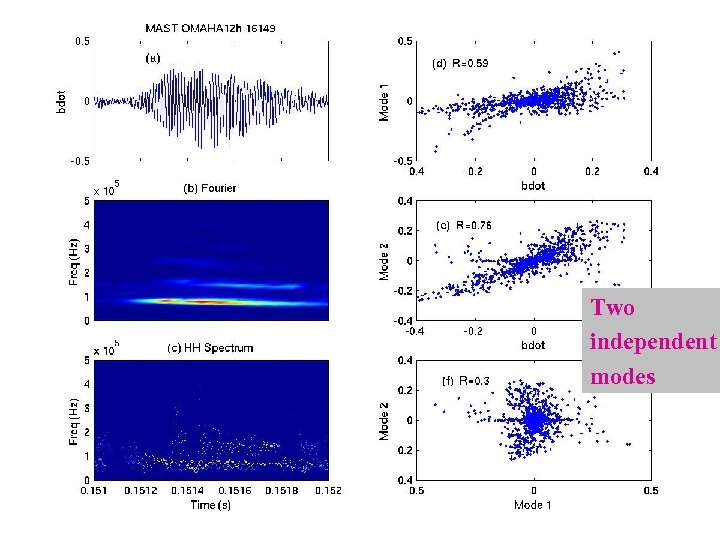
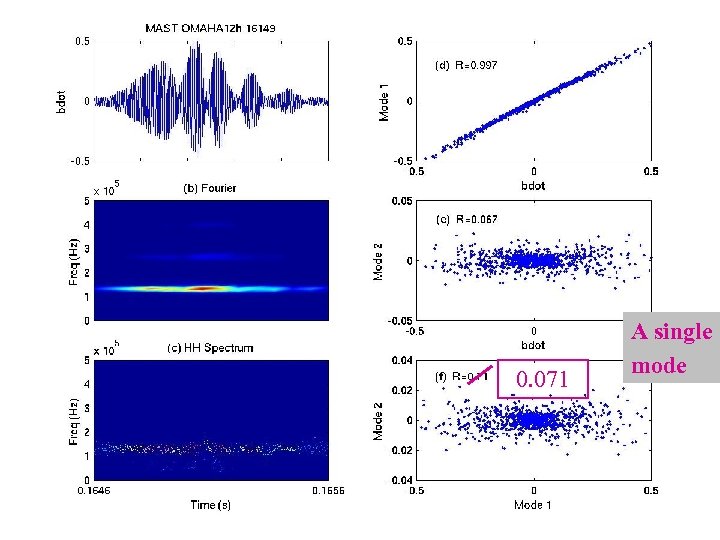
 ITPA work through other tokamaks We have recently introduced a novel technique based on Empirical Mode Decomposition and Hilbert transform that can detect physically relevant modes from a time-series along with its instantaneous frequency content. [Phys. Plasmas 13, 82507 (2006)] We are applying this technique on two ITPA experiment data : MAST Mirnov coil data - (with Mikhail Gryaznevich) MDC-11 TJ-II fast camera images – (with Carlos Hidalgo) DSOL -15
 MDC-11 Fast ions losses and redistribution from localized Alfven Eigenmodes (AEs) Collaborator: Mikhail Gryaznevich (MAST/ JET) Analyzed MAST coil data in discharges with NBI heating (AEs). Our analysis shows two independent AEs as against one that is theoretically expected. The modes are not harmonics as they were believed earlier. Sometimes a single mode is also observed and we need to understand critical conditions required for two modes.
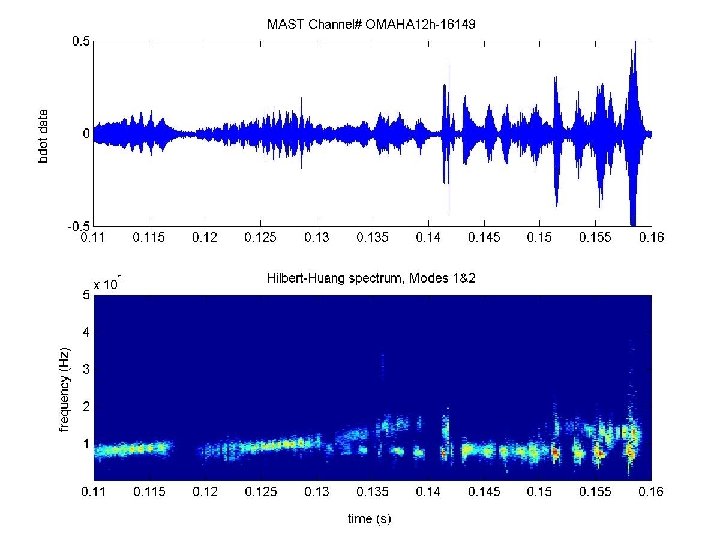
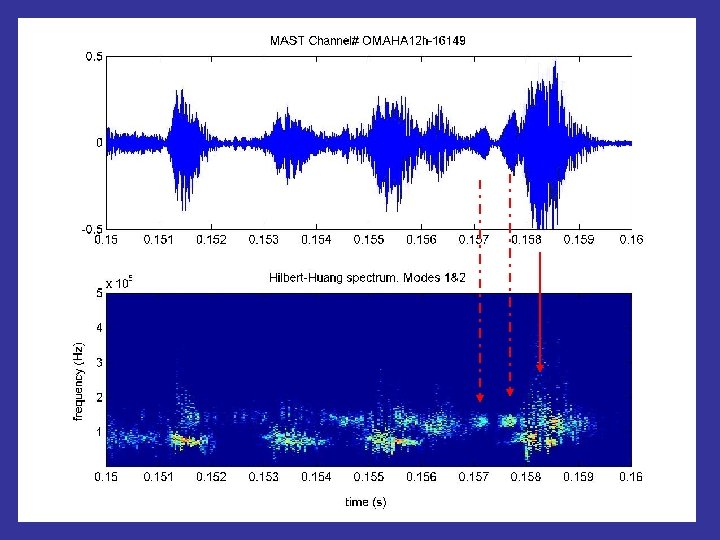
 Two independent modes
 Two independent modes
 0. 071 A single mode
 Summary of data analysis of ITPA on other tokamaks MDC-11: On MAST data, we need further analysis to understand the critical conditions required for one or two AEs. Appropriate datasets are being selected and we shall analyze them in coming months. Similar studies on other tokamaks ? DSOL-15: Analysis of TJ-II images require developing or implementing Bi-directional EMD (in space and time). Such developments are already taking place in literature– need some time to learn.
 SST-1 tokamak, engineering commissioning experience and present status
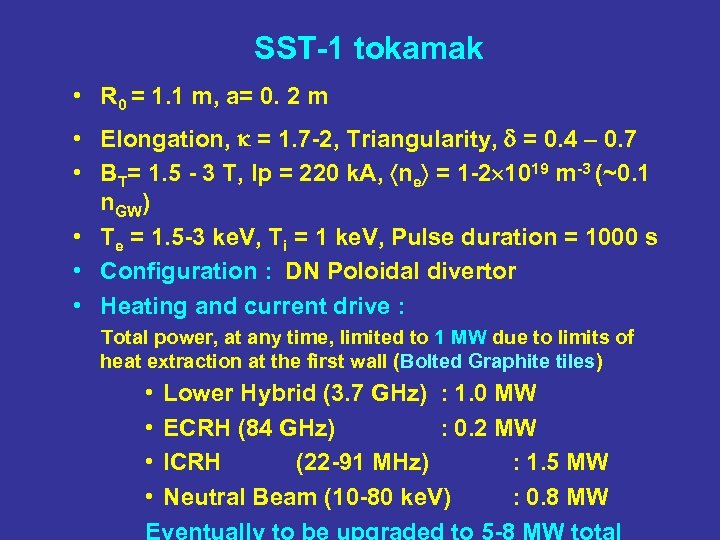 SST-1 tokamak • R 0 = 1. 1 m, a= 0. 2 m • Elongation, = 1. 7 -2, Triangularity, = 0. 4 – 0. 7 • BT= 1. 5 - 3 T, Ip = 220 k. A, ne = 1 -2 1019 m-3 (~0. 1 n. GW) • Te = 1. 5 -3 ke. V, Ti = 1 ke. V, Pulse duration = 1000 s • Configuration : DN Poloidal divertor • Heating and current drive : Total power, at any time, limited to 1 MW due to limits of heat extraction at the first wall (Bolted Graphite tiles) • Lower Hybrid (3. 7 GHz) : 1. 0 MW • ECRH (84 GHz) : 0. 2 MW • ICRH (22 -91 MHz) : 1. 5 MW • Neutral Beam (10 -80 ke. V) : 0. 8 MW Eventually to be upgraded to 5 -8 MW total
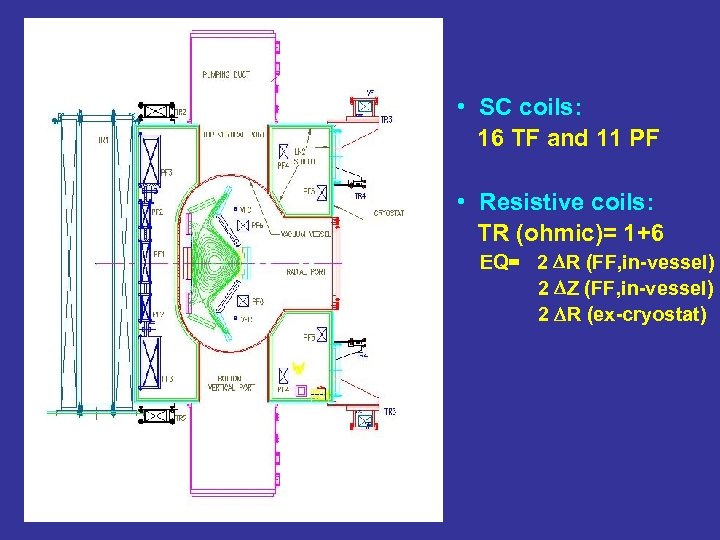 • SC coils: 16 TF and 11 PF • Resistive coils: TR (ohmic)= 1+6 EQ= 2 R (FF, in-vessel) 2 Z (FF, in-vessel) 2 R (ex-cryostat)
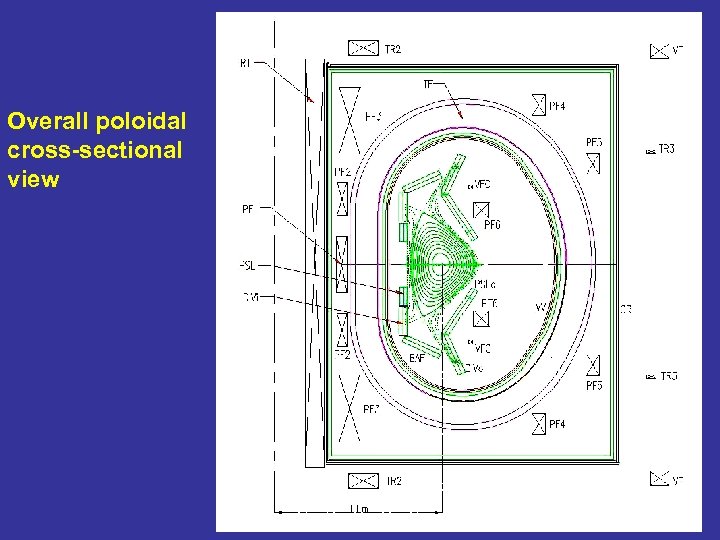 Overall poloidal cross-sectional view
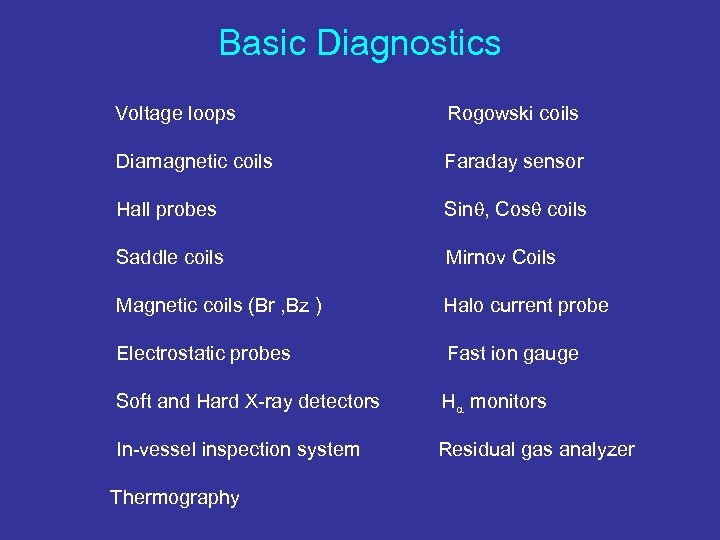 Basic Diagnostics Voltage loops Rogowski coils Diamagnetic coils Faraday sensor Hall probes Sin , Cos coils Saddle coils Mirnov Coils Magnetic coils (Br , Bz ) Halo current probe Electrostatic probes Fast ion gauge Soft and Hard X-ray detectors H monitors In-vessel inspection system Residual gas analyzer Thermography
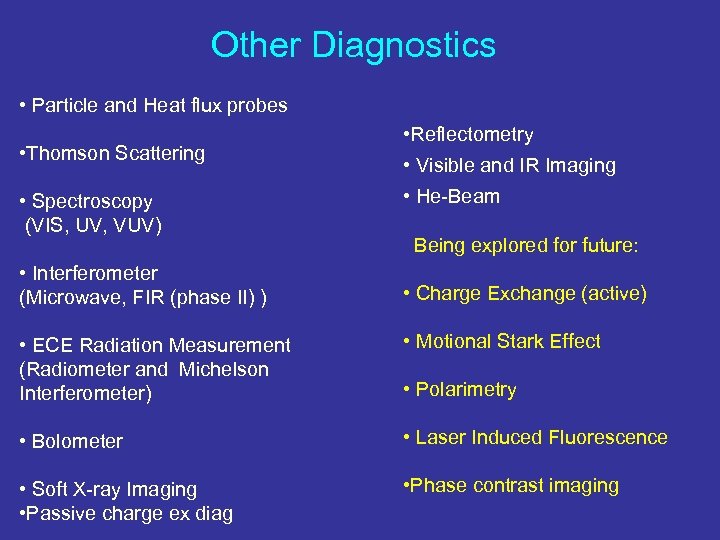 Other Diagnostics • Particle and Heat flux probes • Thomson Scattering • Spectroscopy (VIS, UV, VUV) • Interferometer (Microwave, FIR (phase II) ) • Reflectometry • Visible and IR Imaging • He-Beam Being explored for future: • Charge Exchange (active) • ECE Radiation Measurement (Radiometer and Michelson Interferometer) • Motional Stark Effect • Bolometer • Laser Induced Fluorescence • Soft X-ray Imaging • Passive charge ex diag • Phase contrast imaging • Polarimetry
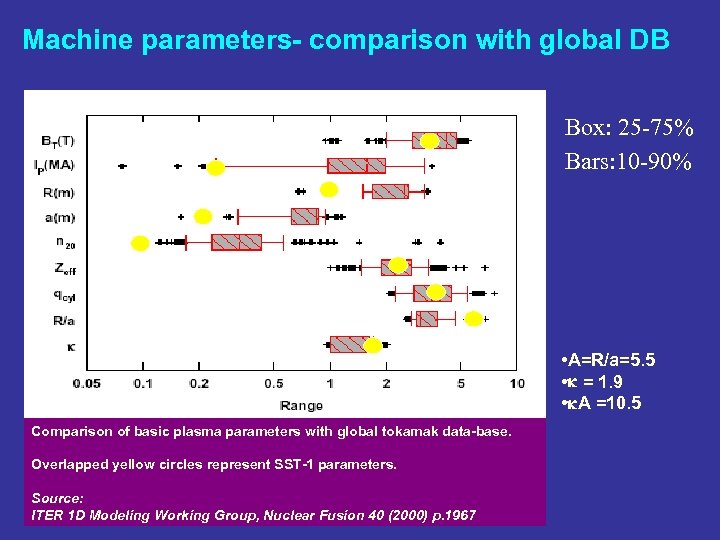 Machine parameters- comparison with global DB Box: 25 -75% Bars: 10 -90% • A=R/a=5. 5 • = 1. 9 • A =10. 5 Comparison of basic plasma parameters with global tokamak data-base. Overlapped yellow circles represent SST-1 parameters. Source: ITER 1 D Modeling Working Group, Nuclear Fusion 40 (2000) p. 1967
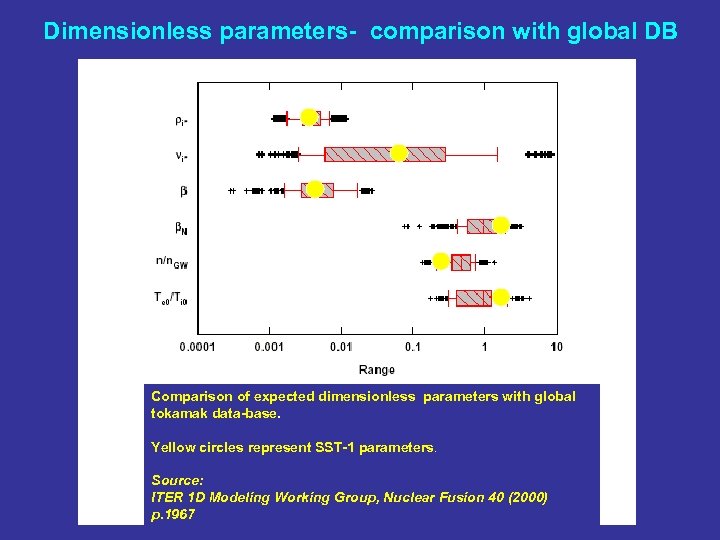 Dimensionless parameters- comparison with global DB Comparison of expected dimensionless parameters with global tokamak data-base. Yellow circles represent SST-1 parameters. Source: ITER 1 D Modeling Working Group, Nuclear Fusion 40 (2000) p. 1967
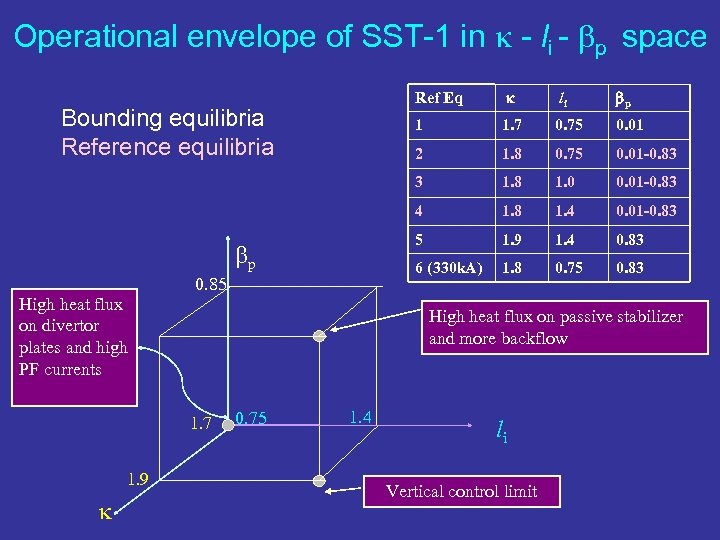 Operational envelope of SST-1 in - li - p space Ref Eq 0. 01 1. 8 0. 75 0. 01 -0. 83 1. 8 1. 0 0. 01 -0. 83 1. 8 1. 4 0. 01 -0. 83 5 1. 9 1. 4 0. 83 6 (330 k. A) 1. 8 0. 75 0. 83 High heat flux on passive stabilizer and more backflow 1. 7 1. 9 0. 75 4 High heat flux on divertor plates and high PF currents 1. 7 3 0. 85 p 2 p li 1 Bounding equilibria Reference equilibria 0. 75 1. 4 li Vertical control limit
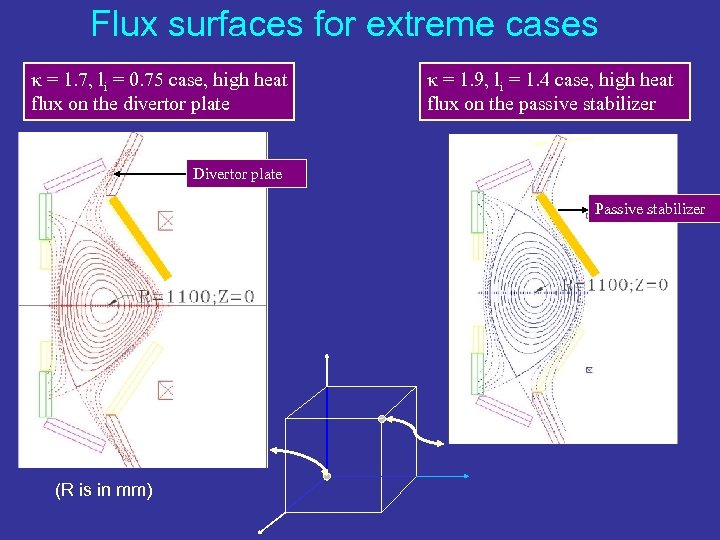 Flux surfaces for extreme cases = 1. 7, li = 0. 75 case, high heat flux on the divertor plate = 1. 9, li = 1. 4 case, high heat flux on the passive stabilizer Divertor plate Passive stabilizer (R is in mm)
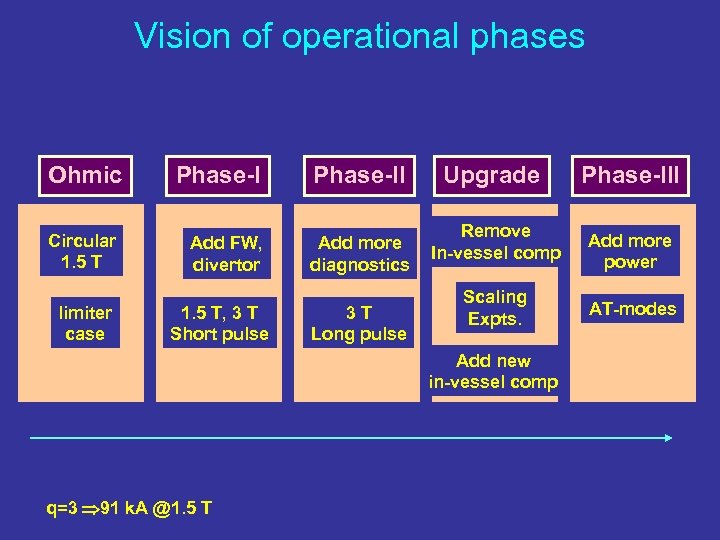 Vision of operational phases Ohmic Circular 1. 5 T limiter case Phase-II Add FW, divertor Add more diagnostics 1. 5 T, 3 T Short pulse 3 T Long pulse Upgrade Remove In-vessel comp Scaling Expts. Add new in-vessel comp q=3 91 k. A @1. 5 T Phase-III Add more power AT-modes
 Experience of engineering commissioning and Present status
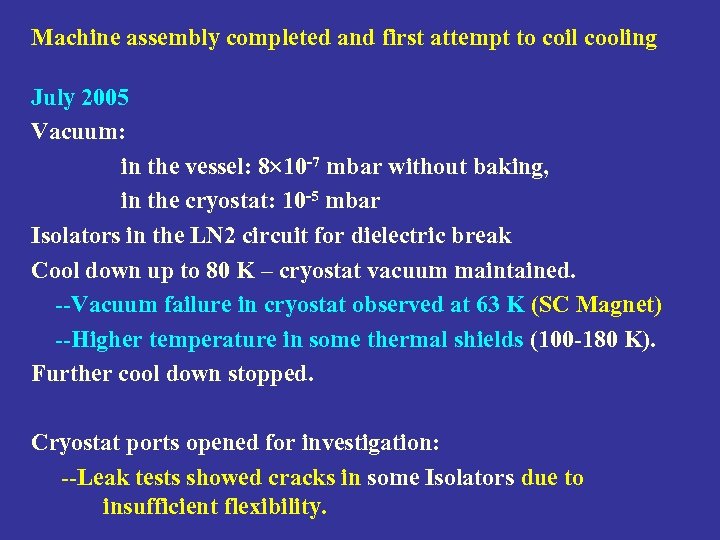 Machine assembly completed and first attempt to coil cooling July 2005 Vacuum: in the vessel: 8 10 -7 mbar without baking, in the cryostat: 10 -5 mbar Isolators in the LN 2 circuit for dielectric break Cool down up to 80 K – cryostat vacuum maintained. --Vacuum failure in cryostat observed at 63 K (SC Magnet) --Higher temperature in some thermal shields (100 -180 K). Further cool down stopped. Cryostat ports opened for investigation: --Leak tests showed cracks in some Isolators due to insufficient flexibility.
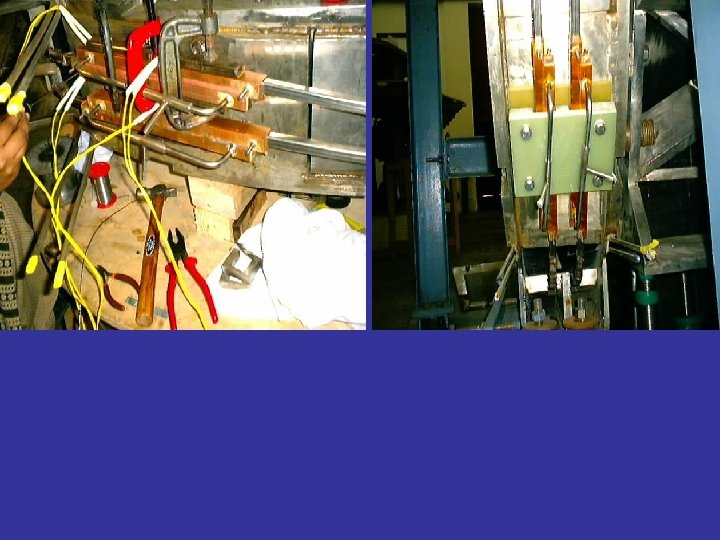
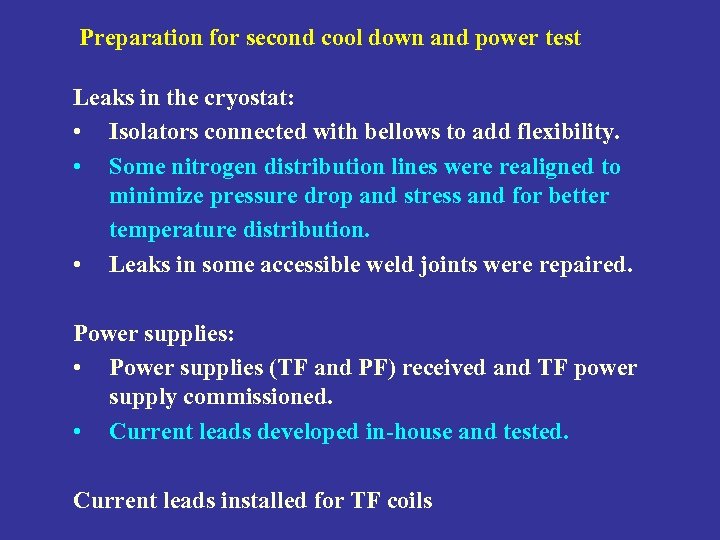 Preparation for second cool down and power test Leaks in the cryostat: • Isolators connected with bellows to add flexibility. • Some nitrogen distribution lines were realigned to minimize pressure drop and stress and for better temperature distribution. • Leaks in some accessible weld joints were repaired. Power supplies: • Power supplies (TF and PF) received and TF power supply commissioned. • Current leads developed in-house and tested. Current leads installed for TF coils
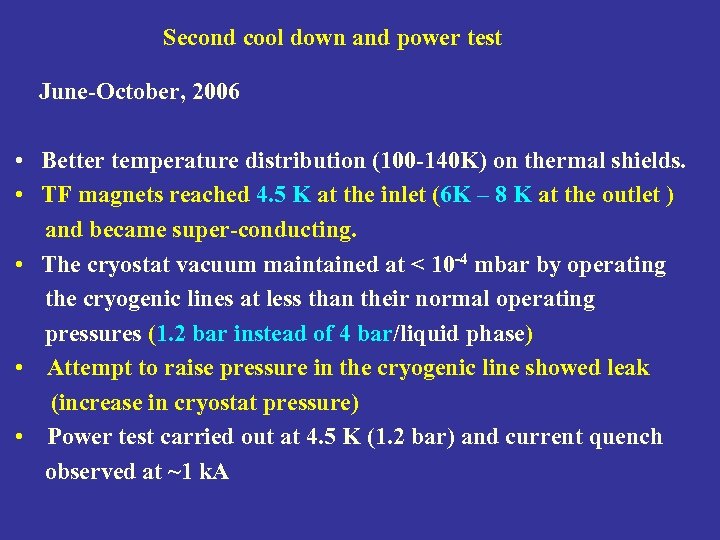 Second cool down and power test June-October, 2006 • Better temperature distribution (100 -140 K) on thermal shields. • TF magnets reached 4. 5 K at the inlet (6 K – 8 K at the outlet ) and became super-conducting. • The cryostat vacuum maintained at < 10 -4 mbar by operating the cryogenic lines at less than their normal operating pressures (1. 2 bar instead of 4 bar/liquid phase) • Attempt to raise pressure in the cryogenic line showed leak (increase in cryostat pressure) • Power test carried out at 4. 5 K (1. 2 bar) and current quench observed at ~1 k. A
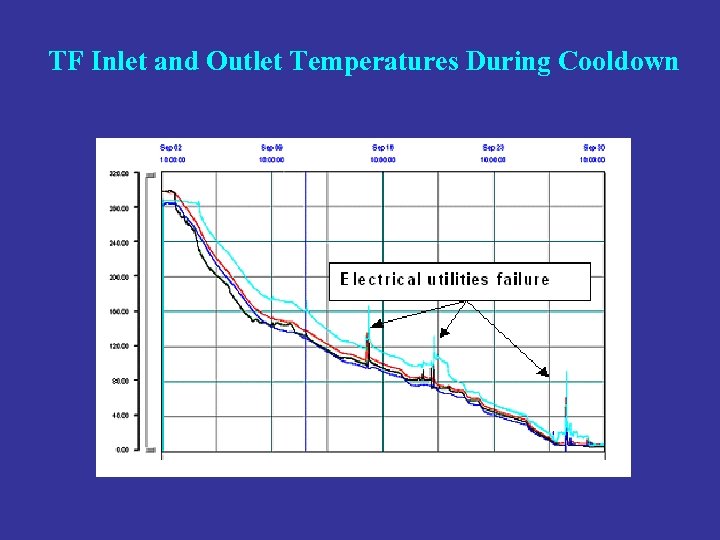 TF Inlet and Outlet Temperatures During Cooldown
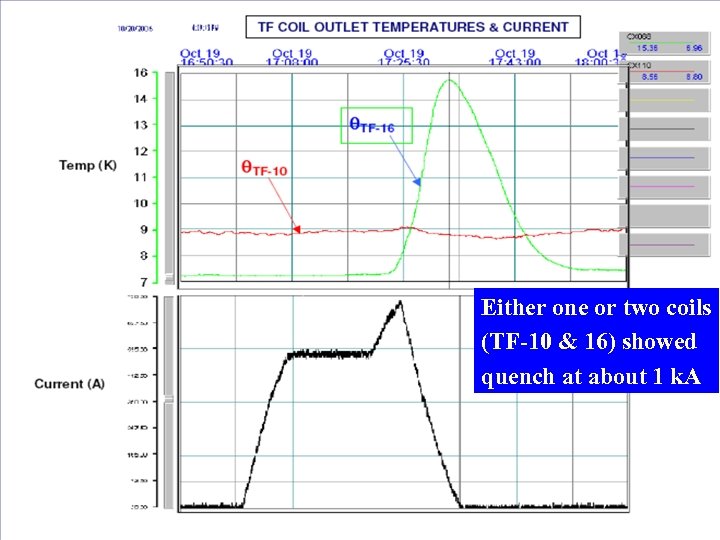 Either one or two coils (TF-10 & 16) showed quench at about 1 k. A
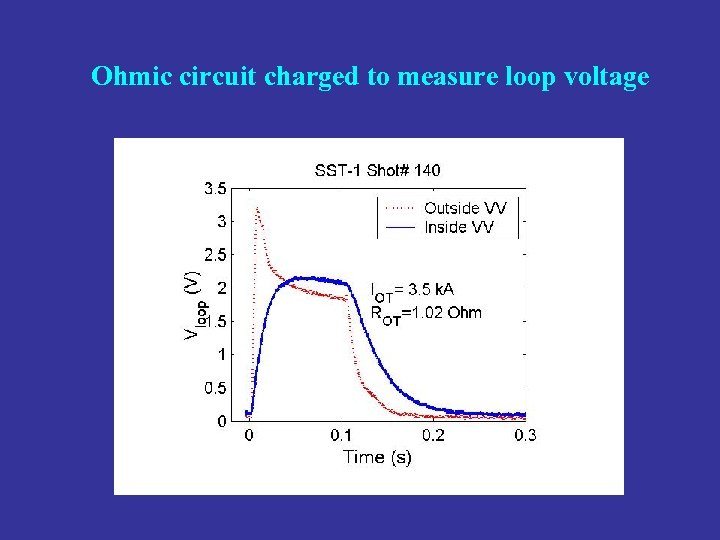 Ohmic circuit charged to measure loop voltage
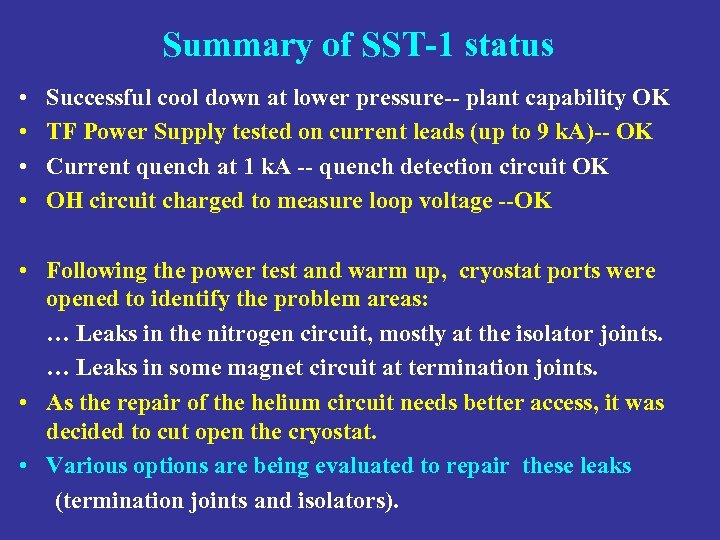 Summary of SST-1 status • • Successful cool down at lower pressure-- plant capability OK TF Power Supply tested on current leads (up to 9 k. A)-- OK Current quench at 1 k. A -- quench detection circuit OK OH circuit charged to measure loop voltage --OK • Following the power test and warm up, cryostat ports were opened to identify the problem areas: … Leaks in the nitrogen circuit, mostly at the isolator joints. … Leaks in some magnet circuit at termination joints. • As the repair of the helium circuit needs better access, it was decided to cut open the cryostat. • Various options are being evaluated to repair these leaks (termination joints and isolators).
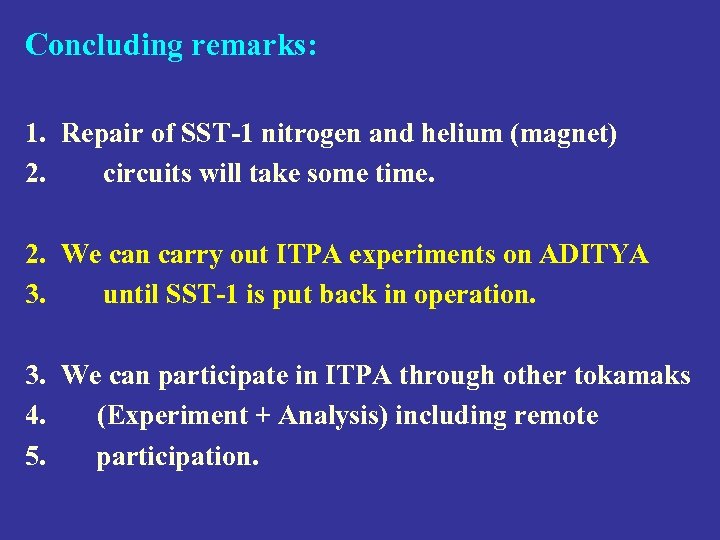 Concluding remarks: 1. Repair of SST-1 nitrogen and helium (magnet) 2. circuits will take some time. 2. We can carry out ITPA experiments on ADITYA 3. until SST-1 is put back in operation. 3. We can participate in ITPA through other tokamaks 4. (Experiment + Analysis) including remote 5. participation.
 Thank you !