


 Скачать презентацию INRES INsular regions cooperation for maximising the environmental
95c6c11e15ae3e65fabbd4c09eb82669.ppt
- Количество слайдов: 26
 INRES INsular regions cooperation for maximising the environmental and economic benefits from the research in Renewable Energy Sources ARTEMIS SAITAKIS Director, Science & Technology Park of Crete, GR, 4 th International Scientific Conference on Energy and Climate Change, 13 -14 October 2011, Athens, GR
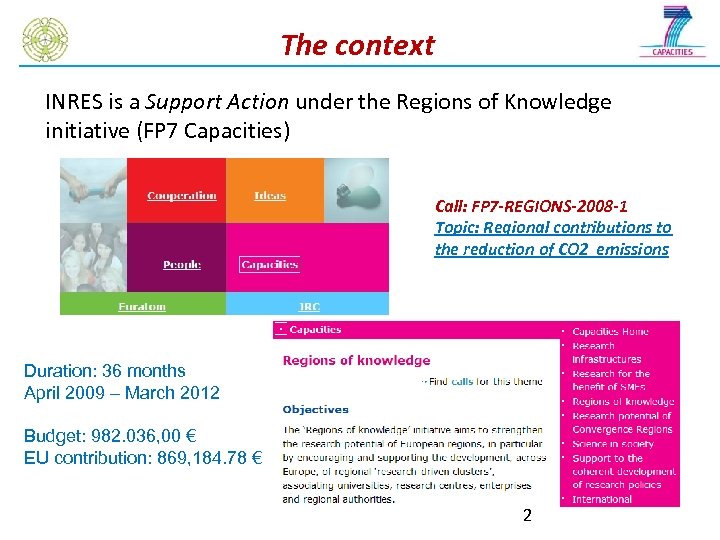 The context INRES is a Support Action under the Regions of Knowledge initiative (FP 7 Capacities) Call: FP 7 -REGIONS-2008 -1 Topic: Regional contributions to the reduction of CO 2 emissions Duration: 36 months April 2009 – March 2012 Budget: 982. 036, 00 € EU contribution: 869, 184. 78 € 2
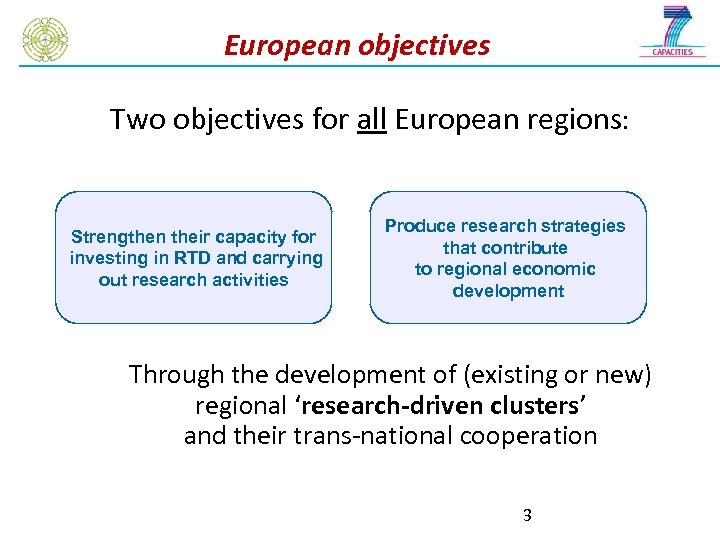 European objectives Two objectives for all European regions: Strengthen their capacity for investing in RTD and carrying out research activities Produce research strategies that contribute to regional economic development Through the development of (existing or new) regional ‘research-driven clusters’ and their trans-national cooperation 3
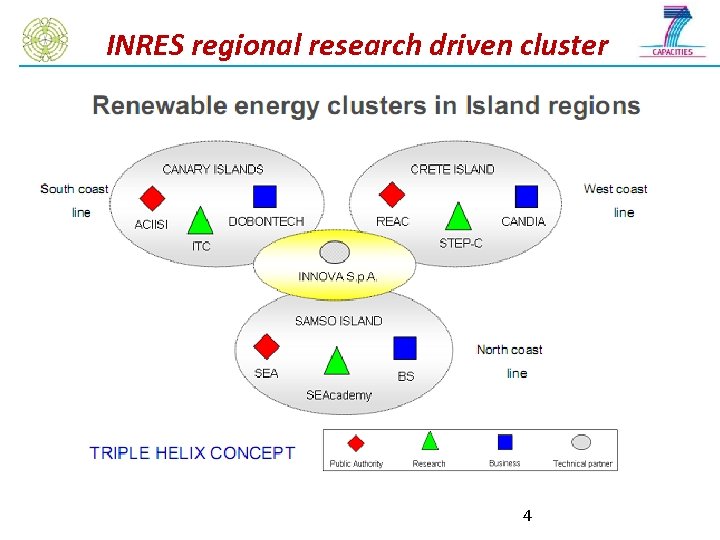 INRES regional research driven cluster 4
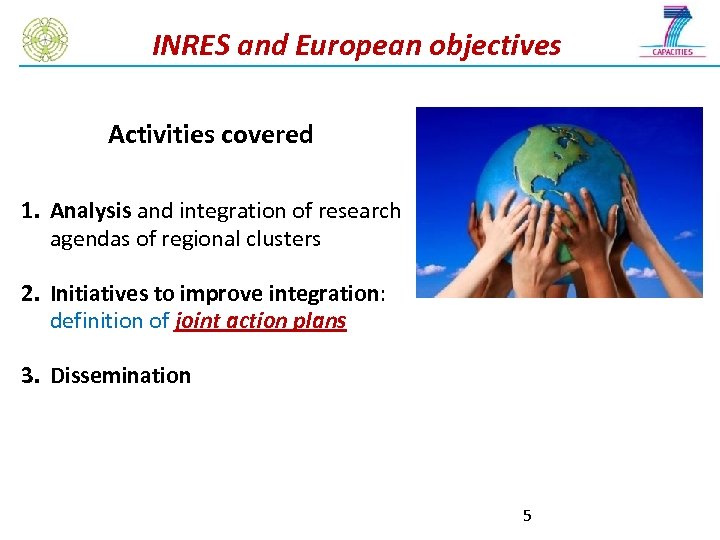 INRES and European objectives Activities covered 1. Analysis and integration of research agendas of regional clusters 2. Initiatives to improve integration: definition of joint action plans 3. Dissemination 5
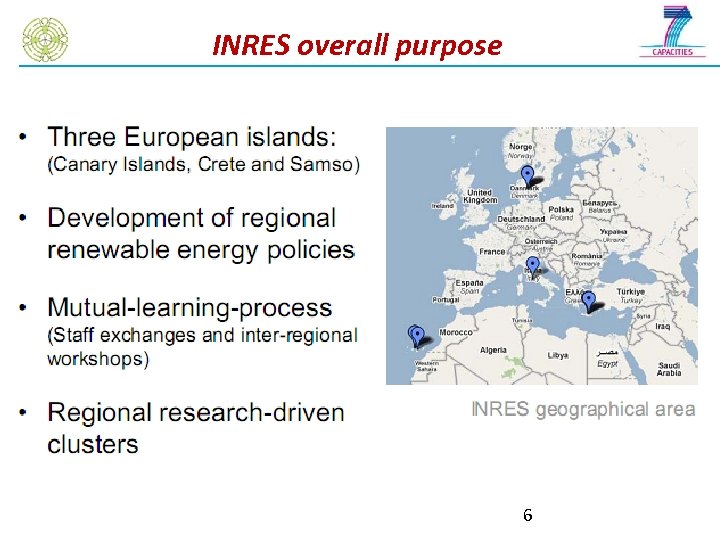 INRES overall purpose 6
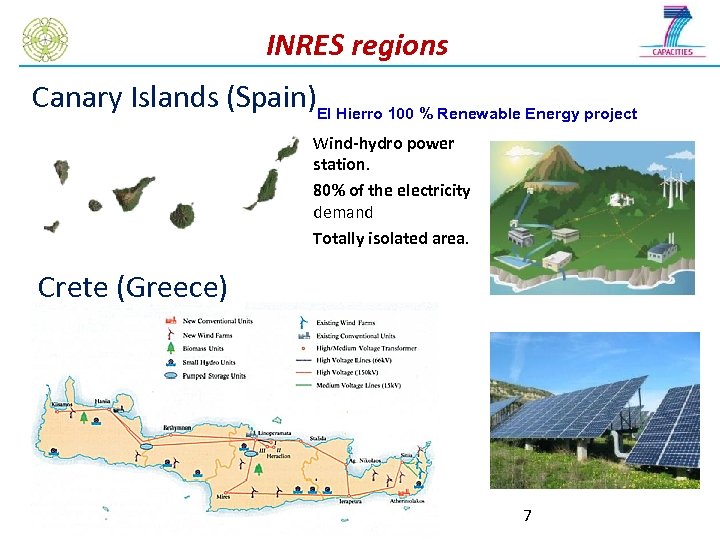 INRES regions Canary Islands (Spain)El Hierro 100 % Renewable Energy project Wind-hydro power station. 80% of the electricity demand Totally isolated area. Crete (Greece) 7
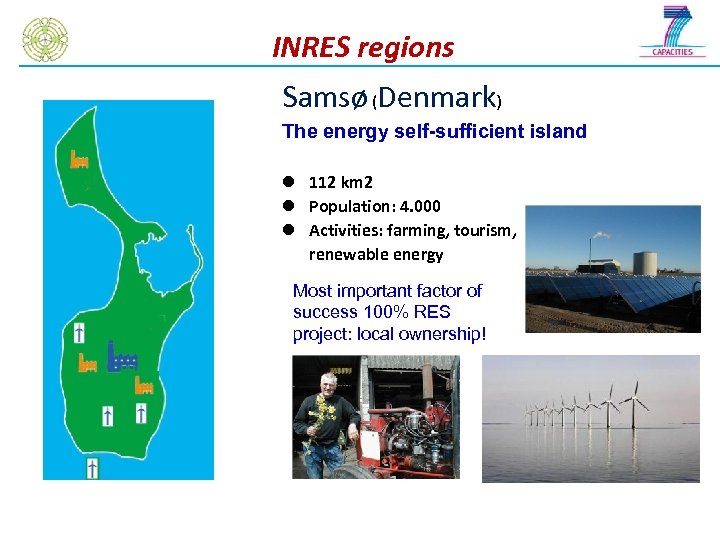 INRES regions Samsø (Denmark) The energy self-sufficient island l 112 km 2 l Population: 4. 000 l Activities: farming, tourism, renewable energy Most important factor of success 100% RES project: local ownership!
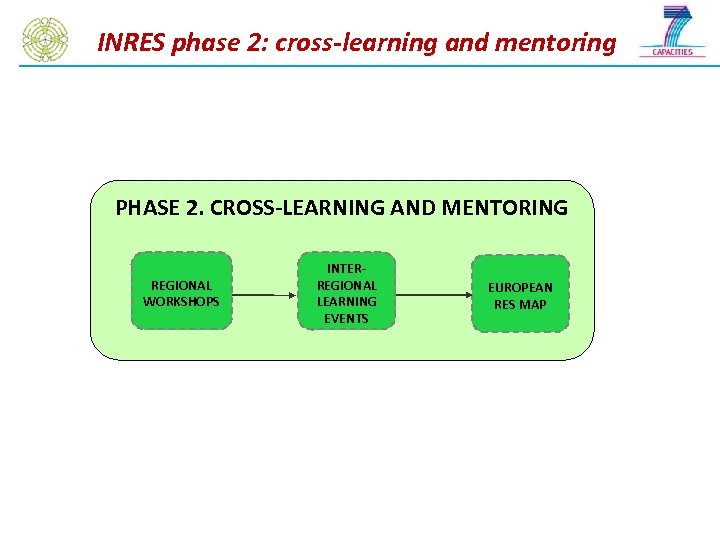
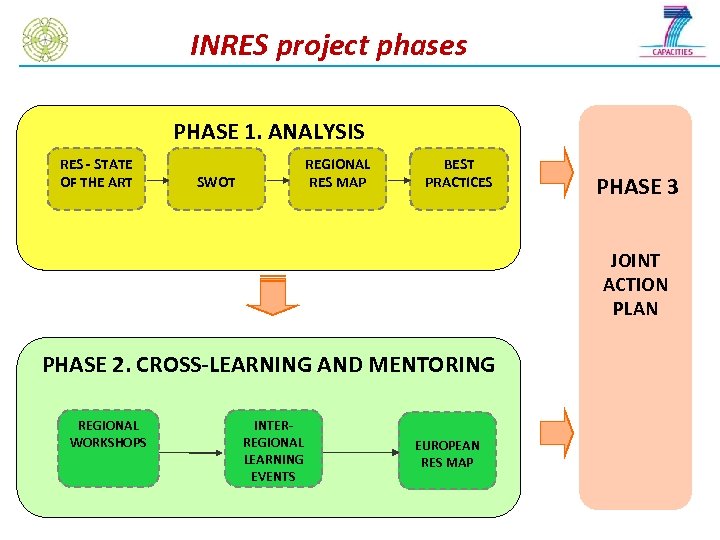 INRES project phases PHASE 1. ANALYSIS RES - STATE OF THE ART REGIONAL RES MAP SWOT BEST PRACTICES PHASE 3 JOINT ACTION PLAN PHASE 2. CROSS-LEARNING AND MENTORING REGIONAL WORKSHOPS INTERREGIONAL LEARNING EVENTS EUROPEAN RES MAP
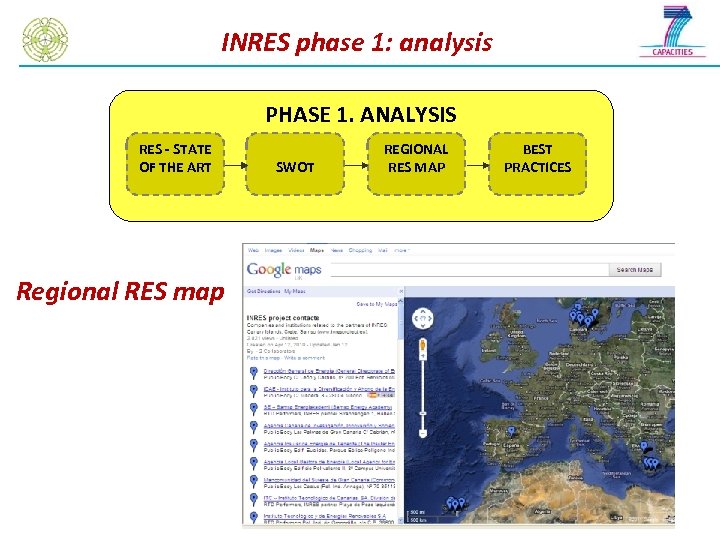 INRES phase 1: analysis PHASE 1. ANALYSIS RES - STATE OF THE ART SWOT REGIONAL RES MAP BEST PRACTICES Regional RES map 10
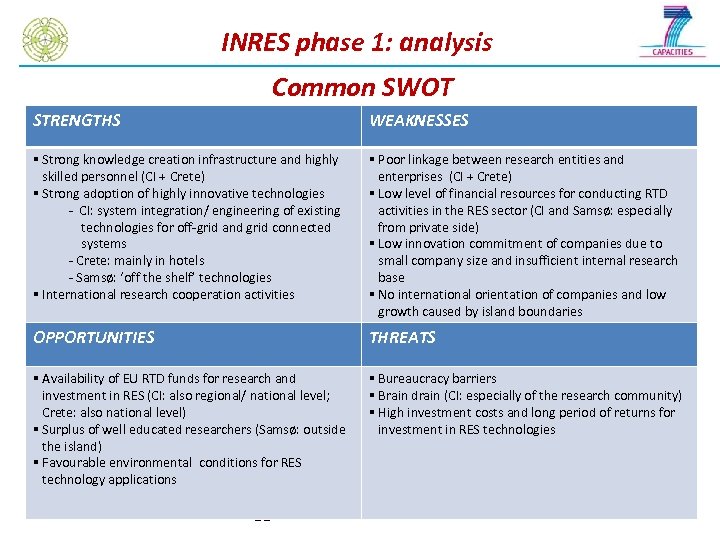 INRES phase 1: analysis Common SWOT STRENGTHS WEAKNESSES § Strong knowledge creation infrastructure and highly skilled personnel (CI + Crete) § Strong adoption of highly innovative technologies - CI: system integration/ engineering of existing technologies for off-grid and grid connected systems - Crete: mainly in hotels - Samsø: ‘off the shelf’ technologies § International research cooperation activities § Poor linkage between research entities and enterprises (CI + Crete) § Low level of financial resources for conducting RTD activities in the RES sector (CI and Samsø: especially from private side) § Low innovation commitment of companies due to small company size and insufficient internal research base § No international orientation of companies and low growth caused by island boundaries OPPORTUNITIES THREATS § Availability of EU RTD funds for research and investment in RES (CI: also regional/ national level; Crete: also national level) § Surplus of well educated researchers (Samsø: outside the island) § Favourable environmental conditions for RES technology applications § Bureaucracy barriers § Brain drain (CI: especially of the research community) § High investment costs and long period of returns for investment in RES technologies 11
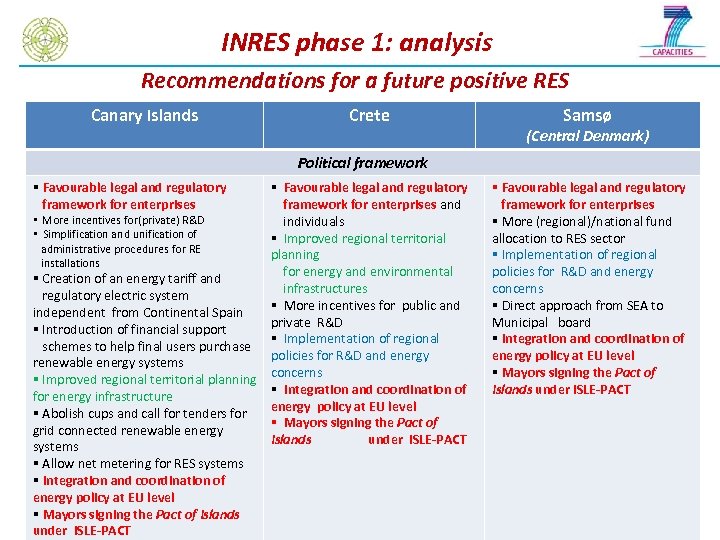 INRES phase 1: analysis Recommendations for a future positive RES development Canary Islands Crete Samsø (Central Denmark) Political framework § Favourable legal and regulatory framework for enterprises and • More incentives for(private) R&D individuals • Simplification and unification of § Improved regional territorial administrative procedures for RE planning installations for energy and environmental § Creation of an energy tariff and infrastructures regulatory electric system § More incentives for public and independent from Continental Spain private R&D § Introduction of financial support § Implementation of regional schemes to help final users purchase policies for R&D and energy renewable energy systems § Improved regional territorial planning concerns § Integration and coordination of for energy infrastructure energy policy at EU level § Abolish cups and call for tenders for § Mayors signing the Pact of grid connected renewable energy Islands under ISLE-PACT systems § Allow net metering for RES systems § Integration and coordination of energy policy at EU level § Mayors signing the Pact of Islands under ISLE-PACT 12 § Favourable legal and regulatory framework for enterprises § More (regional)/national fund allocation to RES sector § Implementation of regional policies for R&D and energy concerns § Direct approach from SEA to Municipal board § Integration and coordination of energy policy at EU level § Mayors signing the Pact of Islands under ISLE-PACT
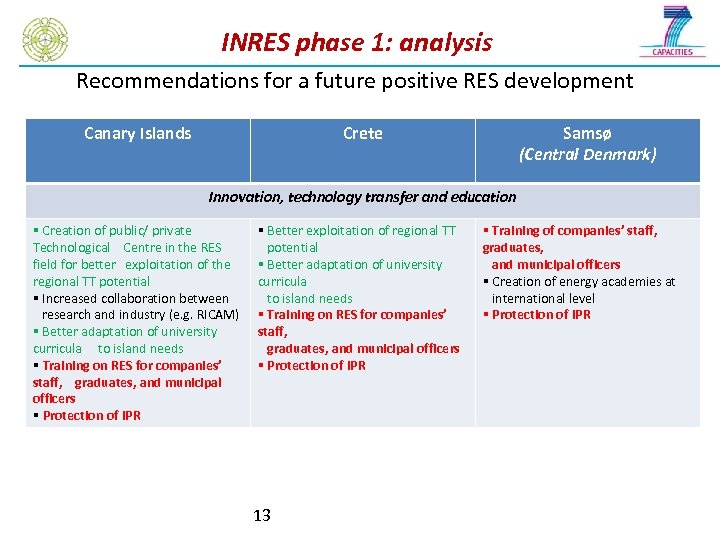 INRES phase 1: analysis Recommendations for a future positive RES development Canary Islands Crete Samsø (Central Denmark) Innovation, technology transfer and education § Creation of public/ private Technological Centre in the RES field for better exploitation of the regional TT potential § Increased collaboration between research and industry (e. g. RICAM) § Better adaptation of university curricula to island needs § Training on RES for companies’ staff, graduates, and municipal officers § Protection of IPR § Better exploitation of regional TT potential § Better adaptation of university curricula to island needs § Training on RES for companies’ staff, graduates, and municipal officers § Protection of IPR 13 § Training of companies’ staff, graduates, and municipal officers § Creation of energy academies at international level § Protection of IPR
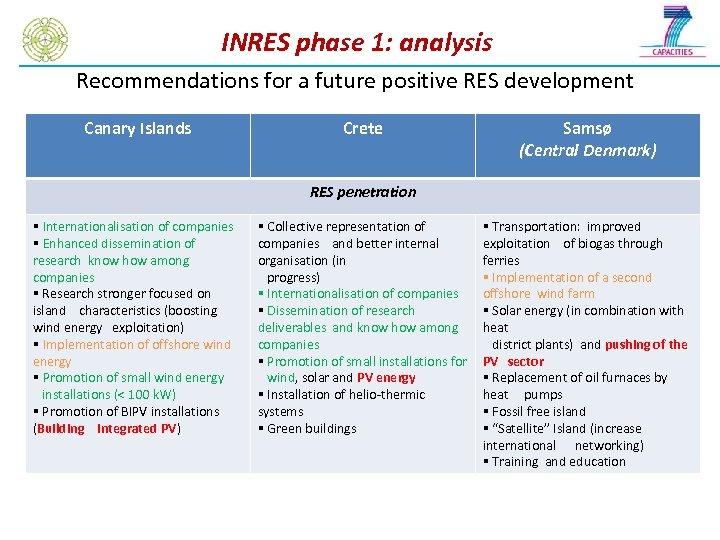 INRES phase 1: analysis Recommendations for a future positive RES development Canary Islands Crete Samsø (Central Denmark) RES penetration § Internationalisation of companies § Enhanced dissemination of research know how among companies § Research stronger focused on island characteristics (boosting 14 wind energy exploitation) § Implementation of offshore wind energy § Promotion of small wind energy installations (< 100 k. W) § Promotion of BIPV installations (Building Integrated PV) § Collective representation of companies and better internal organisation (in progress) § Internationalisation of companies § Dissemination of research deliverables and know how among companies § Promotion of small installations for wind, solar and PV energy § Installation of helio-thermic systems § Green buildings § Transportation: improved exploitation of biogas through ferries § Implementation of a second offshore wind farm § Solar energy (in combination with heat district plants) and pushing of the PV sector § Replacement of oil furnaces by heat pumps § Fossil free island § “Satellite” Island (increase international networking) § Training and education
 INRES phase 2: cross-learning and mentoring PHASE 2. CROSS-LEARNING AND MENTORING REGIONAL WORKSHOPS INTERREGIONAL LEARNING EVENTS EUROPEAN RES MAP
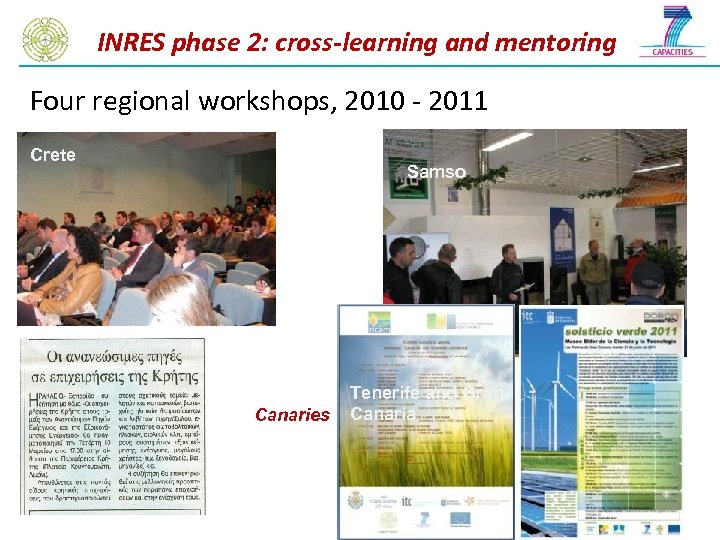 INRES phase 2: cross-learning and mentoring Four regional workshops, 2010 - 2011 Crete Samso Canaries Tenerife and Gran Canaria 16
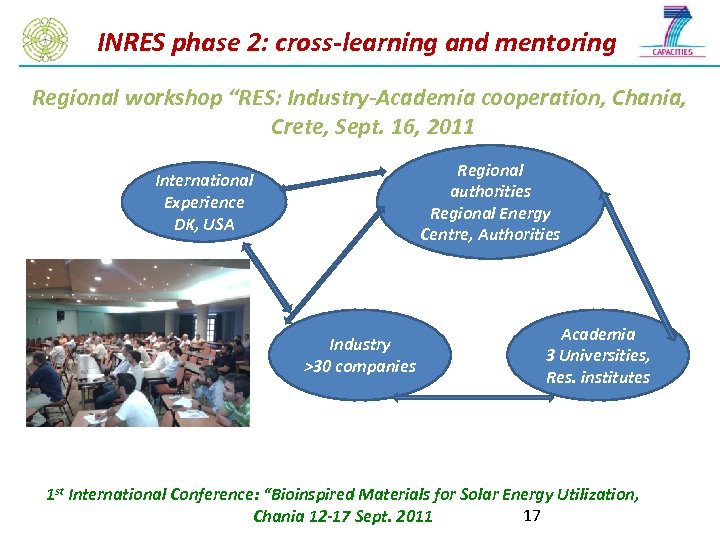 INRES phase 2: cross-learning and mentoring Regional workshop “RES: Industry-Academia cooperation, Chania, Crete, Sept. 16, 2011 Regional authorities Regional Energy Centre, Authorities International Experience DK, USA Industry >30 companies Academia 3 Universities, Res. institutes 1 st International Conference: “Bioinspired Materials for Solar Energy Utilization, 17 Chania 12 -17 Sept. 2011
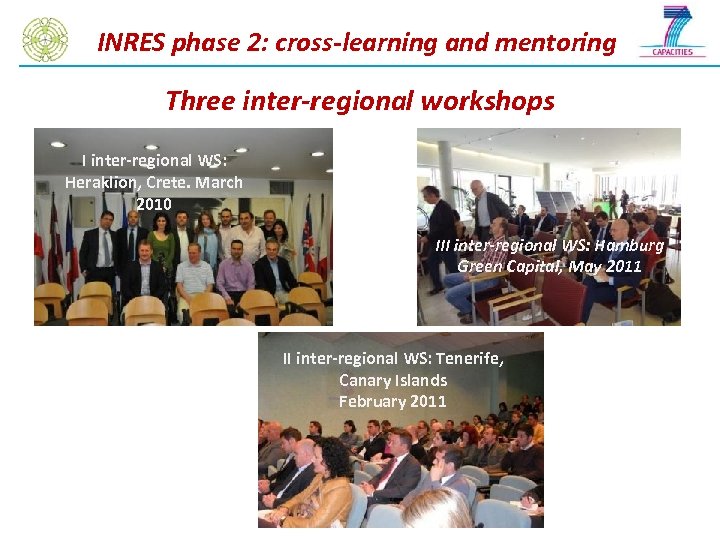 INRES phase 2: cross-learning and mentoring Three inter-regional workshops I inter-regional WS: Heraklion, Crete. March 2010 III inter-regional WS: Hamburg Green Capital, May 2011 II inter-regional WS: Tenerife, Canary Islands February 2011 18
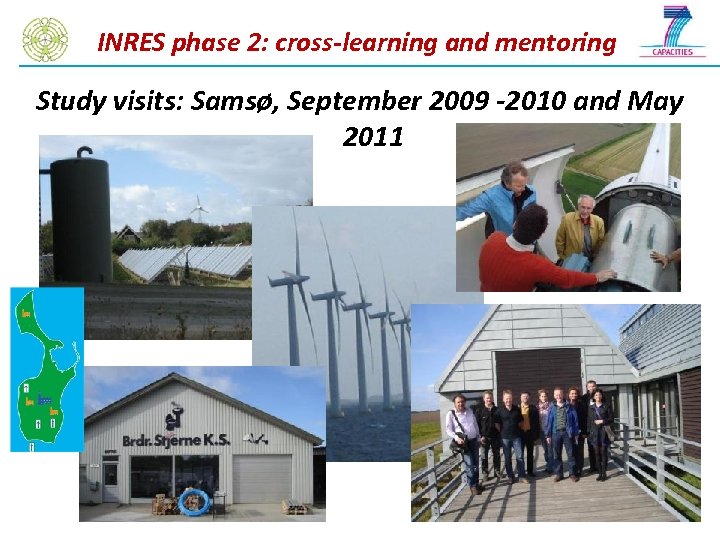 INRES phase 2: cross-learning and mentoring Study visits: Samsø, September 2009 -2010 and May 2011 19
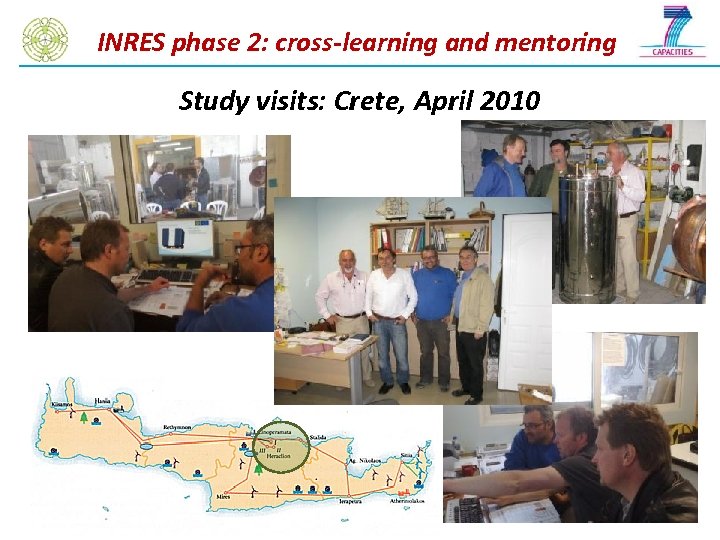 INRES phase 2: cross-learning and mentoring Study visits: Crete, April 2010 20
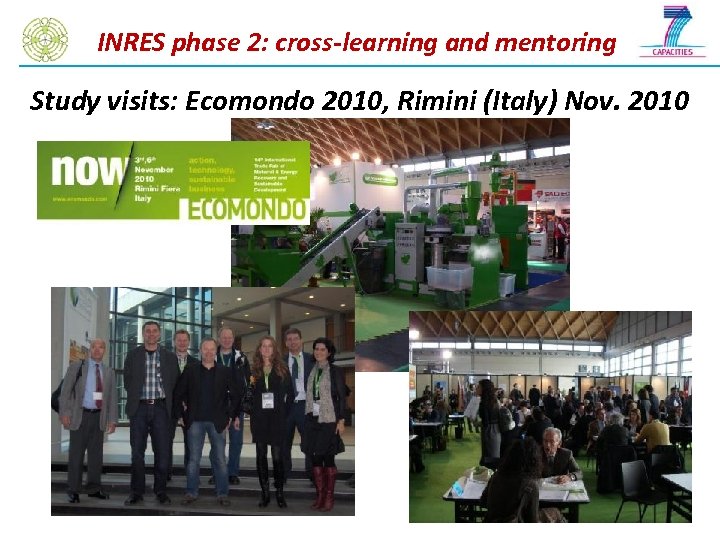 INRES phase 2: cross-learning and mentoring Study visits: Ecomondo 2010, Rimini (Italy) Nov. 2010 21
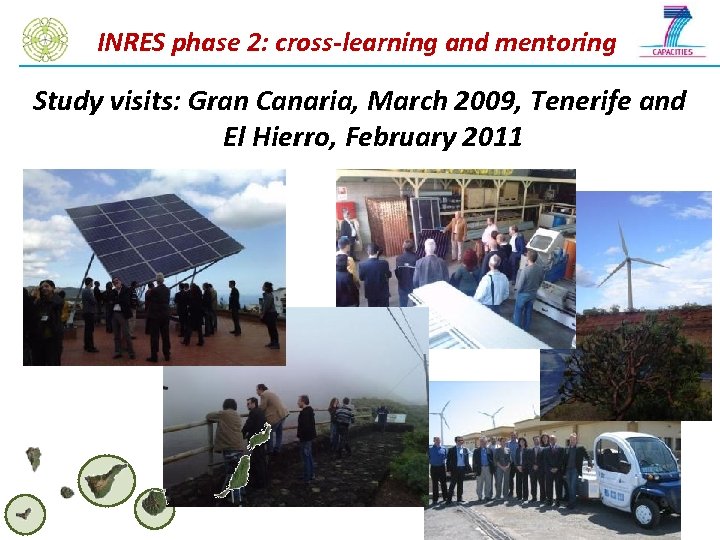 INRES phase 2: cross-learning and mentoring Study visits: Gran Canaria, March 2009, Tenerife and El Hierro, February 2011 22
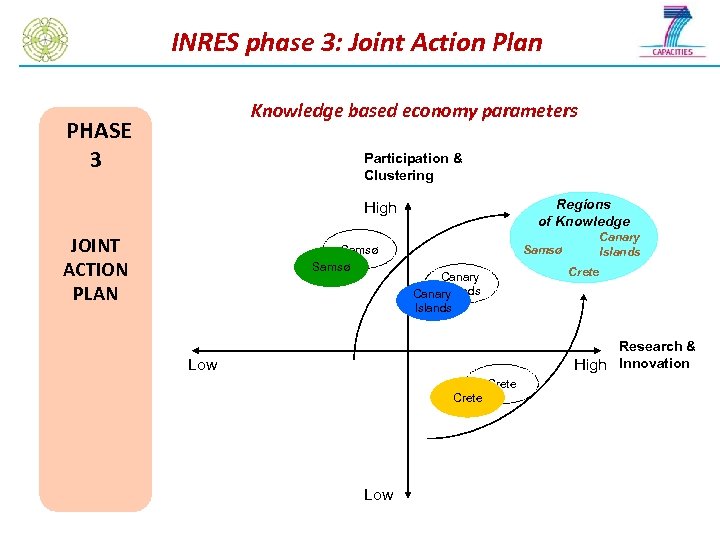 INRES phase 3: Joint Action Plan Knowledge based economy parameters PHASE 3 Participation & Clustering Regions of Knowledge High JOINT ACTION PLAN Samsø Canary Islands Samsø Crete Canary Islands Research & High Innovation Low Crete
 INRES phase 3: Joint Action Plan PHASE 3 JOINT ACTION PLAN Action lines identified • Topic 1: Policies addressing legal and financial incentives to encourage RES solutions in islands. • Topic 2: Measures to encourage R+D+I for advanced technological RES solutions in islands. • Topic 3: Community awareness and capability activities.
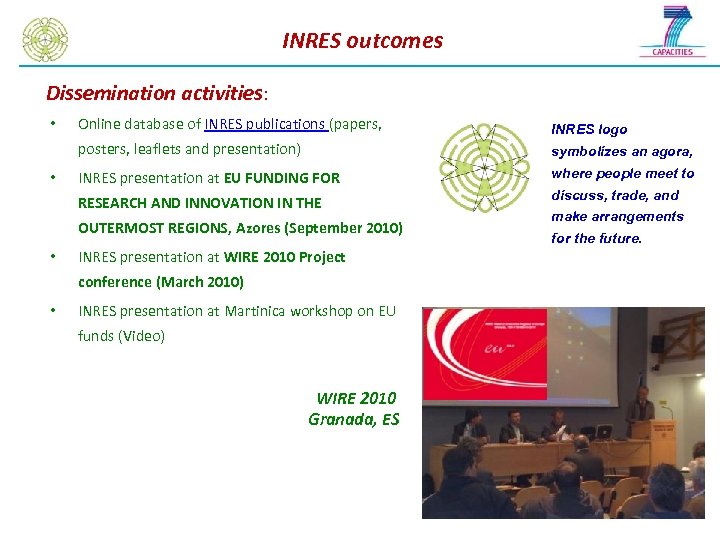 INRES outcomes Dissemination activities: • Online database of INRES publications (papers, INRES logo posters, leaflets and presentation) • symbolizes an agora, INRES presentation at EU FUNDING FOR where people meet to RESEARCH AND INNOVATION IN THE OUTERMOST REGIONS, Azores (September 2010) • INRES presentation at WIRE 2010 Project conference (March 2010) • INRES presentation at Martinica workshop on EU funds (Video) WIRE 2010 Granada, ES discuss, trade, and make arrangements for the future.
 INRES Thank you! saitakis@stepc. gr http: //www. inresproject. eu