


 Скачать презентацию Injuries During Pregnancy Understanding Tracking The Hidden
63b58d897e7b16a01c5b08ffa81a2c02.ppt
- Количество слайдов: 42
 Injuries During Pregnancy: Understanding & Tracking The Hidden Epidemic A Focus on Mortality Advisory Committee on Infant Mortality Washington, DC – March, 2004
 Introduction
 Objectives 1. Discuss the nature and importance of injuries on fetal and infant mortality. 2. Discuss the deficiencies and barriers of using existing data to look at this issue. 3. Discuss how to improve surveillance of pregnancy-related injury and outcomes. 4. Introduce the morbidity issues
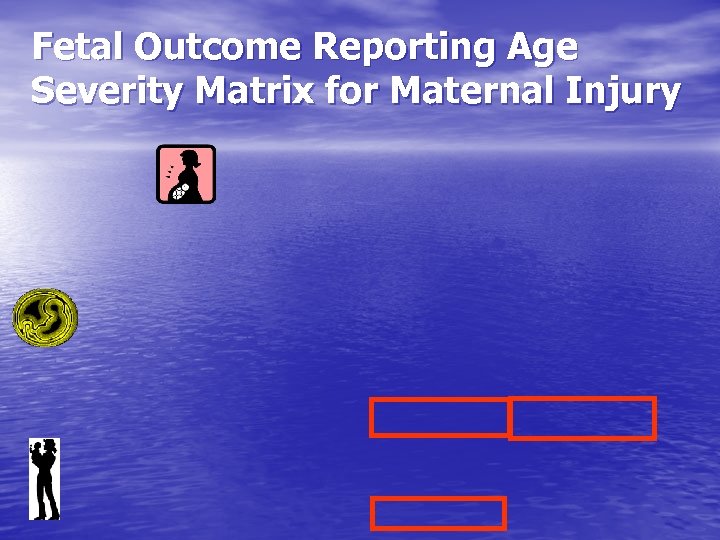 Fetal Outcome Reporting Age Severity Matrix for Maternal Injury
 Maternal Injury The basis of the threat to fetuses
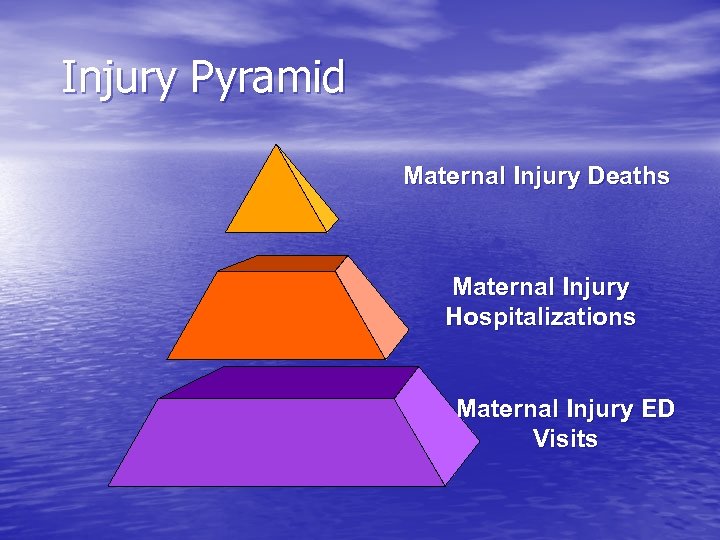 Injury Pyramid Maternal Injury Deaths Maternal Injury Hospitalizations Maternal Injury ED Visits
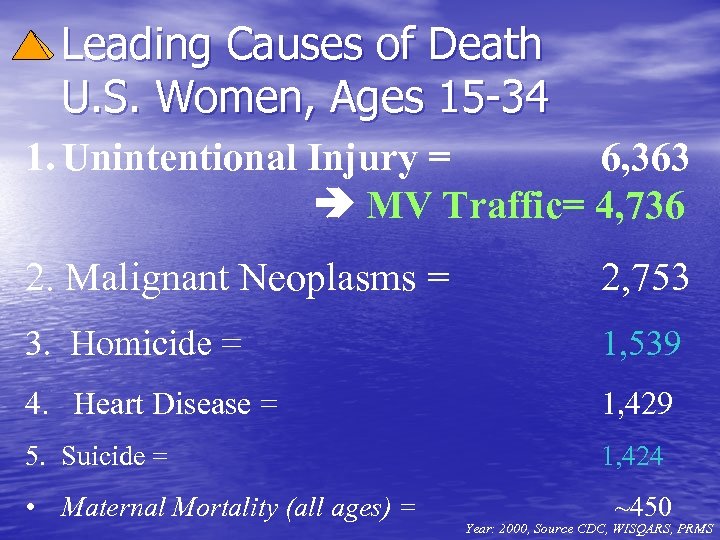 Leading Causes of Death U. S. Women, Ages 15 -34 1. Unintentional Injury = 6, 363 MV Traffic= 4, 736 2. Malignant Neoplasms = 2, 753 3. Homicide = 1, 539 4. Heart Disease = 1, 429 5. Suicide = 1, 424 • Maternal Mortality (all ages) = ~450 Year: 2000, Source CDC, WISQARS, PRMS
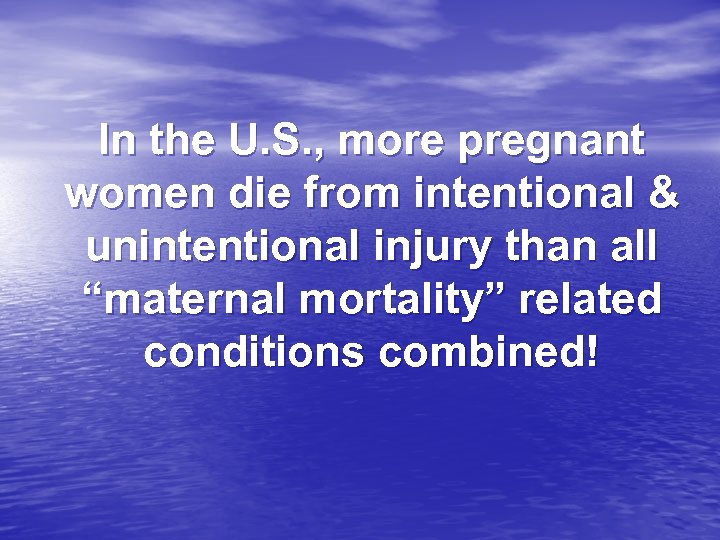 In the U. S. , more pregnant women die from intentional & unintentional injury than all “maternal mortality” related conditions combined!
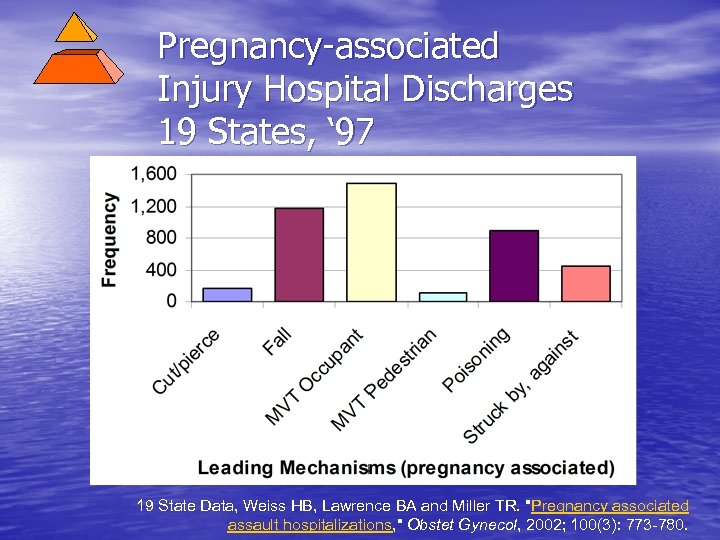 Pregnancy-associated Injury Hospital Discharges 19 States, ‘ 97 19 State Data, Weiss HB, Lawrence BA and Miller TR. "Pregnancy associated assault hospitalizations, " Obstet Gynecol, 2002; 100(3): 773 -780.
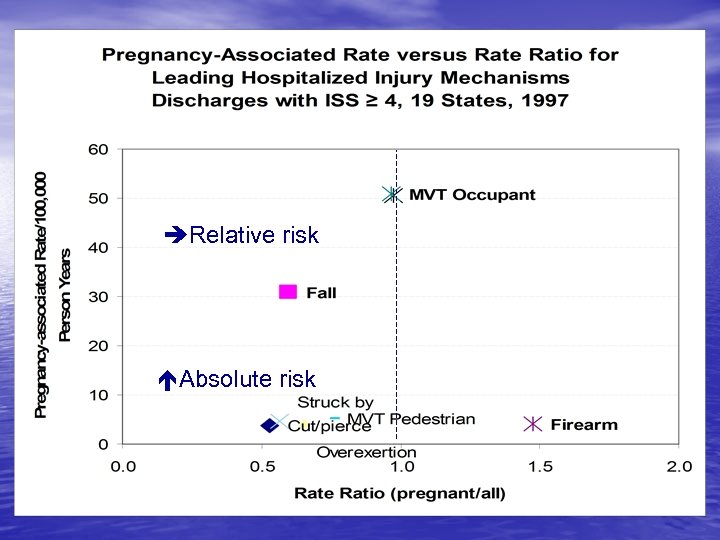 Pregnancy Assocaited Rate versus Rate Ratio Relative risk Absolute risk
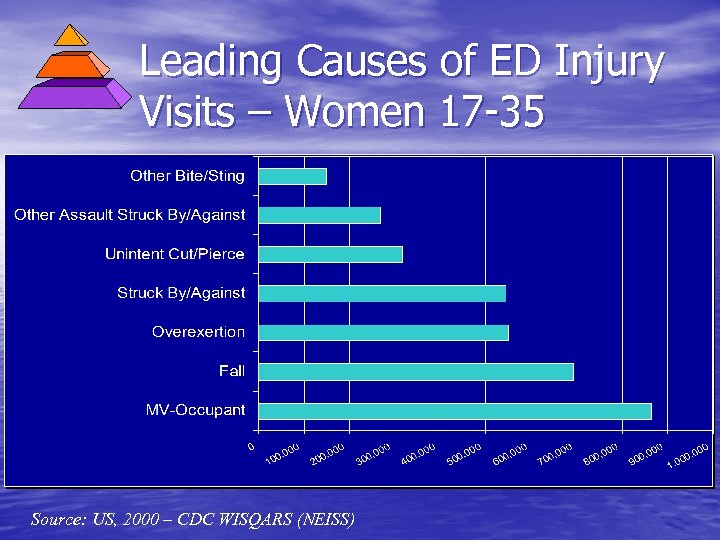 Leading Causes of ED Injury Visits – Women 17 -35 Source: US, 2000 – CDC WISQARS (NEISS)
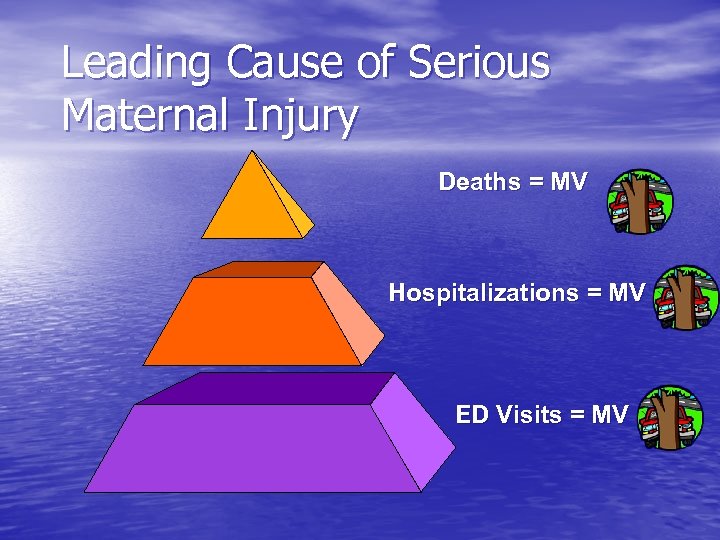 Leading Cause of Serious Maternal Injury Deaths = MV Hospitalizations = MV ED Visits = MV
 Biomechanical Considerations Unbelted Virginia Tech Simulation
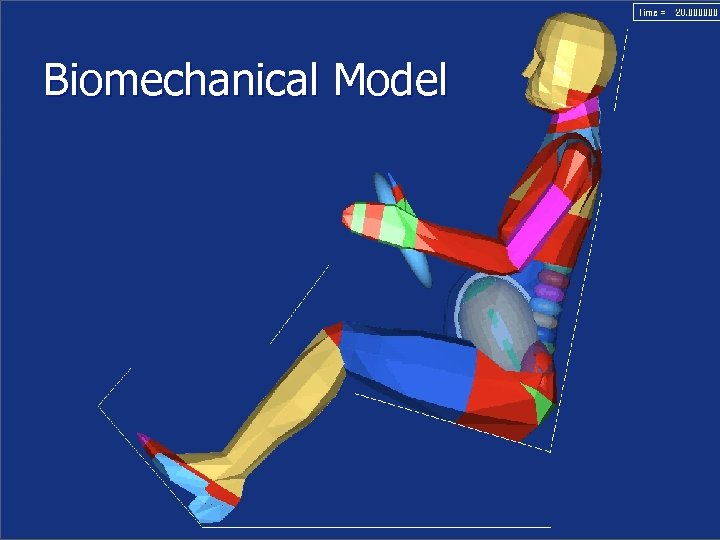 Biomechanical Model
 Fetal Injury Deaths
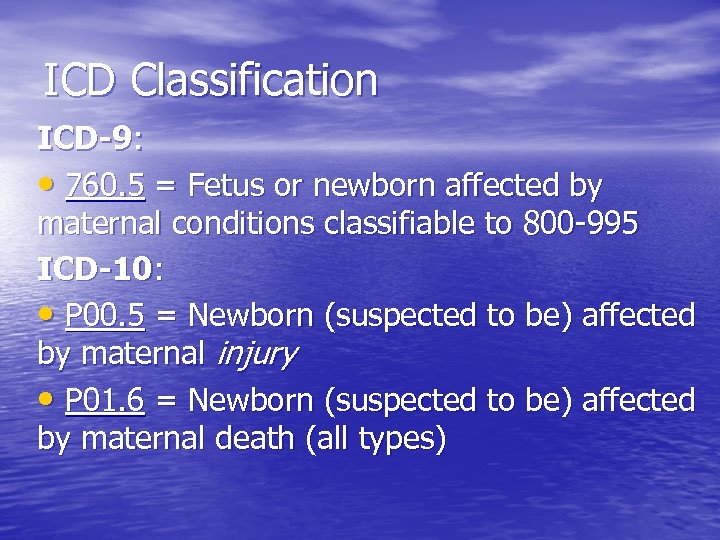 ICD Classification ICD-9: • 760. 5 = Fetus or newborn affected by maternal conditions classifiable to 800 -995 ICD-10: • P 00. 5 = Newborn (suspected to be) affected by maternal injury • P 01. 6 = Newborn (suspected to be) affected by maternal death (all types)
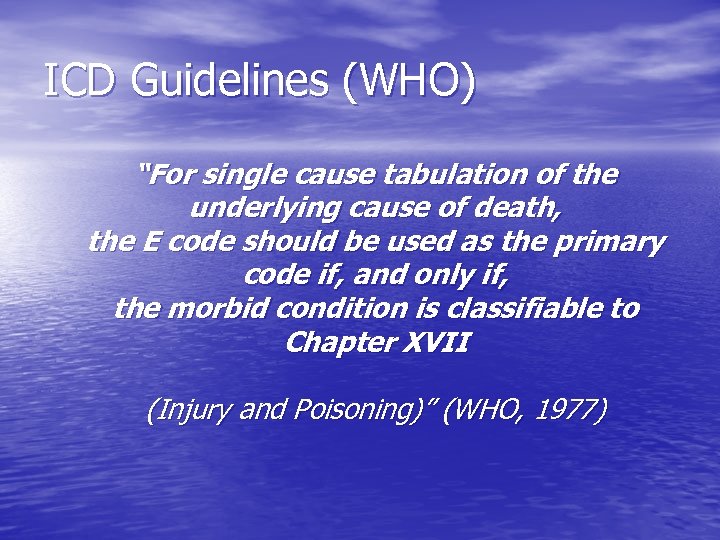 ICD Guidelines (WHO) “For single cause tabulation of the underlying cause of death, the E code should be used as the primary code if, and only if, the morbid condition is classifiable to Chapter XVII (Injury and Poisoning)” (WHO, 1977)
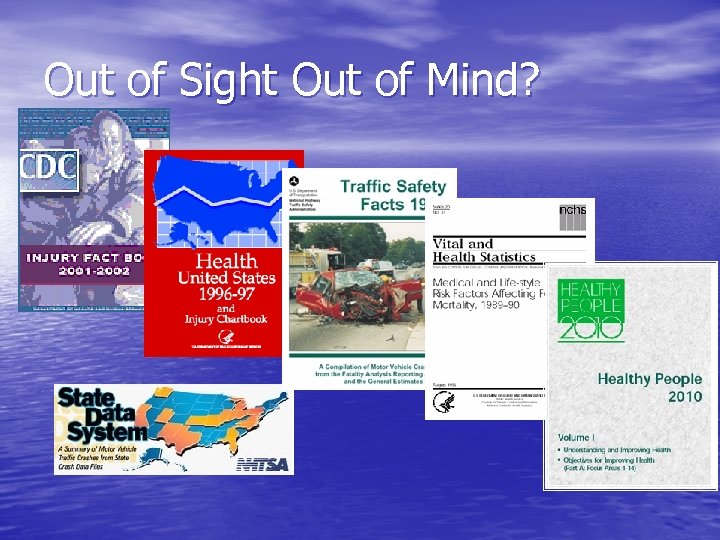 Out of Sight Out of Mind?
 Fetal Death Registries • Most but not all states • Only 20 weeks are greater included • ICD limitations (no mechanism codes) • Reliance on written cause narratives
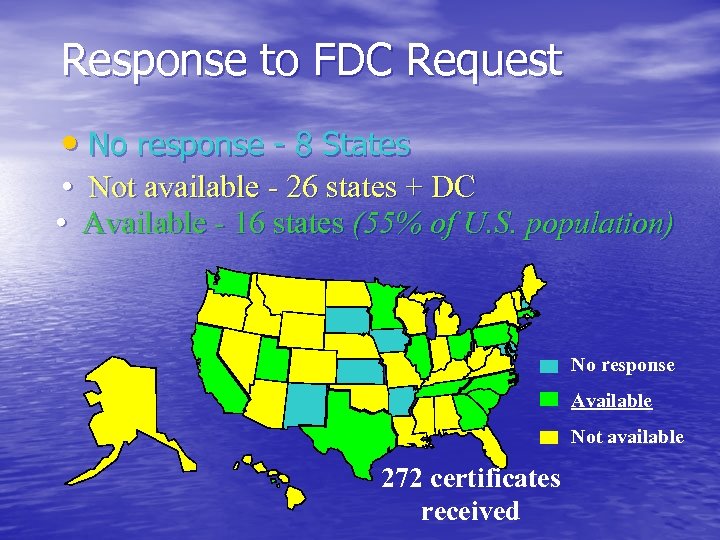 Response to FDC Request • No response - 8 States • Not available - 26 states + DC • Available - 16 states (55% of U. S. population) No response Available Not available 272 certificates received
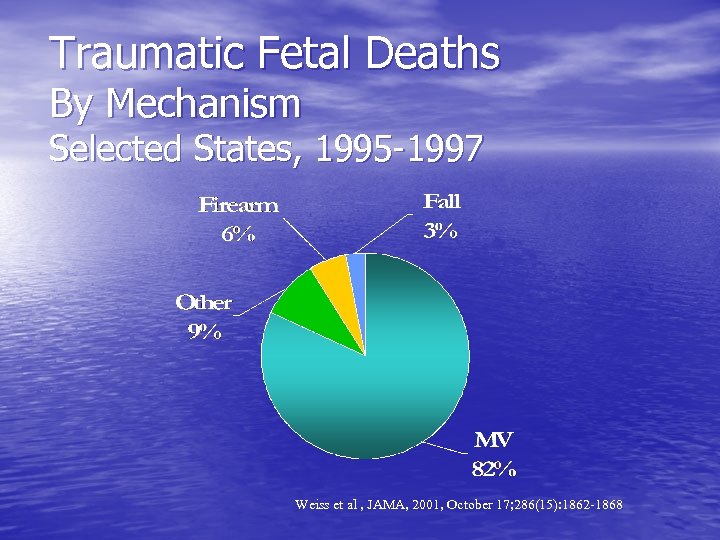 Traumatic Fetal Deaths By Mechanism Selected States, 1995 -1997 Weiss et al , JAMA, 2001, October 17; 286(15): 1862 -1868
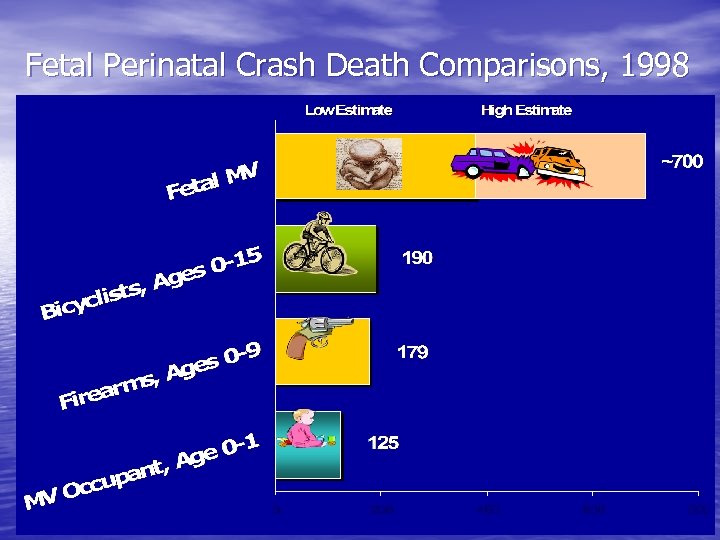 Fetal Perinatal Crash Death Comparisons, 1998
 Fetal MV Injury Deaths • Account for more deaths than several leading childhood injury causes
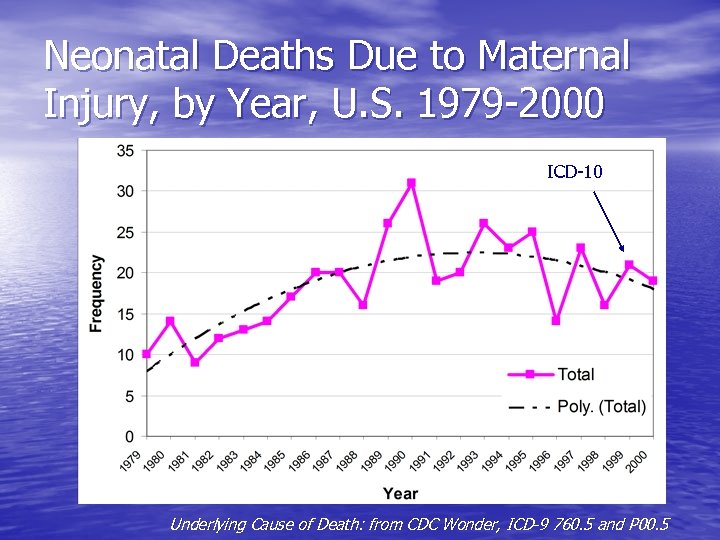 Neonatal Deaths Due to Maternal Injury, by Year, U. S. 1979 -2000 ICD-10 Underlying Cause of Death: from CDC Wonder, ICD-9 760. 5 and P 00. 5
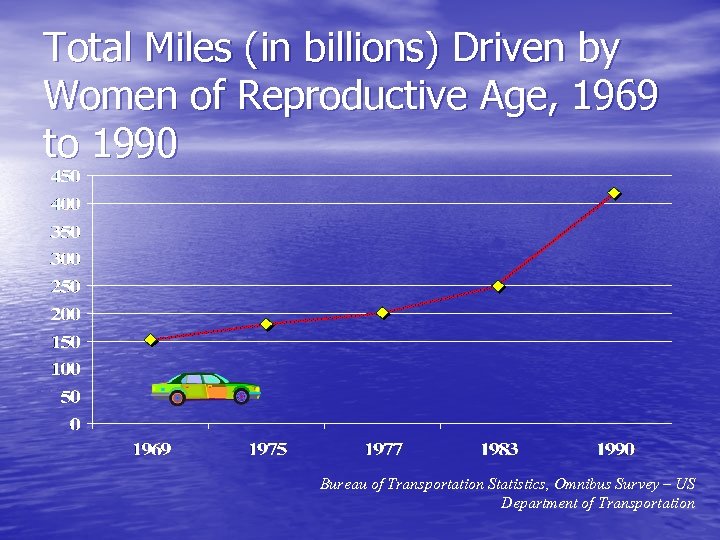 Total Miles (in billions) Driven by Women of Reproductive Age, 1969 to 1990 Bureau of Transportation Statistics, Omnibus Survey – US Department of Transportation
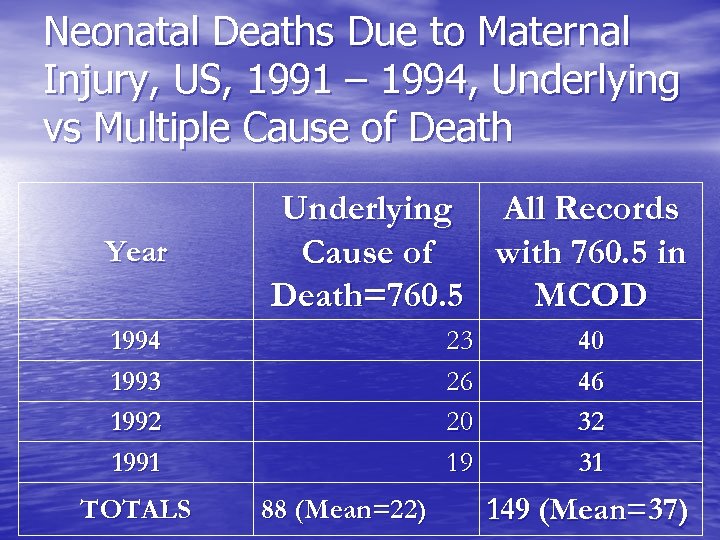 Neonatal Deaths Due to Maternal Injury, US, 1991 – 1994, Underlying vs Multiple Cause of Death Year Underlying All Records Cause of with 760. 5 in Death=760. 5 MCOD 1994 1993 1992 1991 TOTALS 23 26 20 19 88 (Mean=22) 40 46 32 31 149 (Mean=37)
 Placental Abruption • Reported neonatal deaths related to maternal injury account for at least 3% of all neonatal deaths associated with placental separation
 Morbidity Issues
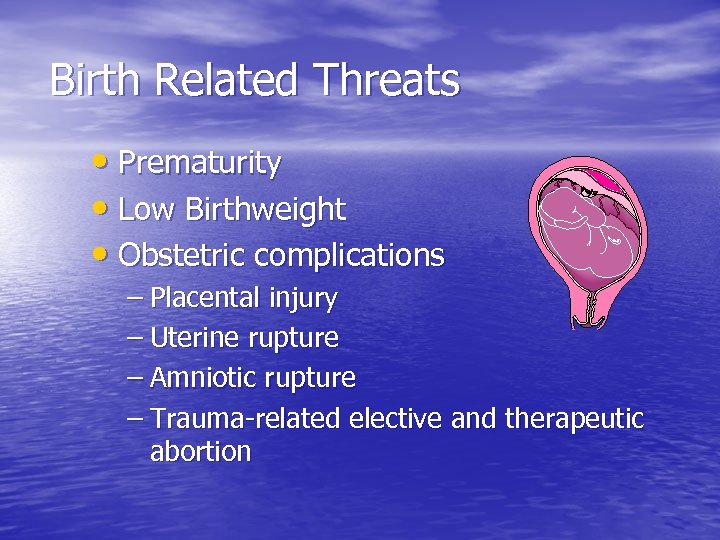 Birth Related Threats • Prematurity • Low Birthweight • Obstetric complications – Placental injury – Uterine rupture – Amniotic rupture – Trauma-related elective and therapeutic abortion
 Threats to the Baby • Neonatal Death • Adverse development due to direct and indirect neural and other organ damage – Mental retardation? – ADHD? – Autism? – Cerebral palsy? – Epilepsy? – ? ? ?
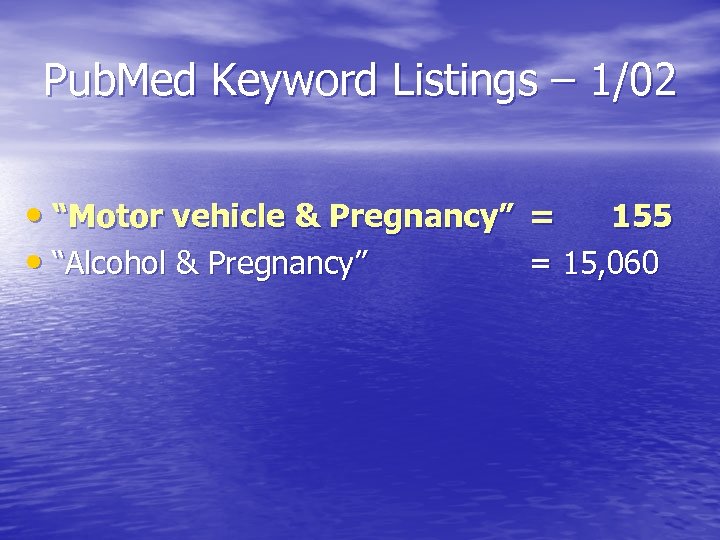 Pub. Med Keyword Listings – 1/02 • “Motor vehicle & Pregnancy” = 155 • “Alcohol & Pregnancy” = 15, 060
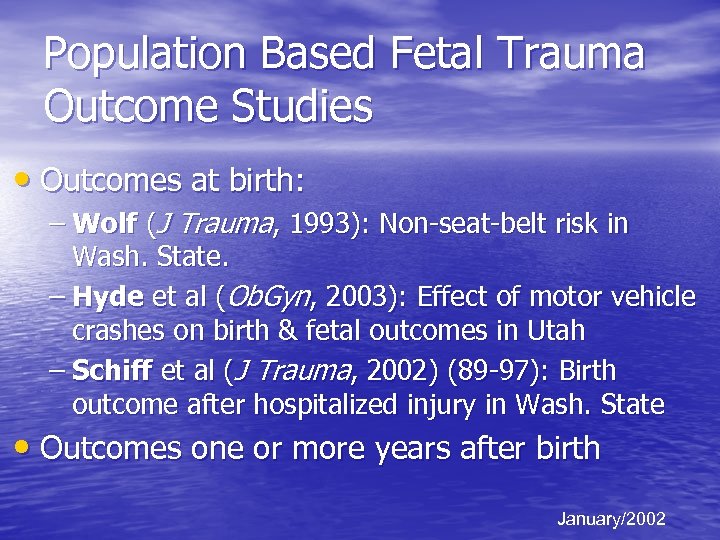 Population Based Fetal Trauma Outcome Studies • Outcomes at birth: – Wolf (J Trauma, 1993): Non-seat-belt risk in Wash. State. – Hyde et al (Ob. Gyn, 2003): Effect of motor vehicle crashes on birth & fetal outcomes in Utah – Schiff et al (J Trauma, 2002) (89 -97): Birth outcome after hospitalized injury in Wash. State • Outcomes one or more years after birth January/2002
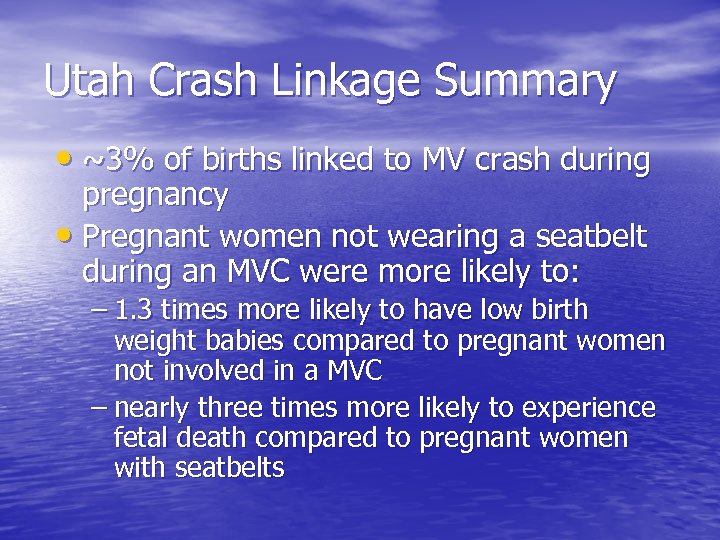 Utah Crash Linkage Summary • ~3% of births linked to MV crash during pregnancy • Pregnant women not wearing a seatbelt during an MVC were more likely to: – 1. 3 times more likely to have low birth weight babies compared to pregnant women not involved in a MVC – nearly three times more likely to experience fetal death compared to pregnant women with seatbelts
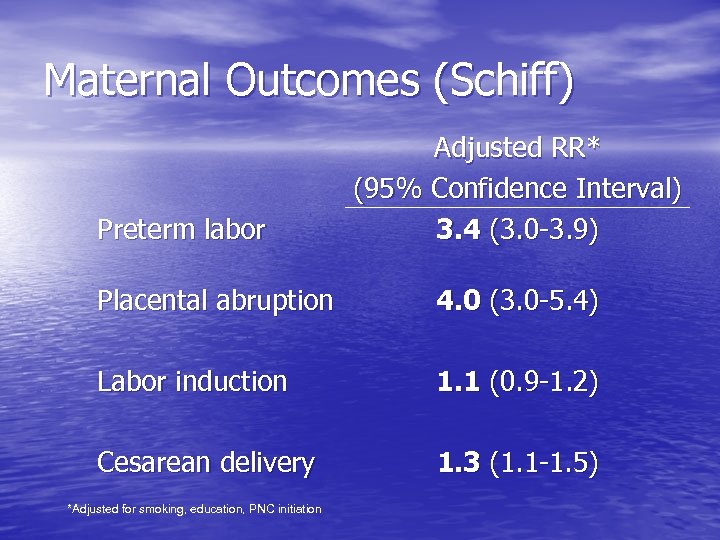 Maternal Outcomes (Schiff) Preterm labor Adjusted RR* (95% Confidence Interval) 3. 4 (3. 0 -3. 9) Placental abruption 4. 0 (3. 0 -5. 4) Labor induction 1. 1 (0. 9 -1. 2) Cesarean delivery 1. 3 (1. 1 -1. 5) *Adjusted for smoking, education, PNC initiation
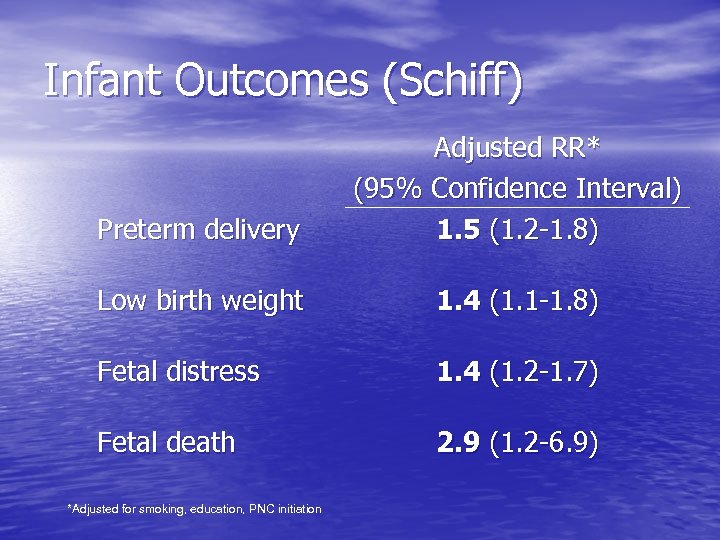 Infant Outcomes (Schiff) Preterm delivery Adjusted RR* (95% Confidence Interval) 1. 5 (1. 2 -1. 8) Low birth weight 1. 4 (1. 1 -1. 8) Fetal distress 1. 4 (1. 2 -1. 7) Fetal death 2. 9 (1. 2 -6. 9) *Adjusted for smoking, education, PNC initiation
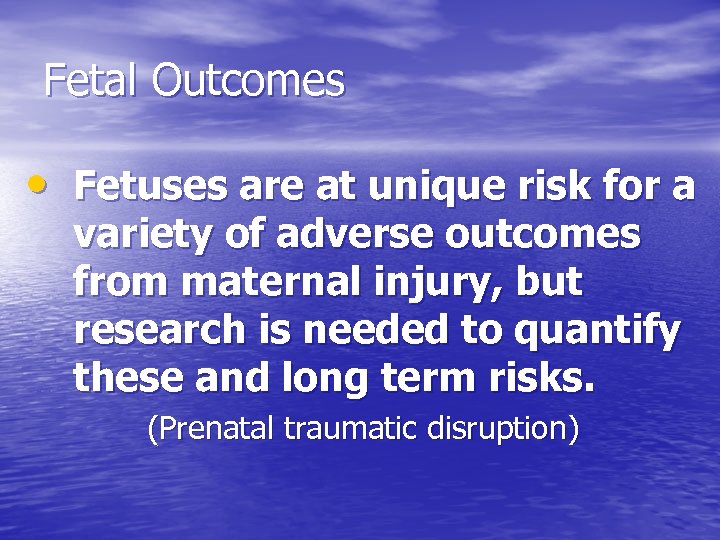 Fetal Outcomes • Fetuses are at unique risk for a variety of adverse outcomes from maternal injury, but research is needed to quantify these and long term risks. (Prenatal traumatic disruption)
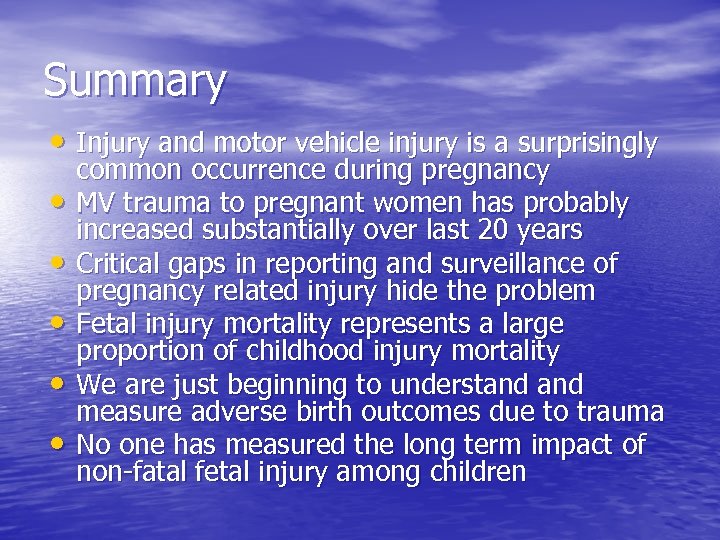 Summary • Injury and motor vehicle injury is a surprisingly • • • common occurrence during pregnancy MV trauma to pregnant women has probably increased substantially over last 20 years Critical gaps in reporting and surveillance of pregnancy related injury hide the problem Fetal injury mortality represents a large proportion of childhood injury mortality We are just beginning to understand measure adverse birth outcomes due to trauma No one has measured the long term impact of non-fatal fetal injury among children
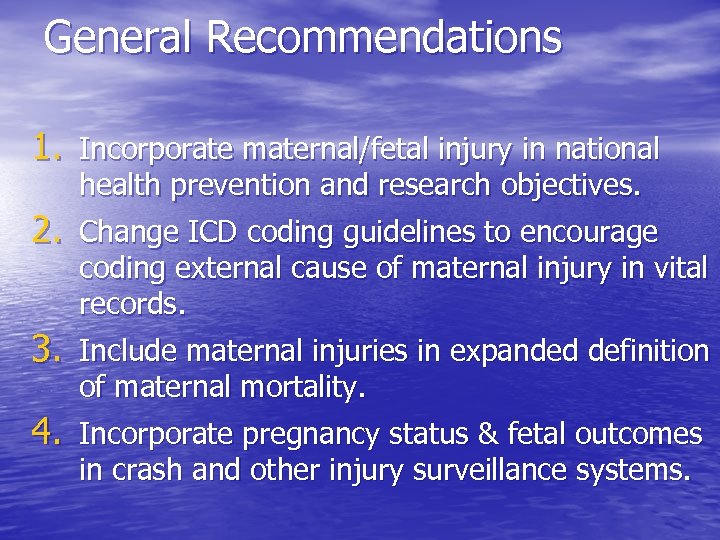 General Recommendations 1. Incorporate maternal/fetal injury in national health prevention and research objectives. 2. Change ICD coding guidelines to encourage coding external cause of maternal injury in vital records. 3. Include maternal injuries in expanded definition of maternal mortality. 4. Incorporate pregnancy status & fetal outcomes in crash and other injury surveillance systems.
 General Recommendations 5. States should continuously link birth to hospital discharge data to create a maternal injury surveillance system. 6. CDC should incorporate injury experience in pregnancy risk assessment research (PRAMS). 7. CDC should improve maternal injury details in their birth defects surveillance system. 8. NICHD should examine ways to study developmental outcomes in children exposed to in utero trauma.
 Motor Vehicle Recommendations 9. All states should continuously link birth and crash data. 10. The FHA should add pregnancy status to driver behavior surveys so maternal behaviors can be better understood. 11. NHTSA should mandate pregnant crash dummies tests to understand crash dynamics on women & fetuses. 12. States should enhance education and primary belt laws to improve the use and proper use of seat belts by pregnant women. 13. International seat-belt exemptions for pregnant women should be removed. 14. Research should explore ways to reduce maternal: • • Driving Motor vehicle travel Crash risk Occupant protection
 Conclusion Questions ? Injury Prevention Begins at Conception!
 Contact Information Hank Weiss, MPH, Ph. D Associate Professor Phone: (412) 648 -9290 Email: hw@injurycontrol. com University of Pittsburgh Center for Injury Research and Control (CIRCL) Links: http: //www. circl. pitt. edu/home/