 Скачать презентацию Initial Care of Burns Checked by Z S
ems_symposium_handel.ppt
- Количество слайдов: 36



Initial Care of Burns Checked by: Z. S. Maksutzhanovna Presented: Zhakypova A
What is a burn? l Cutaneous injury caused by heat, electricity, chemicals, friction, or radiation.
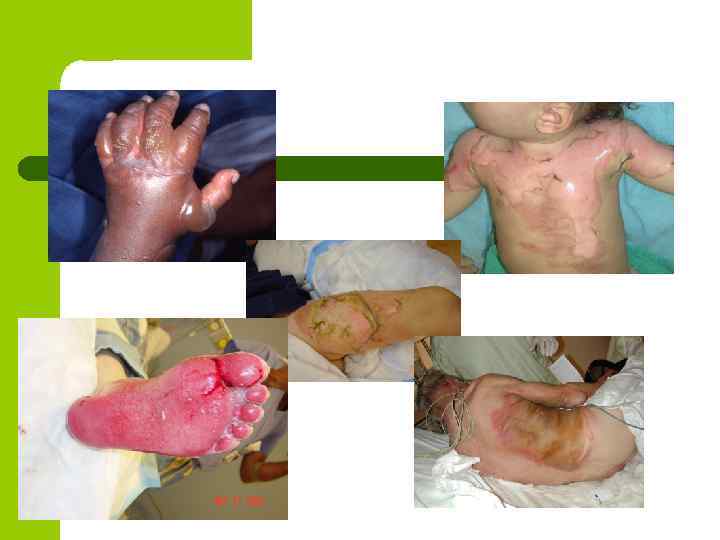
Burn Depth
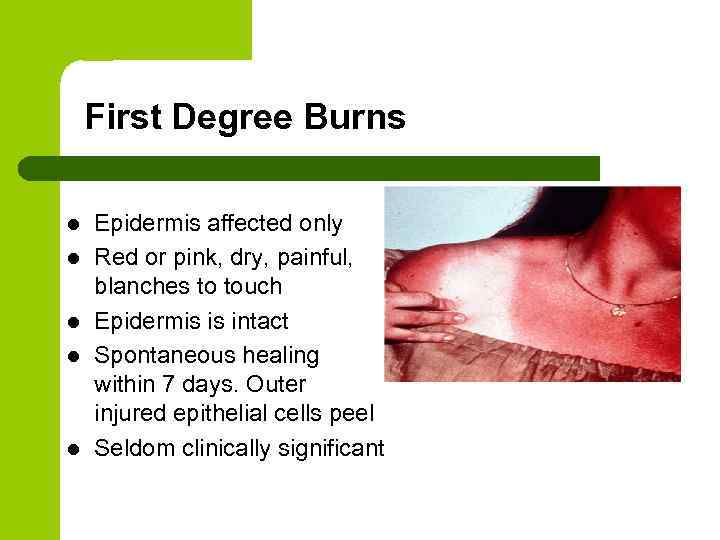
First Degree Burns l l l Epidermis affected only Red or pink, dry, painful, blanches to touch Epidermis is intact Spontaneous healing within 7 days. Outer injured epithelial cells peel Seldom clinically significant
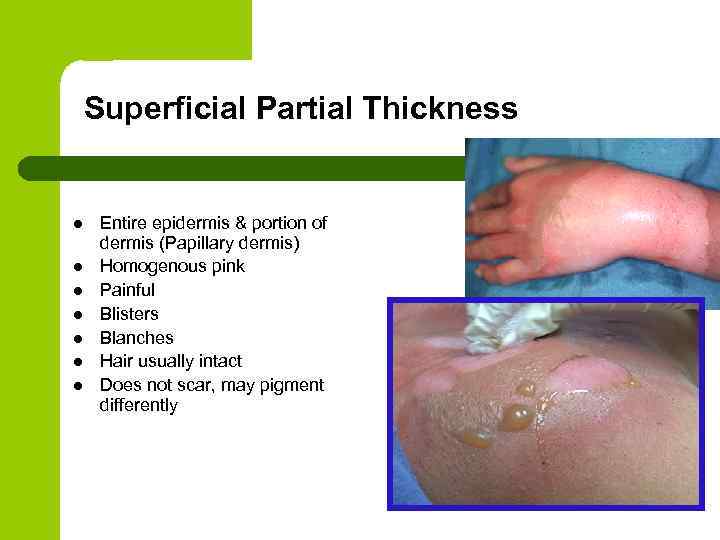
Superficial Partial Thickness l l l l Entire epidermis & portion of dermis (Papillary dermis) Homogenous pink Painful Blisters Blanches Hair usually intact Does not scar, may pigment differently
Deep partial thickness l l l l Reticular dermis Mottled red and white Not painful to pinprick or pressure Does not blanch Heals > 3 weeks Usually scars Need to excise and graft
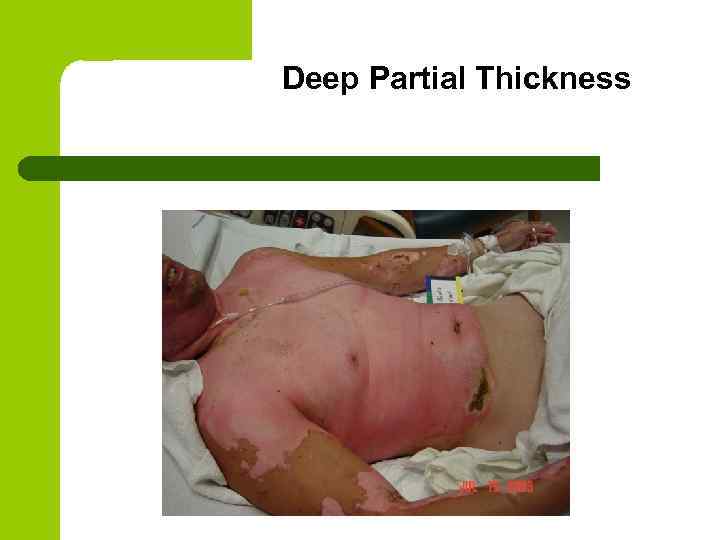
Deep Partial Thickness
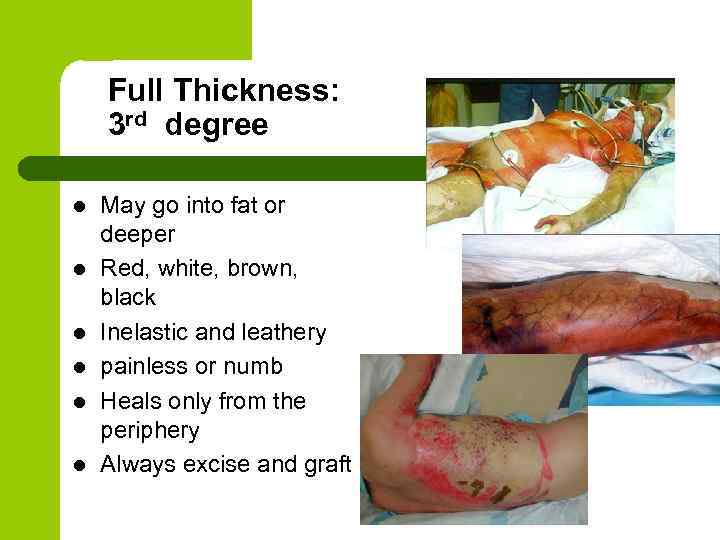
Full Thickness: 3 rd degree l l l May go into fat or deeper Red, white, brown, black Inelastic and leathery painless or numb Heals only from the periphery Always excise and graft

Etiology
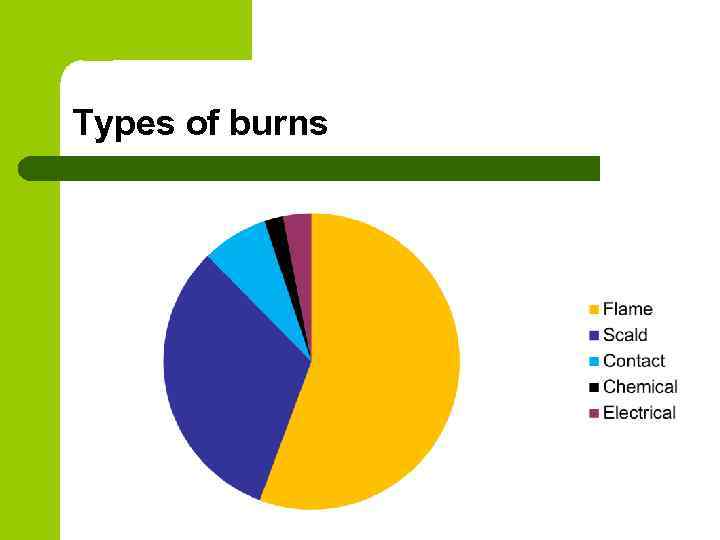
Types of burns
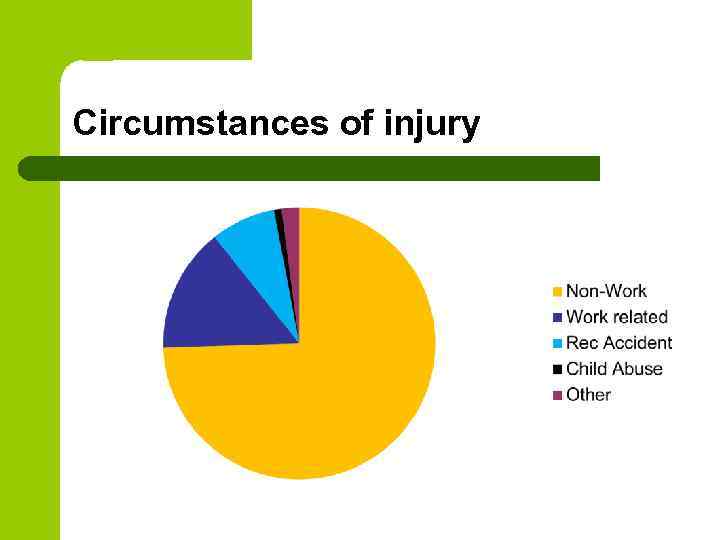
Circumstances of injury
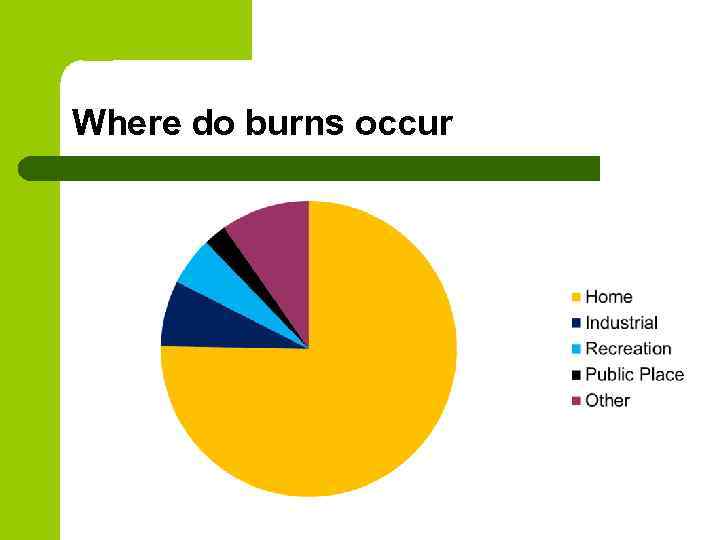
Where do burns occur
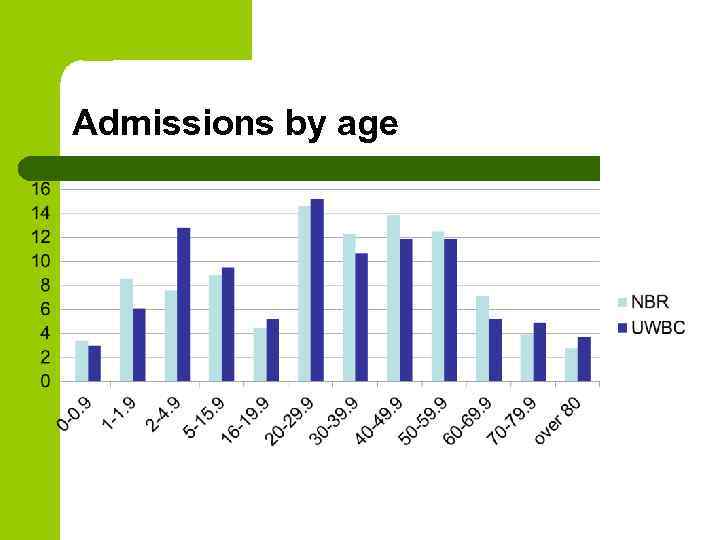
Admissions by age
Inhalation Injury Exposure to heat and toxic products of combustion l l 50% of fire deaths are related to inhalation injuries Asphyxia/Carbon Monoxide displacement of oxygen
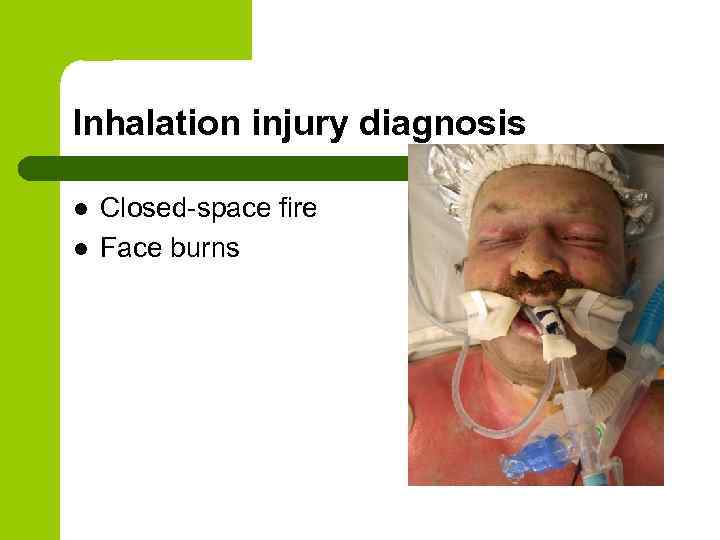
Inhalation injury diagnosis l l Closed-space fire Face burns
Terminology l Inhalation injury “nonspecific” – Thermal injury l l – Local chemical irritation l l – Upper airway Heat and toxic fumes Throughout airway Primarily toxic fumes Systemic toxicity l CO
Signs and symptoms l l l l Lacrimation Cough Hoarseness Dyspnea Disorientation Anxiety Wheezing l l l Conjunctivitis Carbonaceous sputum Singed hairs Stridor Bronchorrhea
Pathophysiology l l The main factor responsible for mortality in thermally injured patients Carbon monoxide the most common toxin – – 200 times greater affinity Competitive inhibition with cytochrome P-450
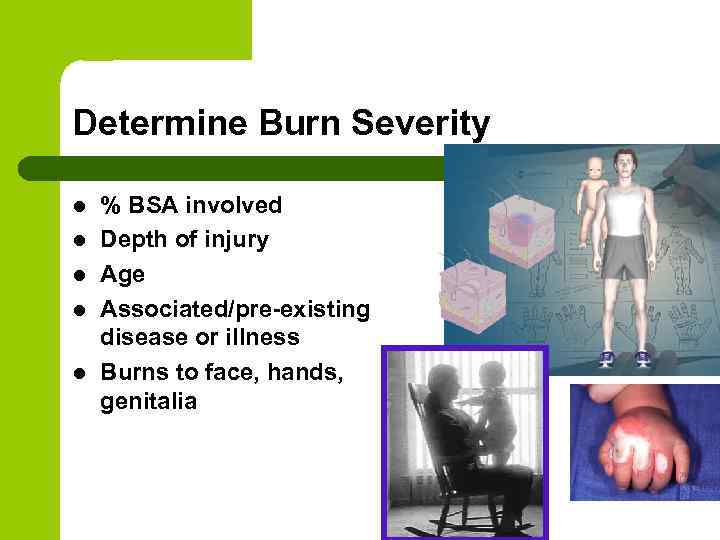
Determine Burn Severity l l l % BSA involved Depth of injury Age Associated/pre-existing disease or illness Burns to face, hands, genitalia
Burn Extent Total Body Surface Area (TBSA)? l l l Rule of nines Lund and Browder chart Patients palm = about 1% TBSA
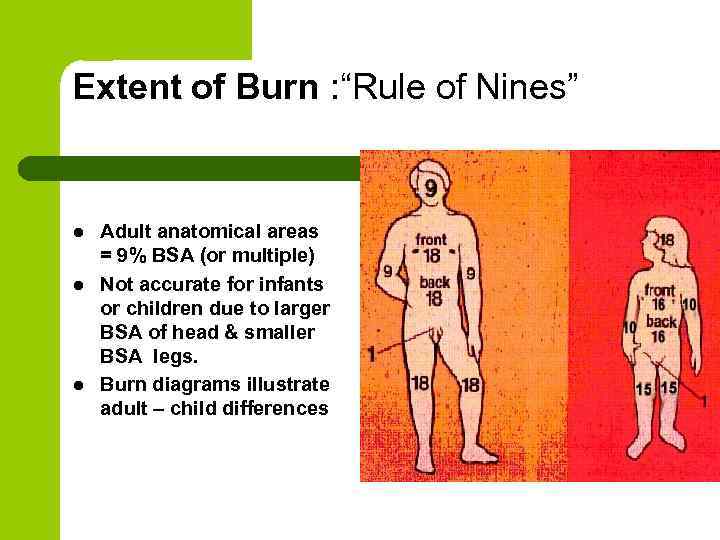
Extent of Burn : “Rule of Nines” l l l Adult anatomical areas = 9% BSA (or multiple) Not accurate for infants or children due to larger BSA of head & smaller BSA legs. Burn diagrams illustrate adult – child differences
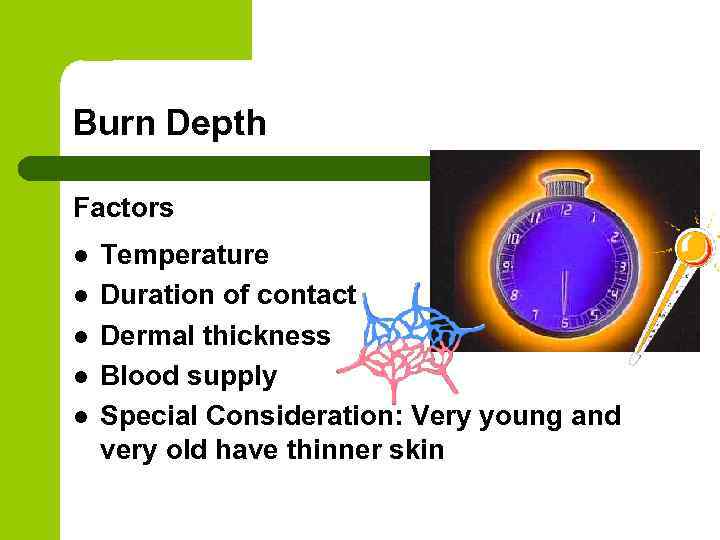
Burn Depth Factors l l l Temperature Duration of contact Dermal thickness Blood supply Special Consideration: Very young and very old have thinner skin
Burns begin at 44 degrees C l 6 hours for burns to occur at 111 degrees F (44 C) l 1 second of burns to occur at 140 degrees F (60 C)
Pain control
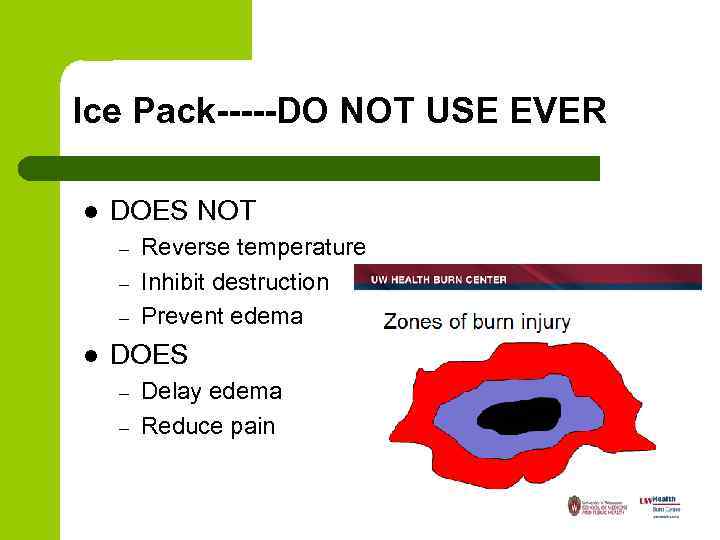
Ice Pack-----DO NOT USE EVER l DOES NOT – – – l Reverse temperature Inhibit destruction Prevent edema DOES – – Delay edema Reduce pain
Non-medication methods l Cover burns with plastic wrap – – – Wet dressings will stick and cause more pain Other burn dressings are expensive and not necessary Quik Clot is expensive and will not provide any patient benefit
Medication l Medications – – Opioids Narcotics Pain medications IV Analgesia
Resuscitation
IV access l l l < 15% TBSA – oral resuscitation 15 – 40% TBSA – one large bore IV > 40% -- two large bore IV’s should be in the upper extremities Suture IV’s started through burns
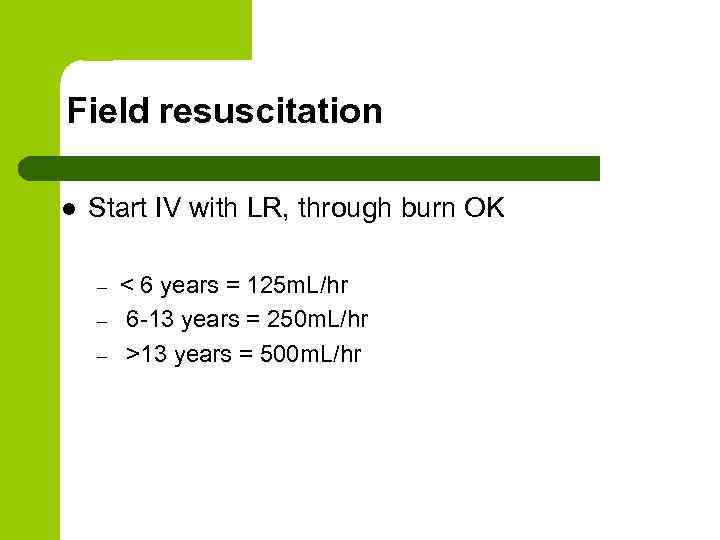
Field resuscitation l Start IV with LR, through burn OK – – – < 6 years = 125 m. L/hr 6 -13 years = 250 m. L/hr >13 years = 500 m. L/hr
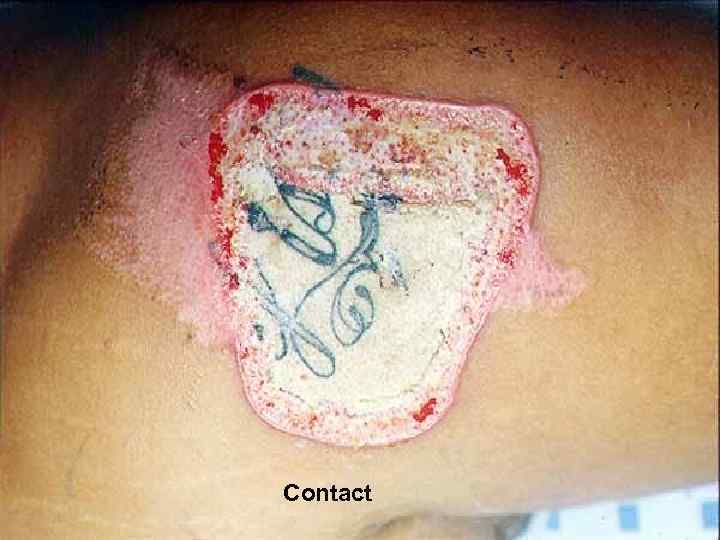
l Contact
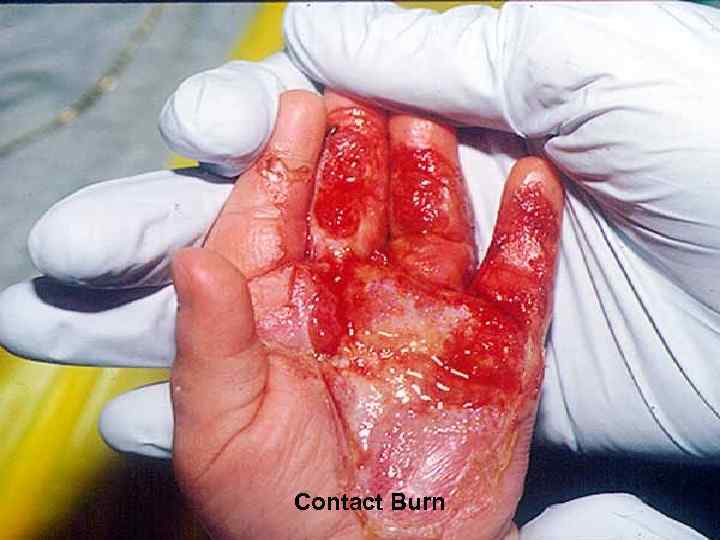
l Contact Burn
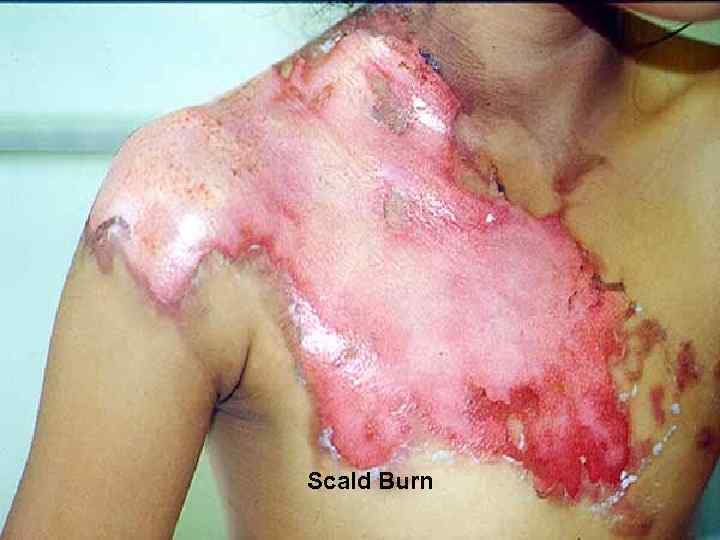
l Scald Burn
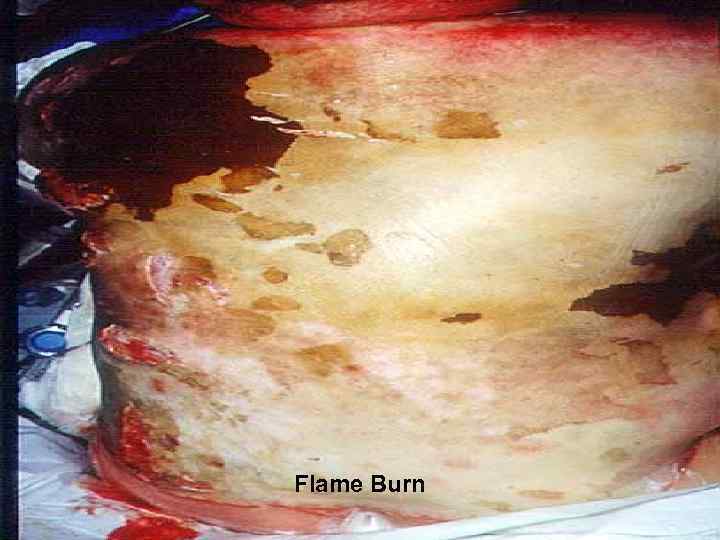
l Flame Burn
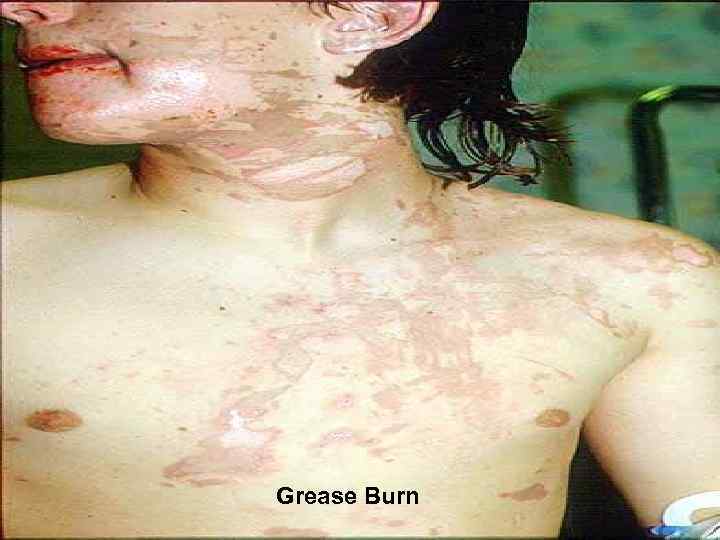
l Grease Burn
l
Скачать презентацию Initial Care of Burns Checked by Z S
ems_symposium_handel.ppt