 Скачать презентацию INITIAL ASSESSMENT OF THE TRAUMA PATIENT Rambam
Initial Assessment Of the Trauma patient2011.ppt
- Количество слайдов: 60



INITIAL ASSESSMENT OF THE TRAUMA PATIENT • Rambam Medical Center • Dr Nordkin Dmitri
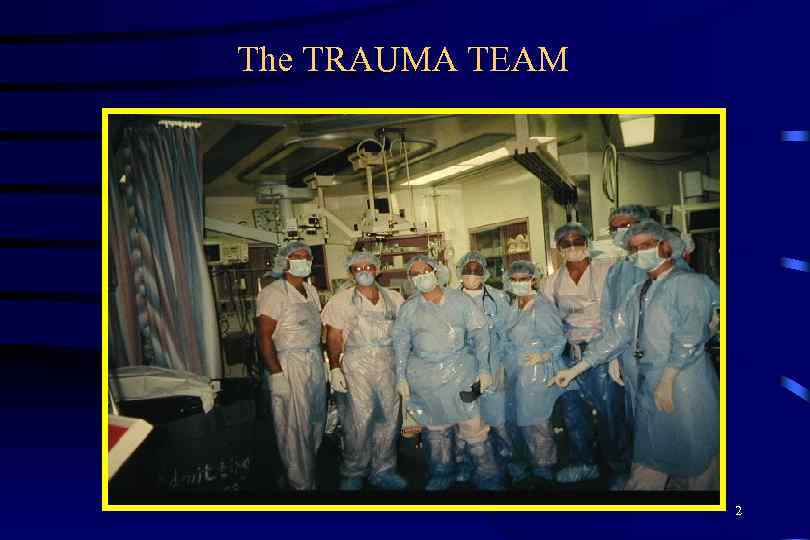
The TRAUMA TEAM 2
Concepts of Initial Assessment • • • Rapid Primary Survey Resuscitation Detailed Secondary Survey Re-evaluation Initiate Definitive Care 3
Concepts of Initial Assessment Triage Sorting of Patients According to ABCs and Available Resources 4
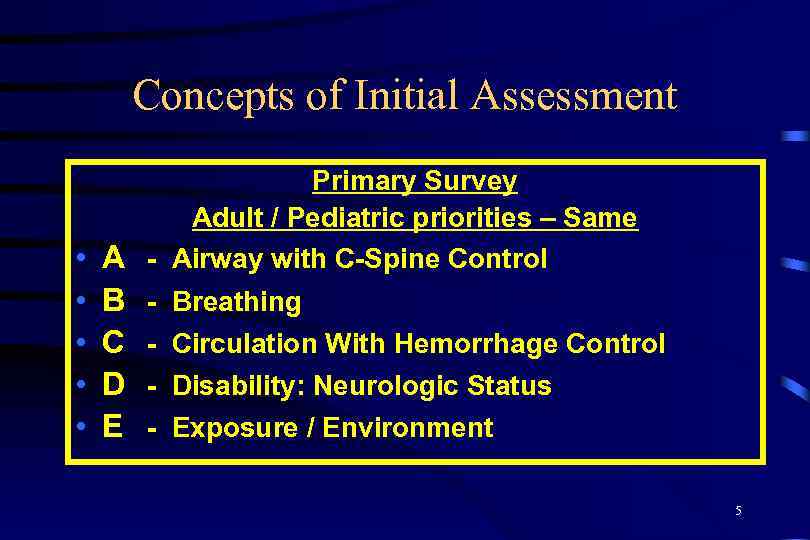
Concepts of Initial Assessment Primary Survey Adult / Pediatric priorities – Same • A - Airway with C-Spine Control • • B C D E - Breathing - Circulation With Hemorrhage Control - Disability: Neurologic Status - Exposure / Environment 5
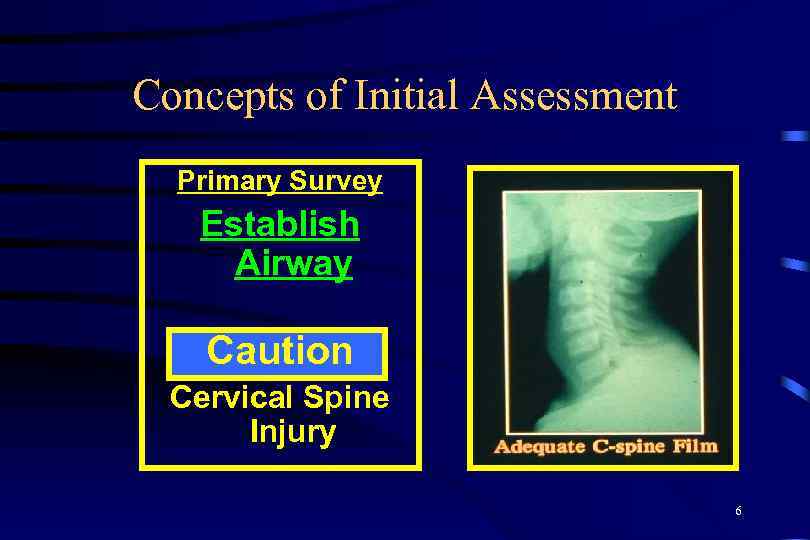
Concepts of Initial Assessment Primary Survey Establish Airway Caution Cervical Spine Injury 6
Airway Management
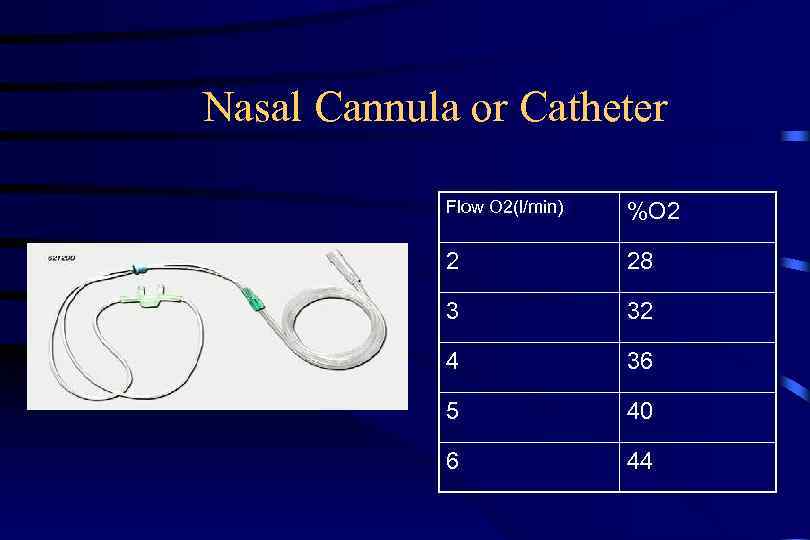
Nasal Cannula or Catheter Flow O 2(l/min) %O 2 2 28 3 32 4 36 5 40 6 44
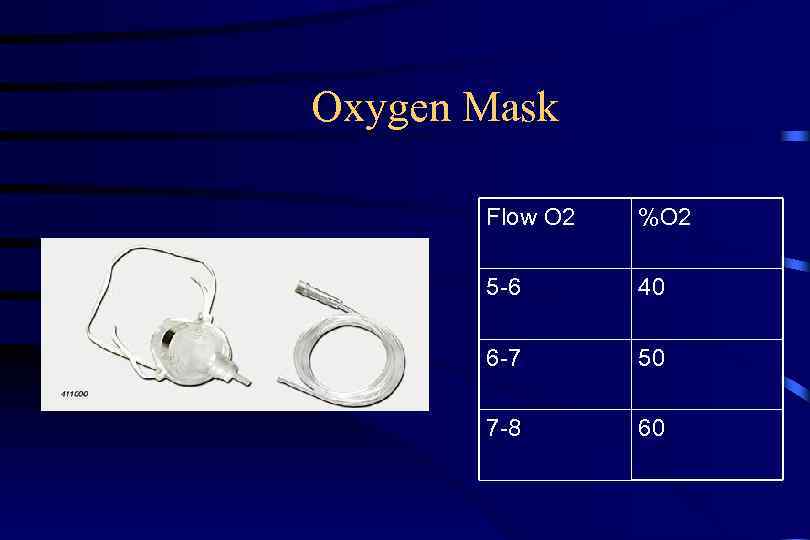
Oxygen Mask Flow O 2 %O 2 5 -6 40 6 -7 50 7 -8 60
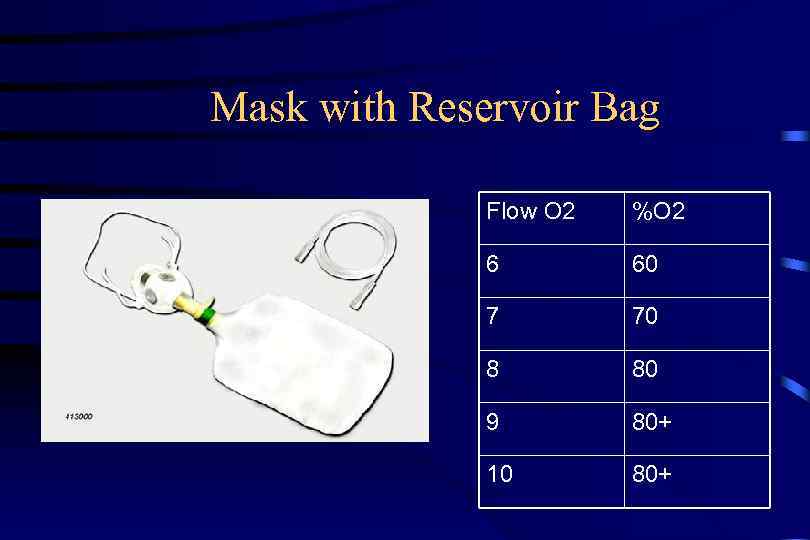
Mask with Reservoir Bag Flow O 2 %O 2 6 60 7 70 8 80 9 80+ 10 80+
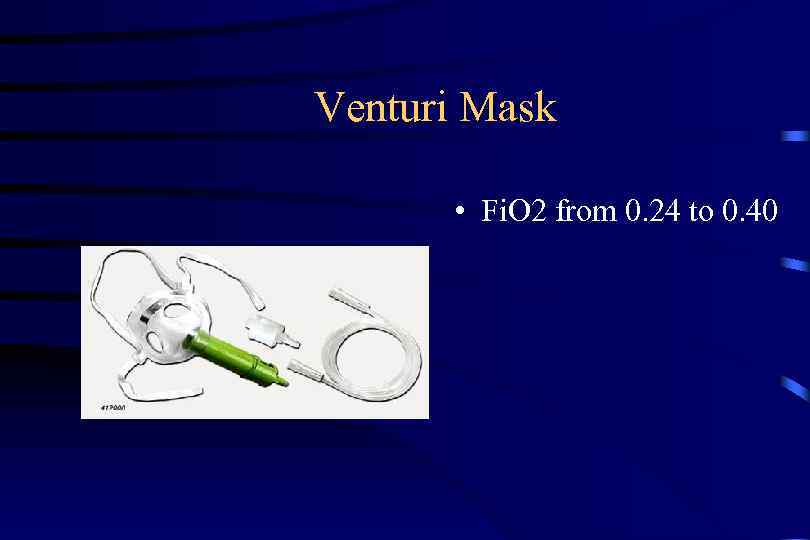
Venturi Mask • Fi. O 2 from 0. 24 to 0. 40
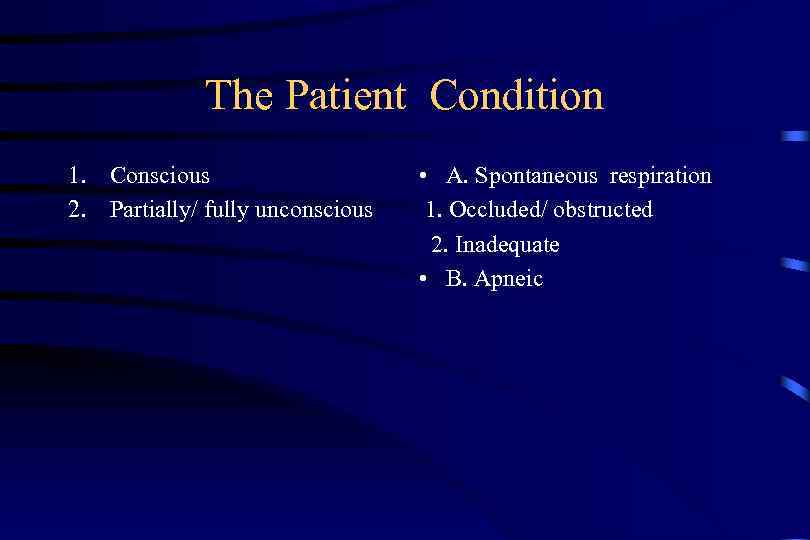
The Patient Condition 1. Conscious 2. Partially/ fully unconscious • A. Spontaneous respiration 1. Occluded/ obstructed 2. Inadequate • B. Apneic
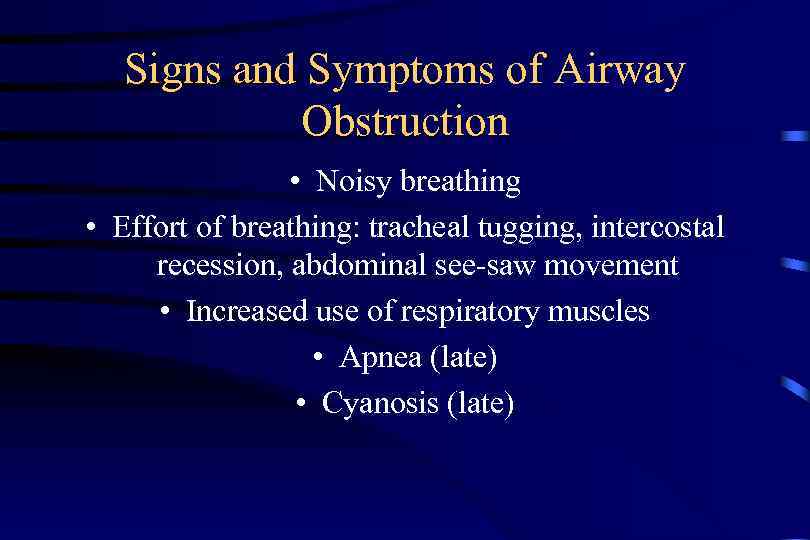
Signs and Symptoms of Airway Obstruction • Noisy breathing • Effort of breathing: tracheal tugging, intercostal recession, abdominal see-saw movement • Increased use of respiratory muscles • Apnea (late) • Cyanosis (late)
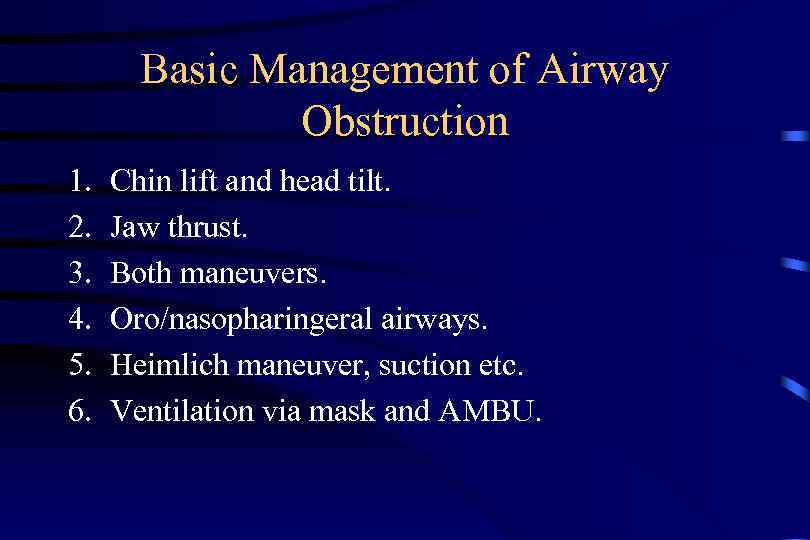
Basic Management of Airway Obstruction 1. 2. 3. 4. 5. 6. Chin lift and head tilt. Jaw thrust. Both maneuvers. Oro/nasopharingeral airways. Heimlich maneuver, suction etc. Ventilation via mask and AMBU.
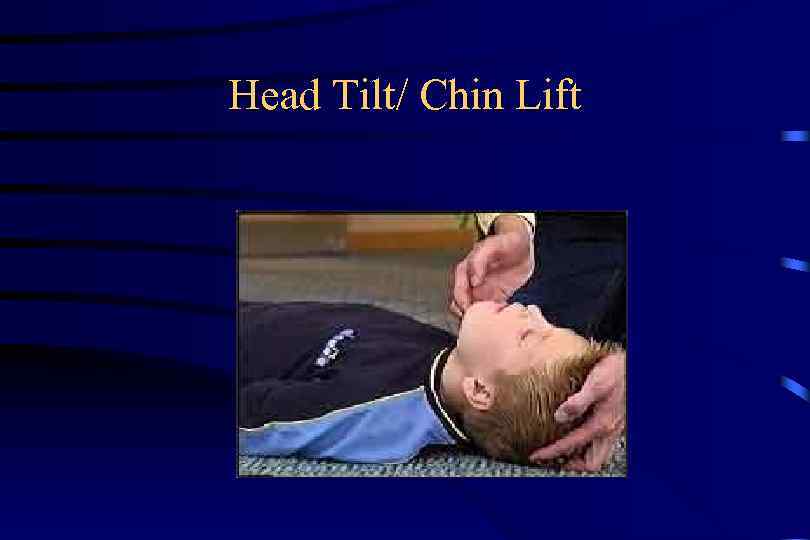
Head Tilt/ Chin Lift
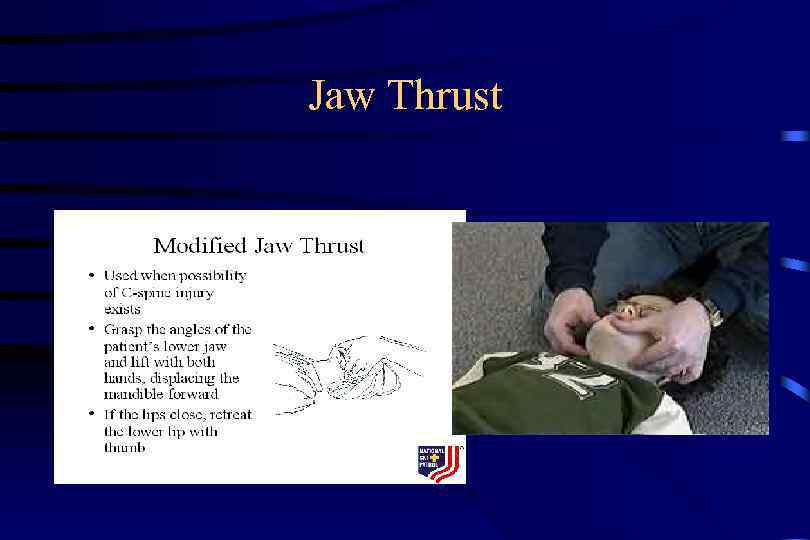
Jaw Thrust
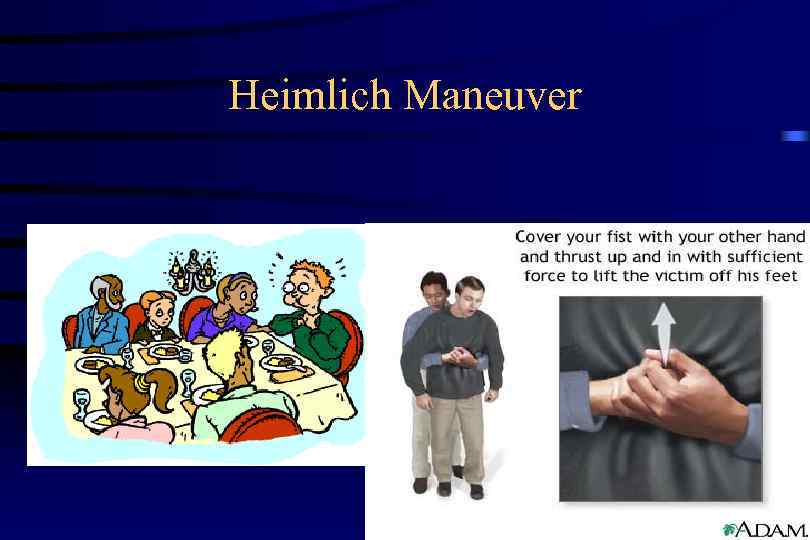
Heimlich Maneuver
Modes of ventilation • • • Mouth-to-mouse/ mouth-to-nose Mouth-to-mask Bag-valve device Transtracheal jet-ventilation Automatic transport ventilators
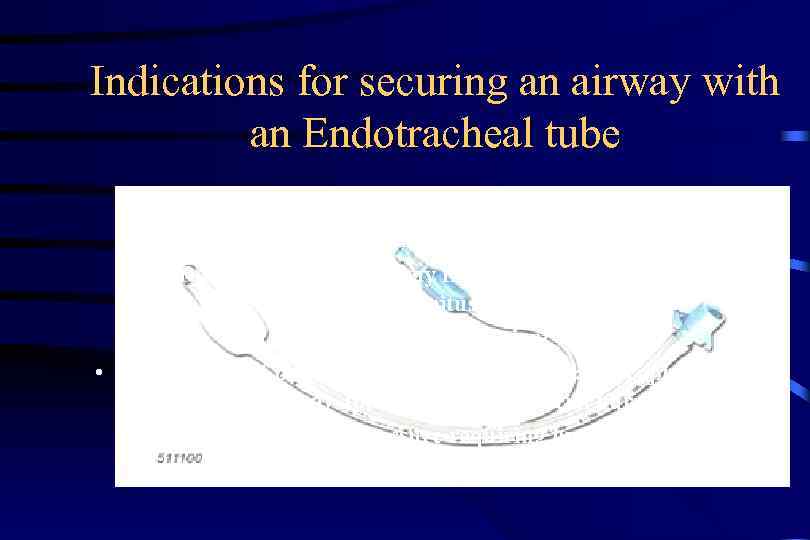
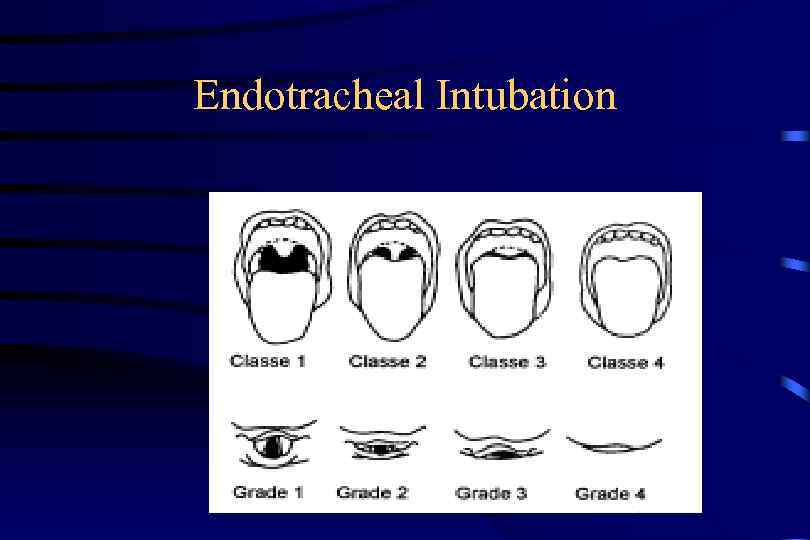
Indications for securing an airway with an Endotracheal tube • Apnea • Obstruction of upper airway • Protection of lower airway from soiling with blood or vomitus • Respiratory insufficiency • Impending of potential compromise of airway (prophylactic intubation)- for example, after facial burns • Raised intracranial pressure requiring hyperventilation
Definitive airway
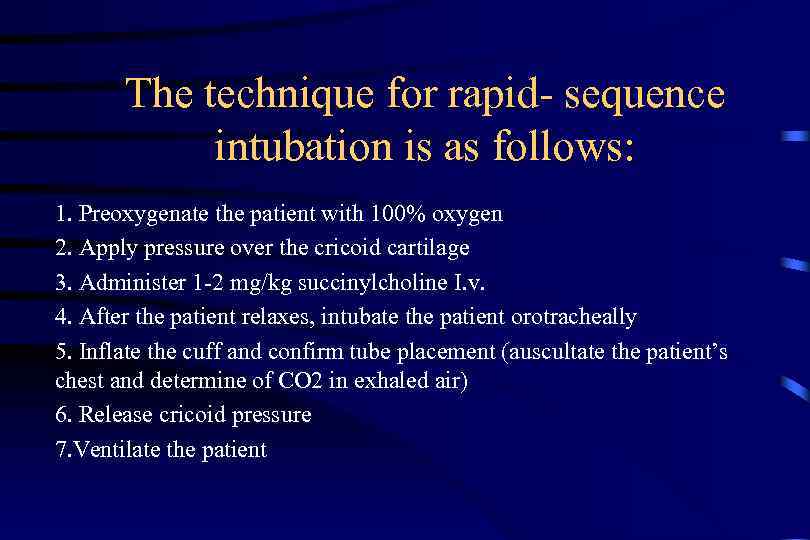
The technique for rapid- sequence intubation is as follows: 1. Preoxygenate the patient with 100% oxygen 2. Apply pressure over the cricoid cartilage 3. Administer 1 -2 mg/kg succinylcholine I. v. 4. After the patient relaxes, intubate the patient orotracheally 5. Inflate the cuff and confirm tube placement (auscultate the patient’s chest and determine of CO 2 in exhaled air) 6. Release cricoid pressure 7. Ventilate the patient
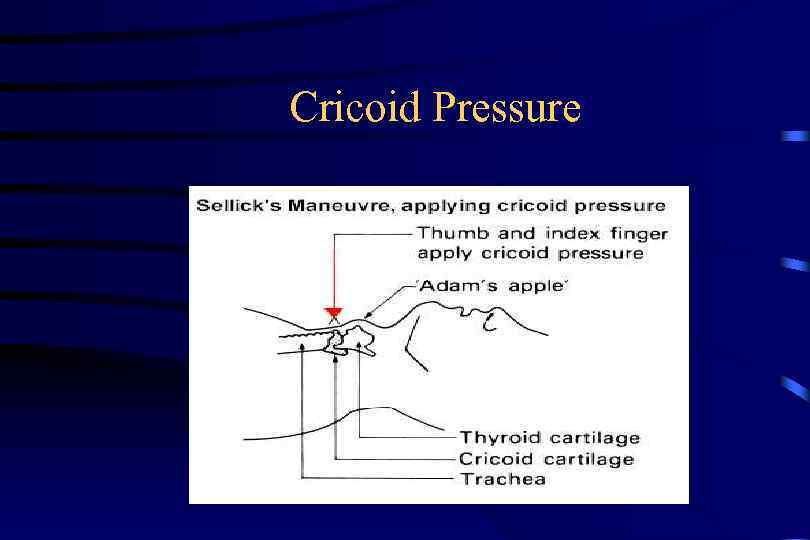
Cricoid Pressure
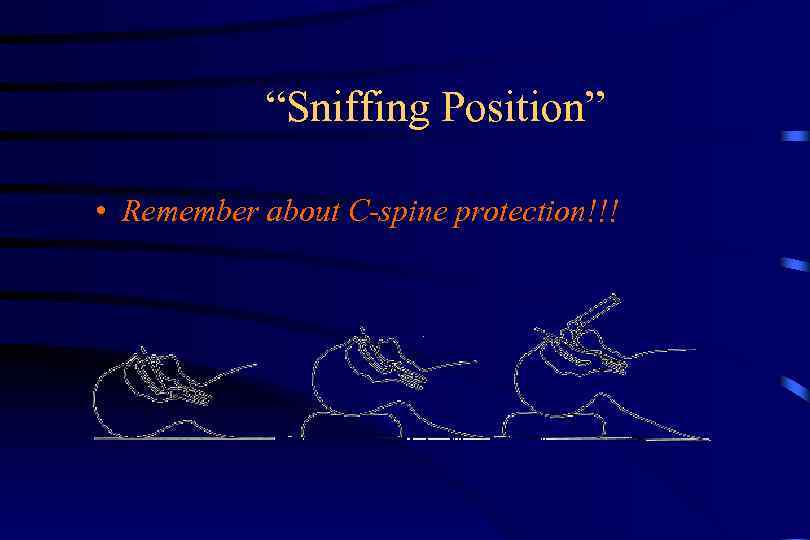
“Sniffing Position” • Remember about C-spine protection!!!
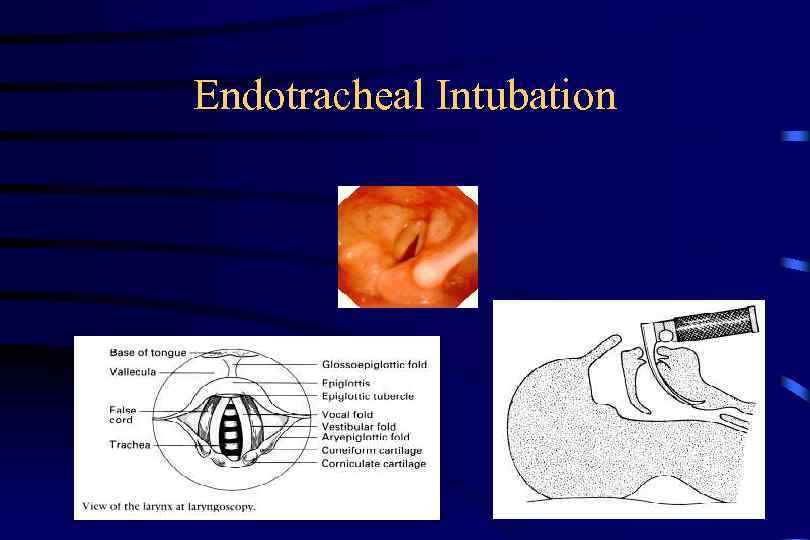
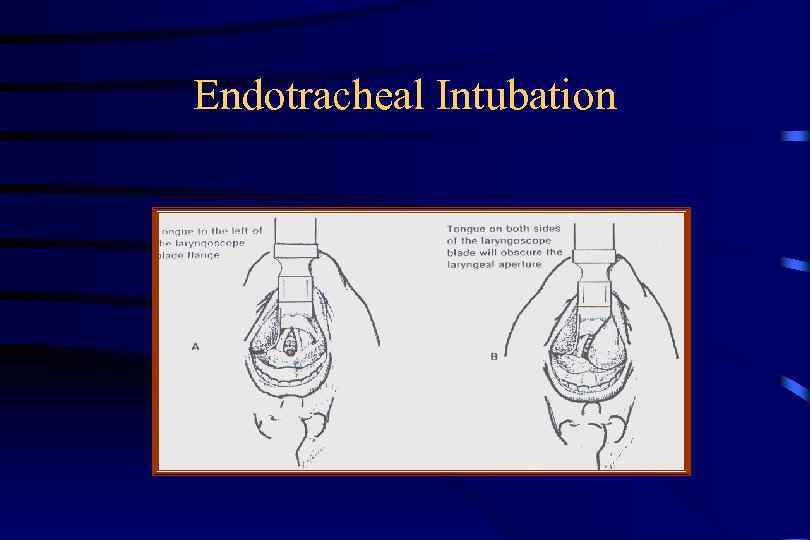
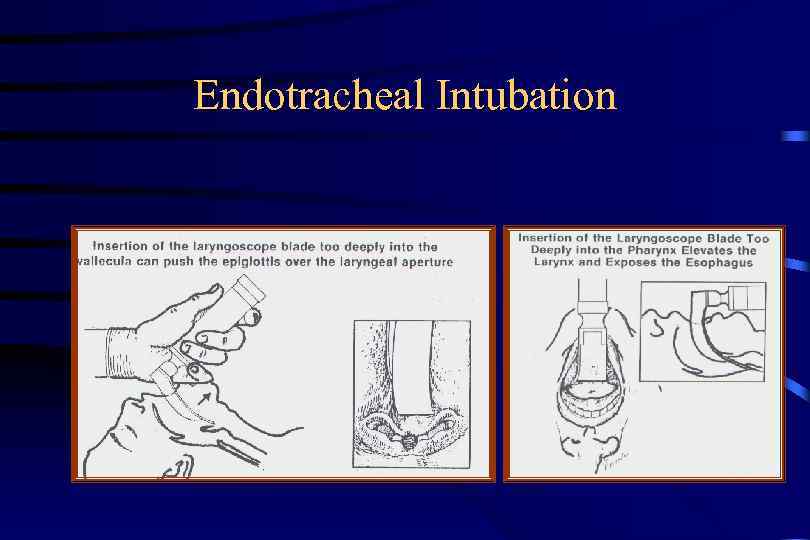
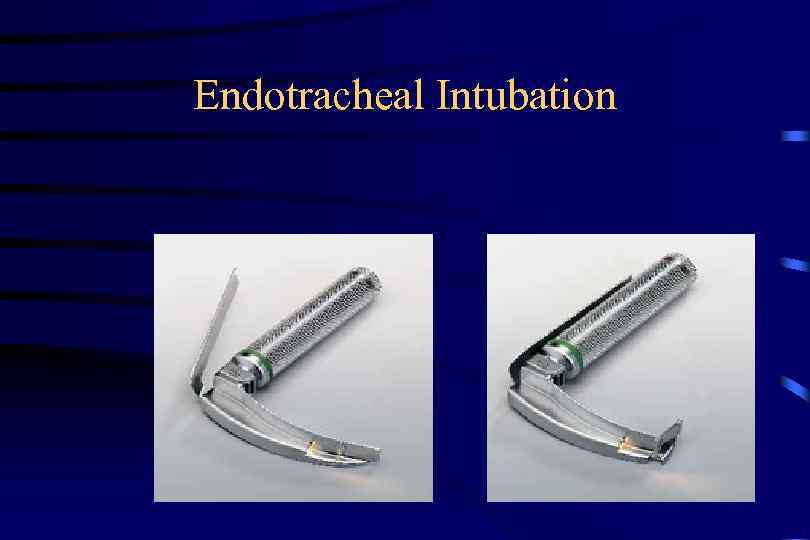
Endotracheal Intubation
Endotracheal Intubation
Endotracheal Intubation
Endotracheal Intubation
Endotracheal Intubation
Alternatives to Endotracheal Intubation
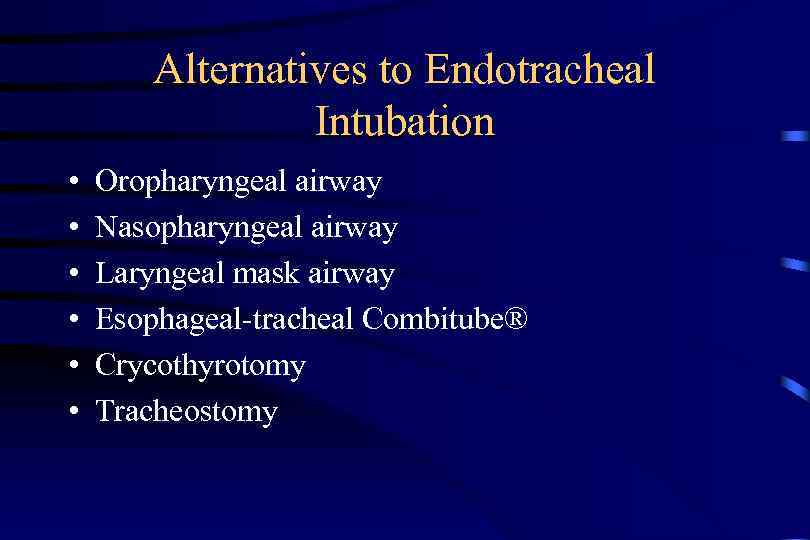
Alternatives to Endotracheal Intubation • • • Oropharyngeal airway Nasopharyngeal airway Laryngeal mask airway Esophageal-tracheal Combitube® Crycothyrotomy Tracheostomy
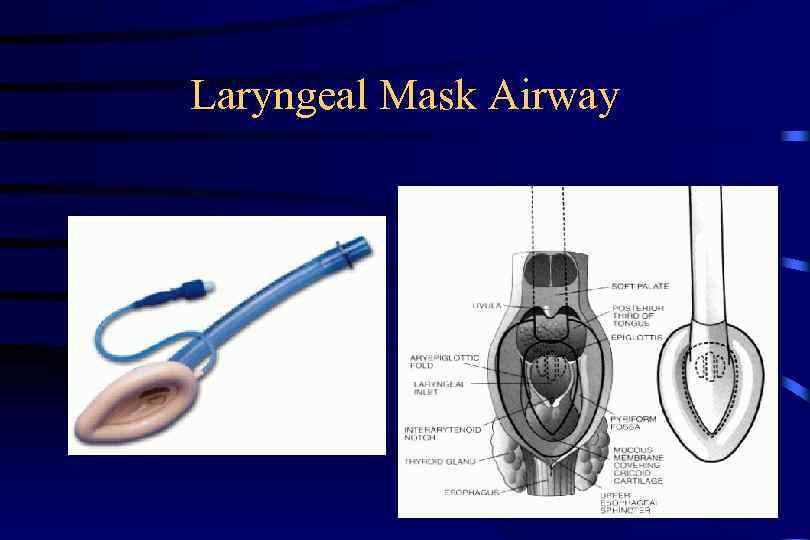
Laryngeal Mask Airway
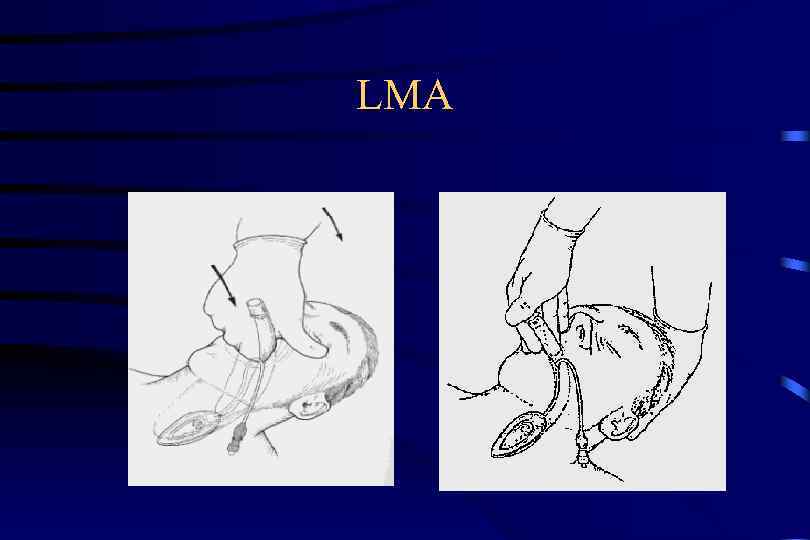
LMA
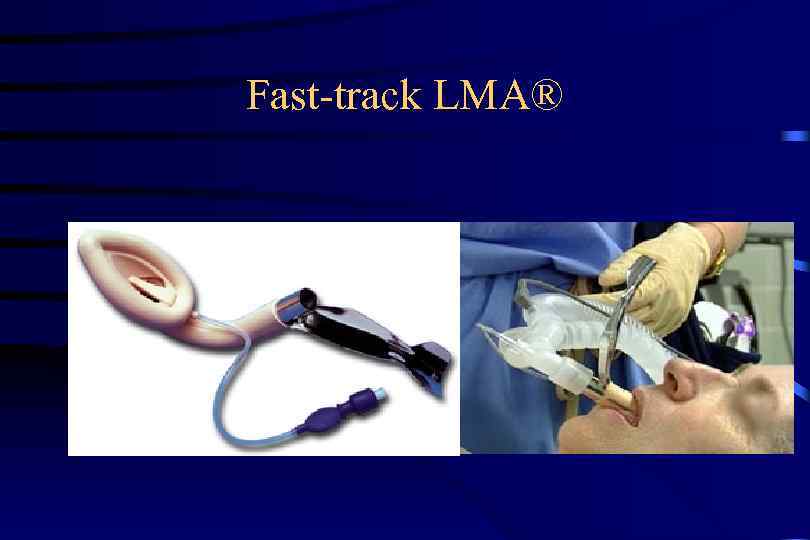
Fast-track LMA®
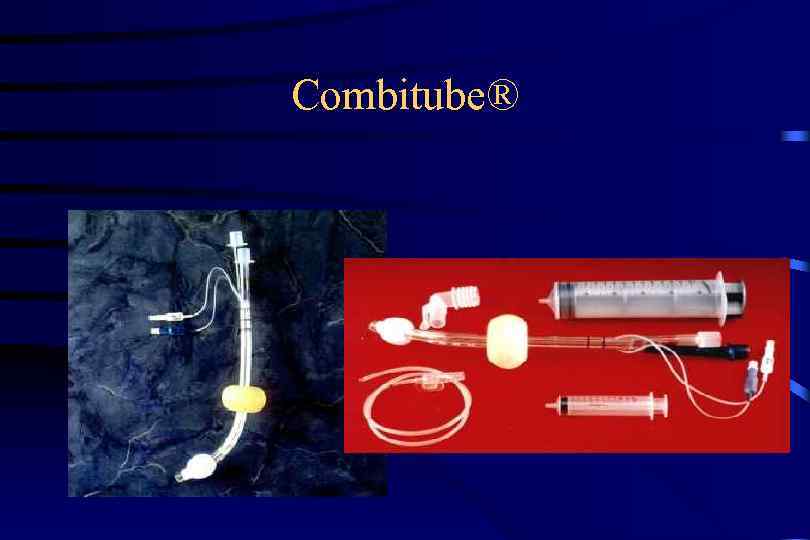
Combitube®
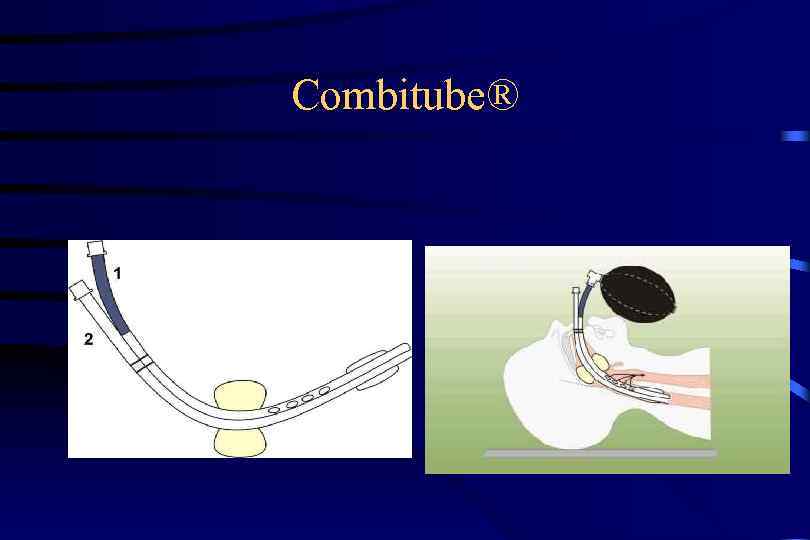
Combitube®
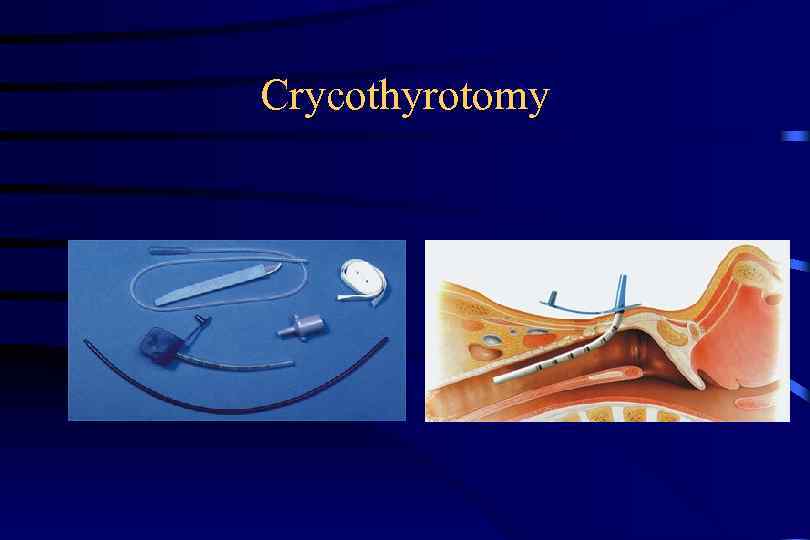
Crycothyrotomy
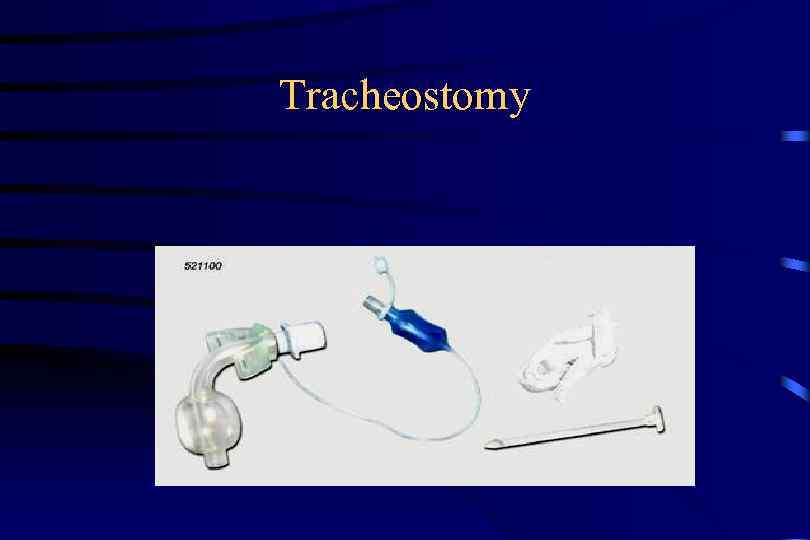
Tracheostomy
Concepts of Initial Assessment Primary Survey Assume C-Spine Injury !! • Multi System Trauma • Altered Level of Conciousness • Blunt Injury Above Clavicles 38
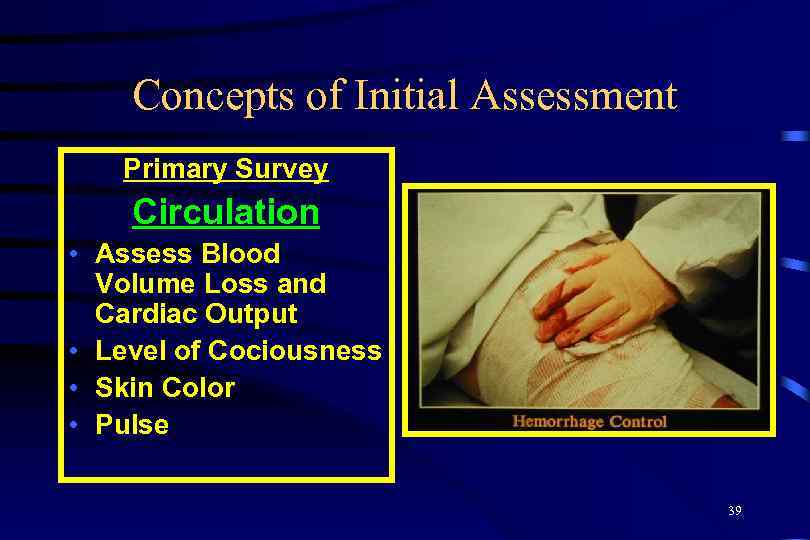
Concepts of Initial Assessment Primary Survey Circulation • Assess Blood Volume Loss and Cardiac Output • Level of Cociousness • Skin Color • Pulse 39
Concepts of Initial Assessment Primary Survey Disability: Neurological Evaluation • Level of Conciousness – – A - Alert V – Response To Voice P - Response To Pain U - Unresponsive • Pupils 40
Concepts of Initial Assessment Primary Survey Exposure / Environment • Undress Pt Completely • Protect from Hypothermia 41
Concepts of Initial Assessment Resuscitation • • • Protect / Secure Airway Ventilate / Oxygenate Fluid Therapy – New concept ? ? !! Protect from Hypothermia Caution: Urinary / Gastric Catheters Unless Contraindicated 42
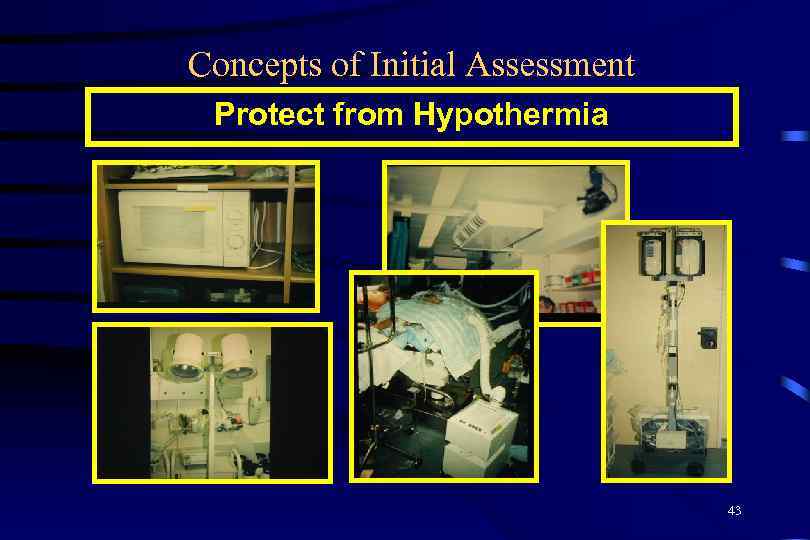
Concepts of Initial Assessment Protect from Hypothermia 43
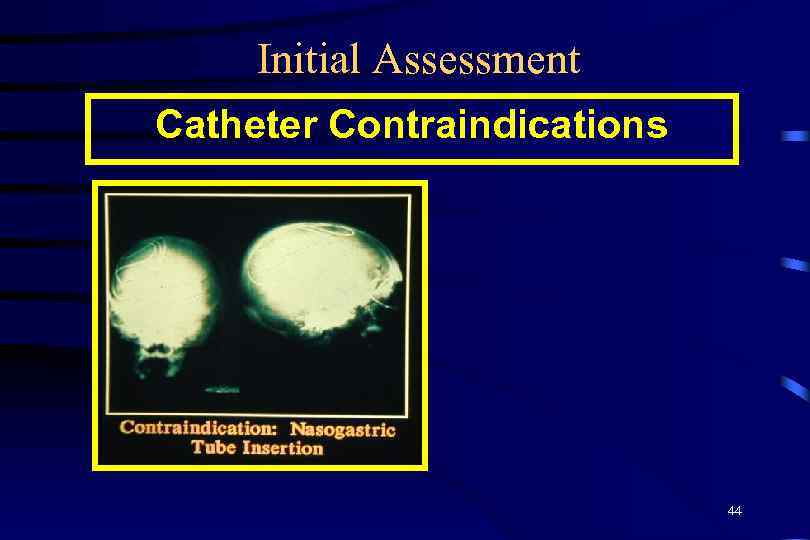
Initial Assessment Catheter Contraindications 44
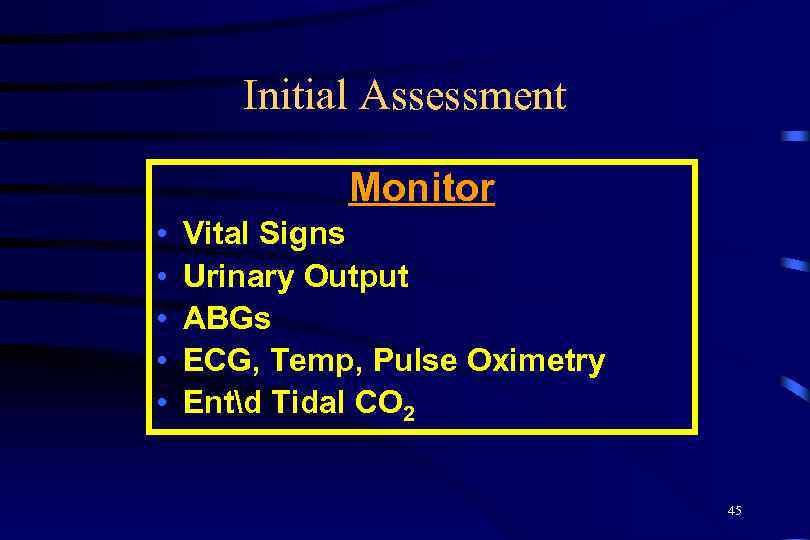
Initial Assessment Monitor • • • Vital Signs Urinary Output ABGs ECG, Temp, Pulse Oximetry Entd Tidal CO 2 45
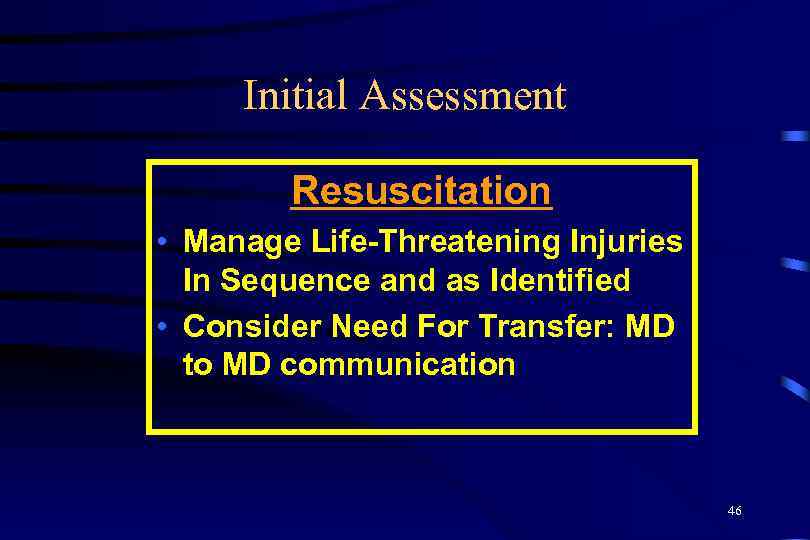
Initial Assessment Resuscitation • Manage Life-Threatening Injuries In Sequence and as Identified • Consider Need For Transfer: MD to MD communication 46
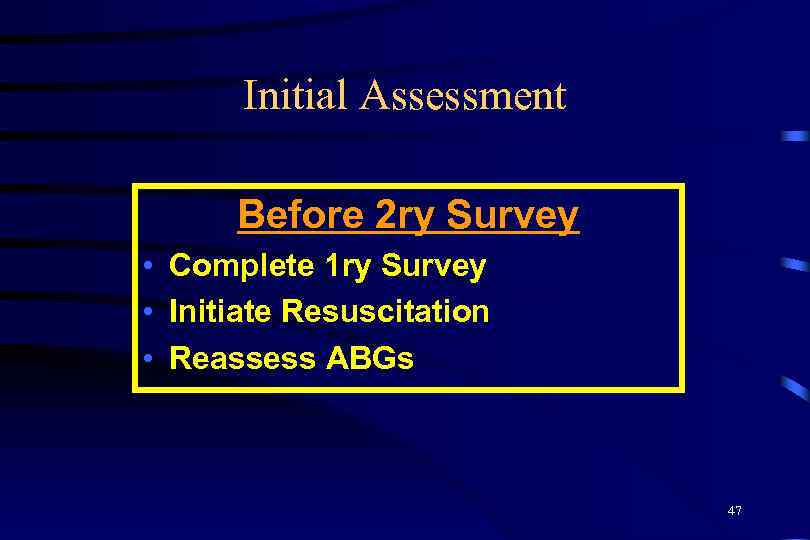
Initial Assessment Before 2 ry Survey • Complete 1 ry Survey • Initiate Resuscitation • Reassess ABGs 47
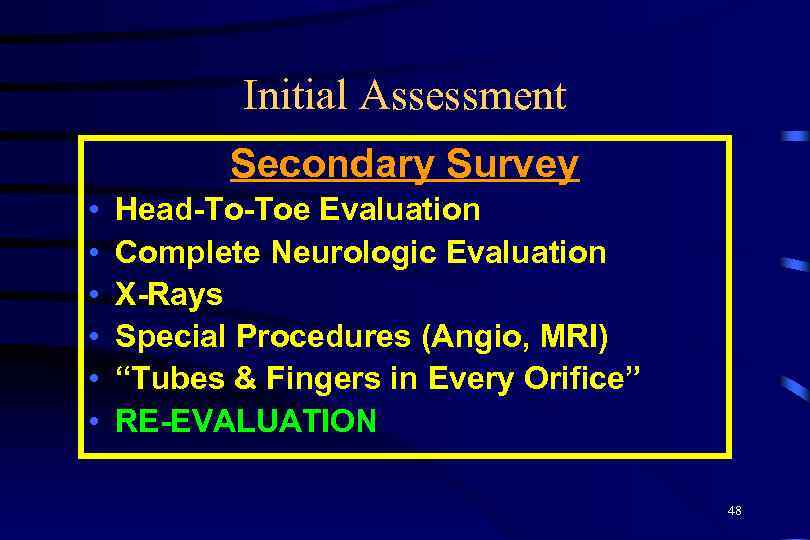
Initial Assessment Secondary Survey • • • Head-To-Toe Evaluation Complete Neurologic Evaluation X-Rays Special Procedures (Angio, MRI) “Tubes & Fingers in Every Orifice” RE-EVALUATION 48
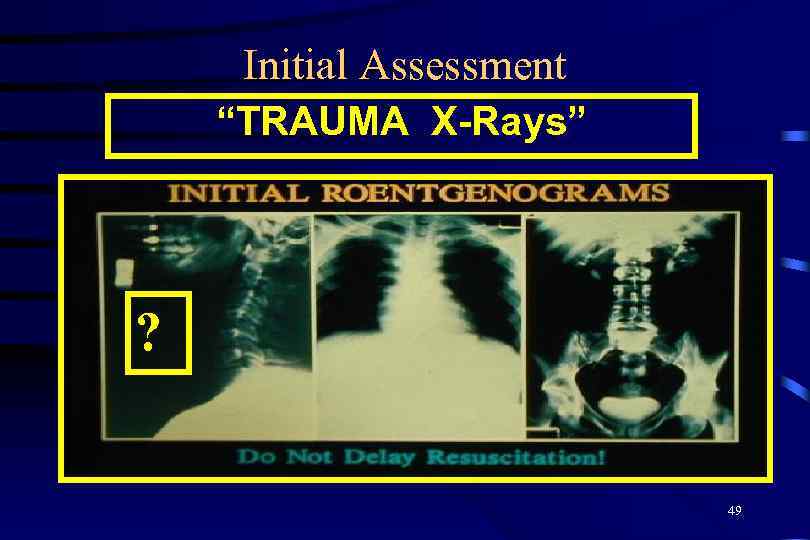
Initial Assessment “TRAUMA X-Rays” ? 49
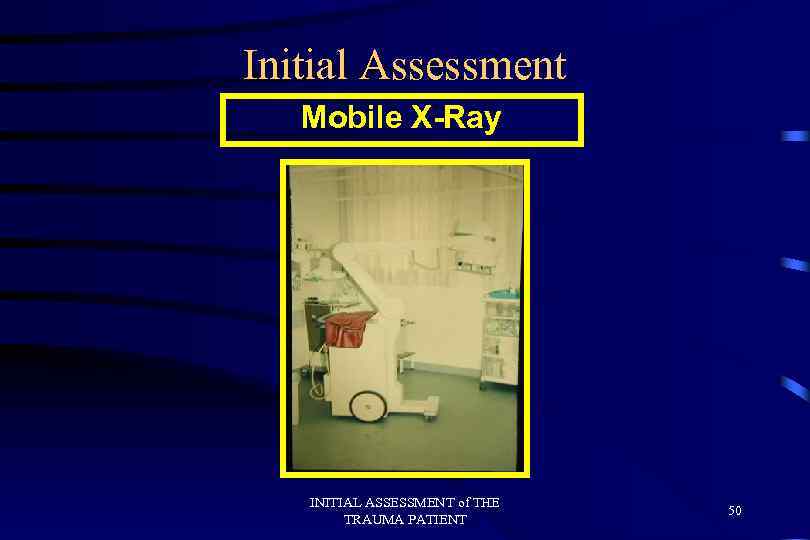
Initial Assessment Mobile X-Ray INITIAL ASSESSMENT of THE TRAUMA PATIENT 50
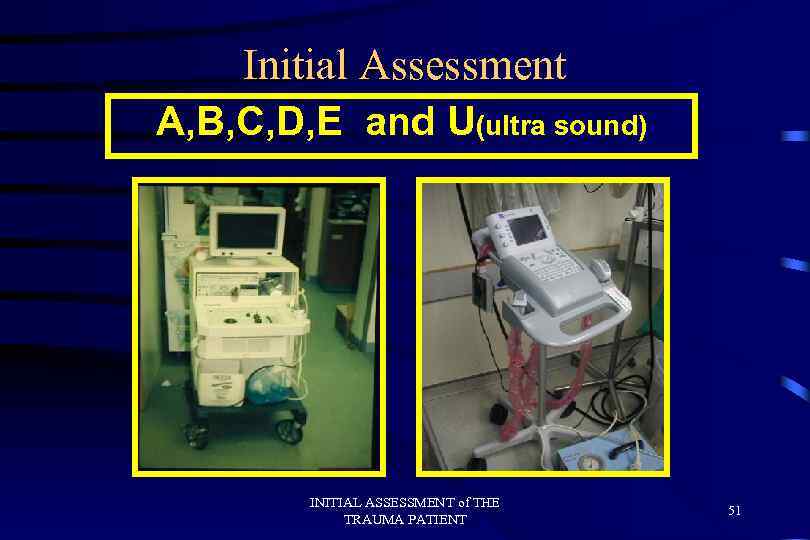
Initial Assessment A, B, C, D, E and U(ultra sound) INITIAL ASSESSMENT of THE TRAUMA PATIENT 51
Initial Assessment Secondary Survey • Mechanism Of Injury: BLUNT – Direction of Impact Determines Injury Patterns – History / Description of Events – Age Factors INITIAL ASSESSMENT of THE TRAUMA PATIENT 52
Initial Assessment Secondary Survey • Mechanism Of Injury: Penetrating – Anatomic Factors – Energy Transfer Factors • Velocity and Caliber of Bullet • Trajectory • Distance INITIAL ASSESSMENT of THE TRAUMA PATIENT 53
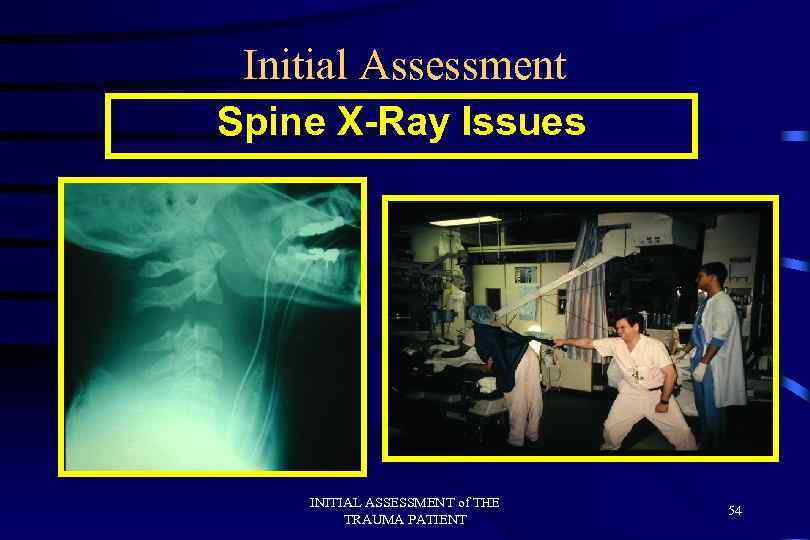
Initial Assessment Spine X-Ray Issues INITIAL ASSESSMENT of THE TRAUMA PATIENT 54
Initial Assessment Secondary Survey Musculoskeletal • Extremities/Pelvis: – Contusions, Deformity, Pain, Crepitation, Abnormal Movement • Vascular: – Assess All Peripheral Pulses • Spine: – Physical Finding – Mechanism of Injuries INITIAL ASSESSMENT of THE TRAUMA PATIENT 55
Initial Assessment Secondary Survey Neurologic • • • Determine GCS Score Re-Evaluate Pupils Sensory / Motor Evaluation Maintain Immobilization Prevent 2 ry CNS Injury Early Neurosurgical Consultation INITIAL ASSESSMENT of THE TRAUMA PATIENT 56
Initial Assessment Re-Evaluation • New Findings / Deterioration / Improvement • High Index Of Susspicion • Continuous Monitoring • Pain Relief AFTER Surgical Consultation INITIAL ASSESSMENT of THE TRAUMA PATIENT 57
Initial Assessment Definitive Care • Trauma Center Vs • Closest Appropriate Hospital INITIAL ASSESSMENT of THE TRAUMA PATIENT 58
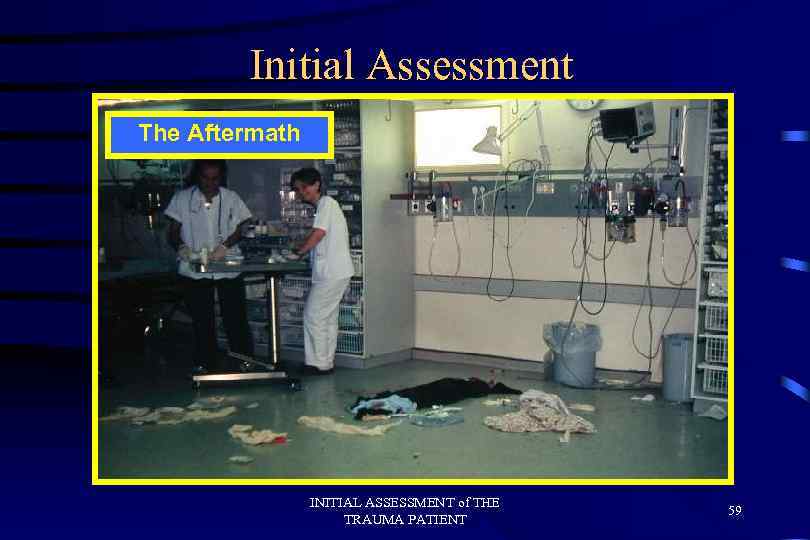
Initial Assessment The Aftermath INITIAL ASSESSMENT of THE TRAUMA PATIENT 59
Initial Assessment Records & Legal Considerations • Concise, Chronologic Documentation • Consent for Treatment • Forensic Evidence INITIAL ASSESSMENT of THE TRAUMA PATIENT 60
Скачать презентацию INITIAL ASSESSMENT OF THE TRAUMA PATIENT Rambam
Initial Assessment Of the Trauma patient2011.ppt