 Скачать презентацию Inhibition of rabies virus replication by micro RNA
76f48825094bcc499523236e0f515dc2.ppt
- Количество слайдов: 30



Inhibition of rabies virus replication by micro. RNA N. ISRASENA, N. RATANASETYUTH, P. SUPAVONWONG, P. VIROJANAPIROM, T. HEMACHUDHA Department of Pharmacology, Chulalongkorn University Hospital. Queen Saovabha Memorial Institute, Thai Red Cross Society, Bangkok, Thailand. Department of Medicine, Chulalongkorn University Hospital.
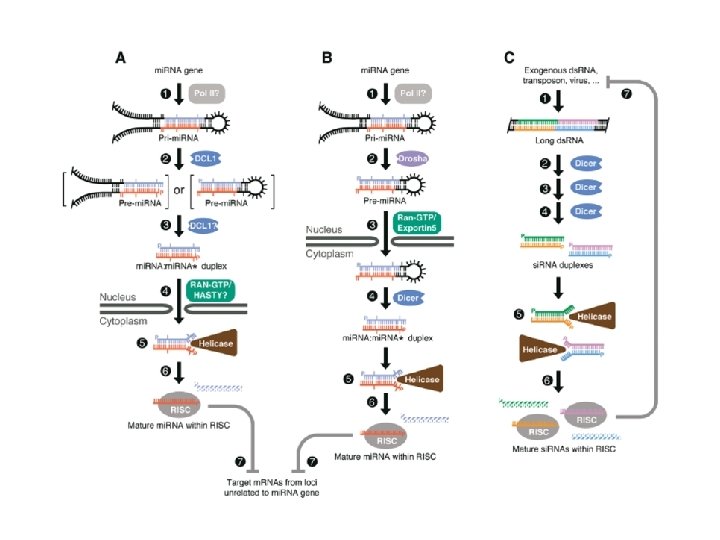
Si. RNA mi. RNA
BMJ 2004; 328: 1245– 48
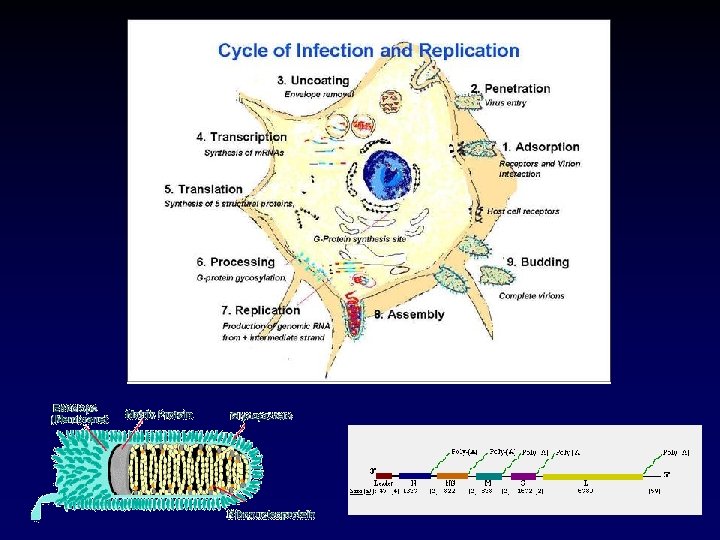
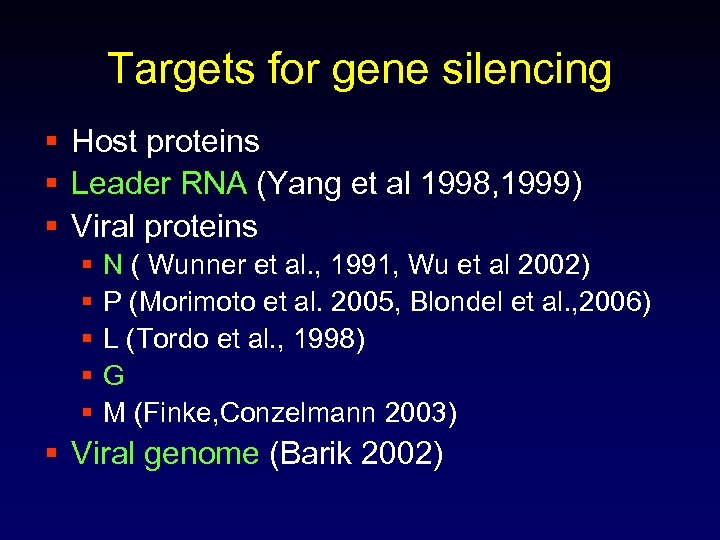
Targets for gene silencing § Host proteins § Leader RNA (Yang et al 1998, 1999) § Viral proteins § § § N ( Wunner et al. , 1991, Wu et al 2002) P (Morimoto et al. 2005, Blondel et al. , 2006) L (Tordo et al. , 1998) G M (Finke, Conzelmann 2003) § Viral genome (Barik 2002)
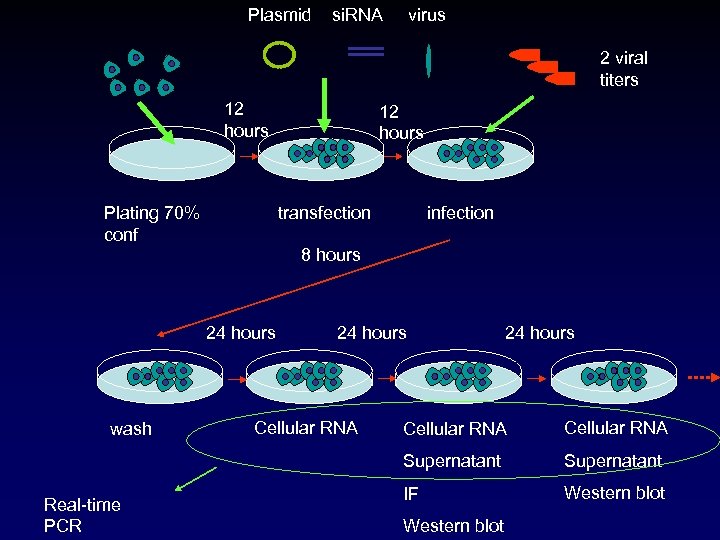
Plasmid si. RNA virus 2 viral titers 12 hours Plating 70% conf 12 hours transfection infection 8 hours 24 hours Real-time PCR Cellular RNA Supernatant wash Cellular RNA 24 hours Supernatant IF Western blot
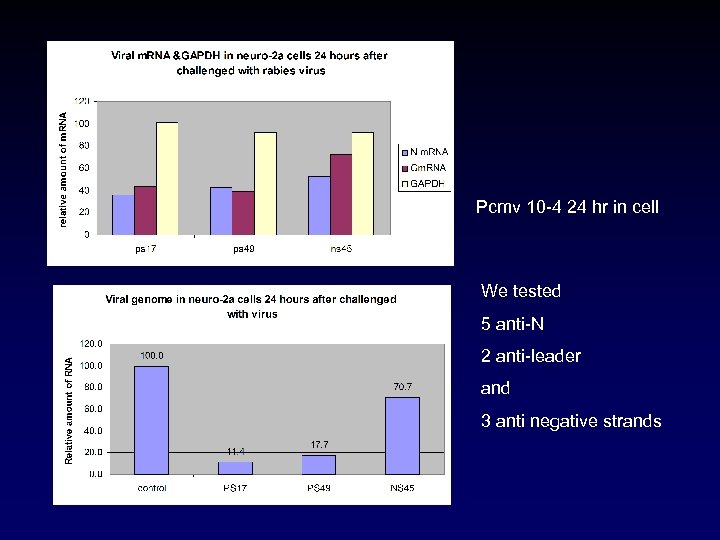
Pcmv 10 -4 24 hr in cell We tested 5 anti-N 2 anti-leader and 3 anti negative strands
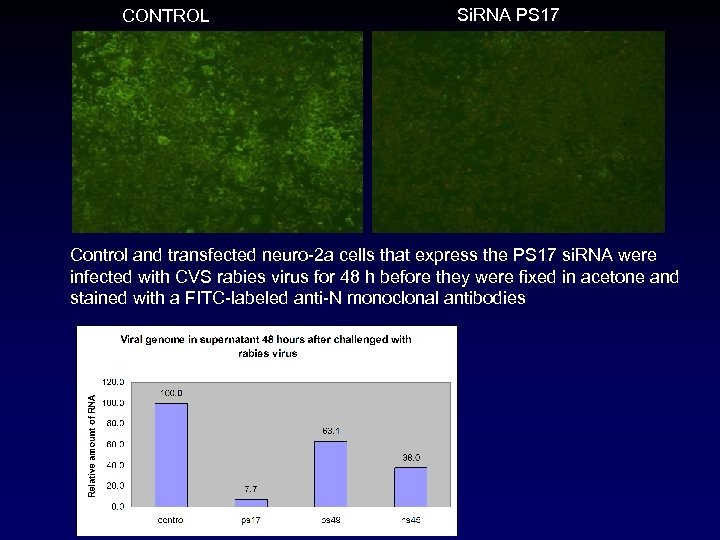
CONTROL Si. RNA PS 17 Control and transfected neuro-2 a cells that express the PS 17 si. RNA were infected with CVS rabies virus for 48 h before they were fixed in acetone and stained with a FITC-labeled anti-N monoclonal antibodies
Conclusions from si. RNA studies • Specific viral m. RNA and viral replication can be reduced by si. RNA • Inhibition of leader RNA and negative strand RNA is less effective than inhibiting N m. RNA • All methods that we tested (22 nt si. RNA, PCRbased, vector with pol II or pol III promoter ) normally yield only 70% reduction of viral protein m. RNA and viral genome • Stable NA cell line expressing anti-N si. RNA slow the growth rate of the virus
• the si. RNA is extremely stringent in its specificity such that a single nucleotide mismatch may abrogate its function To develop therapeutic tool- Need method that is more effective and less stringent
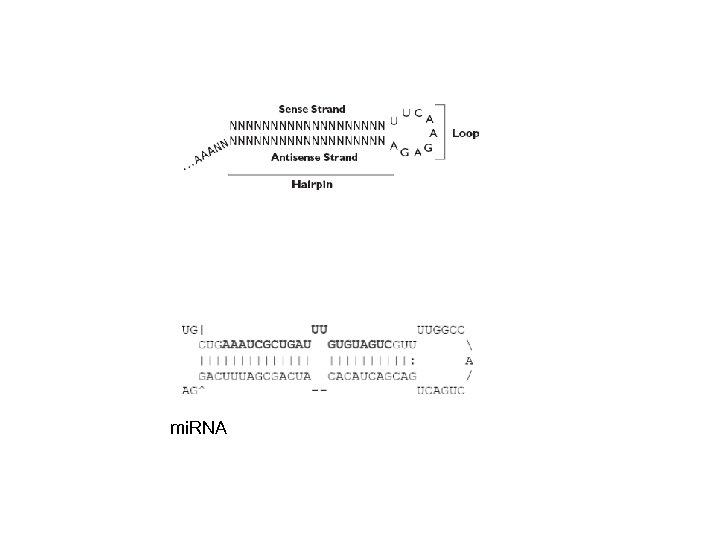
mi. RNA
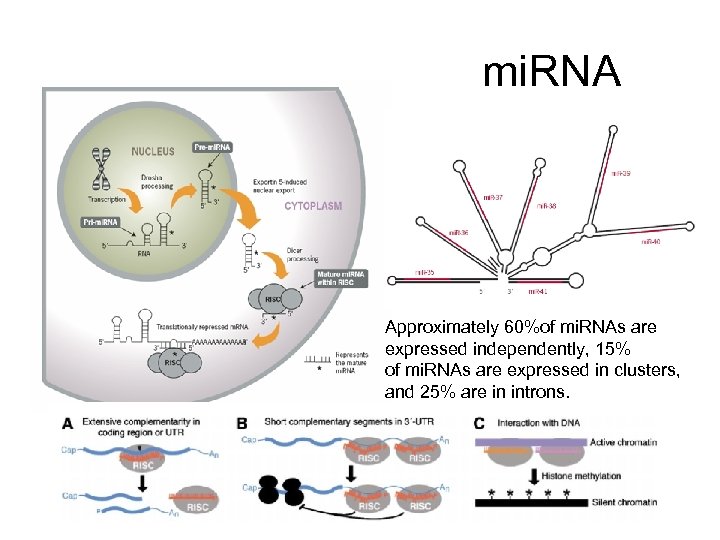
mi. RNA Approximately 60%of mi. RNAs are expressed independently, 15% of mi. RNAs are expressed in clusters, and 25% are in introns.
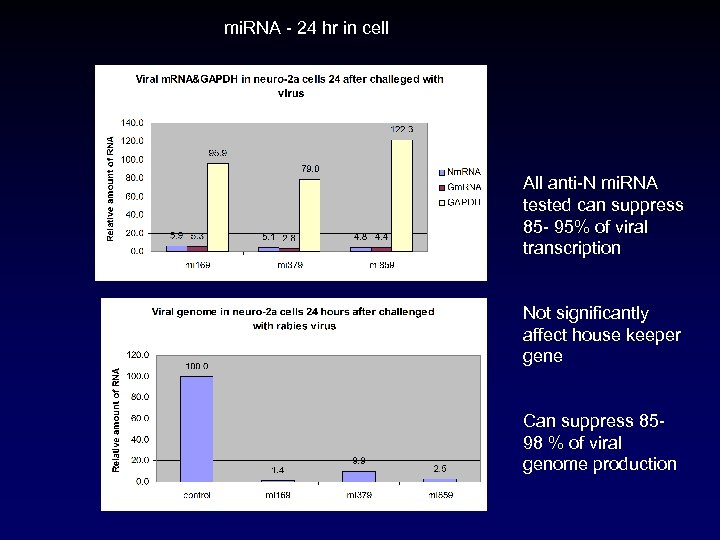
mi. RNA - 24 hr in cell All anti-N mi. RNA tested can suppress 85 - 95% of viral transcription Not significantly affect house keeper gene Can suppress 8598 % of viral genome production
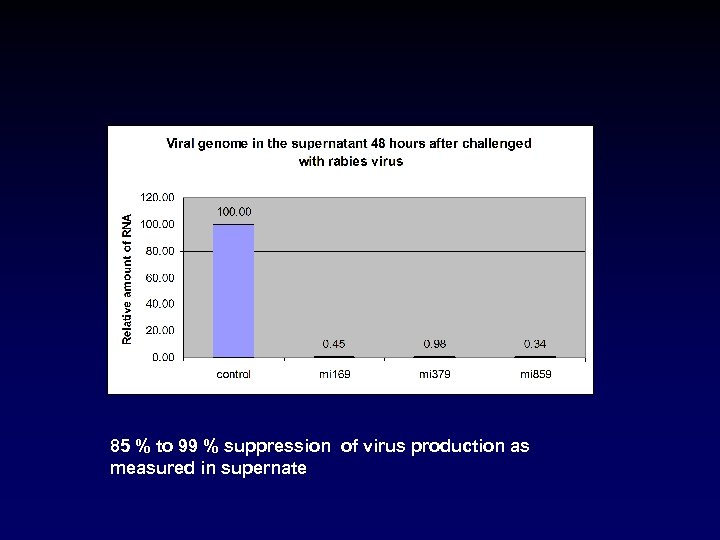
85 % to 99 % suppression of virus production as measured in supernate
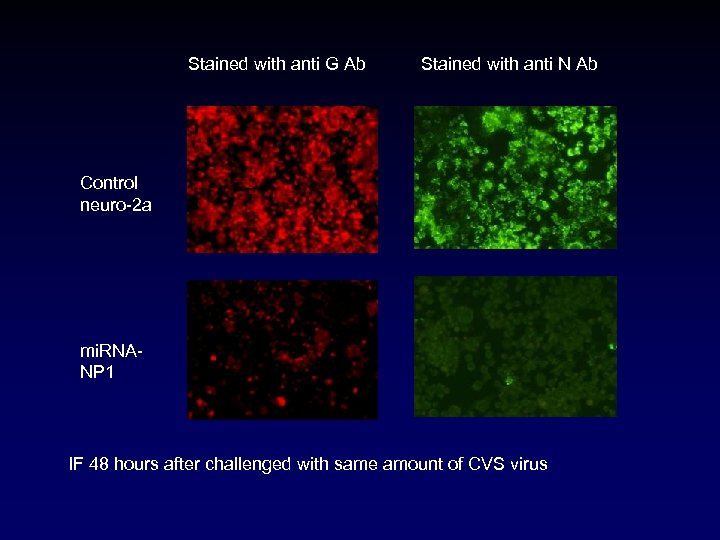
Stained with anti G Ab Stained with anti N Ab Control neuro-2 a mi. RNANP 1 IF 48 hours after challenged with same amount of CVS virus
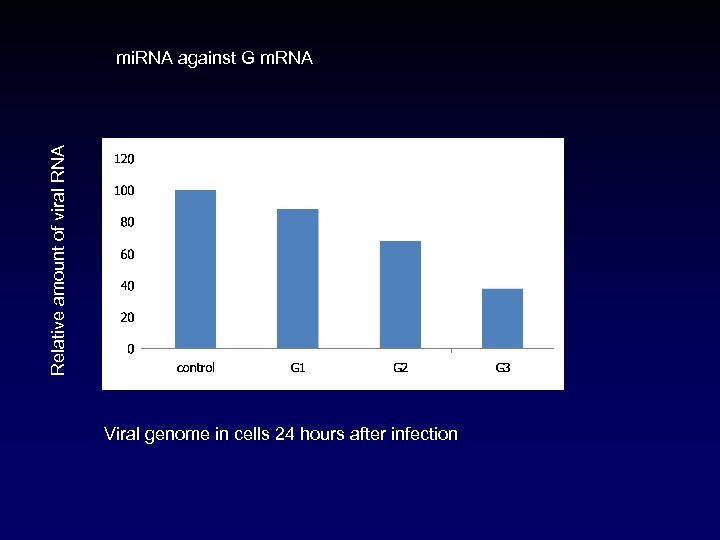
Relative amount of viral RNA mi. RNA against G m. RNA Viral genome in cells 24 hours after infection
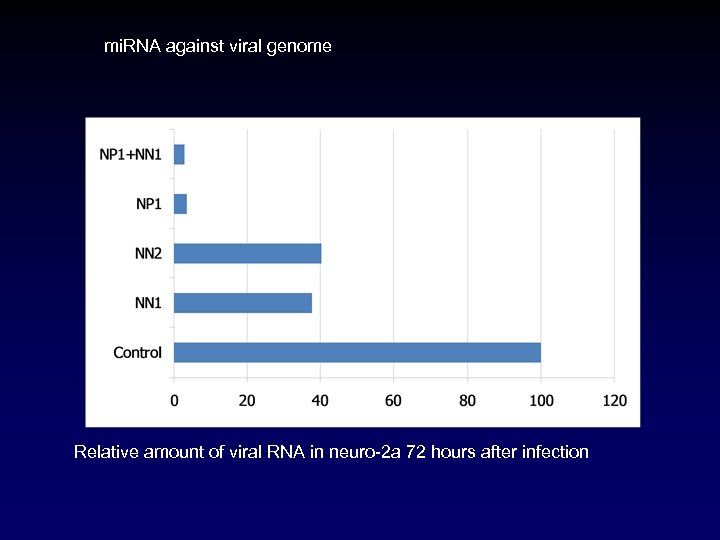
mi. RNA against viral genome Relative amount of viral RNA in neuro-2 a 72 hours after infection
• mi. RNA against G-m. RNA and against negative strand viral genome are not effective
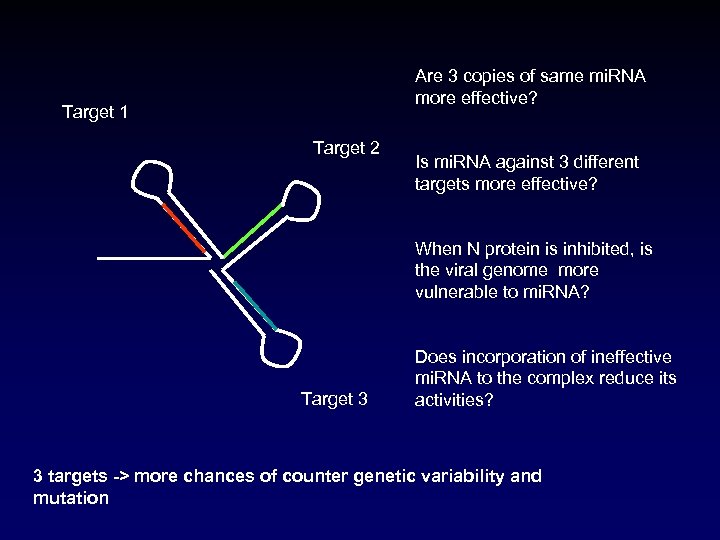
Are 3 copies of same mi. RNA more effective? Target 1 Target 2 Is mi. RNA against 3 different targets more effective? When N protein is inhibited, is the viral genome more vulnerable to mi. RNA? Target 3 Does incorporation of ineffective mi. RNA to the complex reduce its activities? 3 targets -> more chances of counter genetic variability and mutation
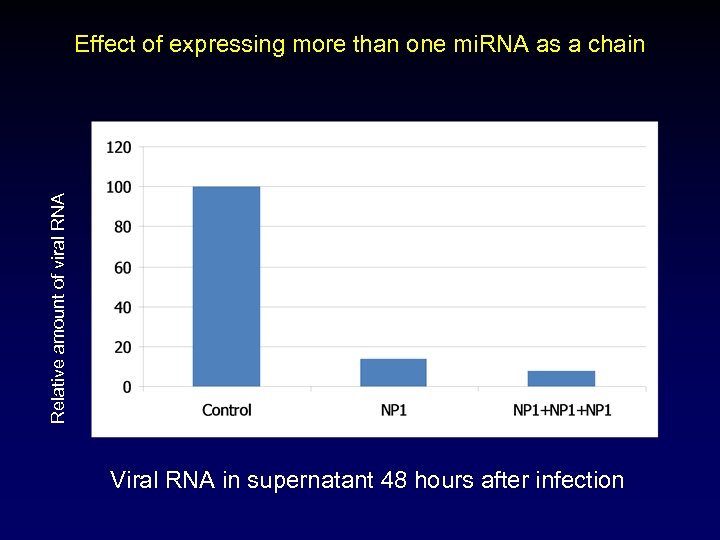
Relative amount of viral RNA Effect of expressing more than one mi. RNA as a chain Viral RNA in supernatant 48 hours after infection
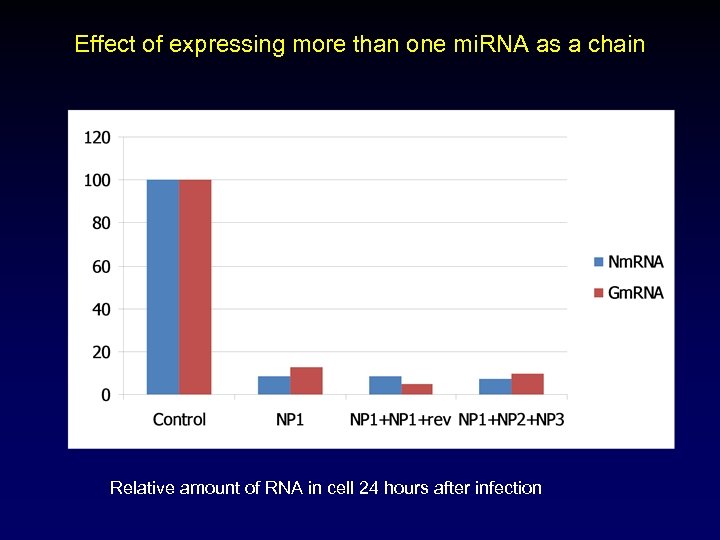
Effect of expressing more than one mi. RNA as a chain Relative amount of RNA in cell 24 hours after infection
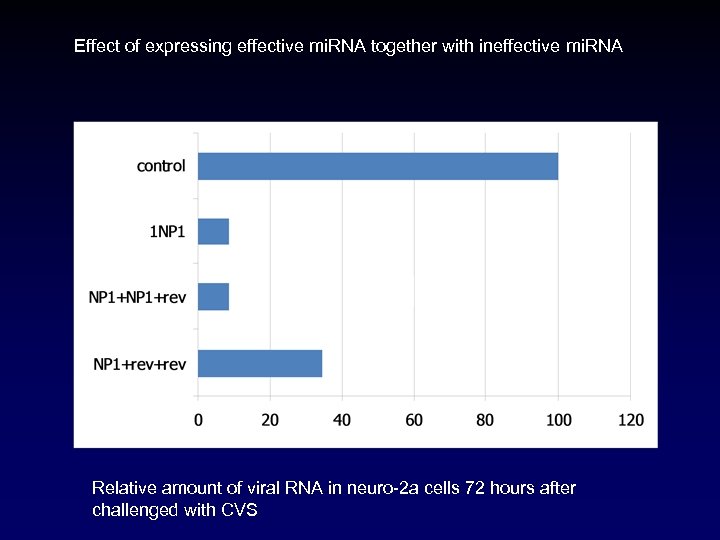
Effect of expressing effective mi. RNA together with ineffective mi. RNA Relative amount of viral RNA in neuro-2 a cells 72 hours after challenged with CVS
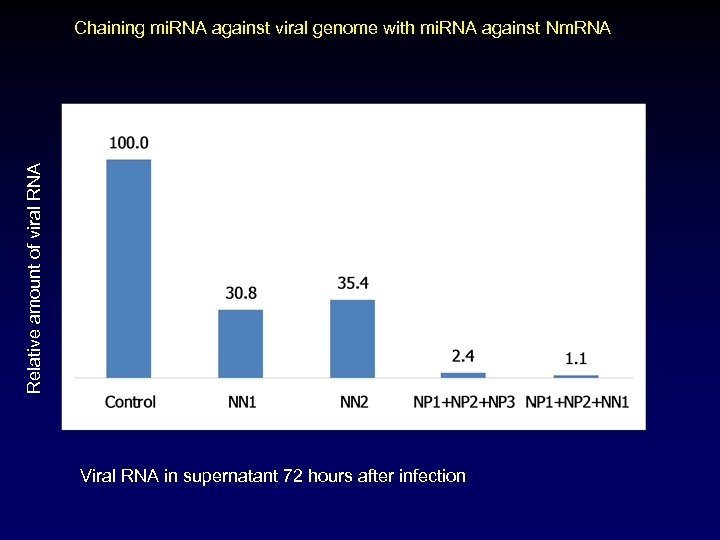
Relative amount of viral RNA Chaining mi. RNA against viral genome with mi. RNA against Nm. RNA Viral RNA in supernatant 72 hours after infection
Can RNA interference be used for street rabies?
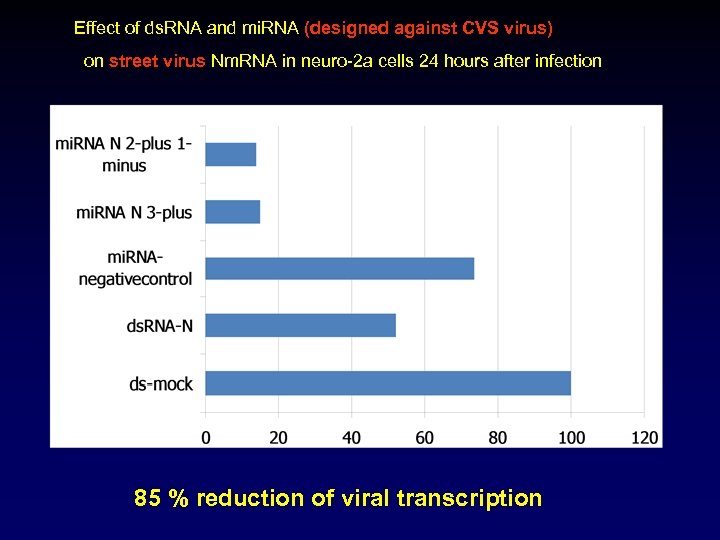
Effect of ds. RNA and mi. RNA (designed against CVS virus) on street virus Nm. RNA in neuro-2 a cells 24 hours after infection 85 % reduction of viral transcription
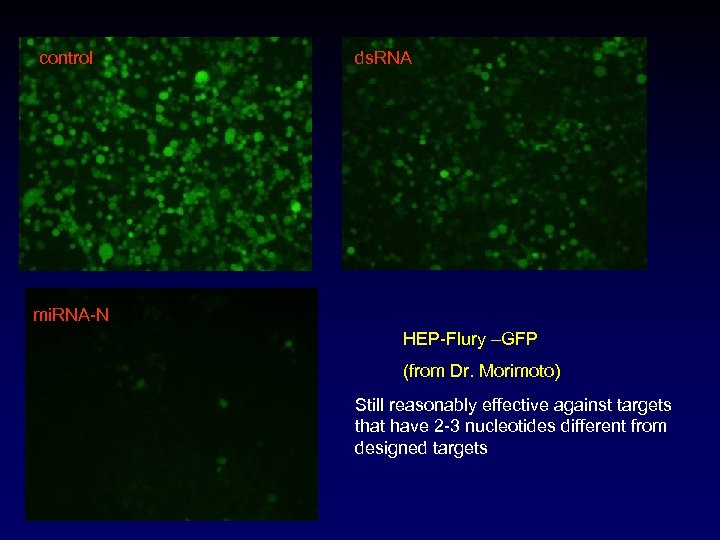
control ds. RNA mi. RNA-N HEP-Flury –GFP (from Dr. Morimoto) Still reasonably effective against targets that have 2 -3 nucleotides different from designed targets
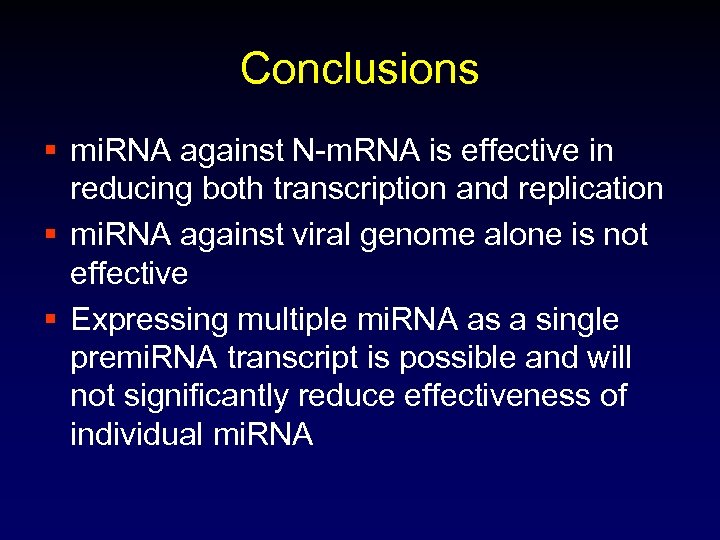
Conclusions § mi. RNA against N-m. RNA is effective in reducing both transcription and replication § mi. RNA against viral genome alone is not effective § Expressing multiple mi. RNA as a single premi. RNA transcript is possible and will not significantly reduce effectiveness of individual mi. RNA
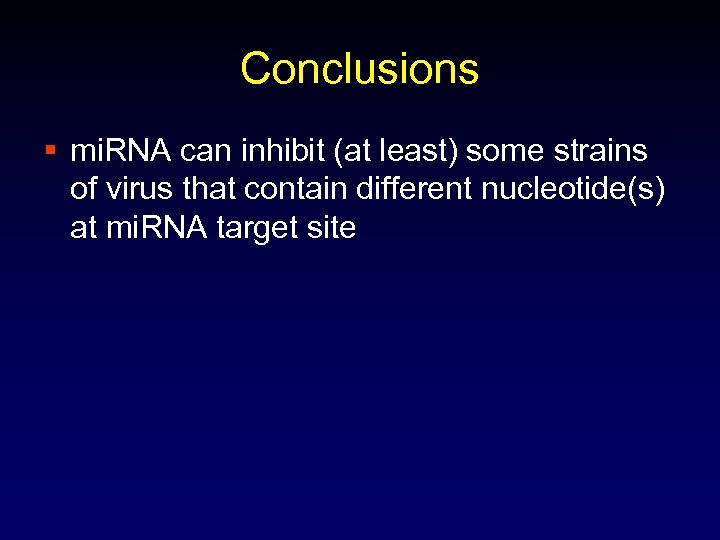
Conclusions § mi. RNA can inhibit (at least) some strains of virus that contain different nucleotide(s) at mi. RNA target site

Acknowledgements T. HEMACHUDHA N. RATANASETYUTH P. SUPAVONWONG P. VIROJANAPIROM P. KHAWPLOD BIOTEC Thailand
 Скачать презентацию Inhibition of rabies virus replication by micro RNA
76f48825094bcc499523236e0f515dc2.ppt