 Скачать презентацию Information Technology as an enabler of Life Sciences
5f0aae97395e33e773e4da9eea9f6588.ppt
- Количество слайдов: 24



Information Technology as an enabler of Life Sciences Research Craig Stewart Associate Vice President, Research & Academic Computing Chief Operating Officer, Pervasive Technology Labs at IU
License Terms • • Please cite this presentation as: Stewart, C. A. Information Technology as an enabler of Life Sciences Research. 2005. Presentation. Presented at: Statewide IT Conference (Indianapolis, IN, 24 Sept 2005). Available from: http: //hdl. handle. net/2022/14771 Portions of this document that originated from sources outside IU are shown here and used by permission or under licenses indicated within this document. Items indicated with a © or denoted with a source url are under copyright and used here with permission. Such items may not be reused without permission from the holder of copyright except where license terms noted on a slide permit reuse. Except where otherwise noted, the contents of this presentation are copyright 2004 by the Trustees of Indiana University. This content is released under the Creative Commons Attribution 3. 0 Unported license (http: //creativecommons. org/licenses/by/3. 0/). This license includes the following terms: You are free to share – to copy, distribute and transmit the work and to remix – to adapt the work under the following conditions: attribution – you must attribute the work in the manner specified by the author or licensor (but not in any way that suggests that they endorse you or your use of the work). For any reuse or distribution, you must make clear to others the license terms of this work.
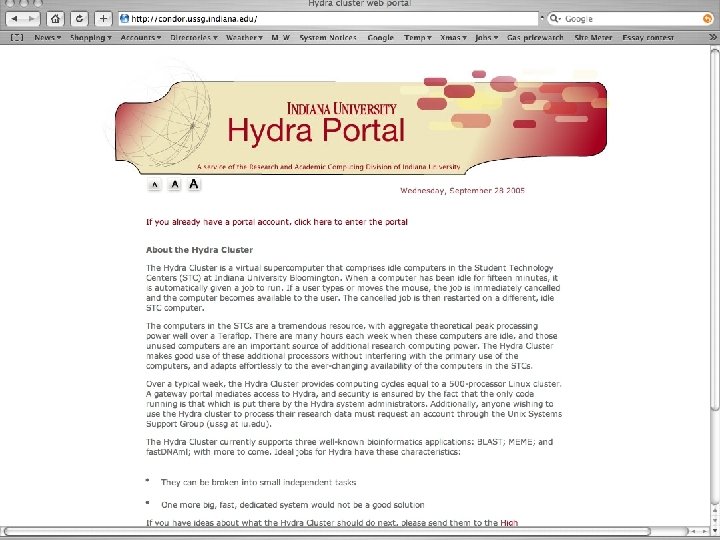
Information Technology • A natural linkage with life sciences – Generating research data in the life sciences: simple – Transforming data into knowledge: more difficult each day
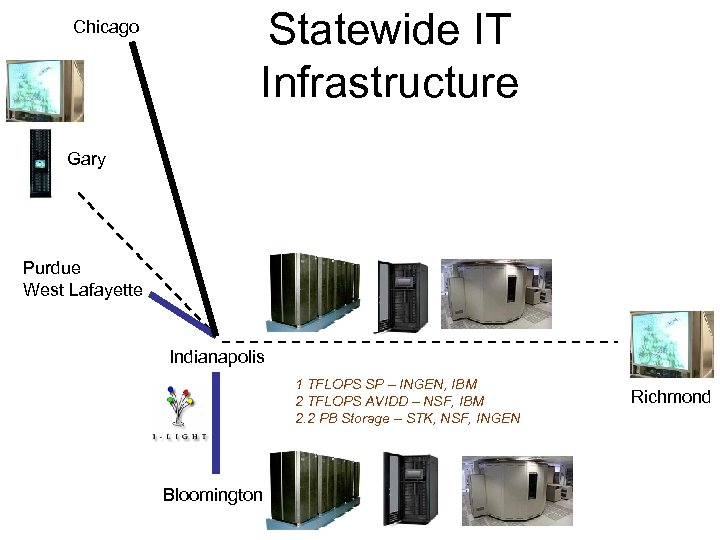
Chicago Statewide IT Infrastructure Gary Purdue West Lafayette Indianapolis 1 TFLOPS SP – INGEN, IBM 2 TFLOPS AVIDD – NSF, IBM 2. 2 PB Storage – STK, NSF, INGEN Bloomington Richmond
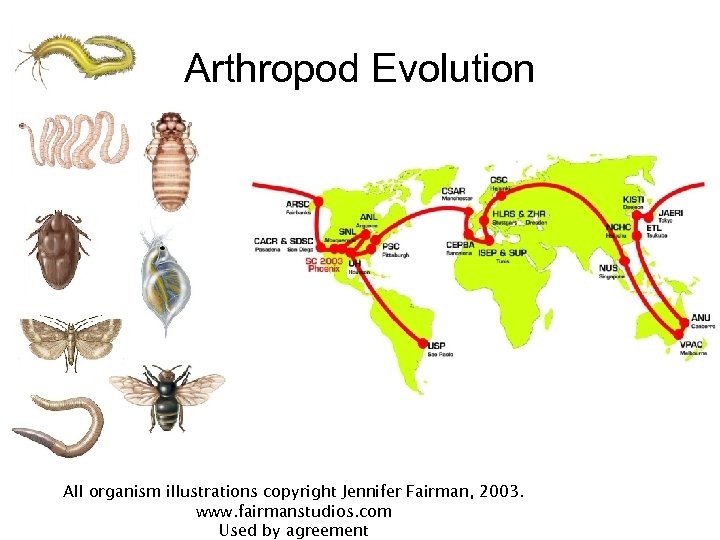
Arthropod Evolution All organism illustrations copyright Jennifer Fairman, 2003. www. fairmanstudios. com Used by agreement
Genome Sequencing • Indiana Center for Insect Genomics – Notre Dame – The Department of Entomology – Purdue – The Center for Genomics and Bioinformatics – IU Bloomington – Study economically important insects • Indiana University School of Informatics
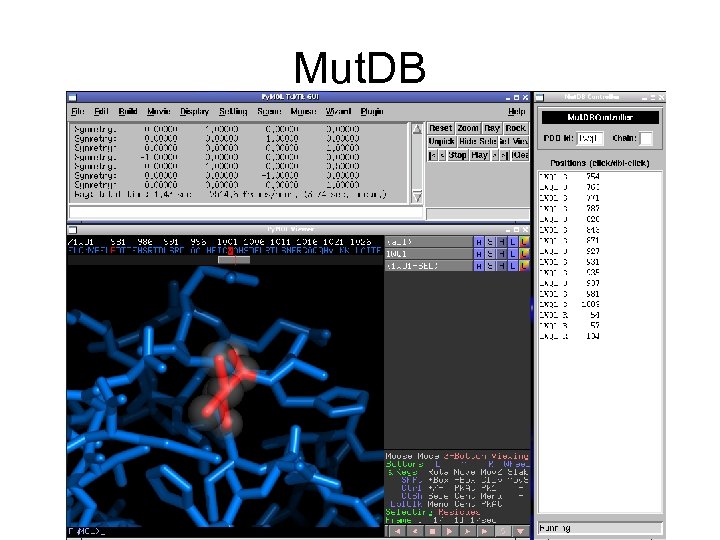
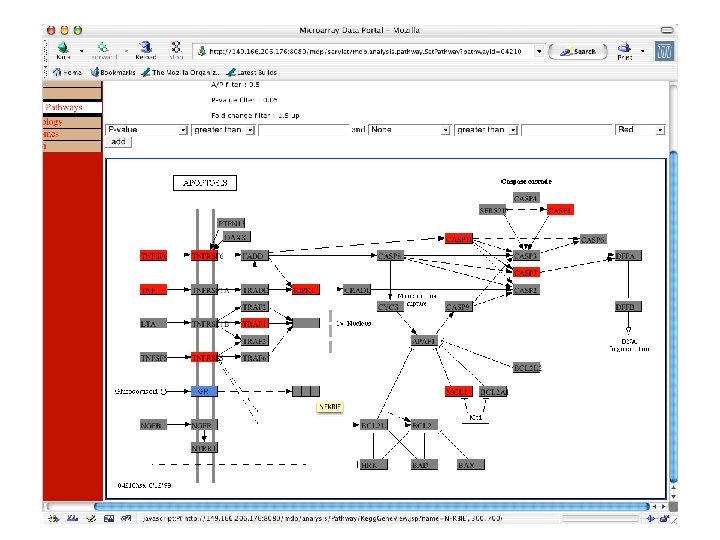
Mut. DB
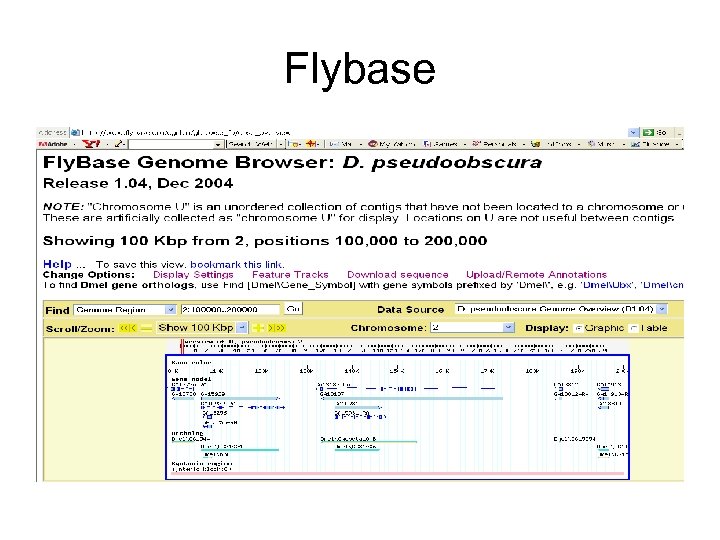
Flybase
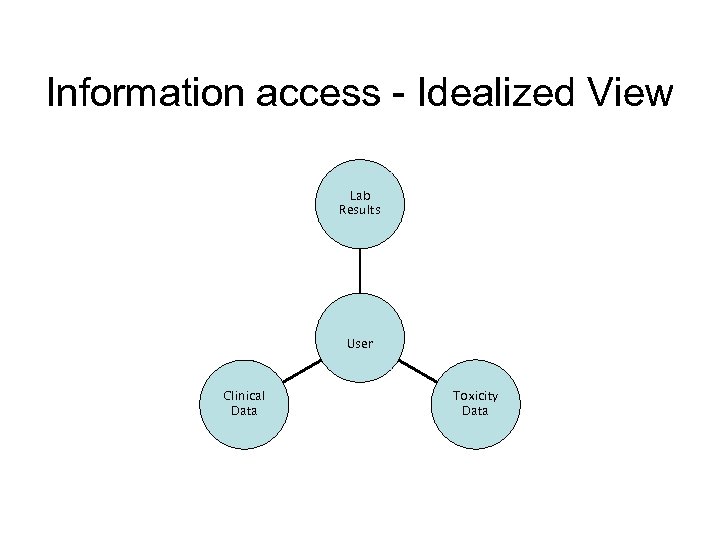
Information access - Idealized View Lab Results User Clinical Data Toxicity Data
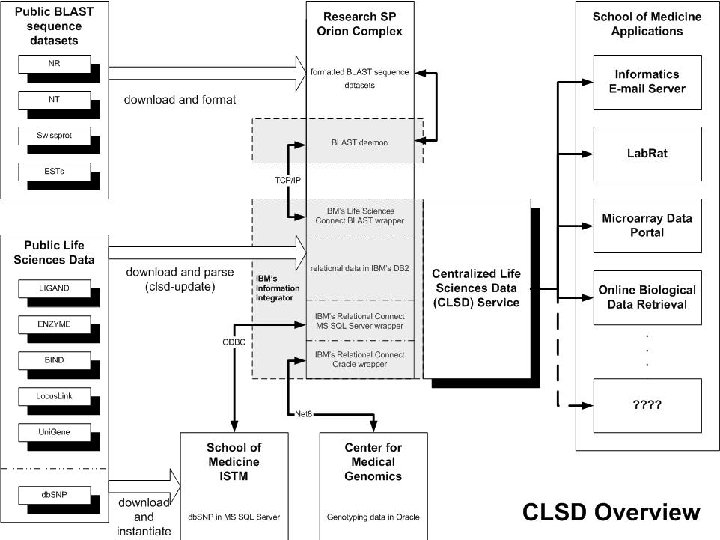
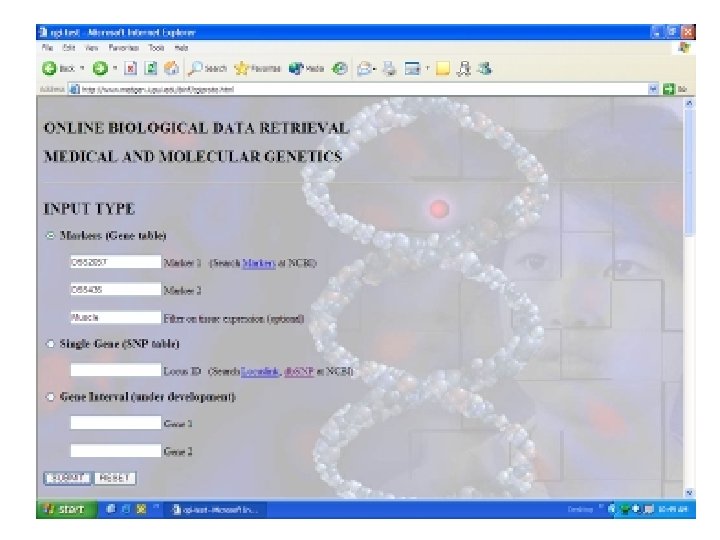
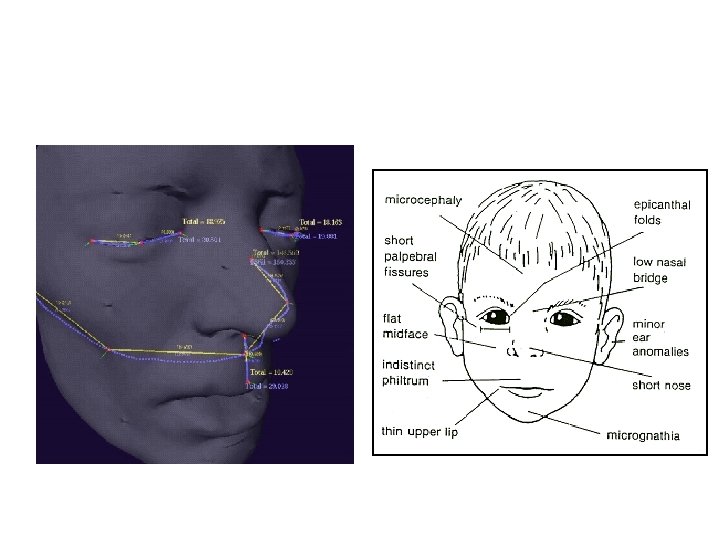
Collaborative Initiative on Fetal Alcohol Spectrum Disorder • Early diagnosis is important, difficult • International research consortium storing data at Indiana University – duplicate copies in Bloomington and Indianapolis enabled by Ilight
Gamma Knife • Used to treat inoperable tumors • Treatment methods currently use a standardized head model • UITS is working with IU School of Medicine to adapt Penelope code to work with detailed model of an individual patient’s head
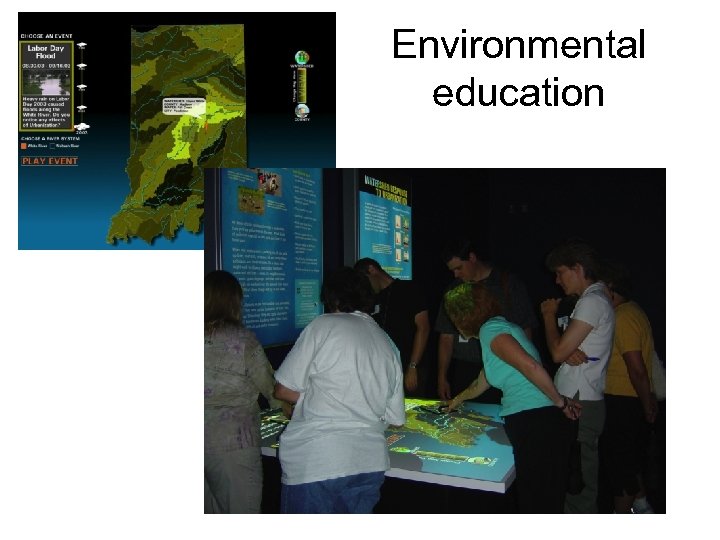
Environmental education
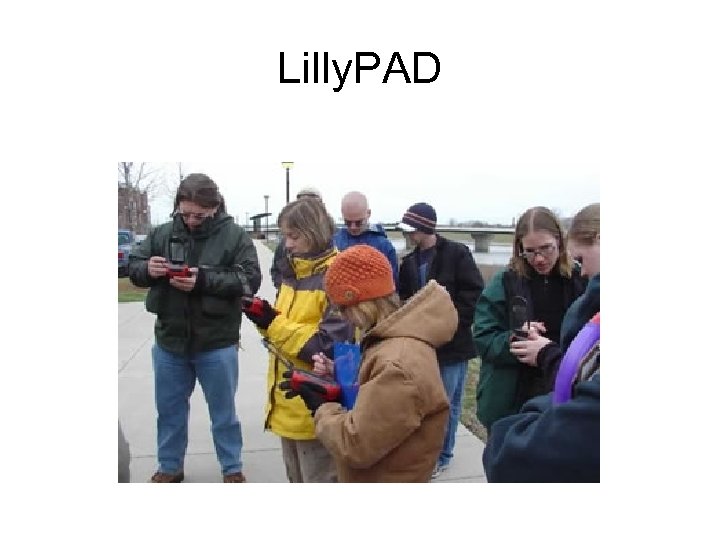
Lilly. PAD
Tools – The Biggest Barrier • GUI made desktop computing broadly accessible, and, • Web browsers made networking popular. • HPC hardware and software hard to use, but, • HPC companies have little reason to forge new tools and utilities, although • Industry needs to tackle more complex models in a much wider context, • Cost of developing HPC tools versus other business investments is problematic…. This slide courtesy and © Dr. S. Ahalt, Director, Ohio Supercomputer Center
• Center for Computational Cytomics • Additions to IU IT Infrastructure • Collaborations with Research Nodes and other Integrative Science and Technology Centers • Data Capacitor – IUSM, INGEN, METACyt, COAS, Informatics, UITS
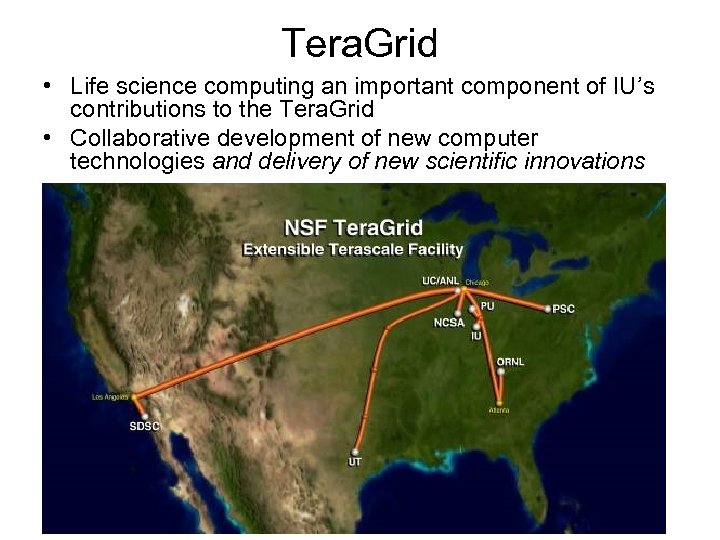
Tera. Grid • Life science computing an important component of IU’s contributions to the Tera. Grid • Collaborative development of new computer technologies and delivery of new scientific innovations
Life Science Advances enabled by IT - Benefits • New Discoveries – Life sciences – Computer science, informatics, and information technology • • Grants Better Health New Businesses, better jobs Better quality of life overall
Acknowledgments • Funding for projects described in this talk has come from the National Science Foundation, National Institutes of Health, Lilly Endowment, Inc. , State of Indiana (particularly through support of I-light Initiative and the 21 st Century Fund) • The work described here was made possible by the faculty, students, and staff of Indiana University. Thanks especially to the staff of UITS, the participants in the Indiana Genomics Initiative, and the participants in the METACyt Initiative.
For additional info • • • rac. uits. indiana. edu/ www. iu. teragrid. org/ uits. iu. edu/ metacyt. indiana. edu informatics. iu. edu email: stewart@iu. edu
Скачать презентацию Information Technology as an enabler of Life Sciences
5f0aae97395e33e773e4da9eea9f6588.ppt