 Скачать презентацию Information Seminar for National Reference Points Paris September
b1baf69a864f14ee793323cb86c94030.ppt
- Количество слайдов: 21



Information Seminar for National Reference Points Paris, September 27 -28, 2012 Comparison between the EQAVET Quality Cycle and the ISO 9001 and the EFQM Model Hungarian experience Katalin Molnar-Stadler
Innovative tools for quality improvement in the Hungarian VET sector § SA against the VET specific EFQM Model 1995 -1999 § COMENIUS 2000 Quality Improvement Program for Public Education 2000 – 2004 § QM models for implementation of a Partner-focused operation and a Total Quality Management System (COM I. and COM II. ) § Hungarian Public Education Quality Award (KMD) 2002 § Accreditation System for Adult VET Providers 2002 § Development Program for Vocational Training Schools Phase I: 2003 -2006, Phase II: 2006 -2009 § Self-assessment Model for Vocational Schools (SZÖM) § Institutional Quality Management Programme (IMIP) 2004
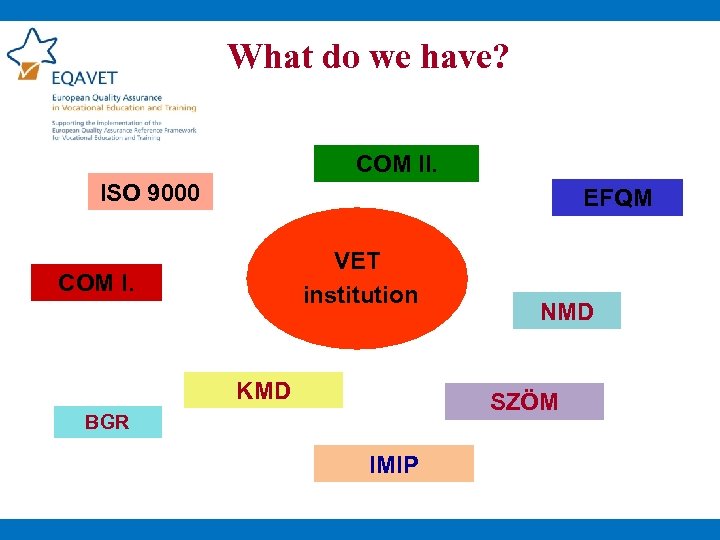
What do we have? COM II. ISO 9000 EFQM VET institution COM I. KMD NMD SZÖM BGR IMIP
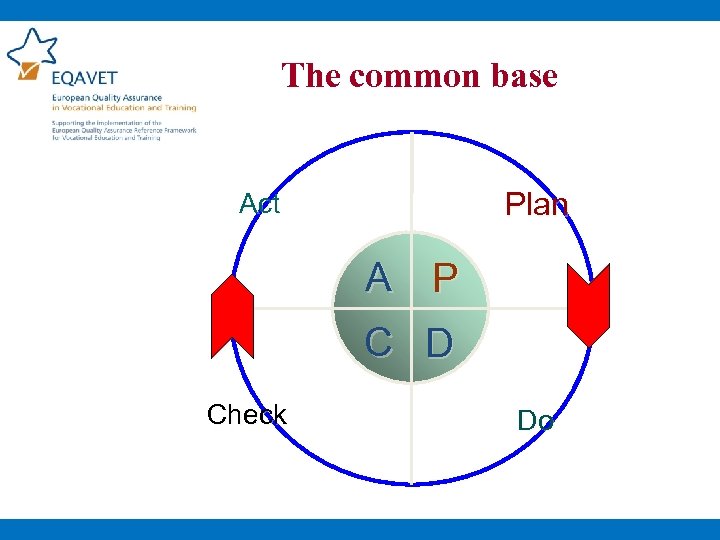
The common base Plan Act A P C D Check Do
European developments in Quality Assurance of VET The VET Common Quality Assurance Framework (CQAF) The European Quality Assurance Reference Framework for VET (EQAVET)
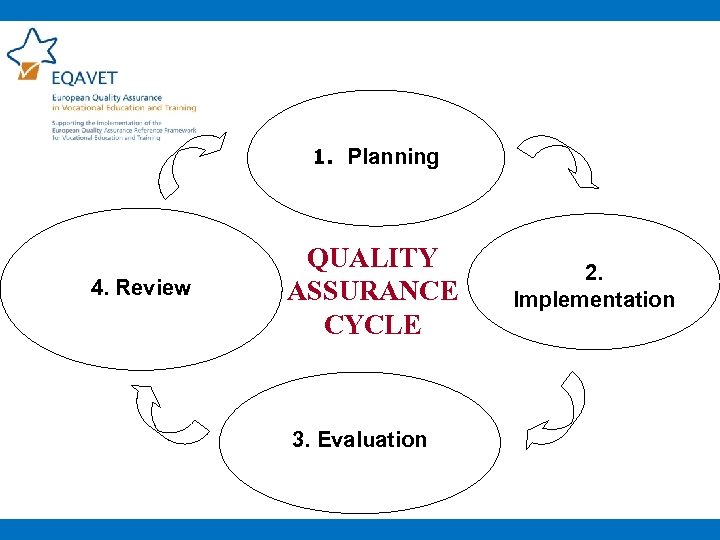
1. Planning 4. Review QUALITY ASSURANCE CYCLE 3. Evaluation 2. Implementation
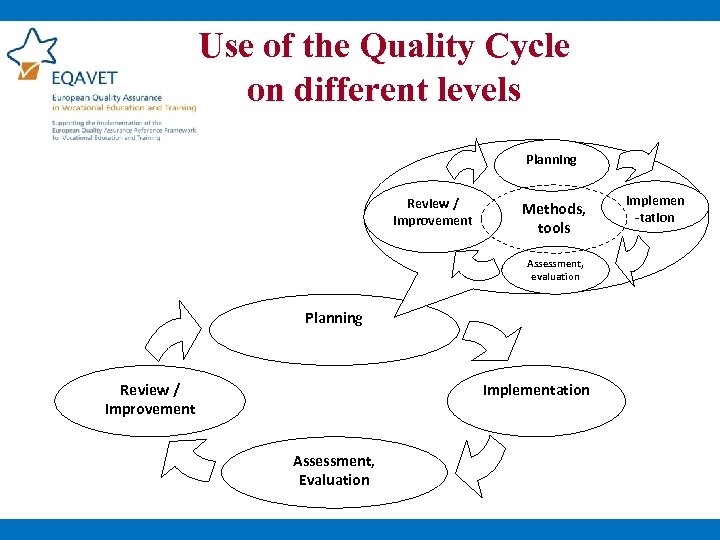
Use of the Quality Cycle on different levels Planning Review / Improvement Methods, tools Assessment, evaluation Planning Review / Improvement Implementation Assessment, Evaluation Implemen -tation
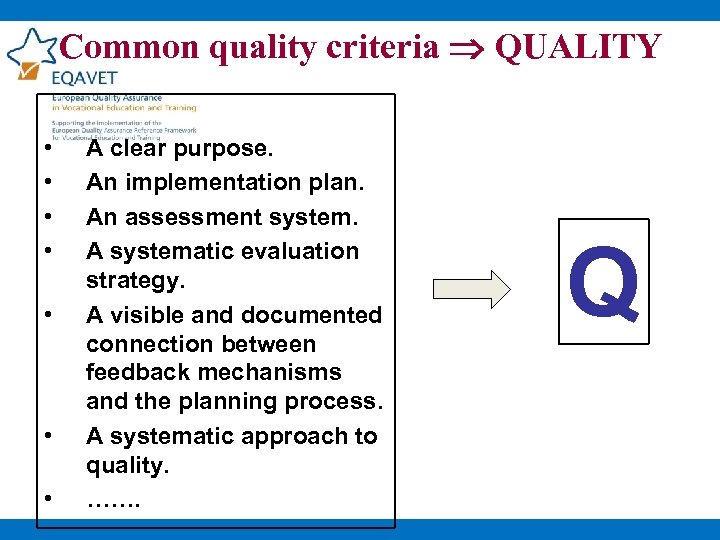
Common quality criteria QUALITY • • A clear purpose. An implementation plan. An assessment system. A systematic evaluation strategy. A visible and documented connection between feedback mechanisms and the planning process. A systematic approach to quality. ……. Q
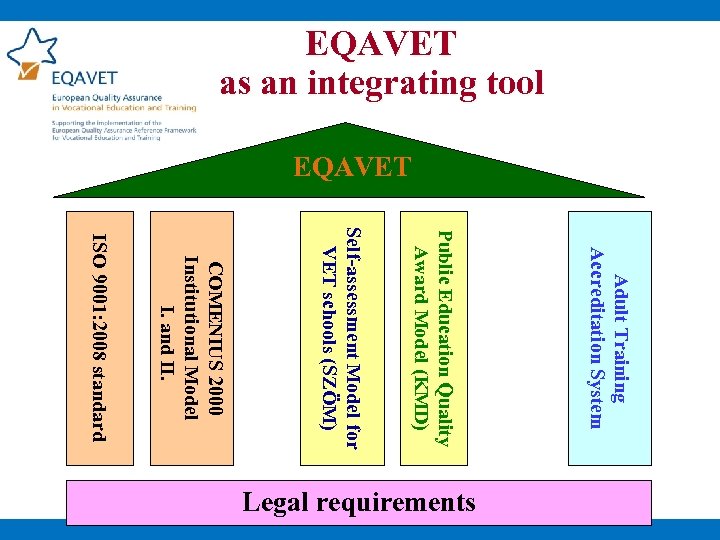
EQAVET as an integrating tool EQAVET Adult Training Accreditation System Public Education Quality Award Model (KMD) Self-assessment Model for VET schools (SZÖM) COMENIUS 2000 Institutional Model I. and II. ISO 9001: 2008 standard Legal requirements
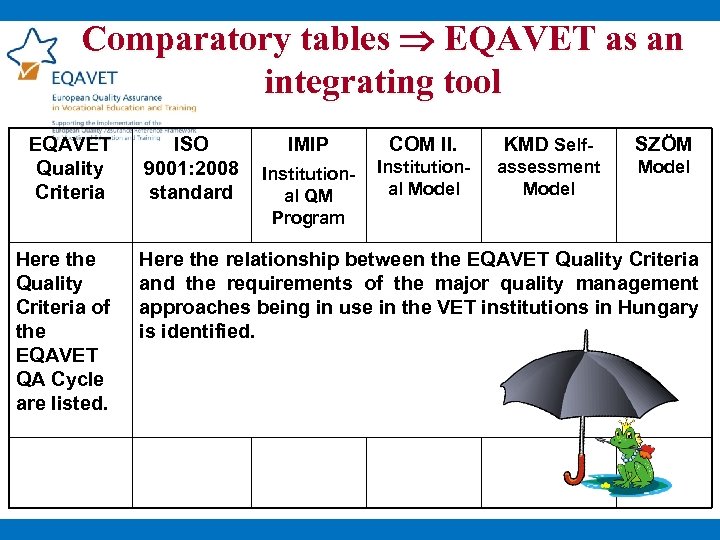
Comparatory tables EQAVET as an integrating tool EQAVET Quality Criteria Here the Quality Criteria of the EQAVET QA Cycle are listed. ISO 9001: 2008 standard IMIP COM II. KMD Self- SZÖM Institutional QM Program Institutional Model assessment Model Here the relationship between the EQAVET Quality Criteria and the requirements of the major quality management approaches being in use in the VET institutions in Hungary is identified.
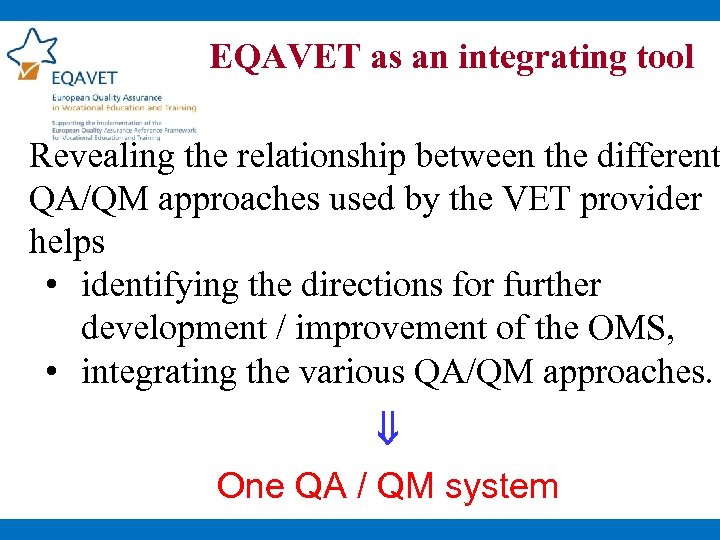
EQAVET as an integrating tool Revealing the relationship between the different QA/QM approaches used by the VET provider helps • identifying the directions for further development / improvement of the OMS, • integrating the various QA/QM approaches. One QA / QM system
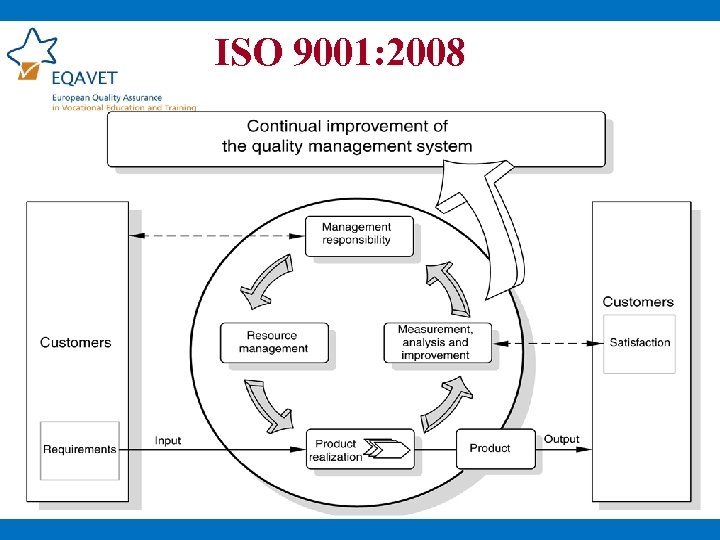
ISO 9001: 2008 12
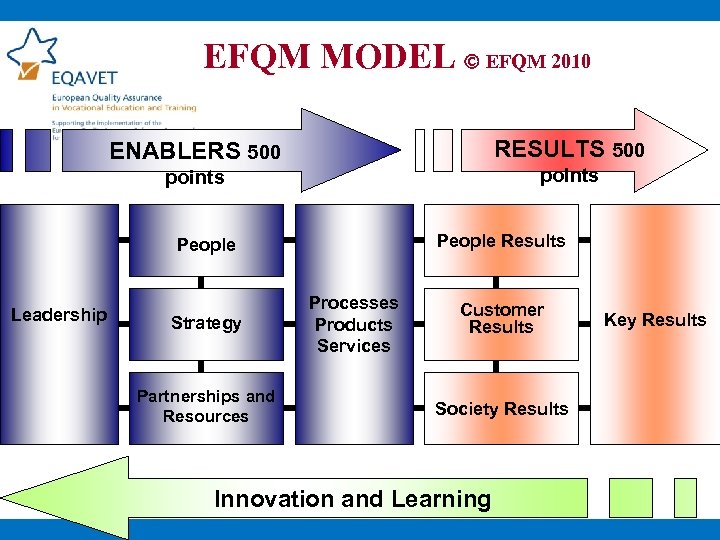
EFQM MODEL EFQM 2010 RESULTS 500 ENABLERS 500 points People Results People Leadership Strategy Partnerships and Resources Processes Products Services Customer Results Society Results Innovation and Learning Key Results
How to use the EQAVET indicative descriptors? It should be investigated: 1. What do the EQAVET indicative descriptors mean in the operation, QMS of the VET provider? 2. What the VET provider needs to do in order to make the EQAVET indicative descriptors valid in their operation, QMS? 3. How can the VET provider further develop / improve their QM systems in order to ensure its compliance with the EQAVET Framework? 4. How can the different QA /QM approaches (systems, models) be integrated?
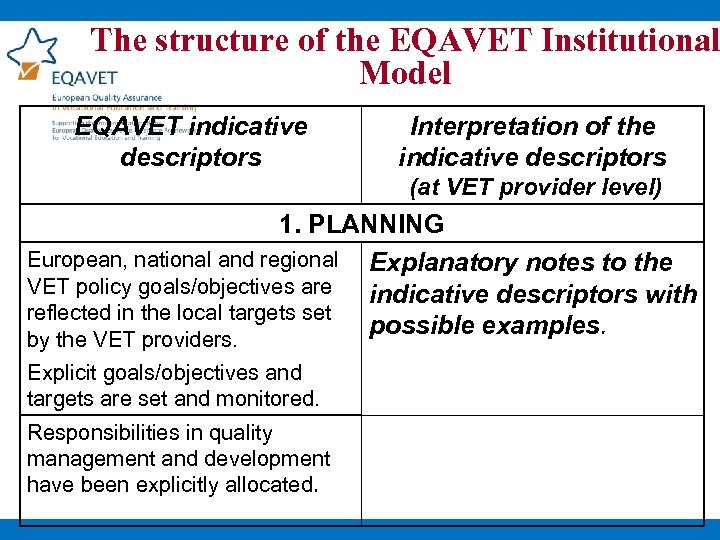
The structure of the EQAVET Institutional Model EQAVET indicative descriptors Interpretation of the indicative descriptors (at VET provider level) 1. PLANNING European, national and regional Explanatory notes to the VET policy goals/objectives are indicative descriptors with reflected in the local targets set possible examples. by the VET providers. Explicit goals/objectives and targets are set and monitored. Responsibilities in quality management and development have been explicitly allocated.
How to use the EQAVET indicative descriptors? Main steps Step 1: Preparation • Look for the EQAVET Quality Criteria and indicative descriptors in your operation / quality management system. Review of the QMS – Investigate the compliance of the operated system against EQAVET. • In your own QMS where can you give answer to the EQAVET Quality Criteria and indicative descriptors? • Is there a need for integrating the different approaches? Comparatory tables
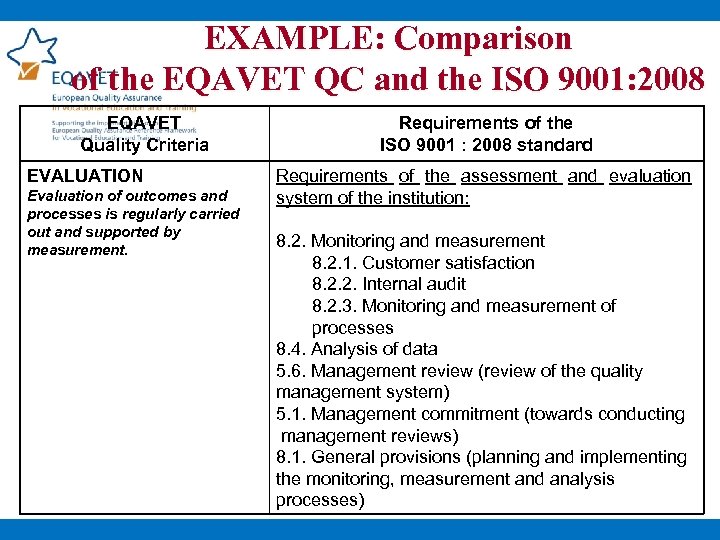
EXAMPLE: Comparison of the EQAVET QC and the ISO 9001: 2008 EQAVET Quality Criteria EVALUATION Evaluation of outcomes and processes is regularly carried out and supported by measurement. Requirements of the ISO 9001 : 2008 standard Requirements of the assessment and evaluation system of the institution: 8. 2. Monitoring and measurement 8. 2. 1. Customer satisfaction 8. 2. 2. Internal audit 8. 2. 3. Monitoring and measurement of processes 8. 4. Analysis of data 5. 6. Management review (review of the quality management system) 5. 1. Management commitment (towards conducting management reviews) 8. 1. General provisions (planning and implementing the monitoring, measurement and analysis processes)
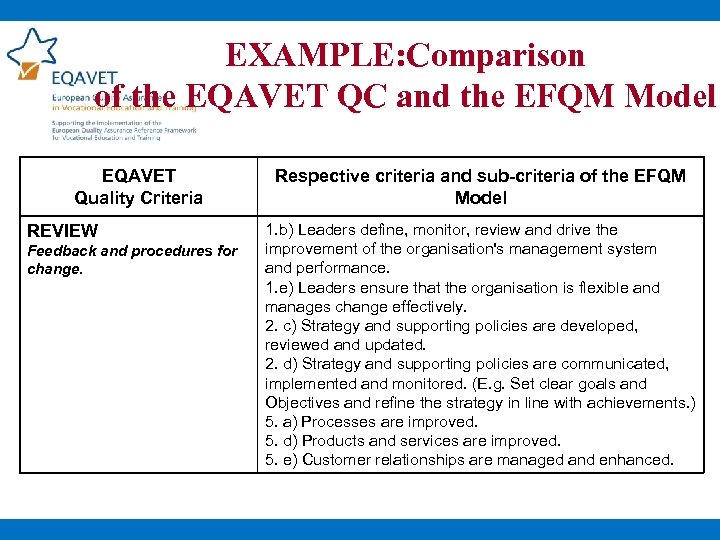
EXAMPLE: Comparison of the EQAVET QC and the EFQM Model EQAVET Quality Criteria REVIEW Feedback and procedures for change. Respective criteria and sub-criteria of the EFQM Model 1. b) Leaders define, monitor, review and drive the improvement of the organisation's management system and performance. 1. e) Leaders ensure that the organisation is flexible and manages change effectively. 2. c) Strategy and supporting policies are developed, reviewed and updated. 2. d) Strategy and supporting policies are communicated, implemented and monitored. (E. g. Set clear goals and Objectives and refine the strategy in line with achievements. ) 5. a) Processes are improved. 5. d) Products and services are improved. 5. e) Customer relationships are managed and enhanced.
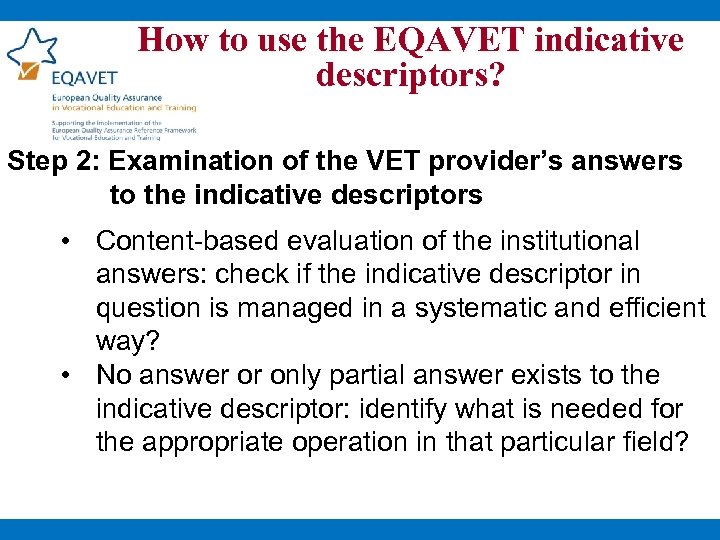
How to use the EQAVET indicative descriptors? Step 2: Examination of the VET provider’s answers to the indicative descriptors • Content-based evaluation of the institutional answers: check if the indicative descriptor in question is managed in a systematic and efficient way? • No answer or only partial answer exists to the indicative descriptor: identify what is needed for the appropriate operation in that particular field?
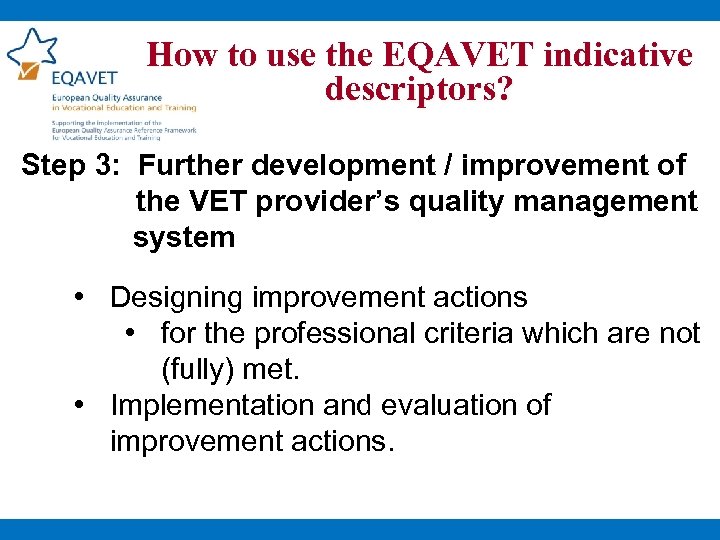
How to use the EQAVET indicative descriptors? Step 3: Further development / improvement of the VET provider’s quality management system • Designing improvement actions • for the professional criteria which are not (fully) met. • Implementation and evaluation of improvement actions.

Thank you for your attention! katalin. stadler@t-online. hu
Скачать презентацию Information Seminar for National Reference Points Paris September
b1baf69a864f14ee793323cb86c94030.ppt