 Скачать презентацию Information Security Batyrkhan Omarov Motivation People
lecture1_introduction.ppt
- Количество слайдов: 33



Information Security Batyrkhan Omarov
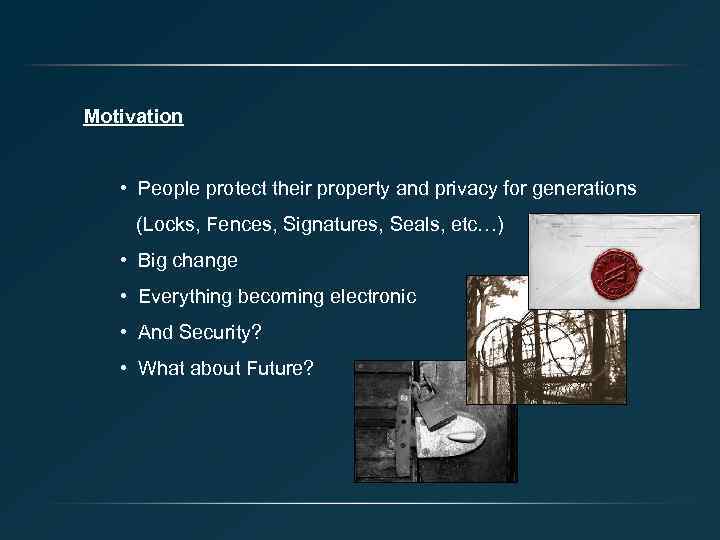
Motivation • People protect their property and privacy for generations (Locks, Fences, Signatures, Seals, etc…) • Big change • Everything becoming electronic • And Security? • What about Future?
What will you learn • What is computer/information security ? • Why is it so important ? • How to evaluate and measure it ? • How to enforce it ? • How to minimise its risk ? • The bad guy’s point of view • The victim’s point of view
Resources Course Text: Computer Security – Dieter Gollmann 2 nd edition (Amazon) Security Engineering – Ross Anderson (Available online) Additional Reading: Secrets & Lies – Bruce Schneier Computer Security: Art and Science – Matt Bishop
Introduction to Security
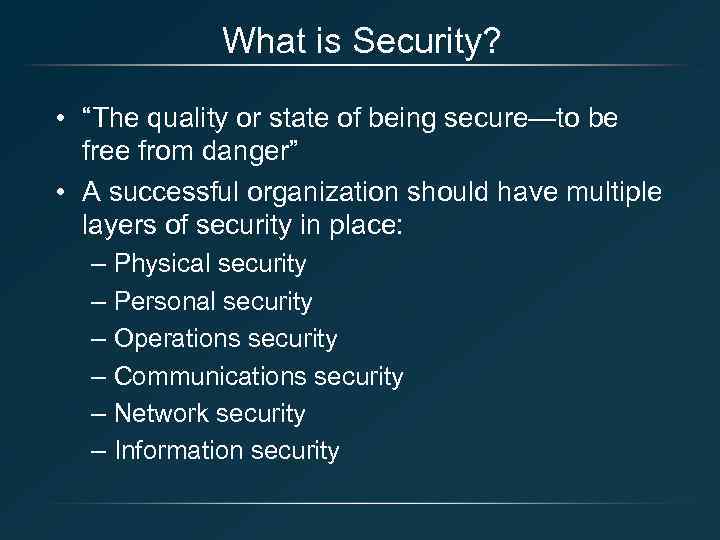
What is Security? • “The quality or state of being secure—to be free from danger” • A successful organization should have multiple layers of security in place: – Physical security – Personal security – Operations security – Communications security – Network security – Information security
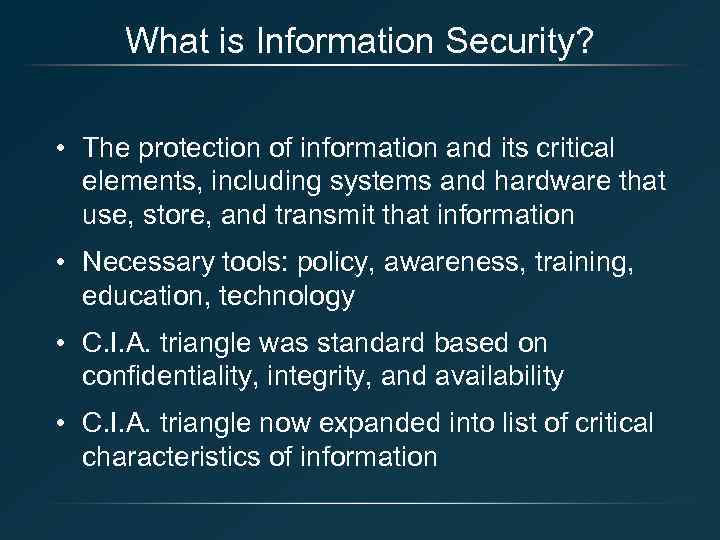
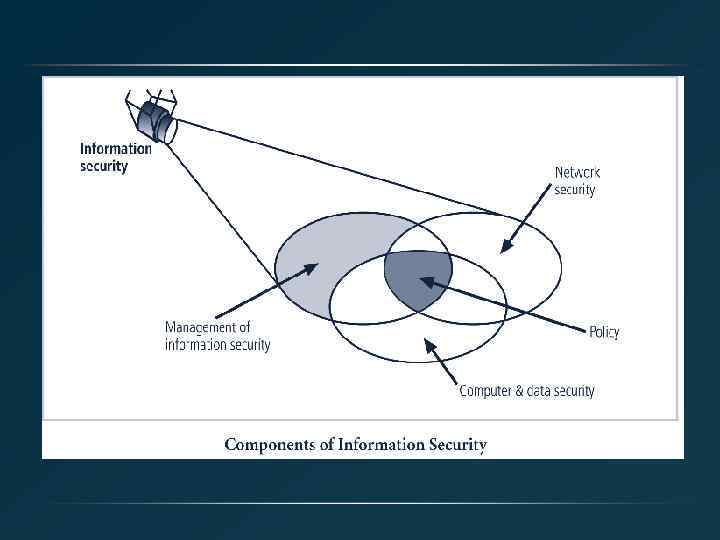
What is Information Security? • The protection of information and its critical elements, including systems and hardware that use, store, and transmit that information • Necessary tools: policy, awareness, training, education, technology • C. I. A. triangle was standard based on confidentiality, integrity, and availability • C. I. A. triangle now expanded into list of critical characteristics of information
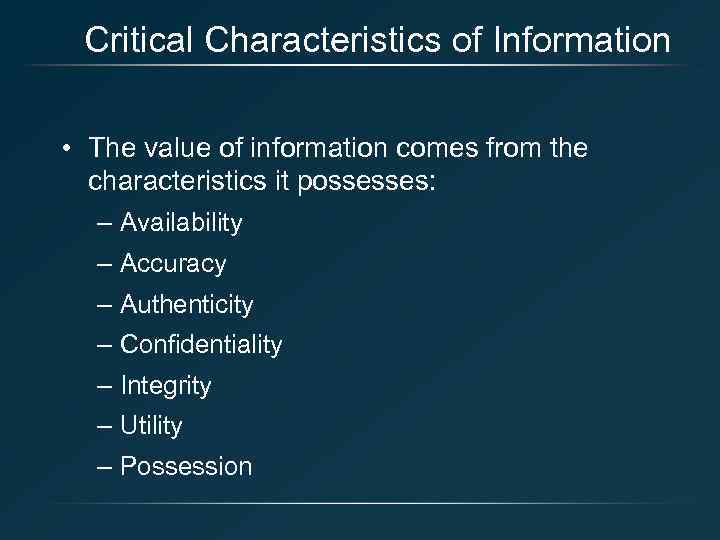
Critical Characteristics of Information • The value of information comes from the characteristics it possesses: – Availability – Accuracy – Authenticity – Confidentiality – Integrity – Utility – Possession
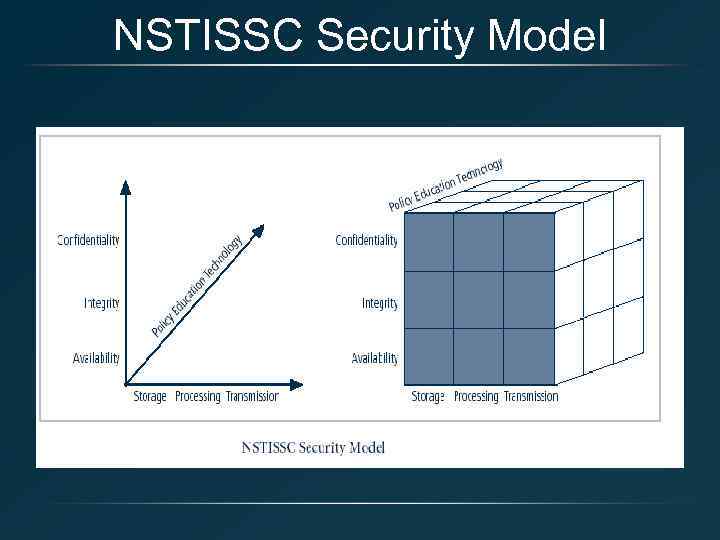
NSTISSC Security Model
Securing Components • Computer can be subject of an attack and/or the object of an attack – When the subject of an attack, computer is used as an active tool to conduct attack – When the object of an attack, computer is the entity being attacked
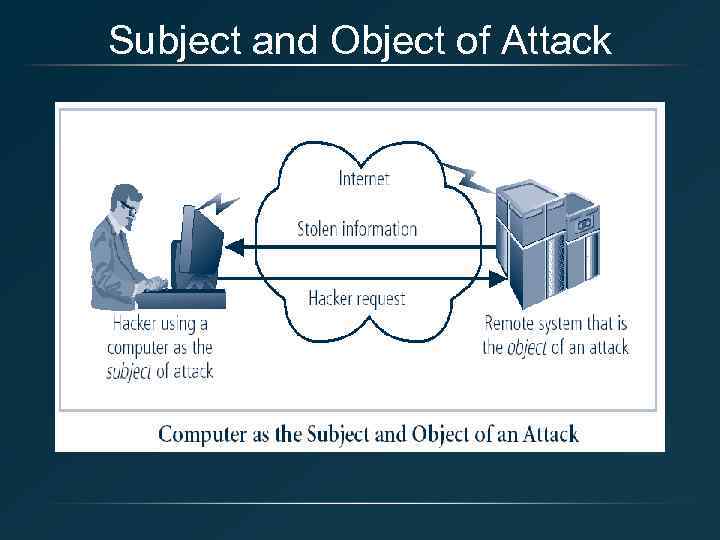
Subject and Object of Attack
Outline • On Security • Attacks and Attackers • Security Management • Security Policies • Measuring Security • Standards • Risk and Threat Analysis • Assets • Vulnerabilities • Threats • Risks • Countermeasures
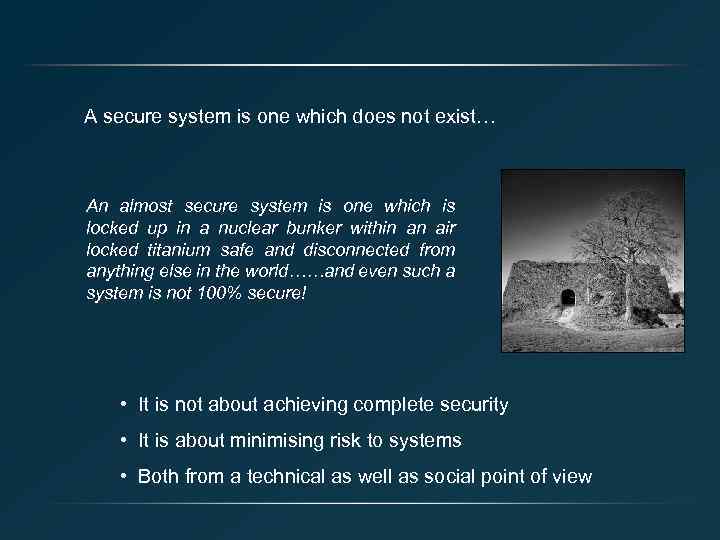
A secure system is one which does not exist… An almost secure system is one which is locked up in a nuclear bunker within an air locked titanium safe and disconnected from anything else in the world……and even such a system is not 100% secure! • It is not about achieving complete security • It is about minimising risk to systems • Both from a technical as well as social point of view
On Security • Original focus on multiuser systems • Today focus on ubiquitous end systems • Systems interconnected by networks • Danger of possible attacks from ‘un-trusted’ nodes • Both remotely as well as locally (insiders) • Primarily a management issue!
Attacks and Attackers • Landscape is changing • Script kiddies -> Organized crime • Website defacement -> Personal data harvesting • Peer appreciation -> Earning money • Viruses -> Trojans and Denial-of-Service attacks • Complexity of our systems is increasing • Our understanding of the system’s intricacies can’t keep up
Key Terms • • • Access Asset Attack Control, Safeguard or Countermeasure Exploit Exposure Hacking Object Risk • Security Blueprint • Security Model • Security Posture or Security Profile • Subject • Threats • Threat Agent • Vulnerability
Security • Reliability – Accidental failures • Usability – Operating mistakes • Security – Intentional failures 1. ‘Security is a people problem’ 2. Legal system defines boundaries of acceptable behaviour 3. Management responsible for security
Security Management • Management responsible for assets • Security measures must have clear full support of senior management • Security awareness programs • User is not the enemy! • Developers need even more awareness!
Security Policies • State what should be protected • And how this should be achieved • Security Policy Objective • Organizational Security Policy • Automated Security Policy
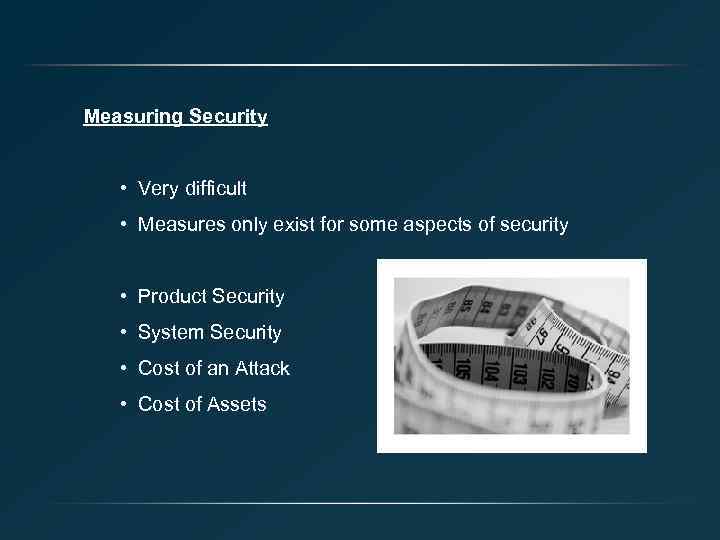
Measuring Security • Very difficult • Measures only exist for some aspects of security • Product Security • System Security • Cost of an Attack • Cost of Assets
Standards • Exist for specific industry branches • e. g. financial sector, government departments • ISO 17799 • Not a technical standard • Code of best practice • Encompasses many aspects of security • From policies to software and physical security
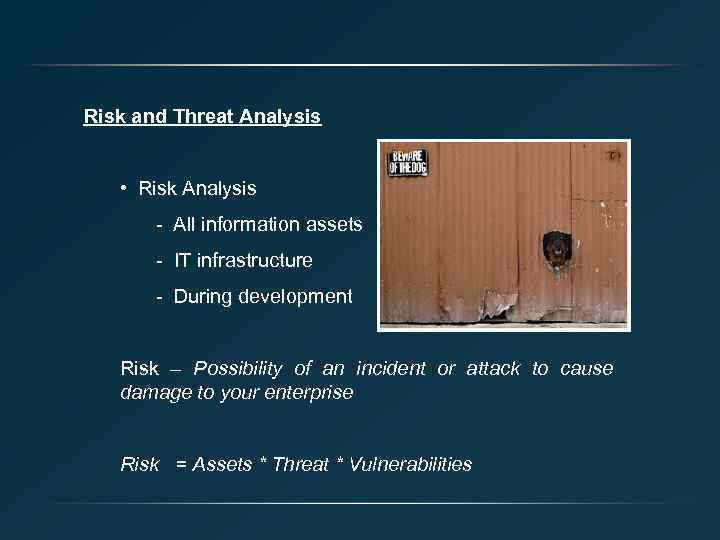
Risk and Threat Analysis • Risk Analysis - All information assets - IT infrastructure - During development Risk – Possibility of an incident or attack to cause damage to your enterprise Risk = Assets * Threat * Vulnerabilities
Assets • Software • Hardware • Data and Information • Reputation • Identification easy, valuation difficult • Data, Information, Reputation – difficult to measure
Vulnerabilities • Weaknesses of a system that could be accidentally or intentionally exploited to damage assets • Badly configured accounts • Programs with known flaws • Weak access control • Weak firewall configuration • Can be rated according to impact
Threats • Actions by adversaries who try to exploit vulnerabilities to damage assets • Categorisation by damage done to assets • Identification of source of attacks • Analysis of attack execution (Attack Graphs) • Can be rated according to likelihood • Attack Graphs - formalized and structured - assessable, reproducible
Risk Quantitative Risk Analysis + probability theory based on mathematical theory - quality of results depends on quality of inputs - not always feasible Qualitative Risk Analysis + more applicable - scaling based on judgements of security experts
Countermeasures / Risk Mitigation • Risk analysis presents recommended countermeasures • Risk analysis not always possible • Baseline protection – security requirements for typical cases with recommended countermeasures
Summary • Current security landscape • Management is vital to security • How security can be measured • What is Risk and how it is analysed
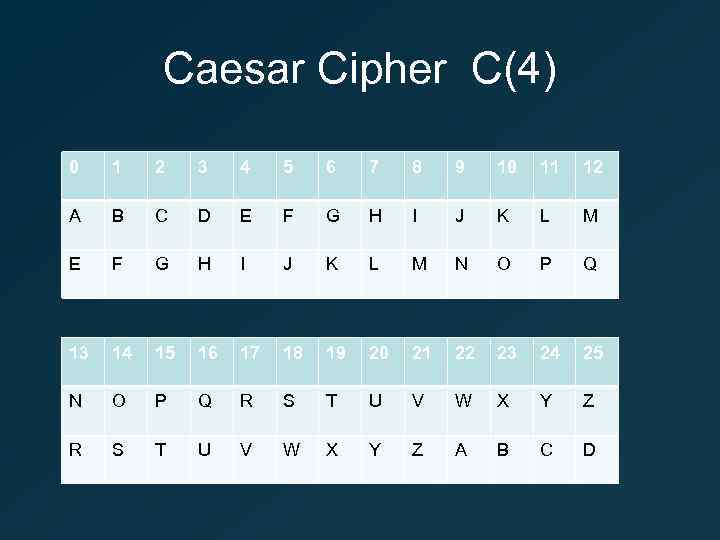
Caesar Cipher C(4) 0 1 2 3 4 5 6 7 8 9 10 11 12 A B C D E F G H I J K L M N O P Q 13 14 15 16 17 18 19 20 21 22 23 24 25 N O P Q R S T U V W X Y Z A B C D
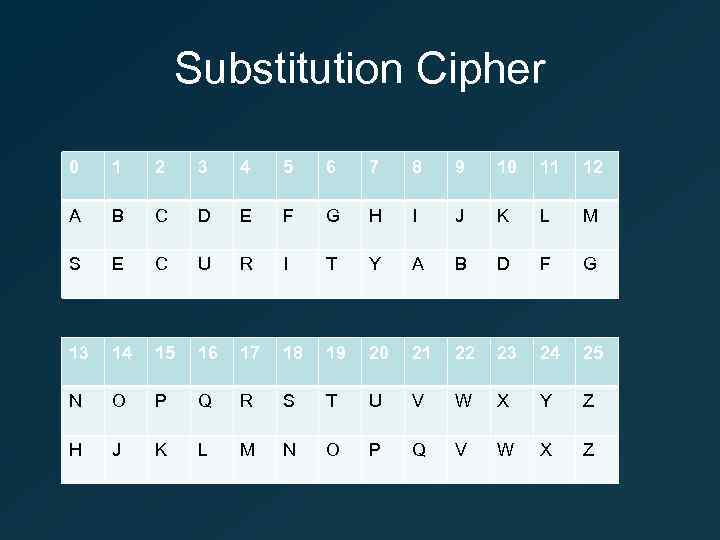
Substitution Cipher 0 1 2 3 4 5 6 7 8 9 10 11 12 A B C D E F G H I J K L M S E C U R I T Y A B D F G 13 14 15 16 17 18 19 20 21 22 23 24 25 N O P Q R S T U V W X Y Z H J K L M N O P Q V W X Z

Questions

End
Скачать презентацию Information Security Batyrkhan Omarov Motivation People
lecture1_introduction.ppt