 Скачать презентацию Information and background on climate change Gustav Strandberg
678bbc098f2ee57716a26b3eb67a3ccc.ppt
- Количество слайдов: 23



Information and background on climate change Gustav Strandberg Rossby Centre, SMHI, Sweden 090401
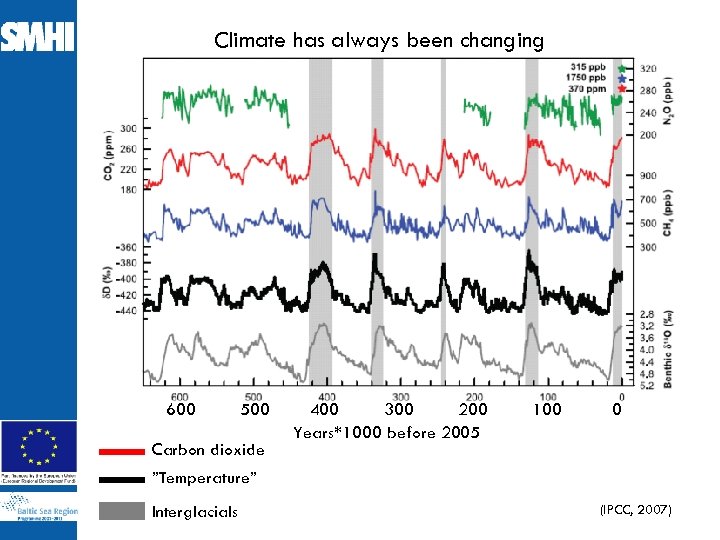
Climate has always been changing 600 500 Carbon dioxide 400 300 200 Years*1000 before 2005 100 0 ”Temperature” Interglacials (IPCC, 2007)
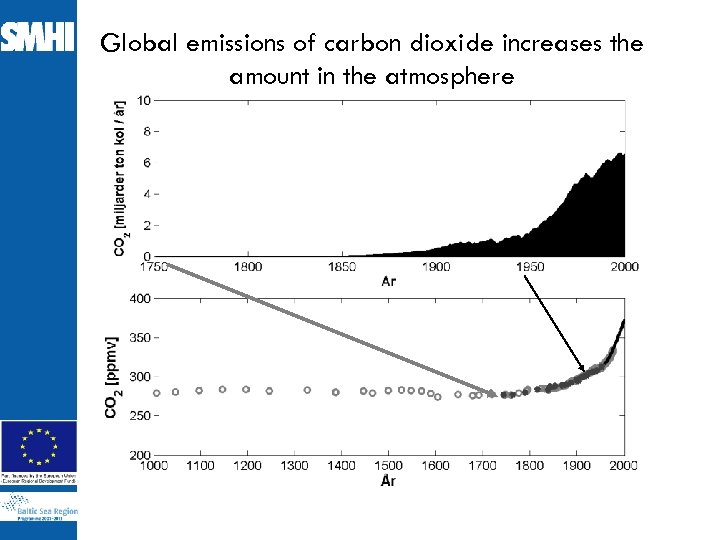
Global emissions of carbon dioxide increases the amount in the atmosphere
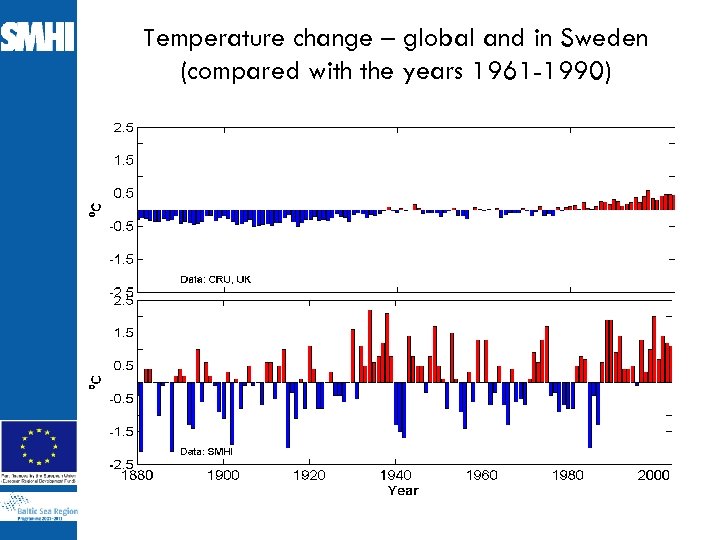
Temperature change – global and in Sweden (compared with the years 1961 -1990)
The concentration of CO 2 in the atmosphere has reached a record high relative to more than the past half-million years, and has done so at an exceptionally fast rate. Current global temperatures are warmer than they have ever been during at least the past five centuries, probably even for more than a millennium. If warming continues unabated, the resulting climate change within this century would be extremely unusual in geological terms. IPCC, 2007
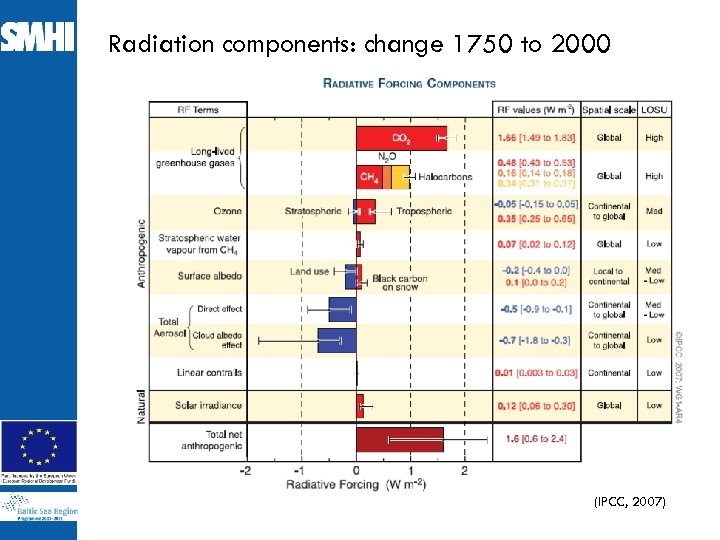
Radiation components: change 1750 to 2000 (IPCC, 2007)
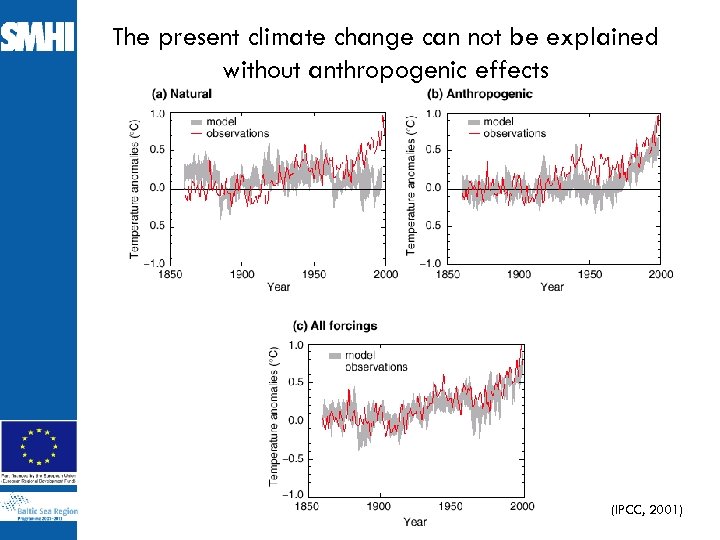
The present climate change can not be explained without anthropogenic effects (IPCC, 2001)
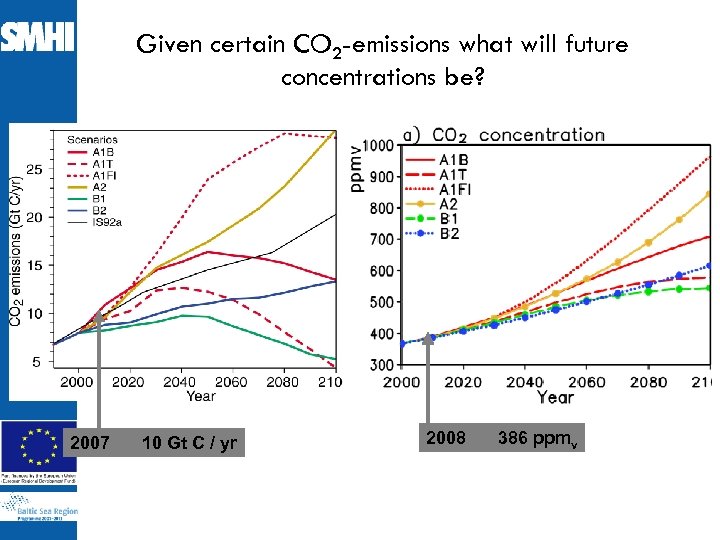
Given certain CO 2 -emissions what will future concentrations be? 2007 10 Gt C / yr 2008 386 ppmv
Emission scenario + global climate model + (regional climate model) + time period = climate scenario (or climate projection) A climate scenario is a combination of several assumptions.
Uncertainties in the i scenario • What we don’t know. Future amounts of green-house gases. • What we can’t describe. Different climate models represents the climate system differently and with different quality. • Natural variability. A climate model can not exactly reproduce the climate in one specific year.
Scenarios are not forecasts Climate models does not reproduce the real weather in a specific point at a certain time. A good quality climate model gives a probable realisation of the weather, with realistic statistical properties.
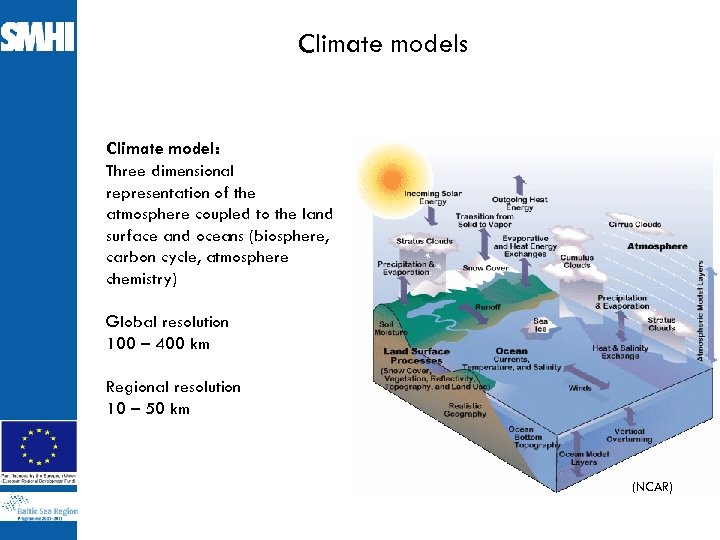
Climate models Climate model: Three dimensional representation of the atmosphere coupled to the land surface and oceans (biosphere, carbon cycle, atmosphere chemistry) Global resolution 100 – 400 km Regional resolution 10 – 50 km (NCAR)
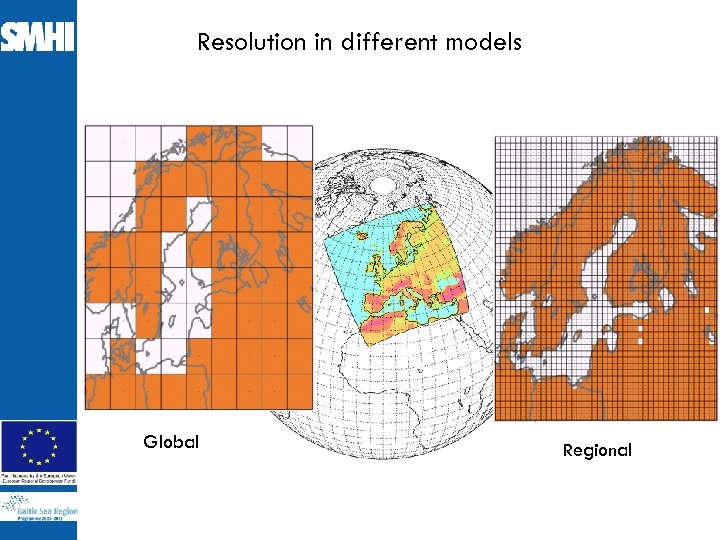
Resolution in different models Global Regional
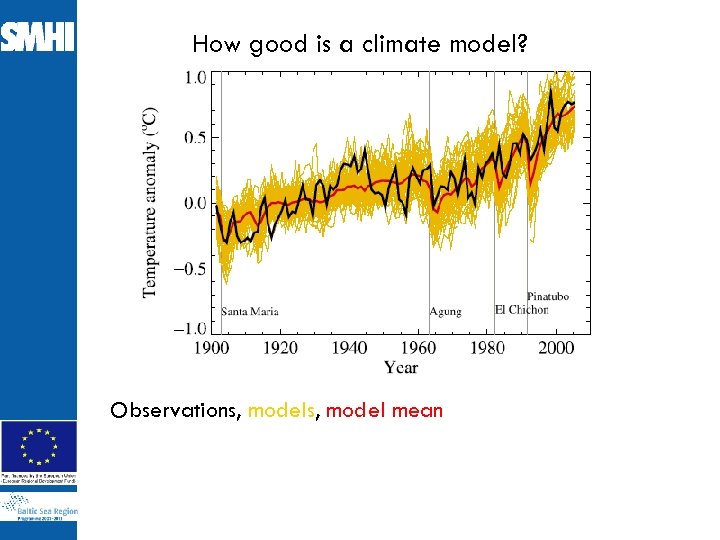
How good is a climate model? Observations, model mean
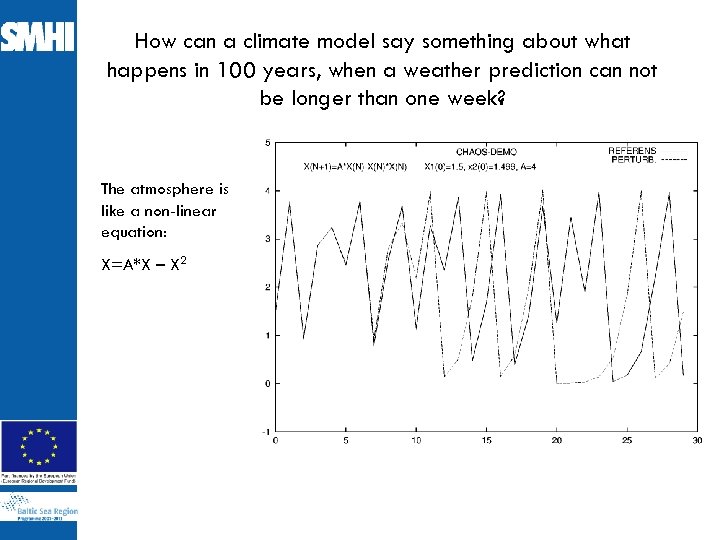
How can a climate model say something about what happens in 100 years, when a weather prediction can not be longer than one week? The atmosphere is like a non-linear equation: X=A*X – X 2
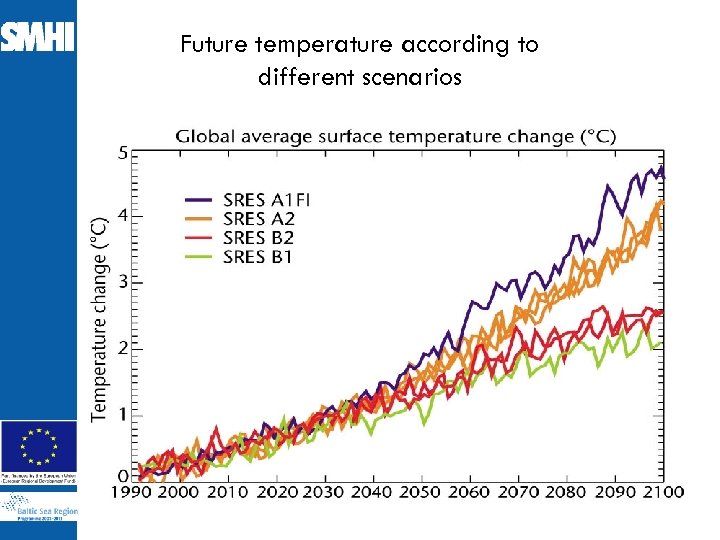
Future temperature according to different scenarios
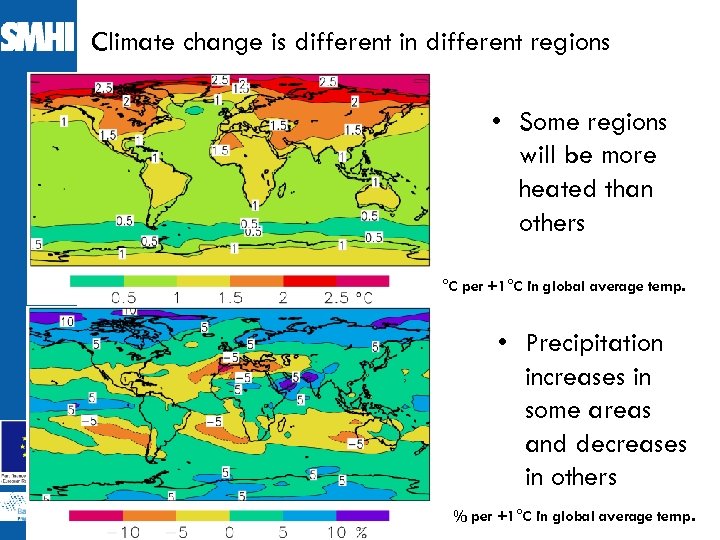
Climate change is different in different regions • Some regions will be more heated than others °C per +1°C in global average temp. • Precipitation increases in some areas and decreases in others % per +1°C in global average temp.
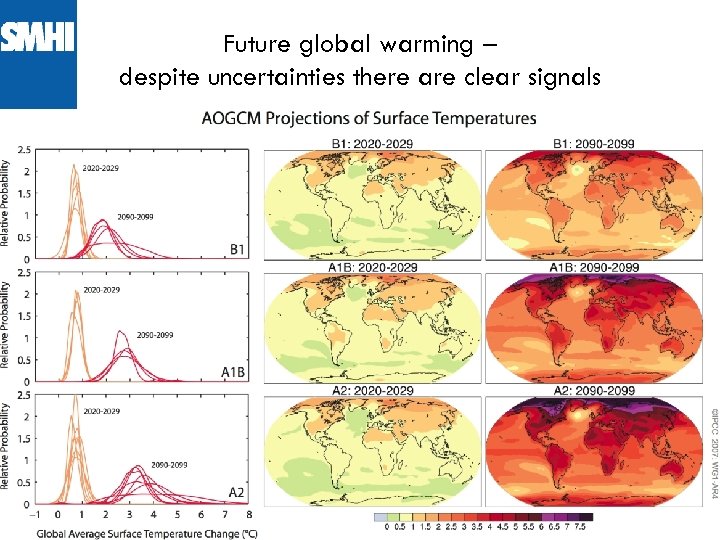
Future global warming – despite uncertainties there are clear signals
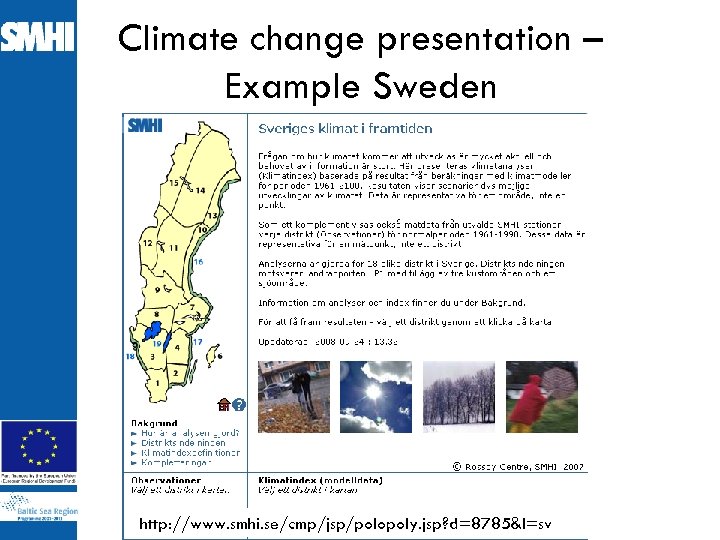
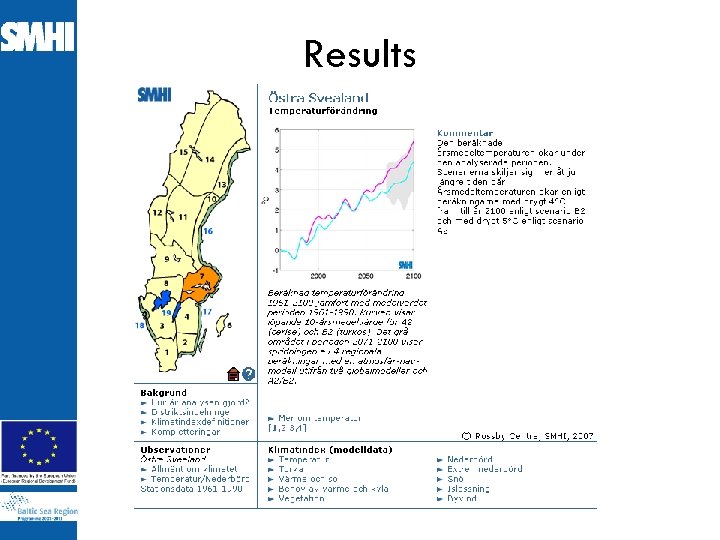
Climate change presentation – Example Sweden http: //www. smhi. se/cmp/jsp/polopoly. jsp? d=8785&l=sv
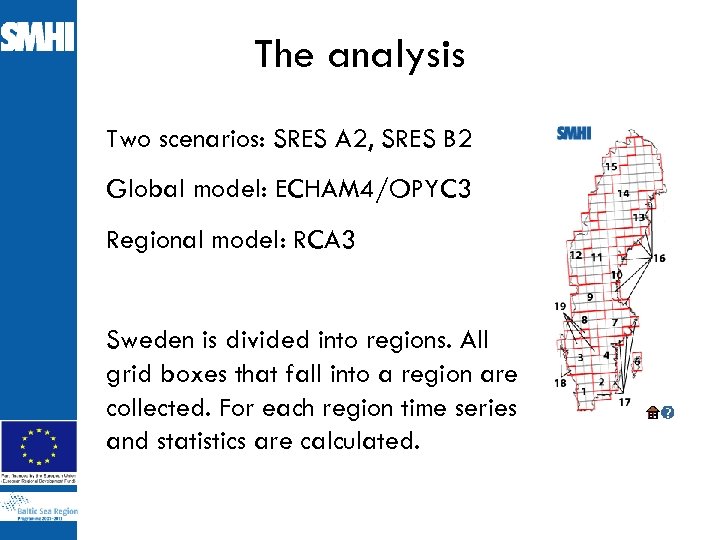
The analysis Two scenarios: SRES A 2, SRES B 2 Global model: ECHAM 4/OPYC 3 Regional model: RCA 3 Sweden is divided into regions. All grid boxes that fall into a region are collected. For each region time series and statistics are calculated.
Results
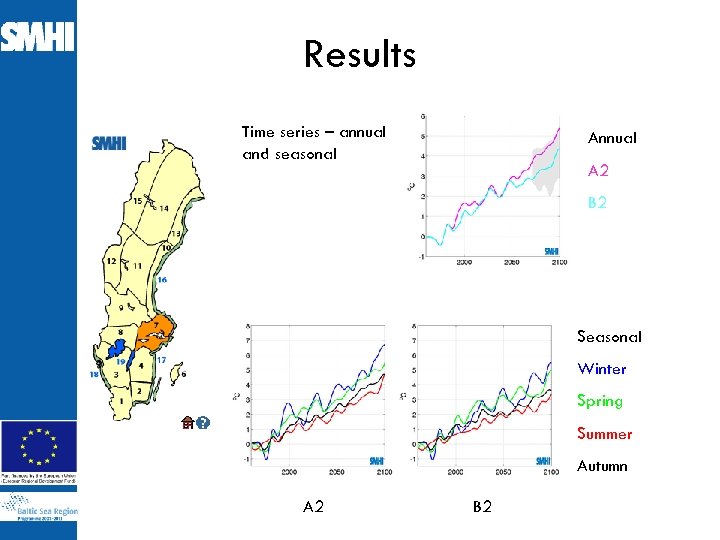
Results Time series – annual and seasonal Annual A 2 B 2 Seasonal Winter Spring Summer Autumn A 2 B 2
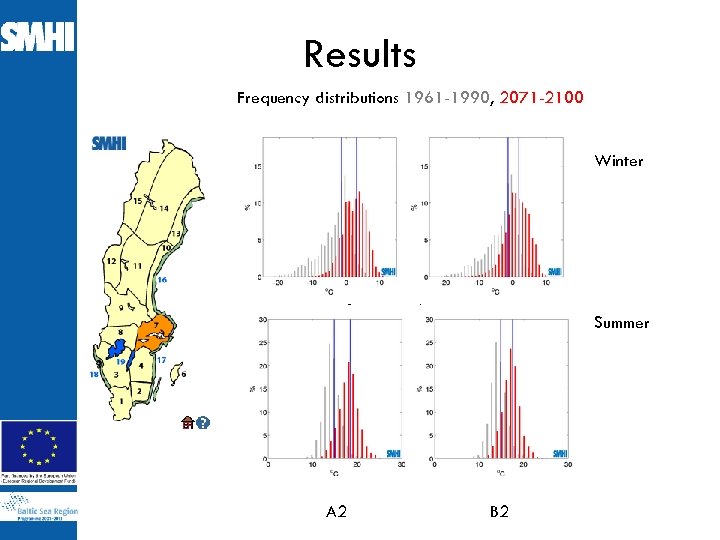
Results Frequency distributions 1961 -1990, 2071 -2100 Winter Summer A 2 B 2
Скачать презентацию Information and background on climate change Gustav Strandberg
678bbc098f2ee57716a26b3eb67a3ccc.ppt