


 Скачать презентацию Informatics 122 Software Design II Lecture 12
412dde79d84318daea6b8d164269cdee.ppt
- Количество слайдов: 32
 + Informatics 122 Software Design II Lecture 12 Emily Navarro Duplication of course material for any commercial purpose without the explicit written permission of the professor is prohibited. 1
 + 2 Today’s Lecture Component reuse Assignment 5
 + 3 Component Reuse – Avoiding “Reinventing the Wheel” Component reuse is using an already-developed piece of software (usually from a third-party) to provide some type of functionality to your system rather than developing the functionality yourself from scratch A true software component is one that has been specifically designed to be reusable
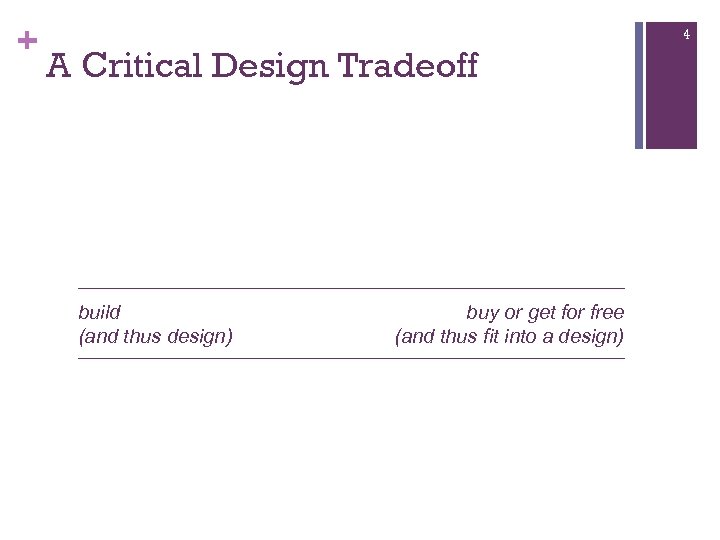 + 4 A Critical Design Tradeoff build (and thus design) buy or get for free (and thus fit into a design)
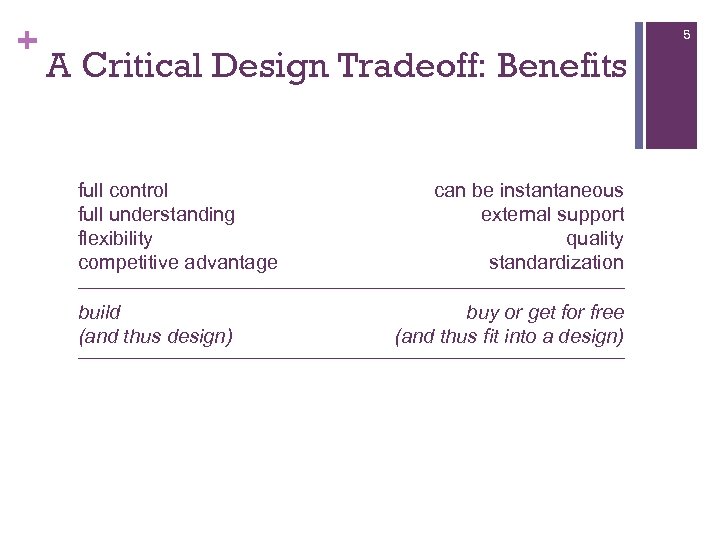 + 5 A Critical Design Tradeoff: Benefits full control full understanding flexibility competitive advantage build (and thus design) can be instantaneous external support quality standardization buy or get for free (and thus fit into a design)
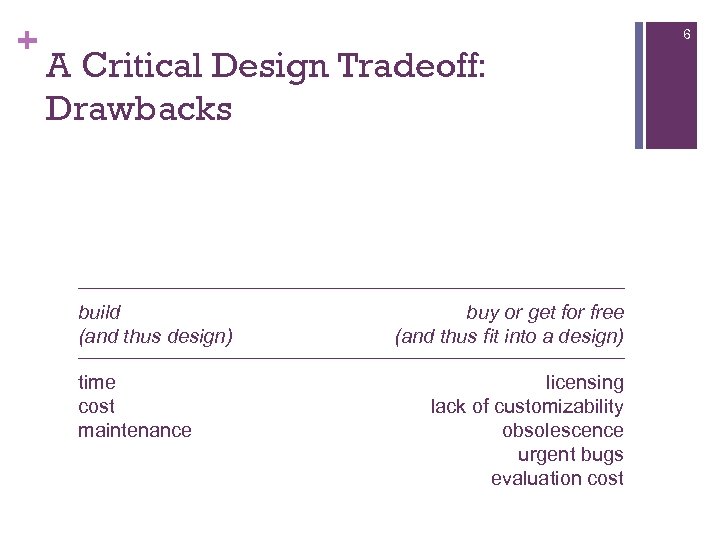 + 6 A Critical Design Tradeoff: Drawbacks build (and thus design) time cost maintenance buy or get for free (and thus fit into a design) licensing lack of customizability obsolescence urgent bugs evaluation cost
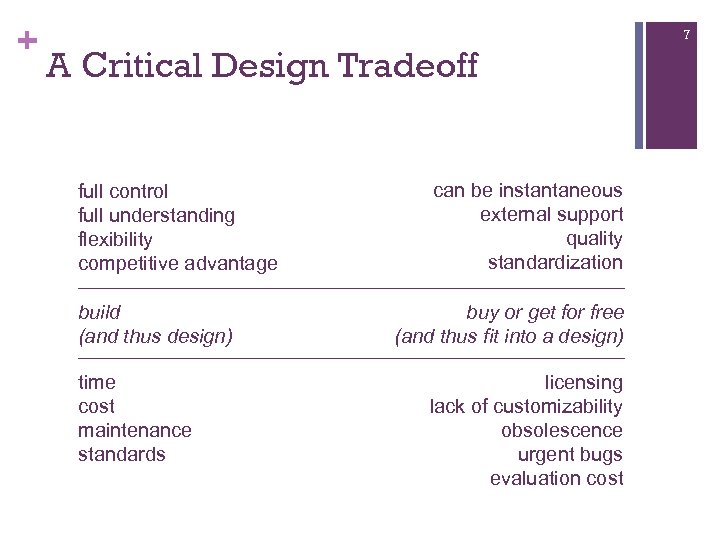 + 7 A Critical Design Tradeoff full control full understanding flexibility competitive advantage build (and thus design) time cost maintenance standards can be instantaneous external support quality standardization buy or get for free (and thus fit into a design) licensing lack of customizability obsolescence urgent bugs evaluation cost
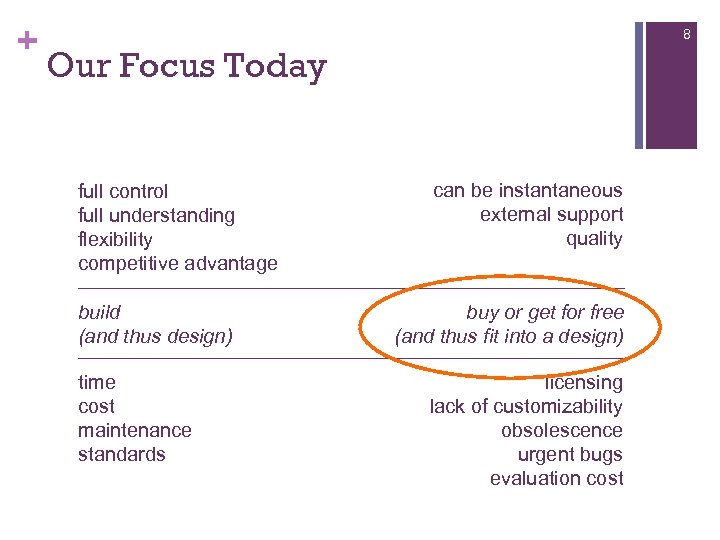 + 8 Our Focus Today full control full understanding flexibility competitive advantage build (and thus design) time cost maintenance standards can be instantaneous external support quality buy or get for free (and thus fit into a design) licensing lack of customizability obsolescence urgent bugs evaluation cost
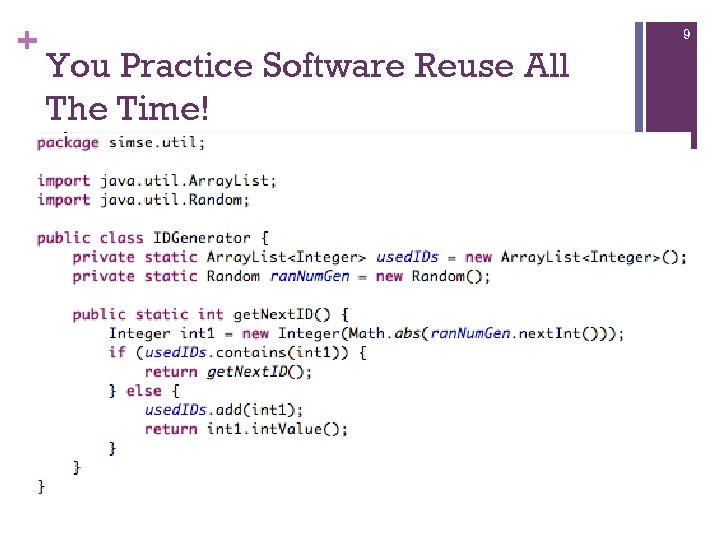 + 9 You Practice Software Reuse All The Time!
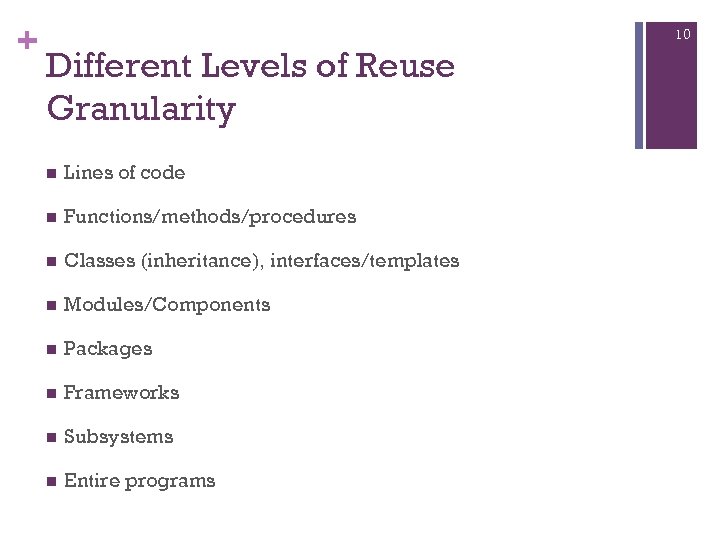 + 10 Different Levels of Reuse Granularity Lines of code Functions/methods/procedures Classes (inheritance), interfaces/templates Modules/Components Packages Frameworks Subsystems Entire programs
 + 11 A New Kind of Design Decision Less fine control More learning and using and applying Similar to recovery
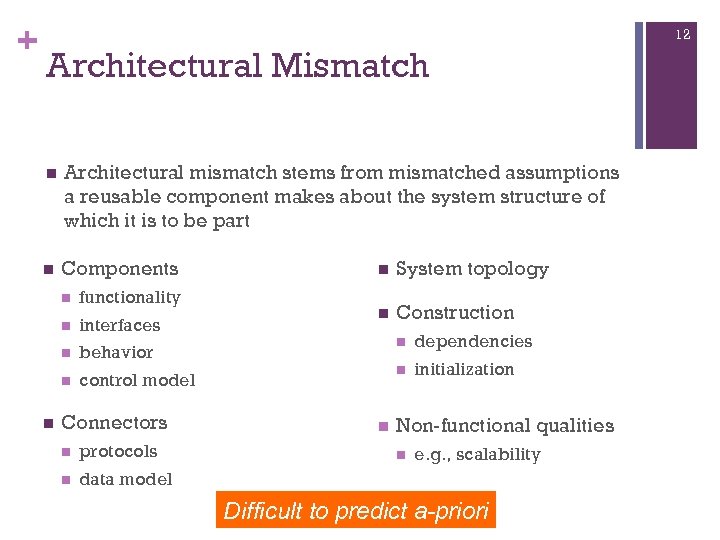 + 12 Architectural Mismatch Architectural mismatch stems from mismatched assumptions a reusable component makes about the system structure of which it is to be part Components interfaces System topology Construction behavior functionality control model Connectors protocols dependencies initialization Non-functional qualities data model e. g. , scalability Difficult to predict a-priori
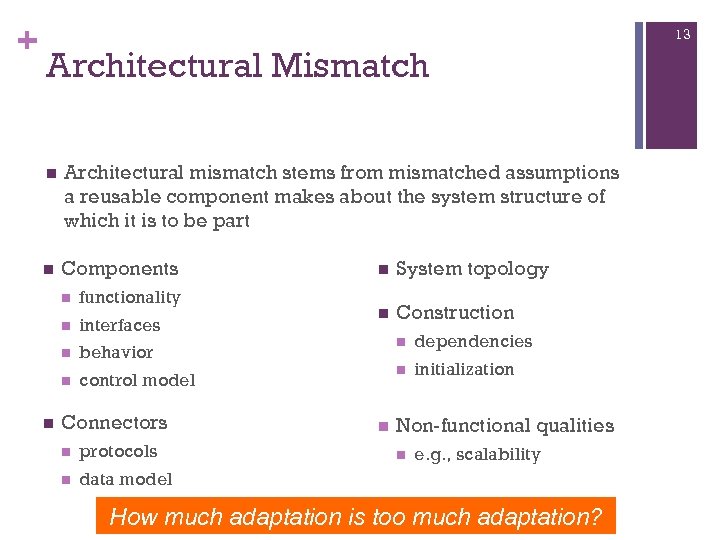 + 13 Architectural Mismatch Architectural mismatch stems from mismatched assumptions a reusable component makes about the system structure of which it is to be part Components interfaces System topology Construction behavior functionality control model Connectors protocols dependencies initialization Non-functional qualities data model e. g. , scalability How much adaptation is too much adaptation?
 + 14 Architectural Mismatch can Break your System! In 1996, the first test flight of the Ariane 5 rocket ended in disaster when the launcher went out of control 37 seconds after take off. The problem was due to a reused component from a previous version of the launcher (the Inertial Navigation System) that failed because assumptions made when that component was developed did not hold for Ariane 5. The functionality that failed in this component was not required in Ariane 5.
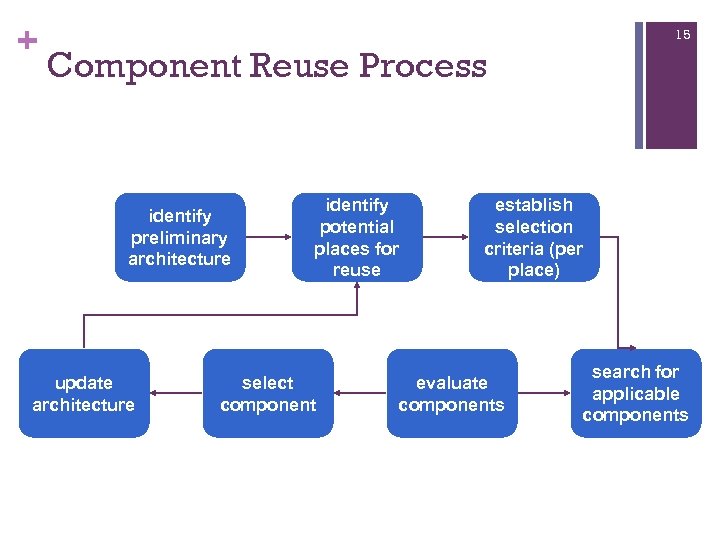 + 15 Component Reuse Process identify preliminary architecture update architecture identify potential places for reuse select component establish selection criteria (per place) evaluate components search for applicable components
 + 16 Identify Preliminary Architecture Largely as usual Familiarity with certain reusable components may influence the architectural choices being made
 + 17 Identify Potential Places for Reuse There are components for just about anything database access regular expression handling numerical computing protein visualization speech recognition e-mail handling index and search maps geocoding graph layout … Judiciously mark the architecture in terms of where reusable components may fit in
 + 18 Establish Selection Criteria (Per Place) What kind of component does the architecture really need? absolutely necessary versus desired functionality software qualities How is the component to fit with the rest of the architecture? some adaptation can be accommodated Investment cost future cost Reputation component provider component itself …
 + 19 Search for Applicable Component Google is a wonderful thing www. google. com code. google. com Component repositories rich in available components many junk some decent occasional gems Research and professional development literature Too many is no good Too few is no good either although one perfect component would solve the problem
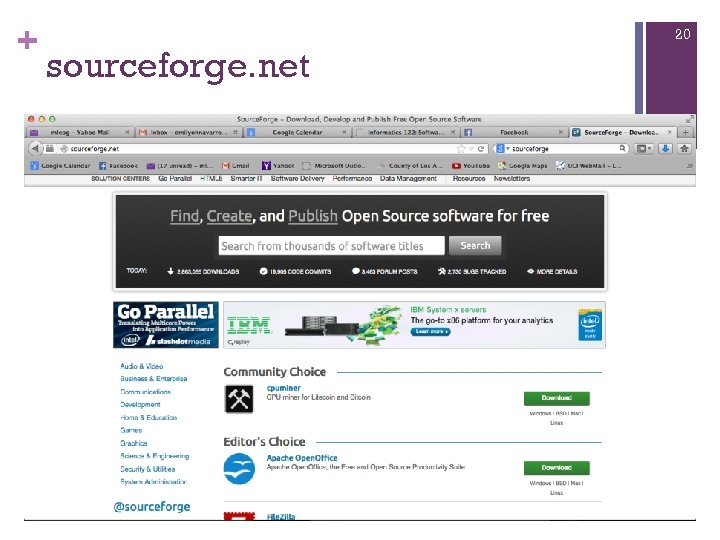 + 20 sourceforge. net
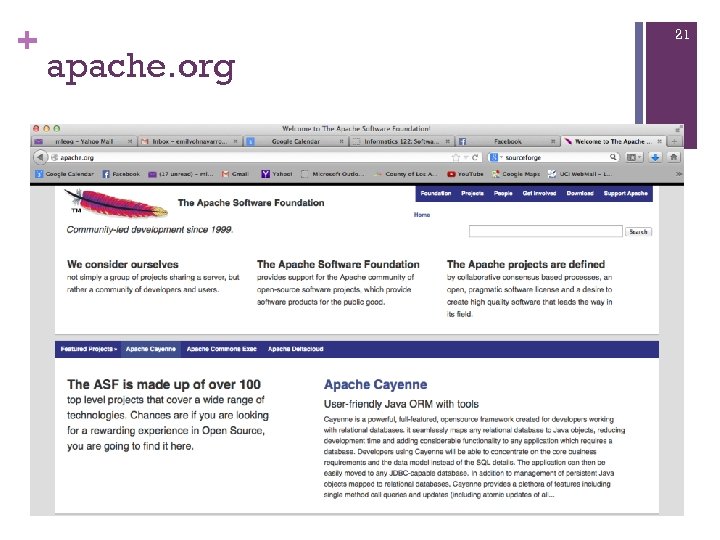 + 21 apache. org
 + 22 stackoverflow. com
 + 23 Evaluate Components Apply selection criteria to each of the components found beware of the platform, deployment needs, licensing terms matrix of criteria versus component Additional approaches trial/evaluation licenses reading component code examine sample programs using the component writing code using the component Examine the component’s documentation Analyze architectural impact of the component Perhaps even “mini integrate” the component
 + 24 Select Component Choose the optimum component understand tradeoffs be prepared to not choose a component
 + 25 Update Architecture Design any adapters necessary to fit the component Redesign other components as needed Restructure architecture as needed Consider implementers special role for documentation
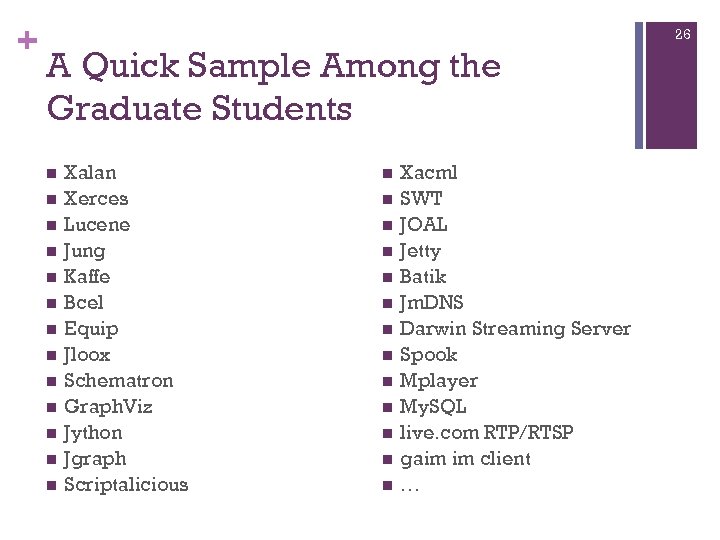 + 26 A Quick Sample Among the Graduate Students Xalan Xerces Lucene Jung Kaffe Bcel Equip Jloox Schematron Graph. Viz Jython Jgraph Scriptalicious Xacml SWT JOAL Jetty Batik Jm. DNS Darwin Streaming Server Spook Mplayer My. SQL live. com RTP/RTSP gaim im client …
 + 27 Assignment 5 Research available components that provide a particular kind of functionality for Sim. SE, set up selection criteria, make a choice of the component that you believe is best, and detail how you would go about integrating the component
 + 28 Assignment 5 Specifically, research components for the following situations 3 D graphics – we want to use a 3 D graphical engine to replace the current icon-based 2 D graphics. It should be particularly flexible and customizable since we will eventually want to also incorporate this engine into the Sim. SE model builder, allowing one to create 3 D graphics in the model builder and generate a customized game incorporating these graphics. speech recognition – we want to add the ability to use speech to allow players to navigate through the game, for which we need some sort of speech-to-text conversion component that is as reliable as possible distribution – we would like to make Sim. SE multi-player, so we need some type of protocol and middleware that is lightweight and fast so as not to disrupt the game experience
 + 29 Assignment 5 Additional constraint we have $25, 000 in funds to spend on this project, but we want to save money for user studies and other assorted expenses, so cost should be (somewhat) minimized if truly warranted, management can be requested to fund one “big ticket” component, up to possibly $75, 000
 + 30 Assignment 5 Create a 10 minute presentation that describes for one of the three categories (specific assignments of which category by which team the last slide) your search process candidate components you considered strengths weaknesses your selection criteria the component you deem best (and why) Create a document that describes, at the design and code level, the impact of incorporating the chosen components (all three) from this document, someone should be able to make these changes “effortlessly” So, you will be researching all three categories (and reporting on them in your document) but presenting on one
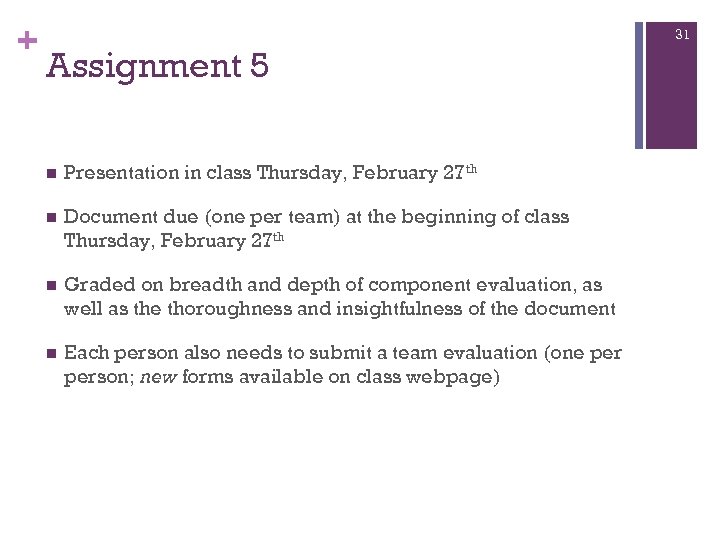 + 31 Assignment 5 Presentation in class Thursday, February 27 th Document due (one per team) at the beginning of class Thursday, February 27 th Graded on breadth and depth of component evaluation, as well as the thoroughness and insightfulness of the document Each person also needs to submit a team evaluation (one person; new forms available on class webpage)
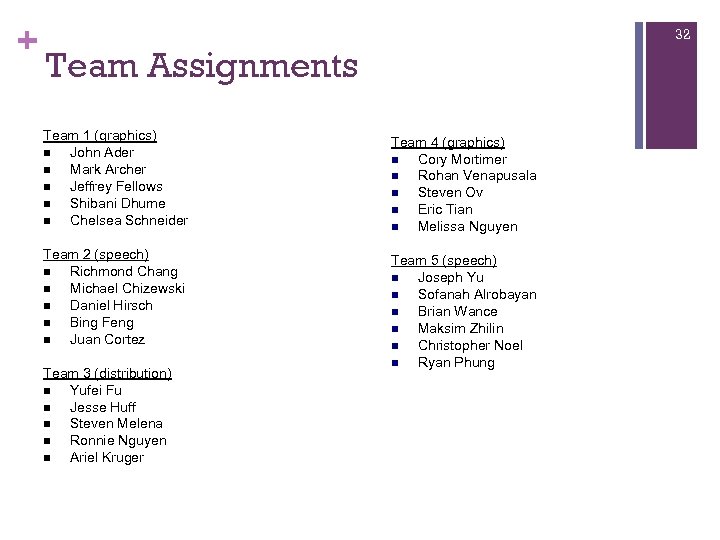 + 32 Team Assignments Team 1 (graphics) John Ader Mark Archer Jeffrey Fellows Shibani Dhume Chelsea Schneider Team 4 (graphics) Cory Mortimer Rohan Venapusala Steven Ov Eric Tian Melissa Nguyen Team 2 (speech) Richmond Chang Michael Chizewski Daniel Hirsch Bing Feng Juan Cortez Team 5 (speech) Joseph Yu Sofanah Alrobayan Brian Wance Maksim Zhilin Christopher Noel Ryan Phung Team 3 (distribution) Yufei Fu Jesse Huff Steven Melena Ronnie Nguyen Ariel Kruger