


 Скачать презентацию Influenza Pandemic Un Preparedness Louis M Katz MD
6f921fef6b4b8d88d3ed4c5e07b9889c.ppt
- Количество слайдов: 33
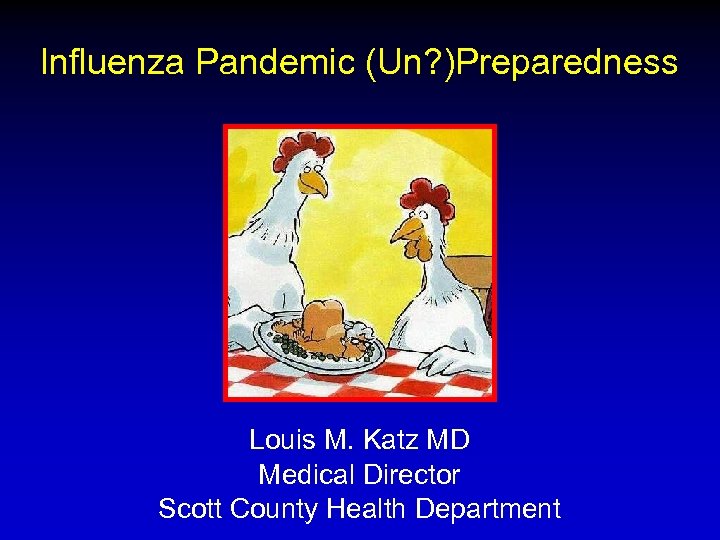 Influenza Pandemic (Un? )Preparedness Louis M. Katz MD Medical Director Scott County Health Department
 Human influenza types • Type A • Epidemics and pandemics • Birds, animals (swine) humans • All ages • Type B • Milder epidemics • Humans only • Primarily affects children • Type C • Never mind
 Influenza A • Incubation: 1 -4 days (average 2 d. ) • Whole respiratory tract may be involved • Abrupt onset fever, chills, malaise and muscle aches. Cough, sore throat, headache. • Duration of severe symptoms: 3 -7 days • Large amounts of virus in secretions • Virus shed for 2 -8 days after onset • Virus detected up to 24 hours before onset • Viral shedding in children can persist for longer
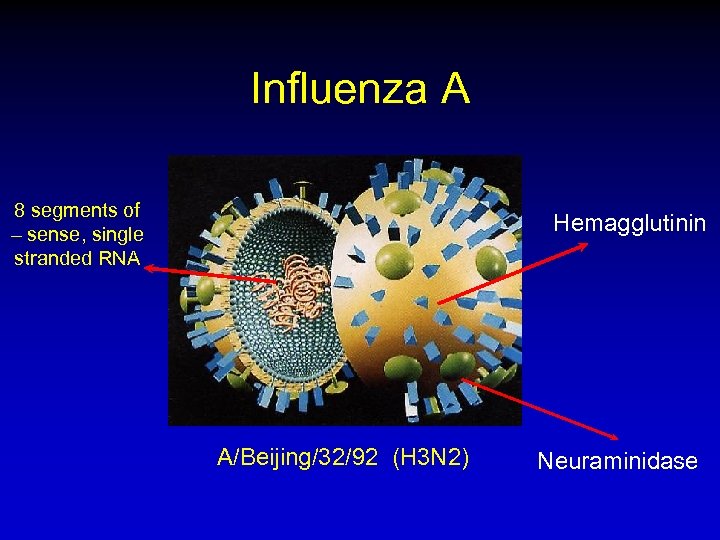 Influenza A 8 segments of – sense, single stranded RNA Hemagglutinin A/Beijing/32/92 (H 3 N 2) Neuraminidase
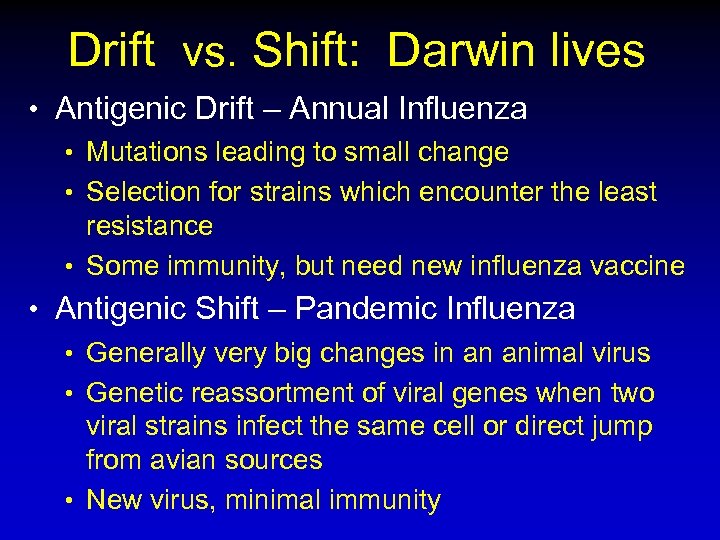 Drift vs. Shift: Darwin lives • Antigenic Drift – Annual Influenza • Mutations leading to small change • Selection for strains which encounter the least resistance • Some immunity, but need new influenza vaccine • Antigenic Shift – Pandemic Influenza • Generally very big changes in an animal virus • Genetic reassortment of viral genes when two viral strains infect the same cell or direct jump from avian sources • New virus, minimal immunity
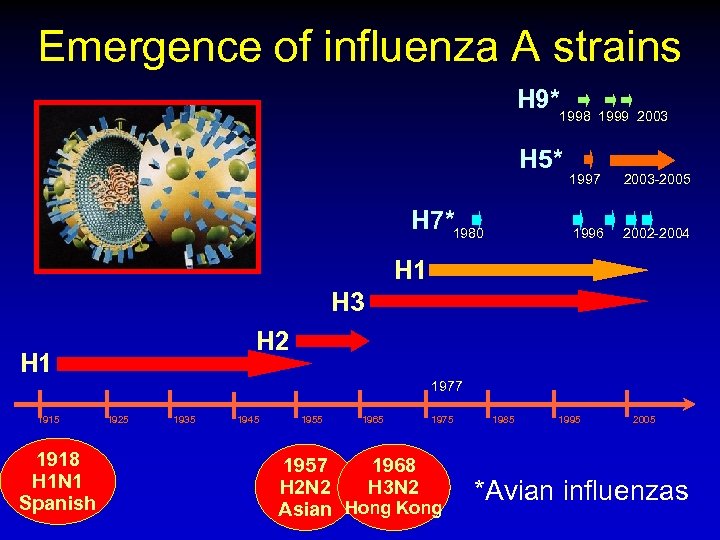 Emergence of influenza A strains H 9*1998 1999 2003 H 5* 2003 -2005 1996 H 7*1980 1997 2002 -2004 H 1 H 3 H 2 H 1 1977 1915 1918 H 1 N 1 Spanish 1925 1935 1945 1955 1965 1975 1957 1968 H 2 N 2 H 3 N 2 Asian Hong Kong 1985 1995 2005 *Avian influenzas
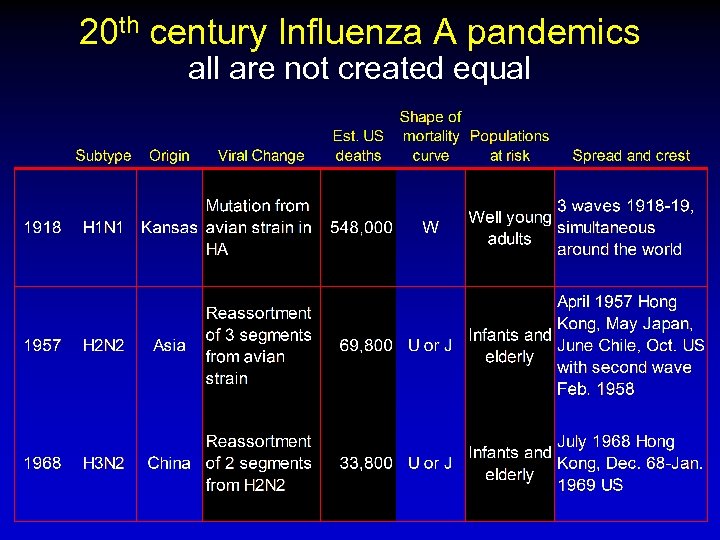 20 th century Influenza A pandemics all are not created equal
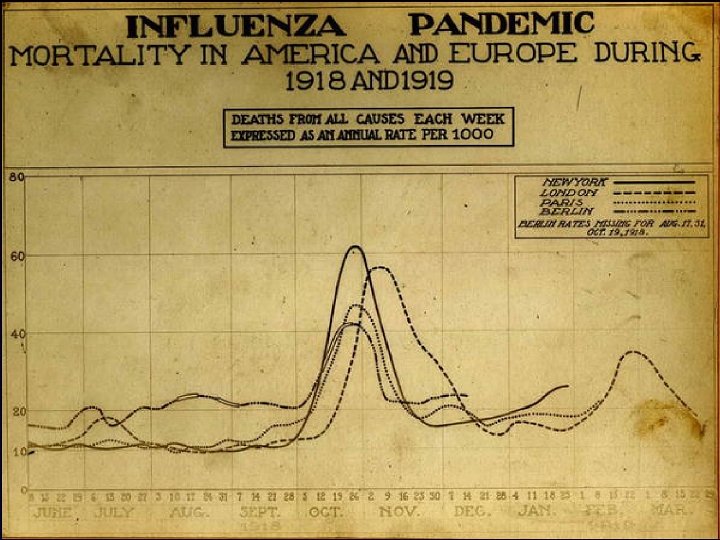
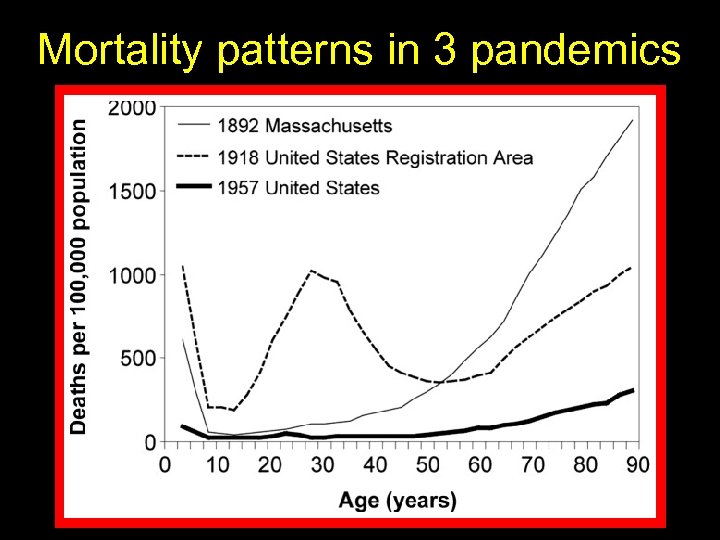 Mortality patterns in 3 pandemics

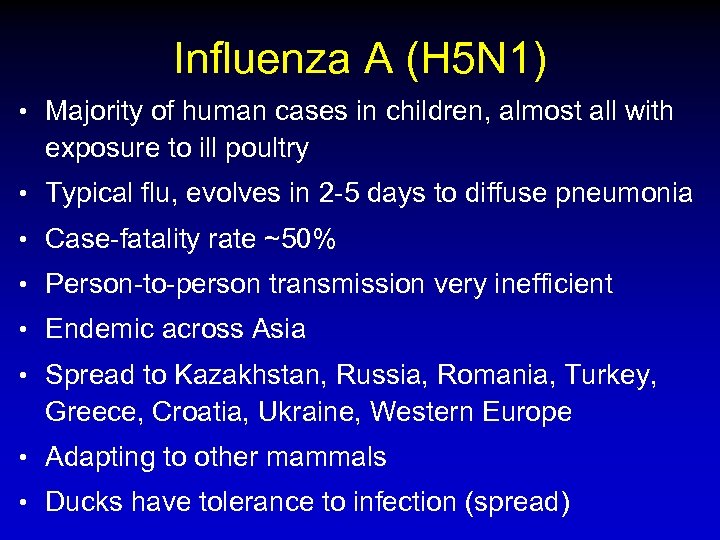 Influenza A (H 5 N 1) • Majority of human cases in children, almost all with exposure to ill poultry • Typical flu, evolves in 2 -5 days to diffuse pneumonia • Case-fatality rate ~50% • Person-to-person transmission very inefficient • Endemic across Asia • Spread to Kazakhstan, Russia, Romania, Turkey, Greece, Croatia, Ukraine, Western Europe • Adapting to other mammals • Ducks have tolerance to infection (spread)
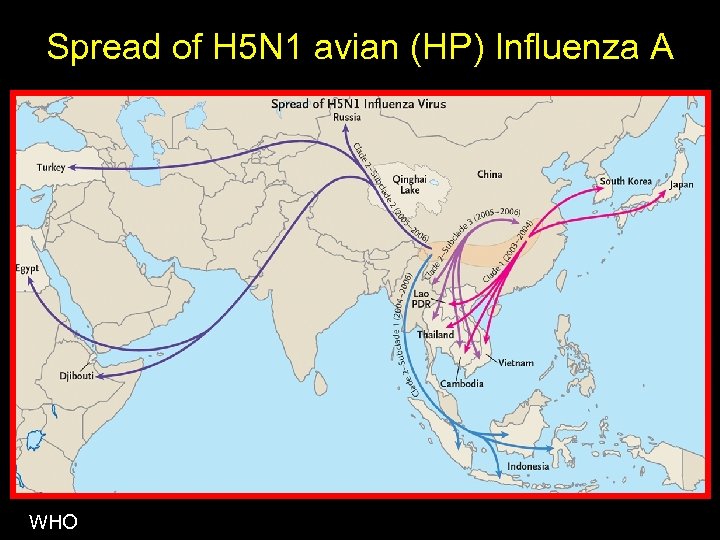 Spread of H 5 N 1 avian (HP) Influenza A WHO
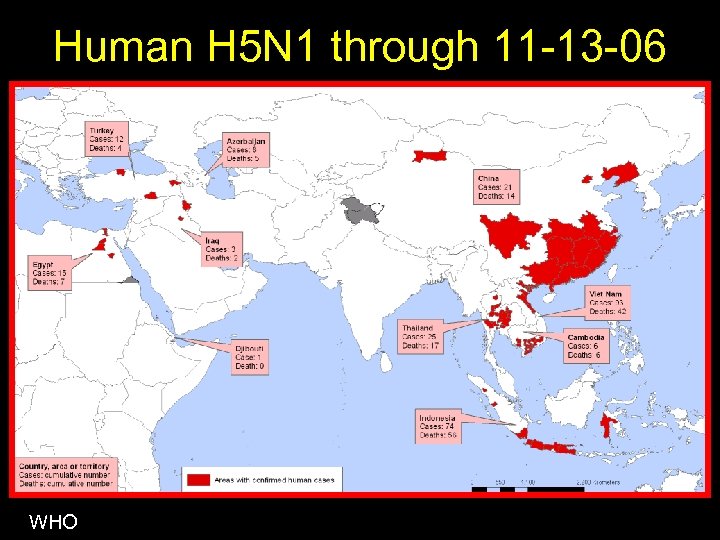 Human H 5 N 1 through 11 -13 -06 WHO
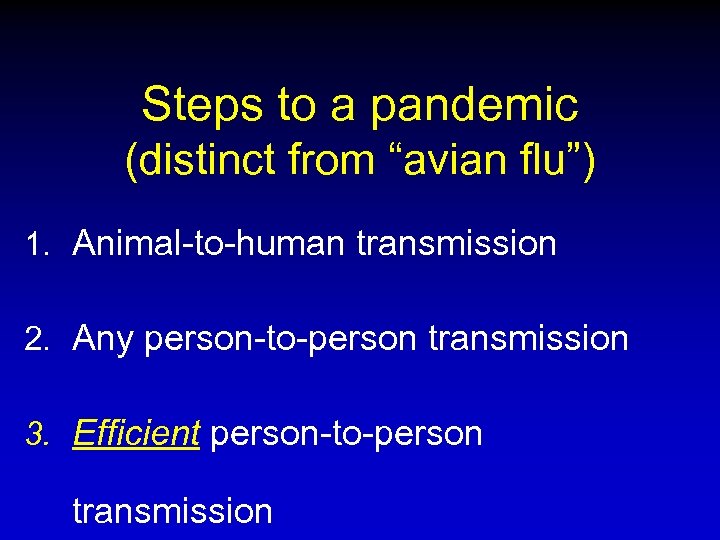 Steps to a pandemic (distinct from “avian flu”) 1. Animal-to-human transmission 2. Any person-to-person transmission 3. Efficient person-to-person transmission
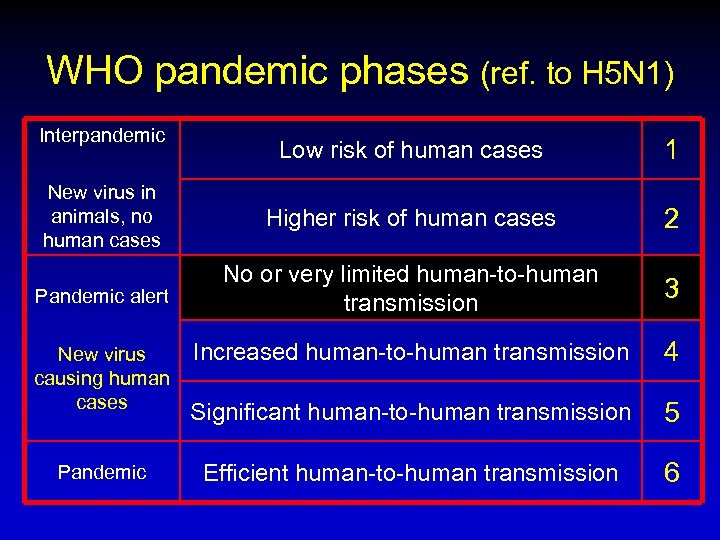 WHO pandemic phases (ref. to H 5 N 1) Interpandemic Low risk of human cases 1 New virus in animals, no human cases Higher risk of human cases 2 Pandemic alert No or very limited human-to-human transmission 3 Increased human-to-human transmission 4 Significant human-to-human transmission 5 Efficient human-to-human transmission 6 New virus causing human cases Pandemic
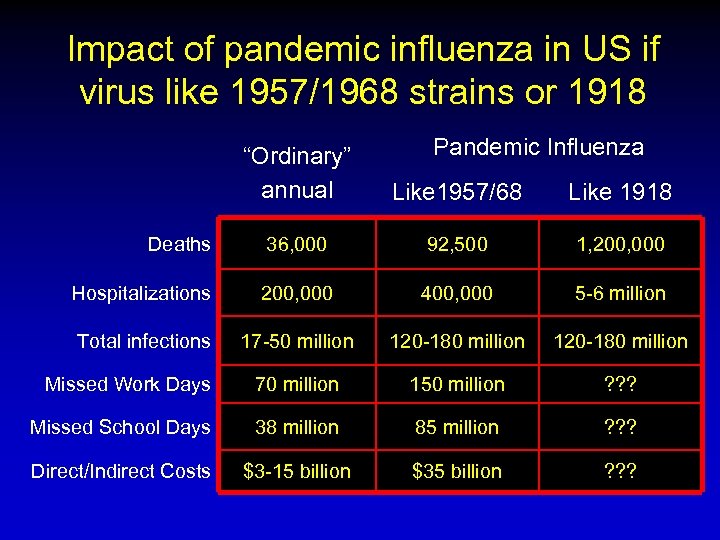 Impact of pandemic influenza in US if virus like 1957/1968 strains or 1918 Pandemic Influenza “Ordinary” annual Like 1957/68 Like 1918 Deaths 36, 000 92, 500 1, 200, 000 Hospitalizations 200, 000 400, 000 5 -6 million Total infections 17 -50 million 120 -180 million Missed Work Days 70 million 150 million ? ? ? Missed School Days 38 million 85 million ? ? ? Direct/Indirect Costs $3 -15 billion $35 billion ? ? ?
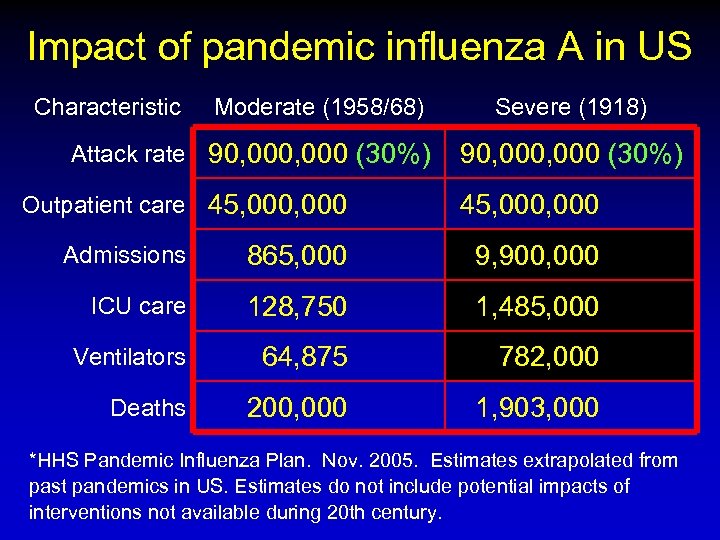 Impact of pandemic influenza A in US Characteristic Moderate (1958/68) Attack rate 90, 000 (30%) Severe (1918) 90, 000 (30%) Outpatient care 45, 000, 000 Admissions 865, 000 9, 900, 000 ICU care 128, 750 1, 485, 000 Ventilators 64, 875 782, 000 Deaths 200, 000 1, 903, 000 *HHS Pandemic Influenza Plan. Nov. 2005. Estimates extrapolated from past pandemics in US. Estimates do not include potential impacts of interventions not available during 20 th century.
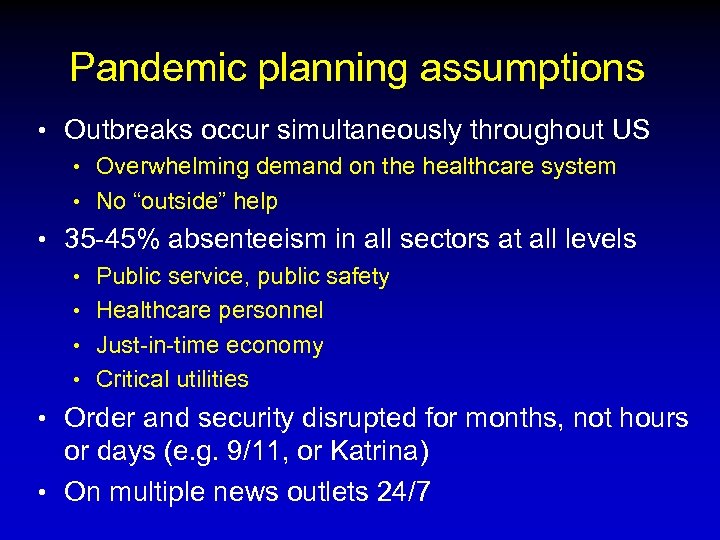 Pandemic planning assumptions • Outbreaks occur simultaneously throughout US • Overwhelming demand on the healthcare system • No “outside” help • 35 -45% absenteeism in all sectors at all levels • Public service, public safety • Healthcare personnel • Just-in-time economy • Critical utilities • Order and security disrupted for months, not hours or days (e. g. 9/11, or Katrina) • On multiple news outlets 24/7
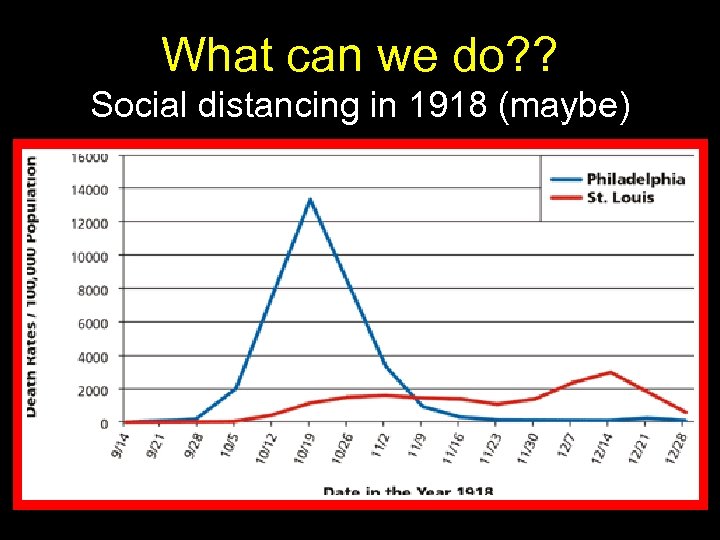 What can we do? ? Social distancing in 1918 (maybe)
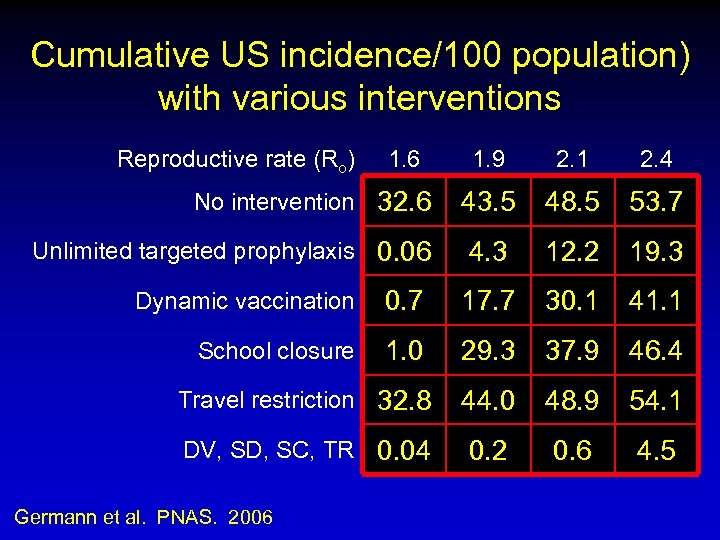 Cumulative US incidence/100 population) with various interventions Reproductive rate (Ro) 1. 6 No intervention 32. 6 Unlimited targeted prophylaxis 0. 06 1. 9 2. 1 2. 4 43. 5 48. 5 53. 7 4. 3 12. 2 19. 3 Dynamic vaccination 0. 7 17. 7 30. 1 41. 1 School closure 1. 0 29. 3 37. 9 46. 4 Travel restriction 32. 8 44. 0 48. 9 54. 1 DV, SD, SC, TR 0. 04 0. 2 0. 6 4. 5 Germann et al. PNAS. 2006
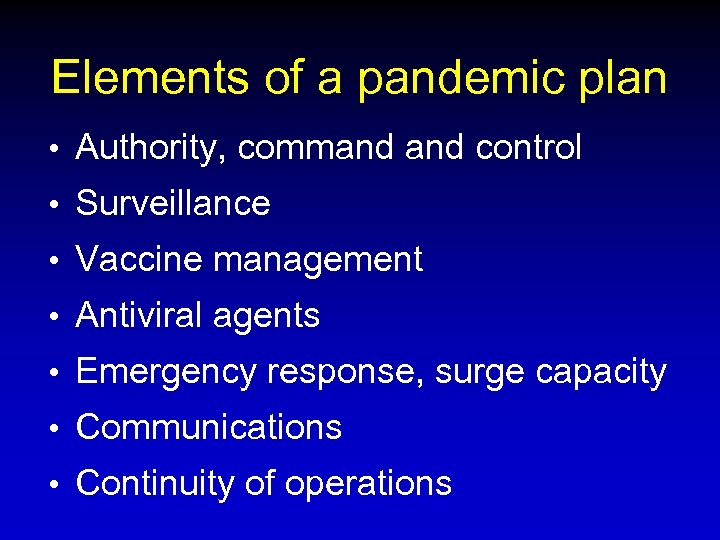 Elements of a pandemic plan • Authority, command control • Surveillance • Vaccine management • Antiviral agents • Emergency response, surge capacity • Communications • Continuity of operations
 Vaccine (conventional wisdom) • Not available for 4 to 6 months • Not necessarily true • Must be matched to strain • Grossly oversimplified • Will become available in allotments, with number of doses dependent on potency • When available, distribution will be prioritized • It is likely that much of the pandemic experience will occur prior to availability
 Antiviral medications • Drug likely to be distributed to states pro rata • Need 45 doses of oseltamivir for 6 wks of prophylaxis vs. 10 doses for 1 course of treatment • Priority for access will be determined state- by-state • Risk/benefit • Ethical considerations
 Expand enhance annual influenza vaccination • Enhance infrastructure • Expand expertise implementing large vaccination clinics • Develop trained cadre of volunteers • Enhance demand to enhance supply • Don’t forget pneumococcal vaccine
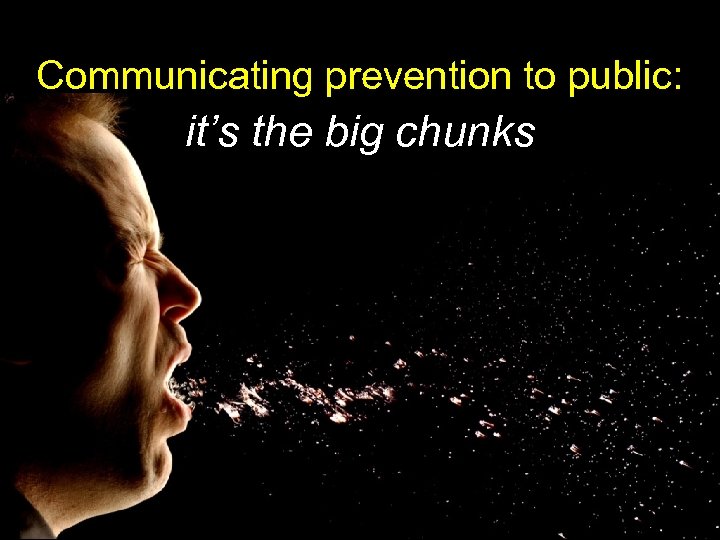 Communicating prevention to public: it’s the big chunks
 Prevention for the public • Frequent hand hygiene, teach children (right!) • Use antibacterial hand cleaner particularly after contact w/ public surfaces (e. g. shopping carts) • Keep your hands away from your face • Cough etiquette • Cover mouth, avoid exposing others • Unknown utility of PPE vs. public expectations • If you get sick, stay home from school/work • Stay ≥ 3 feet from anyone coughing/sneezing • Get an annual flu shot
 Public preparedness (duct tape? ) • As best you can, keep a supply of canned and dried food in the home • Develop a home emergency plan and put together a kit • Talk with your healthcare provider about having more than a 30 -day supply of needed medications • Maintain general good health and habits
 Challenges 1 • Effective surveillance for early recognition • Operational continuity with 40% absenteeism • Business in general • Health care • Hy-Vee, Iowa Light and Power, Starbucks • Constitutional governance • Coping with economic disruption • Implementation/enforcement of social distancing • School closure • Event cancellation • Sheltering
 Challenges 2 • Surge capacity for serious illness does not exist in US healthcare • Workforce support to deal with stress and pressure of 1918–like event
 Challenges 3 • Public buy-in for realistic planning • Low-tech prevention • Vaccine and antiviral priorities • Managing expectations • Effective communication (despite the media? ) during the pandemic • Social cohesion at neighborhood level • Acceptance and remediation of eroded public health infrastructure
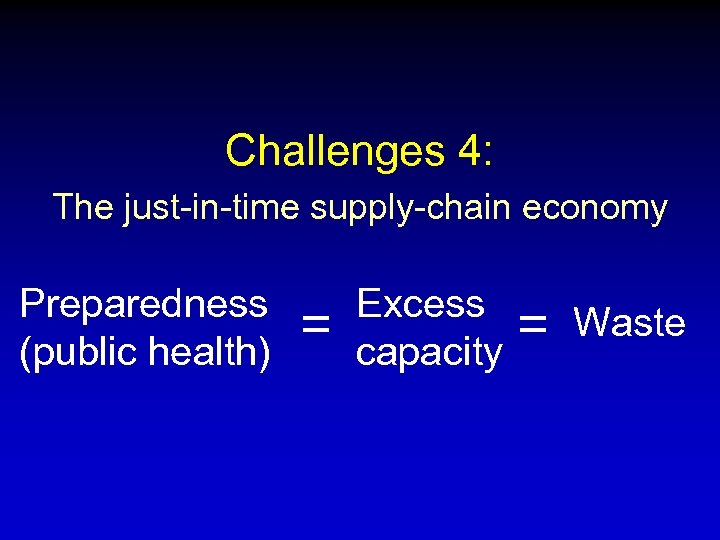 Challenges 4: The just-in-time supply-chain economy Preparedness (public health) = Excess capacity = Waste
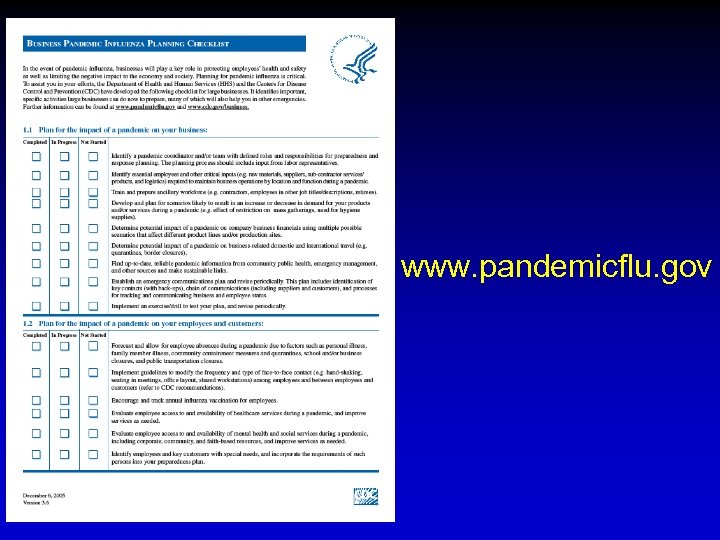 www. pandemicflu. gov
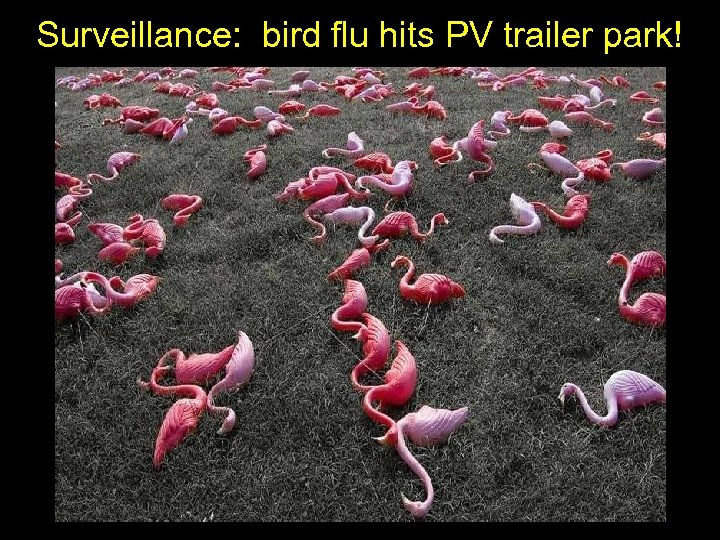 Surveillance: bird flu hits PV trailer park!