


 Скачать презентацию INFLUENCE OF TRADITIONAL KNOWLEDGE AND PRACTICES ON THE
71ae877a07ff3cf9d8e29efc4a71da44.ppt
- Количество слайдов: 25
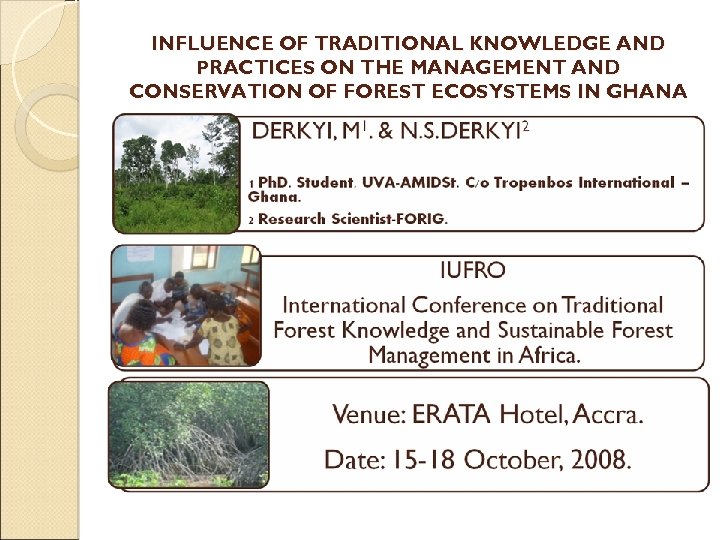 INFLUENCE OF TRADITIONAL KNOWLEDGE AND PRACTICES ON THE MANAGEMENT AND CONSERVATION OF FOREST ECOSYSTEMS IN GHANA
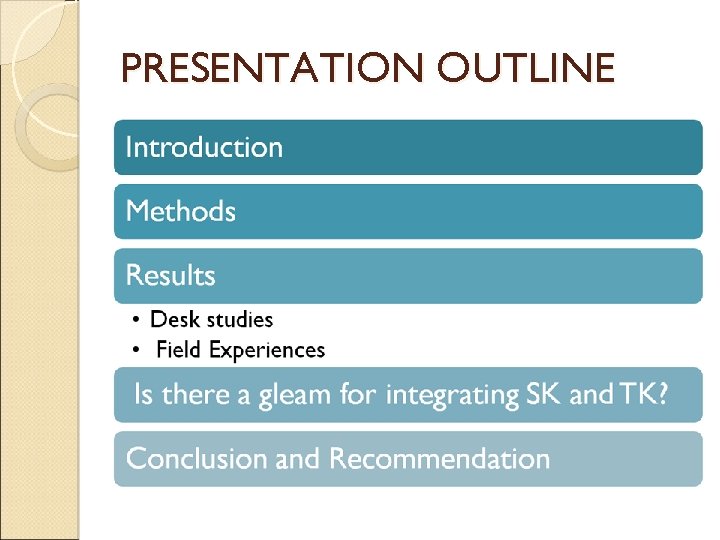 PRESENTATION OUTLINE
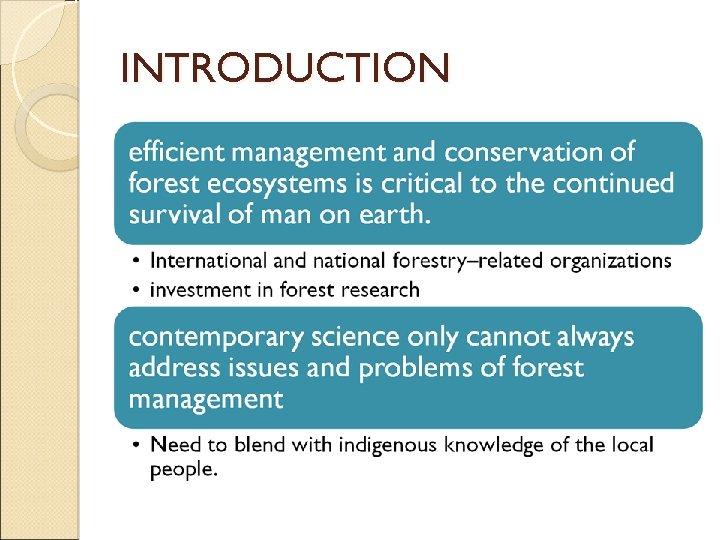 INTRODUCTION
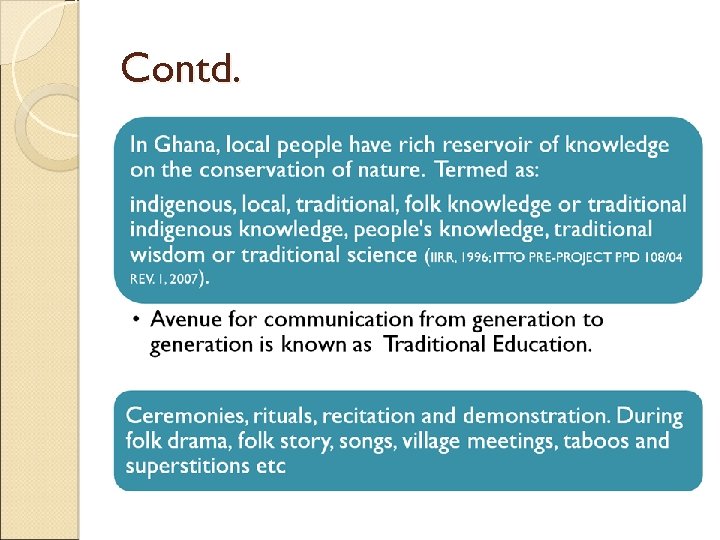 Contd.
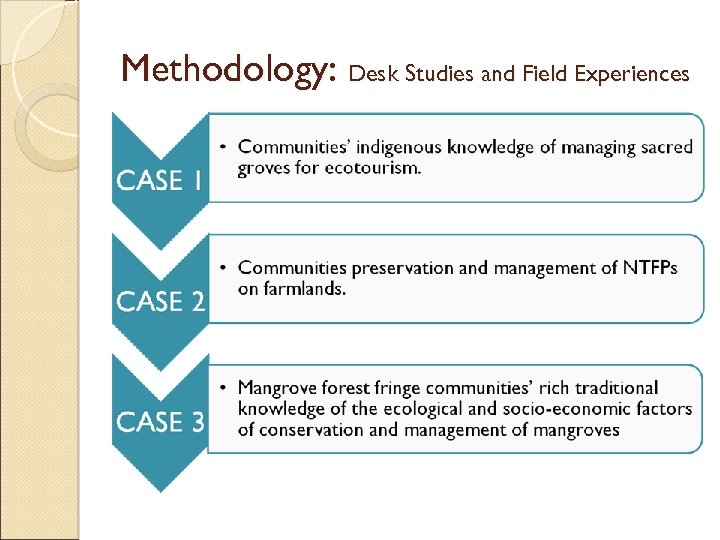 Methodology: Desk Studies and Field Experiences
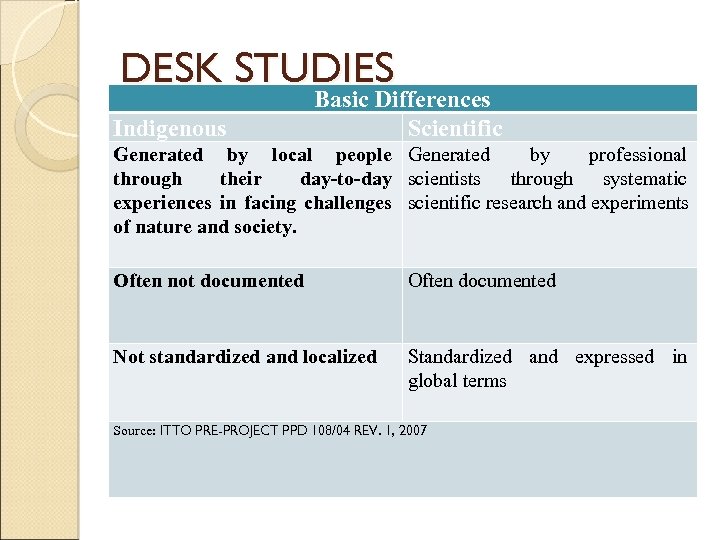 DESK STUDIES Indigenous Basic Differences Scientific Generated by local people Generated by professional through their day-to-day scientists through systematic experiences in facing challenges scientific research and experiments of nature and society. Often not documented Often documented Not standardized and localized Standardized and expressed in global terms Source: ITTO PRE-PROJECT PPD 108/04 REV. 1, 2007
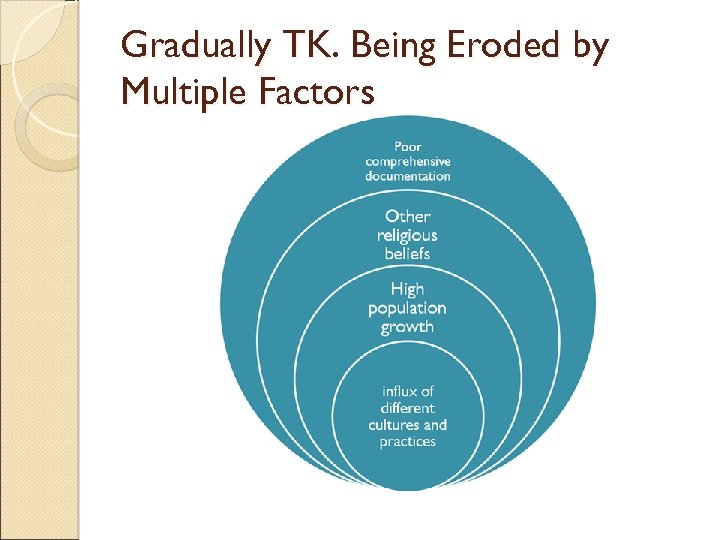 Gradually TK. Being Eroded by Multiple Factors
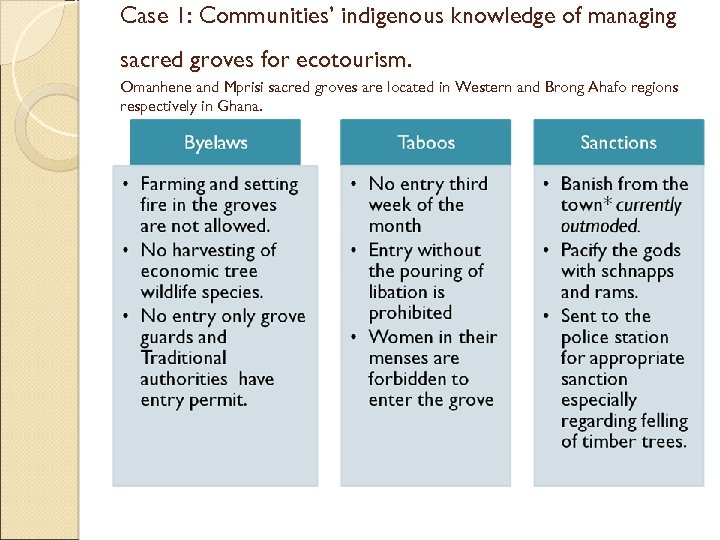 Case 1: Communities’ indigenous knowledge of managing sacred groves for ecotourism. Omanhene and Mprisi sacred groves are located in Western and Brong Ahafo regions respectively in Ghana.
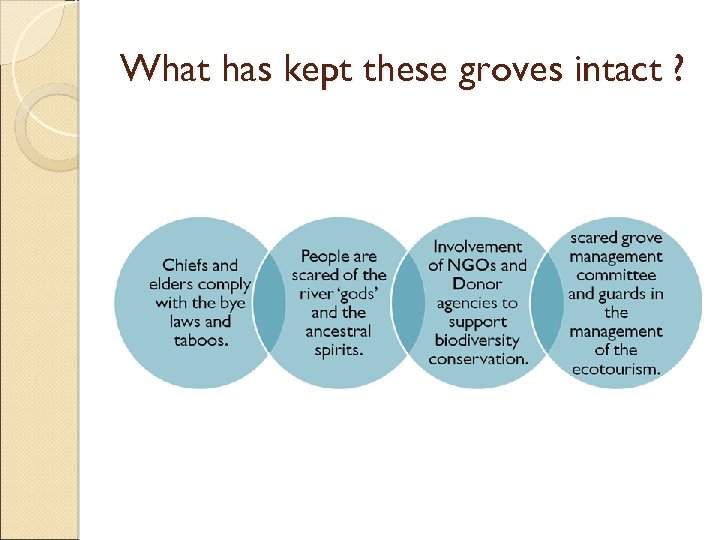 What has kept these groves intact ?
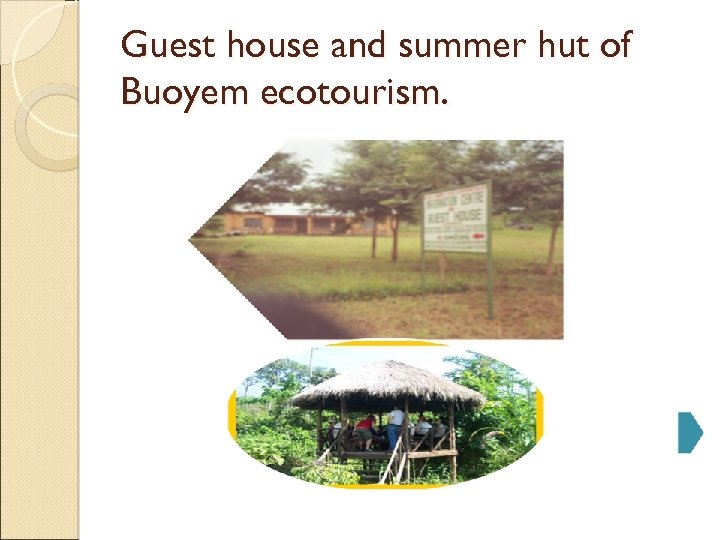 Guest house and summer hut of Buoyem ecotourism.
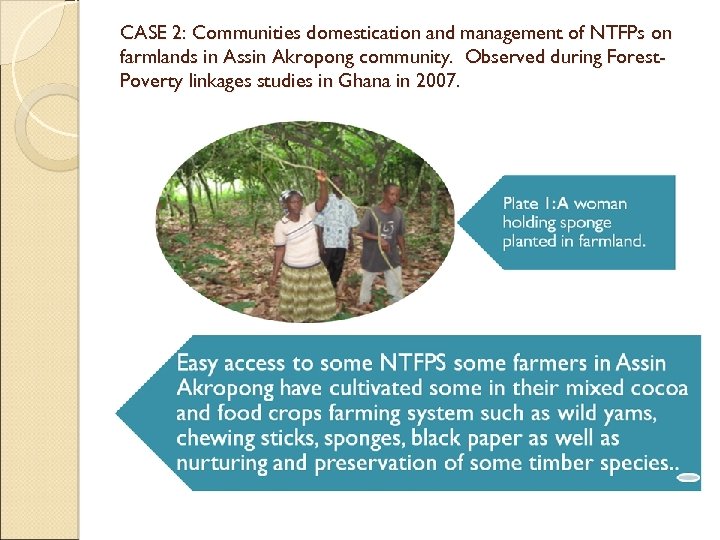 CASE 2: Communities domestication and management of NTFPs on farmlands in Assin Akropong community. Observed during Forest. Poverty linkages studies in Ghana in 2007.
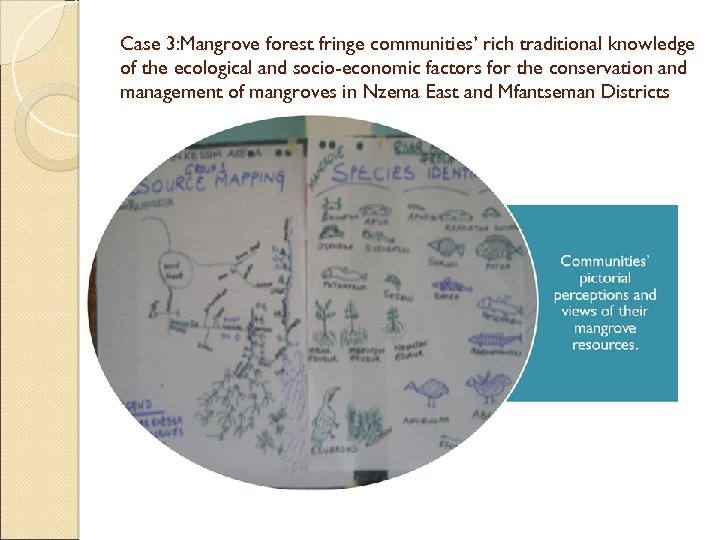 Case 3: Mangrove forest fringe communities’ rich traditional knowledge of the ecological and socio-economic factors for the conservation and management of mangroves in Nzema East and Mfantseman Districts
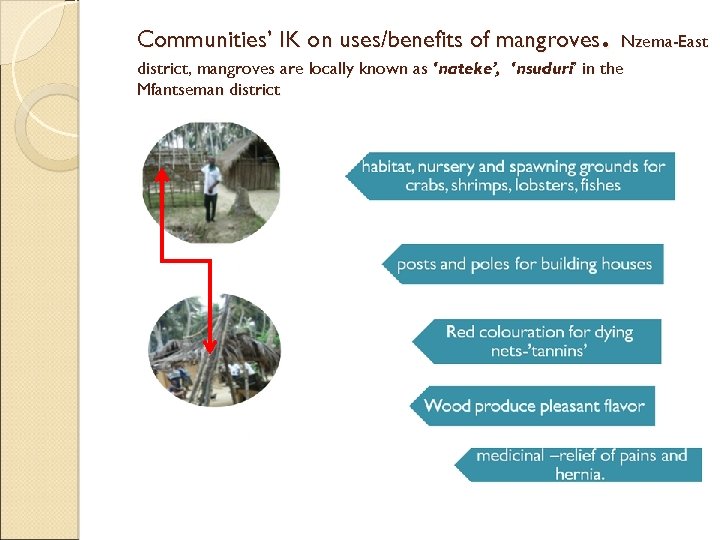 . Nzema-East Communities’ IK on uses/benefits of mangroves district, mangroves are locally known as ‘nateke’, ‘nsuduri’ in the Mfantseman district
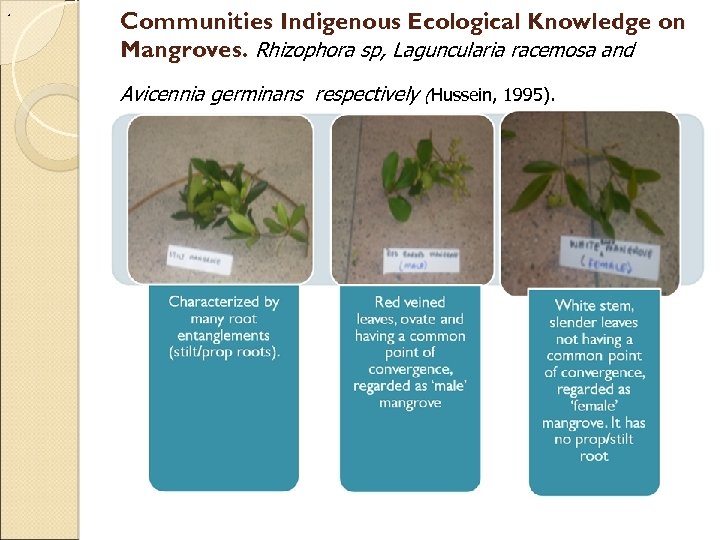 . Communities Indigenous Ecological Knowledge on Mangroves. Rhizophora sp, Laguncularia racemosa and Avicennia germinans respectively (Hussein, 1995).
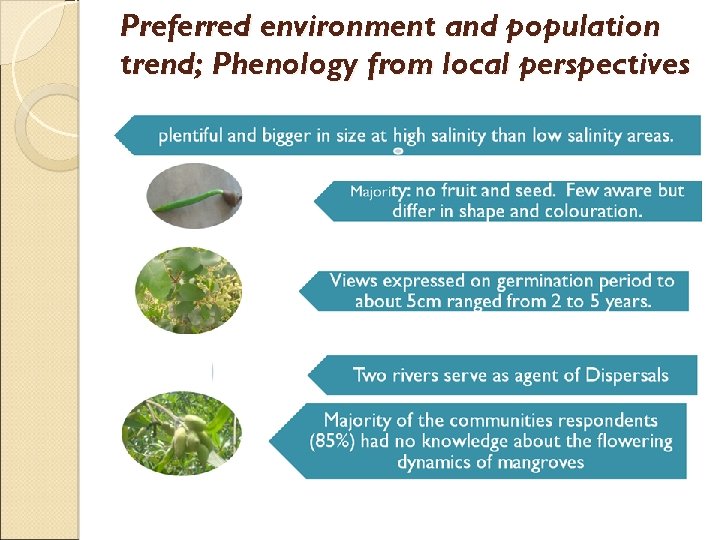 Preferred environment and population trend; Phenology from local perspectives
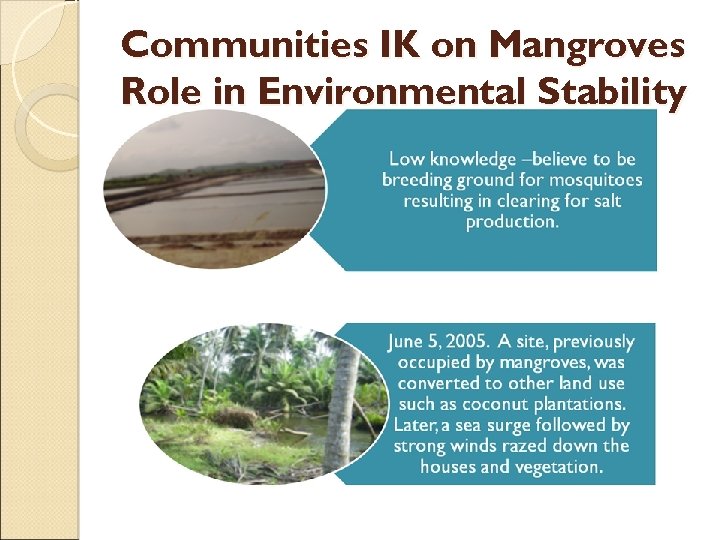 Communities IK on Mangroves Role in Environmental Stability
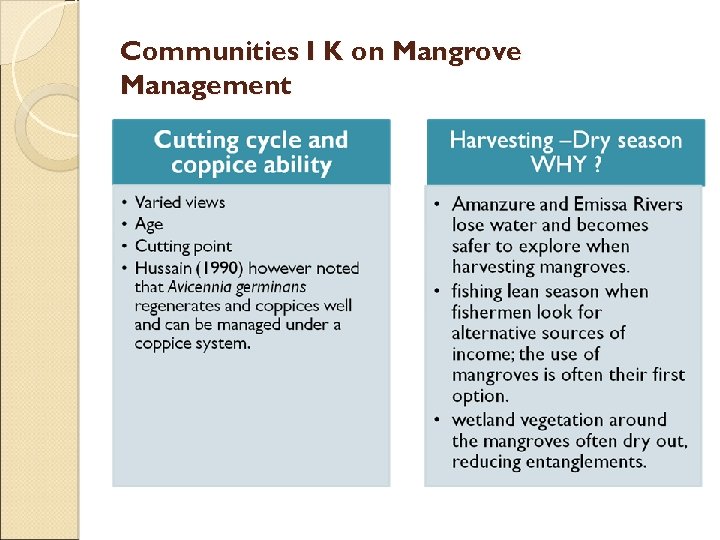 Communities I K on Mangrove Management
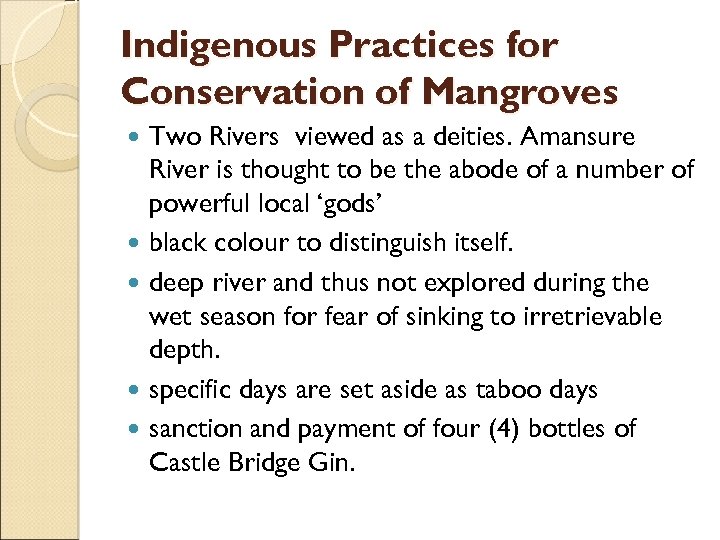 Indigenous Practices for Conservation of Mangroves Two Rivers viewed as a deities. Amansure River is thought to be the abode of a number of powerful local ‘gods’ black colour to distinguish itself. deep river and thus not explored during the wet season for fear of sinking to irretrievable depth. specific days are set aside as taboo days sanction and payment of four (4) bottles of Castle Bridge Gin.
 Has TK received the necessary recognition? Is there a gleam for integrating T. K with S. K? In spite of the many perceived defects of traditional knowledge, it can complement modern science when it is carefully matched with scientific data and applied in policies governing forest ecosystem management.
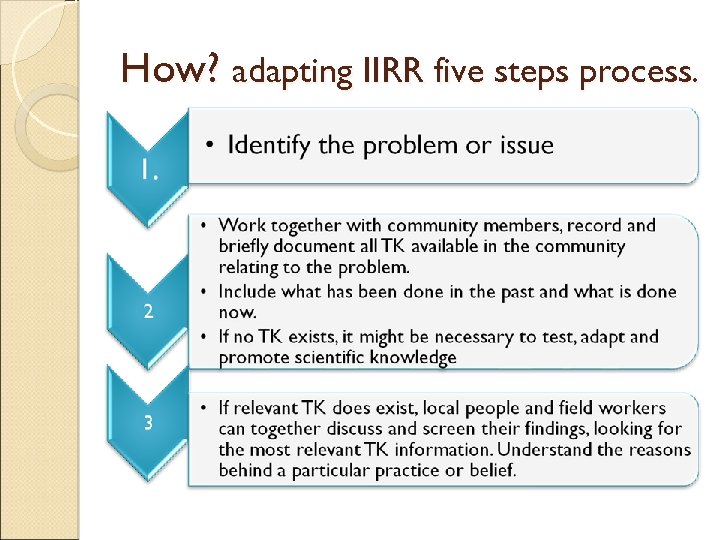 How? adapting IIRR five steps process.
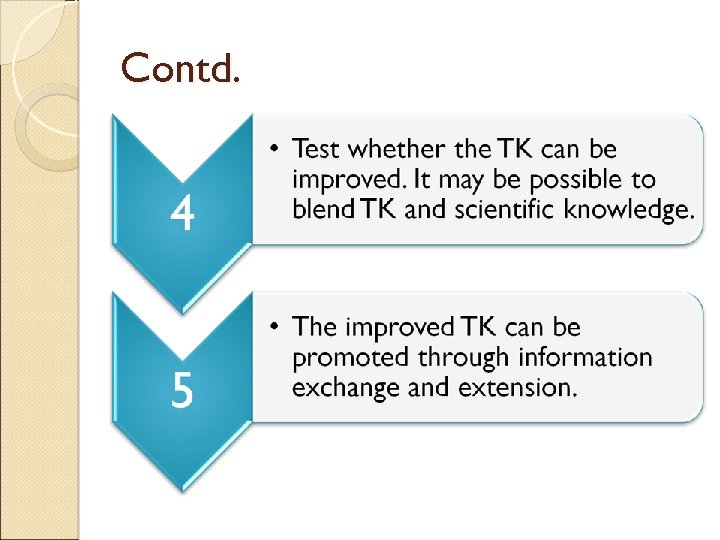 Contd.
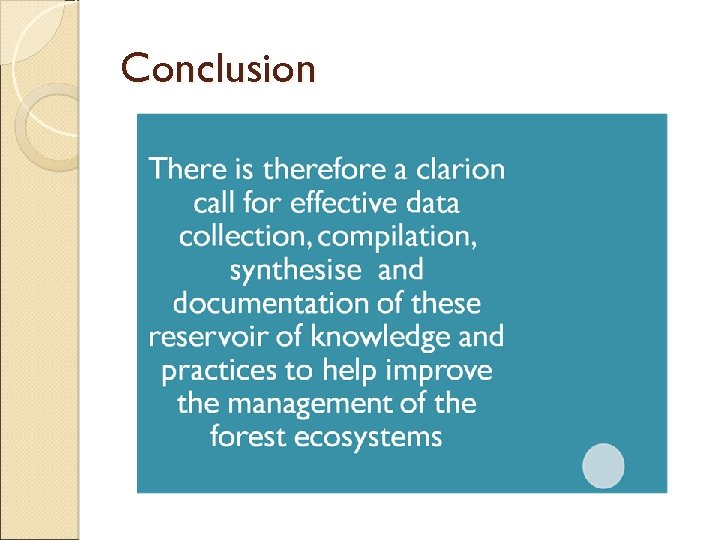 Conclusion
 Acknowledgement
 THANK YOU
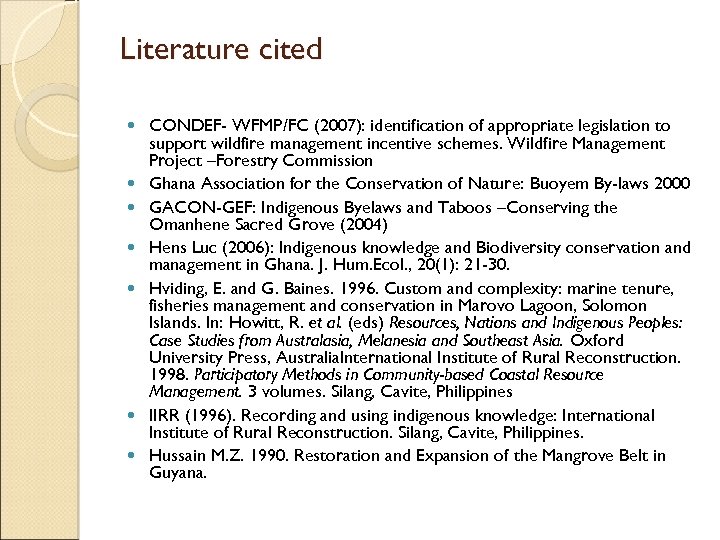 Literature cited CONDEF- WFMP/FC (2007): identification of appropriate legislation to support wildfire management incentive schemes. Wildfire Management Project –Forestry Commission Ghana Association for the Conservation of Nature: Buoyem By-laws 2000 GACON-GEF: Indigenous Byelaws and Taboos –Conserving the Omanhene Sacred Grove (2004) Hens Luc (2006): Indigenous knowledge and Biodiversity conservation and management in Ghana. J. Hum. Ecol. , 20(1): 21 -30. Hviding, E. and G. Baines. 1996. Custom and complexity: marine tenure, fisheries management and conservation in Marovo Lagoon, Solomon Islands. In: Howitt, R. et al. (eds) Resources, Nations and Indigenous Peoples: Case Studies from Australasia, Melanesia and Southeast Asia. Oxford University Press, Australia. International Institute of Rural Reconstruction. 1998. Participatory Methods in Community-based Coastal Resource Management. 3 volumes. Silang, Cavite, Philippines IIRR (1996). Recording and using indigenous knowledge: International Institute of Rural Reconstruction. Silang, Cavite, Philippines. Hussain M. Z. 1990. Restoration and Expansion of the Mangrove Belt in Guyana.