 Скачать презентацию Influence of merchandising on sales By Tulupov Nikita
Чай.ppt
- Количество слайдов: 14



Influence of merchandising on sales By Tulupov Nikita ТВП – 13
Outline of presentation : 1. Using of the term “Merchandising” 2. Methods of using merchandising in shops 3. Using merchandising on practice
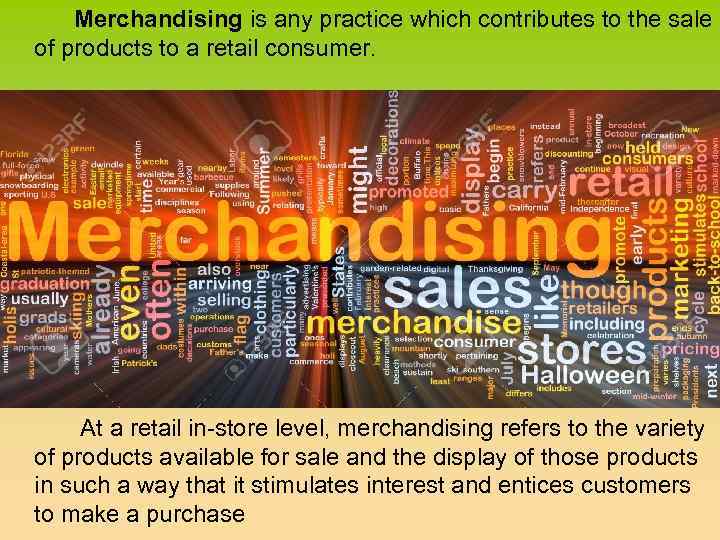
Merchandising is any practice which contributes to the sale of products to a retail consumer. At a retail in-store level, merchandising refers to the variety of products available for sale and the display of those products in such a way that it stimulates interest and entices customers to make a purchase
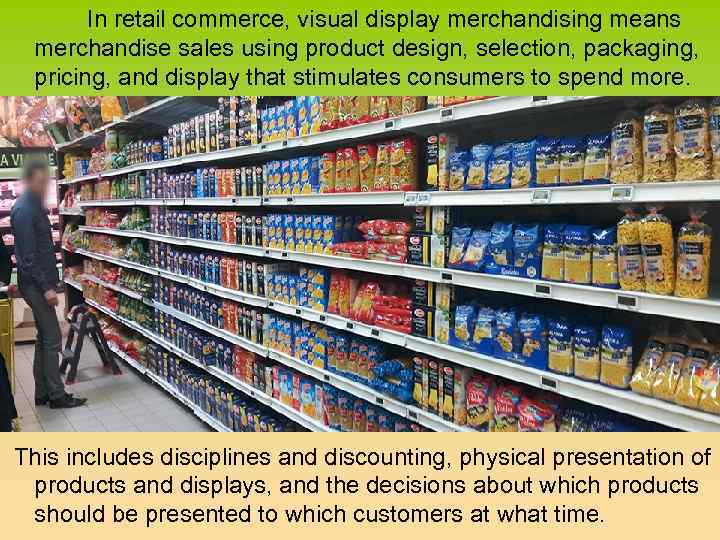
In retail commerce, visual display merchandising means merchandise sales using product design, selection, packaging, pricing, and display that stimulates consumers to spend more. This includes disciplines and discounting, physical presentation of products and displays, and the decisions about which products should be presented to which customers at what time.
Using of the term “Merchandising” In Eastern Europe, particularly in Ukraine, the term "merchandising“ is commonly used within the trading industry and denotes all marketing and sales stimulation activities around Po. S (point of sale): design, creation, promotion, care and training of the sales staff. In Asian countries, this term is more synonymous with activities right from sampling and idea conception to dispatching of the shipment. It is a job description that involves leading and working with different departments within the organization, suppliers and buyers to deal with timely deadlines and accepted quality levels.
Methods of using merchandising in shops 1. Atmospherics 2. Light 3. Music 4. Scent
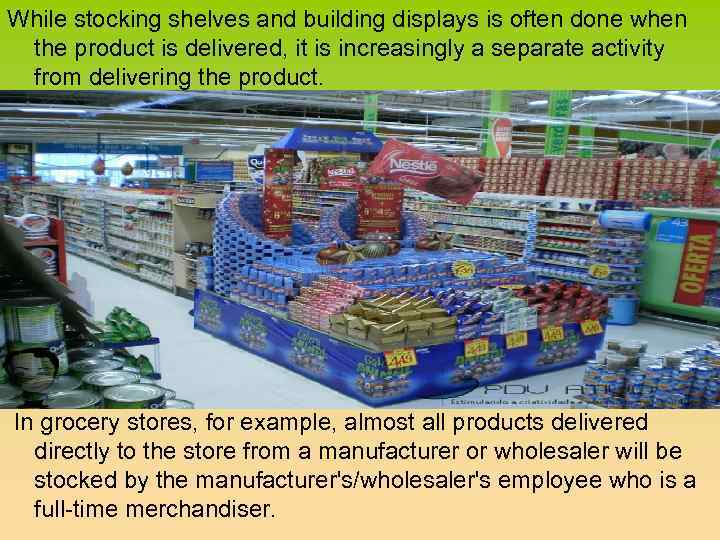
While stocking shelves and building displays is often done when the product is delivered, it is increasingly a separate activity from delivering the product. In grocery stores, for example, almost all products delivered directly to the store from a manufacturer or wholesaler will be stocked by the manufacturer's/wholesaler's employee who is a full-time merchandiser.
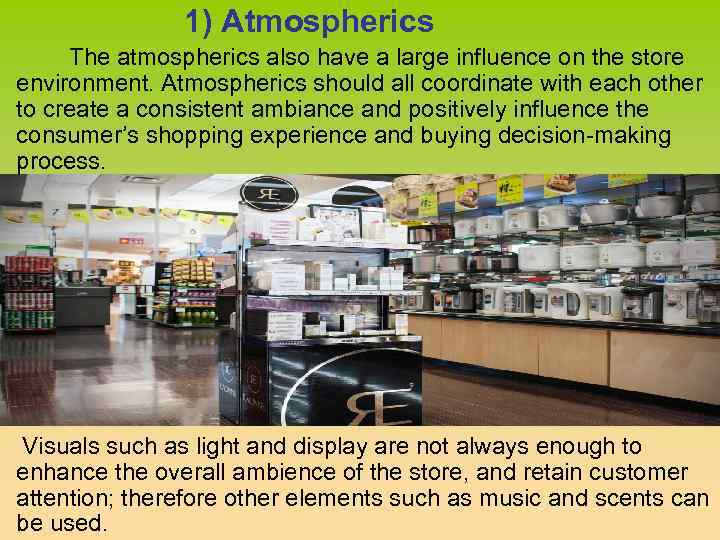
1) Atmospherics The atmospherics also have a large influence on the store environment. Atmospherics should all coordinate with each other to create a consistent ambiance and positively influence the consumer’s shopping experience and buying decision-making process. Visuals such as light and display are not always enough to enhance the overall ambience of the store, and retain customer attention; therefore other elements such as music and scents can be used.
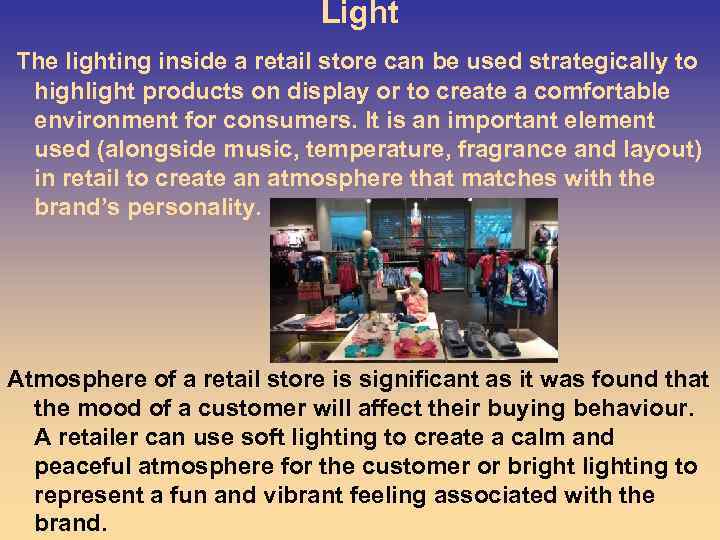
Light The lighting inside a retail store can be used strategically to highlight products on display or to create a comfortable environment for consumers. It is an important element used (alongside music, temperature, fragrance and layout) in retail to create an atmosphere that matches with the brand’s personality. Atmosphere of a retail store is significant as it was found that the mood of a customer will affect their buying behaviour. A retailer can use soft lighting to create a calm and peaceful atmosphere for the customer or bright lighting to represent a fun and vibrant feeling associated with the brand.
Music The music played within a store can promote a brand’s image, and can also aid consumers into making purchase decisions. Having music, which popular within the target market can also encourage consumers to linger in the store longer. For example, a store with a teenage target market should consider playing pop music, as this is a genre that a younger audience commonly enjoys. Playing this genre will make their shopping experience more enjoyable, which can result in them staying longer in the store, exposing them to more merchandise and influencing possible purchasing decisions
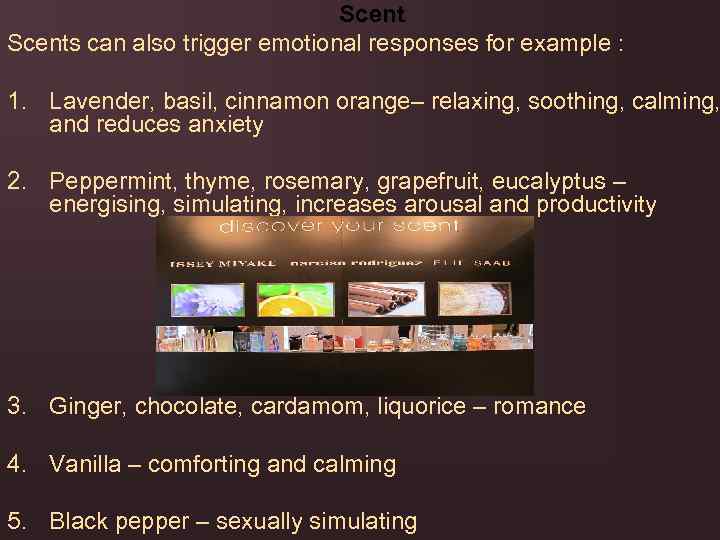
Scents can also trigger emotional responses for example : 1. Lavender, basil, cinnamon orange– relaxing, soothing, calming, and reduces anxiety 2. Peppermint, thyme, rosemary, grapefruit, eucalyptus – energising, simulating, increases arousal and productivity 3. Ginger, chocolate, cardamom, liquorice – romance 4. Vanilla – comforting and calming 5. Black pepper – sexually simulating
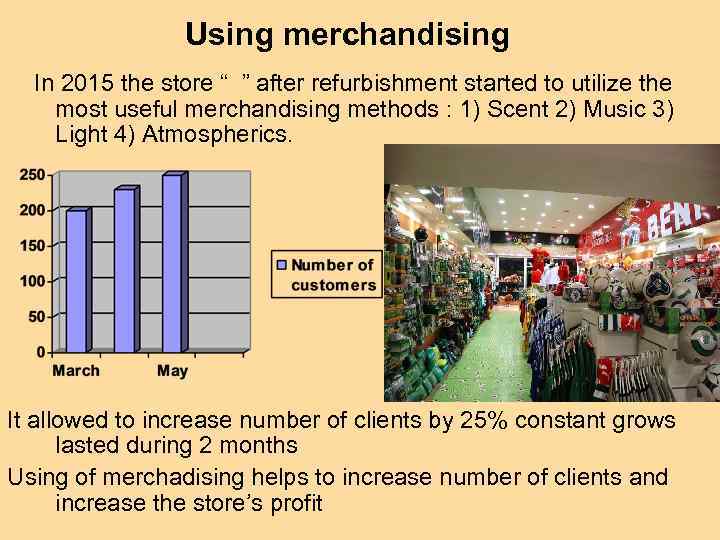
Using merchandising In 2015 the store “ ” after refurbishment started to utilize the most useful merchandising methods : 1) Scent 2) Music 3) Light 4) Atmospherics. It allowed to increase number of clients by 25% constant grows lasted during 2 months Using of merchadising helps to increase number of clients and increase the store’s profit
Conclusion • At a retail in-store level, merchandising refers to the variety of products available for sale and the display of those products in such a way that it stimulates interest and entices customers to make a purchase • For major food manufacturers in the beverage and baked goods industries, their merchandisers are often the single largest employee group within the company. • Having a unique scent, light, scent in a store can differentiate the brand from others • Using of merchandising helps to increase number of clients and increase the store’s profit
References 1. https: //en. wikipedia. org/wiki/Merchandising 2. https: //www. google. com. ua/search? q=merc handising&hl=ru&biw=1280&bih=871&sour ce=lnms&tbm=isch&sa=X&ved=0 ah. UKEwj 0 qte. Hr. YHNAh. Xjdpo. KHXg. JAco. Q_AUIByg. B 3. http: //en. academic. ru/dic. nsf/enwiki/367113
Скачать презентацию Influence of merchandising on sales By Tulupov Nikita
Чай.ppt