 Скачать презентацию Inflation targeting The UK experience Charlie Bean Executive
ff26a64479a4bd01e77d00577b4bc29f.ppt
- Количество слайдов: 32



Inflation targeting: The UK experience Charlie Bean Executive Director and Chief Economist Bank of England Central Bank of Hungary, 19 January 2007
Outline • Framework • Process • Performance • Communication • Issues
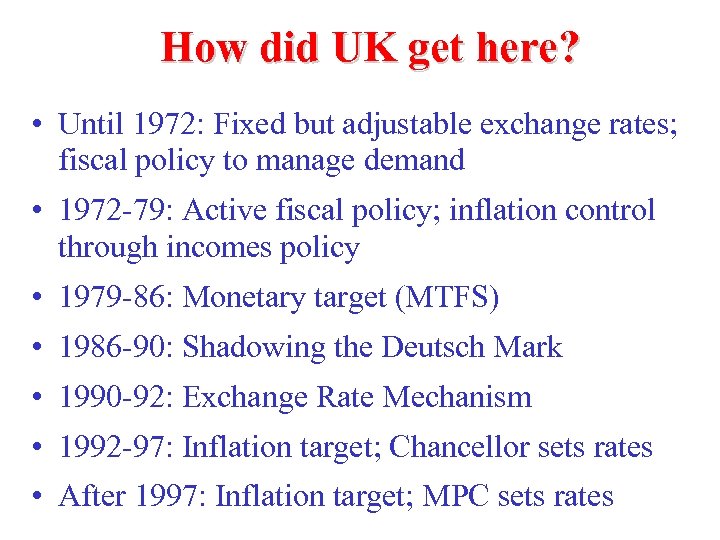
How did UK get here? • Until 1972: Fixed but adjustable exchange rates; fiscal policy to manage demand • 1972 -79: Active fiscal policy; inflation control through incomes policy • 1979 -86: Monetary target (MTFS) • 1986 -90: Shadowing the Deutsch Mark • 1990 -92: Exchange Rate Mechanism • 1992 -97: Inflation target; Chancellor sets rates • After 1997: Inflation target; MPC sets rates
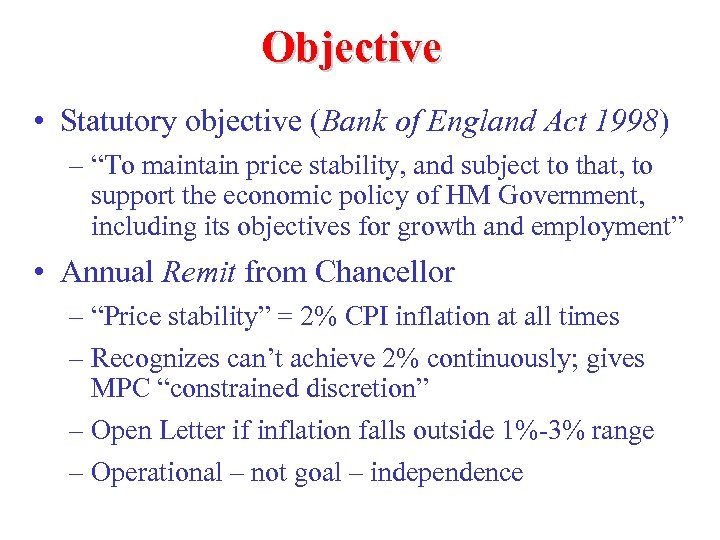
Objective • Statutory objective (Bank of England Act 1998) – “To maintain price stability, and subject to that, to support the economic policy of HM Government, including its objectives for growth and employment” • Annual Remit from Chancellor – “Price stability” = 2% CPI inflation at all times – Recognizes can’t achieve 2% continuously; gives MPC “constrained discretion” – Open Letter if inflation falls outside 1%-3% range – Operational – not goal – independence
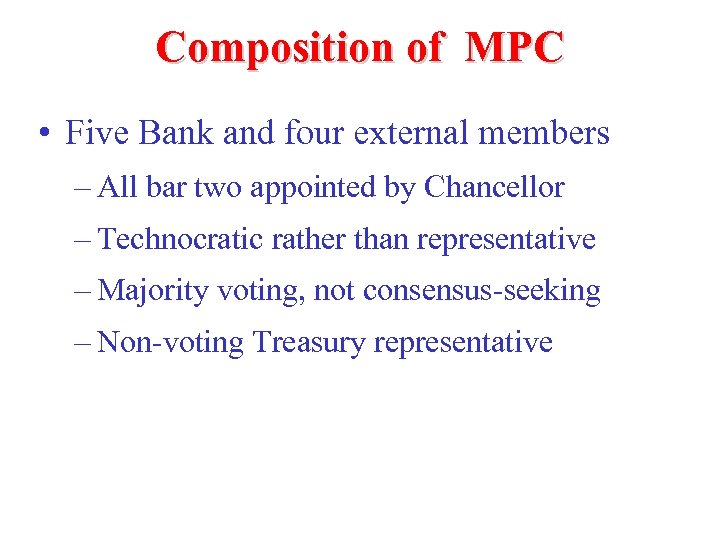
Composition of MPC • Five Bank and four external members – All bar two appointed by Chancellor – Technocratic rather than representative – Majority voting, not consensus-seeking – Non-voting Treasury representative
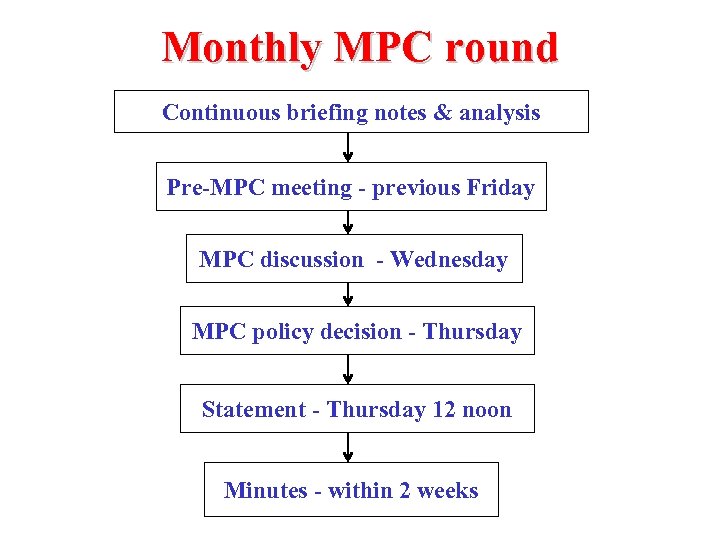
Monthly MPC round Continuous briefing notes & analysis Pre-MPC meeting - previous Friday MPC discussion - Wednesday MPC policy decision - Thursday Statement - Thursday 12 noon Minutes - within 2 weeks
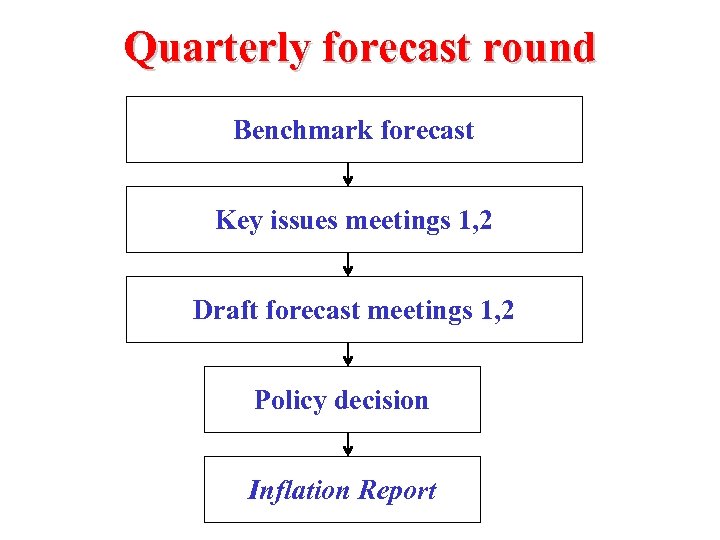
Quarterly forecast round Benchmark forecast Key issues meetings 1, 2 Draft forecast meetings 1, 2 Policy decision Inflation Report
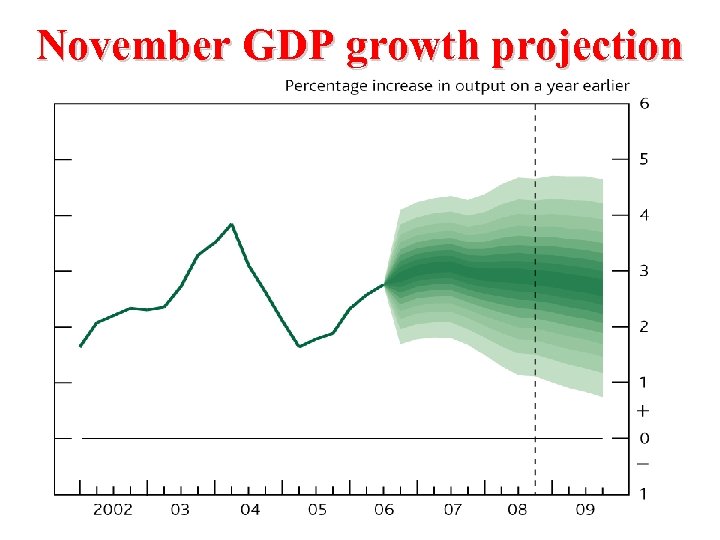
November GDP growth projection
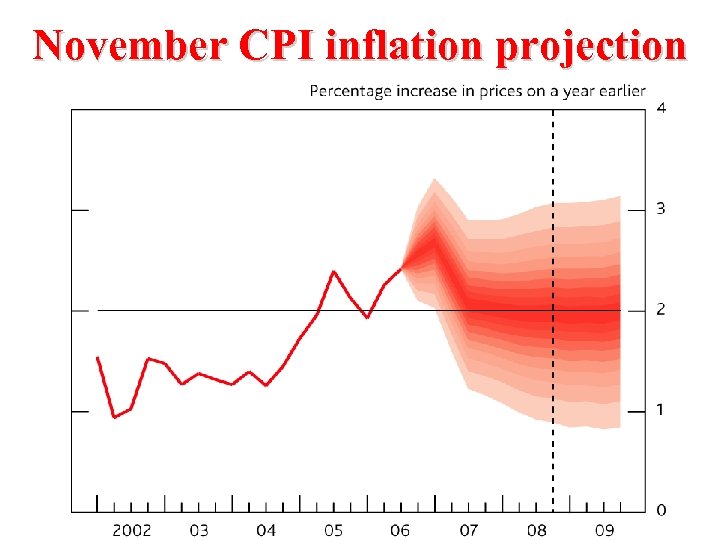
November CPI inflation projection
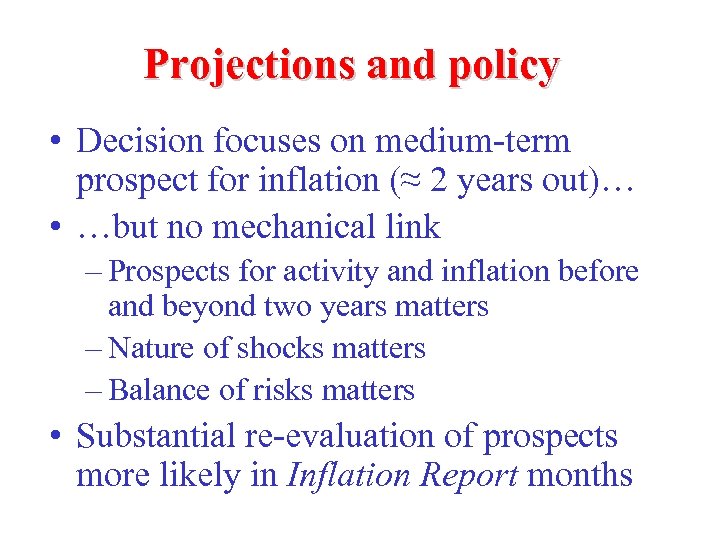
Projections and policy • Decision focuses on medium-term prospect for inflation (≈ 2 years out)… • …but no mechanical link – Prospects for activity and inflation before and beyond two years matters – Nature of shocks matters – Balance of risks matters • Substantial re-evaluation of prospects more likely in Inflation Report months
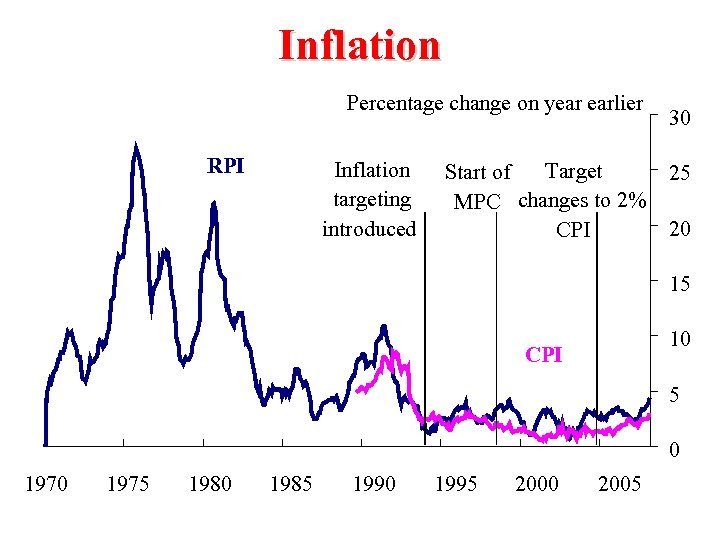
Inflation Percentage change on year earlier RPI Inflation targeting introduced Target Start of MPC changes to 2% CPI 30 25 20 15 10 CPI 5 0 1975 1980 1985 1990 1995 2000 2005
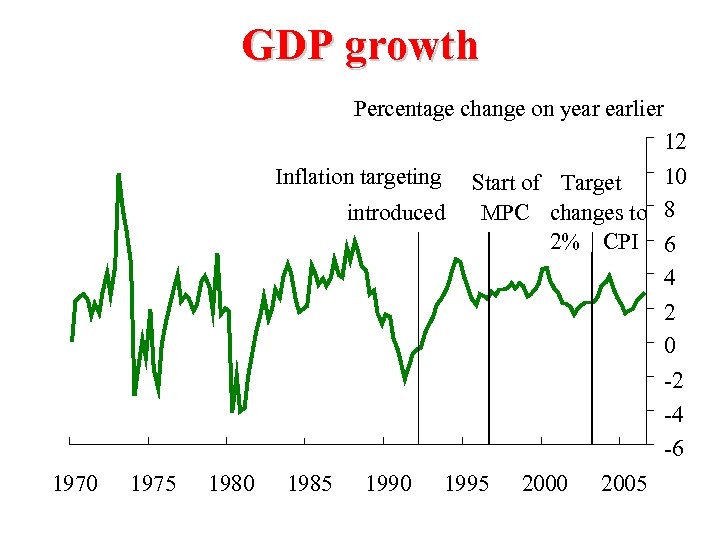
GDP growth Percentage change on year earlier 12 Inflation targeting introduced 10 Start of Target MPC changes to 8 2% CPI 6 4 2 0 -2 -4 -6 1970 1975 1980 1985 1990 1995 2000 2005
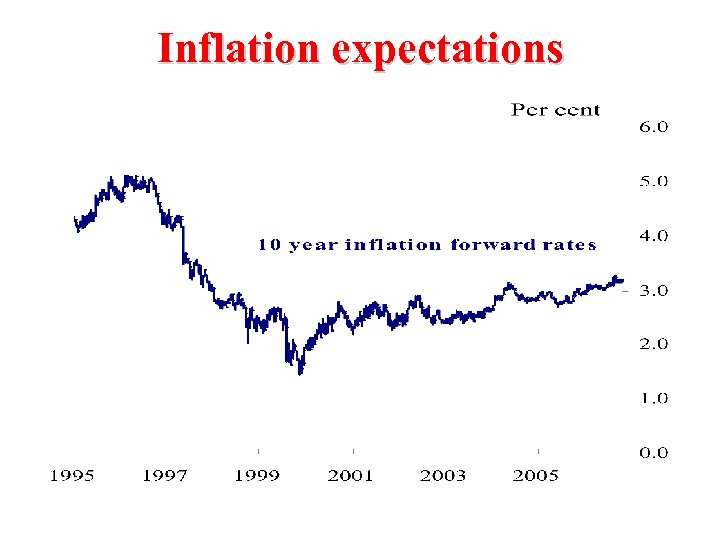
Inflation expectations
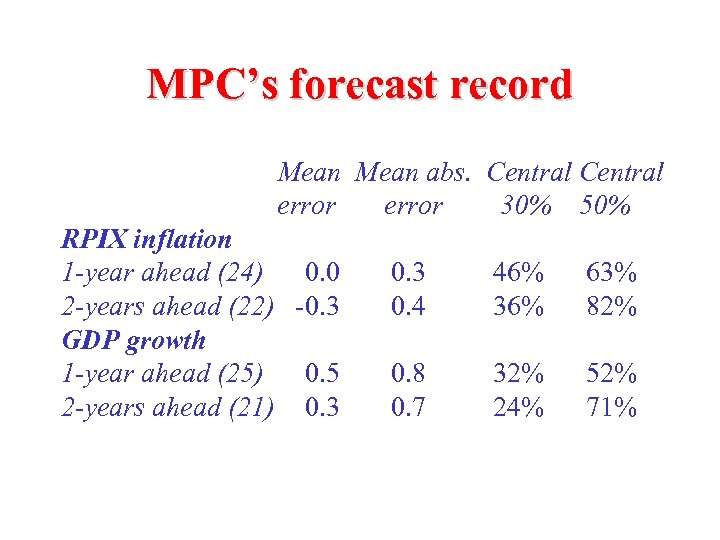
MPC’s forecast record Mean abs. Central error 30% 50% RPIX inflation 1 -year ahead (24) 0. 0 2 -years ahead (22) -0. 3 GDP growth 1 -year ahead (25) 0. 5 2 -years ahead (21) 0. 3 0. 4 46% 36% 63% 82% 0. 8 0. 7 32% 24% 52% 71%
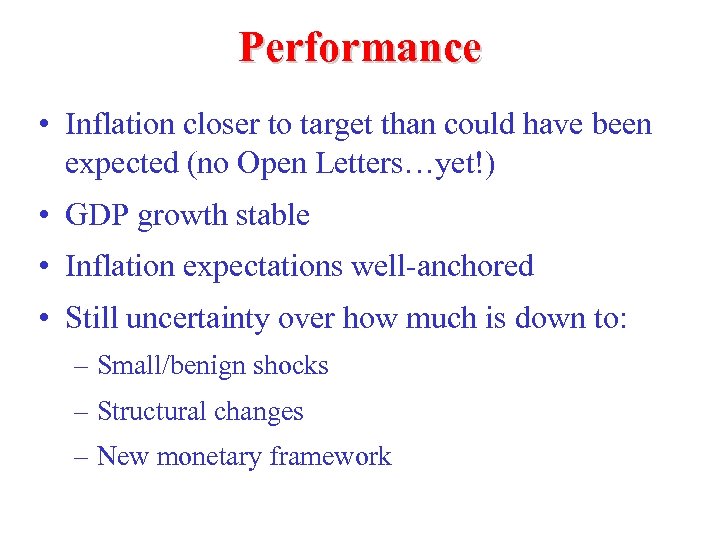
Performance • Inflation closer to target than could have been expected (no Open Letters…yet!) • GDP growth stable • Inflation expectations well-anchored • Still uncertainty over how much is down to: – Small/benign shocks – Structural changes – New monetary framework
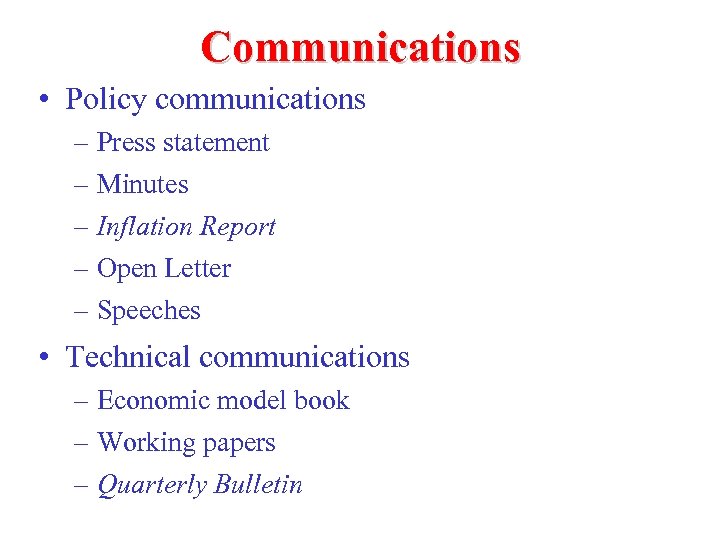
Communications • Policy communications – Press statement – Minutes – Inflation Report – Open Letter – Speeches • Technical communications – Economic model book – Working papers – Quarterly Bulletin
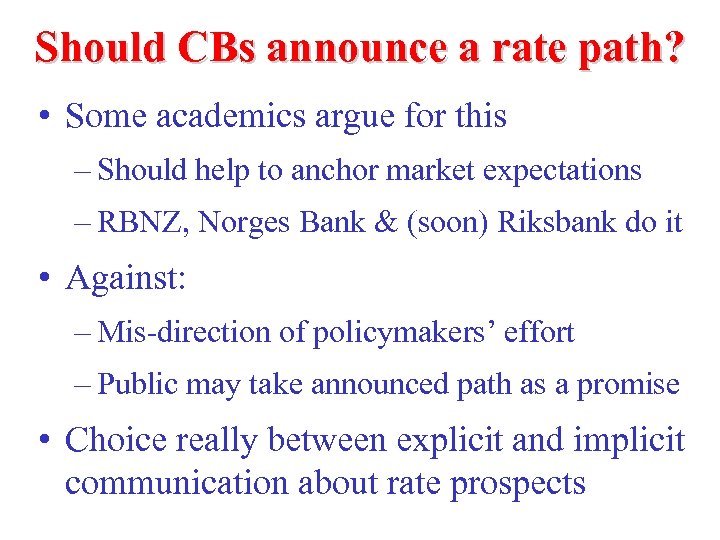
Should CBs announce a rate path? • Some academics argue for this – Should help to anchor market expectations – RBNZ, Norges Bank & (soon) Riksbank do it • Against: – Mis-direction of policymakers’ effort – Public may take announced path as a promise • Choice really between explicit and implicit communication about rate prospects
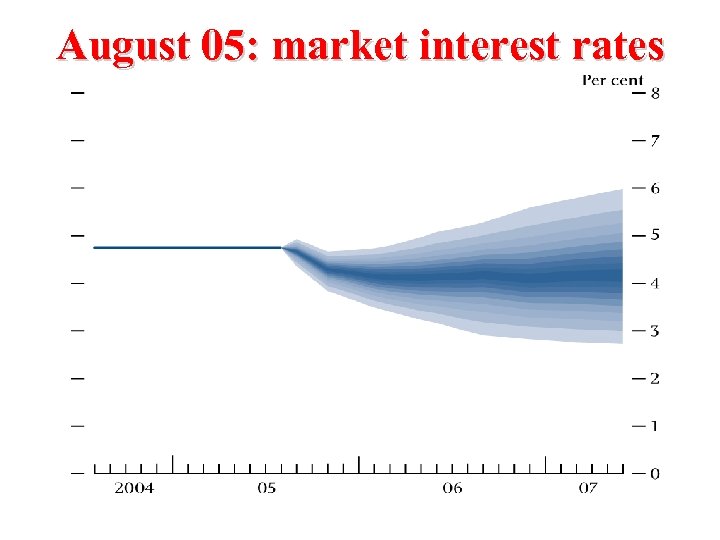
August 05: market interest rates
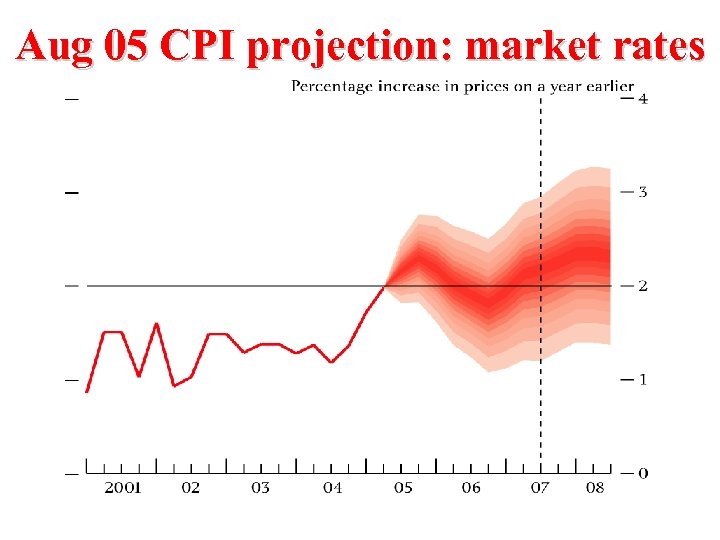
Aug 05 CPI projection: market rates
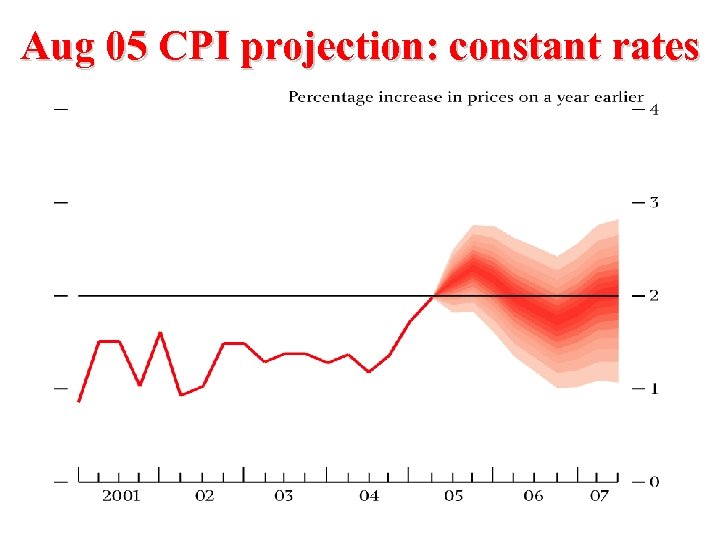
Aug 05 CPI projection: constant rates
Issues • How have globalisation and inflation targeting affected pricing dynamics and policy multiplier? • How should inflation targets incorporate developments in asset prices? • [The relationship with fiscal policy]
Changes in pricing dynamics • Anchoring of inflation expectations and globalisation have: – Reduced response of inflation to demand shocks
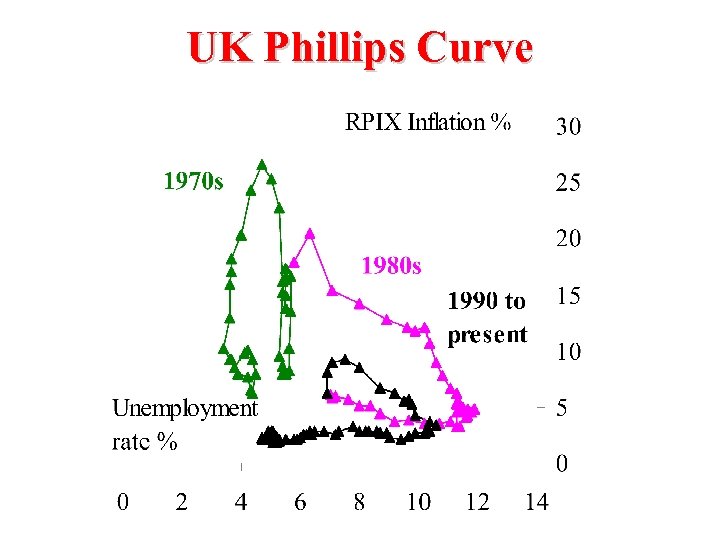
UK Phillips Curve
Changes in pricing dynamics • Anchoring of inflation expectations and globalisation have: – Reduced response of inflation to demand shocks – Reduced inflation persistence; expectations do the work
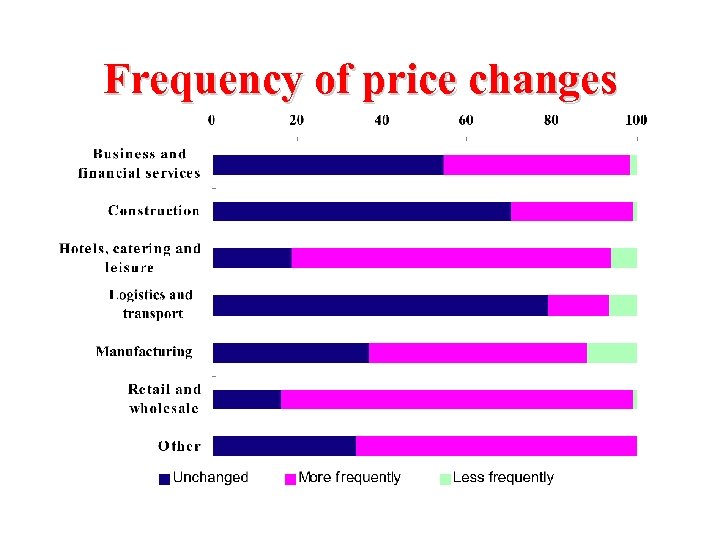
Frequency of price changes
Changes in pricing dynamics • Anchoring of inflation expectations and globalisation have: – Reduced response of inflation to demand shocks – Reduced inflation persistence; expectations do the work • Pass-through of cost shocks also reduced
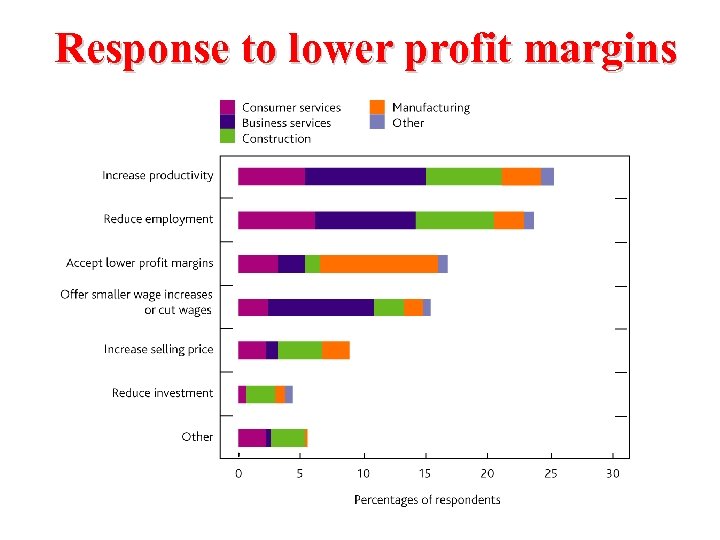
Response to lower profit margins
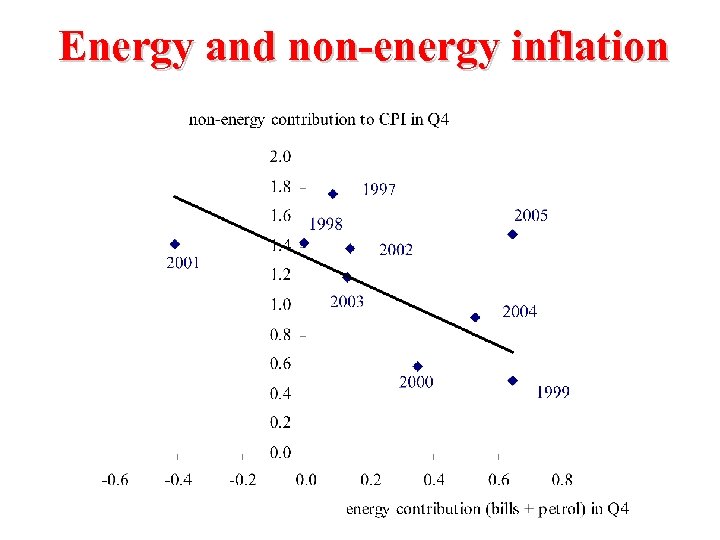
Energy and non-energy inflation
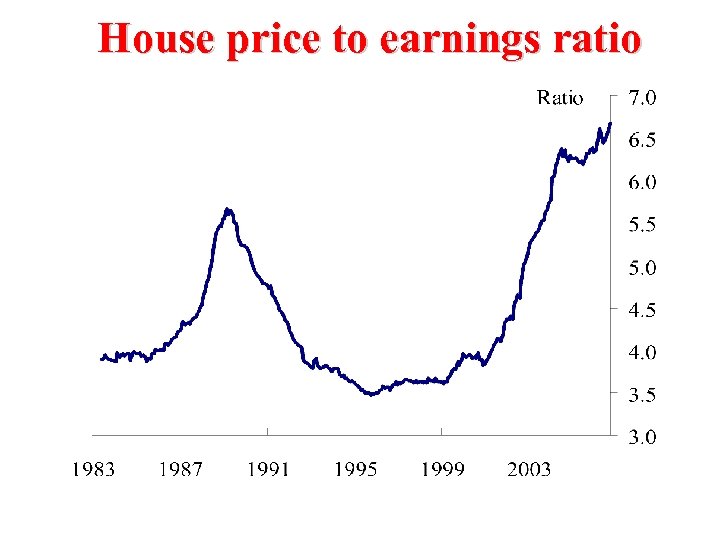
House price to earnings ratio
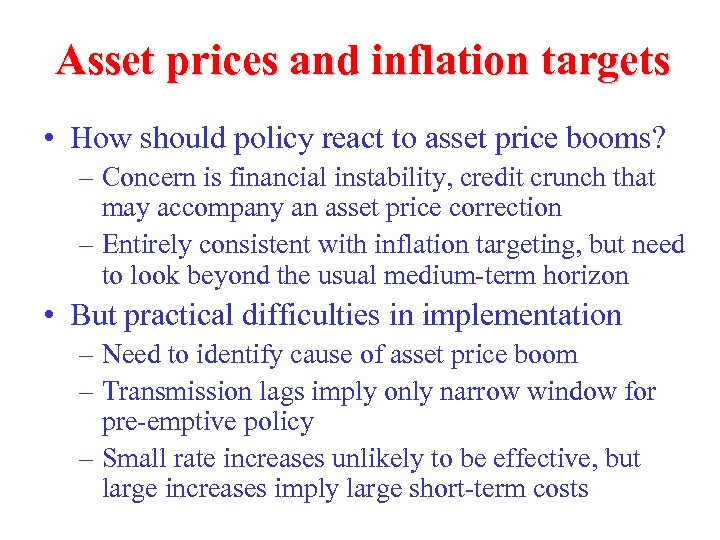
Asset prices and inflation targets • How should policy react to asset price booms? – Concern is financial instability, credit crunch that may accompany an asset price correction – Entirely consistent with inflation targeting, but need to look beyond the usual medium-term horizon • But practical difficulties in implementation – Need to identify cause of asset price boom – Transmission lags imply only narrow window for pre-emptive policy – Small rate increases unlikely to be effective, but large increases imply large short-term costs
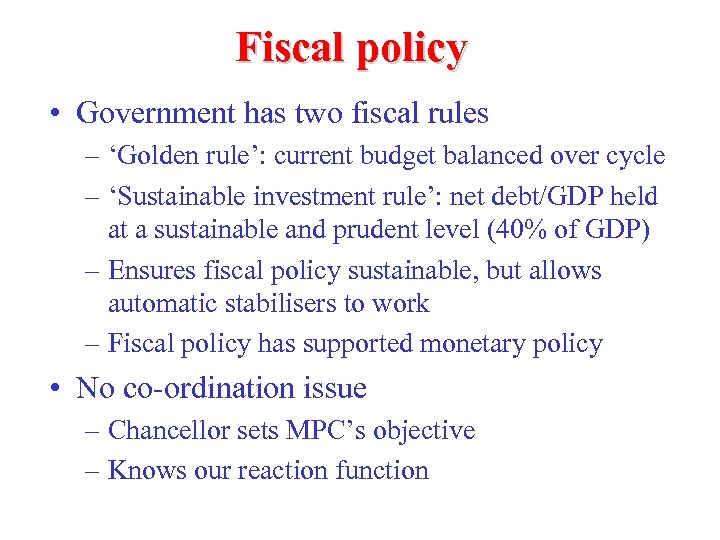
Fiscal policy • Government has two fiscal rules – ‘Golden rule’: current budget balanced over cycle – ‘Sustainable investment rule’: net debt/GDP held at a sustainable and prudent level (40% of GDP) – Ensures fiscal policy sustainable, but allows automatic stabilisers to work – Fiscal policy has supported monetary policy • No co-ordination issue – Chancellor sets MPC’s objective – Knows our reaction function
Inflation targeting: The UK experience THE END www. bankofengland. co. uk
Скачать презентацию Inflation targeting The UK experience Charlie Bean Executive
ff26a64479a4bd01e77d00577b4bc29f.ppt