


 Скачать презентацию Infertility Ana Dimitrović Mentor A Žmegač Horvat
file3219p79.ppt
- Количество слайдов: 21
 Infertility Ana Dimitrović Mentor: A. Žmegač Horvat
 Definition • Not being able to get pregnant despite having frequent unprotected sex for at least a year
 Symptoms • Inability for a couple to get pregnant • Woman: abnormal menstrual periods • Man: hormonal problems (changes in hair growth or sexual function)
 When to see a doctor • You plan to conceive and you are a woman older than 30 or haven‘t menstruated in six months • You are a woman who has a history of irregular or painful menstrual cycles, pelvic pain, endometriosis… • You are a man with a low sperm count or a history of testicular, prostate or sexual problems
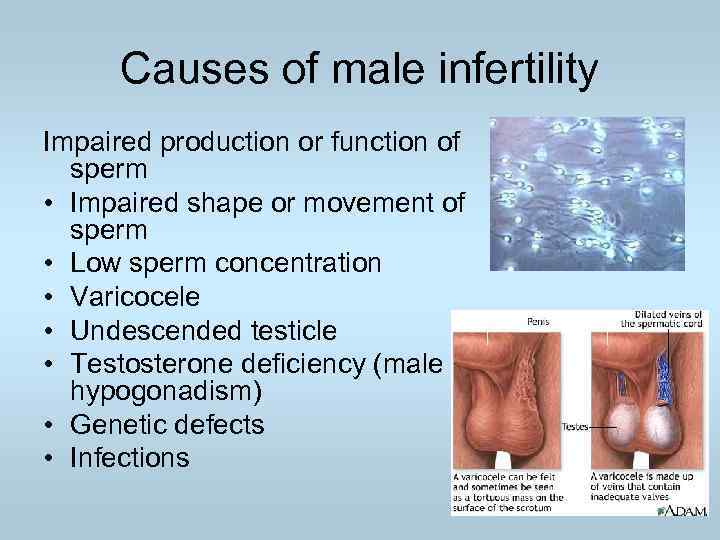 Causes of male infertility Impaired production or function of sperm • Impaired shape or movement of sperm • Low sperm concentration • Varicocele • Undescended testicle • Testosterone deficiency (male hypogonadism) • Genetic defects • Infections
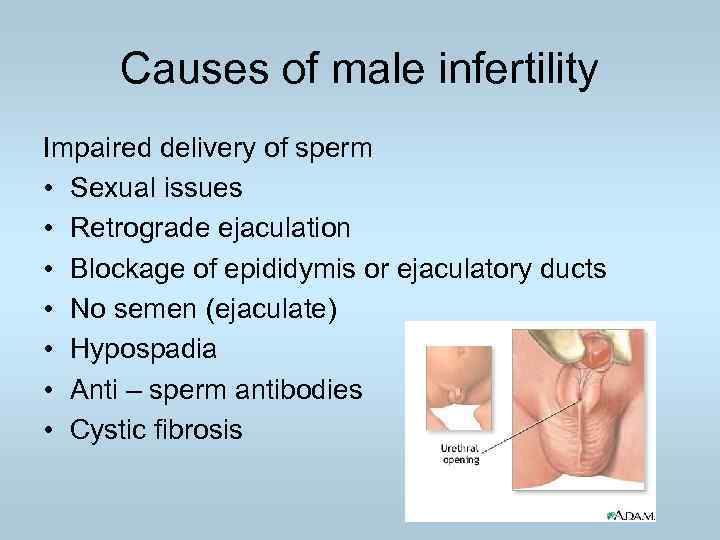 Causes of male infertility Impaired delivery of sperm • Sexual issues • Retrograde ejaculation • Blockage of epididymis or ejaculatory ducts • No semen (ejaculate) • Hypospadia • Anti – sperm antibodies • Cystic fibrosis
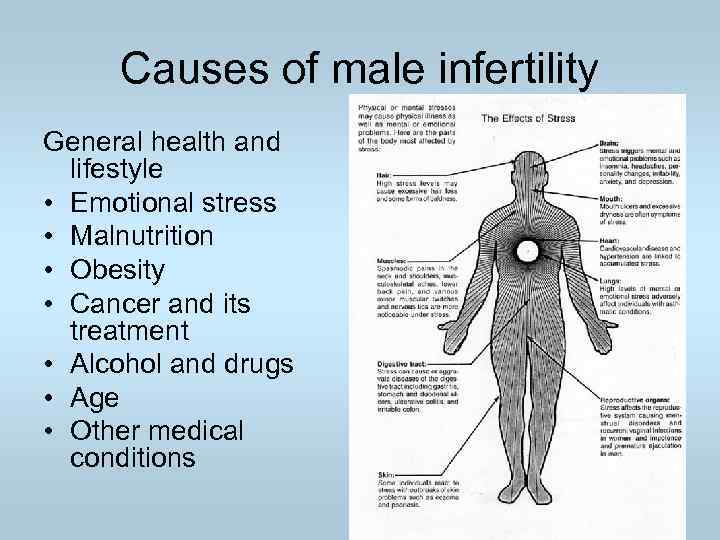 Causes of male infertility General health and lifestyle • Emotional stress • Malnutrition • Obesity • Cancer and its treatment • Alcohol and drugs • Age • Other medical conditions
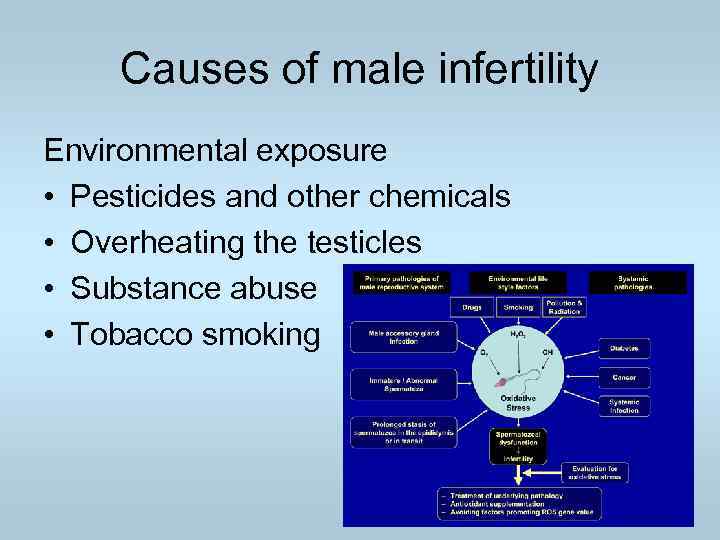 Causes of male infertility Environmental exposure • Pesticides and other chemicals • Overheating the testicles • Substance abuse • Tobacco smoking
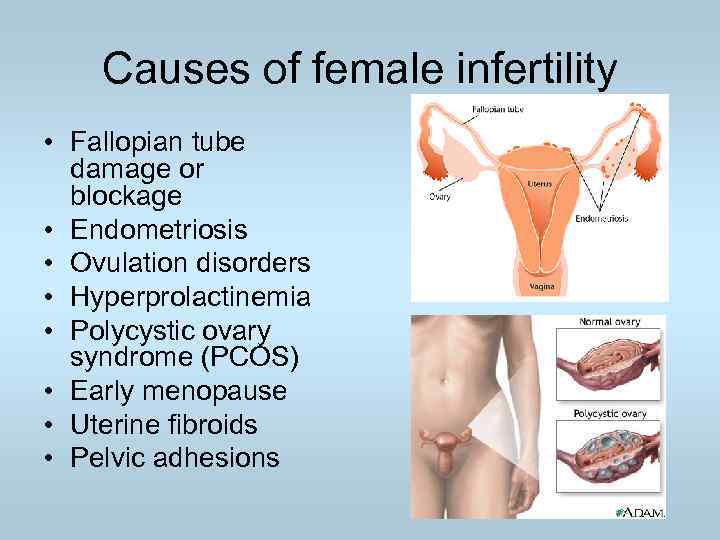 Causes of female infertility • Fallopian tube damage or blockage • Endometriosis • Ovulation disorders • Hyperprolactinemia • Polycystic ovary syndrome (PCOS) • Early menopause • Uterine fibroids • Pelvic adhesions
 Causes of female infertility • • • Medications Thyroid problems Cancer and its treatment Caffeine intake Other medical conditions
 Risk factors • • • Age Tobacco smoking Alcohol use Being overweight Too much exercise Caffeine intake
 Tests and diagnosis Tests for men • General physical examination • Semen analysis • Hormone testing • Transrectal and scrotal ultrasound Tests for women • Ovulation testing • Hysterosalpingography • Laparoscopy • Hormone testing • Ovarian reserve testing • Genetic testing • Pelvic ultrasound
 Medical treatments Drugs • Clomiphene • Human menopausal gonadotropin, h. MG • FSH • Human chorionic gonadotropin, h. CG • Gonadotropin – releasing hormone (Gn-RH) analogs • Aromatase inhibitors • Metformin • Bromocriptine
 Medical treatments Fertility drugs and the risk of multiple pregnancies • Injectable fertility drugs increase the chance of multiple births • Careful monitoring: blood tests, hormone tests, ultrasound measurement of ovarian follicle size • Multifetal pregnancy reduction
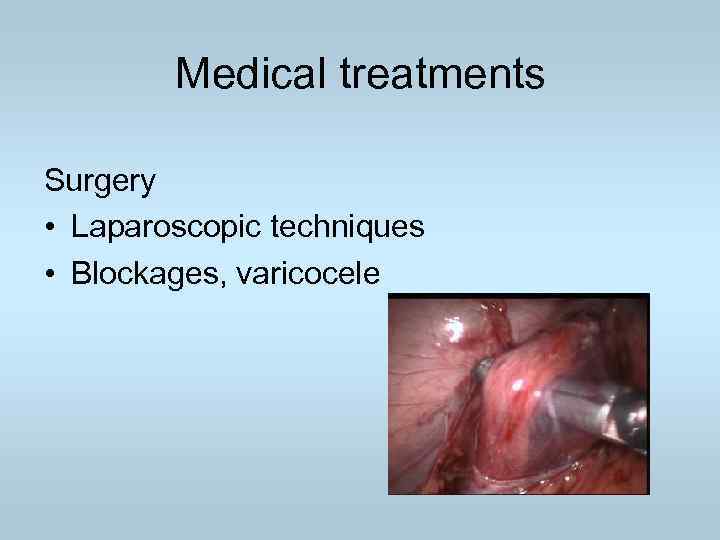 Medical treatments Surgery • Laparoscopic techniques • Blockages, varicocele
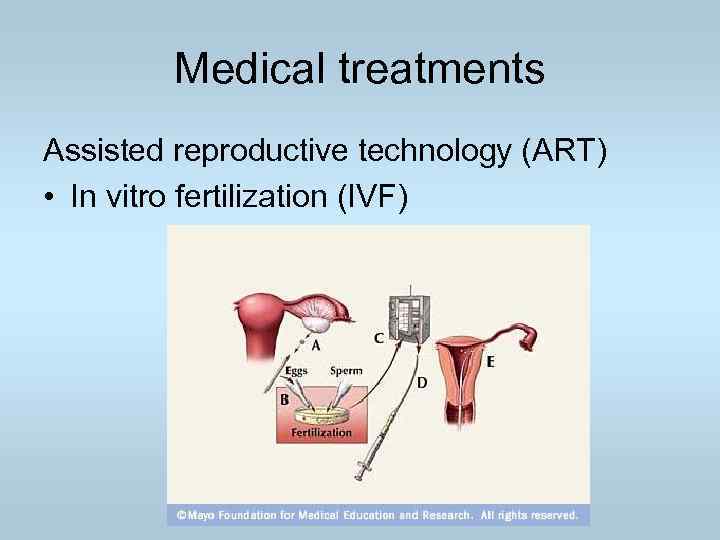 Medical treatments Assisted reproductive technology (ART) • In vitro fertilization (IVF)
 Medical treatments • Electric or vibratory stimulation to achieve ejaculation • Surgical sperm ejaculation • Intracytoplasmic sperm injection (ICSI) • Assisted hatching
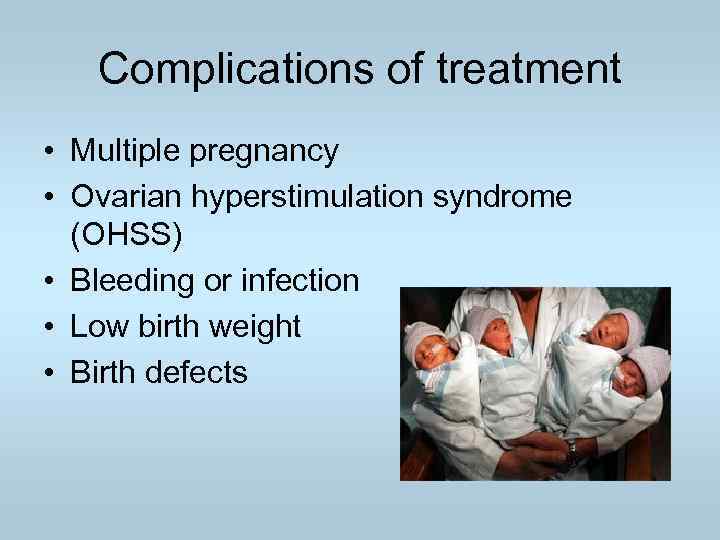 Complications of treatment • Multiple pregnancy • Ovarian hyperstimulation syndrome (OHSS) • Bleeding or infection • Low birth weight • Birth defects
 Complementary and alternative treatments • Group psychological intervention • Acupuncture • Manual physical therapy • Fertility tourism (legal regulation, lower prices, sought procedure)
 Prevention Male: • Avoid alcohol, tobacco and street drugs • Avoid hot tubs and steam baths Female: • Avoid alcohol, tobacco and street drugs • Exercise moderately • Avoid weight extremes • Limit caffeine • Limit medications
 The end