


 Скачать презентацию Infectious diseases Infectious diseases are illnesses caused
Infectious diseases.pptx
- Количество слайдов: 10
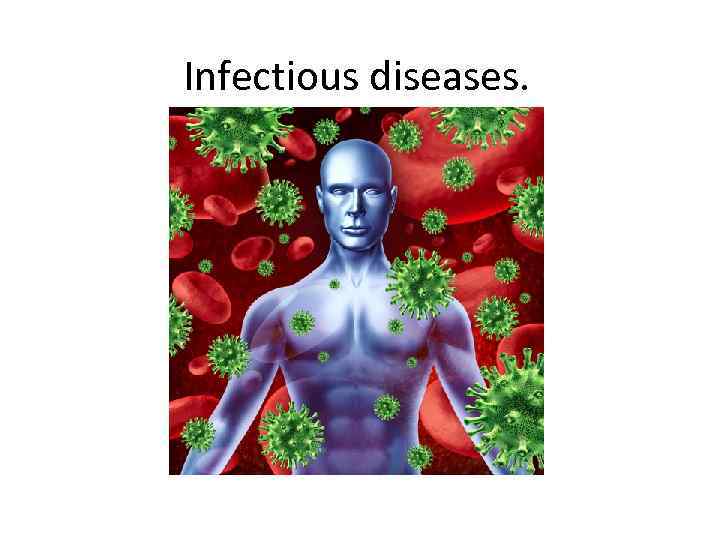 Infectious diseases.
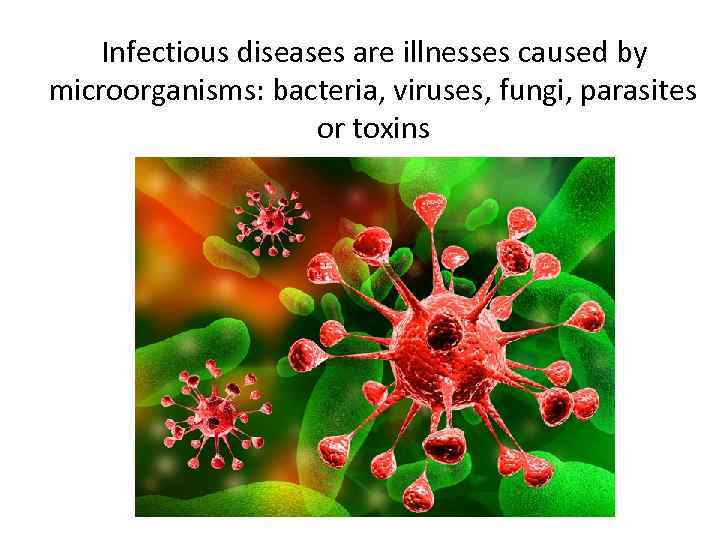 Infectious diseases are illnesses caused by microorganisms: bacteria, viruses, fungi, parasites or toxins
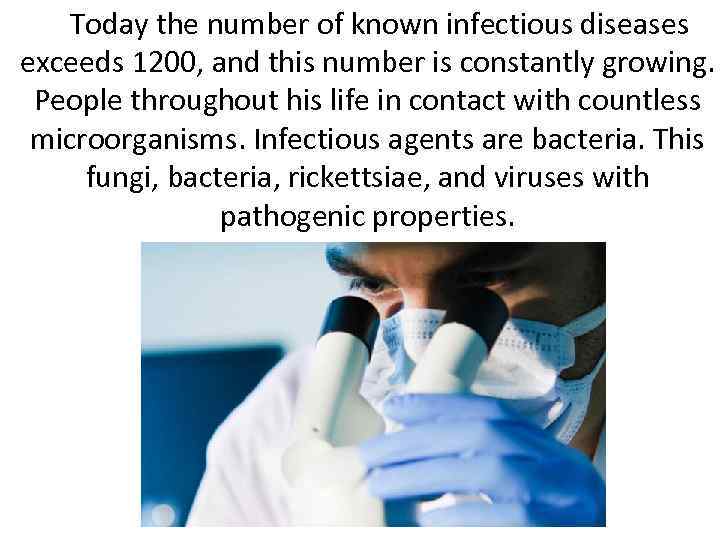 Today the number of known infectious diseases exceeds 1200, and this number is constantly growing. People throughout his life in contact with countless microorganisms. Infectious agents are bacteria. This fungi, bacteria, rickettsiae, and viruses with pathogenic properties.
 The spread of infectious diseases depends mainly on : working conditions, nutrition, housing, cultural level of the population.
 Infectious diseases have a specific biological activity.
 Classification of infectious diseases 1)Intestinal-cholera, dysentery, typhoid fever; 2)Respiratory tract infections - chicken pox, SARS, measles, influenza. 3)Transmissive, or blood, infection- malaria, plague, HIV-infection; 4)Infectious diseases of the outer integument tetanus, anthrax 5)Infection with multiple modes of transmission of - infectious mononucleosis, enteroviral infection.
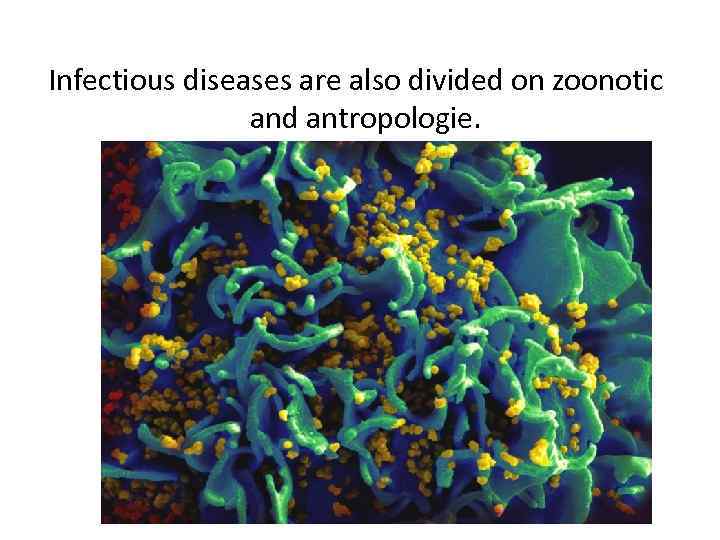 Infectious diseases are also divided on zoonotic and antropologie.
 To zoonoses are animal diseases, pathogens can enter the body and infect it (rabies, anthrax, tularemia, FMD, brucellosis, leptospirosis, listeriosis). Anthropology are exclusively human disease and is transmitted between people (measles, typhoid, cholera, dysentery, smallpox, typhoid, diphtheria). Caused by parasites (pathogens of animal origin such as insects, protozoa, mites) diseases referred to as parasitic, or invasive.
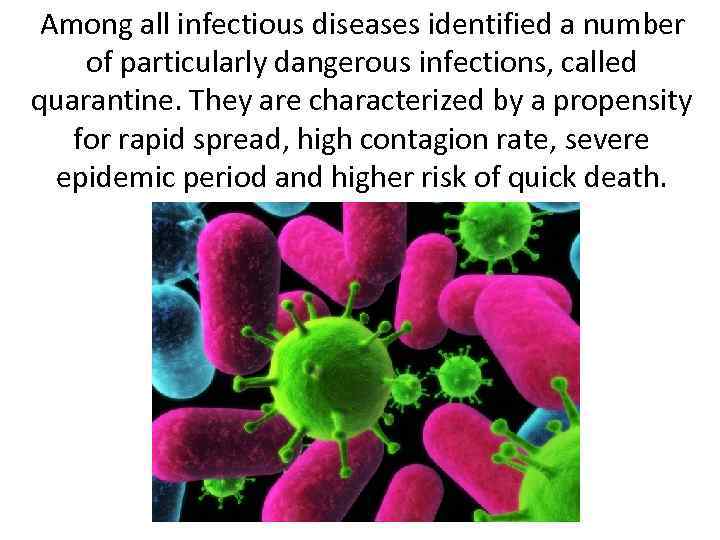 Among all infectious diseases identified a number of particularly dangerous infections, called quarantine. They are characterized by a propensity for rapid spread, high contagion rate, severe epidemic period and higher risk of quick death.
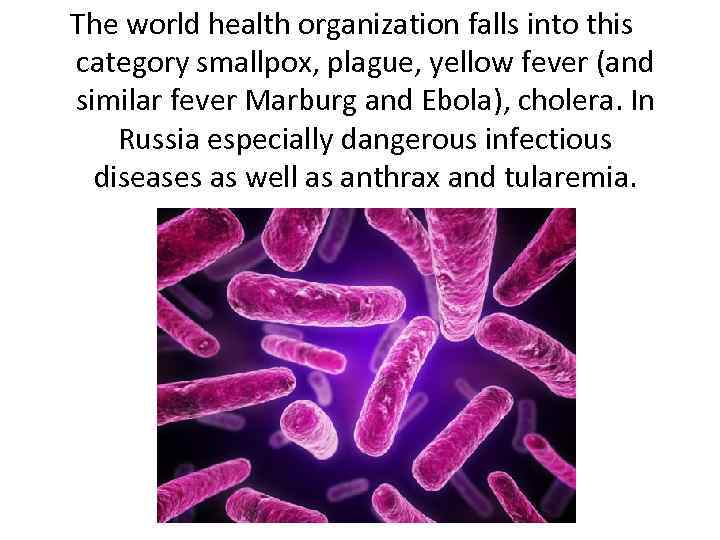 The world health organization falls into this category smallpox, plague, yellow fever (and similar fever Marburg and Ebola), cholera. In Russia especially dangerous infectious diseases as well as anthrax and tularemia.