


 Скачать презентацию Infectious Disease in Mesa County Plague n West
7743423e01dcb69a16f03f2d51ee7e1f.ppt
- Количество слайдов: 17
 Infectious Disease in Mesa County Plague n West Nile Virus n Colorado Tick Fever n Hantavirus n
 Plague Bacteria: Yersinia pestis n Flea bite (78%), Direct animal contact (20%), Aerosolized animal Urine/Feces (2%) n Human cases n April-November (93%) n Increased activity of fleas and hosts n
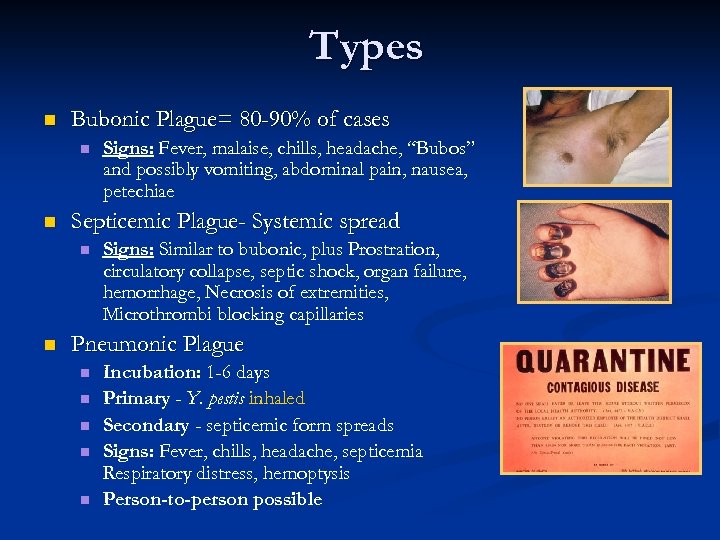 Types n Bubonic Plague= 80 -90% of cases n n Septicemic Plague- Systemic spread n n Signs: Fever, malaise, chills, headache, “Bubos” and possibly vomiting, abdominal pain, nausea, petechiae Signs: Similar to bubonic, plus Prostration, circulatory collapse, septic shock, organ failure, hemorrhage, Necrosis of extremities, Microthrombi blocking capillaries Pneumonic Plague n n n Incubation: 1 -6 days Primary - Y. pestis inhaled Secondary - septicemic form spreads Signs: Fever, chills, headache, septicemia Respiratory distress, hemoptysis Person-to-person possible
 Treatment n n With early treatment – Survival ~100% Supportive treatment Antibiotics treatment n Aminoglycosides n Streptomycin, kanamycin n Doxycycline, tetracycline, chloramphenicol Penicillins and cephalosporins are NOT effective Prevention n n n Don’t handle dead animals Report animal die-offs Rodent-proof home Use insect repellent Treat pets for fleas Treat rodent sites Take pet to vet if symptoms develop n n Redness or swelling around mouth See a health care provider if human symptoms develop
 The West Nile Virus n Flavivirus-a virus, NOT a bacteria. Antibiotics are ineffective. n Infects humans, birds, n Ecology & Transmission mosquitoes, horses and other mammals n n n Culex species(43 species) of mosquito is cause of human cases. Isolated number of cases from ticks Human Disease: n Incubation: 3 -14 days n n 80% asymptomatic or mild flu-like illness 20% develop sudden fever, weakness, headache, myalgia, nausea, vomiting Symptoms last 3 -6 days in mild cases Severe illness develops in less than 1% (1: 150) infected with the neurological component- Encephalitis (meningoencephalitis)
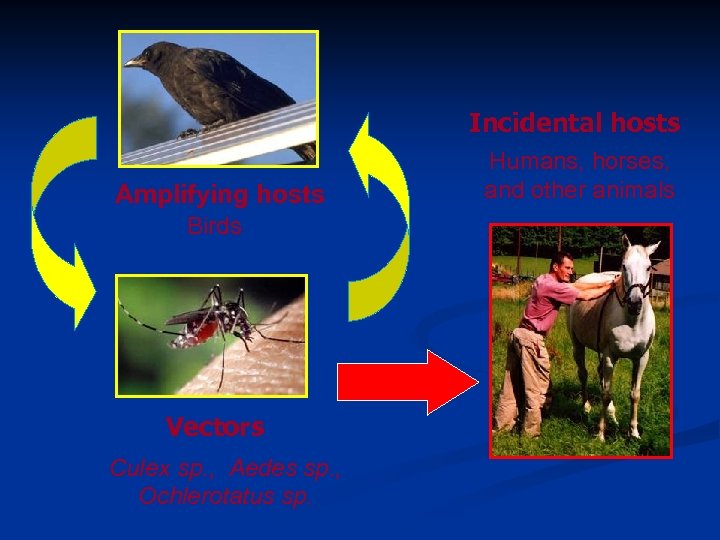 Incidental hosts Amplifying hosts Birds Vectors Culex sp. , Aedes sp. , Ochlerotatus sp. Humans, horses, and other animals
 Prevention n Eliminating larval habitats n n n Tires, bird baths, containers, rain gutters, unused swimming pools Avoid mosquito habitats during dawn and dusk when they are most active Adjust watering times and sprinkler heads to prevent water pooling Protection n Reduce time outdoors n n n Wear long pants and sleeves Use mosquito repellent n n Especially evening hours 30% DEET, Picaridin, or Oil of Lemon Eucalyptus Do not use DEET on your animals- check with a vet. Make sure all window screens are intact Use yellow “bug” light bulbs in outdoor light fixtures
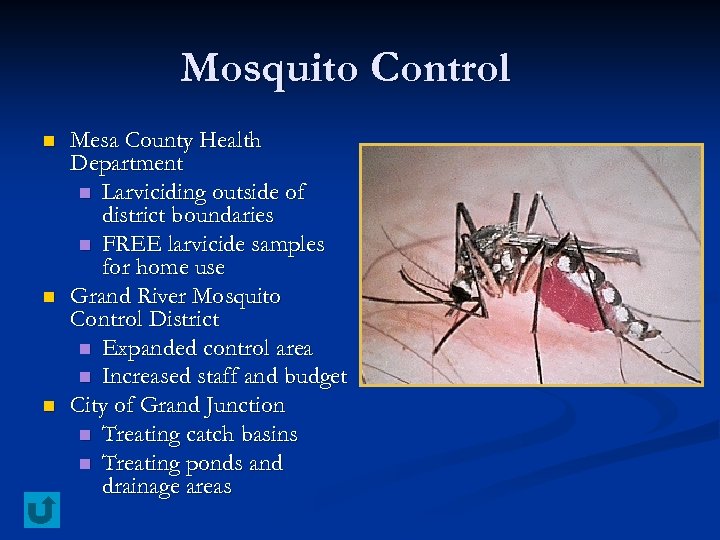 Mosquito Control n n n Mesa County Health Department n Larviciding outside of district boundaries n FREE larvicide samples for home use Grand River Mosquito Control District n Expanded control area n Increased staff and budget City of Grand Junction n Treating catch basins n Treating ponds and drainage areas
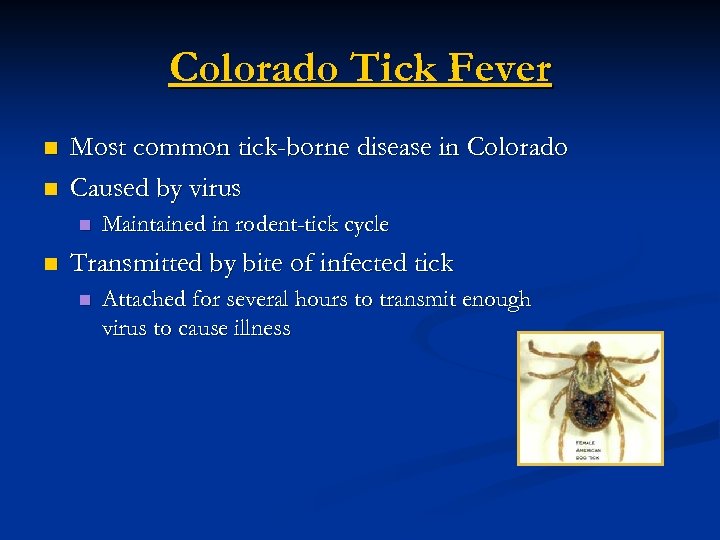 Colorado Tick Fever n n Most common tick-borne disease in Colorado Caused by virus n n Maintained in rodent-tick cycle Transmitted by bite of infected tick n Attached for several hours to transmit enough virus to cause illness
 Symptoms n n n Fever Headache Body aches Nausea Abdominal pain Lethargy Treatment n n n Currently no treatment Treat symptoms Recovery will take 2 -3 weeks Not life threatening Infection produces lifelong immunity
 Hantaviruses n A “viral hemorrhagic fever” Hantavirus Pulmonary Syndrome (HPS) n Hemorrhagic Fever with Renal Syndrome (HFRS) n n Recent Cases: Four Corners Outbreak n May 2003: Montana, 3 cases n
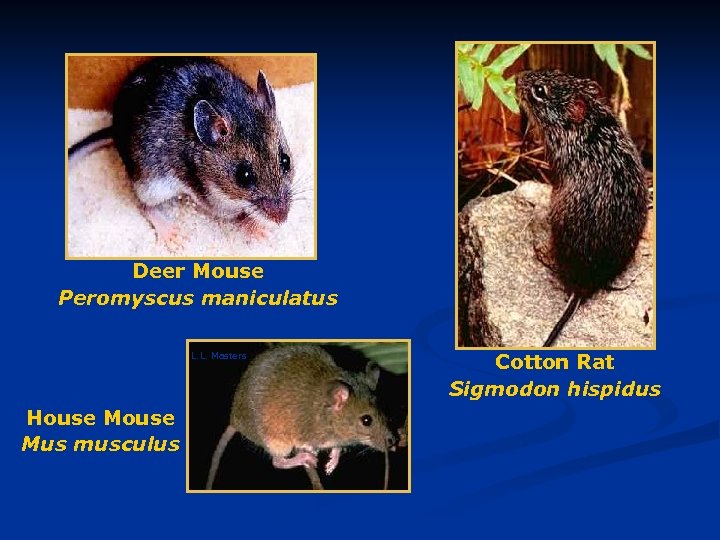 Deer Mouse Peromyscus maniculatus L. L. Masters House Mus musculus Cotton Rat Sigmodon hispidus
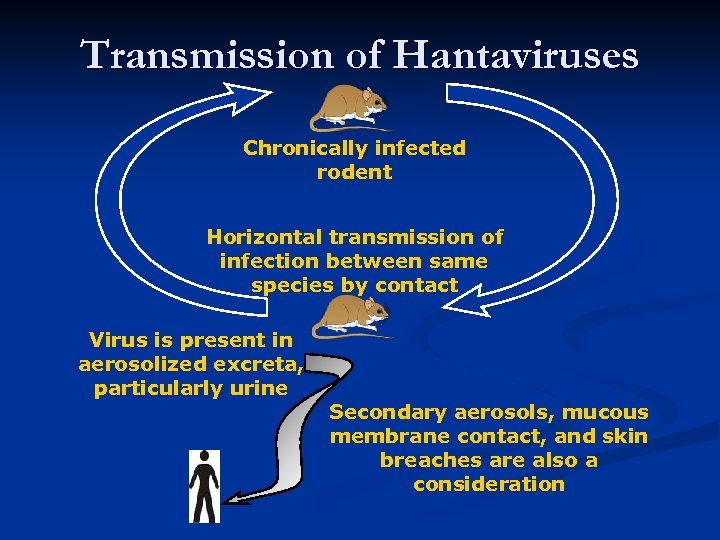 Transmission of Hantaviruses Chronically infected rodent Horizontal transmission of infection between same species by contact Virus is present in aerosolized excreta, particularly urine Secondary aerosols, mucous membrane contact, and skin breaches are also a consideration
 Signs n n Incubation period 14 -17 days Early stage: Fatigue, fever, myalgia, headache and lasts 3 -5 days Later stage 4 to 10 days after initial signs: n Coughing and shortness of breath n Rapidly progressive, non-cardiogenic pulmonary edema and severe hypotension n Hospitalization and ventilation required usually within 24 hours Patients can recover with early supportive care
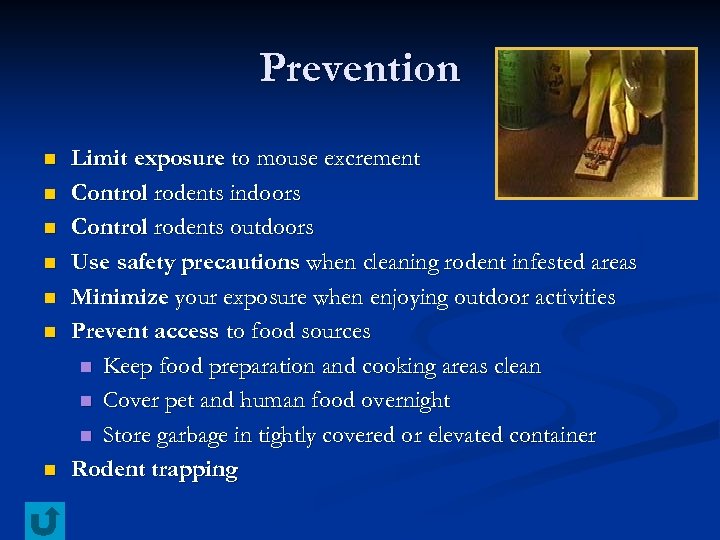 Prevention n n n Limit exposure to mouse excrement Control rodents indoors Control rodents outdoors Use safety precautions when cleaning rodent infested areas Minimize your exposure when enjoying outdoor activities Prevent access to food sources n Keep food preparation and cooking areas clean n Cover pet and human food overnight n Store garbage in tightly covered or elevated container Rodent trapping
 Internet Resources n CDC All About Hantavirus n n CDC Infectious Disease Pathology Activity n n www. bt. cdc. gov/agent/plague/index. asp CDC - Division of Vector-borne Infectious Diseases n n www. cdc. gov/ncidod/diseases/hanta/hps/noframes/printgenlsect ion. htm CDC - Plague information n n www. cdc. gov/ncidod/diseases/hanta/hps/noframes/phys/clinical. htm www. cdc. gov/ncidod/dvbid/index. htm Mesa County Health Department Website n http: //health. mesacounty. us/