


 Скачать презентацию Infant feeding in the context of HIV International
6fd78a3be18dd511473e3775c4ea56a5.ppt
- Количество слайдов: 57
 Infant feeding in the context of HIV International evidence and recommendations WHO Guidelines on HIV and Infant feeding. 2010
 National (or sub-national) health authorities should decide whether health services will principally counsel and support mothers known to be HIV-infected to: - breastfeed and receive ARV interventions, or, - avoid all breastfeeding, as the strategy that will most likely give infants the greatest chance of HIV-free survival. This decision should be based on international recommendations and consideration of the socio-economic and cultural contexts of the populations served by Maternal and Child Health services, the availability and quality of health services, the local epidemiology including HIV prevalence among pregnant women and main causes of infant and child mortality and maternal and child under-nutrition
 … in settings where national authorities decide to promote and support BF and ARVs … Which breastfeeding practices and for how long? Mothers known to be HIV-infected (and whose infants are HIV uninfected or of unknown HIV status) should exclusively breastfeed their infants for the first 6 months of life, introducing appropriate complementary foods thereafter, and continue breastfeeding for the first 12 months of life. Breastfeeding should then only stop once a nutritionally adequate and safe diet without breast milk can be provided.
 National (or sub-national) health authorities should decide whether health services will principally counsel and support mothers known to be HIV-infected to: - breastfeed and receive ARV interventions, or, - avoid all breastfeeding, as the strategy that will most likely give infants the greatest chance of HIV-free survival. This decision should be based on international recommendations and consideration of the socio-economic and cultural contexts of the populations served by Maternal and Child Health services, the availability and quality of health services, the local epidemiology including HIV prevalence among pregnant women and main causes of infant and child mortality and maternal and child under-nutrition
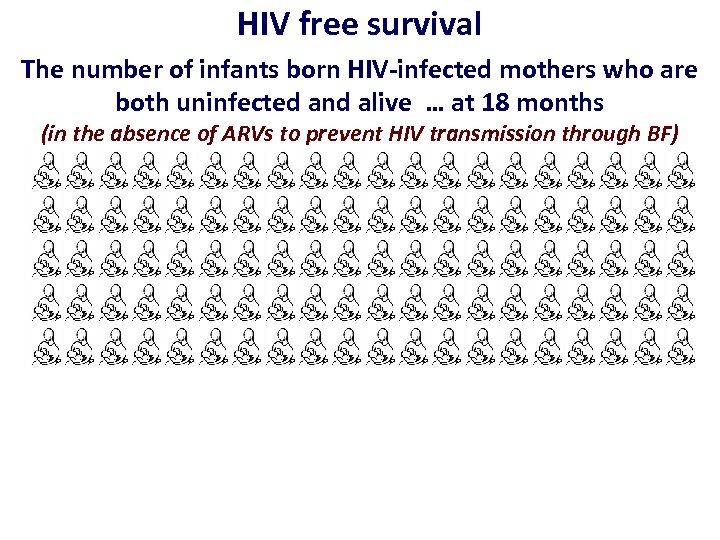 HIV free survival The number of infants born HIV-infected mothers who are both uninfected and alive … at 18 months (in the absence of ARVs to prevent HIV transmission through BF)
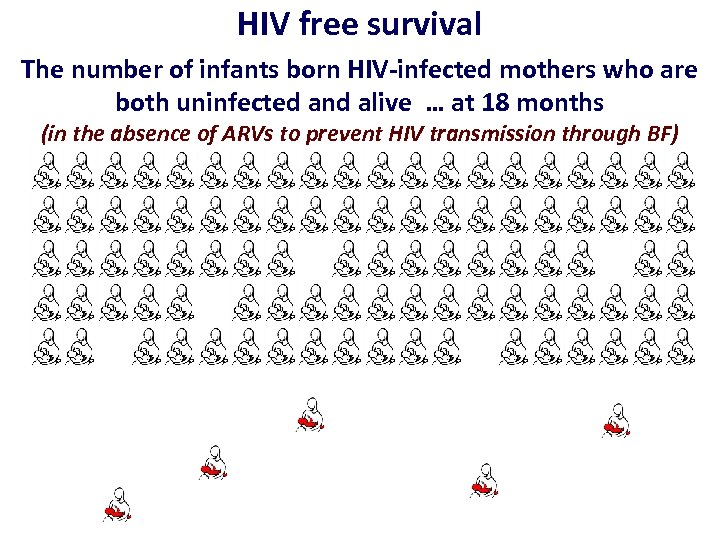 HIV free survival The number of infants born HIV-infected mothers who are both uninfected and alive … at 18 months (in the absence of ARVs to prevent HIV transmission through BF)
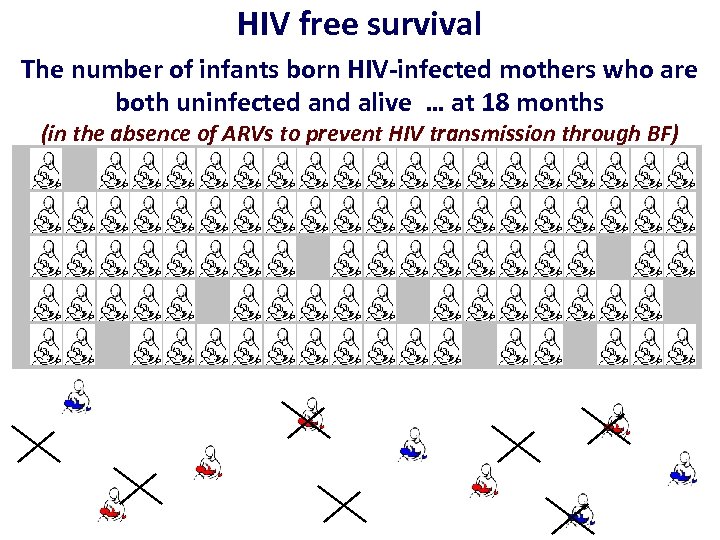 HIV free survival The number of infants born HIV-infected mothers who are both uninfected and alive … at 18 months (in the absence of ARVs to prevent HIV transmission through BF)
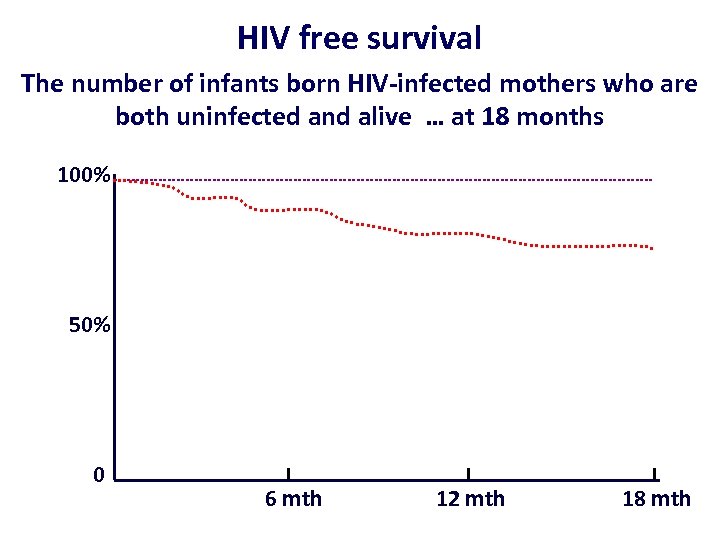 HIV free survival The number of infants born HIV-infected mothers who are both uninfected and alive … at 18 months 100% 50% 0 6 mth 12 mth 18 mth
 Measuring 'success' in PMTCT • Policy, interventions and programmes should be judged on their ability to promote HIV free survival among all children and the health and survival of mothers • Preventing HIV transmission is not enough
 WHO guideline development • Rigorous, independent assessment of available research evidence – GRADE process – Systematic reviews consolidated into tables • Consideration of impact, feasibility, implications beyond immediate recommendations and cost • Equity – ensuring that recommended interventions provide benefit to all sections of the population – particularly important • Guideline development groups include academic experts, programme manager, civil society and community representatives – Declarations of interest • Publication of all evidence included and rationale behind recommendations • Allocation of strength of recommendation
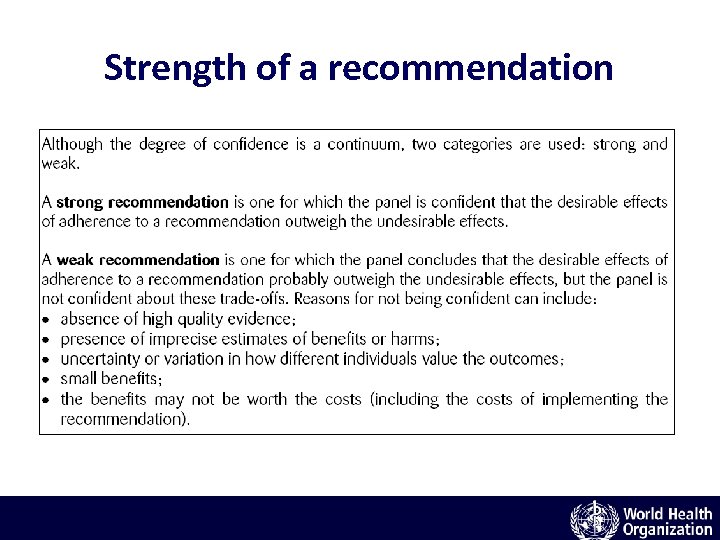 Strength of a recommendation
 Implications of a strong recommendation • Patients: Most people in this situation would want the recommended course of action and only a small proportion would not • Clinicians: Most patients should receive the recommended course of action • Policy makers: The recommendation can be adapted as a policy in most situations
 Revised WHO Recommendations on the use of antiretroviral drugs for treating pregnant women and preventing HIV infection in infants (2010) • Eligibility criteria for ART – CD 4 count <350, irrespective of clinical stage – Clinical stage 3 or 4, irrespective of CD 4 count • The 2010 recommendations … provide two alternative options for women who are not on ART and breastfeed: – A) daily NVP for infants from birth until the end of the breastfeeding period. or – B) continued regimen of triple ARV therapy to the mother until the end of the breastfeeding period. • ARV prophylaxis …. should continue until one week after all exposure to breast milk has ended.
 National (or sub-national) health authorities should decide whether health services will principally counsel and support mothers known to be HIV-infected to: - breastfeed and receive ARV interventions, or, - avoid all breastfeeding, as the strategy that will most likely give infants the greatest chance of HIV-free survival. Mothers known to be HIV-infected (and whose infants are HIV uninfected or of unknown HIV status) should exclusively breastfeed their infants for the first 6 months of life, introducing appropriate complementary foods thereafter, and continue breastfeeding for the first 12 months of life. Breastfeeding should then only stop once a nutritionally adequate and safe diet without breast milk can be provided.
 • What is the evidence base in support of the main revisions? – – Efficacy and safety of ARVs to prevent HIV transmission through BF The risks associated with not BF The optimal duration of BF by HIV-infected mothers Maternal health considerations • Why WHO recommends that national authorities promote a single infant feeding strategy for all HIV-infected mothers and their infants? • What are the 'opportunities' and 'challenges' of adopting and implementing the revised recommendations?
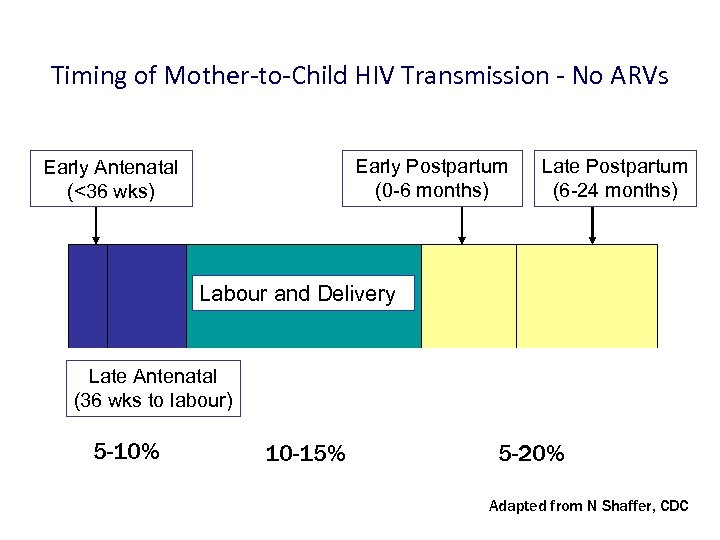 Timing of Mother-to-Child HIV Transmission - No ARVs Early Postpartum (0 -6 months) Early Antenatal (<36 wks) Late Postpartum (6 -24 months) Labour and Delivery Late Antenatal (36 wks to labour) 5 -10% 10 -15% 5 -20% Adapted from N Shaffer, CDC
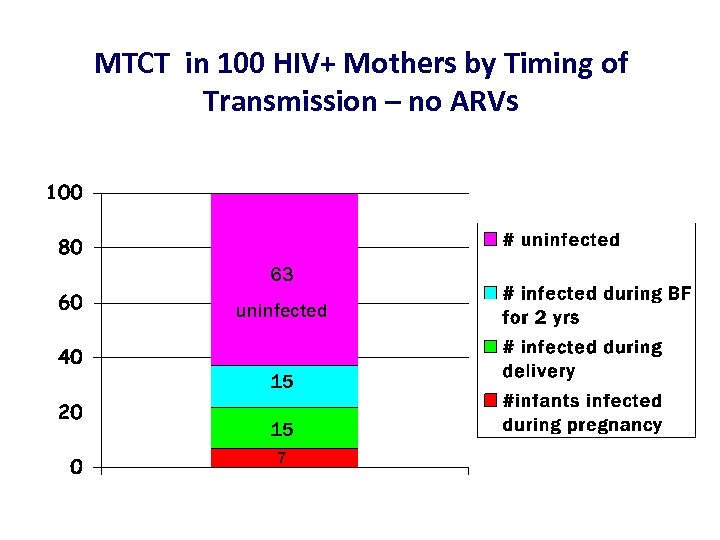 MTCT in 100 HIV+ Mothers by Timing of Transmission – no ARVs 63 uninfected 15 15 7
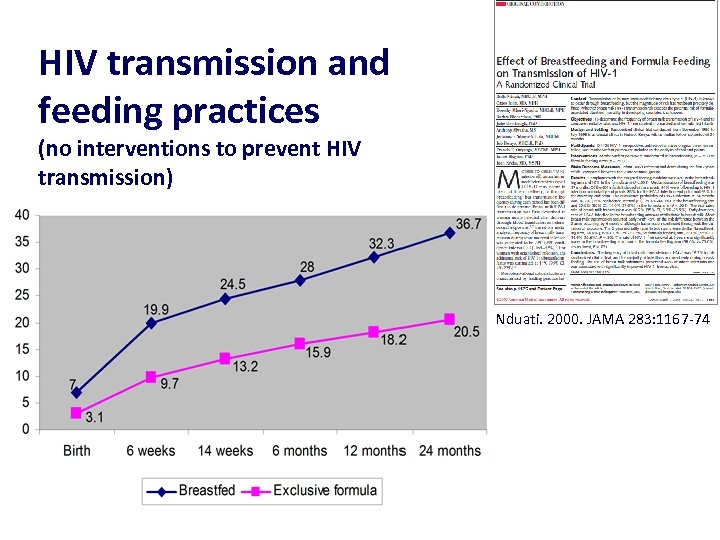 HIV transmission and feeding practices (no interventions to prevent HIV transmission) Nduati. 2000. JAMA 283: 1167 -74
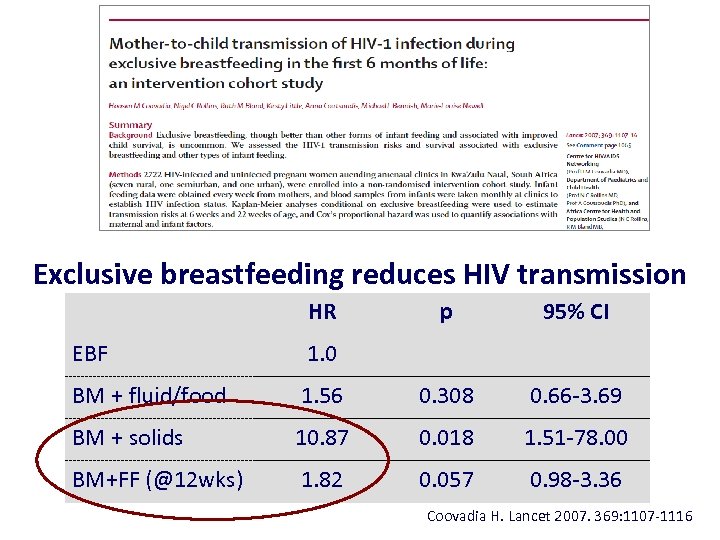 Exclusive breastfeeding reduces HIV transmission HR p 95% CI EBF 1. 0 BM + fluid/food 1. 56 0. 308 0. 66 -3. 69 BM + solids 10. 87 0. 018 1. 51 -78. 00 BM+FF (@12 wks) 1. 82 0. 057 0. 98 -3. 36 Coovadia H. Lancet 2007. 369: 1107 -1116
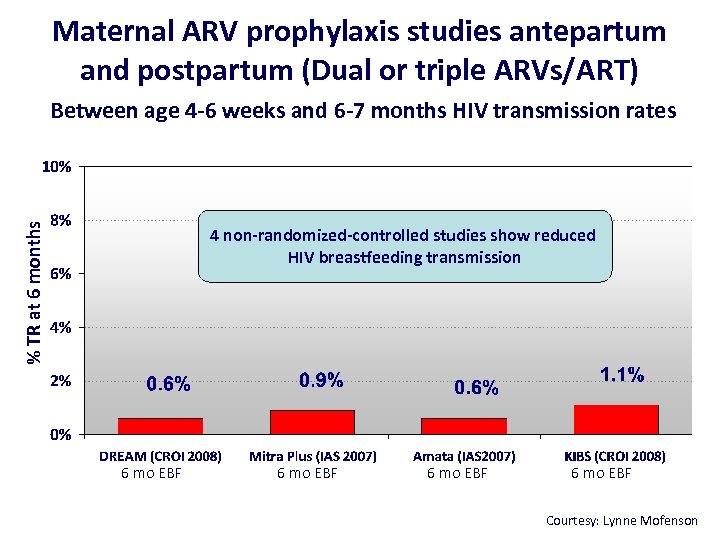 Maternal ARV prophylaxis studies antepartum and postpartum (Dual or triple ARVs/ART) % TR at 6 months Between age 4 -6 weeks and 6 -7 months HIV transmission rates 4 non-randomized-controlled studies show reduced HIV breastfeeding transmission 6 mo EBF Courtesy: Lynne Mofenson
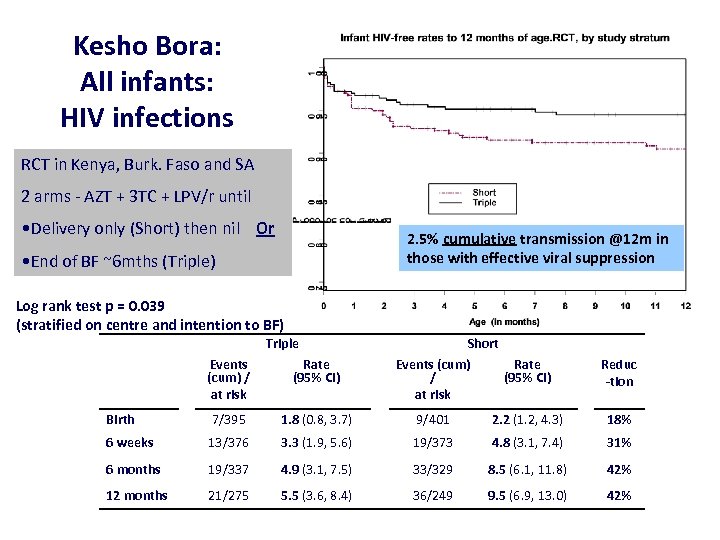 Kesho Bora: All infants: HIV infections RCT in Kenya, Burk. Faso and SA 2 arms - AZT + 3 TC + LPV/r until • Delivery only (Short) then nil Or 2. 5% cumulative transmission @12 m in those with effective viral suppression • End of BF ~6 mths (Triple) Log rank test p = 0. 039 (stratified on centre and intention to BF) Triple Short Events (cum) Rate / (95% CI) at risk Events (cum) / at risk Rate (95% CI) Reduc -tion Birth 7/395 1. 8 (0. 8, 3. 7) 9/401 2. 2 (1. 2, 4. 3) 18% 6 weeks 13/376 3. 3 (1. 9, 5. 6) 19/373 4. 8 (3. 1, 7. 4) 31% 6 months 19/337 4. 9 (3. 1, 7. 5) 33/329 8. 5 (6. 1, 11. 8) 42% 12 months 21/275 5. 5 (3. 6, 8. 4) 36/249 9. 5 (6. 9, 13. 0) 42%
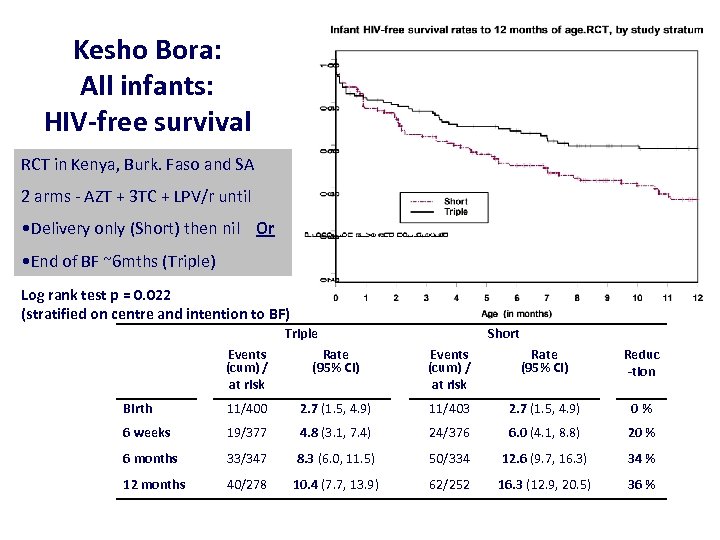 Kesho Bora: All infants: HIV-free survival RCT in Kenya, Burk. Faso and SA 2 arms - AZT + 3 TC + LPV/r until • Delivery only (Short) then nil Or • End of BF ~6 mths (Triple) Log rank test p = 0. 022 (stratified on centre and intention to BF) Triple Short Events (cum) / at risk Rate (95% CI) Reduc -tion Birth 11/400 2. 7 (1. 5, 4. 9) 11/403 2. 7 (1. 5, 4. 9) 0% 6 weeks 19/377 4. 8 (3. 1, 7. 4) 24/376 6. 0 (4. 1, 8. 8) 20 % 6 months 33/347 8. 3 (6. 0, 11. 5) 50/334 12. 6 (9. 7, 16. 3) 34 % 12 months 40/278 10. 4 (7. 7, 13. 9) 62/252 16. 3 (12. 9, 20. 5) 36 %
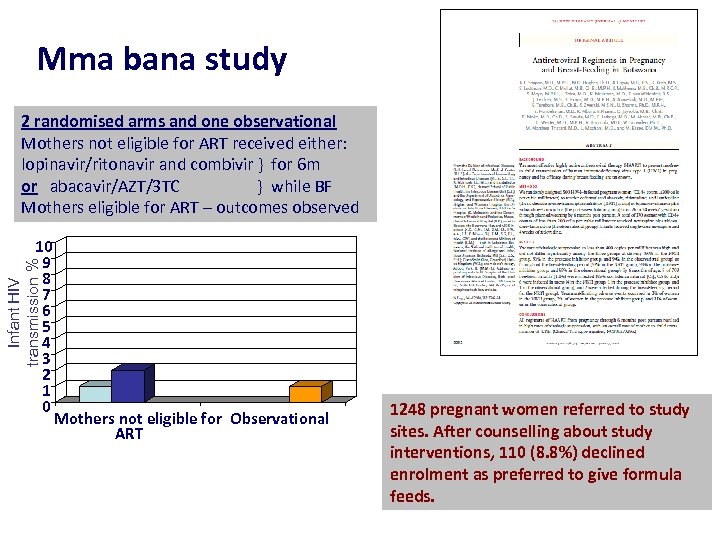
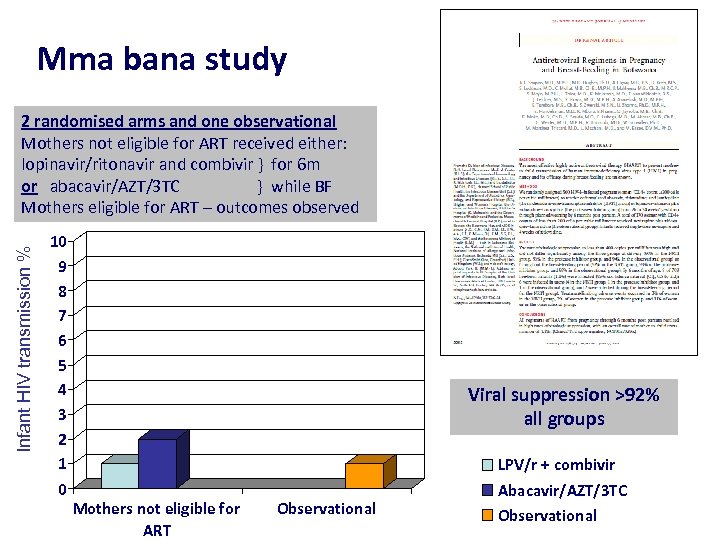 Mma bana study Infant HIV transmission % 2 randomised arms and one observational Mothers not eligible for ART received either: lopinavir/ritonavir and combivir } for 6 m or abacavir/AZT/3 TC } while BF Mothers eligible for ART – outcomes observed 10 9 8 7 6 5 4 3 2 1 0 Viral suppression >92% all groups Mothers not eligible for ART Observational LPV/r + combivir Abacavir/AZT/3 TC Observational
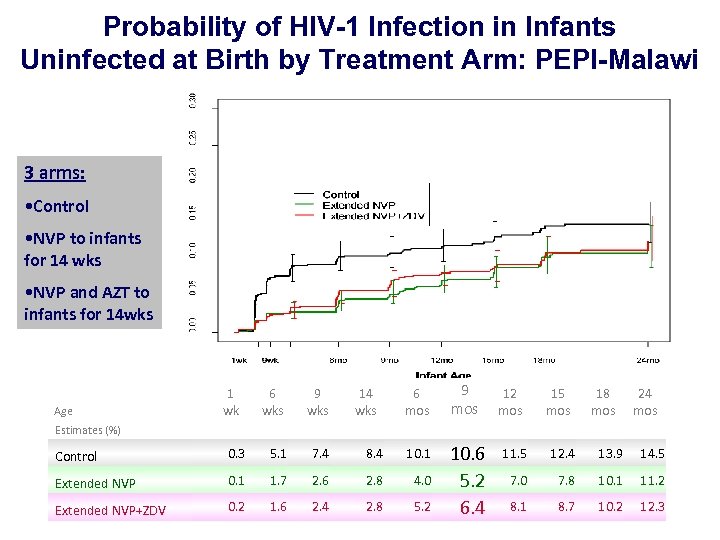 Probability of HIV-1 Infection in Infants Uninfected at Birth by Treatment Arm: PEPI-Malawi 3 arms: • Control • NVP to infants for 14 wks • NVP and AZT to infants for 14 wks Age 1 wk 6 wks 9 wks 14 wks 6 mos 9 mos 10. 6 5. 2 6. 4 12 mos 15 mos 18 mos 24 mos Estimates (%) Control 0. 3 5. 1 7. 4 8. 4 10. 1 Extended NVP 0. 1 1. 7 2. 6 2. 8 4. 0 Extended NVP+ZDV 0. 2 1. 6 2. 4 2. 8 5. 2 11. 5 12. 4 13. 9 14. 5 7. 0 7. 8 10. 1 11. 2 8. 1 8. 7 10. 2 12. 3
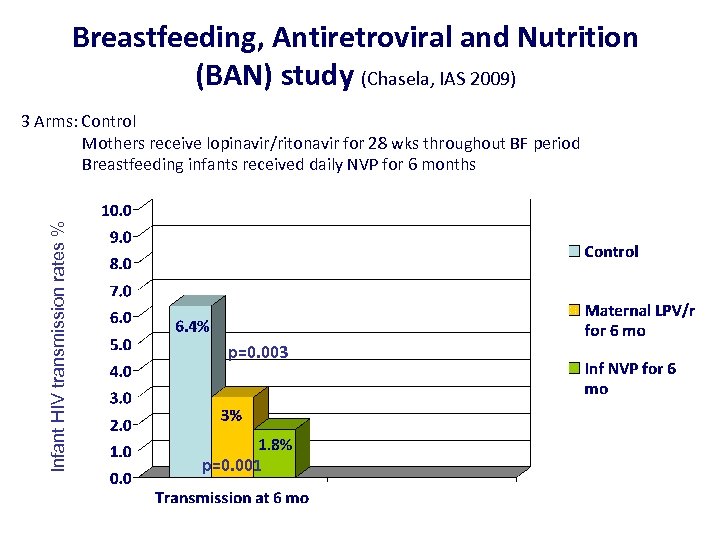 Breastfeeding, Antiretroviral and Nutrition (BAN) study (Chasela, IAS 2009) Infant HIV transmission rates % 3 Arms: Control Mothers receive lopinavir/ritonavir for 28 wks throughout BF period Breastfeeding infants received daily NVP for 6 months p=0. 003 p=0. 001
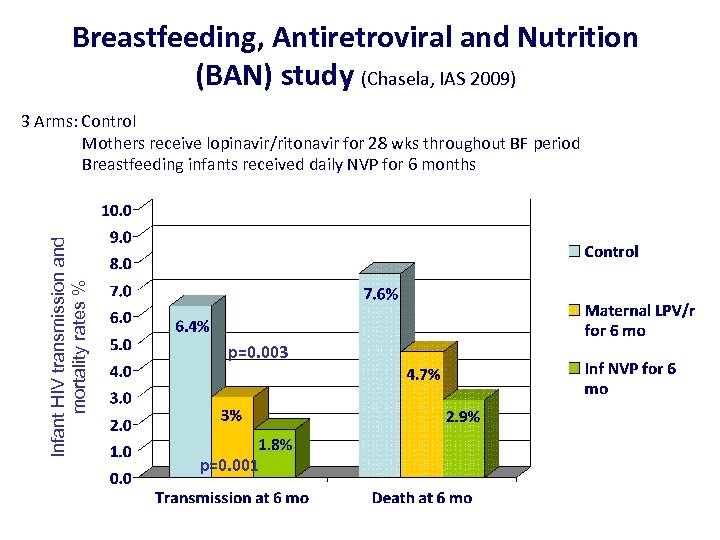 Breastfeeding, Antiretroviral and Nutrition (BAN) study (Chasela, IAS 2009) Infant HIV transmission and mortality rates % 3 Arms: Control Mothers receive lopinavir/ritonavir for 28 wks throughout BF period Breastfeeding infants received daily NVP for 6 months p=0. 003 p=0. 001
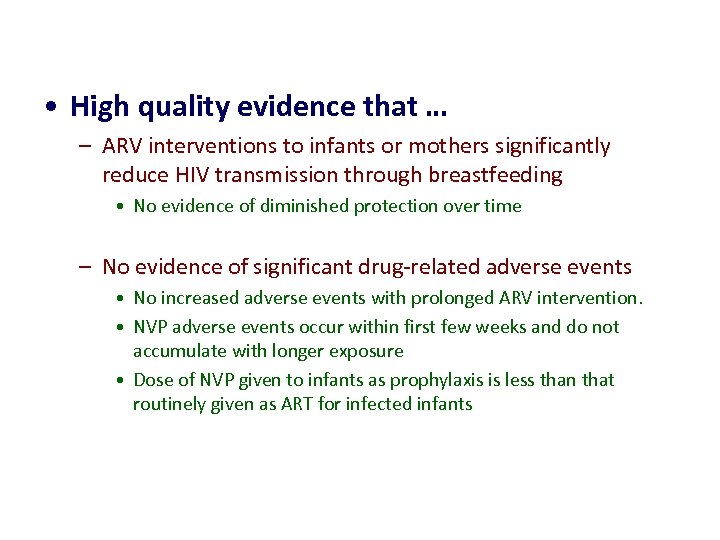 • High quality evidence that … – ARV interventions to infants or mothers significantly reduce HIV transmission through breastfeeding • No evidence of diminished protection over time – No evidence of significant drug-related adverse events • No increased adverse events with prolonged ARV intervention. • NVP adverse events occur within first few weeks and do not accumulate with longer exposure • Dose of NVP given to infants as prophylaxis is less than that routinely given as ART for infected infants
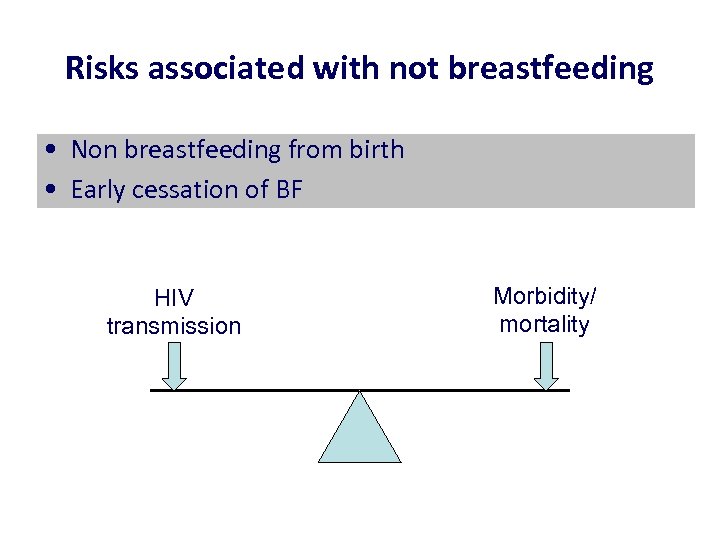 Risks associated with not breastfeeding • Non breastfeeding from birth • Early cessation of BF HIV transmission Morbidity/ mortality
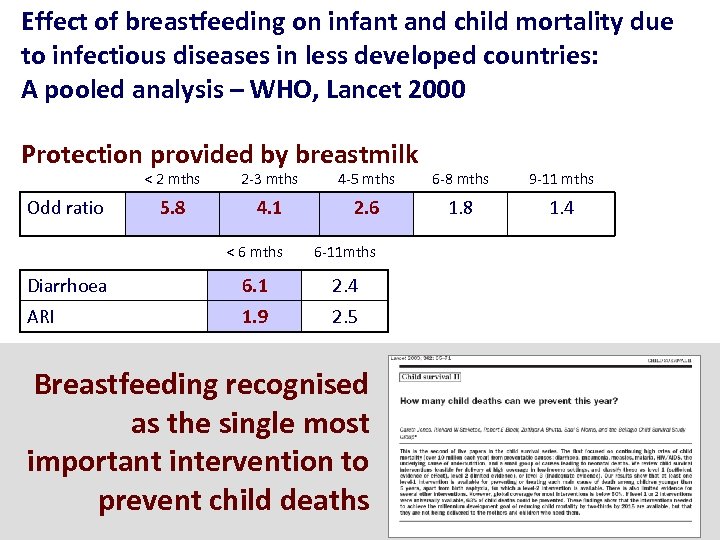 Effect of breastfeeding on infant and child mortality due to infectious diseases in less developed countries: A pooled analysis – WHO, Lancet 2000 Protection provided by breastmilk < 2 mths 2 -3 mths 4 -5 mths 6 -8 mths 9 -11 mths 5. 8 4. 1 2. 6 1. 8 1. 4 < 6 mths 6 -11 mths Diarrhoea 6. 1 2. 4 ARI 1. 9 2. 5 Odd ratio Breastfeeding recognised as the single most important intervention to prevent child deaths
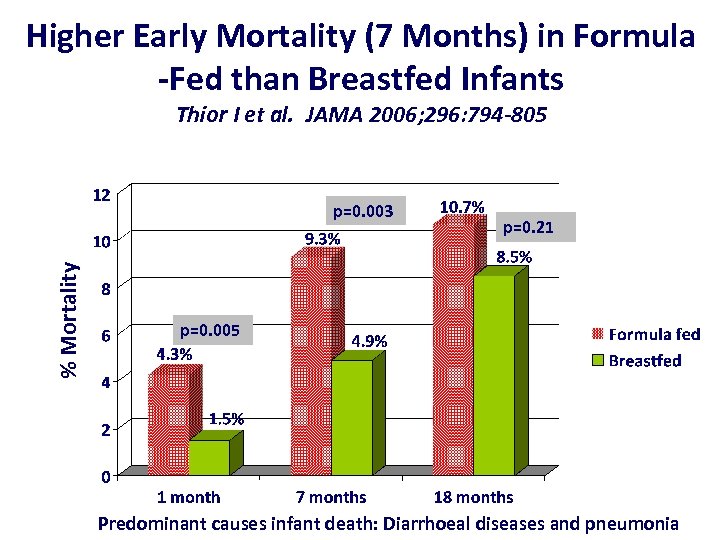 Higher Early Mortality (7 Months) in Formula -Fed than Breastfed Infants Thior I et al. JAMA 2006; 296: 794 -805 % Mortality p=0. 003 p=0. 21 p=0. 005 Predominant causes infant death: Diarrhoeal diseases and pneumonia
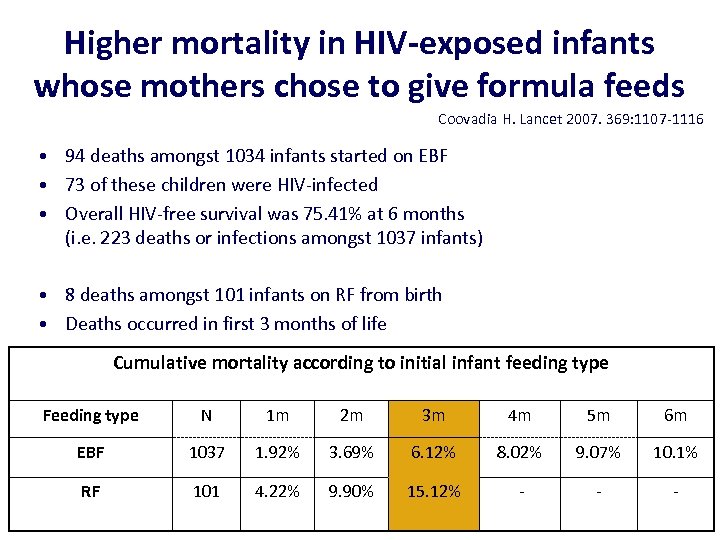 Higher mortality in HIV-exposed infants whose mothers chose to give formula feeds Coovadia H. Lancet 2007. 369: 1107 -1116 • 94 deaths amongst 1034 infants started on EBF • 73 of these children were HIV-infected • Overall HIV-free survival was 75. 41% at 6 months (i. e. 223 deaths or infections amongst 1037 infants) • 8 deaths amongst 101 infants on RF from birth • Deaths occurred in first 3 months of life Cumulative mortality according to initial infant feeding type Feeding type N 1 m 2 m 3 m 4 m 5 m 6 m EBF 1037 1. 92% 3. 69% 6. 12% 8. 02% 9. 07% 10. 1% RF 101 4. 22% 9. 90% 15. 12% - - -
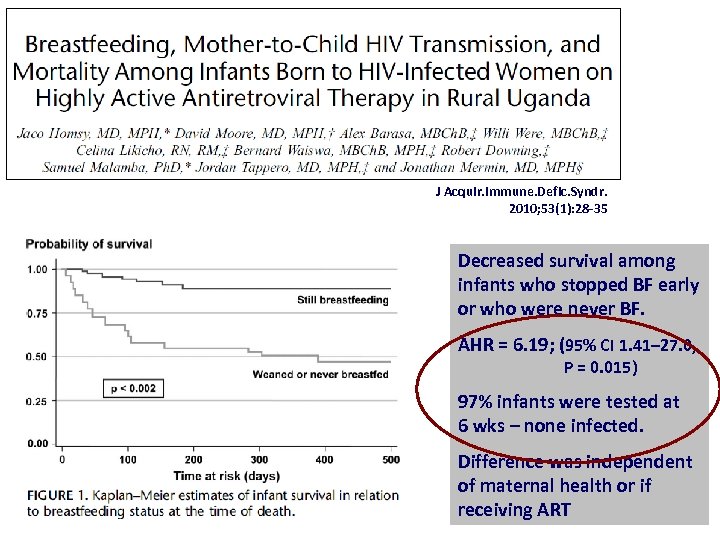 J Acquir. Immune. Defic. Syndr. 2010; 53(1): 28 -35 Decreased survival among infants who stopped BF early or who were never BF. AHR = 6. 19; (95% CI 1. 41– 27. 0, P = 0. 015) 97% infants were tested at 6 wks – none infected. Difference was independent of maternal health or if receiving ART
 Programmatic experiences
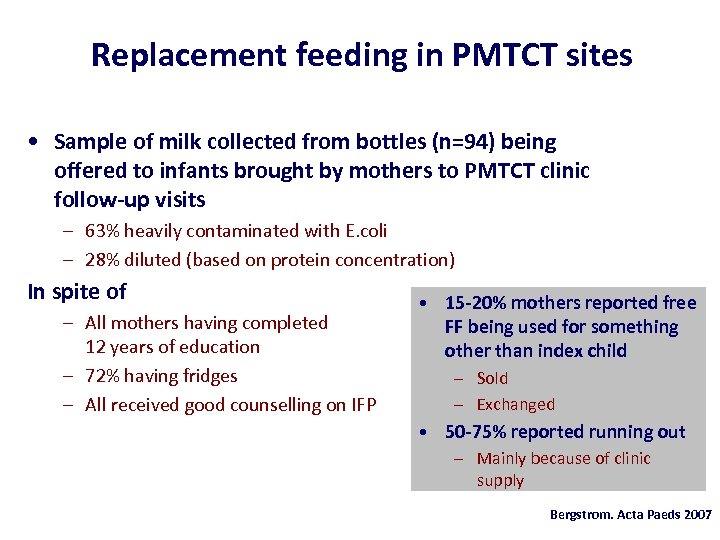 Replacement feeding in PMTCT sites • Sample of milk collected from bottles (n=94) being offered to infants brought by mothers to PMTCT clinic follow-up visits – 63% heavily contaminated with E. coli – 28% diluted (based on protein concentration) In spite of – All mothers having completed 12 years of education – 72% having fridges – All received good counselling on IFP • 15 -20% mothers reported free FF being used for something other than index child – Sold – Exchanged • 50 -75% reported running out – Mainly because of clinic supply Bergstrom. Acta Paeds 2007
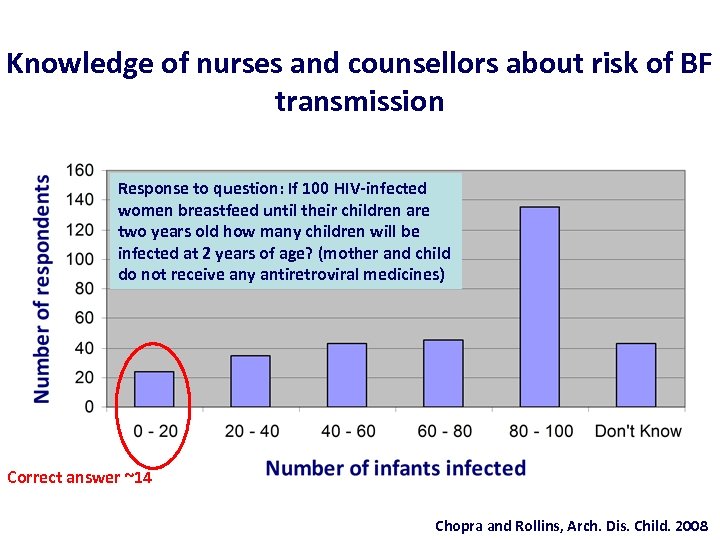 Knowledge of nurses and counsellors about risk of BF transmission Response to question: If 100 HIV-infected women breastfeed until their children are two years old how many children will be infected at 2 years of age? (mother and child do not receive any antiretroviral medicines) Correct answer ~14 Chopra and Rollins, Arch. Dis. Child. 2008
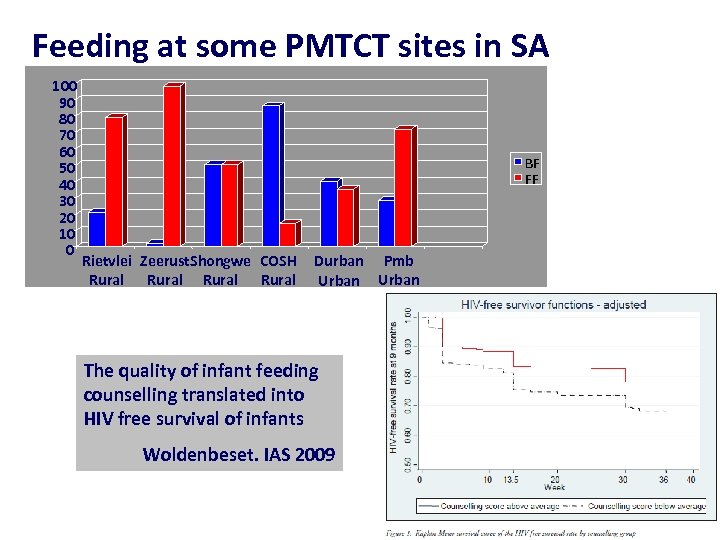 Feeding at some PMTCT sites in SA 100 90 80 70 60 50 40 30 20 10 0 BF FF Rietvlei Zeerust. Shongwe COSH Rural Durban Pmb Urban The quality of infant feeding counselling translated into HIV free survival of infants Woldenbeset. IAS 2009
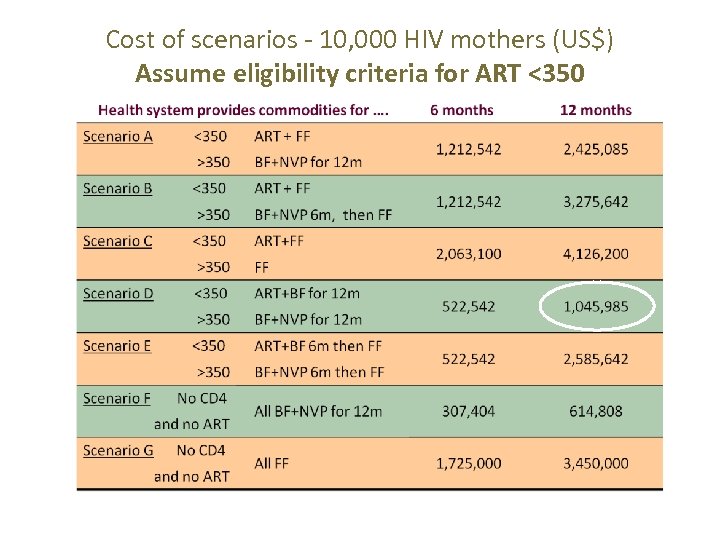 Cost of scenarios - 10, 000 HIV mothers (US$) Assume eligibility criteria for ART <350
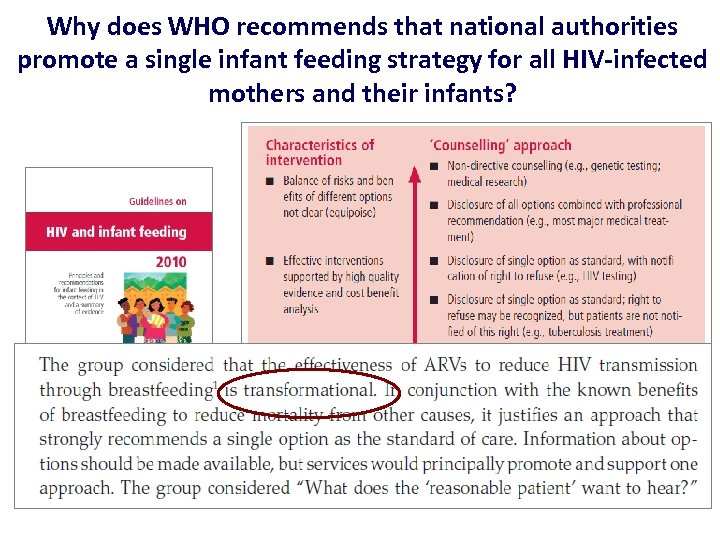
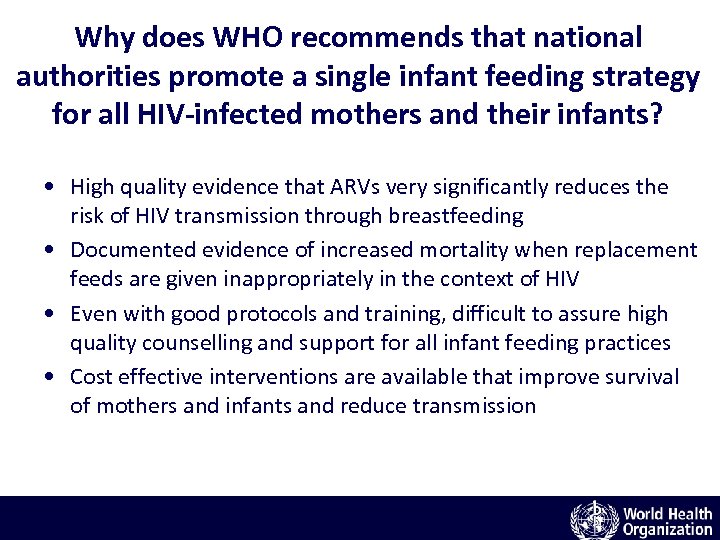 Why does WHO recommends that national authorities promote a single infant feeding strategy for all HIV-infected mothers and their infants? • High quality evidence that ARVs very significantly reduces the risk of HIV transmission through breastfeeding • Documented evidence of increased mortality when replacement feeds are given inappropriately in the context of HIV • Even with good protocols and training, difficult to assure high quality counselling and support for all infant feeding practices • Cost effective interventions are available that improve survival of mothers and infants and reduce transmission
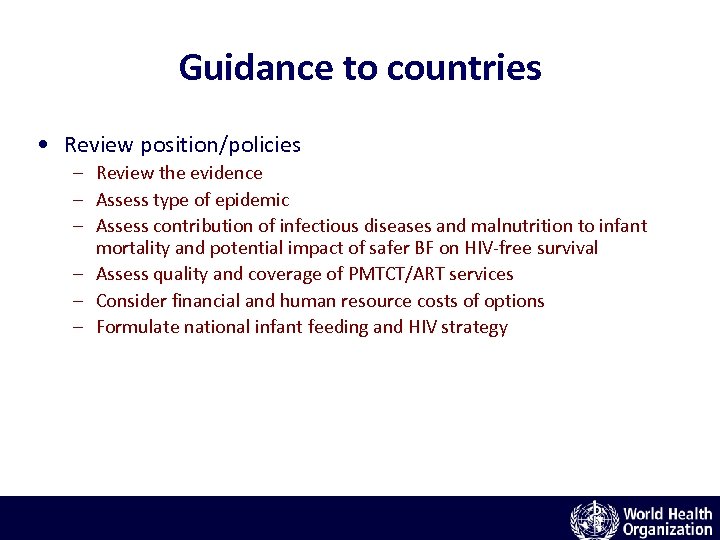 Guidance to countries • Review position/policies – Review the evidence – Assess type of epidemic – Assess contribution of infectious diseases and malnutrition to infant mortality and potential impact of safer BF on HIV-free survival – Assess quality and coverage of PMTCT/ART services – Consider financial and human resource costs of options – Formulate national infant feeding and HIV strategy
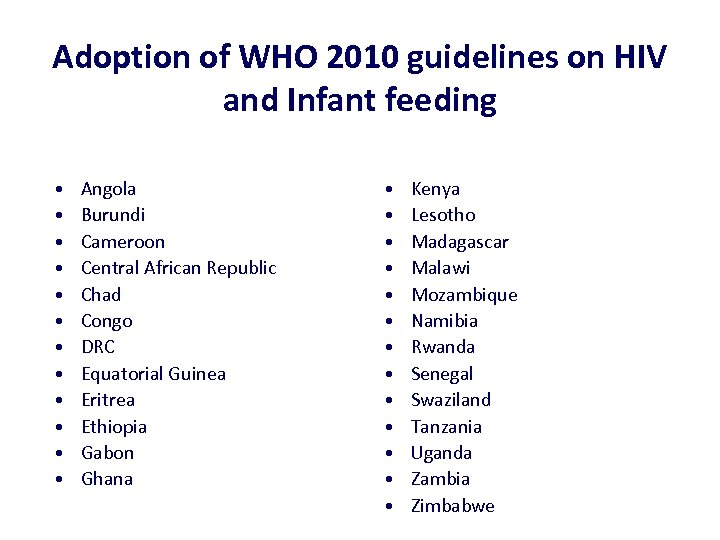 Adoption of WHO 2010 guidelines on HIV and Infant feeding • • • Angola Burundi Cameroon Central African Republic Chad Congo DRC Equatorial Guinea Eritrea Ethiopia Gabon Ghana • • • • Kenya Lesotho Madagascar Malawi Mozambique Namibia Rwanda Senegal Swaziland Tanzania Uganda Zambia Zimbabwe
 Why does WHO recommends that national authorities promote a single infant feeding strategy for all HIV-infected mothers and their infants?
 Guidance to countries • Review position/policies – Review the evidence – Assess type of epidemic – Assess contribution of infectious diseases and malnutrition to infant mortality and potential impact of safer BF on HIV-free survival – Assess quality and coverage of PMTCT/ART services – Consider financial and human resource costs of options – Formulate national infant feeding and HIV strategy • Plan implementation – Advocacy to health care workers, health professionals and communities to gain confidence for support in implementation – Training, commodities, – Local prototypes and plan for scale-up – Identify what national materials need to be revised – Funding applications e. g. Global fund
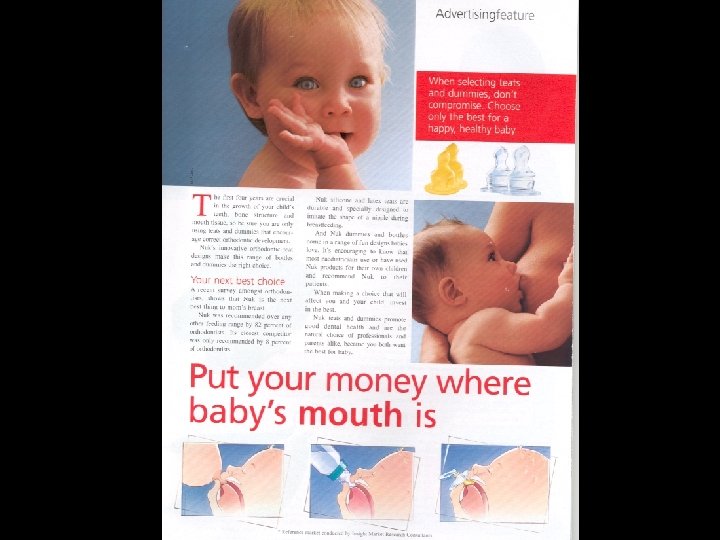
 What will influence the way mothers will feed their infants?
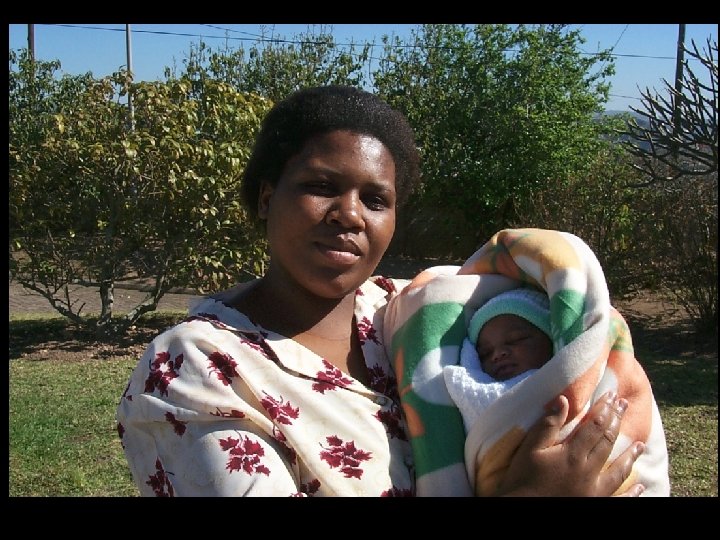
 Breastfeeding is not just nutrition

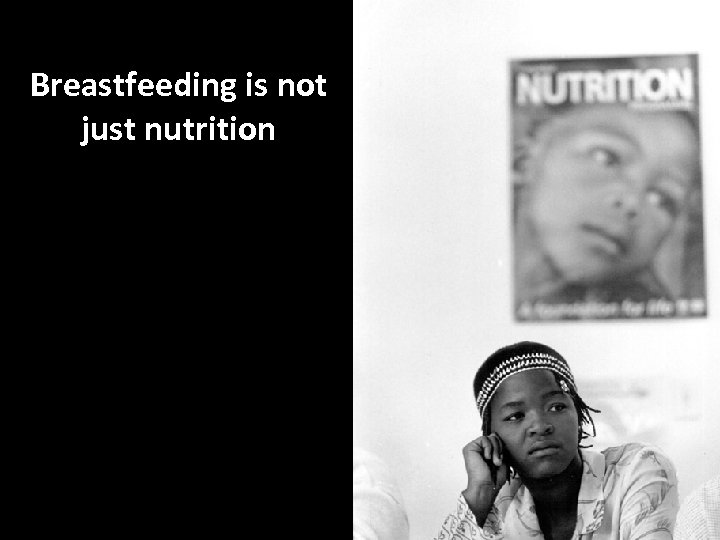
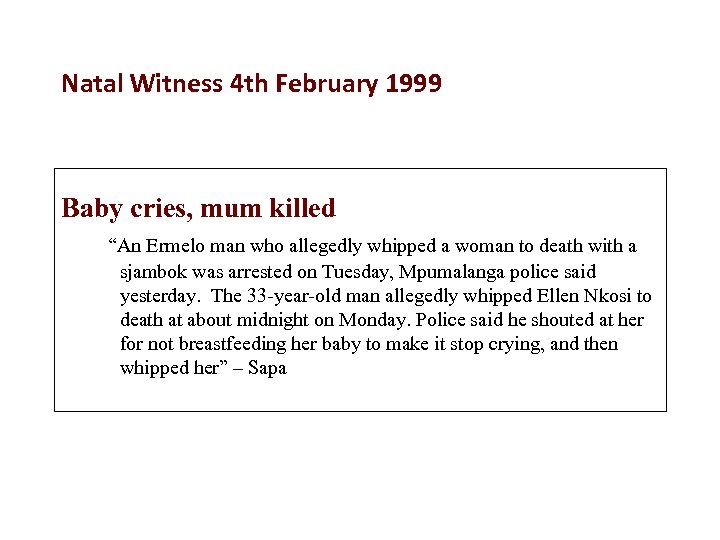 Natal Witness 4 th February 1999 Baby cries, mum killed “An Ermelo man who allegedly whipped a woman to death with a sjambok was arrested on Tuesday, Mpumalanga police said yesterday. The 33 -year-old man allegedly whipped Ellen Nkosi to death at about midnight on Monday. Police said he shouted at her for not breastfeeding her baby to make it stop crying, and then whipped her” – Sapa

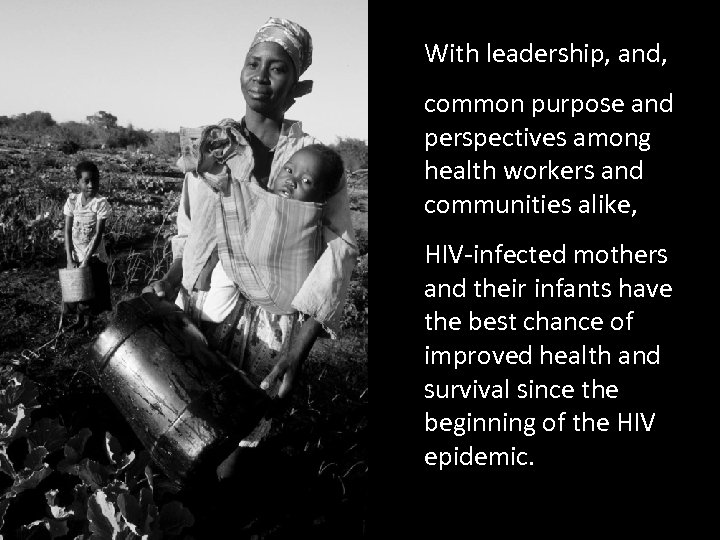 With leadership, and, common purpose and perspectives among health workers and communities alike, HIV-infected mothers and their infants have the best chance of improved health and survival since the beginning of the HIV epidemic.
 Acknowledgements • Colleagues at WHO Departments of CAH, MPS and HIV • The many researchers who have worked to understand these risks and opportunities • The mothers, infants and families who have been part of the research studies

 What wins? Effective interventions Risk factors Health system issues Gerry Boon
 Mma bana study 2 randomised arms and one observational Mothers not eligible for ART received either: lopinavir/ritonavir and combivir } for 6 m or abacavir/AZT/3 TC } while BF Mothers eligible for ART – outcomes observed Infant HIV transmission % 10 9 8 7 6 5 4 3 2 1 0 Mothers not eligible for Observational ART 1248 pregnant women referred to study sites. After counselling about study interventions, 110 (8. 8%) declined enrolment as preferred to give formula feeds.