 Скачать презентацию INF 5120 Modellbasert Systemutvikling n F 12
7418617ebc4217476e19052f16deef2b.ppt
- Количество слайдов: 57



INF 5120 – Modellbasert Systemutvikling n F 12: Model Driven Interoperability and Service Interoperability Lecture 11. 04. 2011 Arne-Jørgen Berre ICT
Agenda n Oblig 2 b) n Model Driven Interoperability n Intro and 2 articles on MDI – article 3, A Model-driven Approach to Interoperability in B 2 B Data Exchange, (Brice Morin, SINTEF) ICT
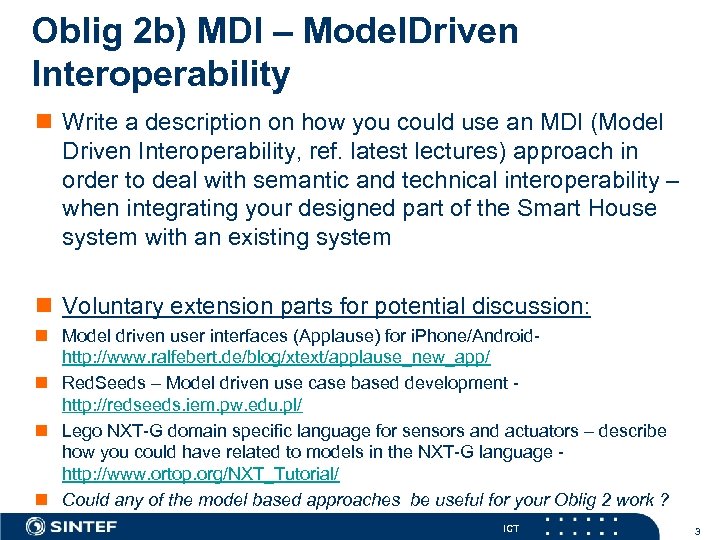
Oblig 2 b) MDI – Model. Driven Interoperability n Write a description on how you could use an MDI (Model Driven Interoperability, ref. latest lectures) approach in order to deal with semantic and technical interoperability – when integrating your designed part of the Smart House system with an existing system n Voluntary extension parts for potential discussion: n Model driven user interfaces (Applause) for i. Phone/Androidhttp: //www. ralfebert. de/blog/xtext/applause_new_app/ n Red. Seeds – Model driven use case based development http: //redseeds. iem. pw. edu. pl/ n Lego NXT-G domain specific language for sensors and actuators – describe how you could have related to models in the NXT-G language http: //www. ortop. org/NXT_Tutorial/ n Could any of the model based approaches be useful for your Oblig 2 work ? ICT 3
Article 1: Organizational interoperability supported through goal alignment with BMM and service collaboration with Soa. ML I-ESA 2009 paper Han Fenglin, NTNU Arne J. Berre, SINTEF Espen Møller, Oslo University Hospital 22. April. 2009 ICT 4
Article 2: Model Driven Service Interoperability through use of Semantic Annotations I-ESA 2009 paper Arne-Jørgen Berre Fangning Liu Jiucheng Xu Brian Elvesæter SINTEF ICT
Article 3: A Model-driven Approach to Interoperability in B 2 B Data Exchange I-WEI 2011 paper Dumitru Roman Brice Morin Arne-Jørgen Berre SINTEF ICT
Introduction n Organizations are collaborating with other organizations in order to meet their business objectives. n For business optimization, organizations re-structure their business realizations by creating new constellations within an enterprise and across the organizational border that need to interoperate. n Key issue: service network, who is to produce the service, who is to consume the service,business goals. n It seems BMM and Soa. ML can combine these issues through: n Align goals with service-centric approach. ICT
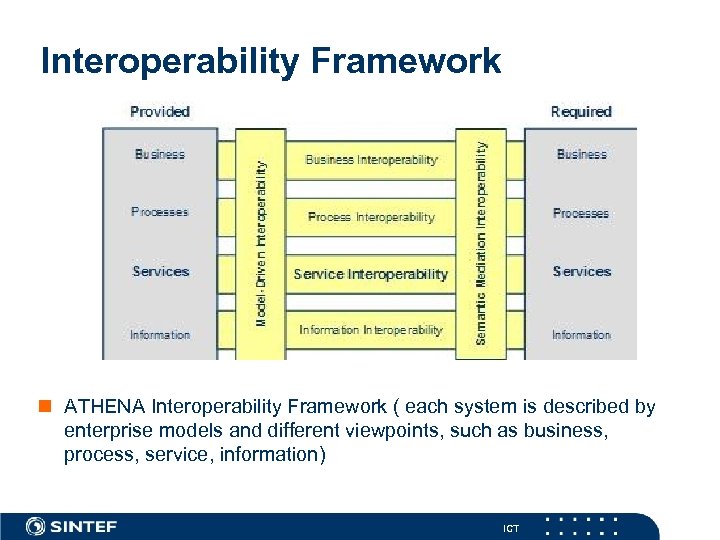
Interoperability Framework n ATHENA Interoperability Framework ( each system is described by enterprise models and different viewpoints, such as business, process, service, information) ICT
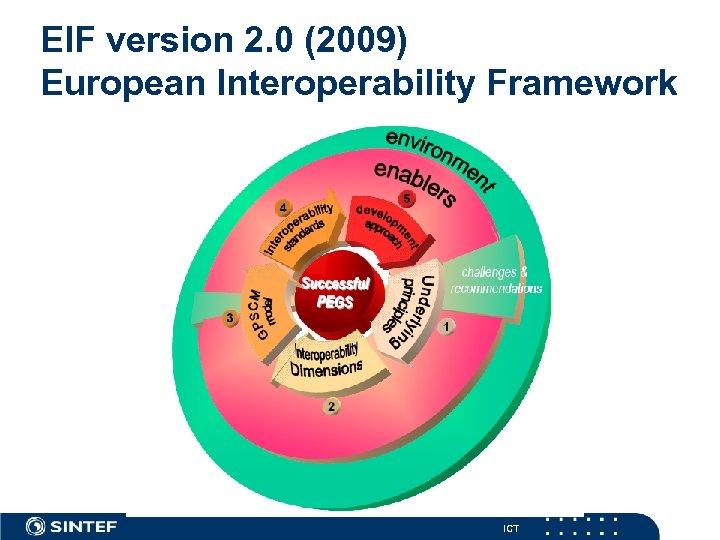
EIF version 2. 0 (2009) European Interoperability Framework ICT
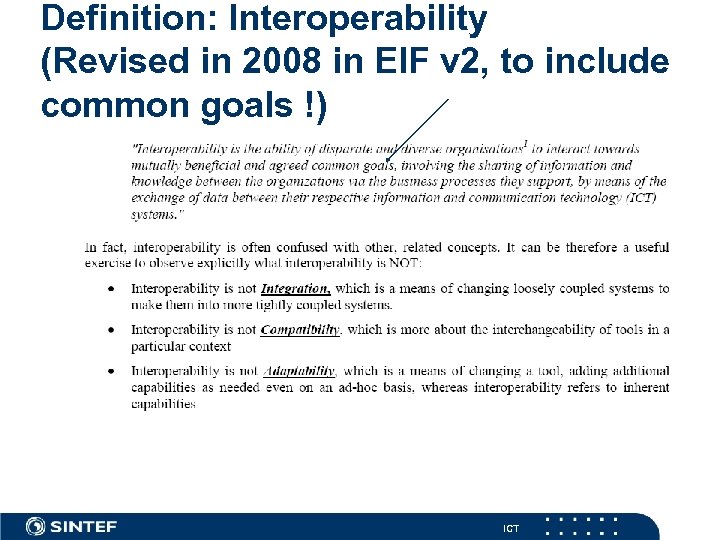
Definition: Interoperability (Revised in 2008 in EIF v 2, to include common goals !) ICT
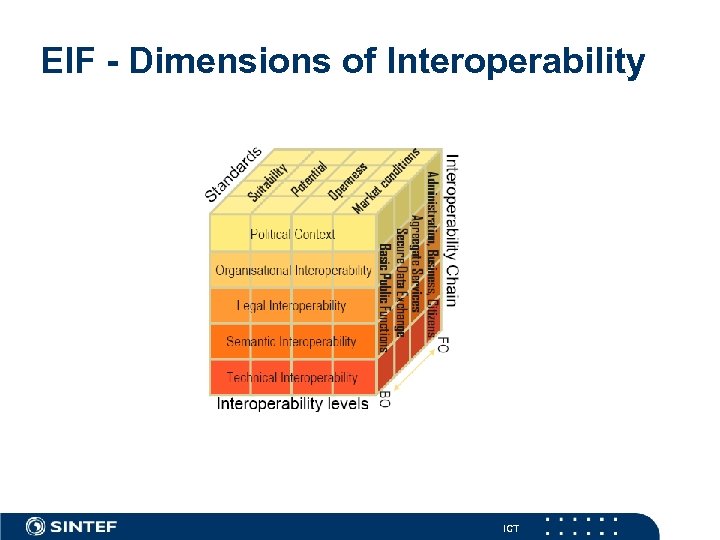
EIF - Dimensions of Interoperability ICT
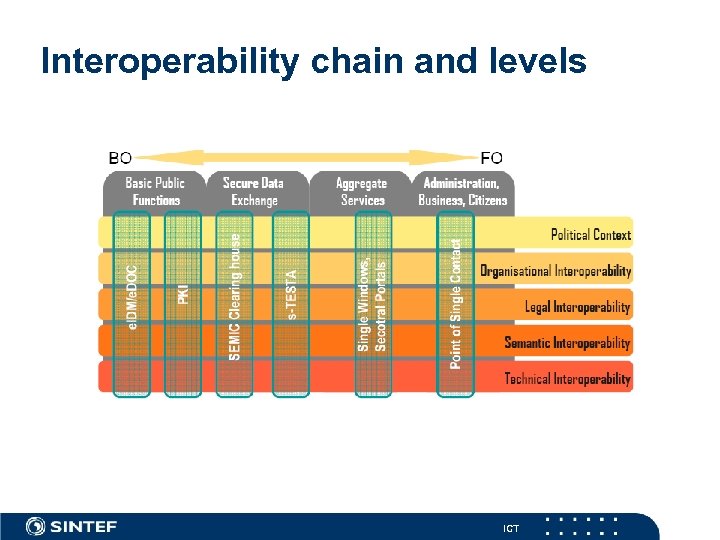
Interoperability chain and levels ICT
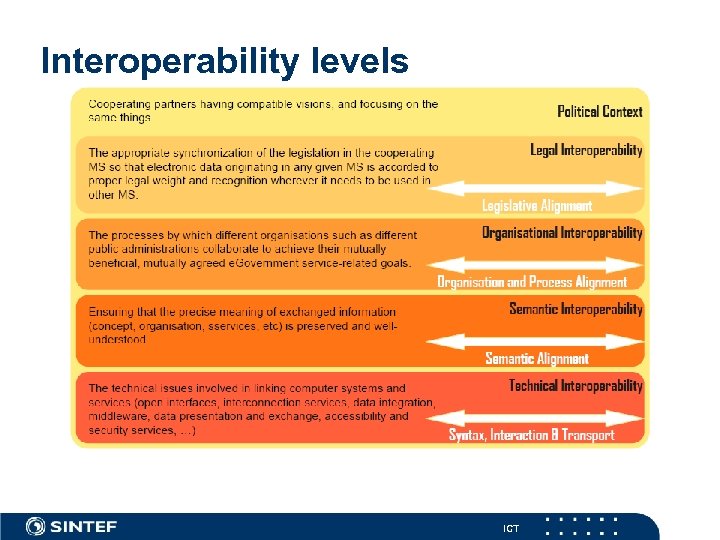
Interoperability levels ICT
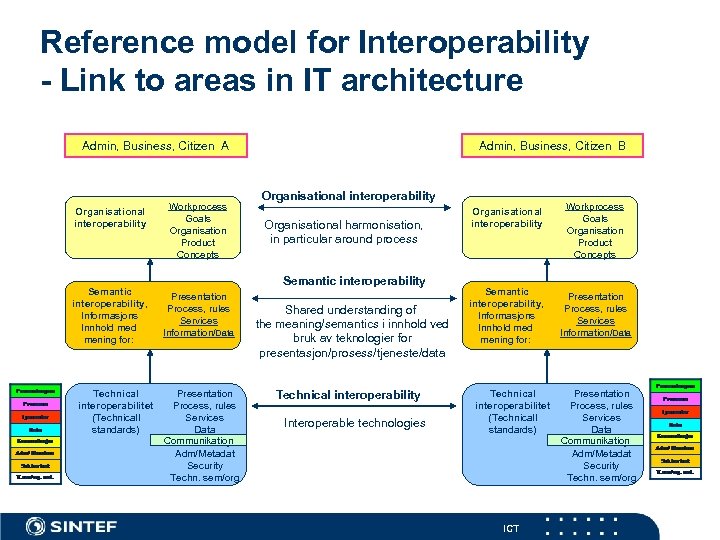
Reference model for Interoperability - Link to areas in IT architecture Admin, Business, Citizen A Organisational interoperability Semantic interoperability, Informasjons Innhold mening for: Technical interoperabilitet (Technicall standards) Workprocess Goals Organisation Product Concepts Admin, Business, Citizen B Organisational interoperability Organisational harmonisation, in particular around process Semantic interoperability Presentation Process, rules Services Information/Data Presentation Process, rules Services Data Communikation Communikasjon Adm/Metadat Security Techn. sem/org Shared understanding of the meaning/semantics i innhold ved bruk av teknologier for presentasjon/prosess/tjeneste/data Technical interoperability Interoperable technologies Organisational interoperability Semantic interoperability, Informasjons Innhold mening for: Technical interoperabilitet (Technicall standards) ICT Workprocess Goals Organisation Product Concepts Presentation Process, rules Services Information/Data Presentation Process, rules Services Data Communikation Communikasjon Adm/Metadat Security Techn. sem/org
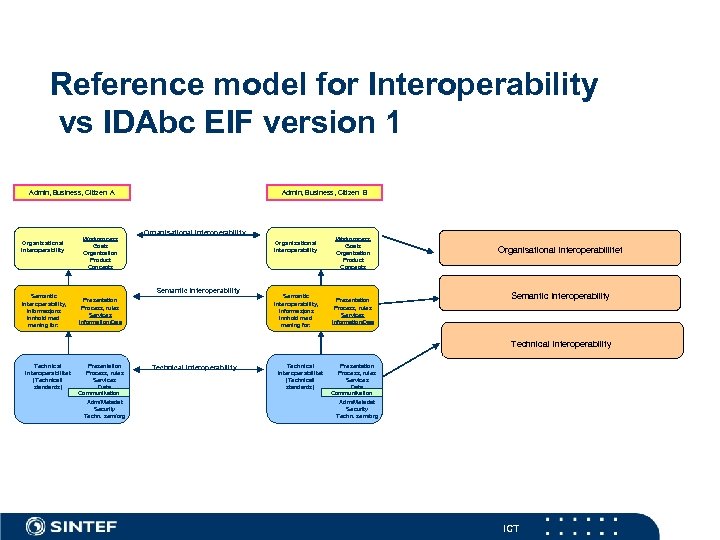
Reference model for Interoperability vs IDAbc EIF version 1 Admin, Business, Citizen A Organisational interoperability Semantic interoperability, Informasjons Innhold mening for: Workprocess Goals Organisation Product Concepts Admin, Business, Citizen B Organisational interoperability Semantic interoperability Presentation Process, rules Services Information/Data Semantic interoperability, Informasjons Innhold mening for: Workprocess Goals Organisation Product Concepts Presentation Process, rules Services Information/Data Organisational Interoperablilitet Semantic Interoperability Technical interoperabilitet (Technicall standards) Presentation Process, rules Services Data Communikation Communikasjon Adm/Metadat Security Techn. sem/org Technical interoperability Technical interoperabilitet (Technicall standards) Presentation Process, rules Services Data Communikation Communikasjon Adm/Metadat Security Techn. sem/org ICT
Model Driven Interoperability ICT
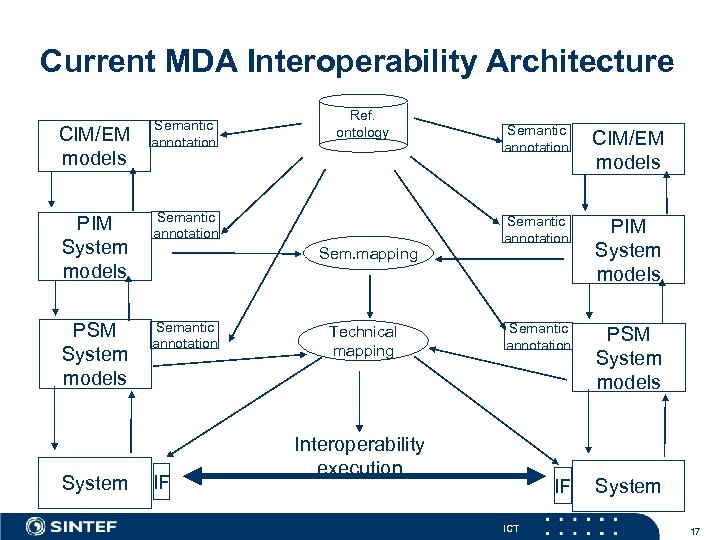
Current MDA Interoperability Architecture CIM/EM models Semantic annotation PIM System models Semantic annotation PSM System models Semantic annotation Ref. ontology System Sem. mapping IF Technical mapping Semantic annotation CIM/EM models Semantic annotation PIM System models Semantic annotation PSM System models IF System Interoperability execution ICT 17
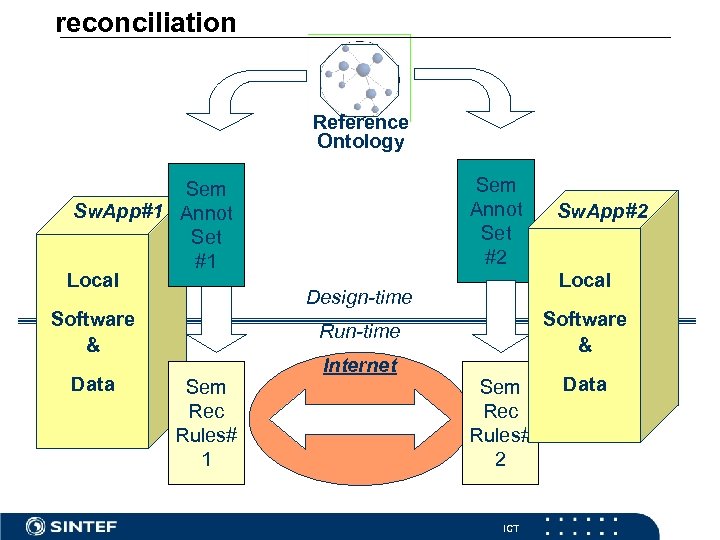
reconciliation Reference Ontology Sem Sw. App#1 Annot Set #1 Local Software & Data Sem Annot Set #2 Local Design-time Software & Run-time Internet Sem Rec Rules# 1 Reconciliation Sw. App#2 Sem Rec Rules# 2 ICT Data
Contents n Introduction n Description of EMPOWER and MEMPOWER n EMPOWER Project n MEMPOWER Project n Comparison Semantic mappings n Conclusion & Further work ICT
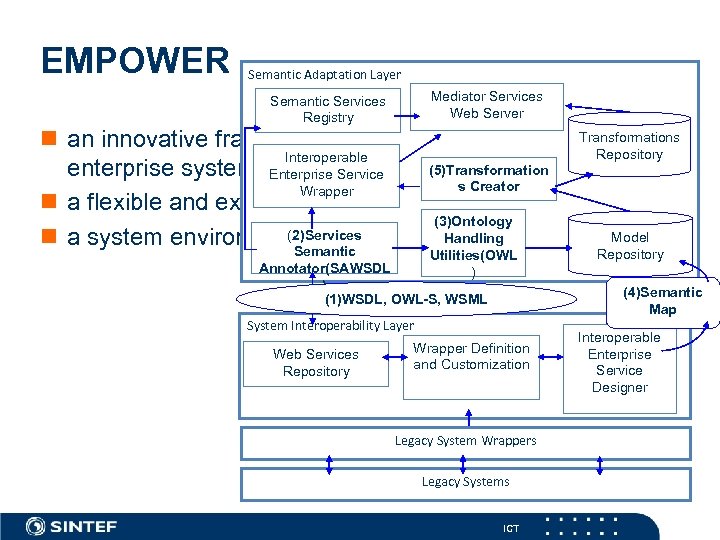
EMPOWER Semantic Adaptation Layer Mediator Services Web Server Semantic Services Registry Transformations n an innovative framework for interoperability between Repository Interoperable (5)Transformation enterprise systems. Enterprise Service s Creator Wrapper n a flexible and extensible architecture (3)Ontology (2)Services Model Handling n a system environment Semantic Utilities(OWL ) Annotator(SAWSDL ) (1)WSDL, OWL-S, WSML (4)Semantic Map System Interoperability Layer Web Services Repository Wrapper Definition and Customization Legacy System Wrappers Legacy Systems ICT Interoperable Enterprise Service Designer
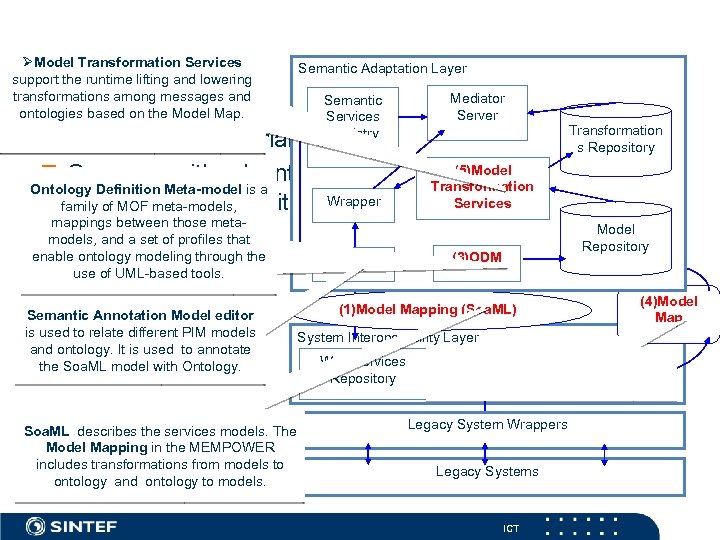
MEMPOWER ØModel Transformation Services support the runtime lifting and lowering transformations among messages and ontologies based on the Model Map. Semantic Adaptation Layer Semantic Services Registry Mediator Server Transformation n a Model Driven variant of EMPOWER, s Repository (5)Model n Compare with advantages and disadvantages of Model Transformation Ontology Definition Meta-model is a Services Driven Interoperability Wrapper family of MOF meta-models, mappings between those metamodels, and a set of profiles that enable ontology modeling through the use of UML-based tools. Semantic Annotation Model editor is used to relate different PIM models and ontology. It is used to annotate the Soa. ML model with Ontology. Soa. ML describes the services models. The Model Mapping in the MEMPOWER includes transformations from models to ontology and ontology to models. (2)SAM Model Repository (3)ODM (1)Model Mapping (Soa. ML) (4)Model Map System Interoperability Layer Web Services Repository Wrapper Semaphore ØModel Map stores mapping rules. Legacy System Wrappers Legacy Systems ICT
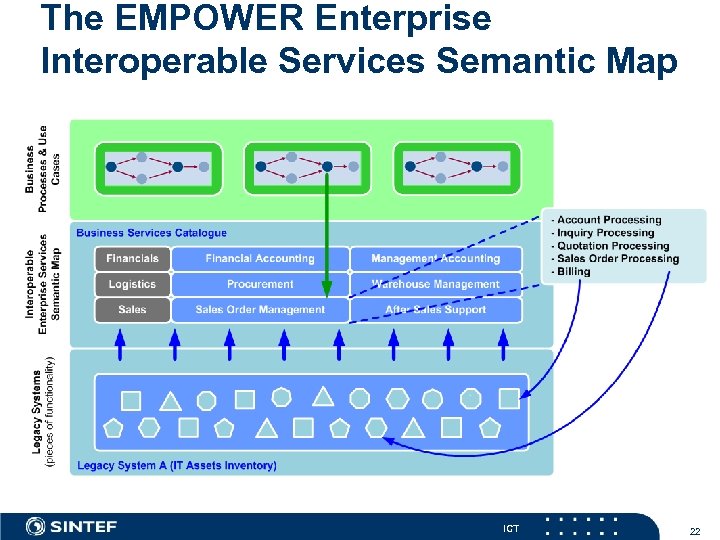
The EMPOWER Enterprise Interoperable Services Semantic Map ICT 22
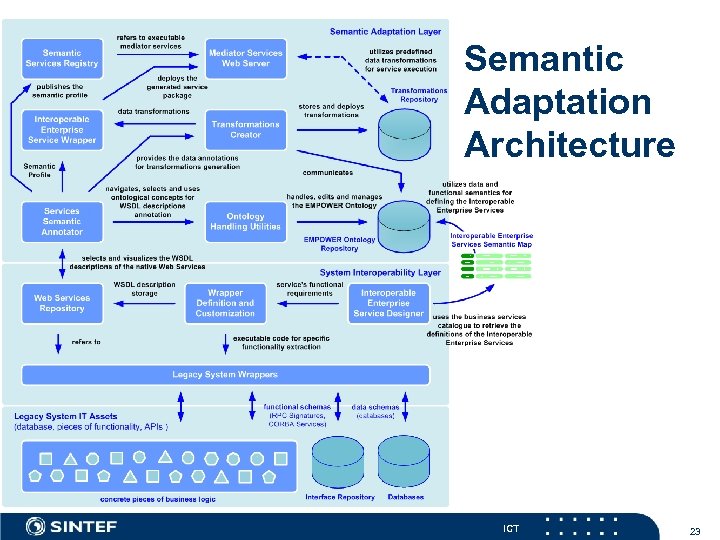
Semantic Adaptation Architecture ICT 23
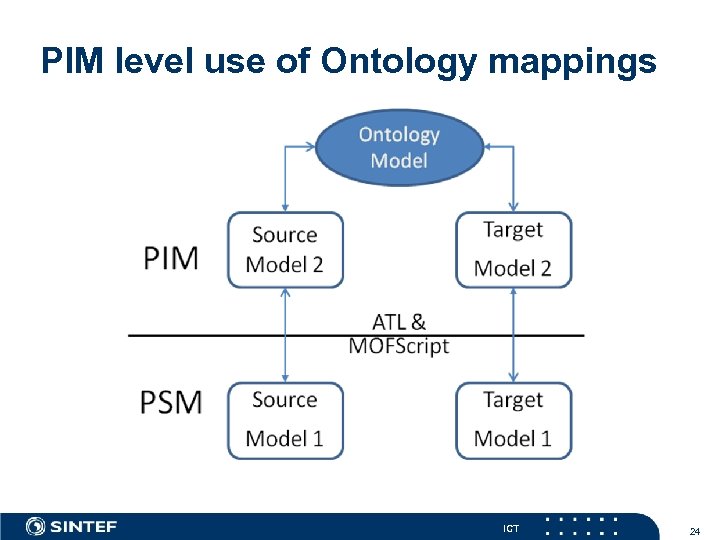
PIM level use of Ontology mappings ICT 24
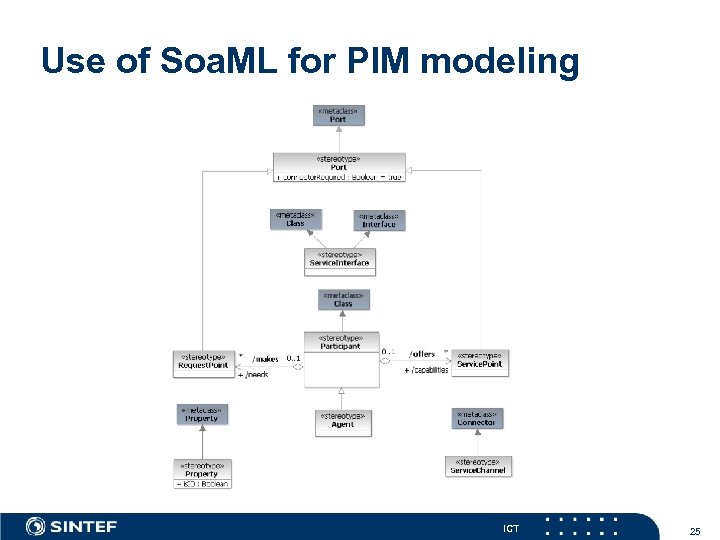
Use of Soa. ML for PIM modeling ICT 25
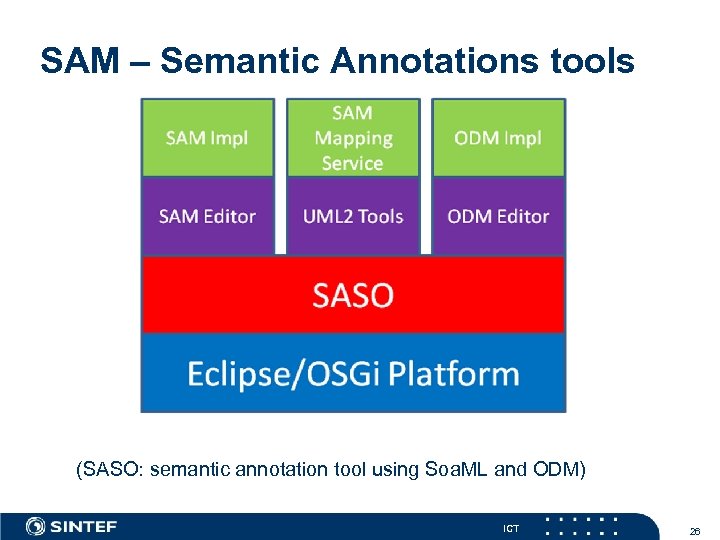
SAM – Semantic Annotations tools (SASO: semantic annotation tool using Soa. ML and ODM) ICT 26
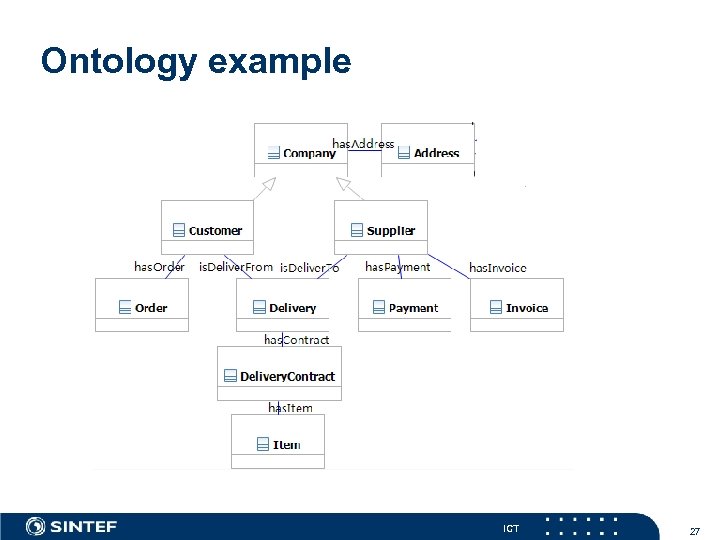
Ontology example ICT 27
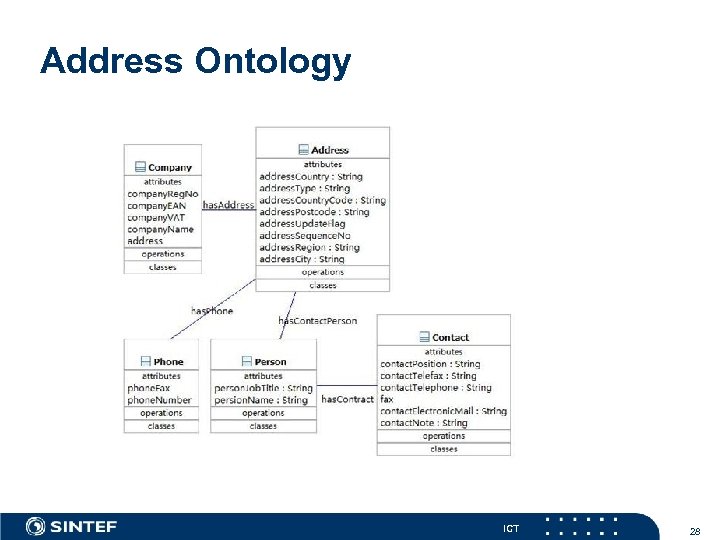
Address Ontology ICT 28
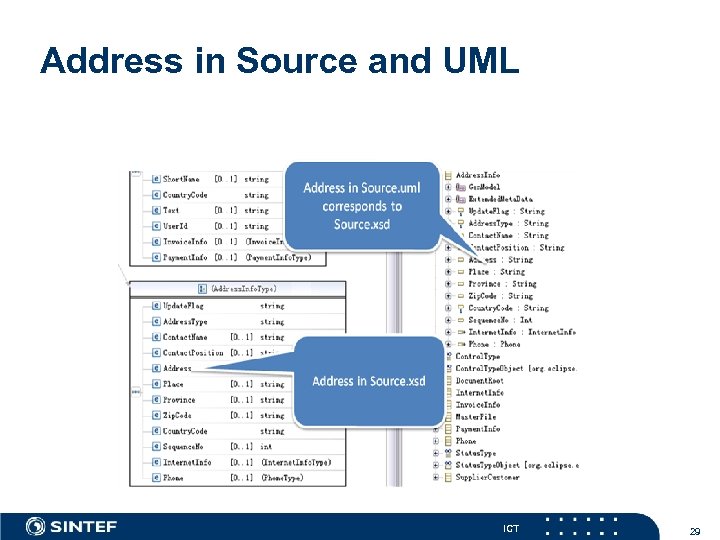
Address in Source and UML ICT 29
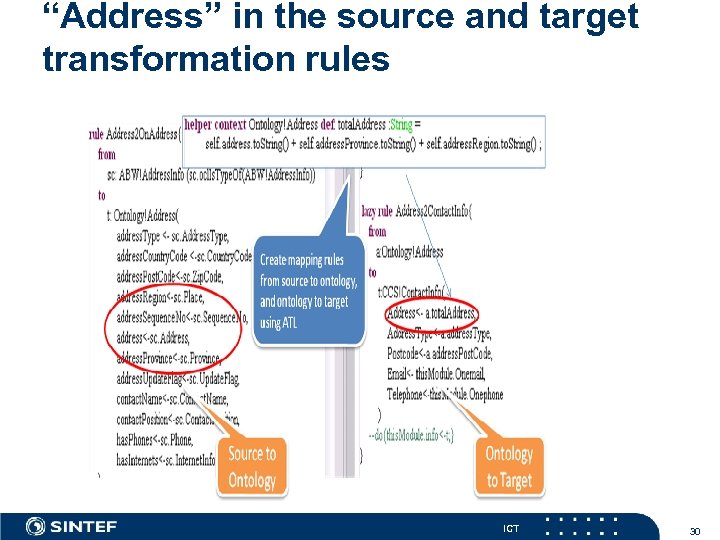
“Address” in the source and target transformation rules ICT 30
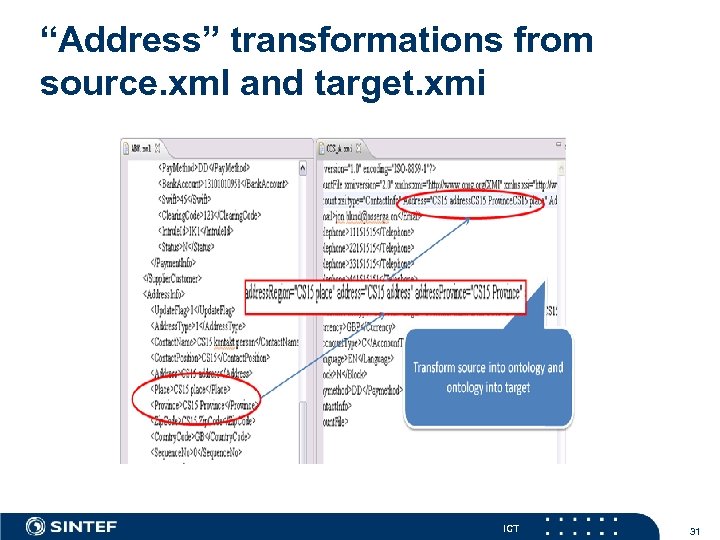
“Address” transformations from source. xml and target. xmi ICT 31
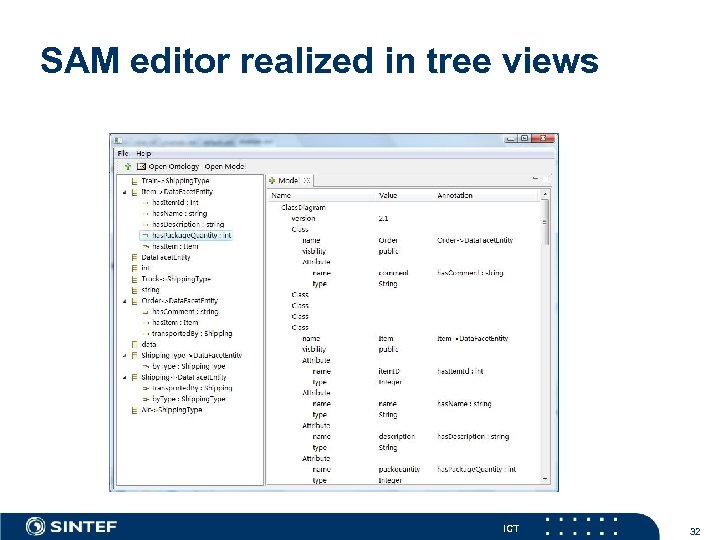
SAM editor realized in tree views ICT 32
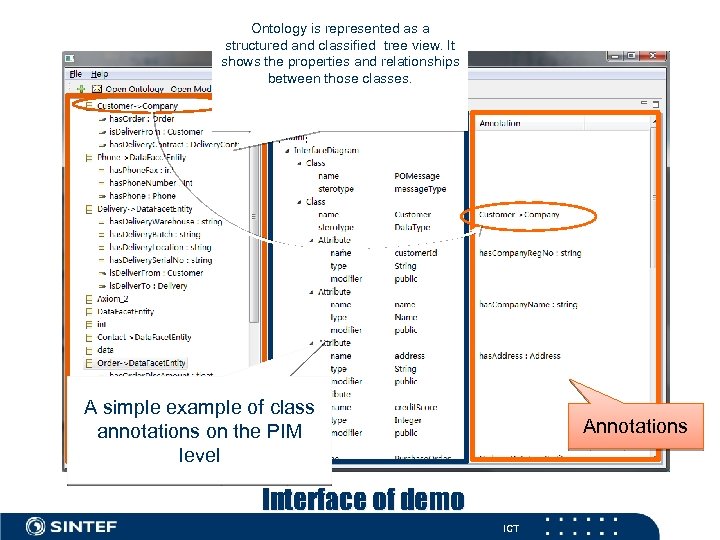
Ontology is represented as a structured and classified tree view. It shows the properties and relationships between those classes. A simple example of class annotations on the PIM level Annotations Interface of demo ICT
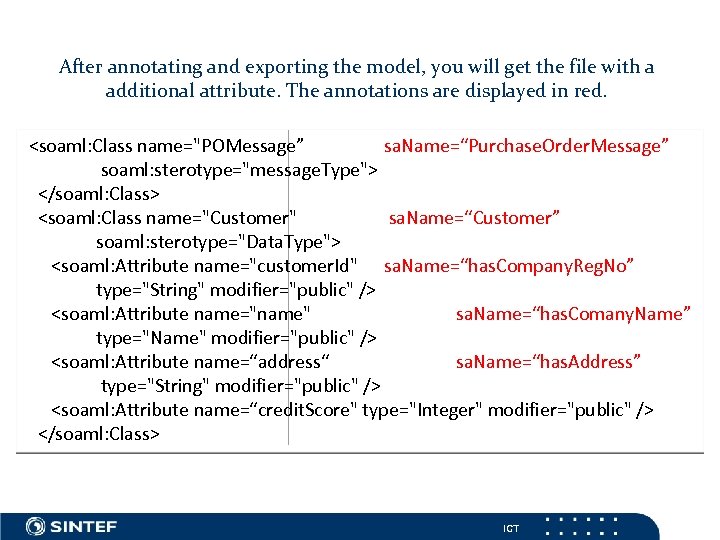
After annotating and exporting the model, you will get the file with a additional attribute. The annotations are displayed in red. <soaml: Class name="POMessage” sa. Name=“Purchase. Order. Message” soaml: sterotype="message. Type"> </soaml: Class> <soaml: Class name="Customer" sa. Name=“Customer” soaml: sterotype="Data. Type"> <soaml: Attribute name="customer. Id" sa. Name=“has. Company. Reg. No” type="String" modifier="public" /> <soaml: Attribute name="name" sa. Name=“has. Comany. Name” type="Name" modifier="public" /> <soaml: Attribute name=“address“ sa. Name=“has. Address” type="String" modifier="public" /> <soaml: Attribute name=“credit. Score" type="Integer" modifier="public" /> </soaml: Class> ICT
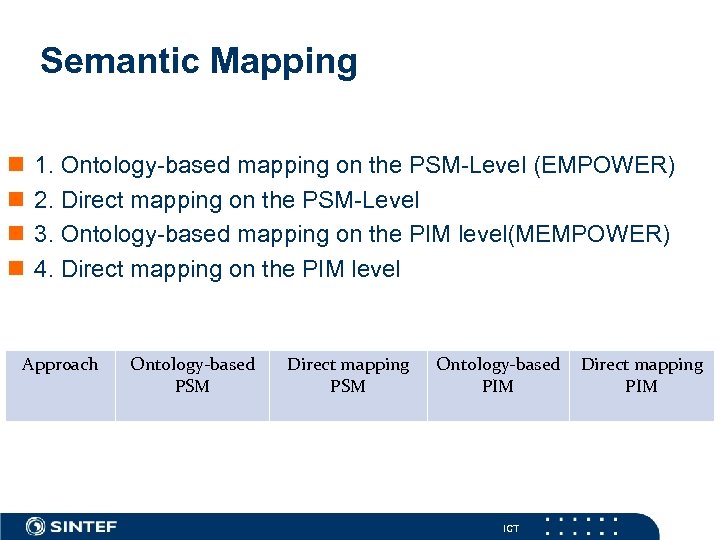
Semantic Mapping n n 1. Ontology-based mapping on the PSM-Level (EMPOWER) 2. Direct mapping on the PSM-Level 3. Ontology-based mapping on the PIM level(MEMPOWER) 4. Direct mapping on the PIM level 1 Approach 2 3 4 Ontology-based PSM Direct mapping PSM Ontology-based PIM Direct mapping PIM ICT
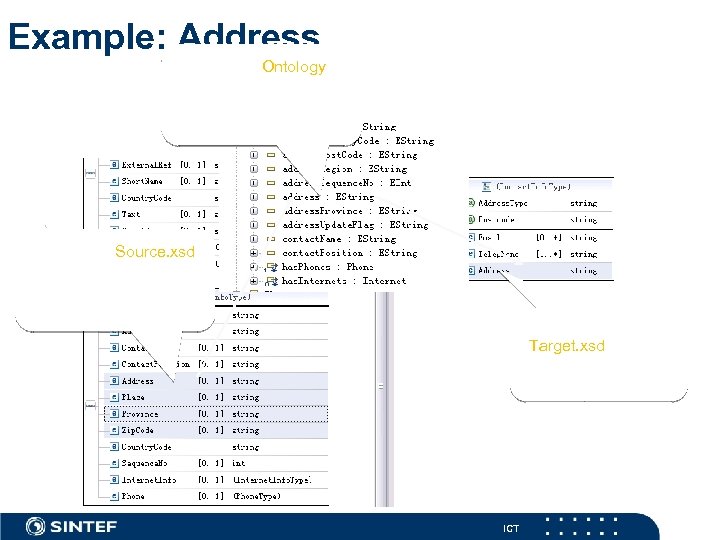
Example: Address in Ontology is divided into three elements: Address, Region, and Province Address in Source. xsd is divided into three elements: Address, Place, and Province Address in Target. xsd has only one elements: Address ICT
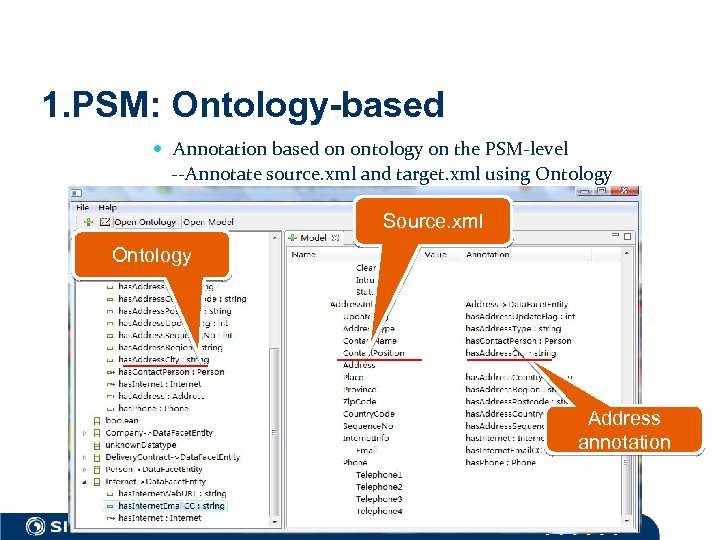
1. PSM: Ontology-based Annotation based on ontology on the PSM-level --Annotate source. xml and target. xml using Ontology Source. xml Ontology Address annotation ICT
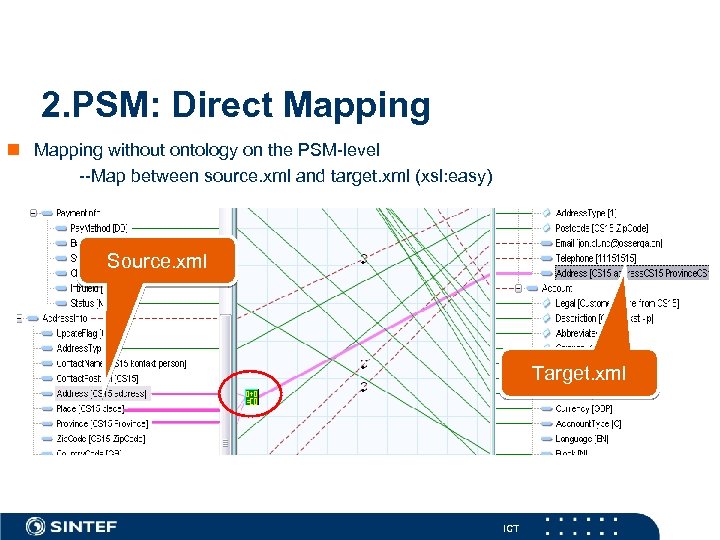
2. PSM: Direct Mapping n Mapping without ontology on the PSM-level --Map between source. xml and target. xml (xsl: easy) Source. xml Target. xml ICT
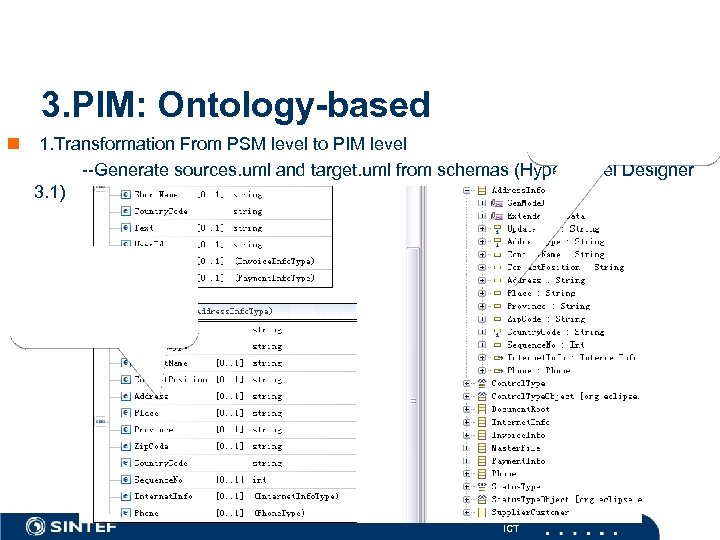
3. PIM: Ontology-based Address in Source. uml corresponds to Source. xsd n 1. Transformation From PSM level to PIM level --Generate sources. uml and target. uml from schemas (Hyper. Model Designer 3. 1) Address in Source. xsd ICT
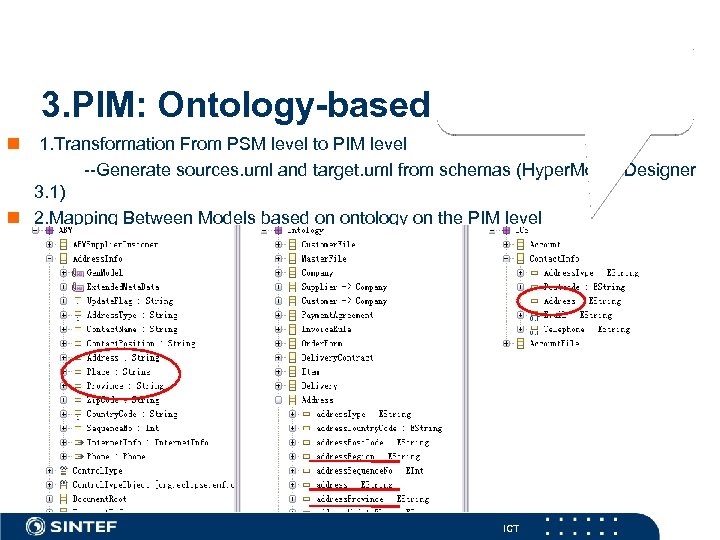
3. PIM: Ontology-based Step 1: Generate meta-models of models and ontology using EMF n 1. Transformation From PSM level to PIM level --Generate sources. uml and target. uml from schemas (Hyper. Model Designer 3. 1) n 2. Mapping Between Models based on ontology on the PIM level ICT
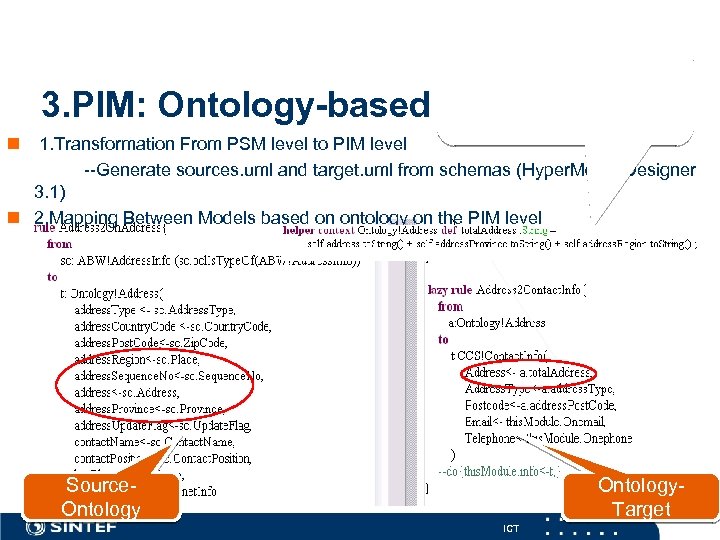
3. PIM: Ontology-based Step 2: Create mapping rules from source to ontology, and ontology to target using ATL n 1. Transformation From PSM level to PIM level --Generate sources. uml and target. uml from schemas (Hyper. Model Designer 3. 1) n 2. Mapping Between Models based on ontology on the PIM level Source. Ontology. Target ICT
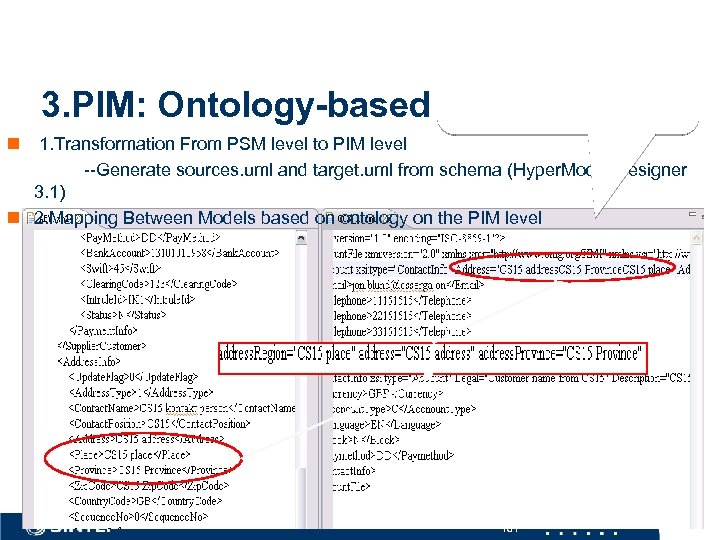
3. PIM: Ontology-based Step 3: Transform source into ontology and ontology into target n 1. Transformation From PSM level to PIM level --Generate sources. uml and target. uml from schema (Hyper. Model Designer 3. 1) n 2. Mapping Between Models based on ontology on the PIM level ICT
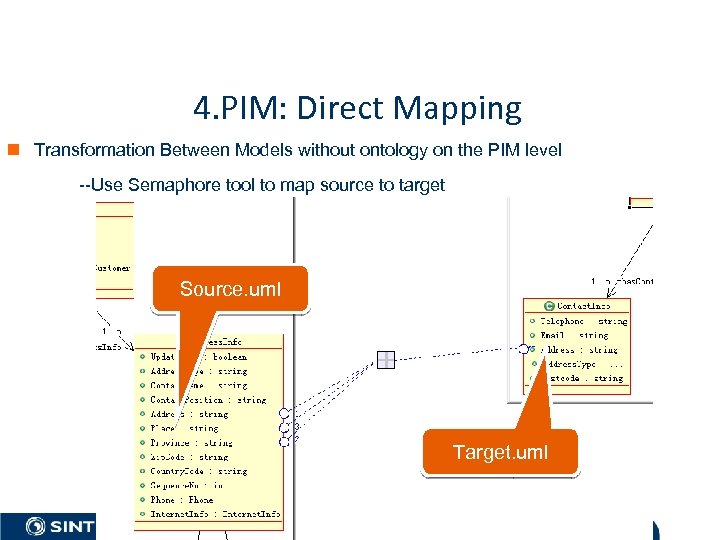
4. PIM: Direct Mapping n Transformation Between Models without ontology on the PIM level --Use Semaphore tool to map source to target Source. uml Target. uml ICT
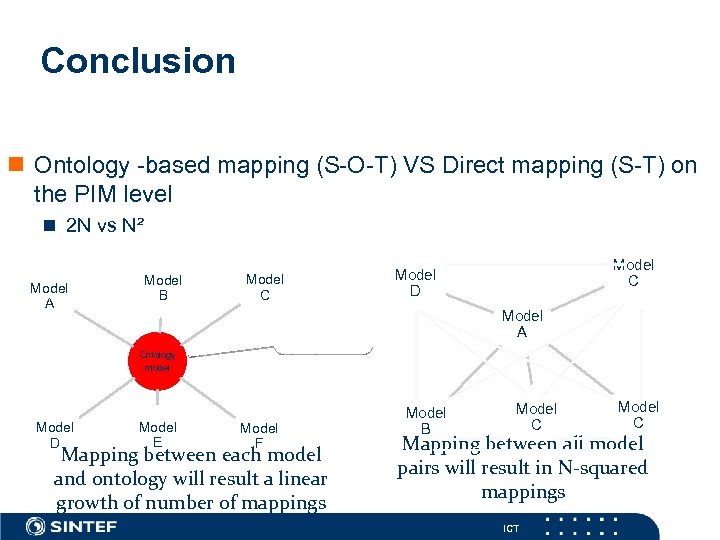
Conclusion n Ontology -based mapping (S-O-T) VS Direct mapping (S-T) on the PIM level n 2 N vs N² Model A Model B Model C Model D Model C Model A Standard Ontology model Model D Model E Model F Mapping between each model and ontology will result a linear growth of number of mappings Model B Model C Mapping between all model pairs will result in N-squared mappings ICT
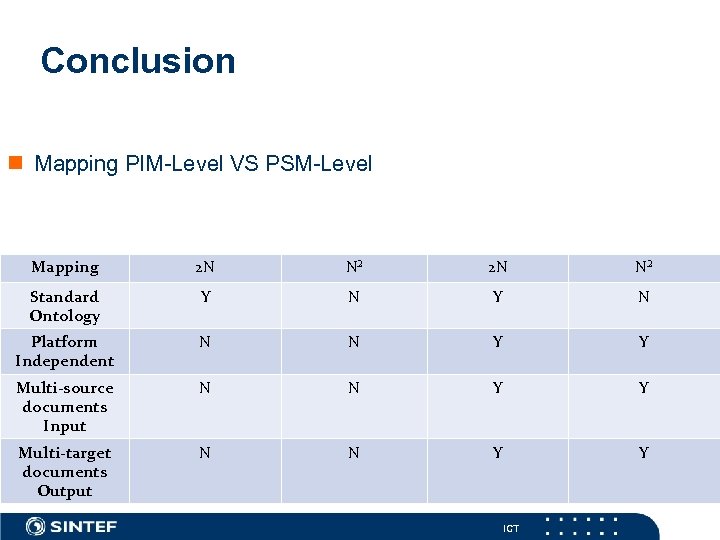
Conclusion n Mapping PIM-Level VS PSM-Level Ontology-based PSM Direct mapping PSM Ontology-based PIM Direct mapping PIM Mapping 2 N N² Standard Ontology Y N Platform Independent N N Y Y Multi-source documents Input N N Y Y Multi-target documents Output N N Y Y ICT
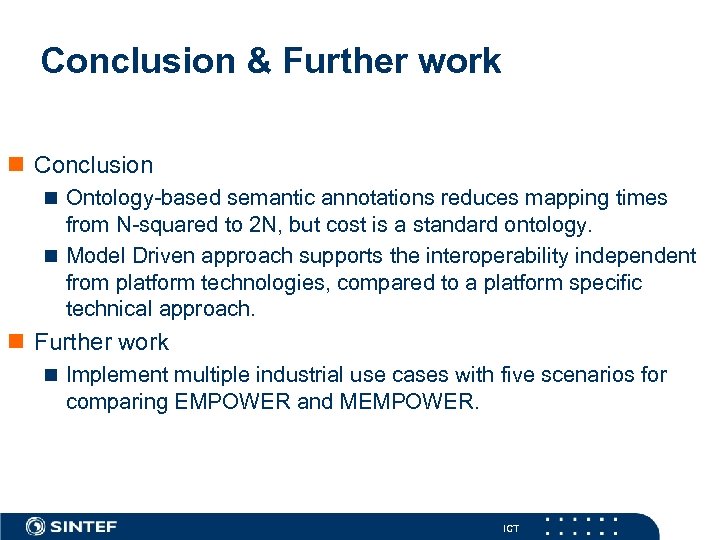
Conclusion & Further work n Conclusion n Ontology-based semantic annotations reduces mapping times from N-squared to 2 N, but cost is a standard ontology. n Model Driven approach supports the interoperability independent from platform technologies, compared to a platform specific technical approach. n Further work n Implement multiple industrial use cases with five scenarios for comparing EMPOWER and MEMPOWER. ICT
Another example of Ontologybased Service: Message Reconciliation ICT
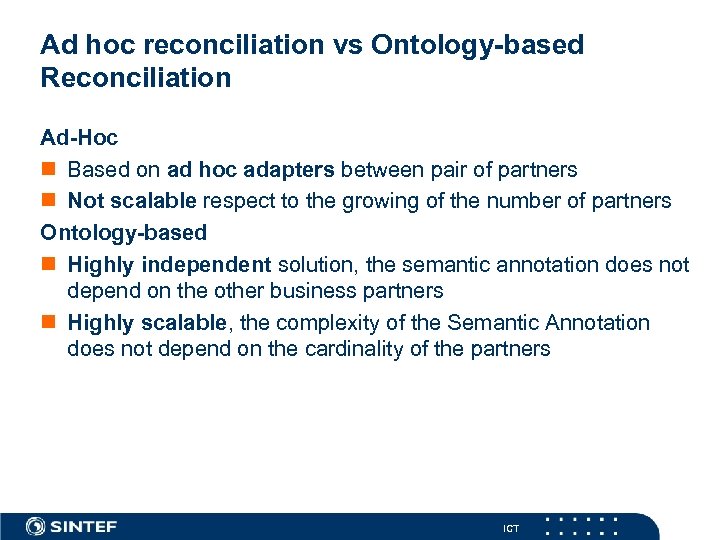
Ad hoc reconciliation vs Ontology-based Reconciliation Ad-Hoc n Based on ad hoc adapters between pair of partners n Not scalable respect to the growing of the number of partners Ontology-based n Highly independent solution, the semantic annotation does not depend on the other business partners n Highly scalable, the complexity of the Semantic Annotation does not depend on the cardinality of the partners ICT
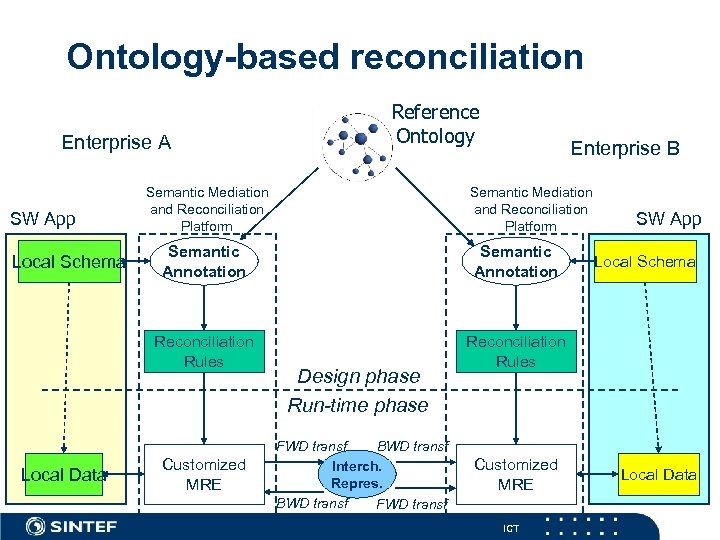
Ontology-based reconciliation Enterprise A SW App Reference Ontology Semantic Mediation and Reconciliation Platform Enterprise B Semantic Mediation and Reconciliation Platform Local Data Semantic Annotation Reconciliation Rules Local Schema SW App Reconciliation Rules Customized MRE Design phase Run-time phase FWD transf BWD transf Interch. Repres. BWD transf FWD transf Customized MRE ICT Local Schema Local Data
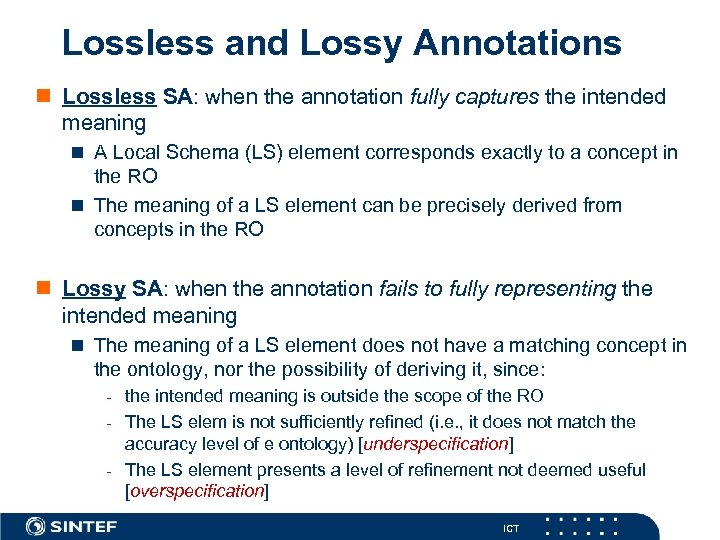
Lossless and Lossy Annotations n Lossless SA: when the annotation fully captures the intended meaning n A Local Schema (LS) element corresponds exactly to a concept in the RO n The meaning of a LS element can be precisely derived from concepts in the RO n Lossy SA: when the annotation fails to fully representing the intended meaning n The meaning of a LS element does not have a matching concept in the ontology, nor the possibility of deriving it, since: - the intended meaning is outside the scope of the RO The LS elem is not sufficiently refined (i. e. , it does not match the accuracy level of e ontology) [underspecification] The LS element presents a level of refinement not deemed useful [overspecification] ICT
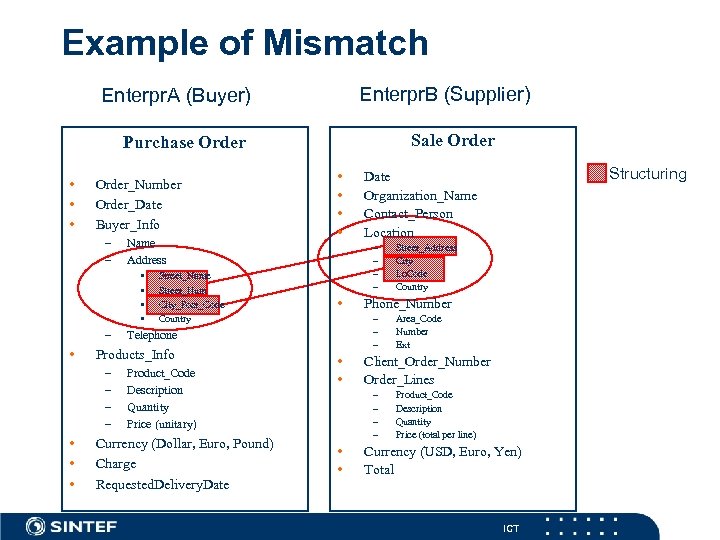
Example of Mismatch Enterpr. B (Supplier) Enterpr. A (Buyer) Sale Order Purchase Order • • • Order_Number Order_Date Buyer_Info – – Name Address • • – • • Product_Code Description Quantity Price (unitary) Currency (Dollar, Euro, Pound) Charge Requested. Delivery. Date Area_Code Number Ext Client_Order_Number Order_Lines – – • • Street_Address City Lo. Code Country Phone_Number – – – • • Structuring Date Organization_Name Contact_Person Location – – Telephone Products_Info – – • • • Street_Name Street_Num City_Post_Code Country • • Product_Code Description Quantity Price (total per line) Currency (USD, Euro, Yen) Total ICT
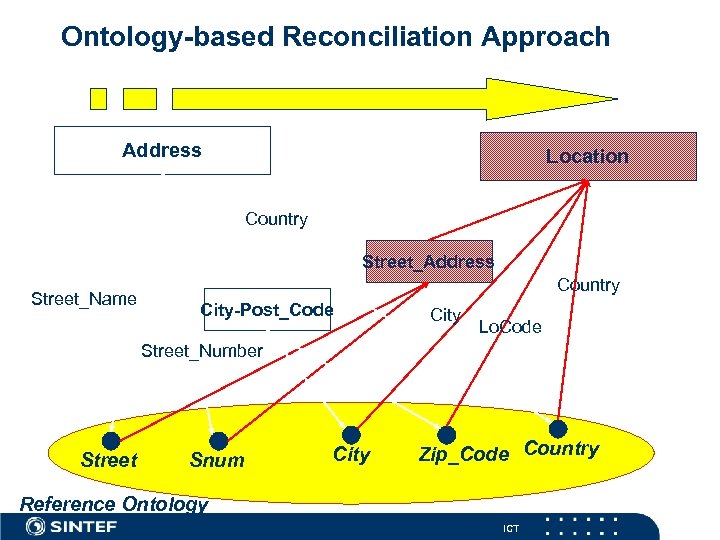
Ontology-based Reconciliation Approach Address Location Country Street_Address Street_Name Country City-Post_Code City Lo. Code Street_Number Street Snum City Zip_Code Country Reference Ontology ICT
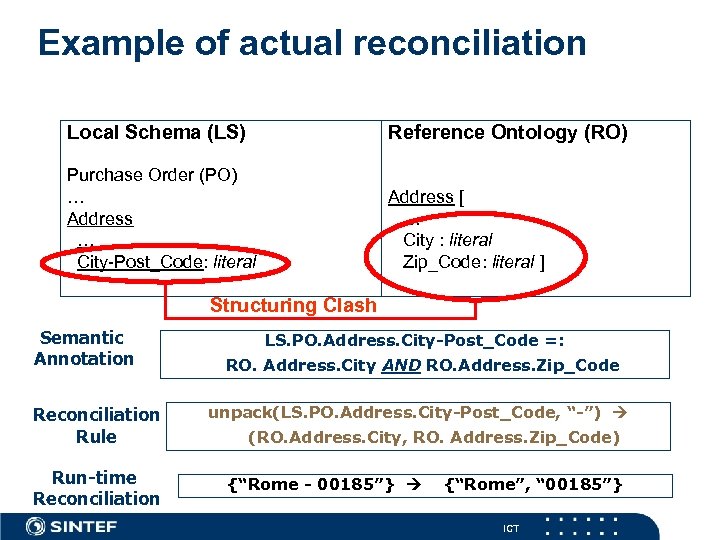
Example of actual reconciliation Local Schema (LS) Reference Ontology (RO) Purchase Order (PO) … Address … City-Post_Code: literal Address [ … City : literal Zip_Code: literal ] Structuring Clash Semantic Annotation Reconciliation Rule Run-time Reconciliation LS. PO. Address. City-Post_Code =: RO. Address. City AND RO. Address. Zip_Code unpack(LS. PO. Address. City-Post_Code, “-”) (RO. Address. City, RO. Address. Zip_Code) {“Rome - 00185”} {“Rome”, “ 00185”} ICT
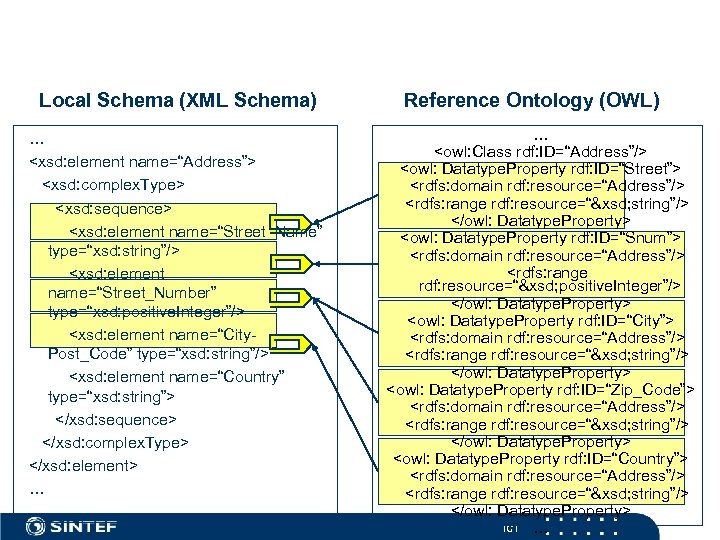
Local Schema (XML Schema) … <xsd: element name=“Address”> <xsd: complex. Type> <xsd: sequence> <xsd: element name=“Street_Name” type=“xsd: string”/> <xsd: element name=“Street_Number” type=“xsd: positive. Integer”/> <xsd: element name=“City. Post_Code” type=“xsd: string”/> <xsd: element name=“Country” type=“xsd: string”> </xsd: sequence> </xsd: complex. Type> </xsd: element> … Reference Ontology (OWL) … <owl: Class rdf: ID=“Address”/> <owl: Datatype. Property rdf: ID=“Street”> <rdfs: domain rdf: resource=“Address”/> <rdfs: range rdf: resource=“&xsd; string”/> </owl: Datatype. Property> <owl: Datatype. Property rdf: ID=“Snum”> <rdfs: domain rdf: resource=“Address”/> <rdfs: range rdf: resource=“&xsd; positive. Integer”/> </owl: Datatype. Property> <owl: Datatype. Property rdf: ID=“City”> <rdfs: domain rdf: resource=“Address”/> <rdfs: range rdf: resource=“&xsd; string”/> </owl: Datatype. Property> <owl: Datatype. Property rdf: ID=“Zip_Code”> <rdfs: domain rdf: resource=“Address”/> <rdfs: range rdf: resource=“&xsd; string”/> </owl: Datatype. Property> <owl: Datatype. Property rdf: ID=“Country”> <rdfs: domain rdf: resource=“Address”/> <rdfs: range rdf: resource=“&xsd; string”/> </owl: Datatype. Property> ICT …
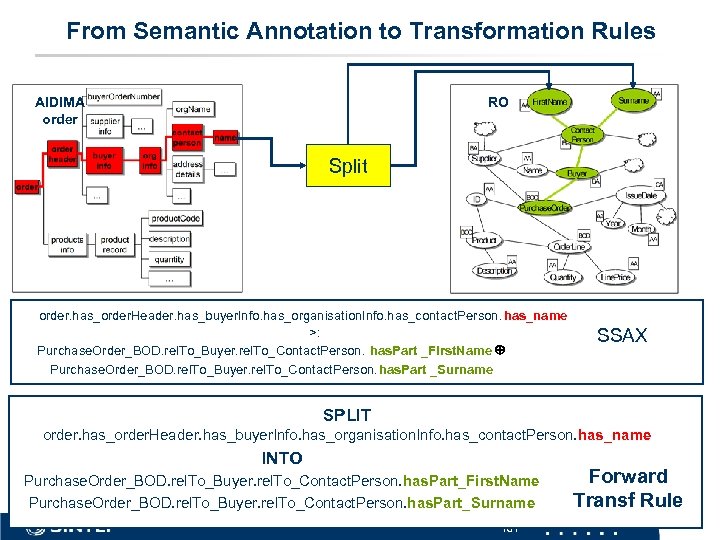
From Semantic Annotation to Transformation Rules AIDIMA order RO Split order. has_order. Header. has_buyer. Info. has_organisation. Info. has_contact. Person. has_name >: Purchase. Order_BOD. rel. To_Buyer. rel. To_Contact. Person. has. Part _First. Name Å Purchase. Order_BOD. rel. To_Buyer. rel. To_Contact. Person. has. Part _Surname SSAX SPLIT order. has_order. Header. has_buyer. Info. has_organisation. Info. has_contact. Person. has_name INTO Purchase. Order_BOD. rel. To_Buyer. rel. To_Contact. Person. has. Part_First. Name Purchase. Order_BOD. rel. To_Buyer. rel. To_Contact. Person. has. Part_Surname ICT Forward Transf Rule
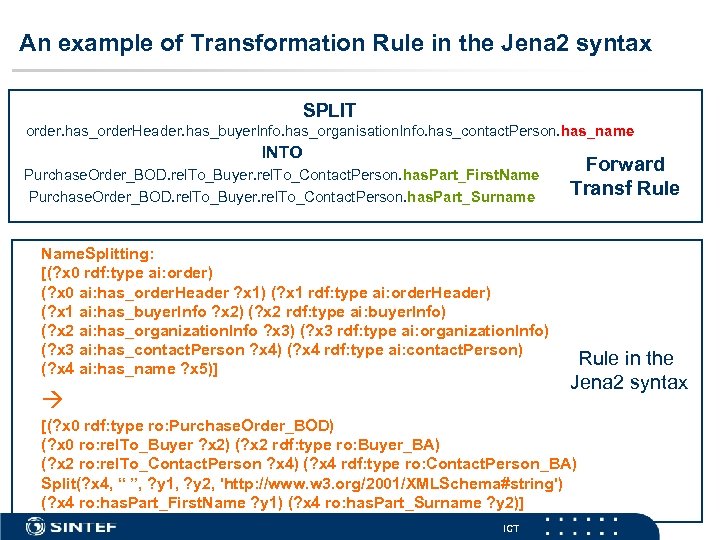
An example of Transformation Rule in the Jena 2 syntax SPLIT order. has_order. Header. has_buyer. Info. has_organisation. Info. has_contact. Person. has_name INTO Purchase. Order_BOD. rel. To_Buyer. rel. To_Contact. Person. has. Part_First. Name Purchase. Order_BOD. rel. To_Buyer. rel. To_Contact. Person. has. Part_Surname Name. Splitting: [(? x 0 rdf: type ai: order) (? x 0 ai: has_order. Header ? x 1) (? x 1 rdf: type ai: order. Header) (? x 1 ai: has_buyer. Info ? x 2) (? x 2 rdf: type ai: buyer. Info) (? x 2 ai: has_organization. Info ? x 3) (? x 3 rdf: type ai: organization. Info) (? x 3 ai: has_contact. Person ? x 4) (? x 4 rdf: type ai: contact. Person) (? x 4 ai: has_name ? x 5)] Forward Transf Rule in the Jena 2 syntax [(? x 0 rdf: type ro: Purchase. Order_BOD) (? x 0 ro: rel. To_Buyer ? x 2) (? x 2 rdf: type ro: Buyer_BA) (? x 2 ro: rel. To_Contact. Person ? x 4) (? x 4 rdf: type ro: Contact. Person_BA) Split(? x 4, “ ”, ? y 1, ? y 2, 'http: //www. w 3. org/2001/XMLSchema#string') (? x 4 ro: has. Part_First. Name ? y 1) (? x 4 ro: has. Part_Surname ? y 2)] ICT
Conclusion and outlook n BMM can be used to support discussions on Organisational interoperability n Support for semantics with ontologies and mediation is available now n Short term benefit can be gained in the area of services for semantic interoperability – through the use of ontologies, and use of mappings and transformations for information and service interoperability n i. e. – start here from an industrial perspective, establish ontologies, use these directly or mediate through semantic annotation. n Semantic Web Services and Service-oriented Semantic Architectures (SESA) is a promising future technology n Longer term benefits can be expected related to matching goals with services for process and service composition and process interoperability ICT 57
Скачать презентацию INF 5120 Modellbasert Systemutvikling n F 12
7418617ebc4217476e19052f16deef2b.ppt