


 Скачать презентацию Inequality trends in SSA 1991 -2011 divergence determinants
c6065e7a3e43f37eb76f41464b620075.ppt
- Количество слайдов: 58
 Inequality trends in SSA, 1991 -2011: divergence, determinants, consequences Giovanni Andrea Cornia University of Florence and SITES ------------------------------SITES summer School 2017, Prato
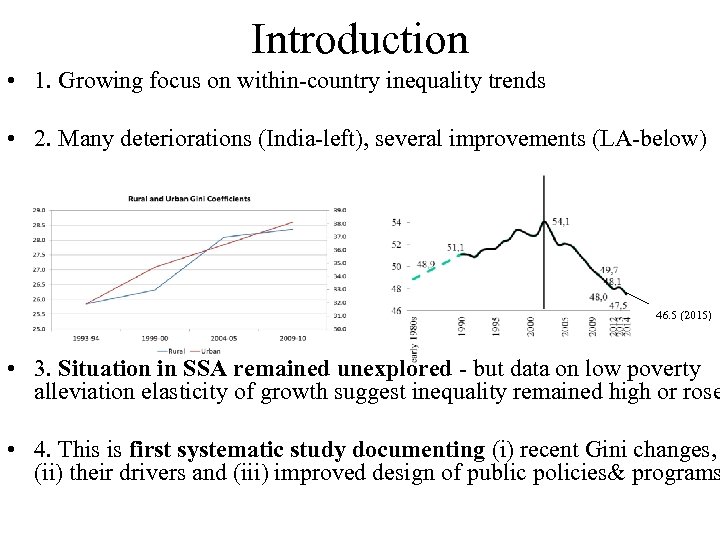 Introduction • 1. Growing focus on within-country inequality trends • 2. Many deteriorations (India-left), several improvements (LA-below) 46. 5 (2015) • 3. Situation in SSA remained unexplored - but data on low poverty alleviation elasticity of growth suggest inequality remained high or rose • 4. This is first systematic study documenting (i) recent Gini changes, (ii) their drivers and (iii) improved design of public policies& programs
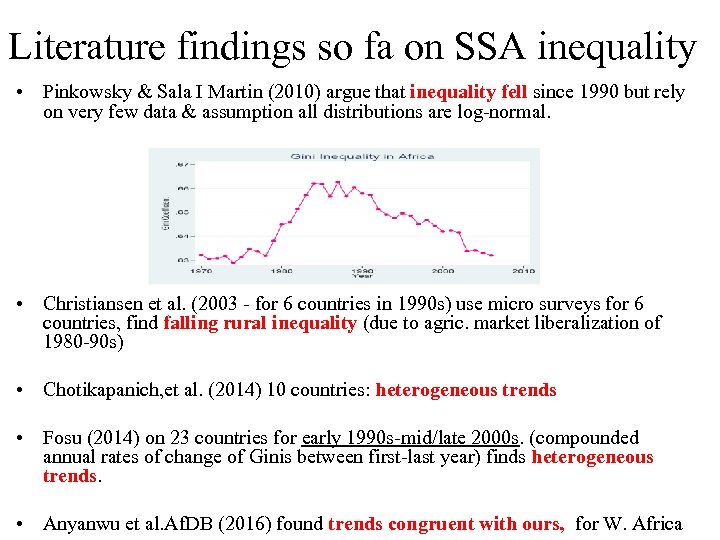 Literature findings so fa on SSA inequality • Pinkowsky & Sala I Martin (2010) argue that inequality fell since 1990 but rely on very few data & assumption all distributions are log-normal. • Christiansen et al. (2003 - for 6 countries in 1990 s) use micro surveys for 6 countries, find falling rural inequality (due to agric. market liberalization of 1980 -90 s) • Chotikapanich, et al. (2014) 10 countries: heterogeneous trends • Fosu (2014) on 23 countries for early 1990 s-mid/late 2000 s. (compounded annual rates of change of Ginis between first-last year) finds heterogeneous trends. • Anyanwu et al. Af. DB (2016) found trends congruent with ours, for W. Africa
 Documenting inequality changes in SSA: building IID-SSA • Databases of Gini: WIIDv 3, SWIID, POVCAL, WYD, I 2 D 2, (RIGA), national data Coverage & data quality vary. • We compiled IIS-SSA Gini database for countries with at least 4 -5 well spaced observations between 1991 -3 and 2011 • Select ‘best data’ (fully documented) from above sources (mainly WIIDv 3) and eliminate 6 -7 ‘obvious outliers’ • Retained 29 countries (out of 48) which represent > 90% SSA’s pop and GDP • About 220 -240 observed and controlled data for 1990 -2010 • Data show different country trends, due to SSA’s structural heterogeneity • Grouped the 29 countries by their Gini trends into 4 groups: rising, falling, U and ∩
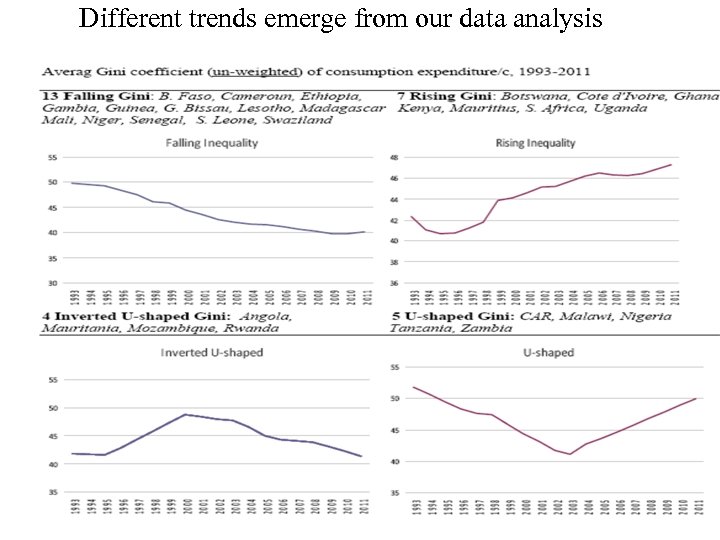 Different trends emerge from our data analysis
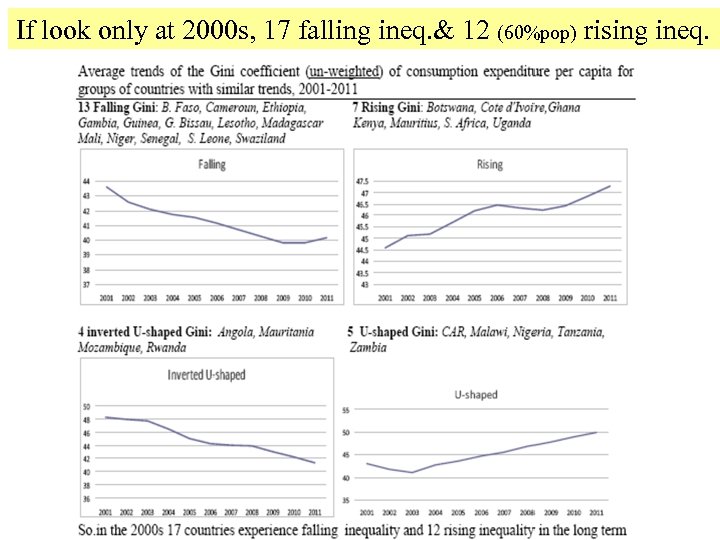 If look only at 2000 s, 17 falling ineq. & 12 (60%pop) rising ineq.
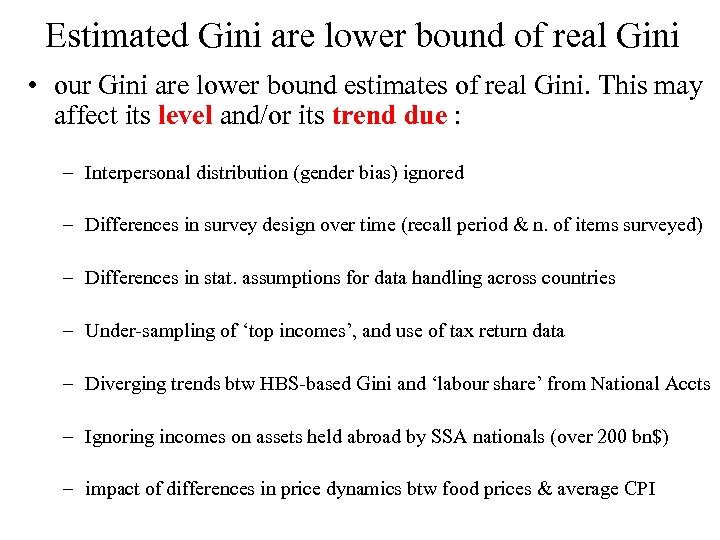 Estimated Gini are lower bound of real Gini • our Gini are lower bound estimates of real Gini. This may affect its level and/or its trend due : – Interpersonal distribution (gender bias) ignored – Differences in survey design over time (recall period & n. of items surveyed) – Differences in stat. assumptions for data handling across countries – Under-sampling of ‘top incomes’, and use of tax return data – Diverging trends btw HBS-based Gini and ‘labour share’ from National Accts – Ignoring incomes on assets held abroad by SSA nationals (over 200 bn$) – impact of differences in price dynamics btw food prices & average CPI
 2. What explains the Gini bifurcation observed over 1991/3 -2011 ?
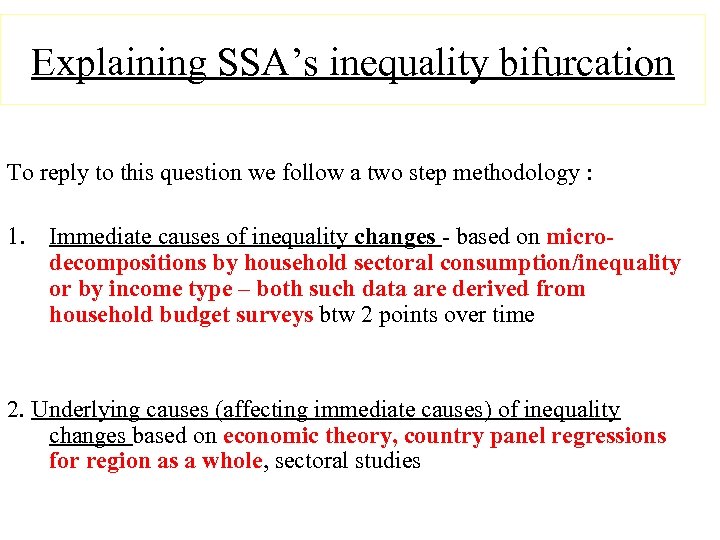 Explaining SSA’s inequality bifurcation To reply to this question we follow a two step methodology : 1. Immediate causes of inequality changes - based on microdecompositions by household sectoral consumption/inequality or by income type – both such data are derived from household budget surveys btw 2 points over time 2. Underlying causes (affecting immediate causes) of inequality changes based on economic theory, country panel regressions for region as a whole, sectoral studies
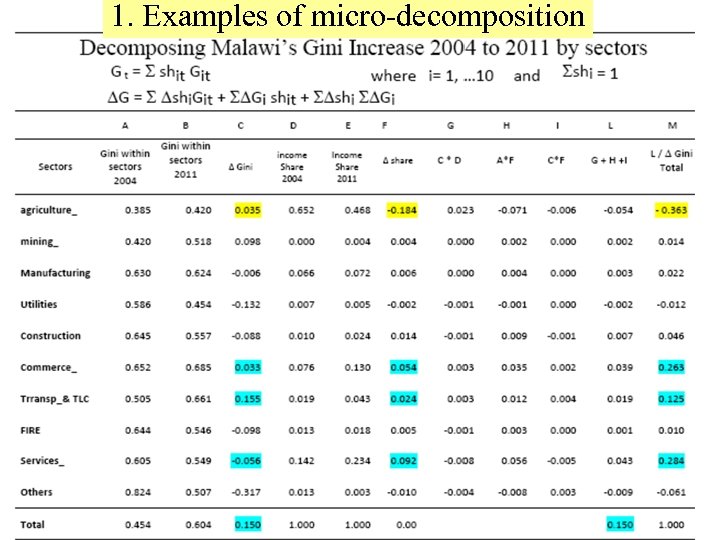 1. Examples of micro-decomposition
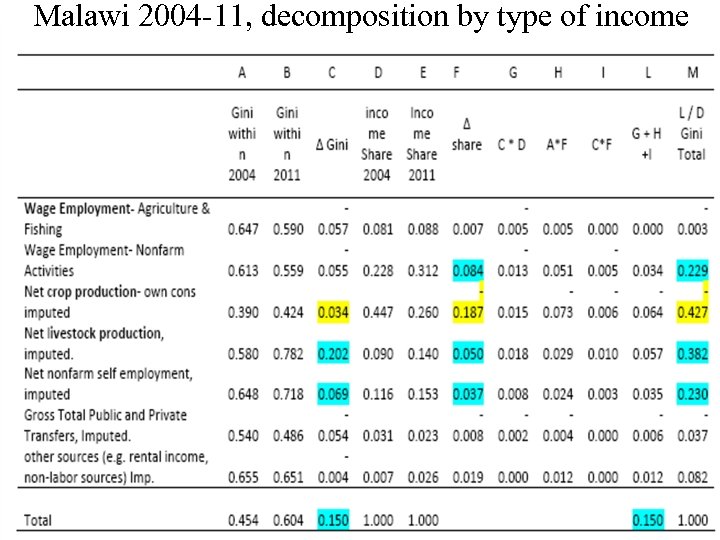 Malawi 2004 -11, decomposition by type of income
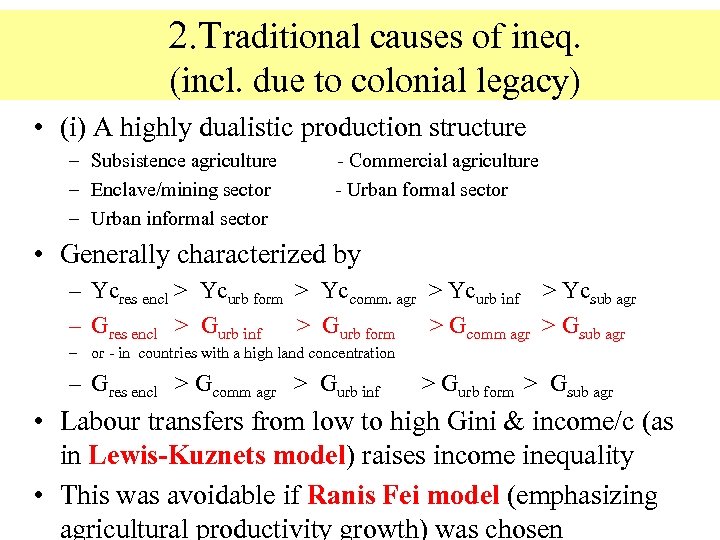 2. Traditional causes of ineq. (incl. due to colonial legacy) • (i) A highly dualistic production structure – Subsistence agriculture – Enclave/mining sector – Urban informal sector - Commercial agriculture - Urban formal sector • Generally characterized by – Ycres encl > Ycurb form > Yccomm. agr > Ycurb inf > Ycsub agr – Gres encl > Gurb inf > Gurb form > Gcomm agr > Gsub agr – or - in countries with a high land concentration – Gres encl > Gcomm agr > Gurb inf > Gurb form > Gsub agr • Labour transfers from low to high Gini & income/c (as in Lewis-Kuznets model) raises income inequality • This was avoidable if Ranis Fei model (emphasizing agricultural productivity growth) was chosen
 Continued • (ii) High asset concentration (mines, human capital and - in Eastern-Southern Africa - land ) • (iii) Dependence on exports of natural resources and commodity cycles (‘curse of natural resources’) • (iv) urban-rural bias and migration • (v) limited/regressive redistribution by the state • (vi) ethnic inequality & gender inequality
 3. Inequality changes over 1991 -2011
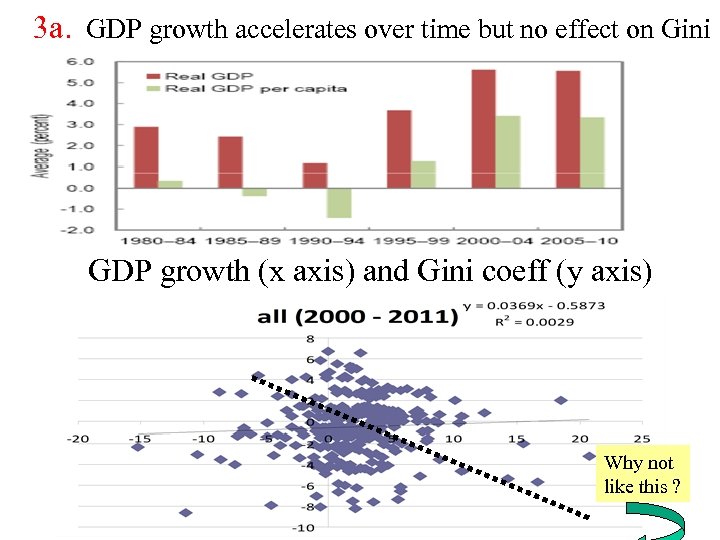 3 a. GDP growth accelerates over time but no effect on Gini GDP growth (x axis) and Gini coeff (y axis) Why not like this ?
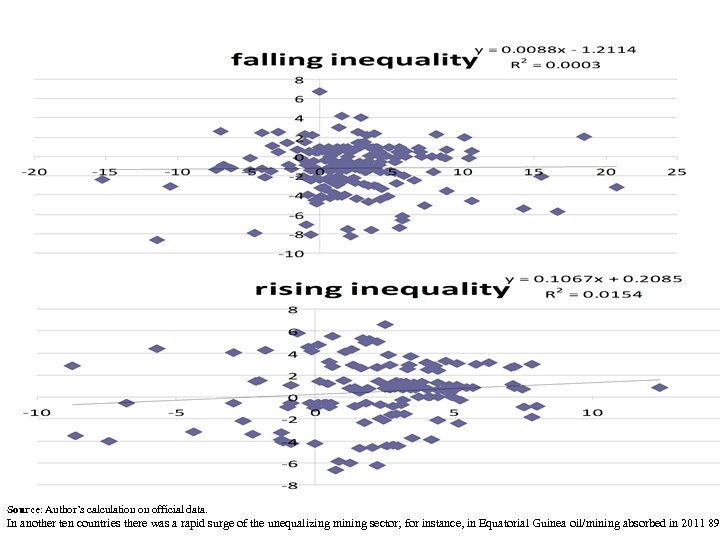 Source: Author’s calculation on official data. In another ten countries there was a rapid surge of the unequalizing mining sector; for instance, in Equatorial Guinea oil/mining absorbed in 2011 89
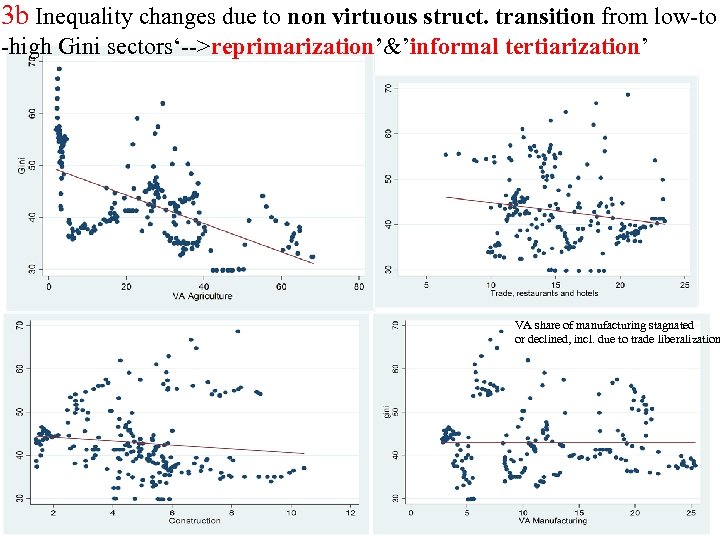 3 b Inequality changes due to non virtuous struct. transition from low-to -high Gini sectors‘-->reprimarization’&’informal tertiarization’ VA share of manufacturing stagnated or declined, incl. due to trade liberalization
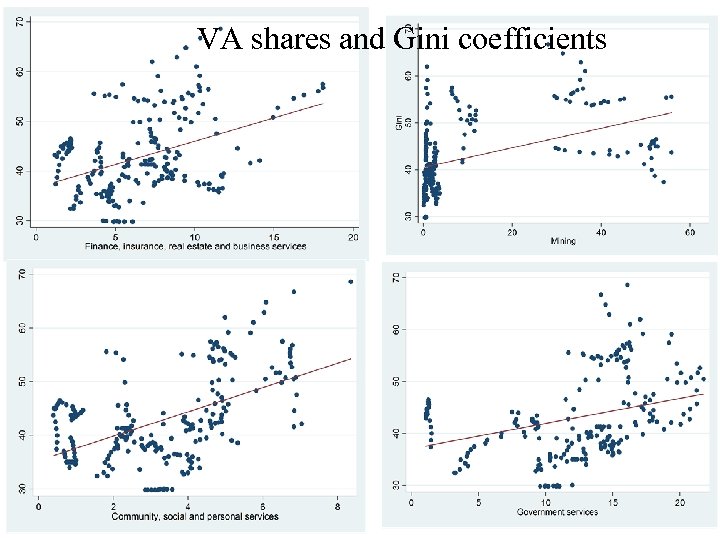 VA shares and Gini coefficients
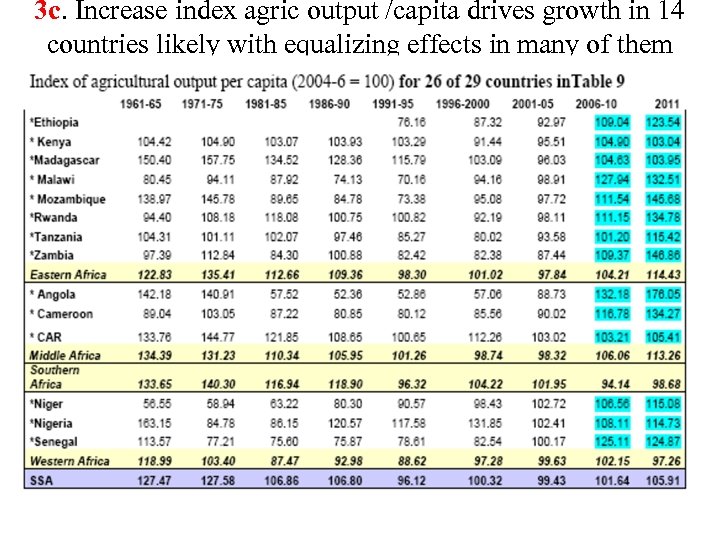 3 c. Increase index agric output /capita drives growth in 14 countries likely with equalizing effects in many of them
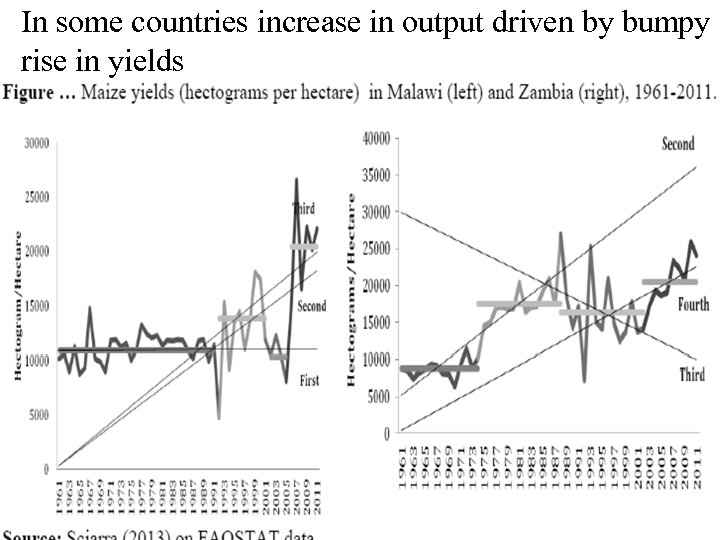 In some countries increase in output driven by bumpy rise in yields
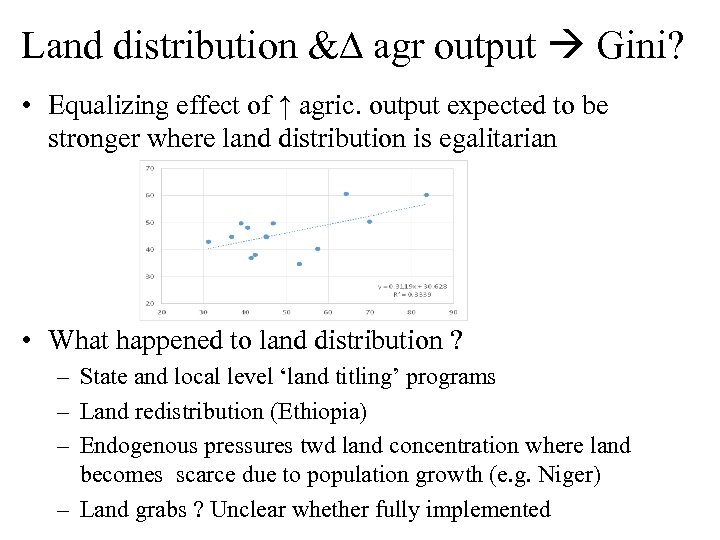 Land distribution &D agr output Gini? • Equalizing effect of ↑ agric. output expected to be stronger where land distribution is egalitarian • What happened to land distribution ? – State and local level ‘land titling’ programs – Land redistribution (Ethiopia) – Endogenous pressures twd land concentration where land becomes scarce due to population growth (e. g. Niger) – Land grabs ? Unclear whether fully implemented
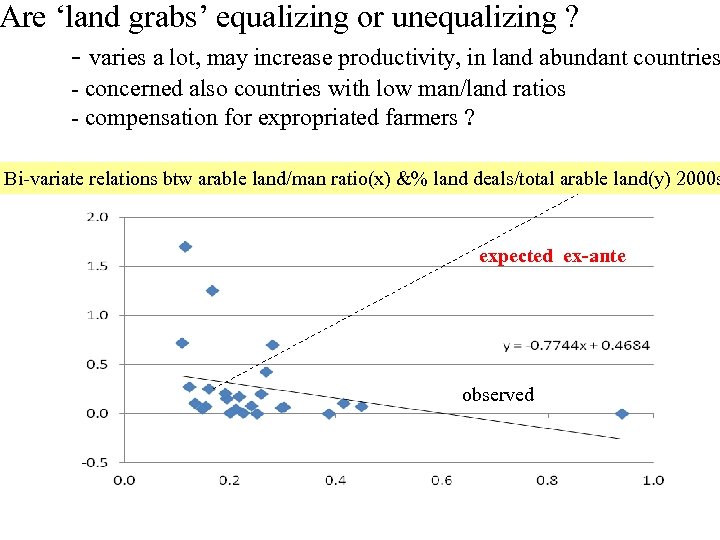 Are ‘land grabs’ equalizing or unequalizing ? - varies a lot, may increase productivity, in land abundant countries - concerned also countries with low man/land ratios - compensation for expropriated farmers ? Bi-variate relations btw arable land/man ratio(x) &% land deals/total arable land(y) 2000 s expected ex-ante observed
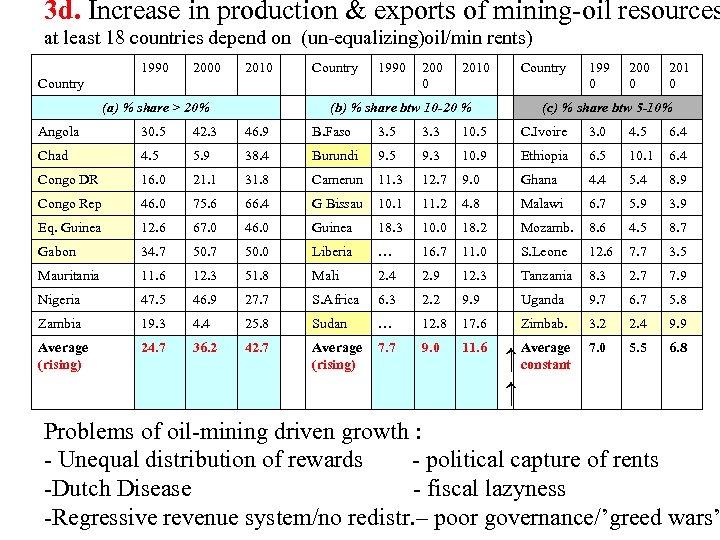 3 d. Increase in production & exports of mining-oil resources at least 18 countries depend on (un-equalizing)oil/min rents) 1990 2000 2010 Country 1990 Country (a) % share > 20% 200 0 2010 (b) % share btw 10 -20 % Country 199 0 200 0 201 0 (c) % share btw 5 -10% Angola 30. 5 42. 3 46. 9 B. Faso 3. 5 3. 3 10. 5 C. Ivoire 3. 0 4. 5 6. 4 Chad 4. 5 5. 9 38. 4 Burundi 9. 5 9. 3 10. 9 Ethiopia 6. 5 10. 1 6. 4 Congo DR 16. 0 21. 1 31. 8 Camerun 11. 3 12. 7 9. 0 Ghana 4. 4 5. 4 8. 9 Congo Rep 46. 0 75. 6 66. 4 G Bissau 10. 1 11. 2 4. 8 Malawi 6. 7 5. 9 3. 9 Eq. Guinea 12. 6 67. 0 46. 0 Guinea 18. 3 10. 0 18. 2 Mozamb. 8. 6 4. 5 8. 7 Gabon 34. 7 50. 0 Liberia … 16. 7 11. 0 S. Leone 12. 6 7. 7 3. 5 Mauritania 11. 6 12. 3 51. 8 Mali 2. 4 2. 9 12. 3 Tanzania 8. 3 2. 7 7. 9 Nigeria 47. 5 46. 9 27. 7 S. Africa 6. 3 2. 2 9. 9 Uganda 9. 7 6. 7 5. 8 Zambia 19. 3 4. 4 25. 8 Sudan … 12. 8 17. 6 Zimbab. 3. 2 2. 4 9. 9 Average (rising) 24. 7 36. 2 42. 7 Average (rising) 7. 7 9. 0 11. 6 ↑ Average constant ↑ 7. 0 5. 5 6. 8 Problems of oil-mining driven growth : - Unequal distribution of rewards - political capture of rents -Dutch Disease - fiscal lazyness -Regressive revenue system/no redistr. – poor governance/’greed wars’
 New factors 4 a. A favorable global economic environement) • Terms of trade rose for most of 2000 s for both agric. & minerals • migrant remittances rose sharply (only half of them recorded offic. ) • Increase in FDI (mostly in mining) – charts
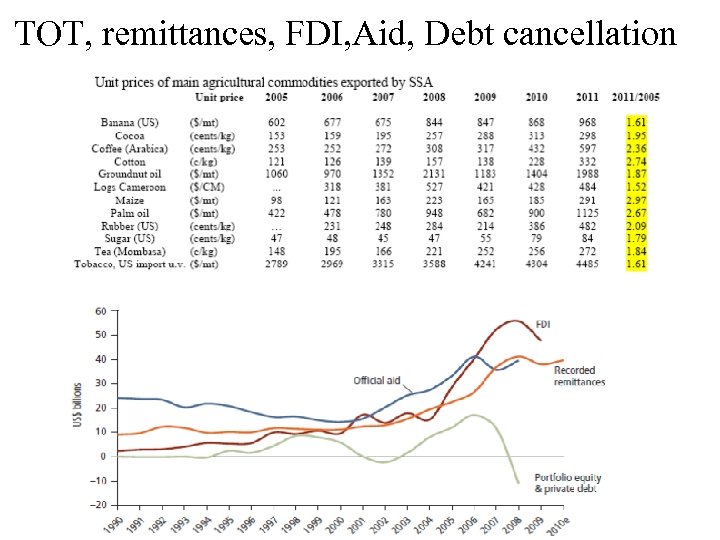 TOT, remittances, FDI, Aid, Debt cancellation
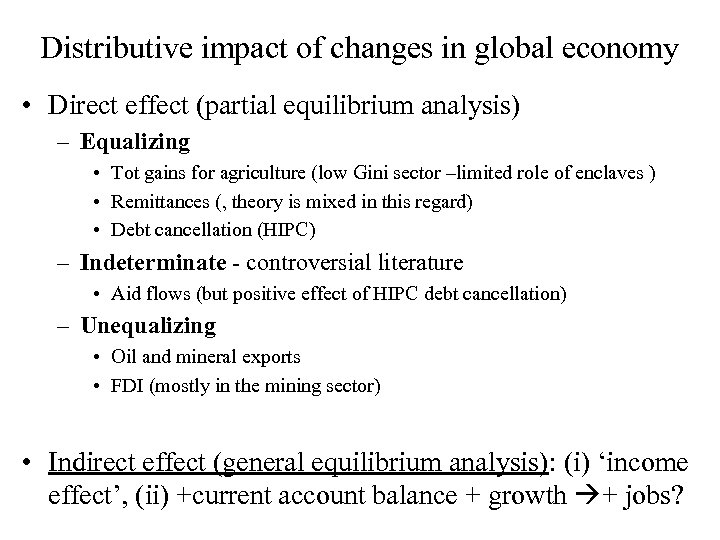 Distributive impact of changes in global economy • Direct effect (partial equilibrium analysis) – Equalizing • Tot gains for agriculture (low Gini sector –limited role of enclaves ) • Remittances (, theory is mixed in this regard) • Debt cancellation (HIPC) – Indeterminate - controversial literature • Aid flows (but positive effect of HIPC debt cancellation) – Unequalizing • Oil and mineral exports • FDI (mostly in the mining sector) • Indirect effect (general equilibrium analysis): (i) ‘income effect’, (ii) +current account balance + growth + jobs?
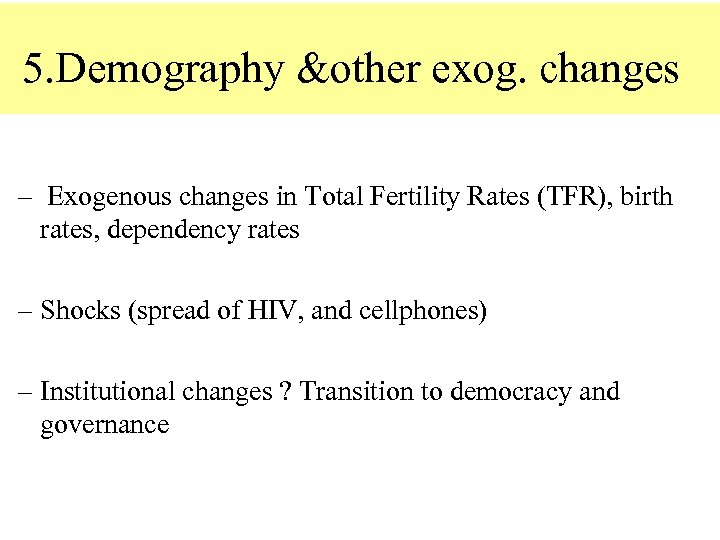 5. Demography &other exog. changes – Exogenous changes in Total Fertility Rates (TFR), birth rates, dependency rates – Shocks (spread of HIV, and cellphones) – Institutional changes ? Transition to democracy and governance
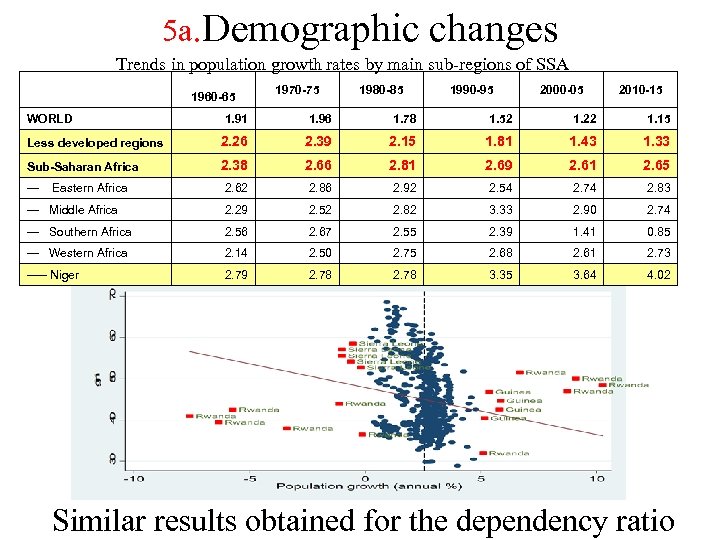 5 a. Demographic changes Trends in population growth rates by main sub-regions of SSA 1960 -65 WORLD 1970 -75 1980 -85 1990 -95 2000 -05 2010 -15 1. 91 1. 96 1. 78 1. 52 1. 22 1. 15 Less developed regions 2. 26 2. 39 2. 15 1. 81 1. 43 1. 33 Sub-Saharan Africa 2. 38 2. 66 2. 81 2. 69 2. 61 2. 65 2. 62 2. 86 2. 92 2. 54 2. 74 2. 83 --- Middle Africa 2. 29 2. 52 2. 82 3. 33 2. 90 2. 74 --- Southern Africa 2. 56 2. 67 2. 55 2. 39 1. 41 0. 85 --- Western Africa 2. 14 2. 50 2. 75 2. 68 2. 61 2. 73 ----- Niger 2. 79 2. 78 3. 35 3. 64 4. 02 --- Eastern Africa Similar results obtained for the dependency ratio
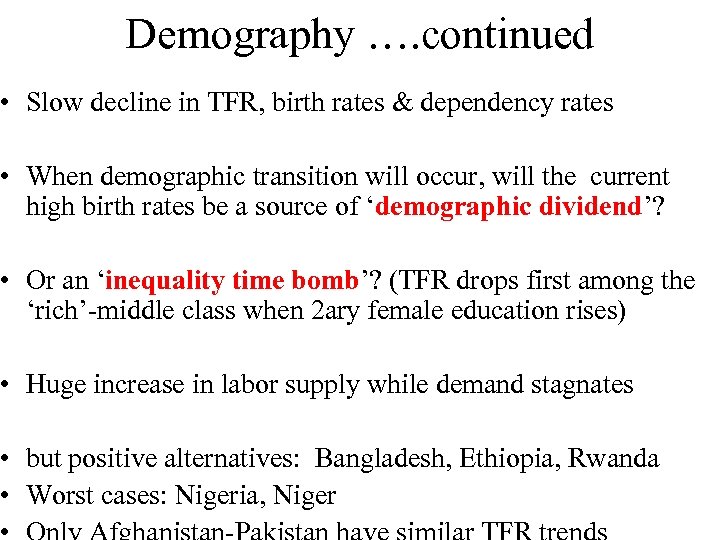 Demography …. continued • Slow decline in TFR, birth rates & dependency rates • When demographic transition will occur, will the current high birth rates be a source of ‘demographic dividend’? • Or an ‘inequality time bomb’? (TFR drops first among the ‘rich’-middle class when 2 ary female education rises) • Huge increase in labor supply while demand stagnates • but positive alternatives: Bangladesh, Ethiopia, Rwanda • Worst cases: Nigeria, Niger
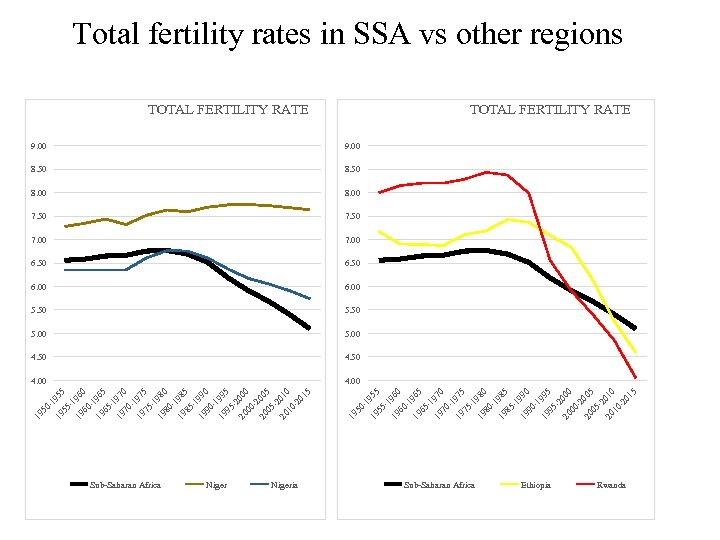 Total fertility rates in SSA vs other regions TOTAL FERTILITY RATE Nigeria Sub-Saharan Africa Ethiopia 5 0 20 10 -2 01 01 5 -2 20 05 00 0 20 00 -2 00 5 -2 19 95 -1 99 99 19 90 -1 98 19 85 -1 98 80 19 19 75 -1 97 19 70 -1 97 5 -1 96 -1 55 19 19 50 -1 95 5 -2 01 01 20 10 00 20 05 -2 0 00 -2 95 19 Niger 20 0 99 -1 90 19 19 85 -1 99 98 19 80 -1 98 -1 97 19 75 0 -1 70 19 -1 97 96 19 65 96 -1 19 95 -1 50 19 19 60 Sub-Saharan Africa 0 4. 00 96 4. 00 5 4. 50 65 4. 50 0 5. 00 19 5. 00 5 5. 50 -1 5. 50 0 6. 00 60 6. 00 0 6. 50 19 6. 50 5 7. 00 0 7. 00 5 7. 50 5 8. 00 0 8. 00 5 8. 50 0 9. 00 5 9. 00 Rwanda
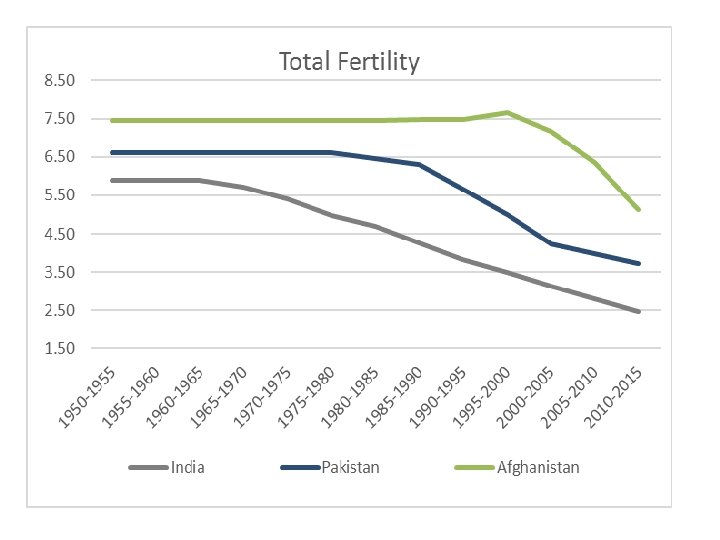
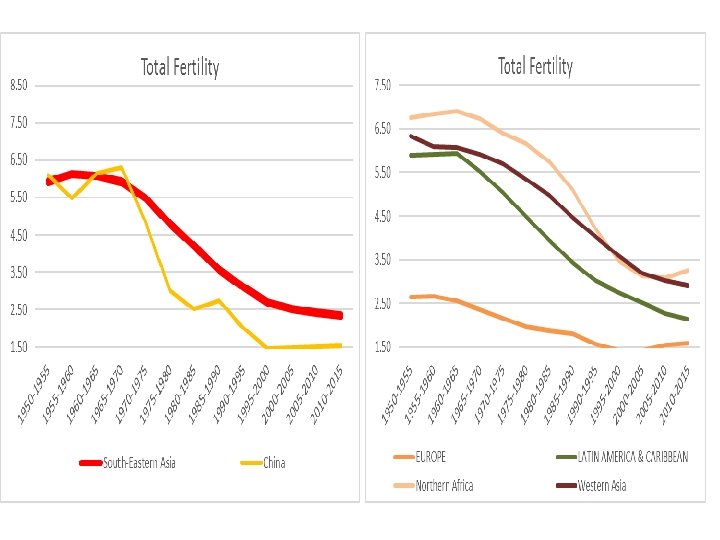
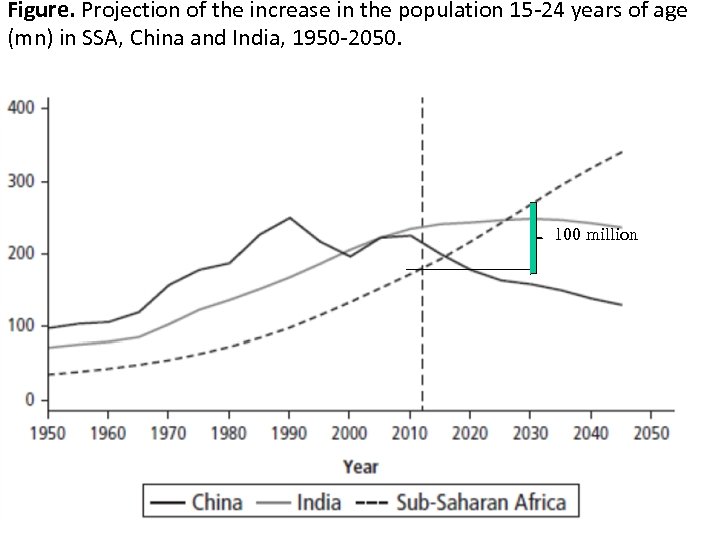 Figure. Projection of the increase in the population 15 -24 years of age (mn) in SSA, China and India, 1950 -2050. 100 million
 5 b. Public policy
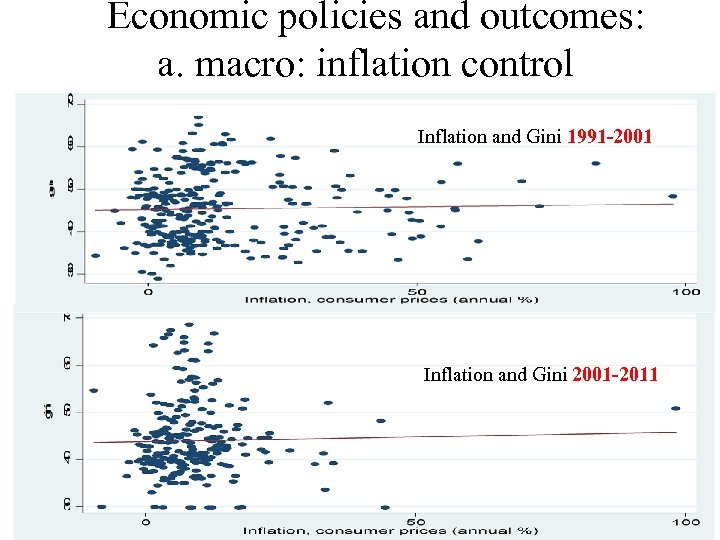 Economic policies and outcomes: a. macro: inflation control Inflation and Gini 1991 -2001 Inflation and Gini 2001 -2011
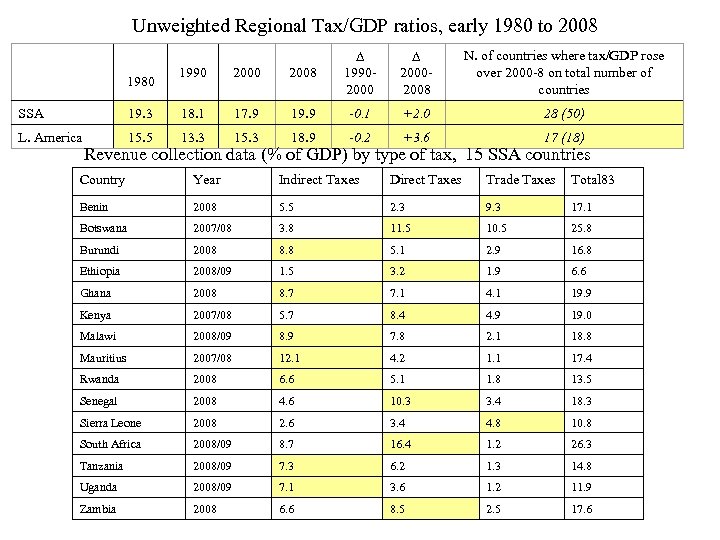
 b. Macro: continued • Budget balances: low and little related to Gini • Real effective exchange rate (RER) is essential to shift resources from T to NT. But strong push to appreciation in resource countries and CFA countries • Trade liberalization? Impact is debatable, gains due to rise in commodity prices, but fall in manufacturing share in GDP. (figure) • Rising tax/GDP (see next slide)
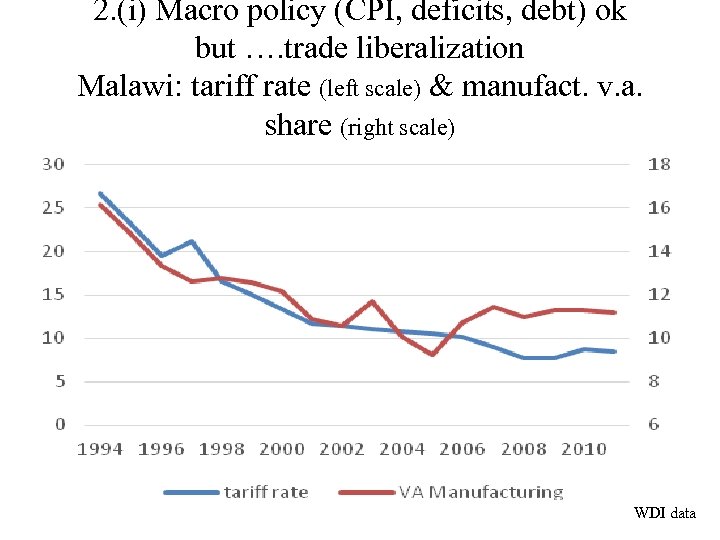 2. (i) Macro policy (CPI, deficits, debt) ok but …. trade liberalization Malawi: tariff rate (left scale) & manufact. v. a. share (right scale) WDI data
 Unweighted Regional Tax/GDP ratios, early 1980 to 2008 1980 1990 2008 D 19902000 D 20002008 N. of countries where tax/GDP rose over 2000 -8 on total number of countries SSA 19. 3 18. 1 17. 9 19. 9 -0. 1 +2. 0 28 (50) L. America 15. 5 13. 3 15. 3 18. 9 -0. 2 +3. 6 17 (18) Revenue collection data (% of GDP) by type of tax, 15 SSA countries Country Year Indirect Taxes Direct Taxes Trade Taxes Total 83 Benin 2008 5. 5 2. 3 9. 3 17. 1 Botswana 2007/08 3. 8 11. 5 10. 5 25. 8 Burundi 2008 8. 8 5. 1 2. 9 16. 8 Ethiopia 2008/09 1. 5 3. 2 1. 9 6. 6 Ghana 2008 8. 7 7. 1 4. 1 19. 9 Kenya 2007/08 5. 7 8. 4 4. 9 19. 0 Malawi 2008/09 8. 9 7. 8 2. 1 18. 8 Mauritius 2007/08 12. 1 4. 2 1. 1 17. 4 Rwanda 2008 6. 6 5. 1 1. 8 13. 5 Senegal 2008 4. 6 10. 3 3. 4 18. 3 Sierra Leone 2008 2. 6 3. 4 4. 8 10. 8 South Africa 2008/09 8. 7 16. 4 1. 2 26. 3 Tanzania 2008/09 7. 3 6. 2 1. 3 14. 8 Uganda 2008/09 7. 1 3. 6 1. 2 11. 9 Zambia 2008 6. 6 8. 5 2. 5 17. 6
 Social protection: two SSA models - Most of Africa: small pilot projects of C & NC cash transfers - but no aggregate impact yet. -Southern African model, with state (formerly white-only but now universal) institutio - Potential for expansion, with equalizing effects & fiscal sustainability (esp in countries with large resource rents …. but political economy?
 Education and skill premium: Fast rise in 1 ary, less for 2 ary (technical knowledge). Likely disequalizing effects via rise in skill premium Relation btw average yrs of educ (x) & Gini educ (y) Educational Inequality of L. F. 6 to 9 Average n. of yrs of educ of l. f.
 As a results: skills are poorly distributed: enrolm. rates of the poorest (blue) & richest quintile (green) of 15 -19 yrs who completed grade 6, late 2000 s Source: Ferreira (2014)
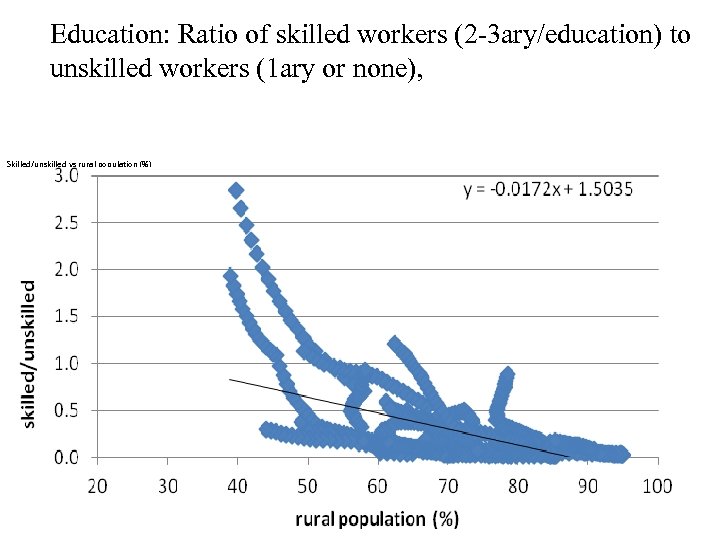 Education: Ratio of skilled workers (2 -3 ary/education) to unskilled workers (1 ary or none), Skilled/unskilled vs rural population (%)
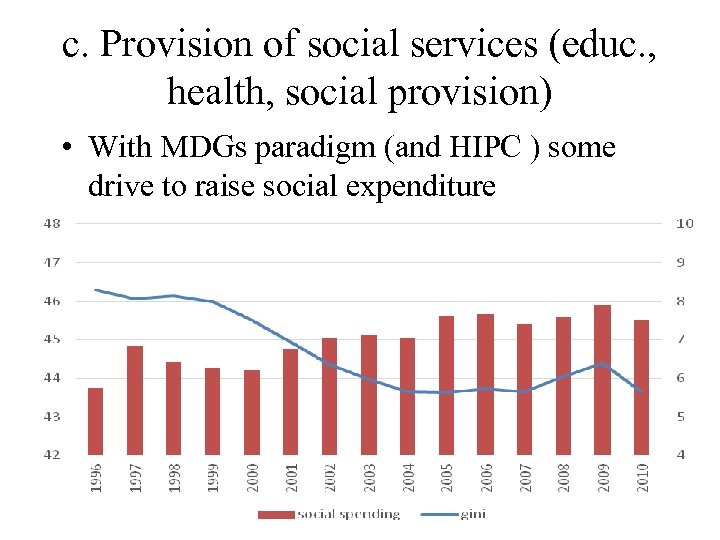 c. Provision of social services (educ. , health, social provision) • With MDGs paradigm (and HIPC ) some drive to raise social expenditure
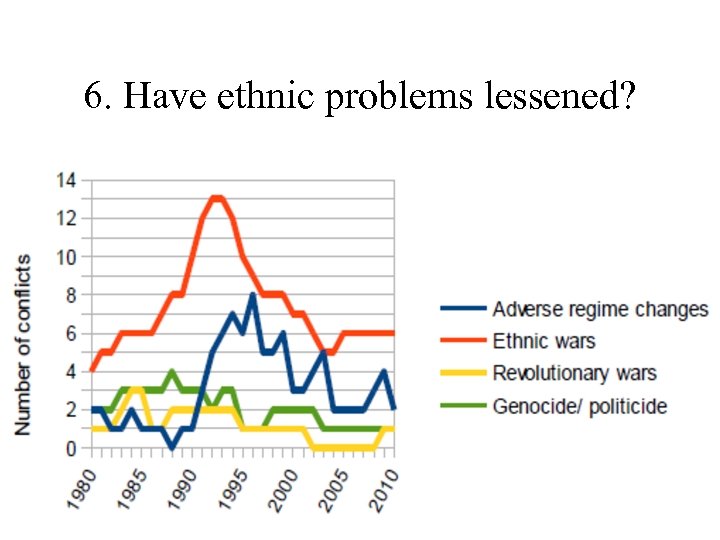 6. Have ethnic problems lessened?
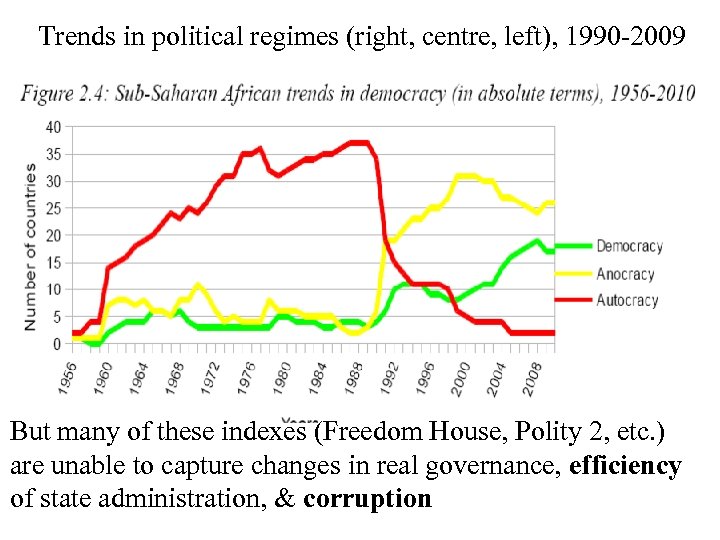 Trends in political regimes (right, centre, left), 1990 -2009 But many of these indexes (Freedom House, Polity 2, etc. ) are unable to capture changes in real governance, efficiency of state administration, & corruption
 7. Exogenous shocks (HIV AIDS and cells/internet)
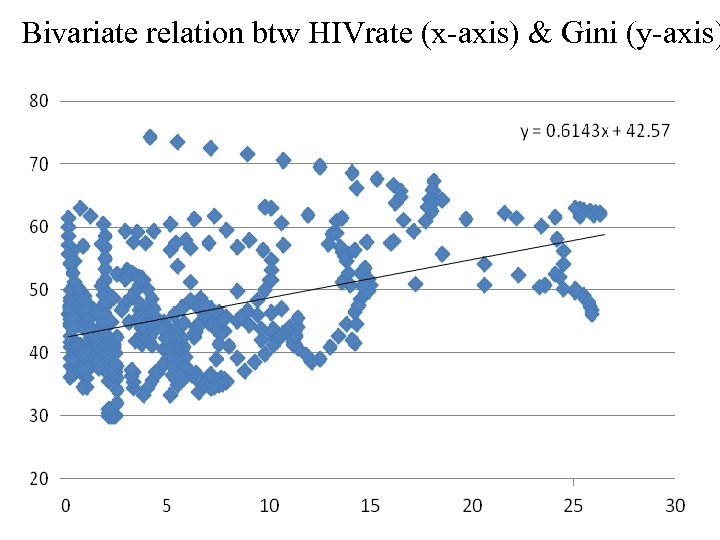 Bivariate relation btw HIVrate (x-axis) & Gini (y-axis)
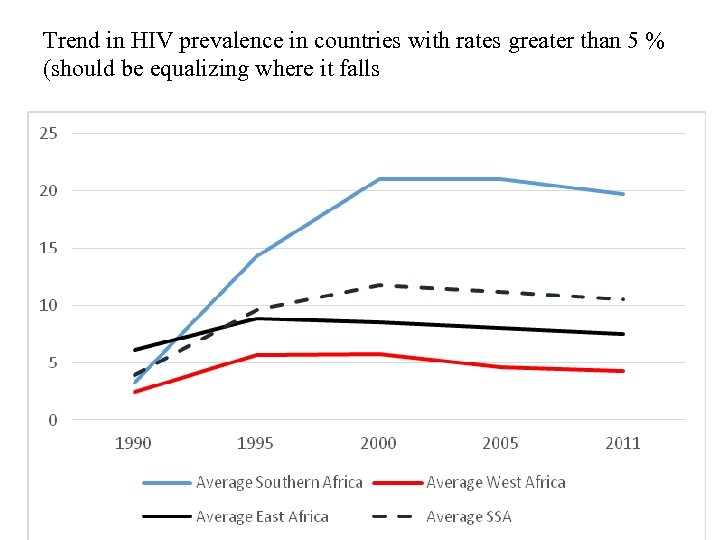 Trend in HIV prevalence in countries with rates greater than 5 % (should be equalizing where it falls
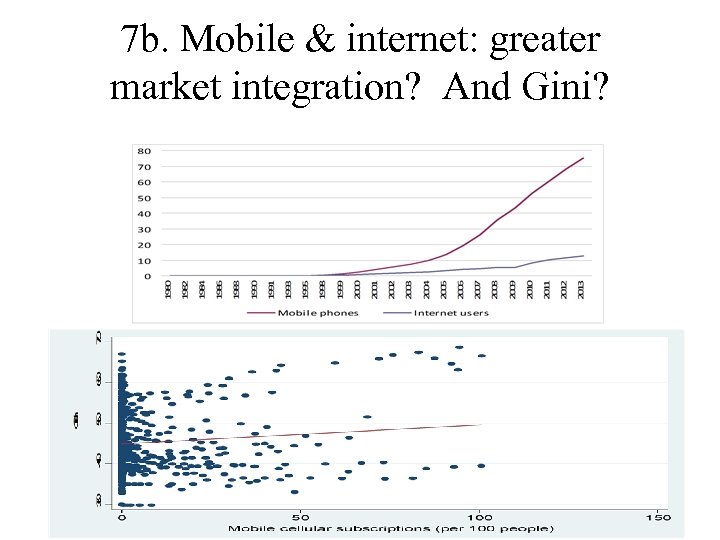 7 b. Mobile & internet: greater market integration? And Gini?
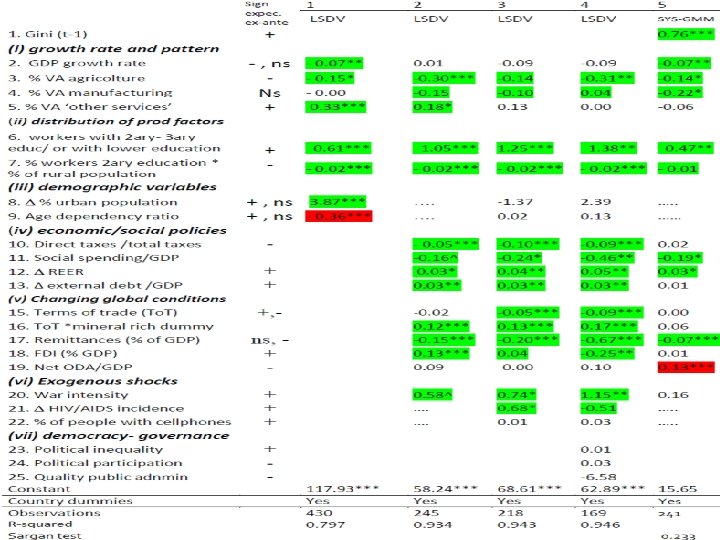
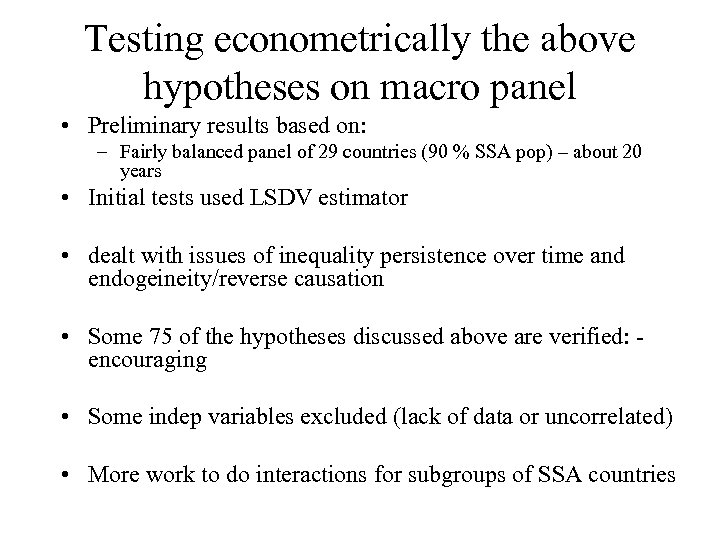 Testing econometrically the above hypotheses on macro panel • Preliminary results based on: – Fairly balanced panel of 29 countries (90 % SSA pop) – about 20 years • Initial tests used LSDV estimator • dealt with issues of inequality persistence over time and endogeineity/reverse causation • Some 75 of the hypotheses discussed above are verified: encouraging • Some indep variables excluded (lack of data or uncorrelated) • More work to do interactions for subgroups of SSA countries
 Tentative conclusions: Inequality Trends • Inequality in SSA is very dualistic (E+S. Africa + oil countries vs the rest) • Despite the necessary prudence dictated by large measurement errors, over 1991/3 -2011 there was a bifurcation in inequality trends, – 40 % of SSA pop lives in 17 countries that experienced fall in Gini – 60 % in 12 countries with rising inequality – Results much affected by what occurs in large nations (Nigeria, Ethiopia) – These results concern 29 countries with at least 4 good quality well spaced Gini data. – Need to invest in HBS for all countries, esp. for 15 countries with only 1 -3 data and 5 with no data.
 Tentative conclusions: drivers of inequality • Sub-optimal structural transition re-primarization, ‘informalization’, & services sectors that often are capital- and skilled-labour intensive, • Limited shift to modern high-yielding labour-intensive agric. , manufacturing, construction & lab-intensive services. • The fall stagnation of manufacturing is related also to trade liberalization • Some progress in taxation but capital flights and ‘weak domestic institutions’ prevent redistribution of resource rents • Favorable effects where (i) agriculture was modernized & connected to rest of economy (ii) labour absorption in l. -intensive manufac. & construction • these favorable shifts need to be strengthened by efforts at creating physical infrastructure and human capital. • There seem to be evidence that an increase in 2 ary education in rural areas is equalizing the distribution (by accelerating modern farming)
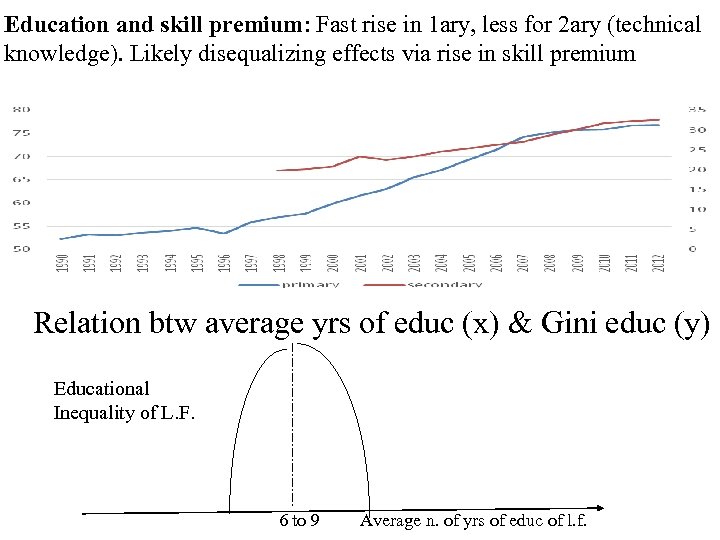
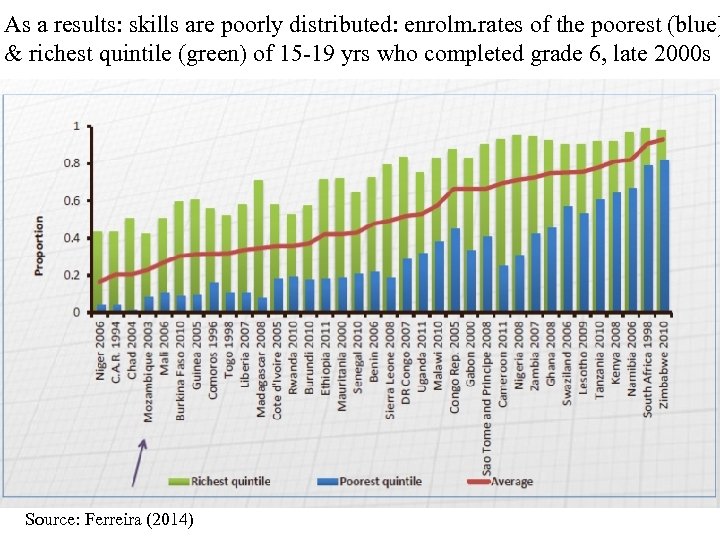
 Continued • accumulation/distribution of assets (human capital, land capital) did not improve and often worsened. • In spite of strong gains at 1 ary level, 2 ary educ rose slowly, is unequally distributed, and contributes to rising skill premium • tenancy reforms improved the security of tillers, but with rare exceptions, land distribution has generally not improved. • With pop growth, land grabs, commercialization of agriculture and continued population pressure – land concentration may rise further. • While this may not necessarily depress output, it will affect inequality, poverty reduction and, possibly, future growth.
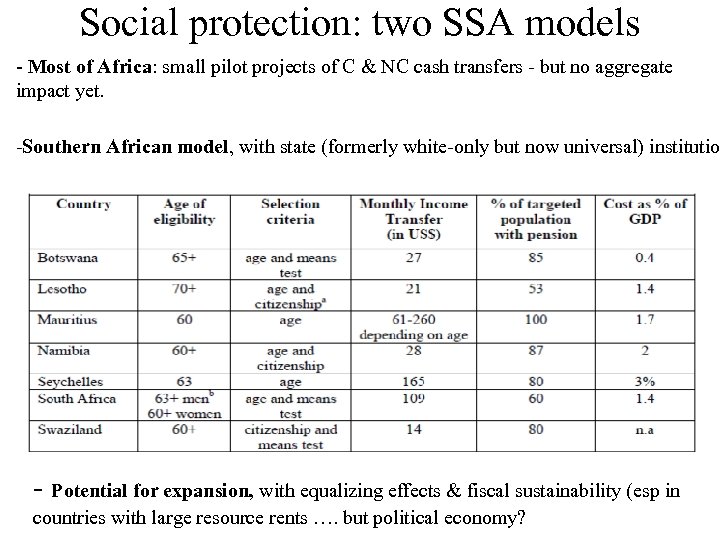
 Continued • Revenue/GDP ratio have risen but tax incidence has not improved in mineral enclaves which experienced large capital flights • Absence of redistributive institutions and adverse political economy made it difficult to undertake redistributive policies, except in Southern Africa. • The ‘fiscal space’ for redistribution now exists in several nations. Main task now is to ‘get the politics/institutions right’. • large increase in the number of pilot cash transfer programs. If properly designed, financed and institutionalized such CT are likely to improve posttransfers inequality.
 What support is needed to increase land yields and rural incomes ? • Change attitude towards agriculture: from Lewis to Fei. Ranis model (Ethiopia), i. e “invest in agriculture” • Green Revolution, rural roads, TLC and improved markets • Deepen agricultural research for African crops • Rural secondary education helps farm output (and is demanded) in areas with ‘agricultural modernization’ • Support to input and output prices? • Rural non farm activities (as Chinese Town and Village Entreprises) – see data on Malawi
 Thank you for your attention