


 Скачать презентацию INDUSTRIAL REVOLUTION I THE FIRST INDUSTRIAL REVOLUTION
8464a79164bea217a652e937f0d2bba7.ppt
- Количество слайдов: 46
 INDUSTRIAL REVOLUTION
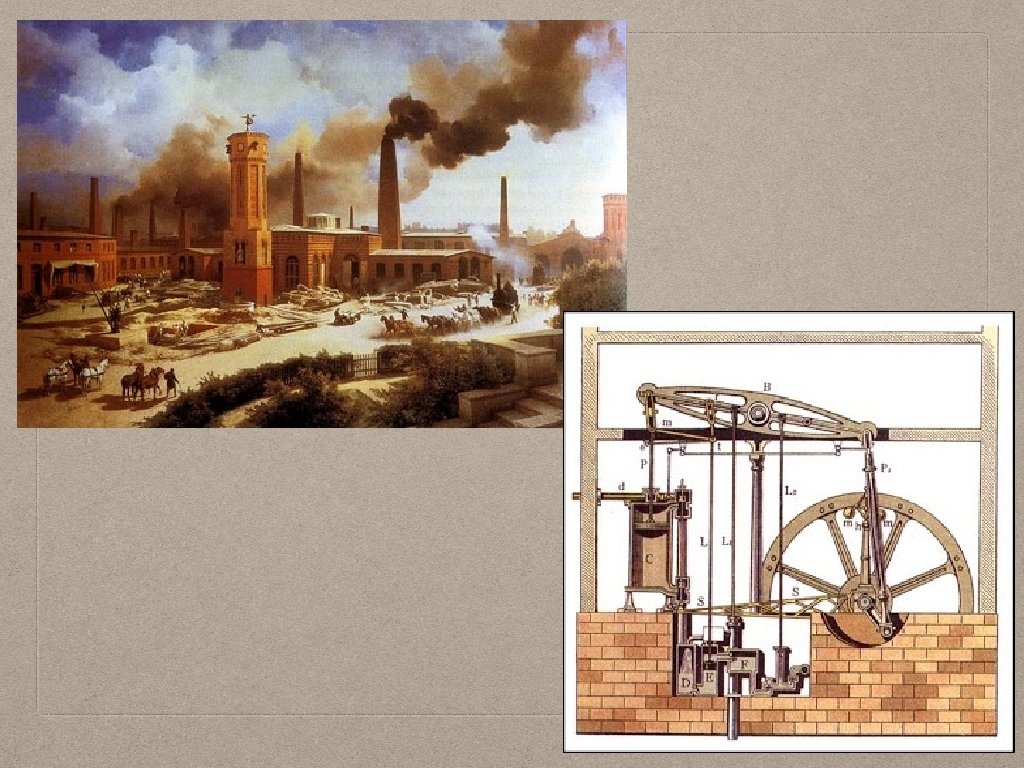
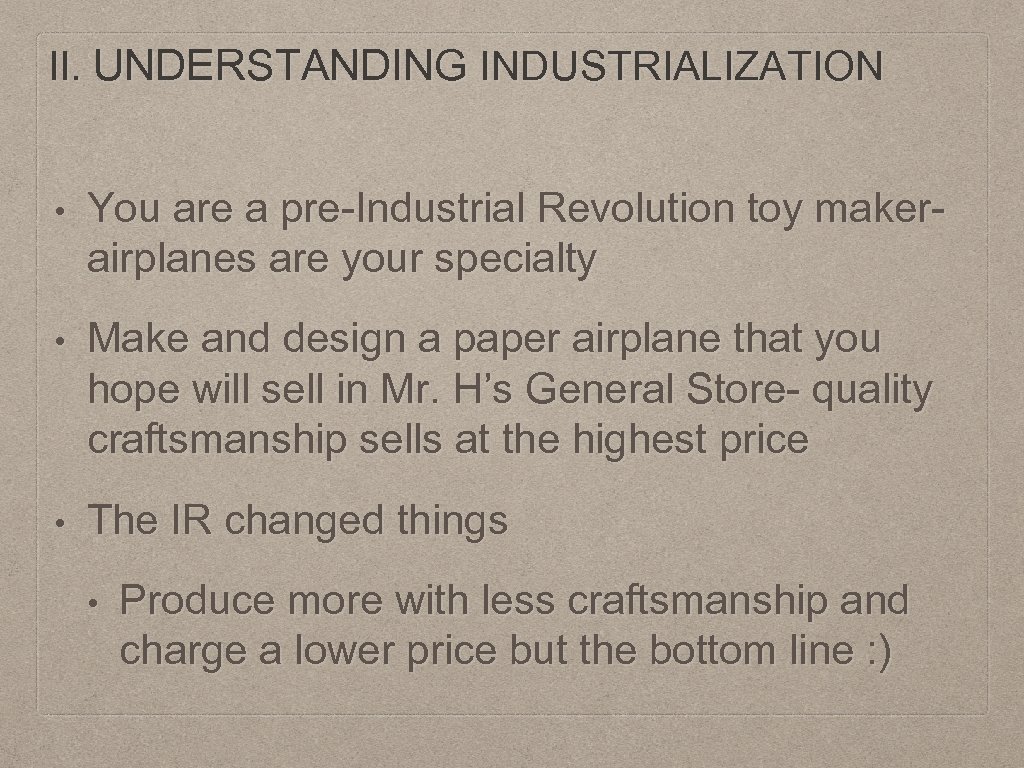
 I. THE FIRST INDUSTRIAL REVOLUTION • Began in Britain in mid-1700 s • Textile industry then iron, coal, steam engine • Industry moved to America in 1791 but did not BOOM until after the Civil War
 II. UNDERSTANDING INDUSTRIALIZATION • You are a pre-Industrial Revolution toy makerairplanes are your specialty • Make and design a paper airplane that you hope will sell in Mr. H’s General Store- quality craftsmanship sells at the highest price • The IR changed things • Produce more with less craftsmanship and charge a lower price but the bottom line : )
 III. SECOND INDUSTRIAL REVOLUTION • Post-Civil War = rapid industrialization due to • Natural resources • Growing labor force • Expanding market for manufactured goods • Plenty of investment opportunities • Government promoted growth
 III. SECOND INDUSTRIAL REVOLUTION • 1865, Americans mostly ag. farmers • 1920, America leading industrial power in world • 1/3 world output, more than GB, F, G combined • 2/3 America in 1880 worked wages • Oil, steel, electricity • Compare and contrast rural and urban life activity
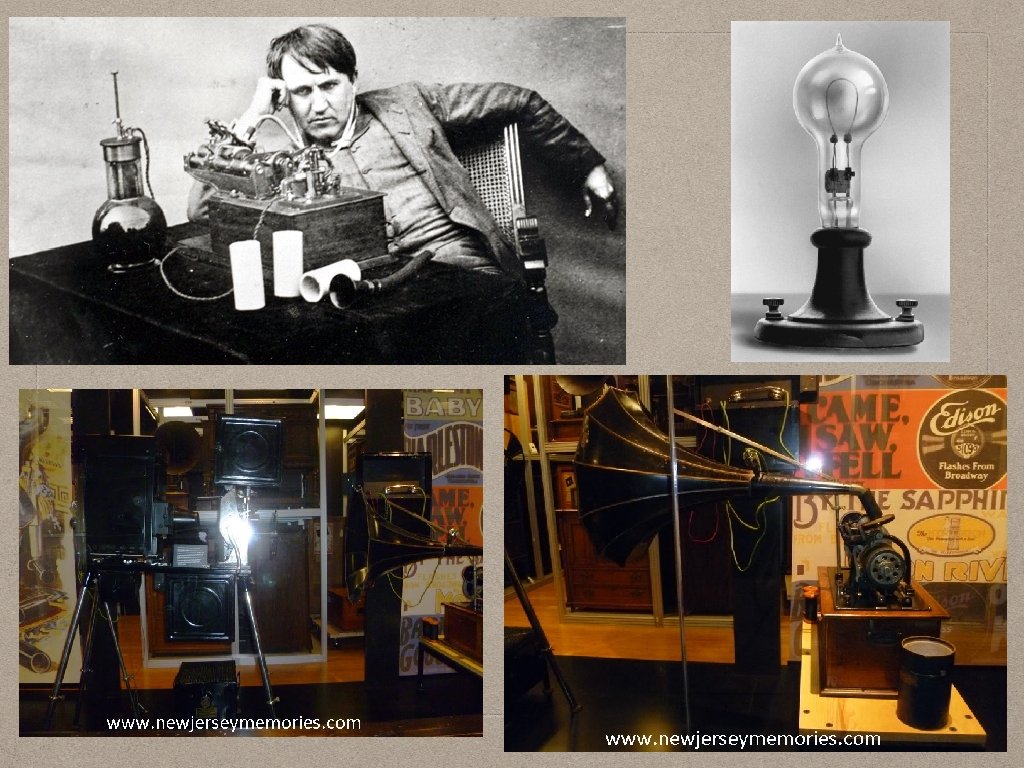
 V. AMERICAN INNOVATION • Atlantic cable 1866 for telegraph • 1870 -1880 s = telephone, typewriter, handheld camera • Edison = phonograph, lightbulb, motion picture, generating/distributing electric power (GE) • Nikola Tesla = developed electric motor w/ alternating current
 VI. COMPETITION & CONSOLIDATION • Economic growth huge but volatile • 1873 -1897 = 1 st Great Depression • Companies practiced questionable tacticsmonopolies, collusion, bribery, etc. to reap massive profits at the costs of the people • Large corporations gobbled up the competition to dominate steel, oil, banking, ag. , etc.
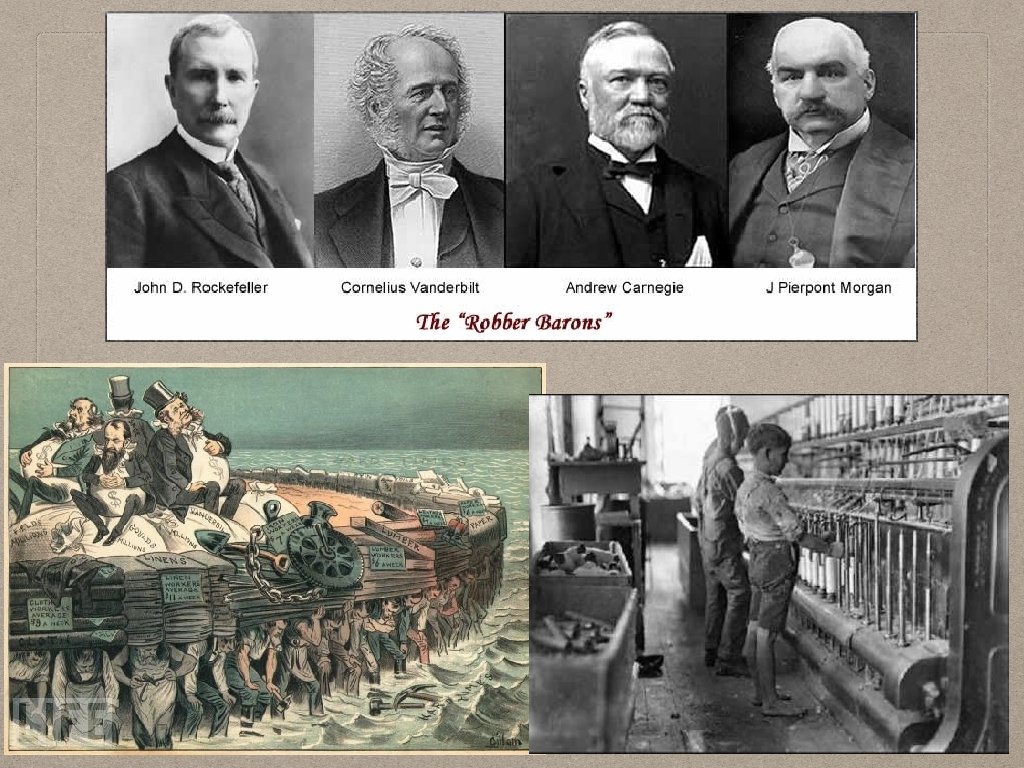
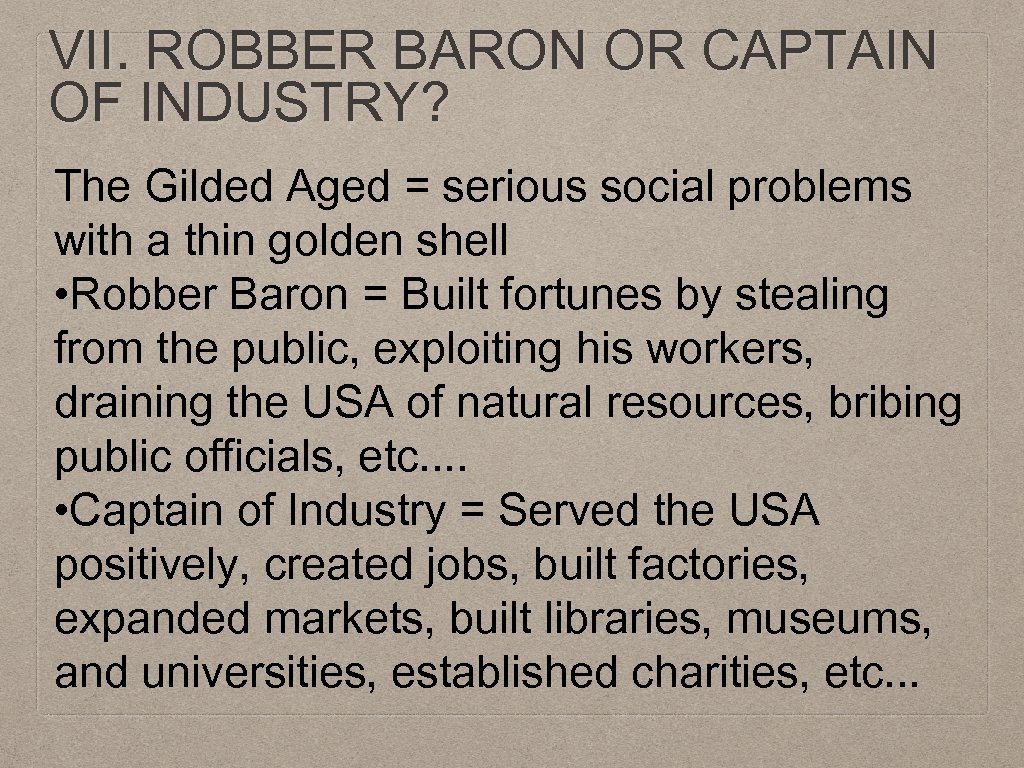 VII. ROBBER BARON OR CAPTAIN OF INDUSTRY? The Gilded Aged = serious social problems with a thin golden shell • Robber Baron = Built fortunes by stealing from the public, exploiting his workers, draining the USA of natural resources, bribing public officials, etc. . • Captain of Industry = Served the USA positively, created jobs, built factories, expanded markets, built libraries, museums, and universities, established charities, etc. . .
 THE CORPORATION • Big ventures like RR too expensive for single person/group to finance so states passed laws on incorporation = company sells stock to raise $ • Positives & negatives for company and investor?
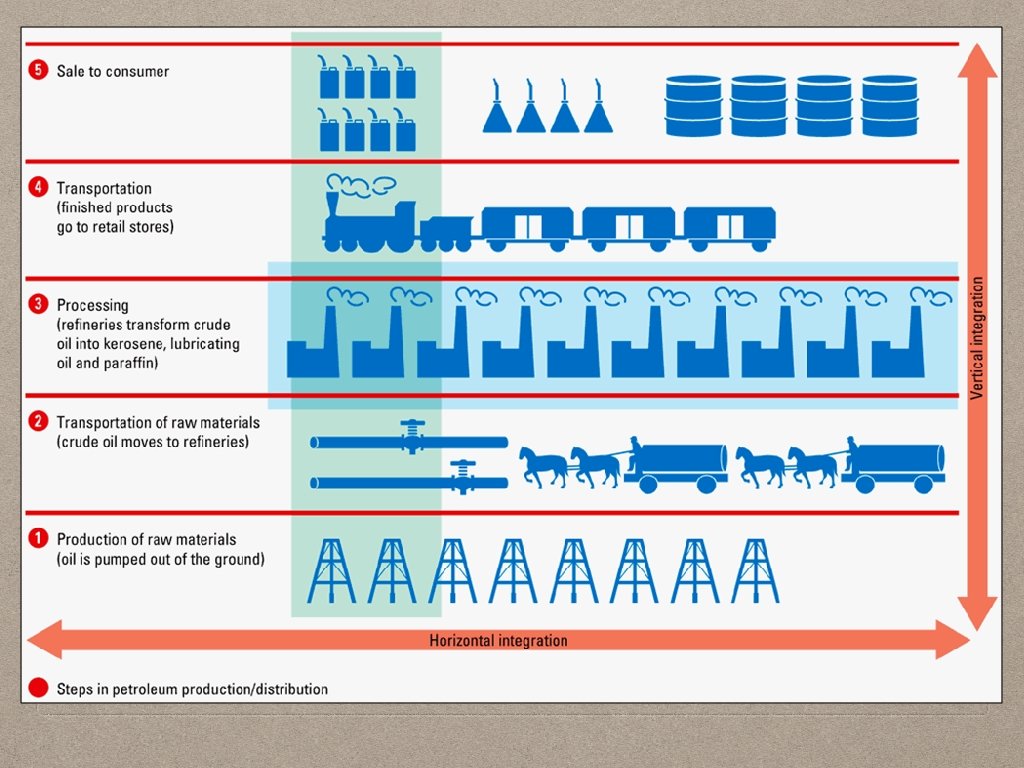
 VIII. VERTICAL INTEGRATION • A company controls every phase of the business- Ex: meat packing industry, Gustavus Franklin Swift • Raw materials- cows and land • Manufacturing- butchered • Transportation- refrigerated train cars & trucks/wagons to market • Distribution- sold to consumer at butcher • Andrew Carnegie dominated this process in steel industry • More efficient to cut out the middle man • Come up with your own example
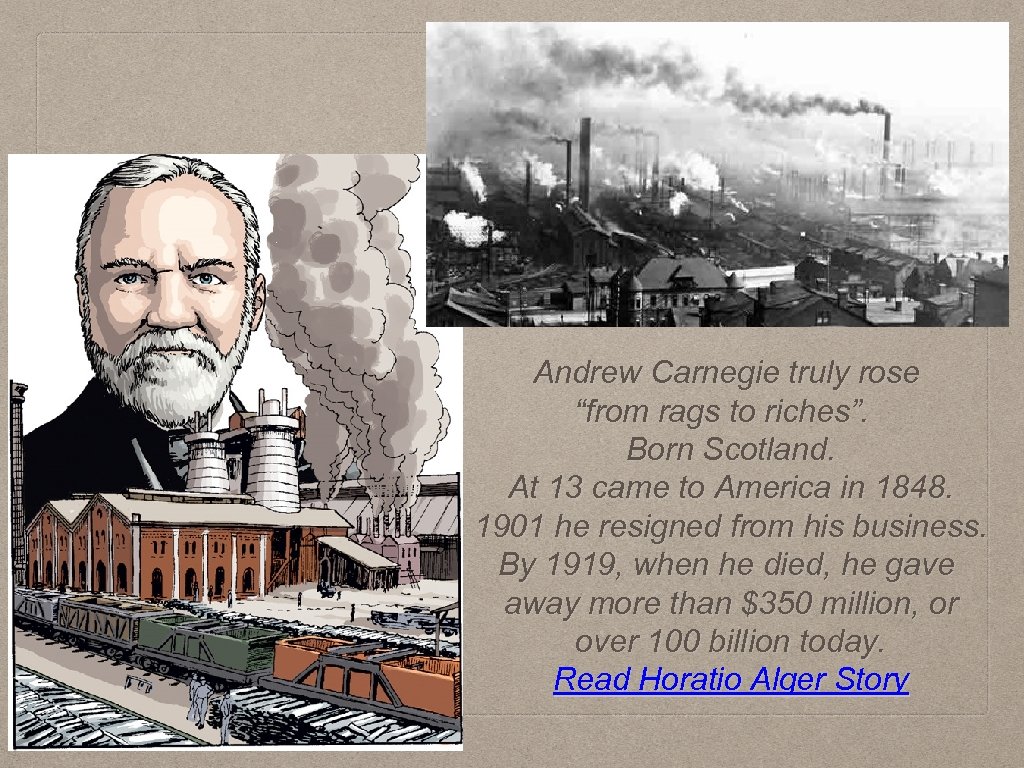 Andrew Carnegie truly rose “from rags to riches”. Born Scotland. At 13 came to America in 1848. 1901 he resigned from his business. By 1919, when he died, he gave away more than $350 million, or over 100 billion today. Read Horatio Alger Story
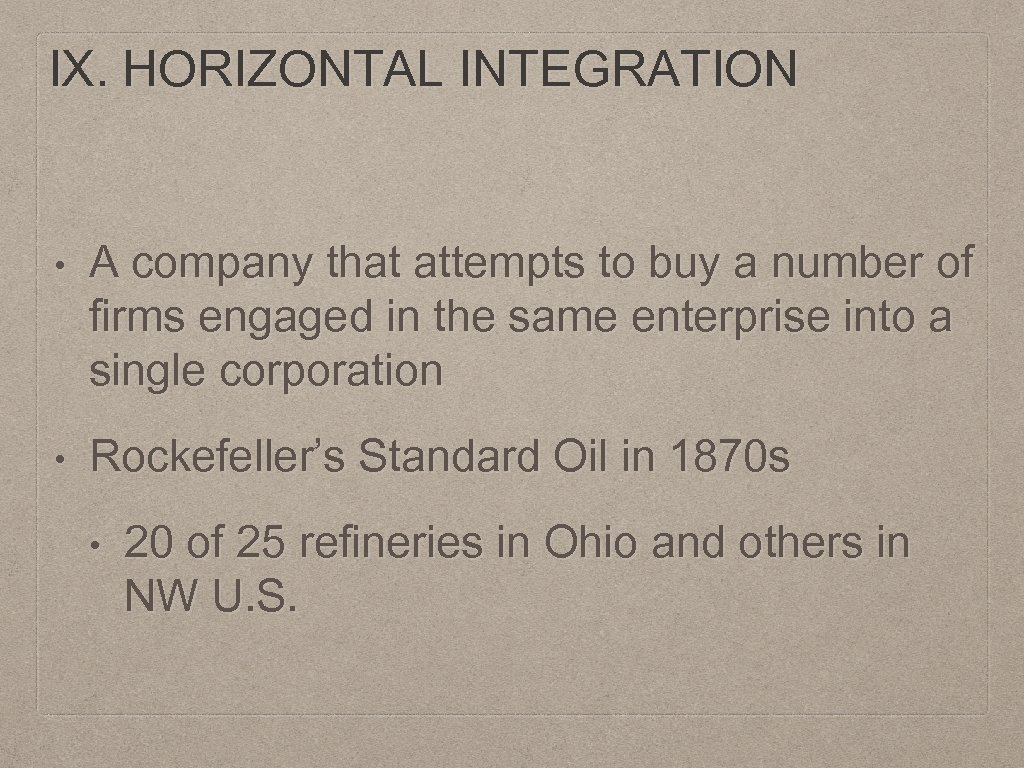 IX. HORIZONTAL INTEGRATION • A company that attempts to buy a number of firms engaged in the same enterprise into a single corporation • Rockefeller’s Standard Oil in 1870 s • 20 of 25 refineries in Ohio and others in NW U. S.
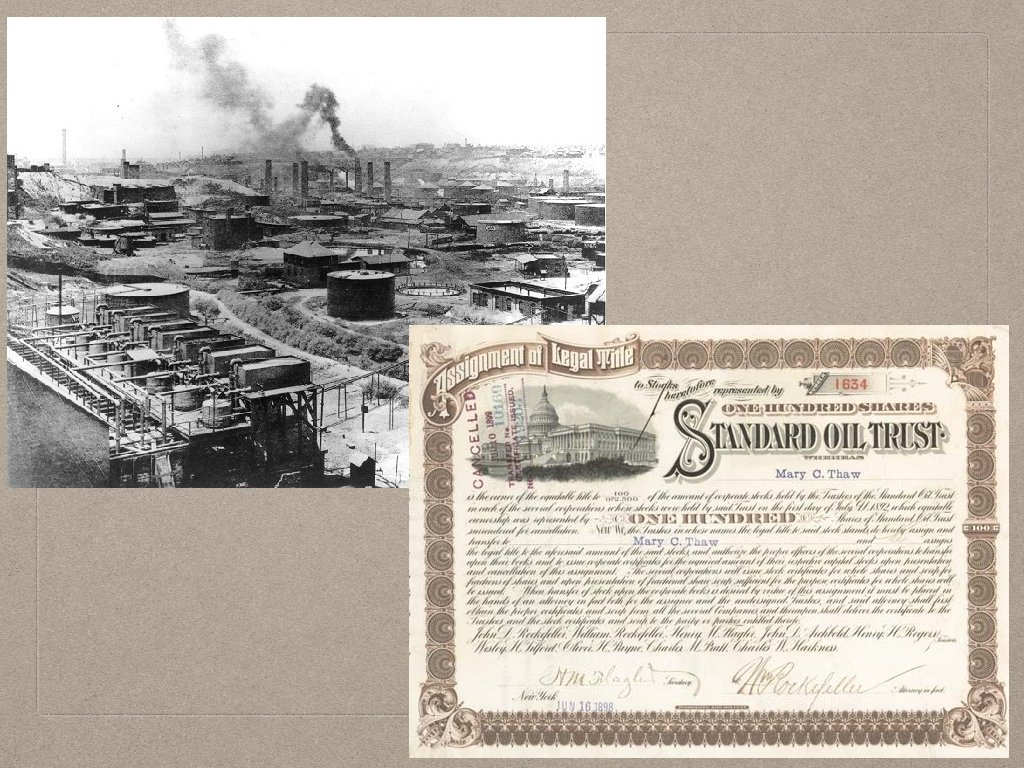
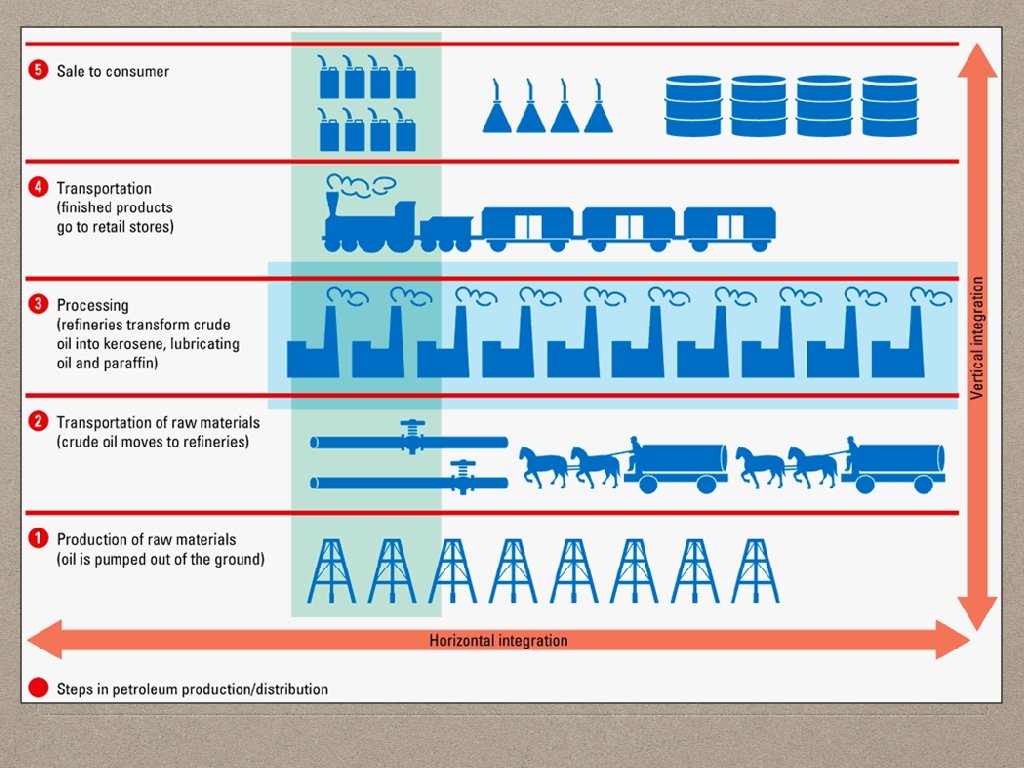
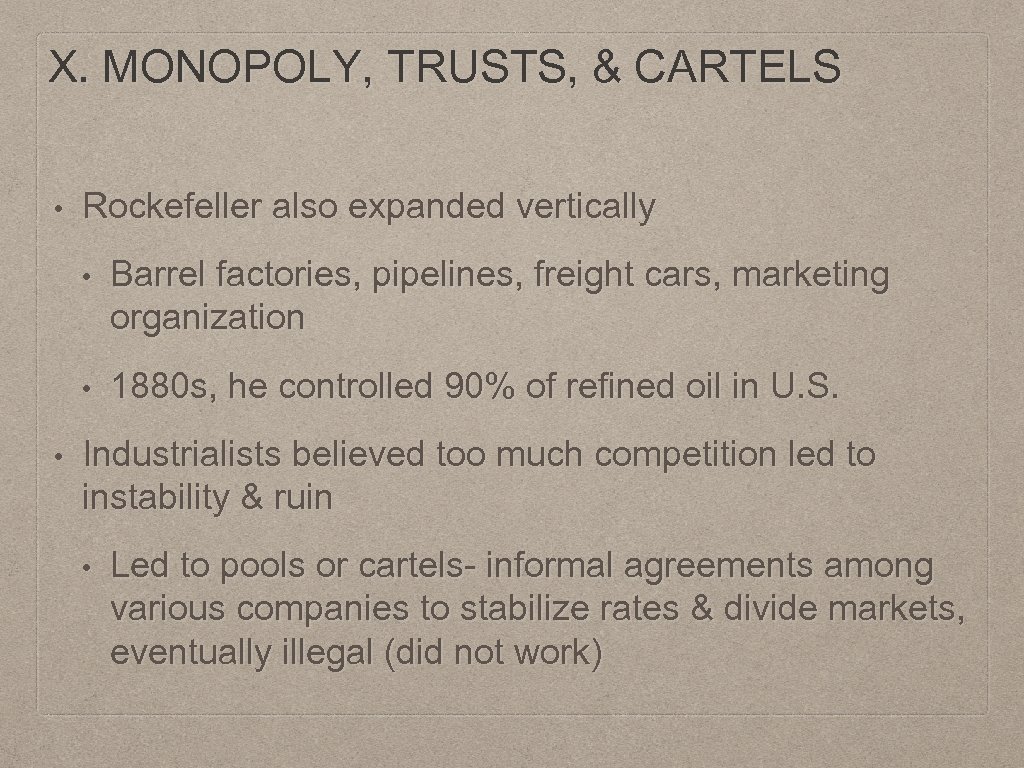 X. MONOPOLY, TRUSTS, & CARTELS • Rockefeller also expanded vertically • • • Barrel factories, pipelines, freight cars, marketing organization 1880 s, he controlled 90% of refined oil in U. S. Industrialists believed too much competition led to instability & ruin • Led to pools or cartels- informal agreements among various companies to stabilize rates & divide markets, eventually illegal (did not work)
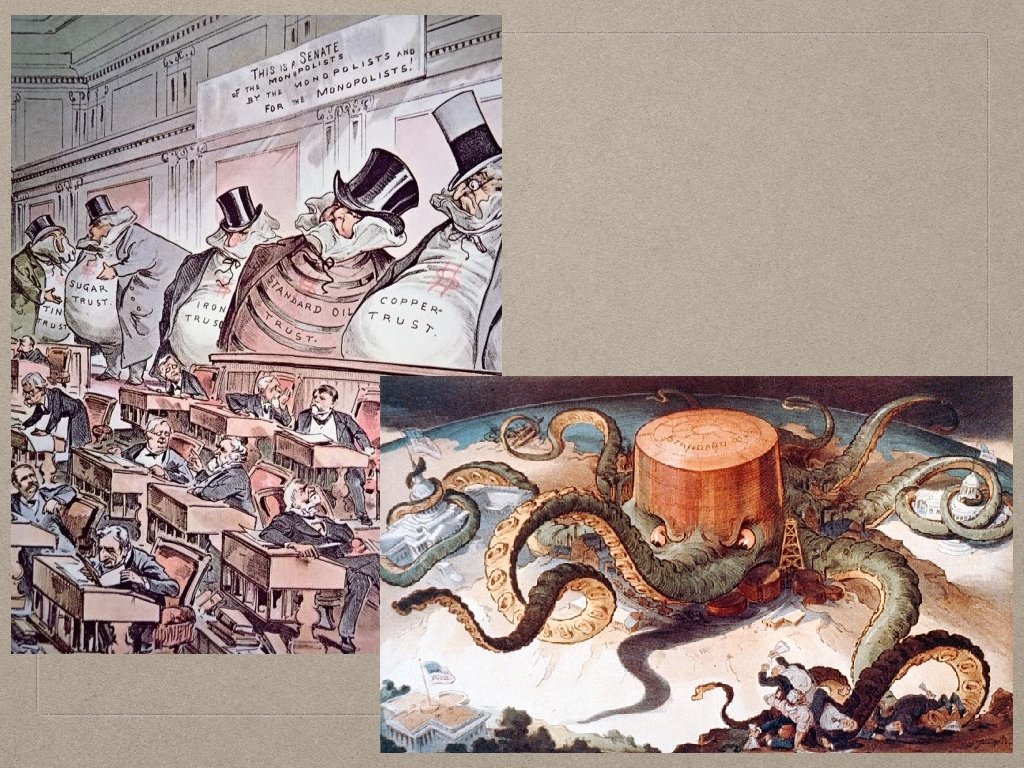
 X. MONOPOLY, TRUSTS, & CARTELS • Rockefeller convinced smaller competitors to ally with Standard Oil by allowing his board to control their stock thereby creating less competition = trust • He controlled a monopoly- when a company controls all of one type of industry, ending competition, and potentially leading to unfair business practices
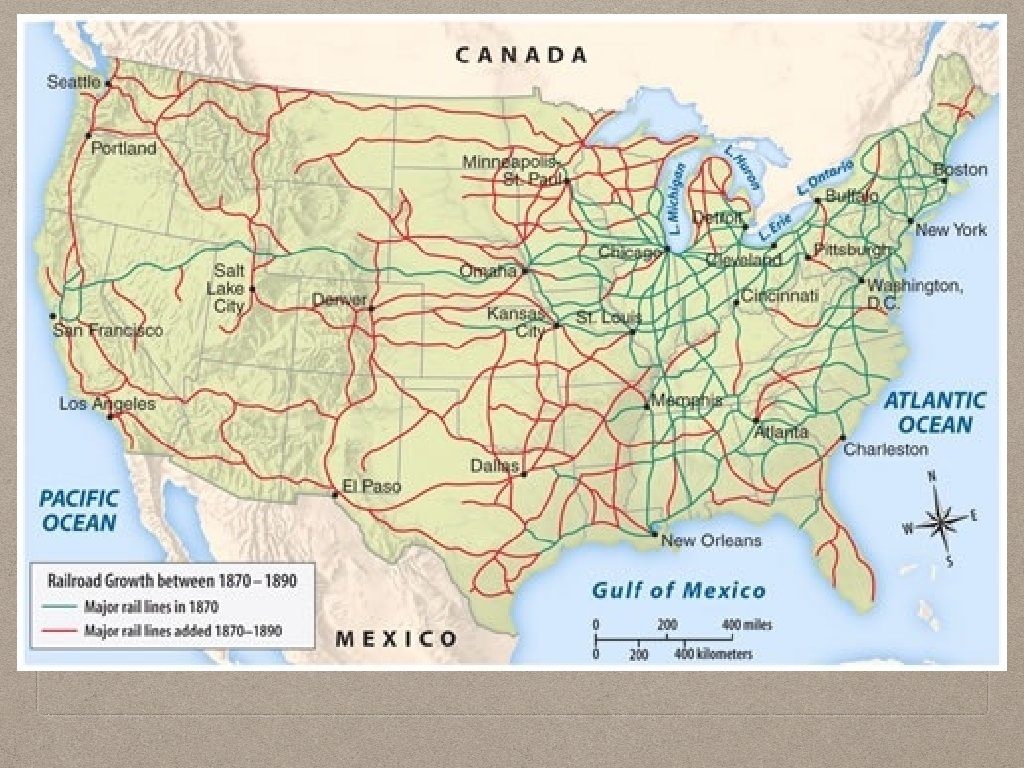
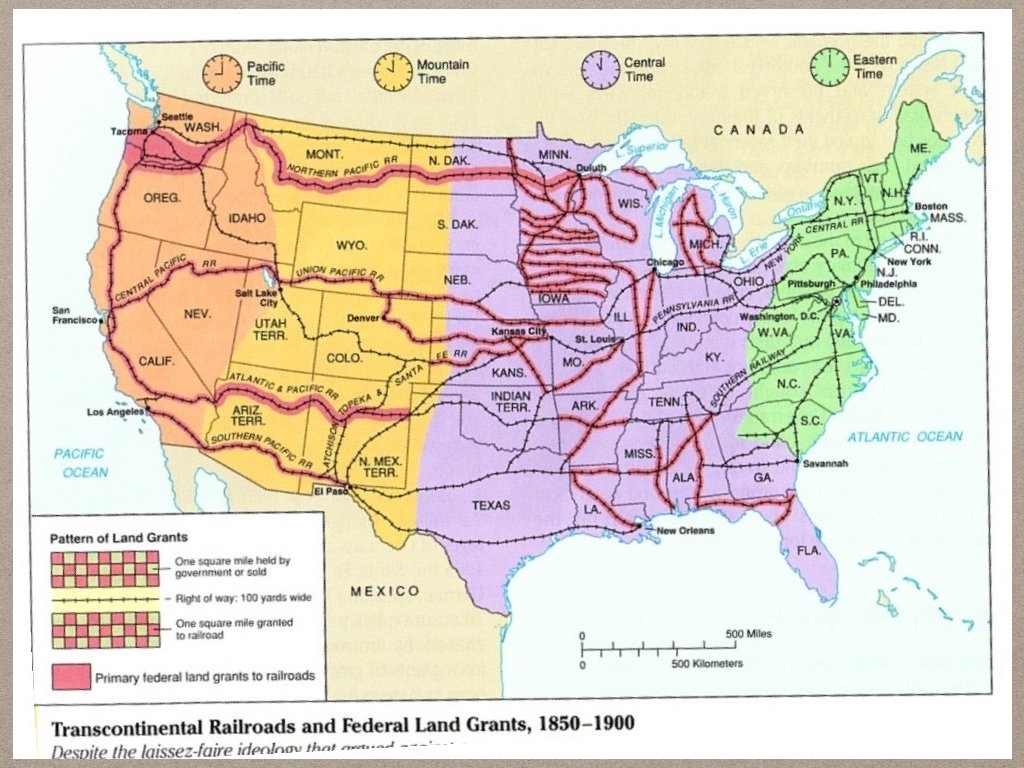
 XI. RAILROADS IN AMERICA • Transcontinental RR costly & risky so govt subsidies necessary • Pacific Railway Act of 1862 (PRA) granted land to Union Pacific and Central Pacific, was a loan • RR tripled 1860 -80, again by 1920 • • 4 time zones created Transcontinental RR completed in 7 years
 XI. TRANSCONTINENTAL RR • UP from Omaha to Salt Lake City built by many “Paddies” • CP Sacramento to Salt Lake city built by Chinese • Big Four: Collis Huntington, Leland Stanford, Mark Hopkins, & Charles Crocker- the Presidents of the CP RR
 XXIV. SOCIAL DARWINISM • Charles Darwin’s laws of evolution & natural selection- fittest survive in nature = fittest survive in marketplace • Some argued that society benefitted from this philosophy • • American ideals of freedom and individualism • Adam Smith: free market regulated only by competition = laissez faire • • Businessmen in a capitalistic society Govts. /unions would be unsuccessful limiting these laws Ppl that made these claims actively tried to escape competition

 XXIV. SOCIAL DARWINISM • Rockefeller said, “The growth of a large business is merely the survival of the fittest. This is not an evil tendency in business. It is merely the working out of the law of nature and the law of God. ” • Influential Yale Professor, William Graham Sumner: “In a free state, ” no one was entitled to claim “help from, and cannot be charged to [offer] help to, another. ” He believed government existed only to protect, “the property of men and the honor of women, ” not to upset the social arrangements decreed by nature.
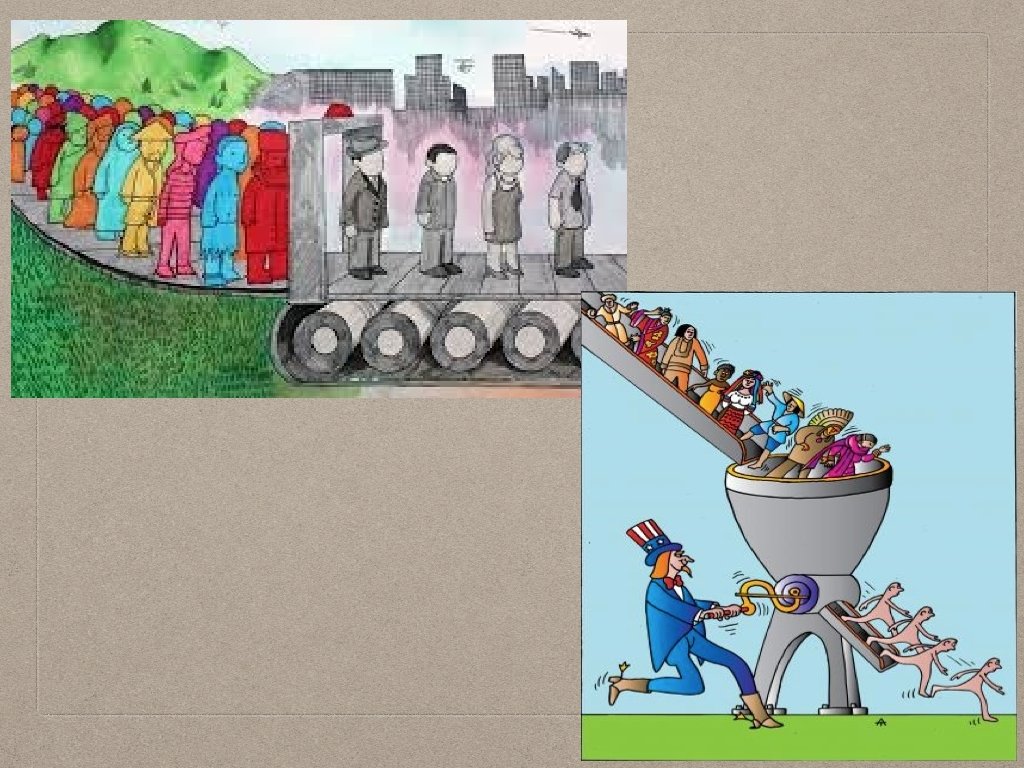
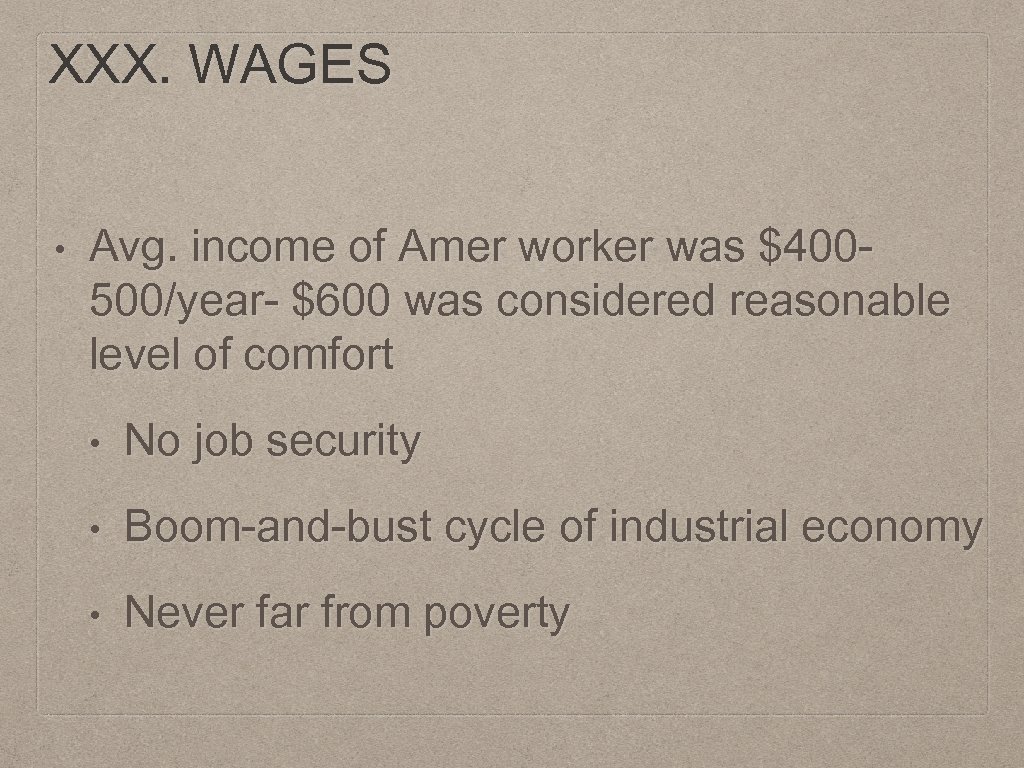
 XXVI. GROWTH OF CITIES • Rural Americans into urban factories • • New economic & social opportunities in the city • • Life on farm changing Women and southern blacks Immigration from Mexico, Asia, Canada, and above all Europe
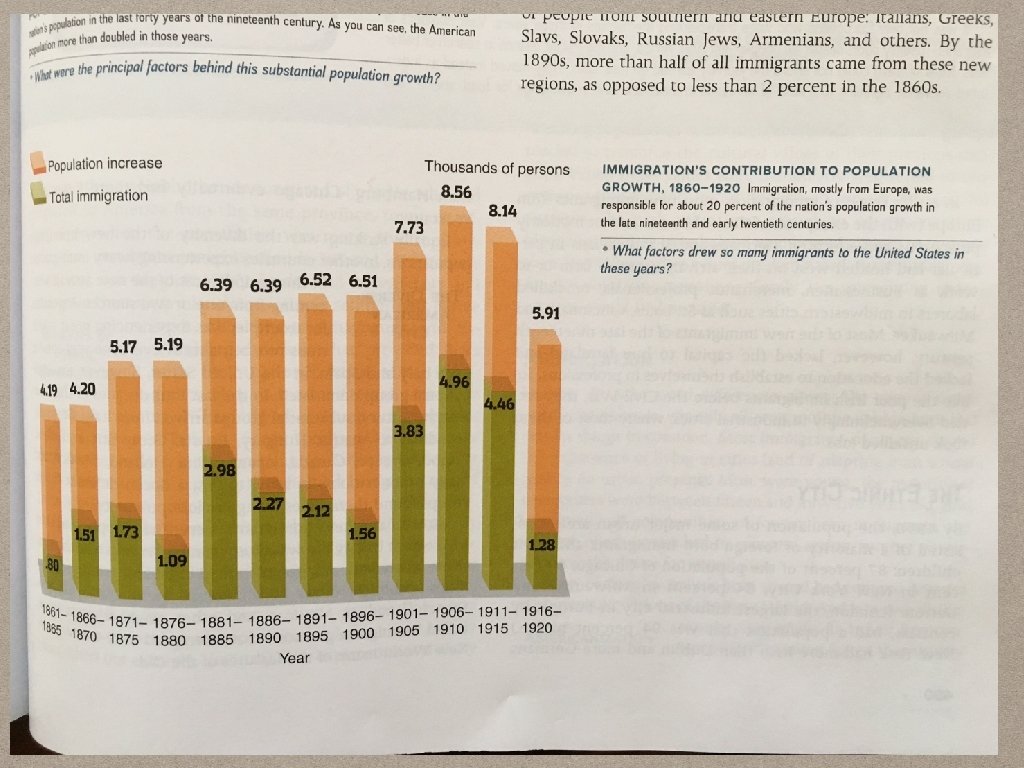
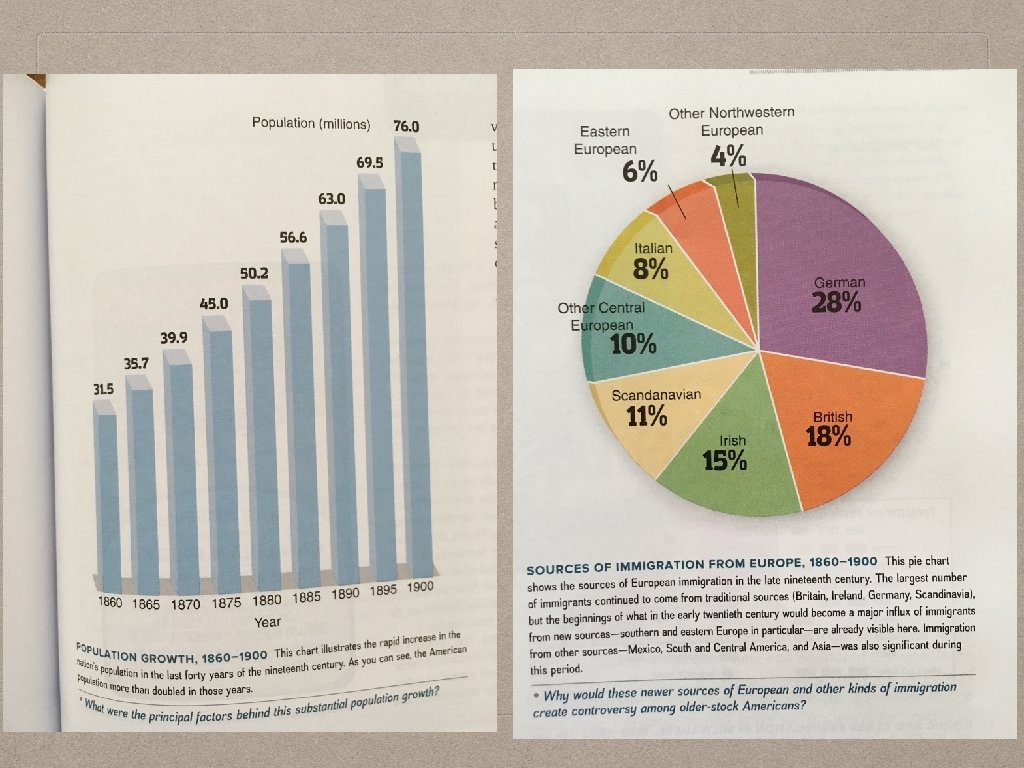
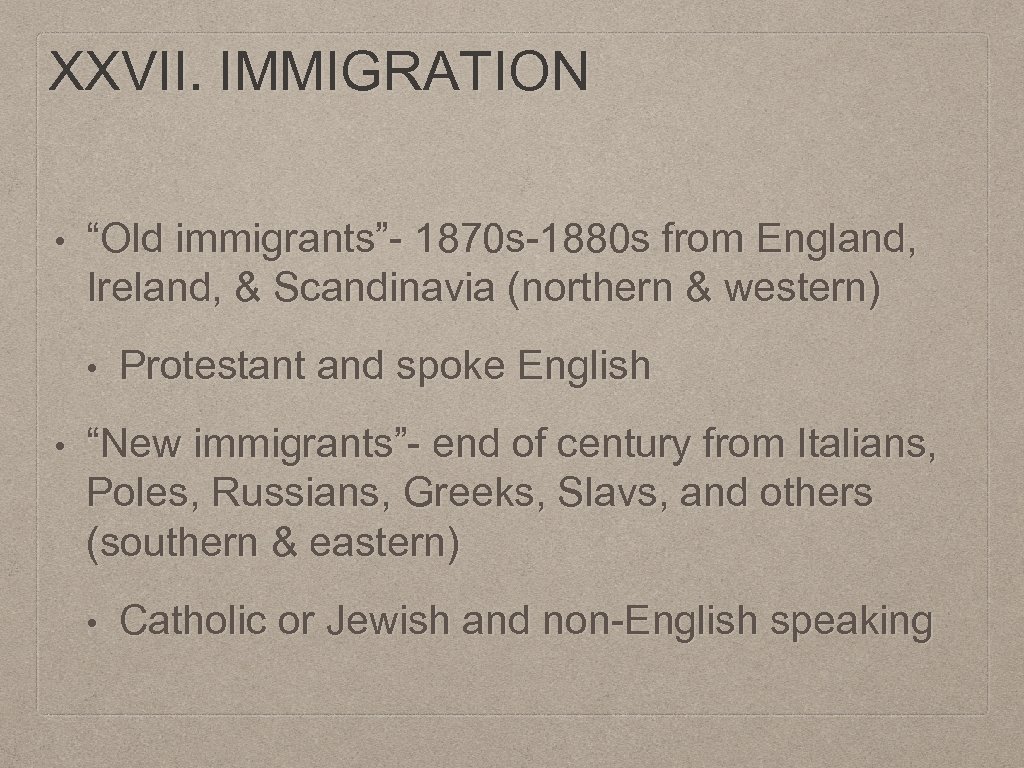 XXVII. IMMIGRATION • “Old immigrants”- 1870 s-1880 s from England, Ireland, & Scandinavia (northern & western) • • Protestant and spoke English “New immigrants”- end of century from Italians, Poles, Russians, Greeks, Slavs, and others (southern & eastern) • Catholic or Jewish and non-English speaking
 XXVII. IMMIGRATION • Major sources in the West: • Mexico estimated 1 million in first 3 decades of 20 th century • China until Chinese Exclusion Act of 1882 • Transcontinental RR • 1877, 17% of California’s population • Trouble assimilating to Amer culture
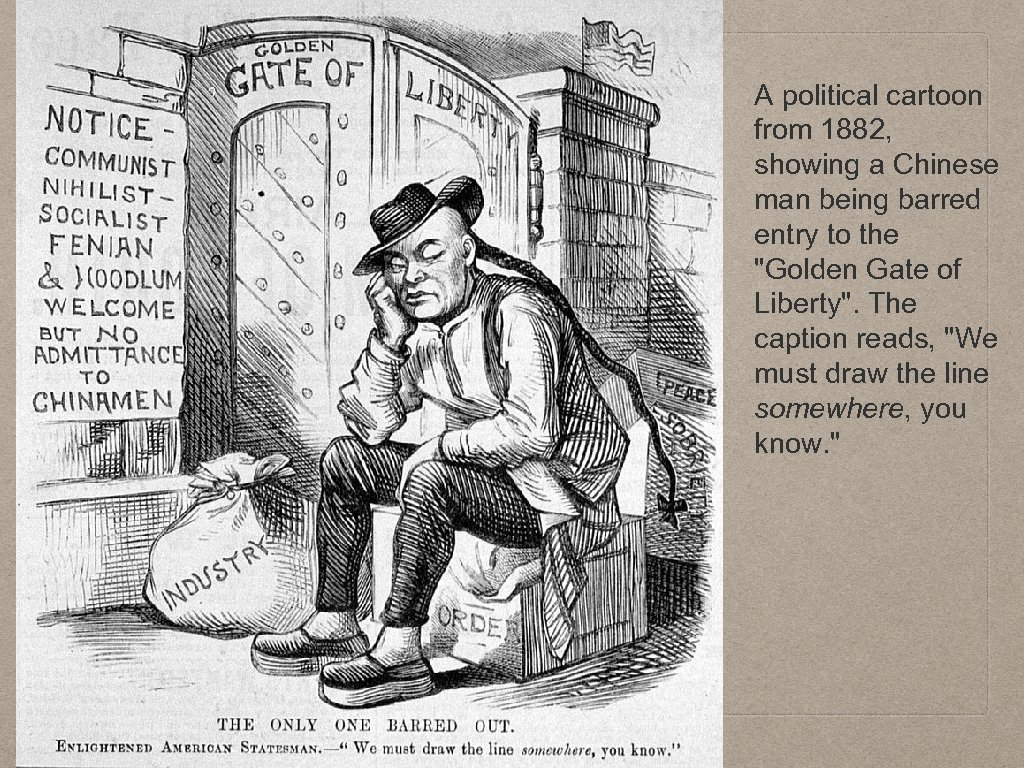 A political cartoon from 1882, showing a Chinese man being barred entry to the "Golden Gate of Liberty". The caption reads, "We must draw the line somewhere, you know. "
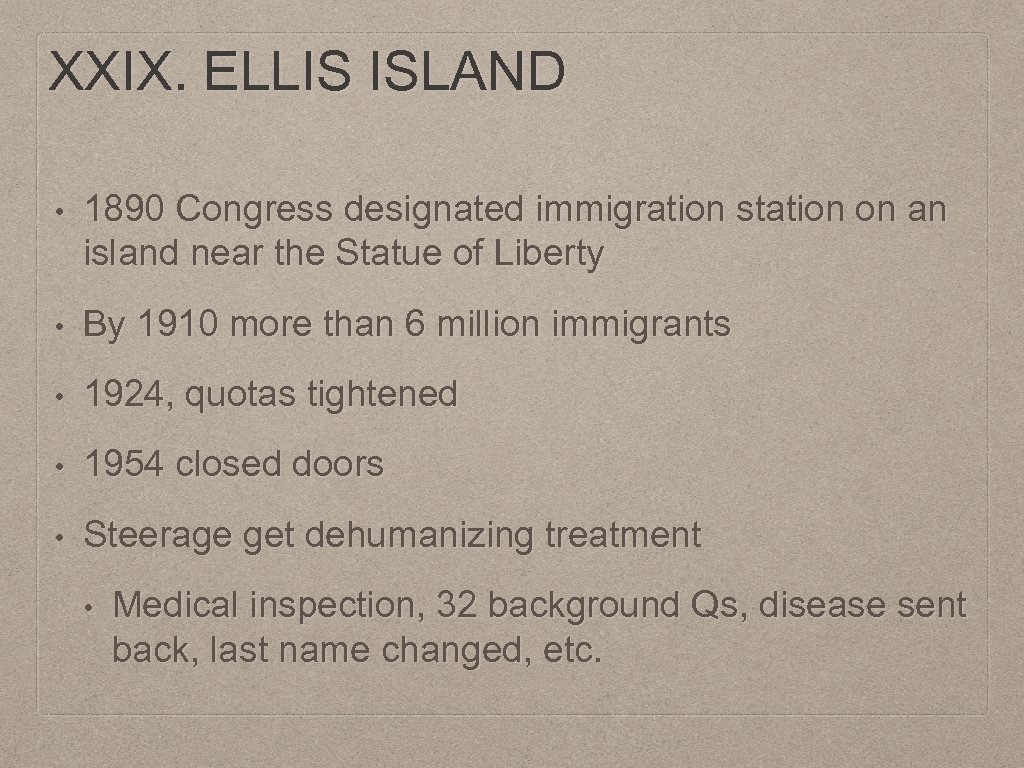 XXIX. ELLIS ISLAND • 1890 Congress designated immigration station on an island near the Statue of Liberty • By 1910 more than 6 million immigrants • 1924, quotas tightened • 1954 closed doors • Steerage get dehumanizing treatment • Medical inspection, 32 background Qs, disease sent back, last name changed, etc.
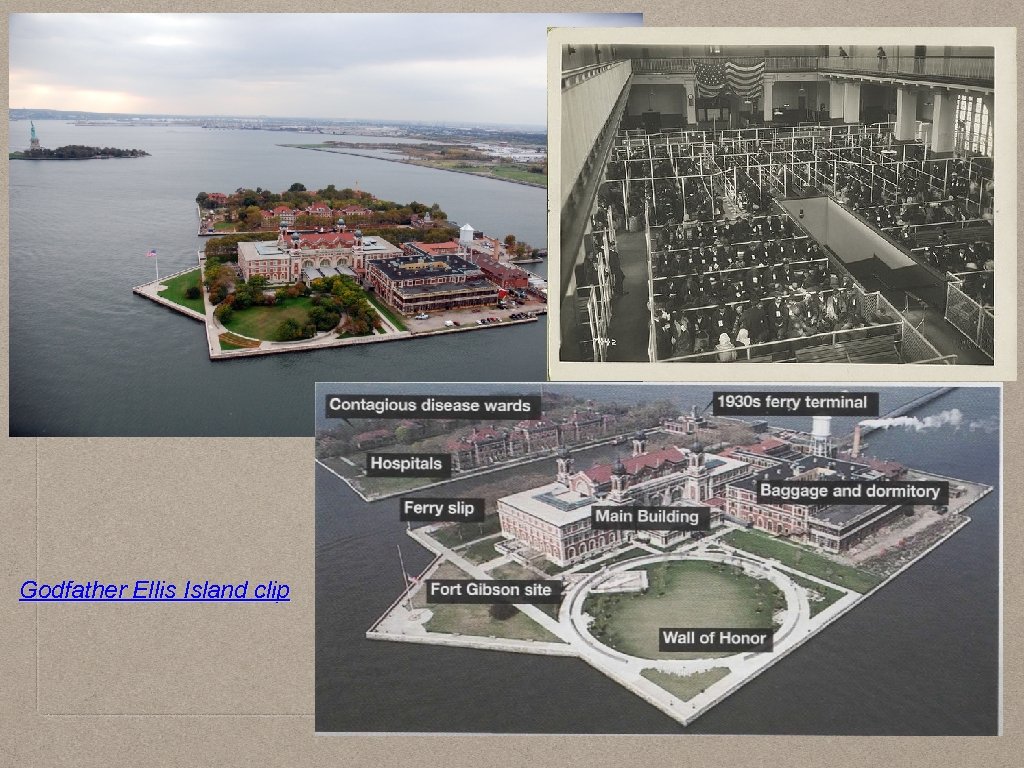 Godfather Ellis Island clip
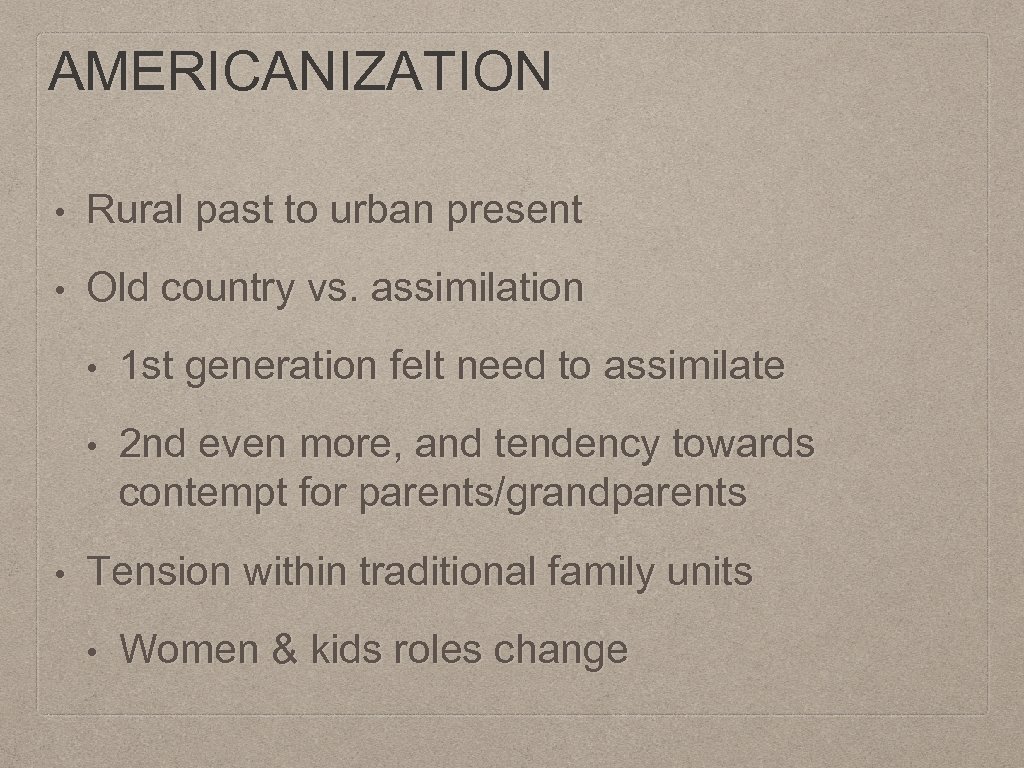 AMERICANIZATION • Rural past to urban present • Old country vs. assimilation • • • 1 st generation felt need to assimilate 2 nd even more, and tendency towards contempt for parents/grandparents Tension within traditional family units • Women & kids roles change
 XXX. WAGES • Avg. income of Amer worker was $400500/year- $600 was considered reasonable level of comfort • No job security • Boom-and-bust cycle of industrial economy • Never far from poverty
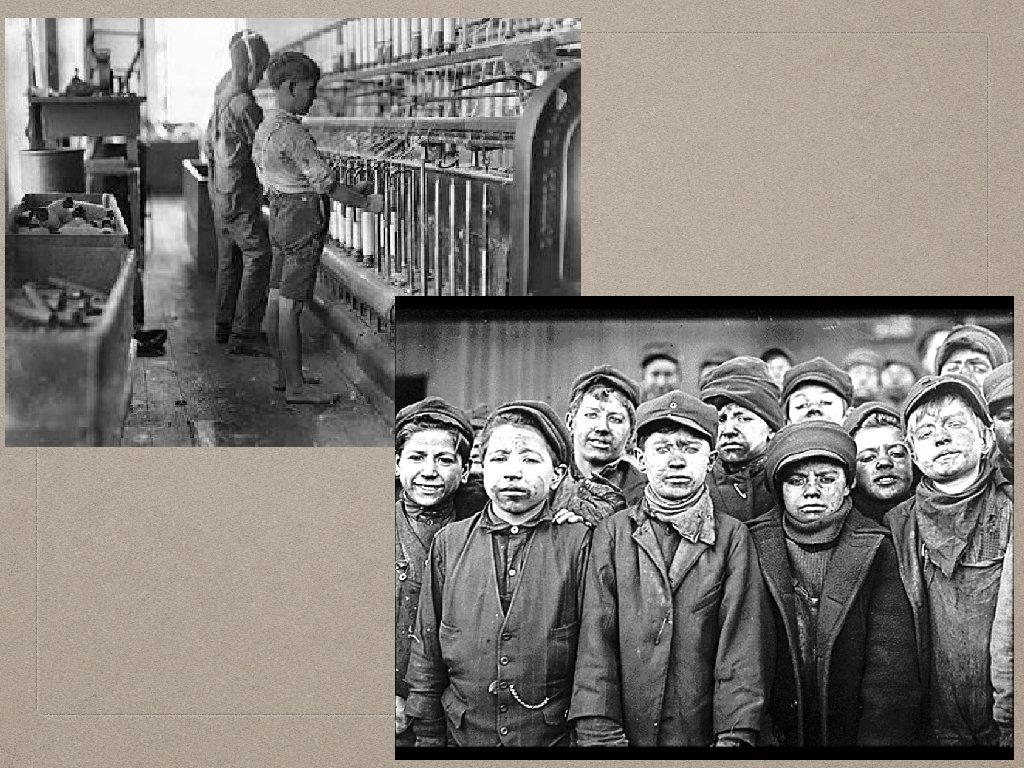
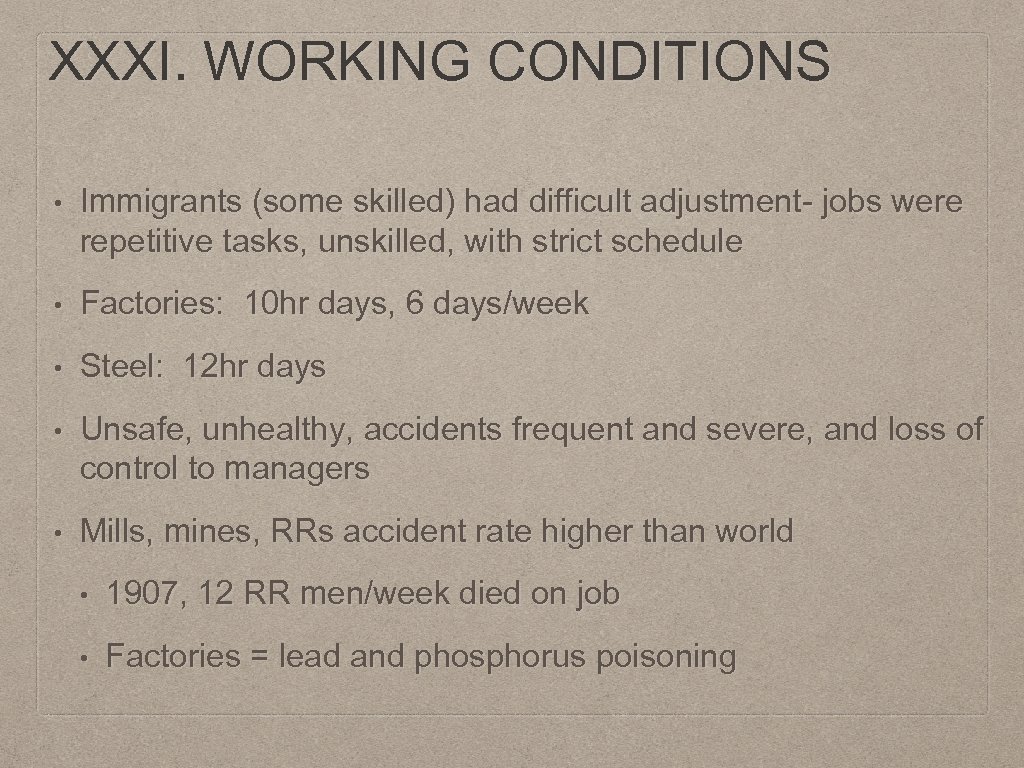 XXXI. WORKING CONDITIONS • Immigrants (some skilled) had difficult adjustment- jobs were repetitive tasks, unskilled, with strict schedule • Factories: 10 hr days, 6 days/week • Steel: 12 hr days • Unsafe, unhealthy, accidents frequent and severe, and loss of control to managers • Mills, mines, RRs accident rate higher than world • 1907, 12 RR men/week died on job • Factories = lead and phosphorus poisoning
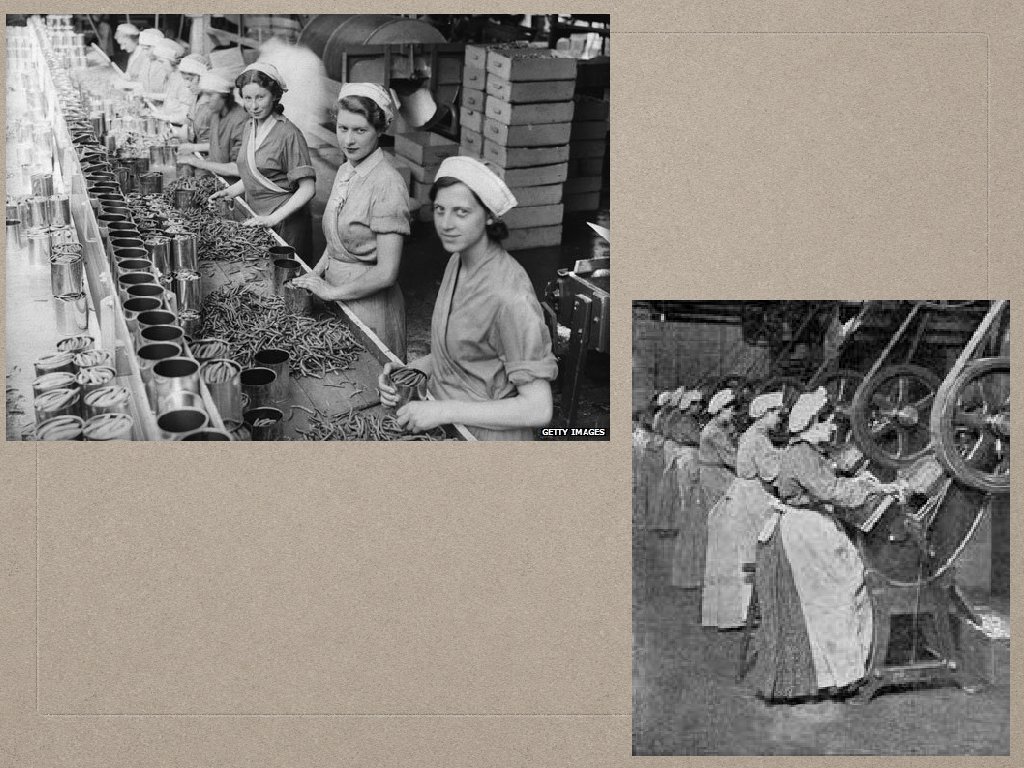
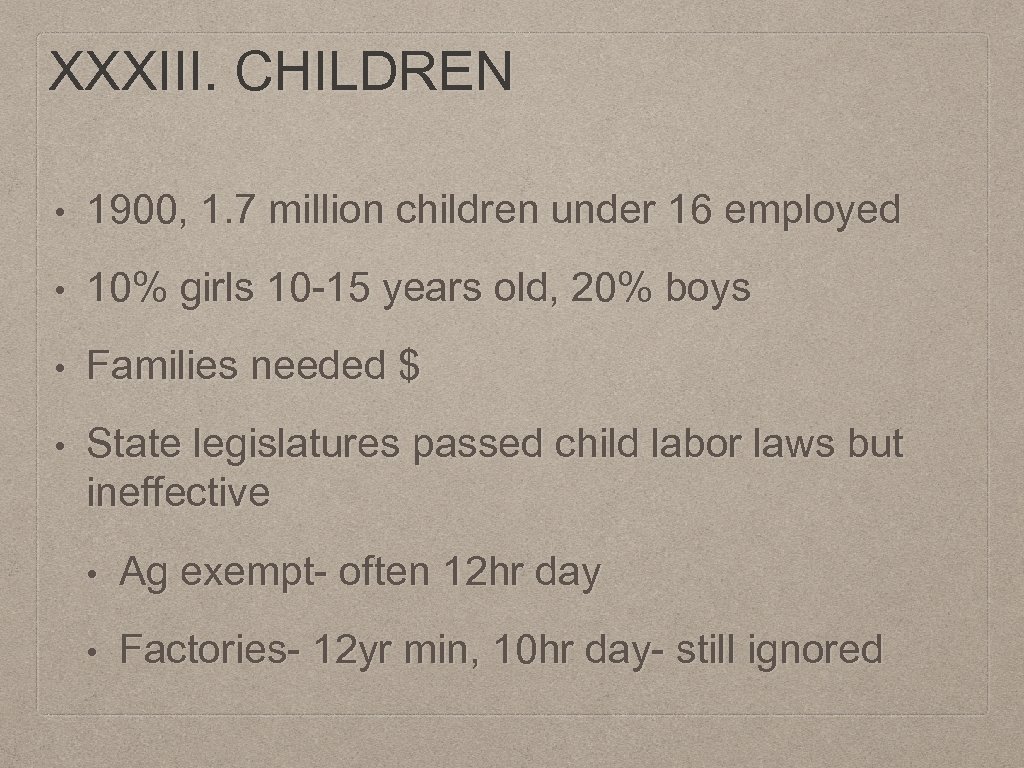
 XXXII. WOMEN • Could be paid less, made approximately half what a man made • 1900, women accounted for 17% of industrial workforce • Women worked to support families- husband wage not enough • • Some considered this a social problem Mostly white, young, and immigrants (or daughters of)
 XXXIII. CHILDREN • 1900, 1. 7 million children under 16 employed • 10% girls 10 -15 years old, 20% boys • Families needed $ • State legislatures passed child labor laws but ineffective • Ag exempt- often 12 hr day • Factories- 12 yr min, 10 hr day- still ignored
 XXXIV. UNIONS • Fight back using same tactics as big business- creating large combinations or unions • End 19 th century, little success