


 Скачать презентацию Industrial Organizational Psychology Lecture 17 18
aff9d0e05d8a11f0d60f04d170600545.ppt
- Количество слайдов: 31
 Industrial & Organizational Psychology Lecture 17 & 18
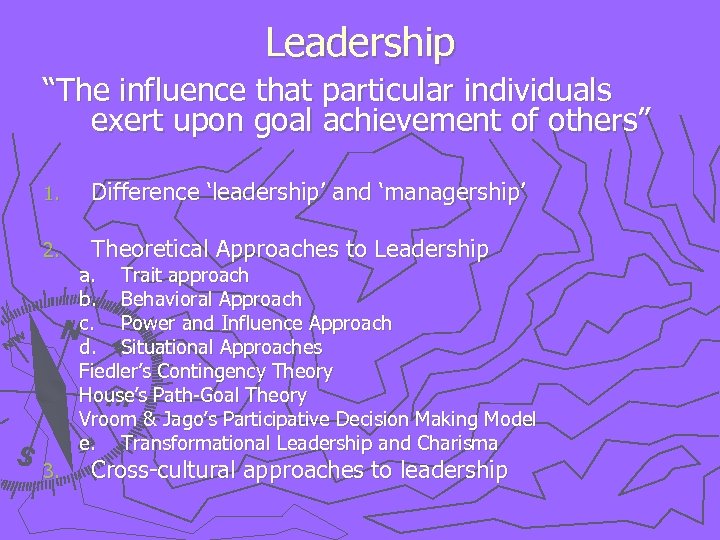 Leadership “The influence that particular individuals exert upon goal achievement of others” 1. Difference ‘leadership’ and ‘managership’ 2. Theoretical Approaches to Leadership 3. a. Trait approach b. Behavioral Approach c. Power and Influence Approach d. Situational Approaches Fiedler’s Contingency Theory House’s Path-Goal Theory Vroom & Jago’s Participative Decision Making Model e. Transformational Leadership and Charisma Cross-cultural approaches to leadership
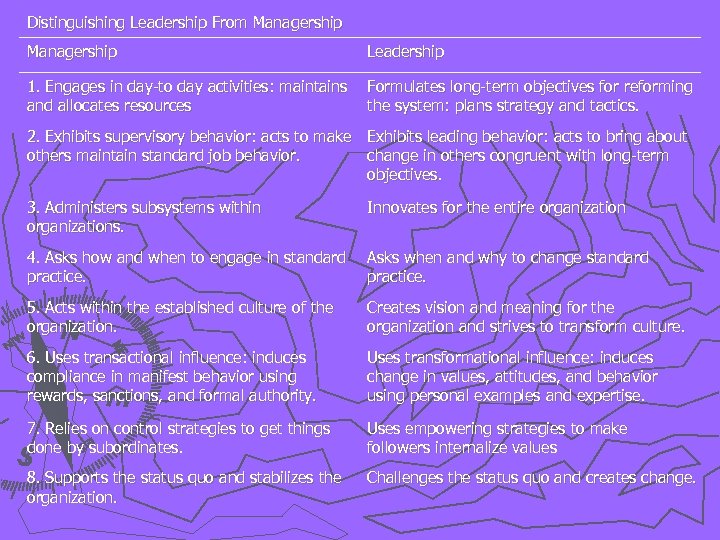 Distinguishing Leadership From Managership Leadership 1. Engages in day-to day activities: maintains and allocates resources Formulates long-term objectives for reforming the system: plans strategy and tactics. 2. Exhibits supervisory behavior: acts to make Exhibits leading behavior: acts to bring about others maintain standard job behavior. change in others congruent with long-term objectives. 3. Administers subsystems within organizations. Innovates for the entire organization 4. Asks how and when to engage in standard practice. Asks when and why to change standard practice. 5. Acts within the established culture of the organization. Creates vision and meaning for the organization and strives to transform culture. 6. Uses transactional influence: induces compliance in manifest behavior using rewards, sanctions, and formal authority. Uses transformational influence: induces change in values, attitudes, and behavior using personal examples and expertise. 7. Relies on control strategies to get things done by subordinates. Uses empowering strategies to make followers internalize values 8. Supports the status quo and stabilizes the organization. Challenges the status quo and creates change.
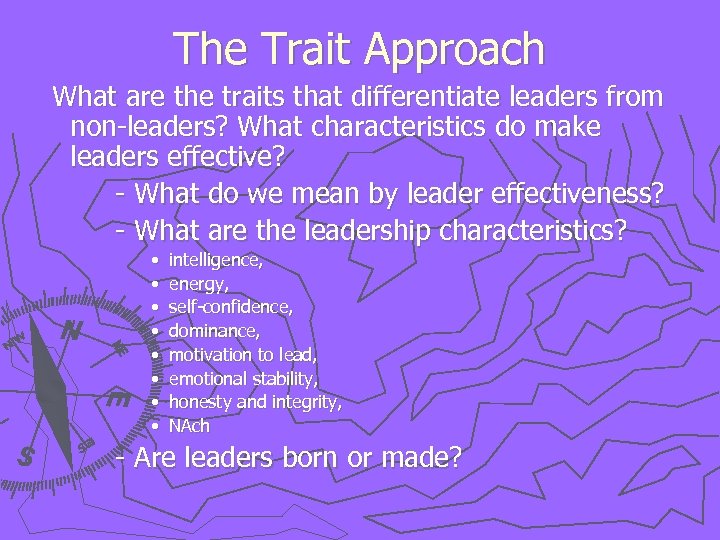 The Trait Approach What are the traits that differentiate leaders from non-leaders? What characteristics do make leaders effective? - What do we mean by leader effectiveness? - What are the leadership characteristics? • • intelligence, energy, self-confidence, dominance, motivation to lead, emotional stability, honesty and integrity, NAch - Are leaders born or made?

 The Behavioral Approach


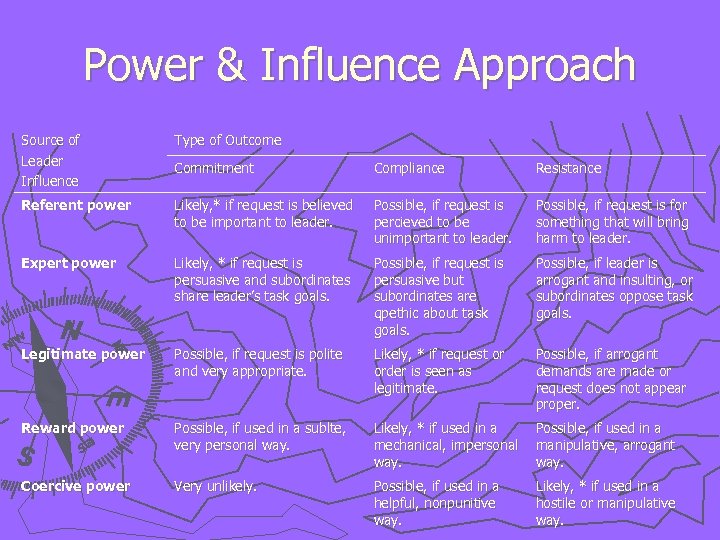 Power & Influence Approach Source of Leader Influence Type of Outcome Commitment Compliance Resistance Referent power Likely, * if request is believed to be important to leader. Possible, if request is percieved to be unimportant to leader. Possible, if request is for something that will bring harm to leader. Expert power Likely, * if request is persuasive and subordinates share leader’s task goals. Possible, if request is persuasive but subordinates are qpethic about task goals. Possible, if leader is arrogant and insulting, or subordinates oppose task goals. Legitimate power Possible, if request is polite and very appropriate. Likely, * if request or order is seen as legitimate. Possible, if arrogant demands are made or request does not appear proper. Reward power Possible, if used in a sublte, very personal way. Likely, * if used in a mechanical, impersonal way. Possible, if used in a manipulative, arrogant way. Coercive power Very unlikely. Possible, if used in a helpful, nonpunitive way. Likely, * if used in a hostile or manipulative way.
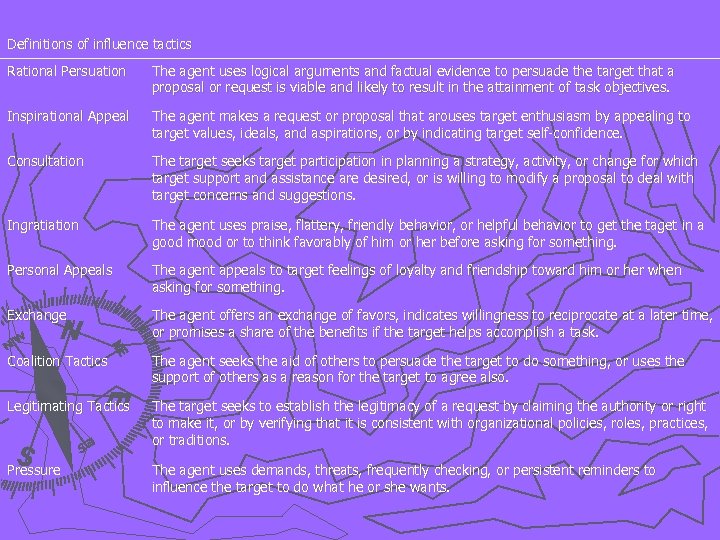 Definitions of influence tactics Rational Persuation The agent uses logical arguments and factual evidence to persuade the target that a proposal or request is viable and likely to result in the attainment of task objectives. Inspirational Appeal The agent makes a request or proposal that arouses target enthusiasm by appealing to target values, ideals, and aspirations, or by indicating target self-confidence. Consultation The target seeks target participation in planning a strategy, activity, or change for which target support and assistance are desired, or is willing to modify a proposal to deal with target concerns and suggestions. Ingratiation The agent uses praise, flattery, friendly behavior, or helpful behavior to get the taget in a good mood or to think favorably of him or her before asking for something. Personal Appeals The agent appeals to target feelings of loyalty and friendship toward him or her when asking for something. Exchange The agent offers an exchange of favors, indicates willingness to reciprocate at a later time, or promises a share of the benefits if the target helps accomplish a task. Coalition Tactics The agent seeks the aid of others to persuade the target to do something, or uses the support of others as a reason for the target to agree also. Legitimating Tactics The target seeks to establish the legitimacy of a request by claiming the authority or right to make it, or by verifying that it is consistent with organizational policies, roles, practices, or traditions. Pressure The agent uses demands, threats, frequently checking, or persistent reminders to influence the target to do what he or she wants.
 Situational Approaches
 Task Characteristics
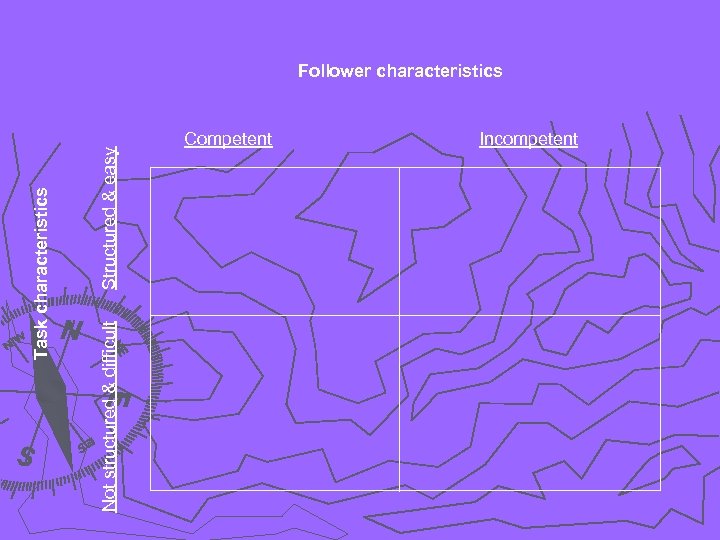 Not structured & difficult Structured & easy Task characteristics Follower characteristics Competent Incompetent
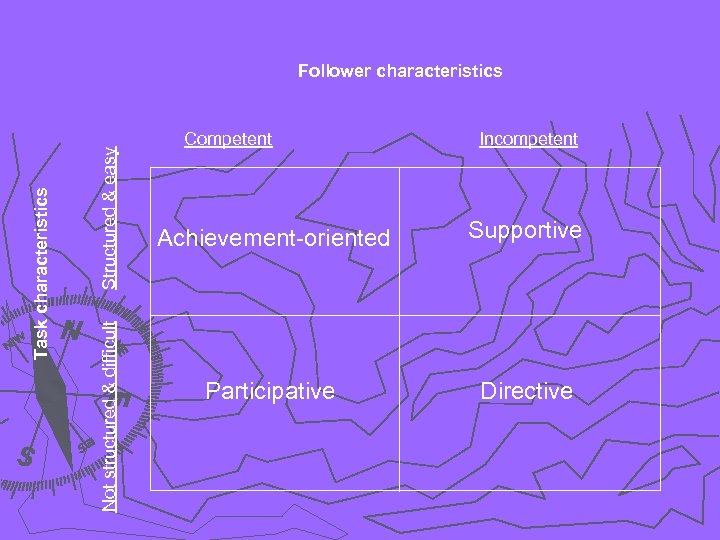 Structured & easy Not structured & difficult Task characteristics Follower characteristics Competent Incompetent Achievement-oriented Supportive Participative Directive
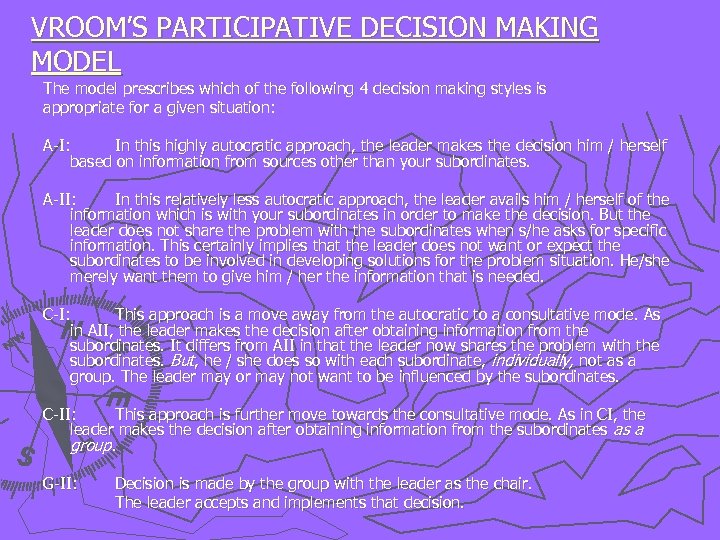 VROOM’S PARTICIPATIVE DECISION MAKING MODEL The model prescribes which of the following 4 decision making styles is appropriate for a given situation: A-I: In this highly autocratic approach, the leader makes the decision him / herself based on information from sources other than your subordinates. A-II: In this relatively less autocratic approach, the leader avails him / herself of the information which is with your subordinates in order to make the decision. But the leader does not share the problem with the subordinates when s/he asks for specific information. This certainly implies that the leader does not want or expect the subordinates to be involved in developing solutions for the problem situation. He/she merely want them to give him / her the information that is needed. C-I: This approach is a move away from the autocratic to a consultative mode. As in AII, the leader makes the decision after obtaining information from the subordinates. It differs from AII in that the leader now shares the problem with the subordinates. But, he / she does so with each subordinate, individually, not as a group. The leader may or may not want to be influenced by the subordinates. C-II: This approach is further move towards the consultative mode. As in CI, the leader makes the decision after obtaining information from the subordinates as a group. G-II: Decision is made by the group with the leader as the chair. The leader accepts and implements that decision.
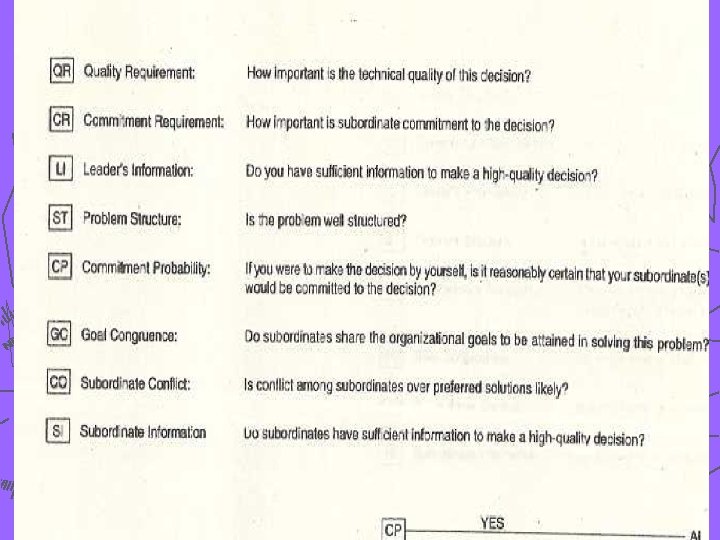
 AI GII CII AII CI CII AI GII
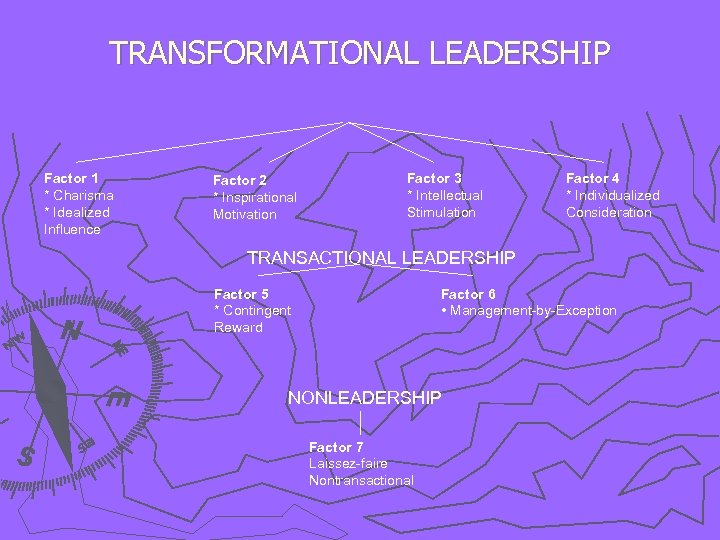 TRANSFORMATIONAL LEADERSHIP Factor 1 * Charisma * Idealized Influence Factor 2 * Inspirational Motivation Factor 3 * Intellectual Stimulation Factor 4 * Individualized Consideration TRANSACTIONAL LEADERSHIP Factor 5 * Contingent Reward Factor 6 • Management-by-Exception NONLEADERSHIP Factor 7 Laissez-faire Nontransactional
 Leadership: What is it for Who? ► “Arabs worship their leaders – as long as they are in power” ► “The Dutch place emphasis on egalitarianism and are skeptical about the value of leadership. Terms like leader and manager carry a stigma. If a father is employed as a manager, Dutch children will not admit it to their schoolmates…” ► “Russians seek power, strength and authority in their leaders. ” ► “The Malaysian leader is expected to behave in a manner that is humble, modest and dignified. ” 21
 ► “The Americans appreciate two kinds of leaders. They seek empowerment from leaders who grant autonomy and delegate authority to subordinates. They also respect the bold, forceful, confident, and risk-taking leader as personified by John Wayne. ” ► “For Europeans, everything seems to indicate that leadership is an unintended and undesirable consequence of democracy. ” ► “Indians prefers leaders who are nurturant, caring, dependable, sacrificing and yet demanding, authoritative, and strict disciplinarian. ” ► “German leaders / managers are expected to have the expertise in resolving technical problems. There is no need to ‘motivate’ workers; all they need to do is to answer all the questions. ” 22
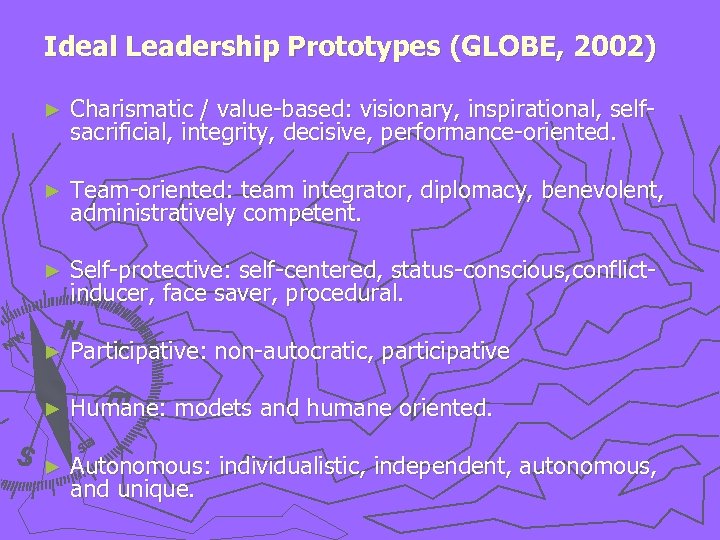 Ideal Leadership Prototypes (GLOBE, 2002) ► Charismatic / value-based: visionary, inspirational, selfsacrificial, integrity, decisive, performance-oriented. ► Team-oriented: team integrator, diplomacy, benevolent, administratively competent. ► Self-protective: self-centered, status-conscious, conflictinducer, face saver, procedural. ► Participative: non-autocratic, participative ► Humane: modets and humane oriented. ► Autonomous: individualistic, independent, autonomous, and unique.
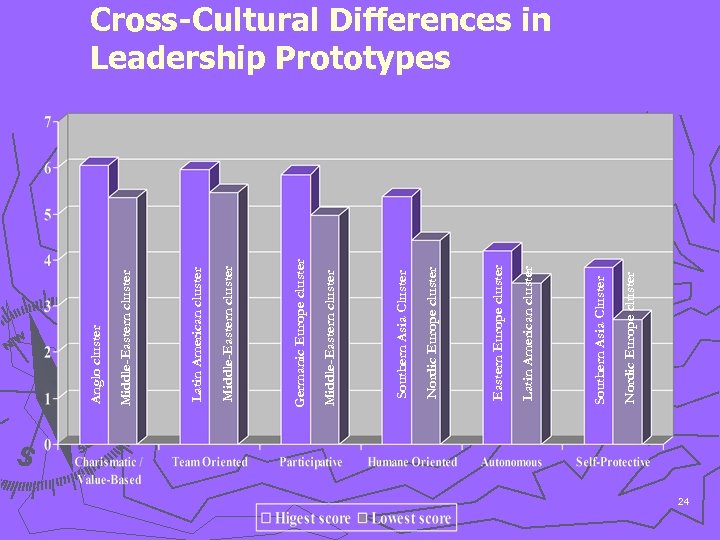 Nordic Europe cluster Southern Asia Cluster Latin American cluster Eastern Europe cluster Nordic Europe cluster Southern Asia Cluster Middle-Eastern cluster Germanic Europe cluster Middle-Eastern cluster Latin American cluster Middle-Eastern cluster Anglo cluster Cross-Cultural Differences in Leadership Prototypes 24
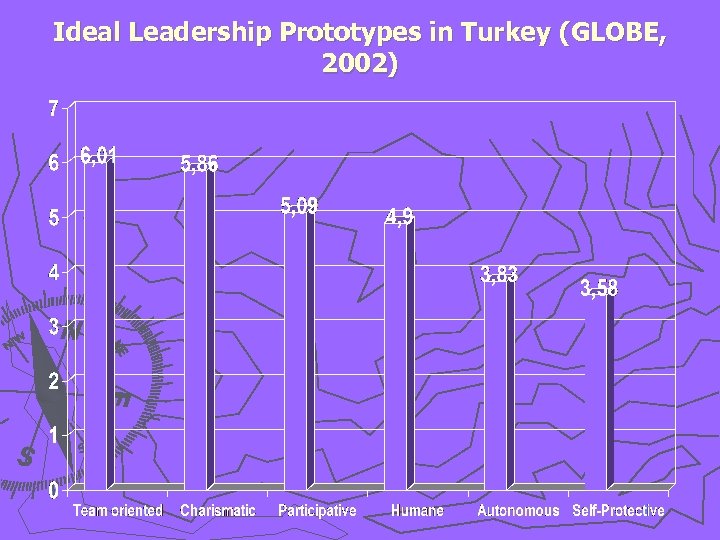 Ideal Leadership Prototypes in Turkey (GLOBE, 2002)
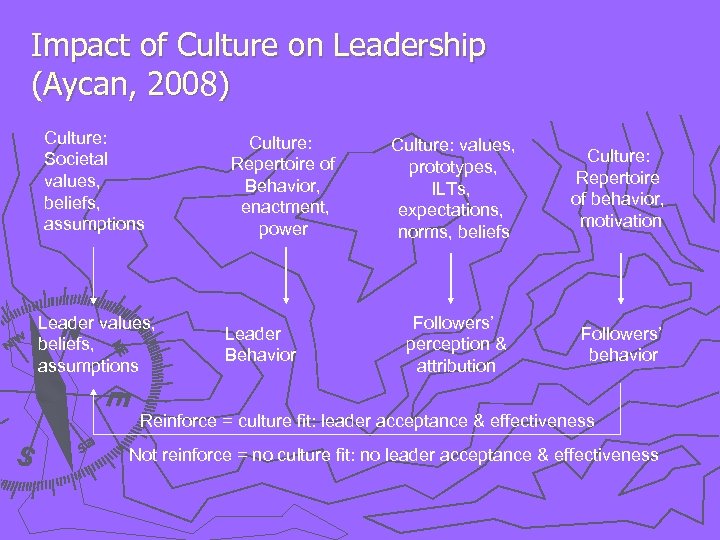 Impact of Culture on Leadership (Aycan, 2008) Culture: Societal values, beliefs, assumptions Leader values, beliefs, assumptions Culture: Repertoire of Behavior, enactment, power Leader Behavior Culture: values, prototypes, ILTs, expectations, norms, beliefs Culture: Repertoire of behavior, motivation Followers’ perception & attribution Followers’ behavior Reinforce = culture fit: leader acceptance & effectiveness Not reinforce = no culture fit: no leader acceptance & effectiveness
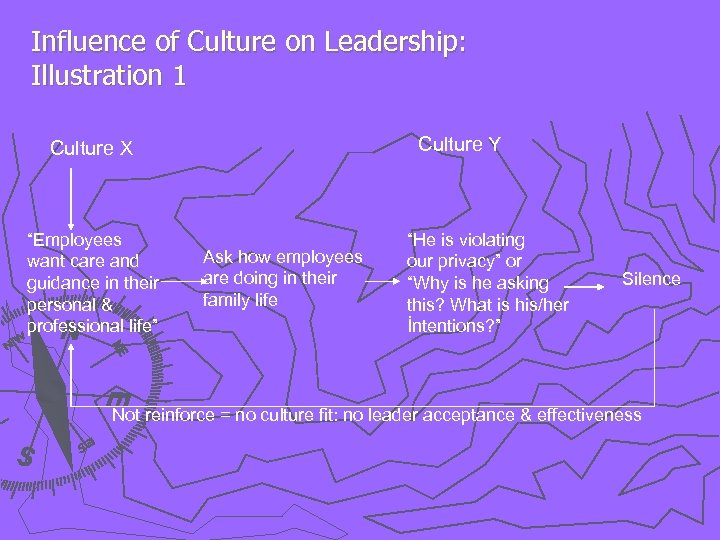 Influence of Culture on Leadership: Illustration 1 Culture Y Culture X “Employees want care and guidance in their personal & professional life” Ask how employees are doing in their family life “He is violating our privacy” or “Why is he asking this? What is his/her İntentions? ” Silence Not reinforce = no culture fit: no leader acceptance & effectiveness
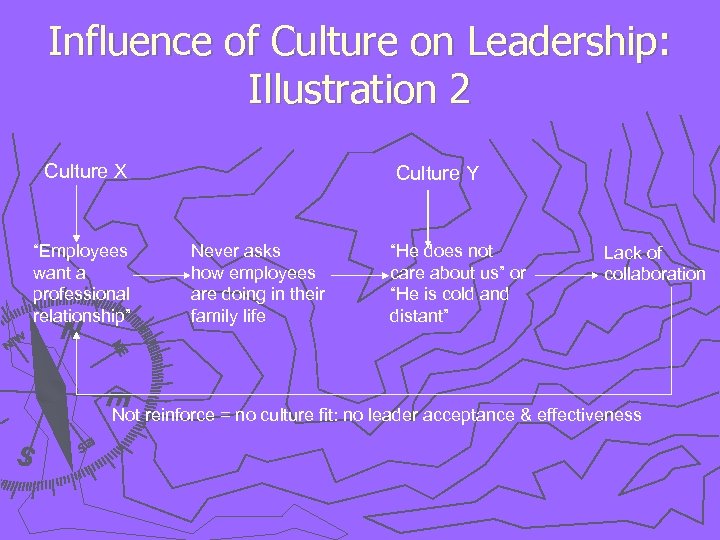 Influence of Culture on Leadership: Illustration 2 Culture X “Employees want a professional relationship” Culture Y Never asks how employees are doing in their family life “He does not care about us” or “He is cold and distant” Lack of collaboration Not reinforce = no culture fit: no leader acceptance & effectiveness
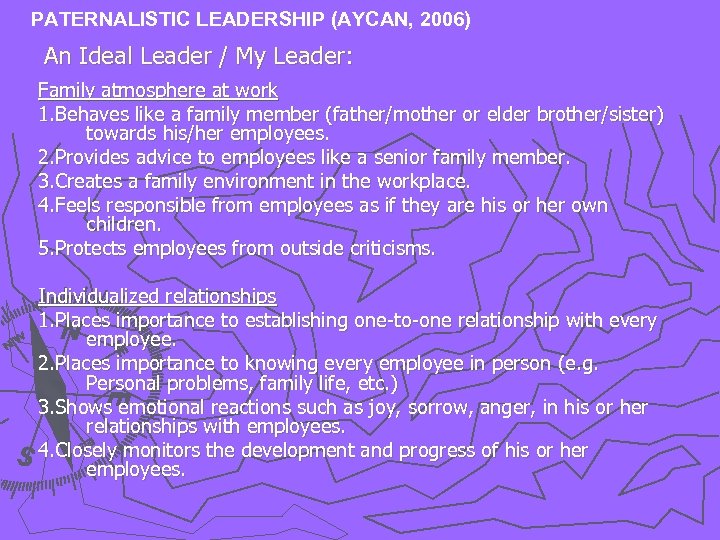 PATERNALISTIC LEADERSHIP (AYCAN, 2006) An Ideal Leader / My Leader: Family atmosphere at work 1. Behaves like a family member (father/mother or elder brother/sister) towards his/her employees. 2. Provides advice to employees like a senior family member. 3. Creates a family environment in the workplace. 4. Feels responsible from employees as if they are his or her own children. 5. Protects employees from outside criticisms. Individualized relationships 1. Places importance to establishing one-to-one relationship with every employee. 2. Places importance to knowing every employee in person (e. g. Personal problems, family life, etc. ) 3. Shows emotional reactions such as joy, sorrow, anger, in his or her relationships with employees. 4. Closely monitors the development and progress of his or her employees.
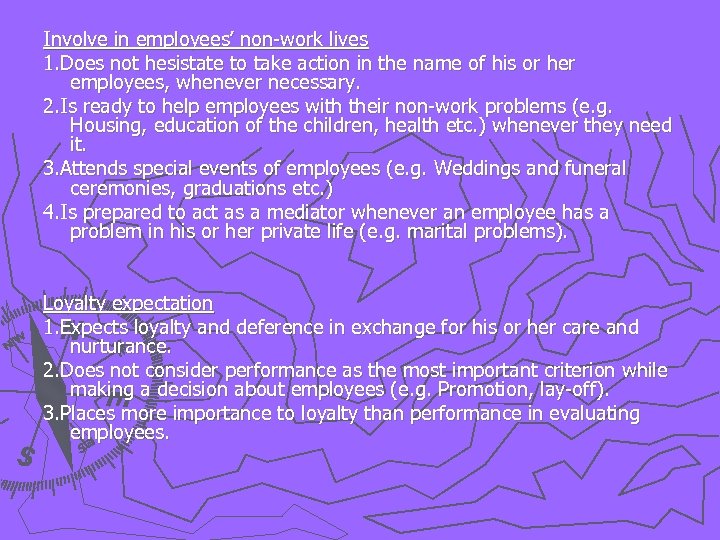 Involve in employees’ non-work lives 1. Does not hesistate to take action in the name of his or her employees, whenever necessary. 2. Is ready to help employees with their non-work problems (e. g. Housing, education of the children, health etc. ) whenever they need it. 3. Attends special events of employees (e. g. Weddings and funeral ceremonies, graduations etc. ) 4. Is prepared to act as a mediator whenever an employee has a problem in his or her private life (e. g. marital problems). Loyalty expectation 1. Expects loyalty and deference in exchange for his or her care and nurturance. 2. Does not consider performance as the most important criterion while making a decision about employees (e. g. Promotion, lay-off). 3. Places more importance to loyalty than performance in evaluating employees.
 Status hierarchy & authority 1. Is disciplinarian and at the same time nurturant (sweet & bitter). 2. Believes that s/he knows what is best for his or her employees. 3. Asks opinions of employees about work-related issues, however, makes the last decision himself or herself. 4. Despite establishing close relationships with employees, keeps his or her distance.