


 Скачать презентацию Industrial Development in the New Century Chi Schive
639aae7e45099d2b30b5cf398305a434.ppt
- Количество слайдов: 35
 Industrial Development in the New Century Chi Schive President Taiwan Academy of Banking and Finance Adjunct Professor National Taiwan University May 4, 2001
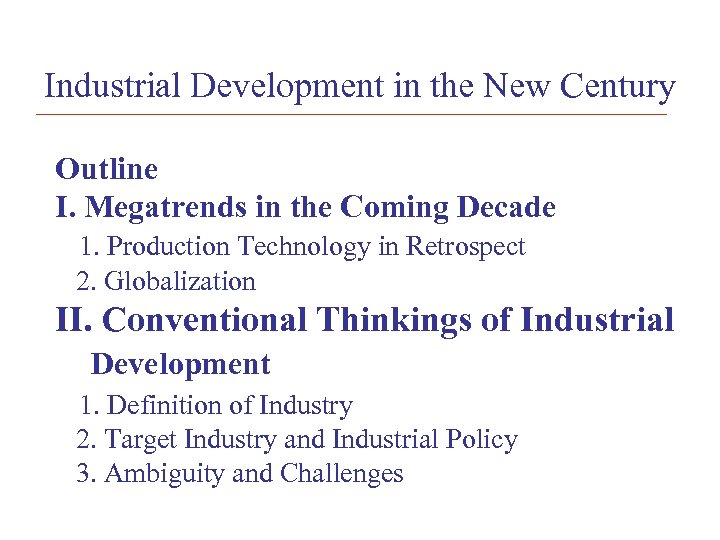 Industrial Development in the New Century Outline I. Megatrends in the Coming Decade 1. Production Technology in Retrospect 2. Globalization II. Conventional Thinkings of Industrial Development 1. Definition of Industry 2. Target Industry and Industrial Policy 3. Ambiguity and Challenges
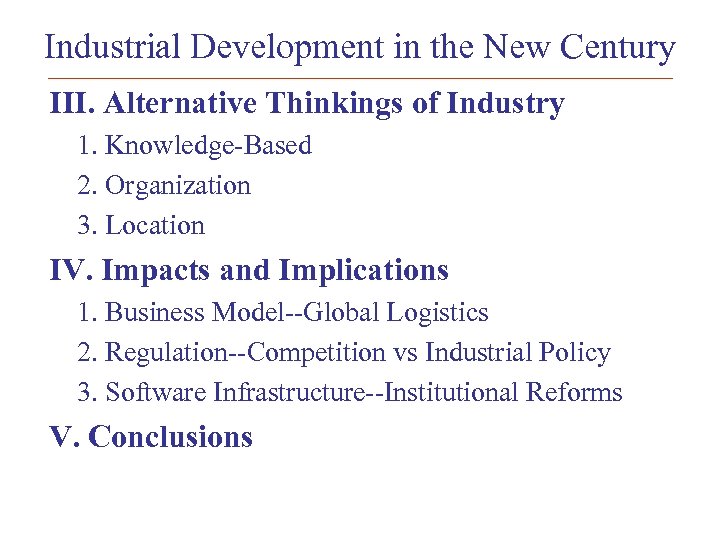 Industrial Development in the New Century III. Alternative Thinkings of Industry 1. Knowledge-Based 2. Organization 3. Location IV. Impacts and Implications 1. Business Model--Global Logistics 2. Regulation--Competition vs Industrial Policy 3. Software Infrastructure--Institutional Reforms V. Conclusions
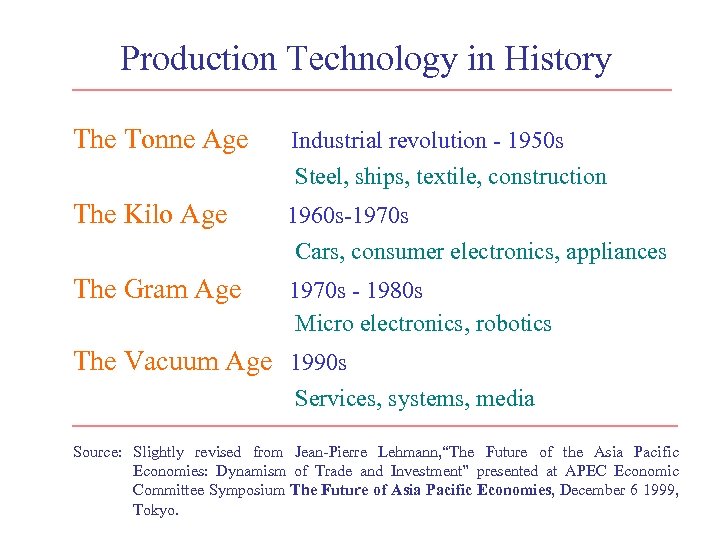 Production Technology in History The Tonne Age Industrial revolution - 1950 s Steel, ships, textile, construction The Kilo Age 1960 s-1970 s Cars, consumer electronics, appliances The Gram Age 1970 s - 1980 s Micro electronics, robotics The Vacuum Age 1990 s Services, systems, media Source: Slightly revised from Jean-Pierre Lehmann, “The Future of the Asia Pacific Economies: Dynamism of Trade and Investment” presented at APEC Economic Committee Symposium The Future of Asia Pacific Economies, December 6 1999, Tokyo.
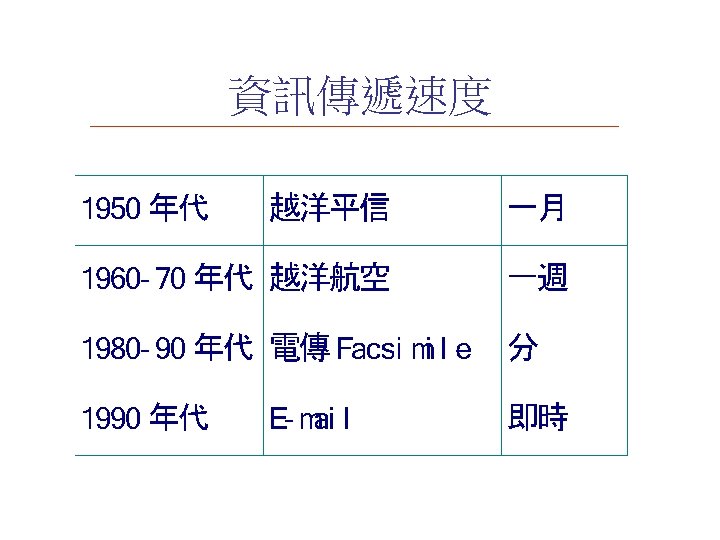 資訊傳遞速度
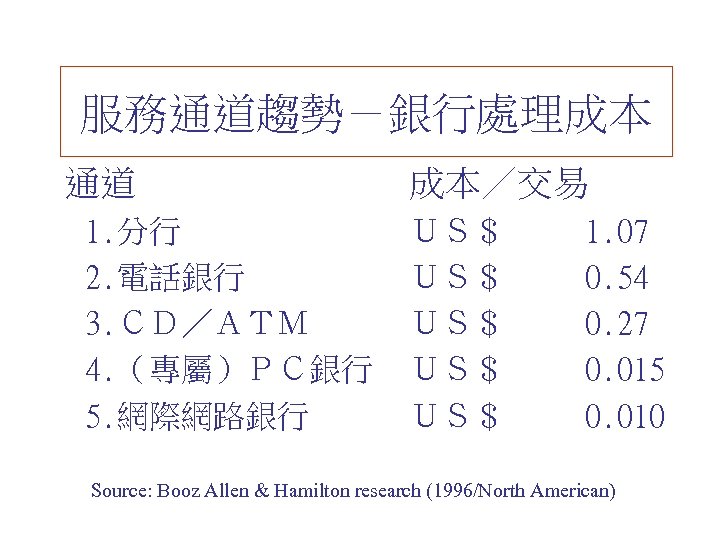 服務通道趨勢-銀行處理成本 通道 1. 分行 2. 電話銀行 3. CD/ATM 4. (專屬)PC銀行 5. 網際網路銀行 成本/交易 US$ US$ US$ 1. 07 0. 54 0. 27 0. 015 0. 010 Source: Booz Allen & Hamilton research (1996/North American)
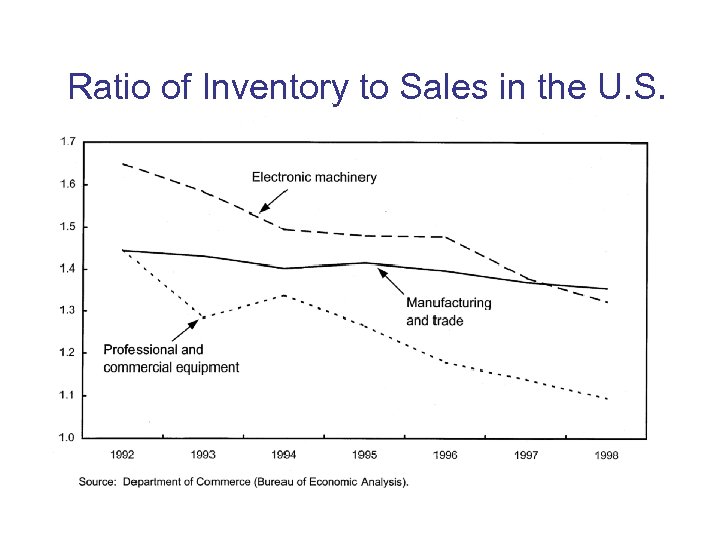 Lowering Real Inventory-to-Sales Ratio of Inventory to Sales in the U. S.
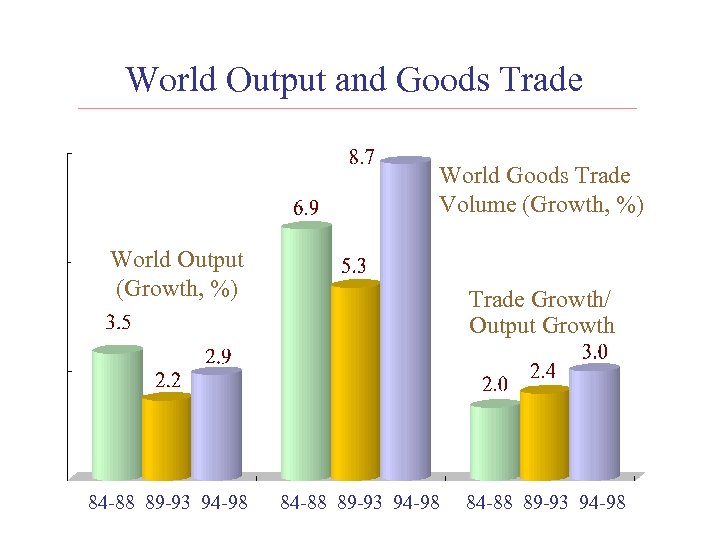 World Output and Goods Trade World Goods Trade Volume (Growth, %) World Output (Growth, %) 84 -88 89 -93 94 -98 Trade Growth/ Output Growth 84 -88 89 -93 94 -98
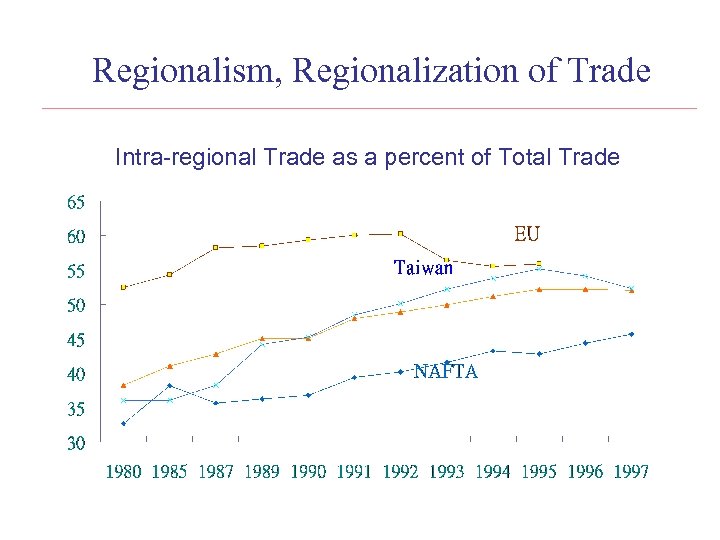 Regionalism, Regionalization of Trade Intra-regional Trade as a percent of Total Trade
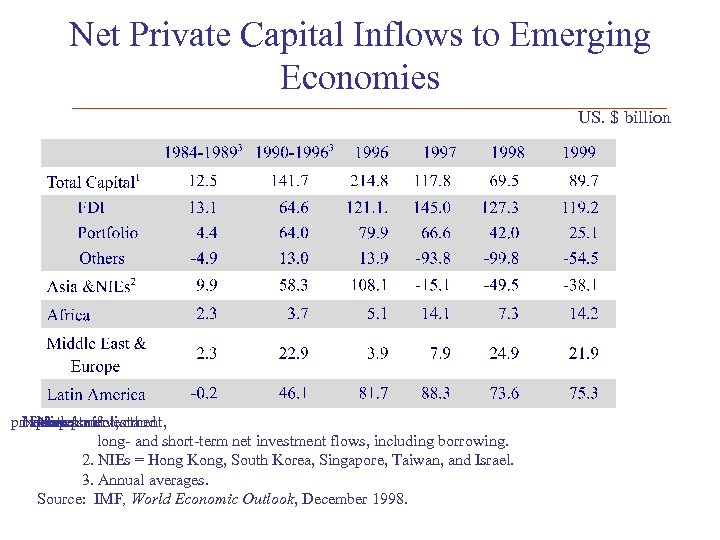 Net Private Capital Inflows to Emerging Economies US. $ billion private net other capital portfolio and Netdirect investment, flows comprise Note: 1. investment, long- and short-term net investment flows, including borrowing. 2. NIEs = Hong Kong, South Korea, Singapore, Taiwan, and Israel. 3. Annual averages. Source: IMF, World Economic Outlook, December 1998.
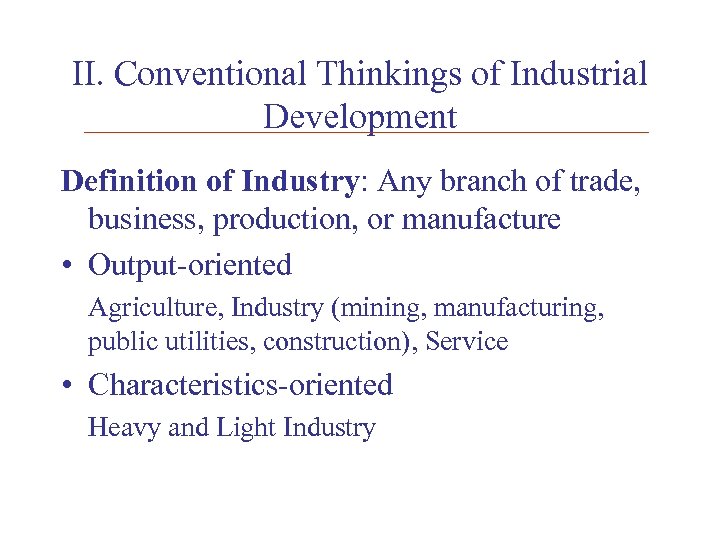 II. Conventional Thinkings of Industrial Development Definition of Industry: Any branch of trade, business, production, or manufacture • Output-oriented Agriculture, Industry (mining, manufacturing, public utilities, construction), Service • Characteristics-oriented Heavy and Light Industry
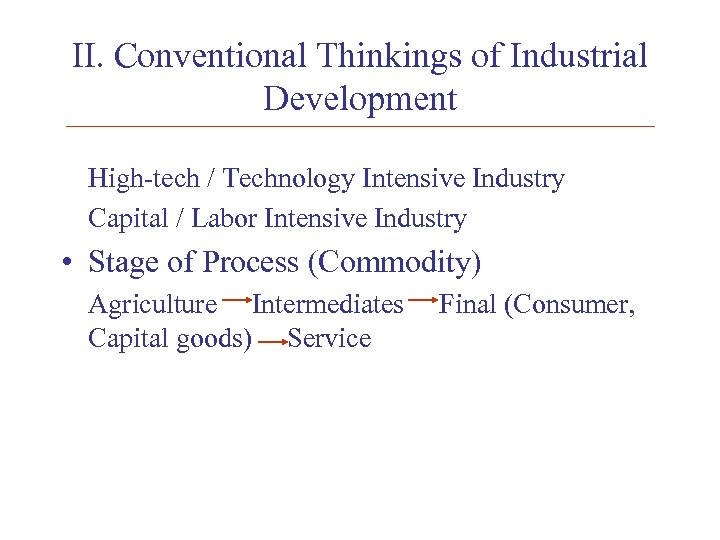 II. Conventional Thinkings of Industrial Development High-tech / Technology Intensive Industry Capital / Labor Intensive Industry • Stage of Process (Commodity) Agriculture Intermediates Capital goods) Service Final (Consumer,
 II. Conventional Thinking of Industrial Development Target Industry: • Ten emerging industries in Taiwan • 15 New Growth Areas in Japan (1995)
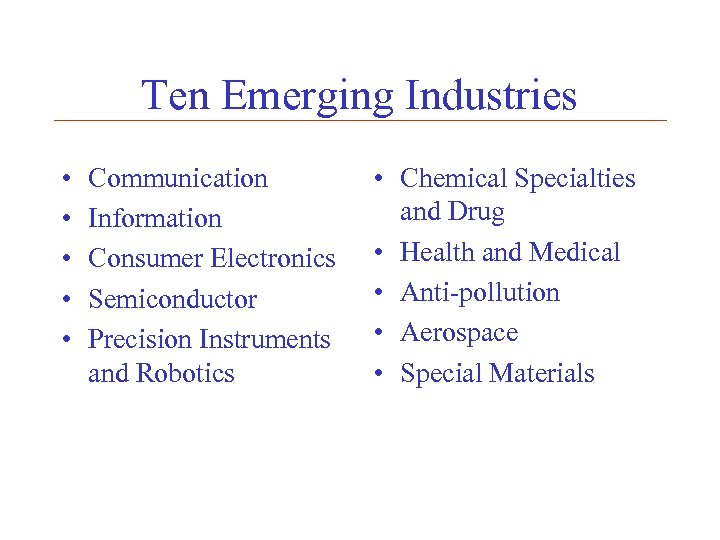 Ten Emerging Industries • • • Communication Information Consumer Electronics Semiconductor Precision Instruments and Robotics • Chemical Specialties and Drug • Health and Medical • Anti-pollution • Aerospace • Special Materials
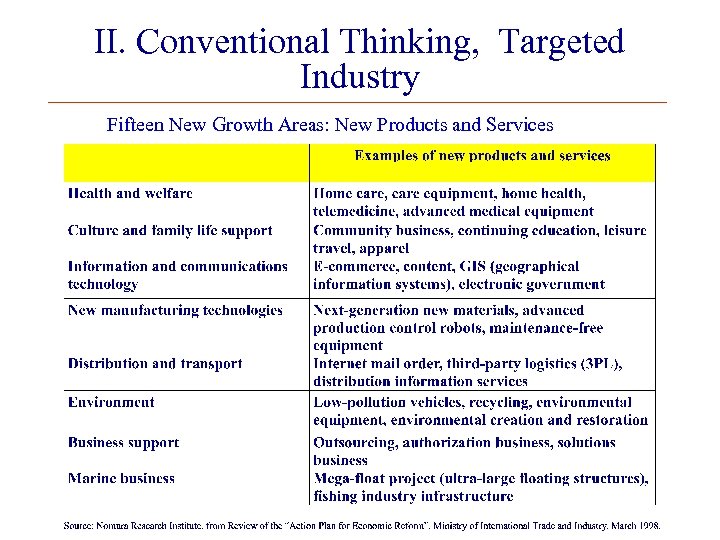 II. Conventional Thinking, Targeted Industry Fifteen New Growth Areas: New Products and Services
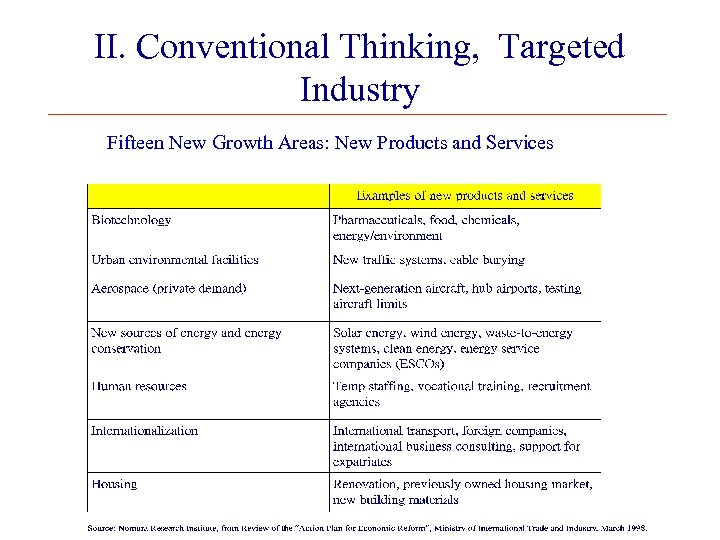 II. Conventional Thinking, Targeted Industry Fifteen New Growth Areas: New Products and Services
 II. Conventional Thinking of Industrial Development Ambiguity: • Commodity Vs. Service Newspaper--Broadcasting--TV--Internet R&D, an industry? • Market and Industry Where is a market, there is an industry. But market and production may not be at the same place--production fragmentation.
 II. Conventional Thinking of Industrial Development • Vertical Disintegration Emerging small and medium-sized business • Production Fragmentation International division of labor in line with comparative advantage In pursuit of dynamic advantage--changes in the “Flying-Geese” pattern of development • Target Industry and Industrial Policy
 III. Alternative Thinkings • Knowledge-Based Activities • Knowledge Creation and Integration
 “… modern economic growth could best be viewed as a process based on a change which raises greatly the stock of technological and social knowledge … When the … knowledge is used, it becomes the source of … increase in output and structural shifts that characterize modern economies. ” Simon Kuznets Modern Economic Growth-Rage, Structure and Spread, 1966
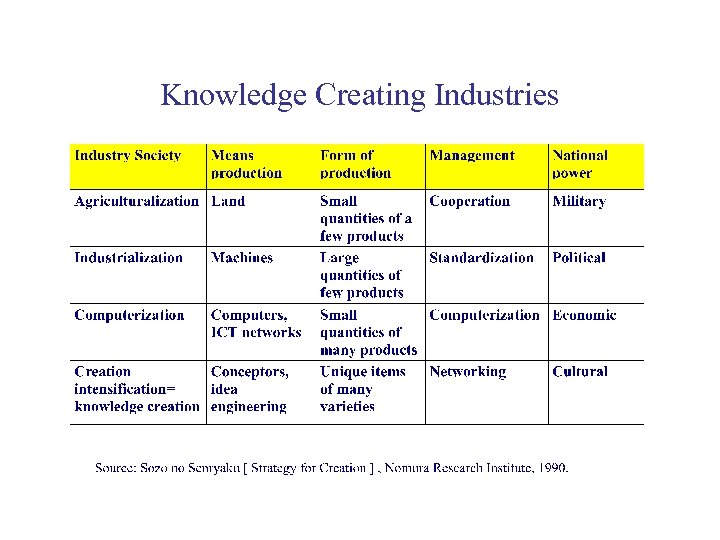 Knowledge Creating Industries
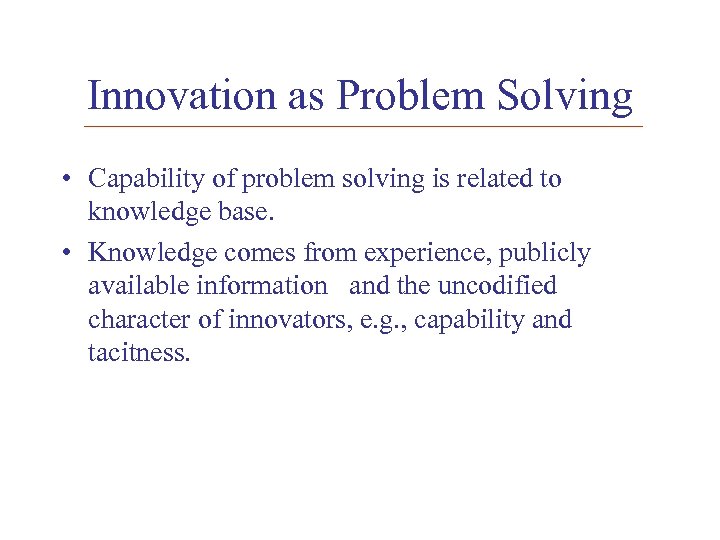 Innovation as Problem Solving • Capability of problem solving is related to knowledge base. • Knowledge comes from experience, publicly available information and the uncodified character of innovators, e. g. , capability and tacitness.
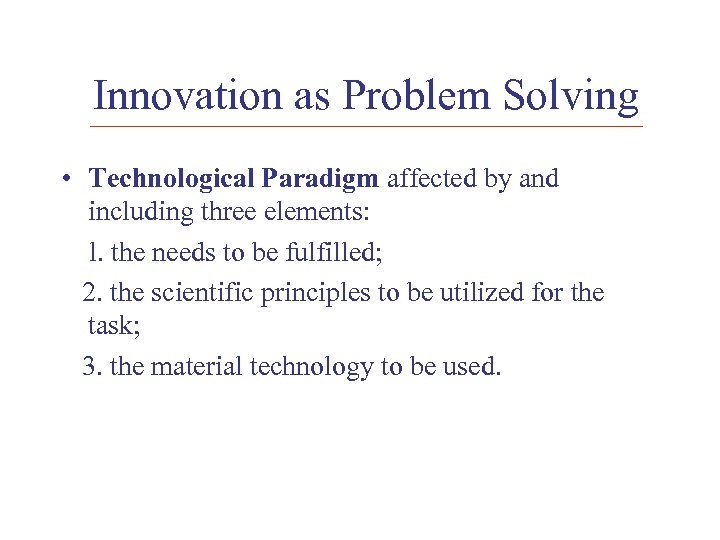 Innovation as Problem Solving • Technological Paradigm affected by and including three elements: l. the needs to be fulfilled; 2. the scientific principles to be utilized for the task; 3. the material technology to be used.
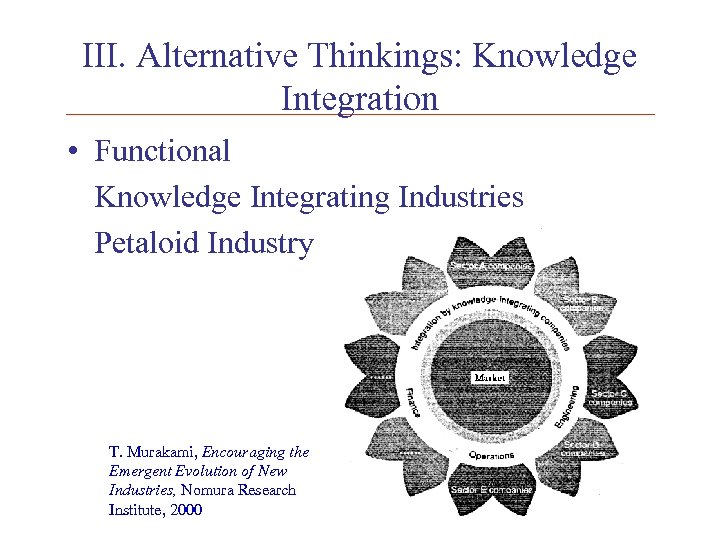 III. Alternative Thinkings: Knowledge Integration • Functional Knowledge Integrating Industries Petaloid Industry T. Murakami, Encouraging the Emergent Evolution of New Industries, Nomura Research Institute, 2000
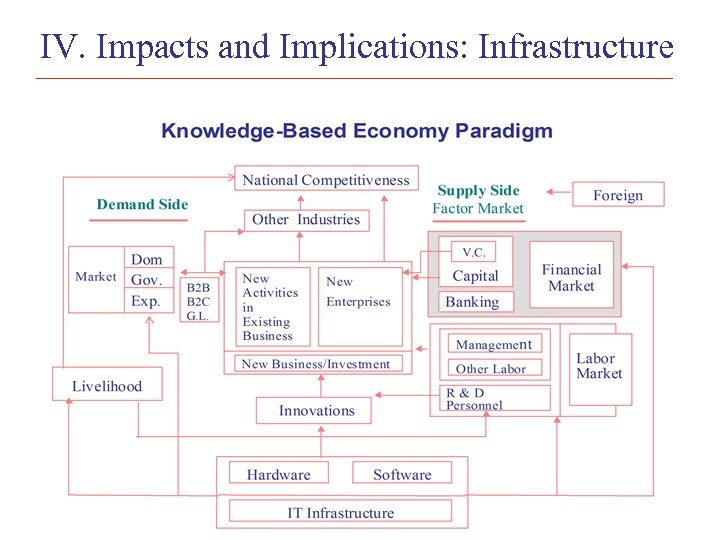 IV. Impacts and Implications: Infrastructure
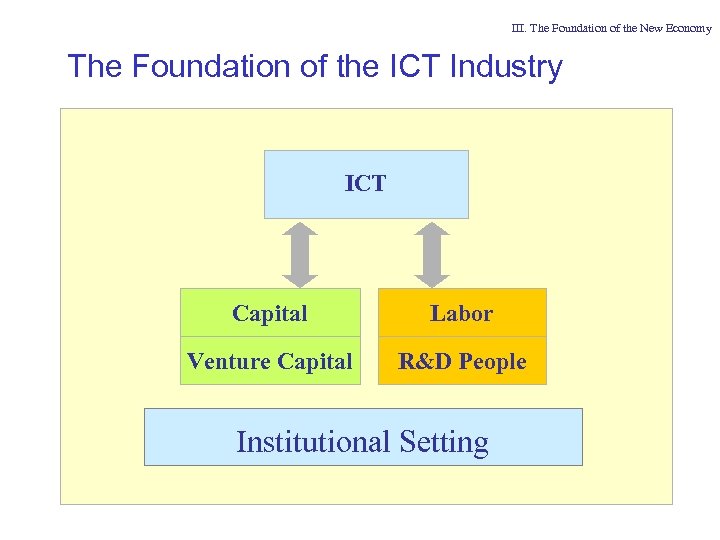 III. The Foundation of the New Economy The Foundation of the ICT Industry ICT Capital Labor Venture Capital R&D People Institutional Setting
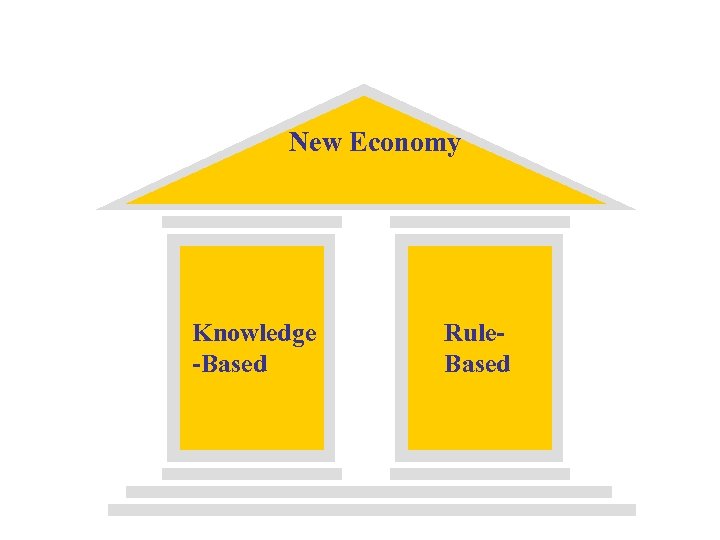 New Economy Knowledge -Based Rule. Based
 IV. Impacts and Implications: Government Role Infant industry or infant entrepreneur? Are government officials smarter? Will the state-owned company be necessary? Are means at hand, --tariff, subsidies, and regulations--still available or necessary? Limits of fiscal and monetary policies.
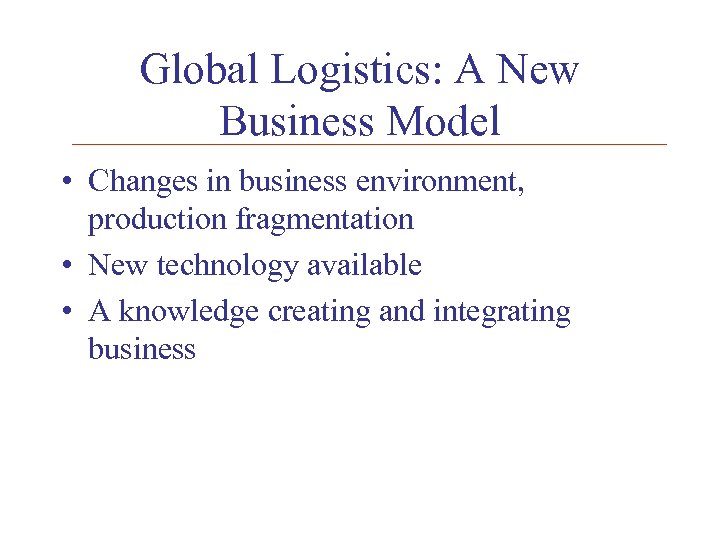 Global Logistics: A New Business Model • Changes in business environment, production fragmentation • New technology available • A knowledge creating and integrating business
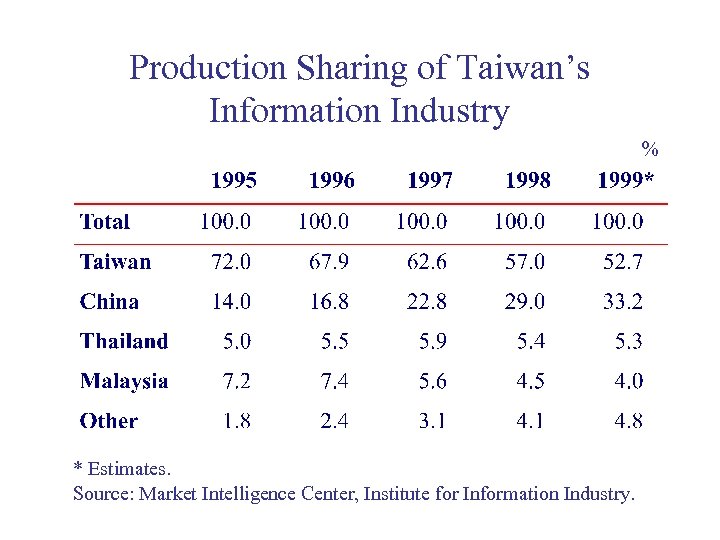 Production Sharing of Taiwan’s Information Industry % * Estimates. Source: Market Intelligence Center, Institute for Information Industry.
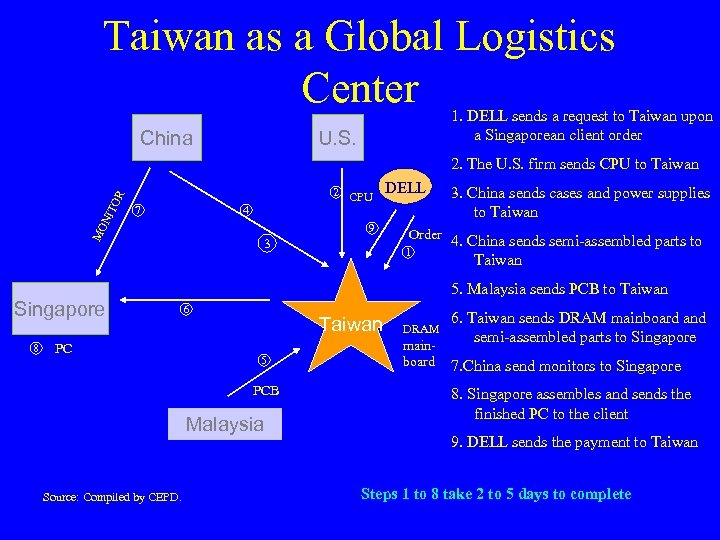 Taiwan as a Global Logistics Center China 1. DELL sends a request to Taiwan upon a Singaporean client order U. S. 2. The U. S. firm sends CPU to Taiwan 7 4 MO N ITO R 2 CPU 9 3 DELL 3. China sends cases and power supplies to Taiwan Order 4. China sends semi-assembled parts to 1 Taiwan 5. Malaysia sends PCB to Taiwan Singapore 8 PC 6 Taiwan 5 PCB Malaysia Source: Compiled by CEPD. 6. Taiwan sends DRAM mainboard and semi-assembled parts to Singapore mainboard 7. China send monitors to Singapore DRAM 8. Singapore assembles and sends the finished PC to the client 9. DELL sends the payment to Taiwan Steps 1 to 8 take 2 to 5 days to complete
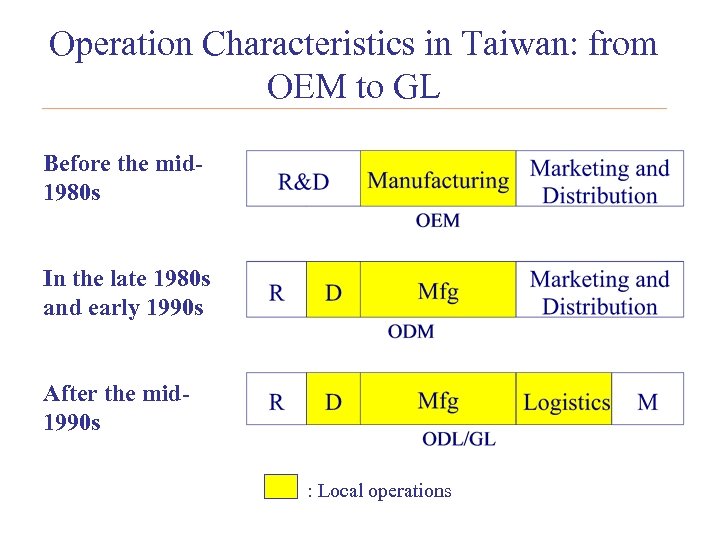 Operation Characteristics in Taiwan: from OEM to GL Before the mid 1980 s In the late 1980 s and early 1990 s After the mid 1990 s : Local operations
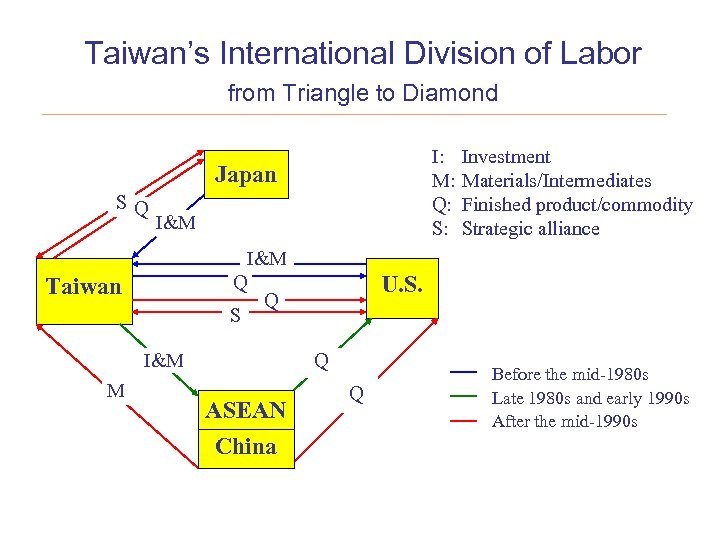 Taiwan’s International Division of Labor from Triangle to Diamond I: M: Q: S: Japan SQ I&M Q Q S Taiwan I&M M U. S. Q ASEAN China Investment Materials/Intermediates Finished product/commodity Strategic alliance Q Before the mid-1980 s Late 1980 s and early 1990 s After the mid-1990 s
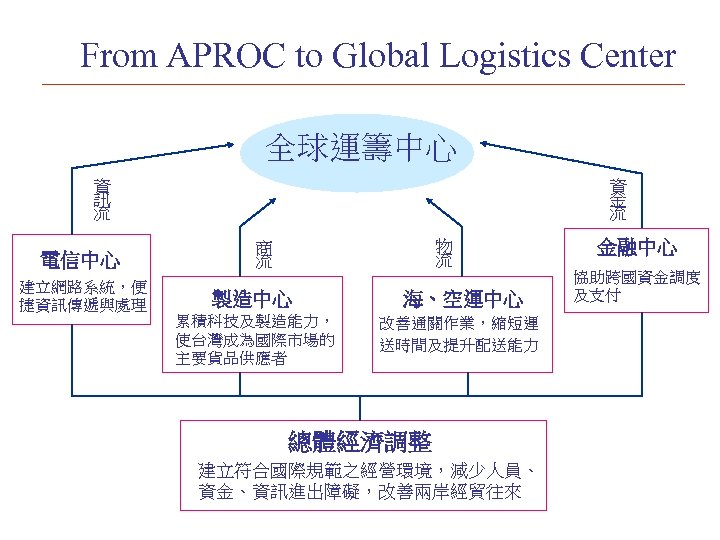 From APROC to Global Logistics Center 全球運籌中心 資 金 流 資 訊 流 電信中心 建立網路系統,便 捷資訊傳遞與處理 物 流 商 流 製造中心 海、空運中心 累積科技及製造能力, 使台灣成為國際市場的 主要貨品供應者 改善通關作業,縮短運 送時間及提升配送能力 總體經濟調整 建立符合國際規範之經營環境,減少人員、 資金、資訊進出障礙,改善兩岸經貿往來 金融中心 協助跨國資金調度 及支付
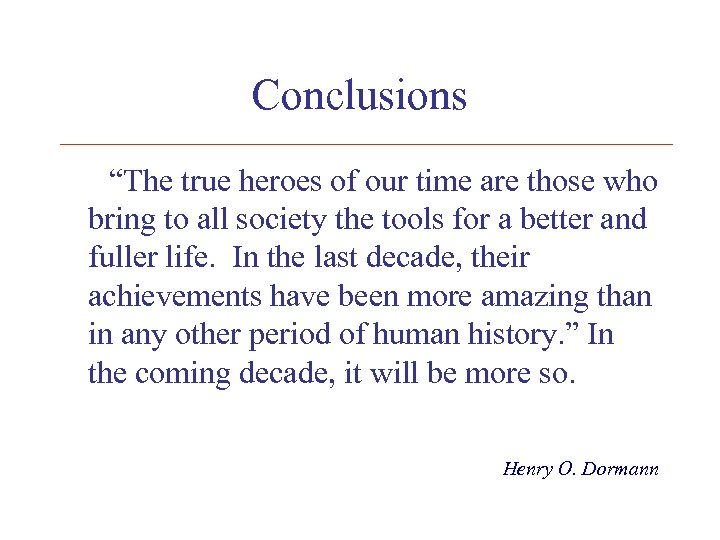 Conclusions “The true heroes of our time are those who bring to all society the tools for a better and fuller life. In the last decade, their achievements have been more amazing than in any other period of human history. ” In the coming decade, it will be more so. Henry O. Dormann