 Скачать презентацию Industrial change and globalisation Challenges for the European
181d6c2cddbf2321d9c214b3869055fb.ppt
- Количество слайдов: 50



Industrial change and globalisation: Challenges for the European Social Model
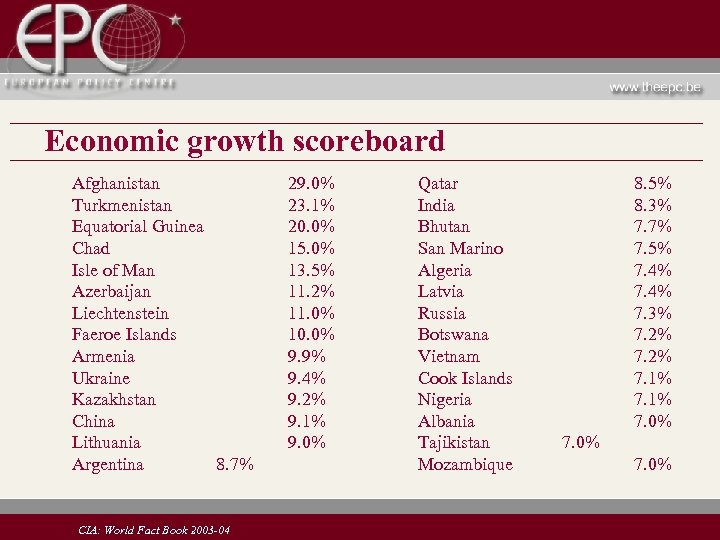
Economic growth scoreboard Afghanistan Turkmenistan Equatorial Guinea Chad Isle of Man Azerbaijan Liechtenstein Faeroe Islands Armenia Ukraine Kazakhstan China Lithuania Argentina 8. 7% CIA: World Fact Book 2003 -04 29. 0% 23. 1% 20. 0% 15. 0% 13. 5% 11. 2% 11. 0% 10. 0% 9. 9% 9. 4% 9. 2% 9. 1% 9. 0% Qatar India Bhutan San Marino Algeria Latvia Russia Botswana Vietnam Cook Islands Nigeria Albania Tajikistan Mozambique 8. 5% 8. 3% 7. 7% 7. 5% 7. 4% 7. 3% 7. 2% 7. 1% 7. 0%
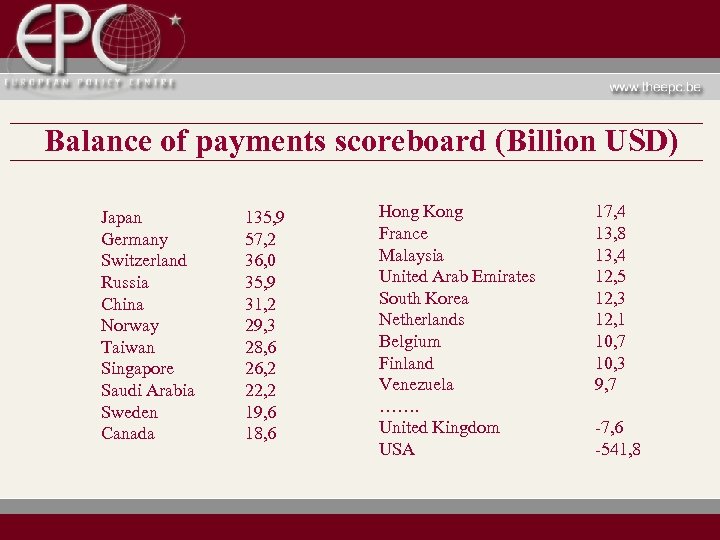
Balance of payments scoreboard (Billion USD) Japan Germany Switzerland Russia China Norway Taiwan Singapore Saudi Arabia Sweden Canada 135, 9 57, 2 36, 0 35, 9 31, 2 29, 3 28, 6 26, 2 22, 2 19, 6 18, 6 Hong Kong France Malaysia United Arab Emirates South Korea Netherlands Belgium Finland Venezuela ……. United Kingdom USA 17, 4 13, 8 13, 4 12, 5 12, 3 12, 1 10, 7 10, 3 9, 7 -7, 6 -541, 8
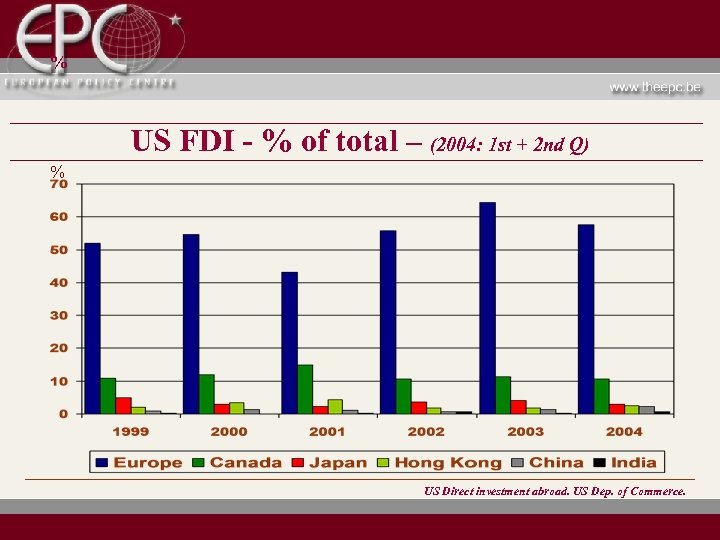
% US FDI - % of total – (2004: 1 st + 2 nd Q) % US Direct investment abroad. US Dep. of Commerce.
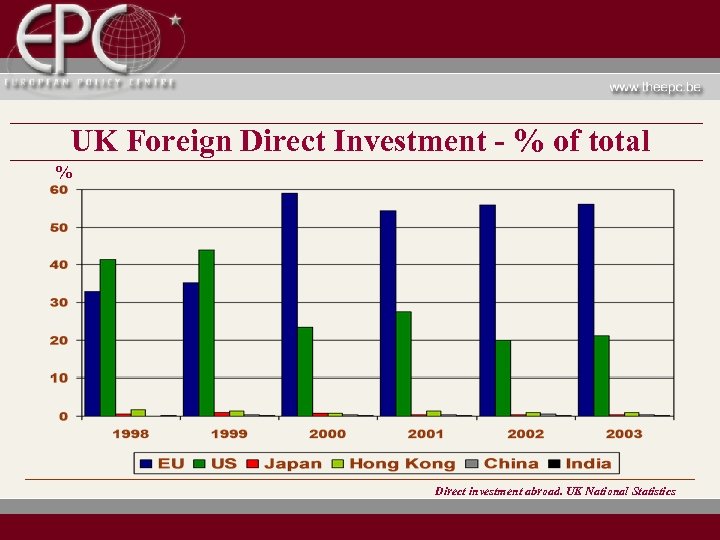
UK Foreign Direct Investment - % of total % Direct investment abroad. UK National Statistics
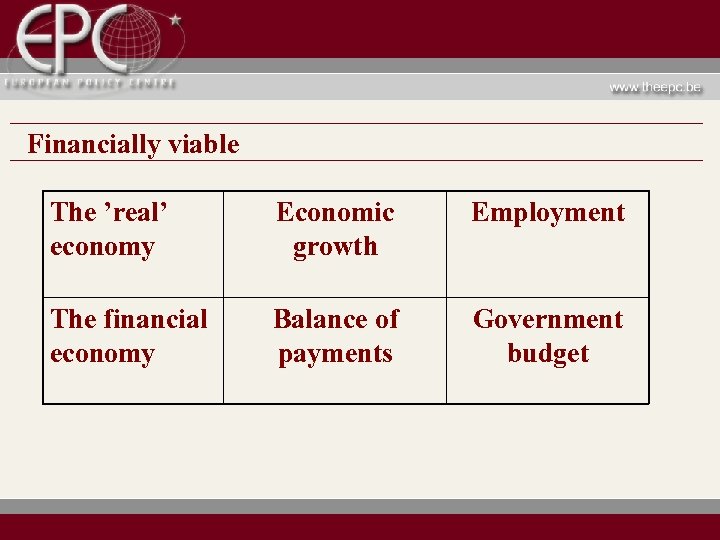
Financially viable The ’real’ economy Economic growth Employment The financial economy Balance of payments Government budget
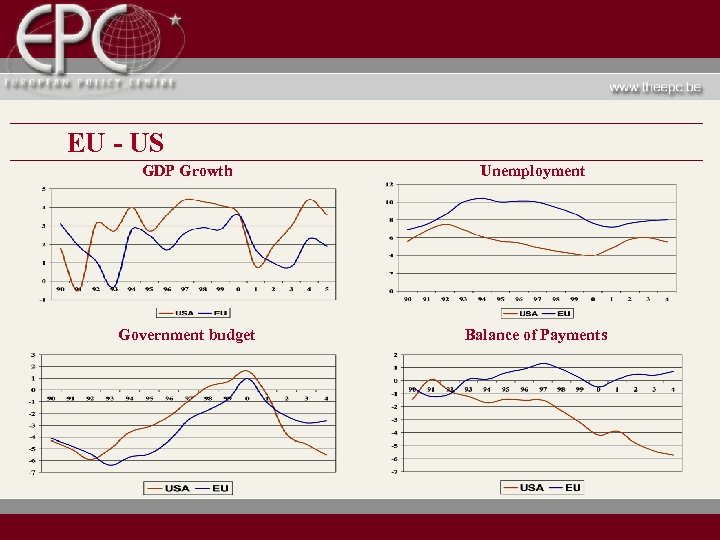
EU - US GDP Growth Unemployment Government budget Balance of Payments
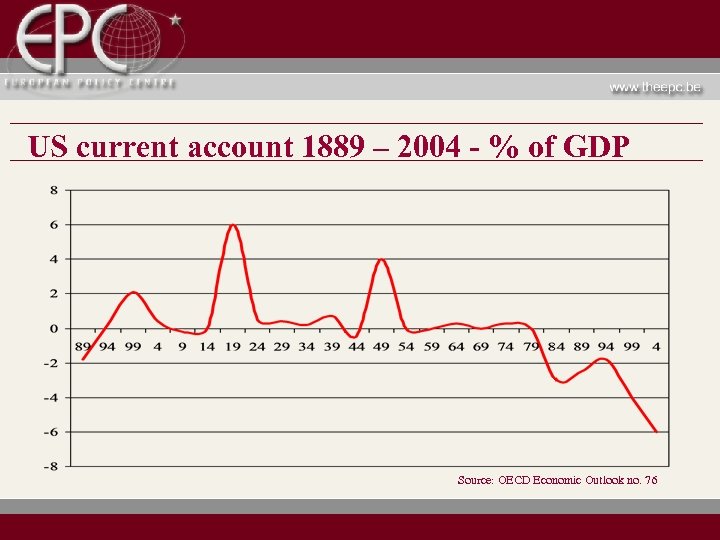
US current account 1889 – 2004 - % of GDP Source: OECD Economic Outlook no. 76
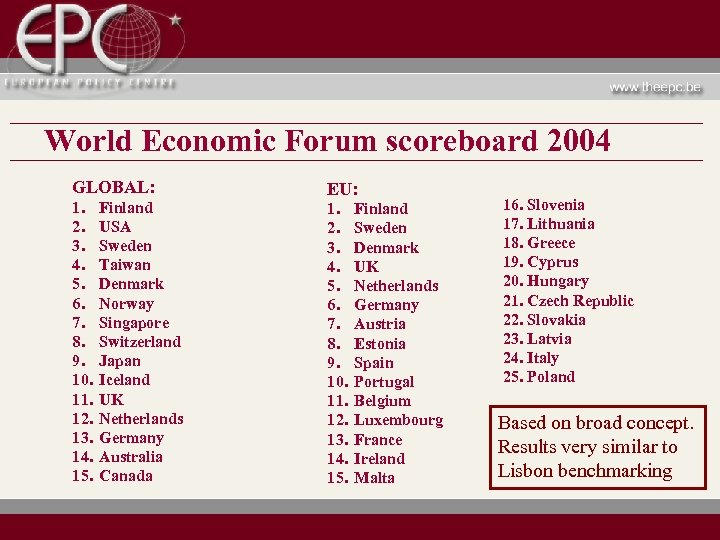
World Economic Forum scoreboard 2004 GLOBAL: 1. 2. 3. 4. 5. 6. 7. 8. 9. 10. 11. 12. 13. 14. 15. Finland USA Sweden Taiwan Denmark Norway Singapore Switzerland Japan Iceland UK Netherlands Germany Australia Canada EU: 1. 2. 3. 4. 5. 6. 7. 8. 9. 10. 11. 12. 13. 14. 15. Finland Sweden Denmark UK Netherlands Germany Austria Estonia Spain Portugal Belgium Luxembourg France Ireland Malta 16. Slovenia 17. Lithuania 18. Greece 19. Cyprus 20. Hungary 21. Czech Republic 22. Slovakia 23. Latvia 24. Italy 25. Poland Based on broad concept. Results very similar to Lisbon benchmarking
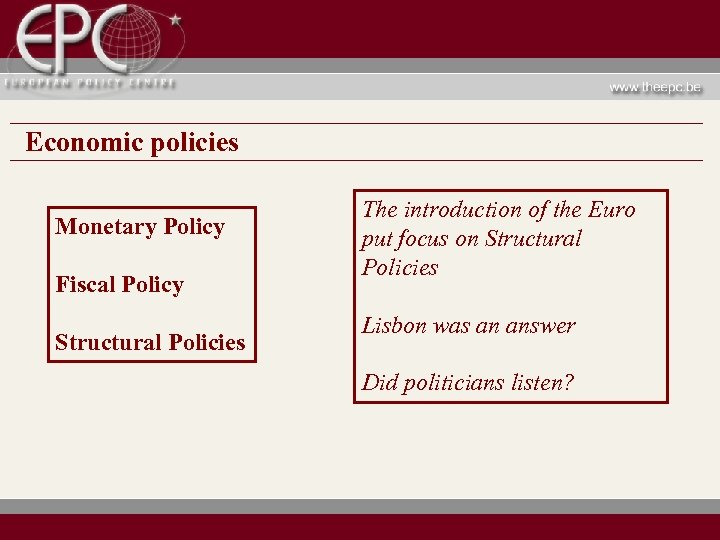
Economic policies Monetary Policy Fiscal Policy Structural Policies The introduction of the Euro put focus on Structural Policies Lisbon was an answer Did politicians listen?
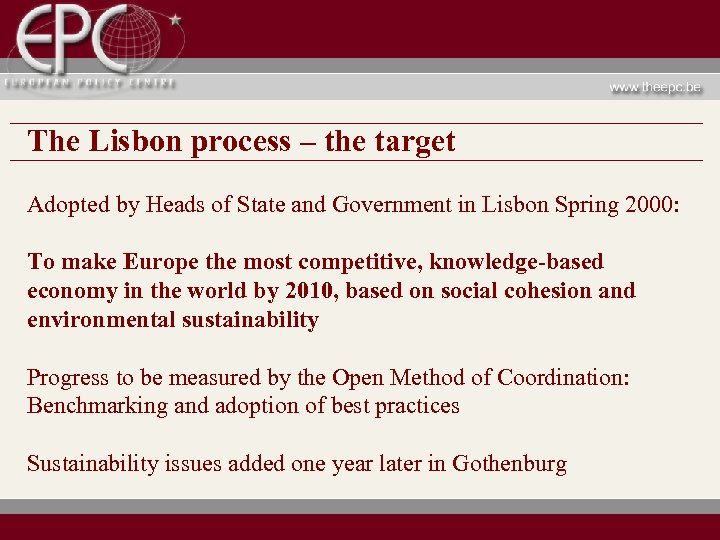
The Lisbon process – the target Adopted by Heads of State and Government in Lisbon Spring 2000: To make Europe the most competitive, knowledge-based economy in the world by 2010, based on social cohesion and environmental sustainability Progress to be measured by the Open Method of Coordination: Benchmarking and adoption of best practices Sustainability issues added one year later in Gothenburg
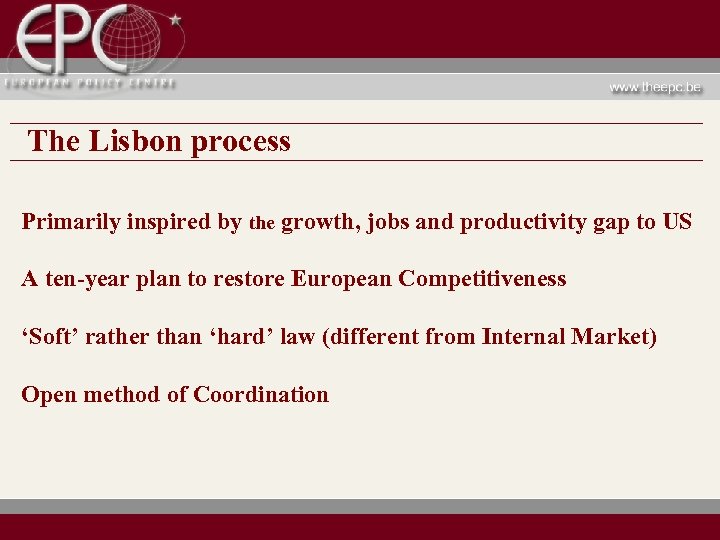
The Lisbon process Primarily inspired by the growth, jobs and productivity gap to US A ten-year plan to restore European Competitiveness ‘Soft’ rather than ‘hard’ law (different from Internal Market) Open method of Coordination
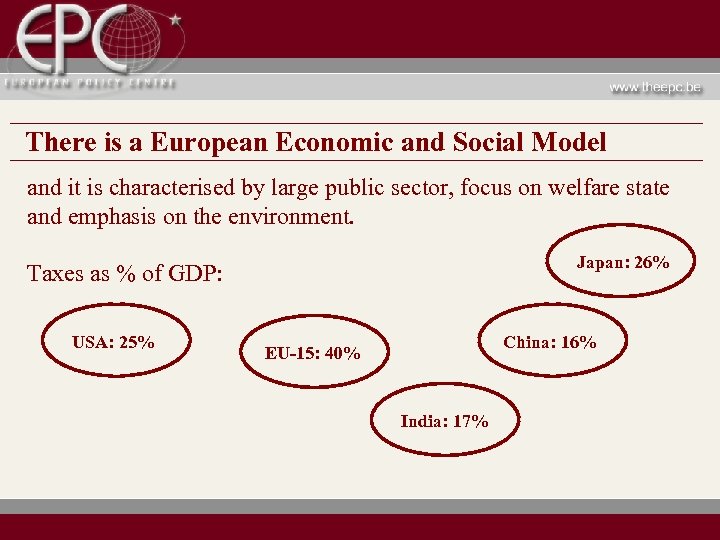
There is a European Economic and Social Model and it is characterised by large public sector, focus on welfare state and emphasis on the environment. Japan: 26% Taxes as % of GDP: USA: 25% China: 16% EU-15: 40% India: 17%
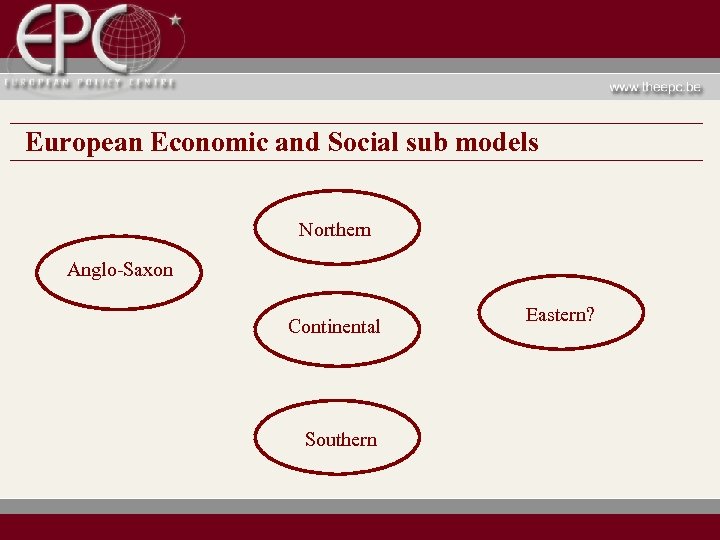
European Economic and Social sub models Northern Anglo-Saxon Continental Southern Eastern?
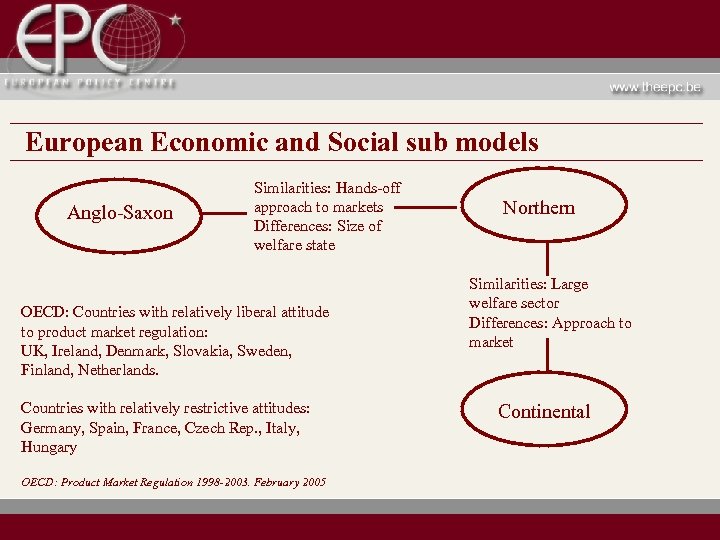
European Economic and Social sub models Anglo-Saxon Similarities: Hands-off approach to markets Differences: Size of welfare state OECD: Countries with relatively liberal attitude to product market regulation: UK, Ireland, Denmark, Slovakia, Sweden, Finland, Netherlands. Countries with relatively restrictive attitudes: Germany, Spain, France, Czech Rep. , Italy, Hungary OECD: Product Market Regulation 1998 -2003. February 2005 Northern Similarities: Large welfare sector Differences: Approach to market Continental
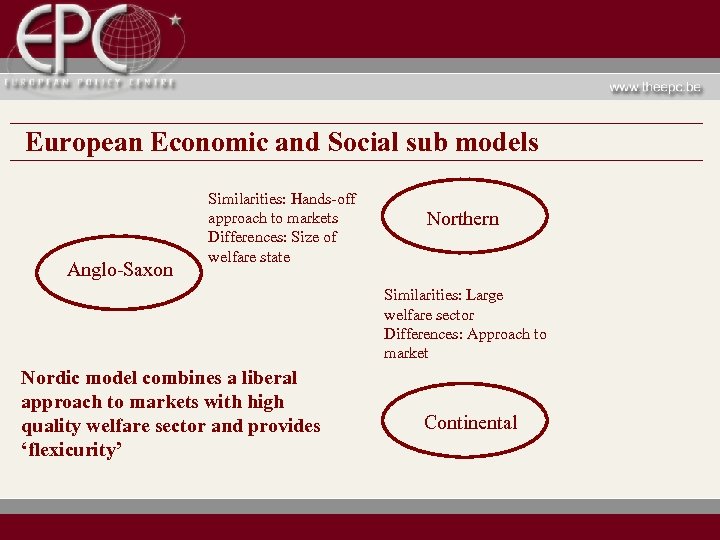
European Economic and Social sub models Anglo-Saxon Similarities: Hands-off approach to markets Differences: Size of welfare state Northern Similarities: Large welfare sector Differences: Approach to market Nordic model combines a liberal approach to markets with high quality welfare sector and provides ‘flexicurity’ Continental
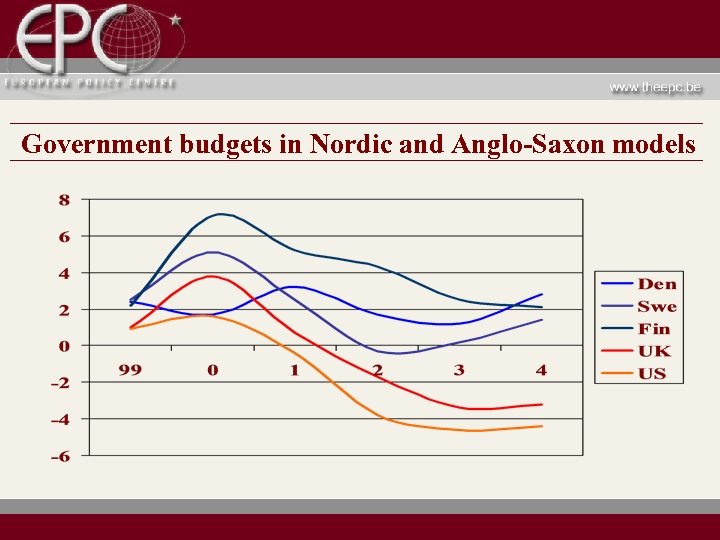
Government budgets in Nordic and Anglo-Saxon models
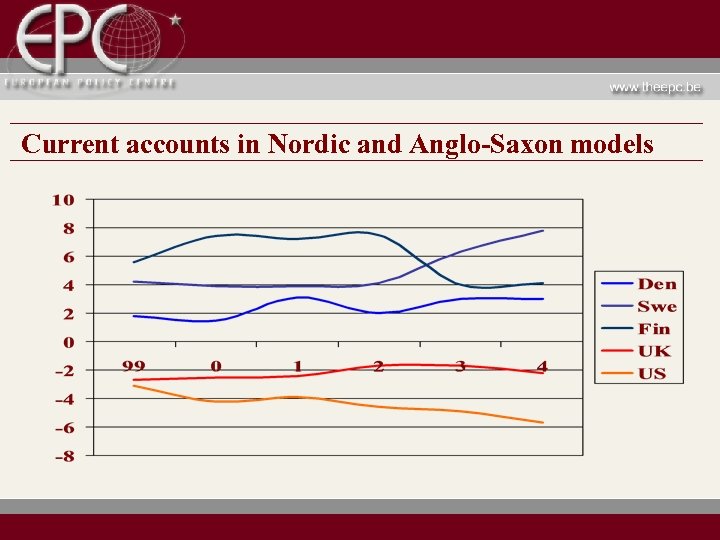
Current accounts in Nordic and Anglo-Saxon models
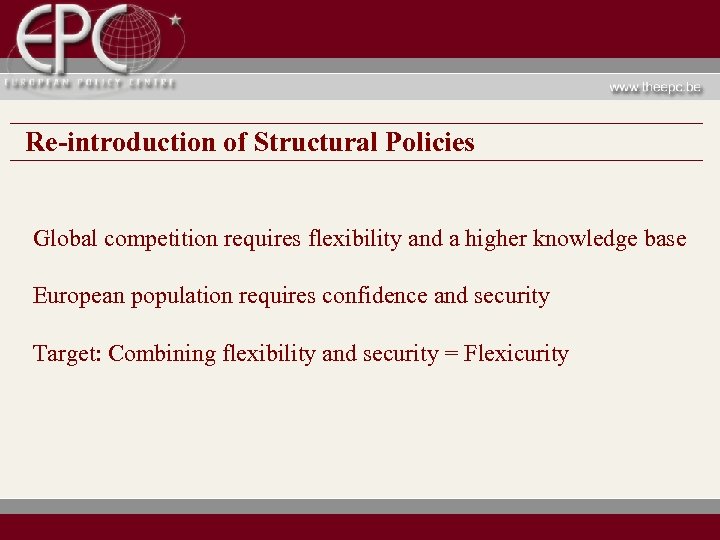
Re-introduction of Structural Policies Global competition requires flexibility and a higher knowledge base European population requires confidence and security Target: Combining flexibility and security = Flexicurity
Does a big state prevent competitiveness? Apparently not. This issue is not quantity but quality.
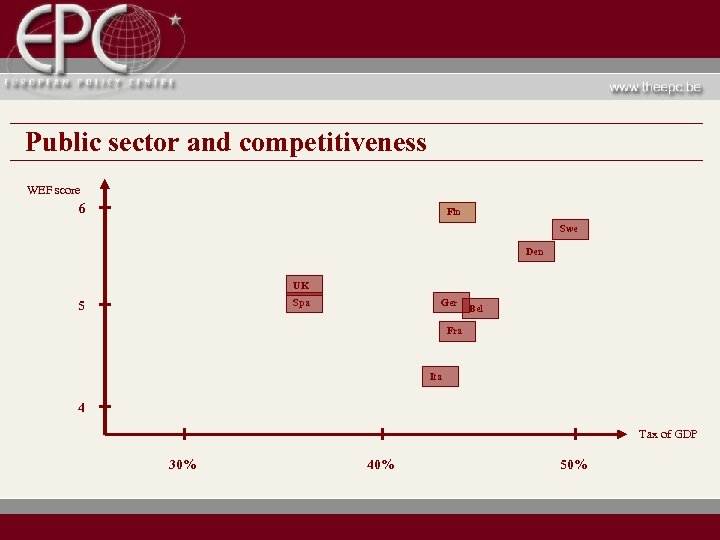
Public sector and competitiveness WEF score 6 Fin Swe Den UK Spa 5 Ger Bel Fra Ita 4 Tax of GDP 30% 40% 50%
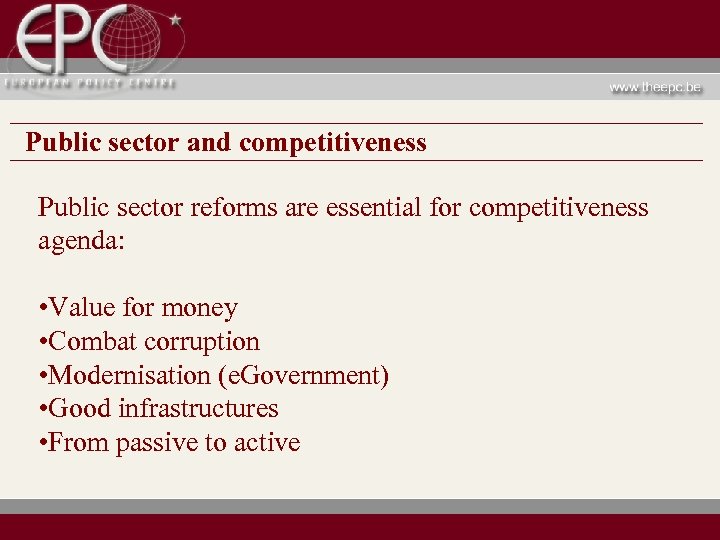
Public sector and competitiveness Public sector reforms are essential for competitiveness agenda: • Value for money • Combat corruption • Modernisation (e. Government) • Good infrastructures • From passive to active
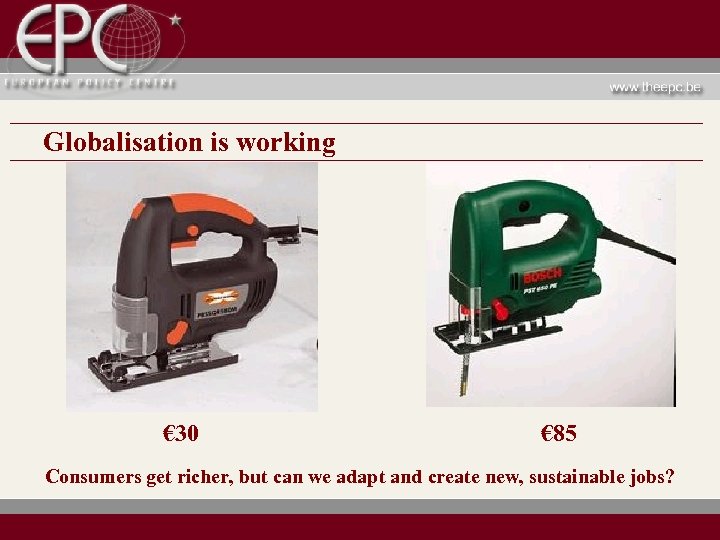
Globalisation is working € 30 € 85 Consumers get richer, but can we adapt and create new, sustainable jobs?
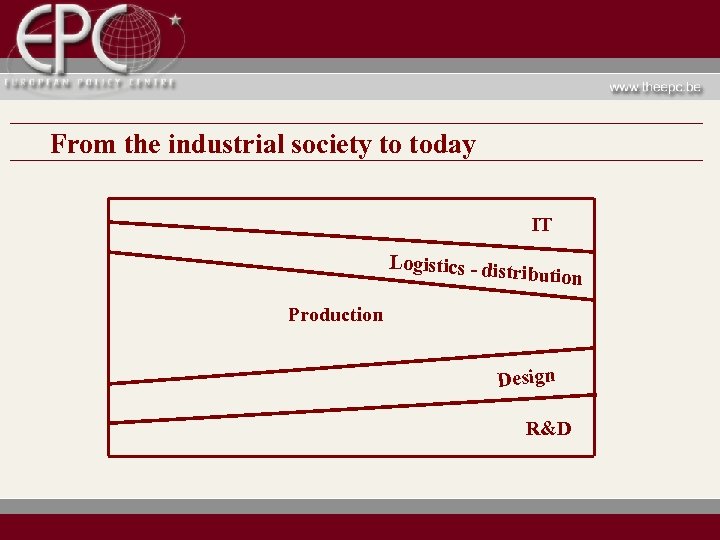
From the industrial society to today IT Logistics - dis tribution Production Design R&D
Outsourcing – and insourcing In some countries the debate focusess only on outsourcing In others a more balanced debate on outsourcing and insourcing Globalisation is not just about loosing, also winning The negative debate shows fear for lack of competitvness and thus lack of strucutral reform
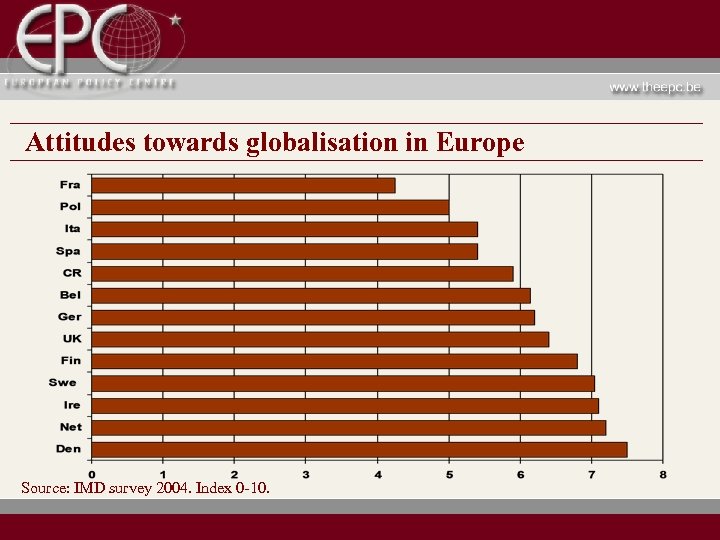
Attitudes towards globalisation in Europe Source: IMD survey 2004. Index 0 -10.
Need for reform Reforms are at least needed in : labour market and social welfare Innovation, entrepreneurship and market
Labour market and social welfare Life cycles are shorter and shorter Need for constant knowledge upgrade Calls for flexible labour market with security and Active Labour Market Policy Ageing population requires life-long learning and longer working life
Innovation entrepreneurship and the markets Europe must be better to grow SME’s Innovation must be brought to the markets – closer links between research and real life Europe’s risk culture underdeveloped
EU budget can in general contribute in a limited way to development of European competitiveness. Budget is only 1% of GDP – and ½ is for CAP Coordination of national policies would be stronger Focus and link to overall targets could help, but the debate is now on marginal issues on overall size and fight for national corners
Some examples of Lisbon benchmarking
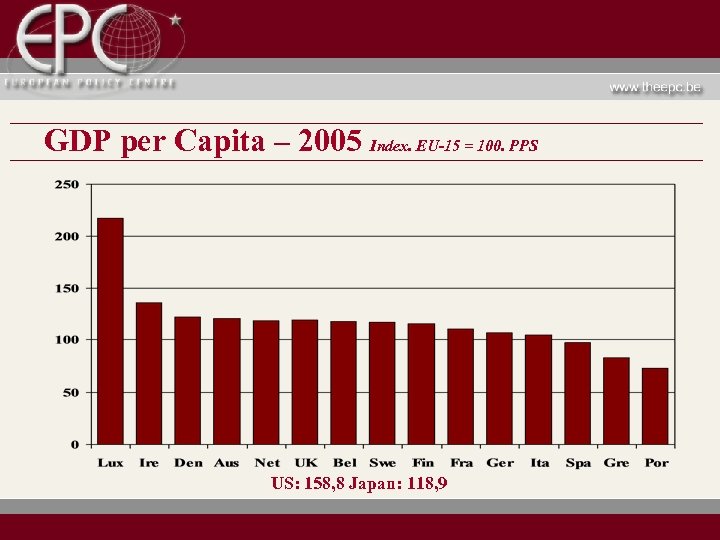
GDP per Capita – 2005 Index. EU-15 = 100. PPS US: 158, 8 Japan: 118, 9
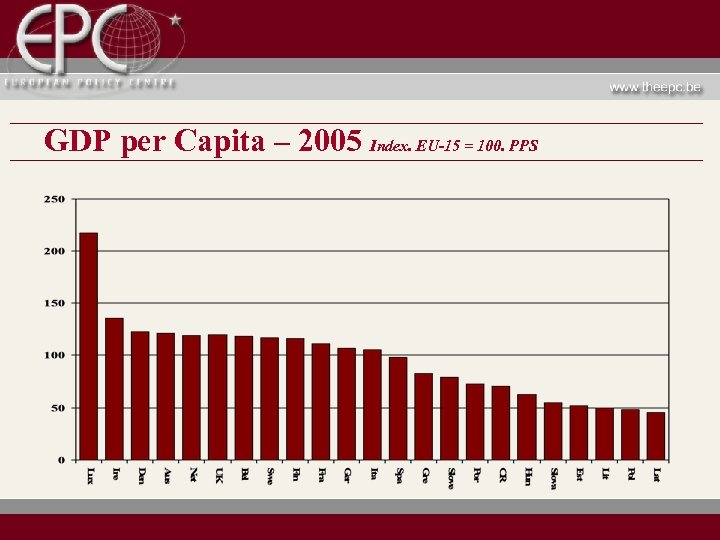
GDP per Capita – 2005 Index. EU-15 = 100. PPS
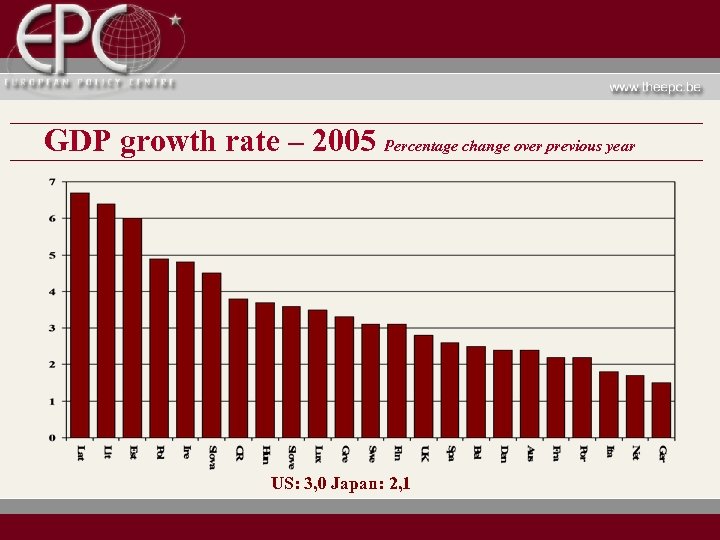
GDP growth rate – 2005 Percentage change over previous year US: 3, 0 Japan: 2, 1
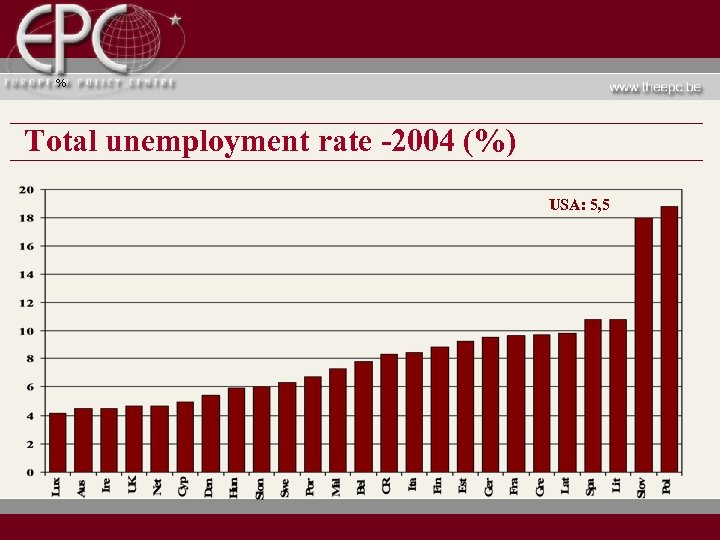
% Total unemployment rate -2004 (%) USA: 5, 5
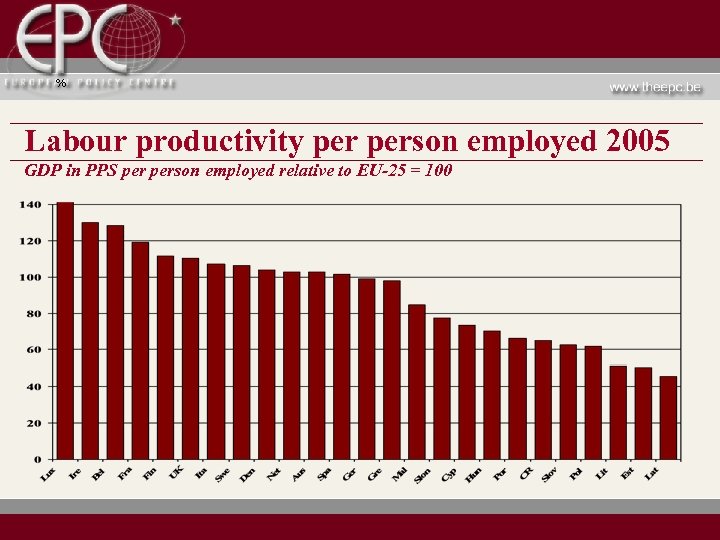
% Labour productivity person employed 2005 GDP in PPS person employed relative to EU-25 = 100
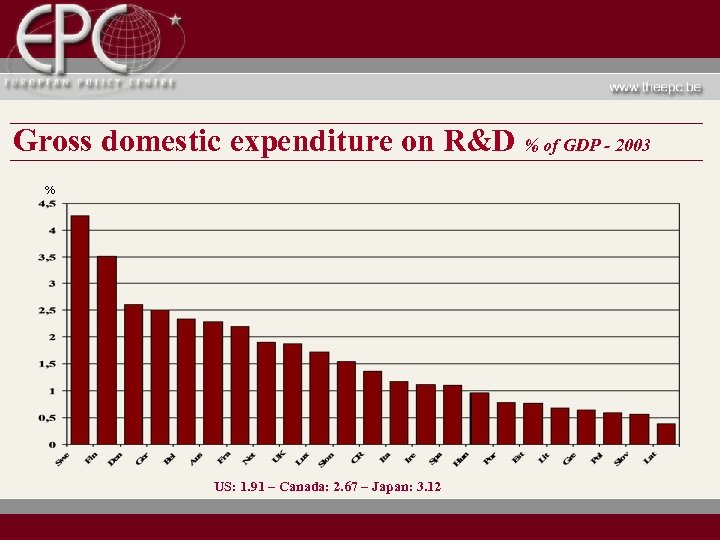
Gross domestic expenditure on R&D % of GDP - 2003 % US: 1. 91 – Canada: 2. 67 – Japan: 3. 12
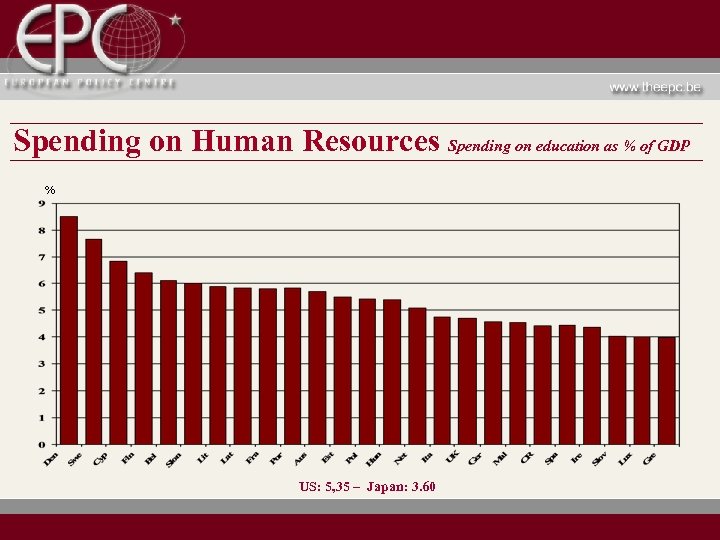
Spending on Human Resources Spending on education as % of GDP % US: 5, 35 – Japan: 3. 60
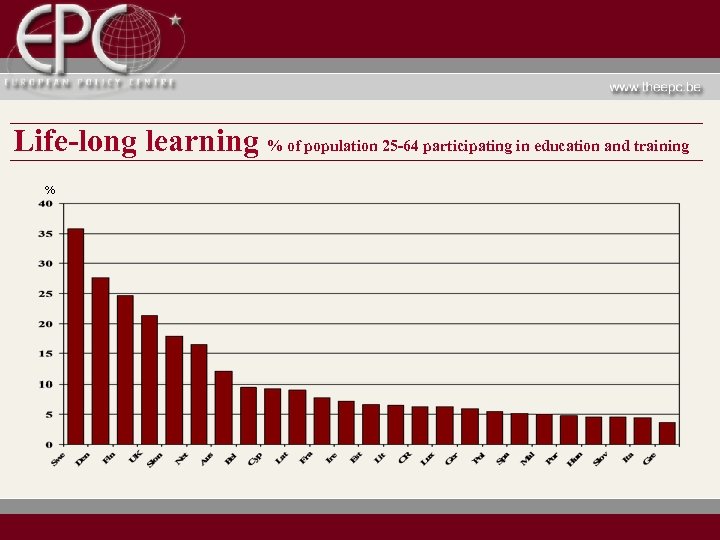
Life-long learning % of population 25 -64 participating in education and training %
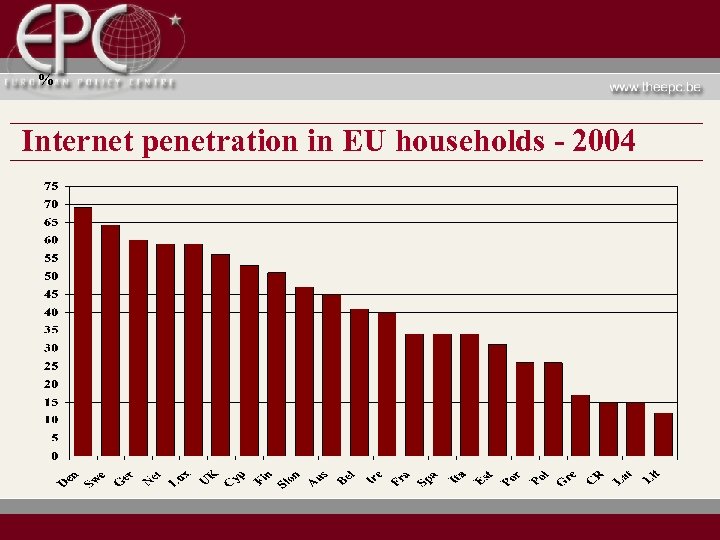
% Internet penetration in EU households - 2004
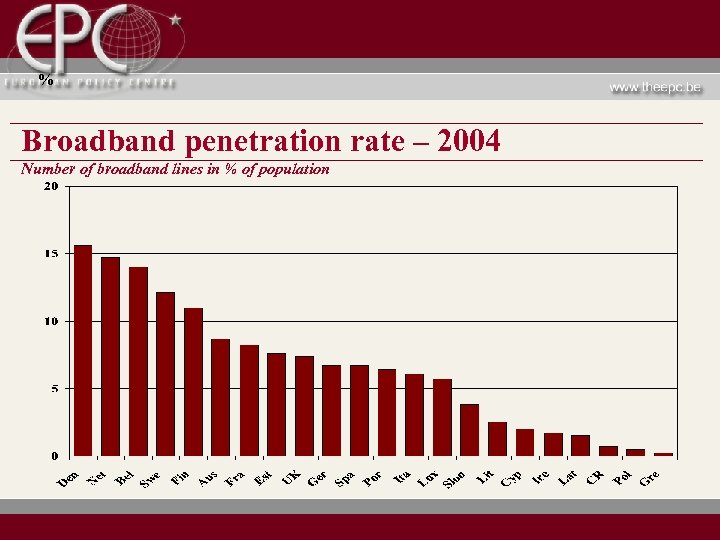
% Broadband penetration rate – 2004 Number of broadband lines in % of population
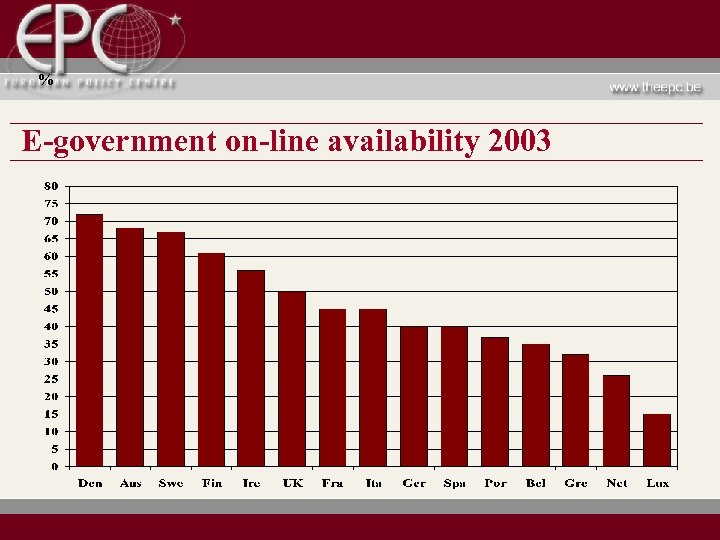
% E-government on-line availability 2003
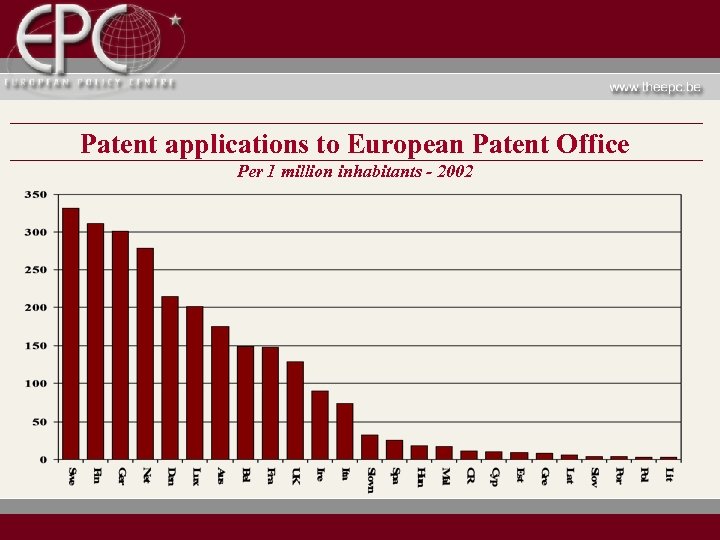
Patent applications to European Patent Office Per 1 million inhabitants - 2002
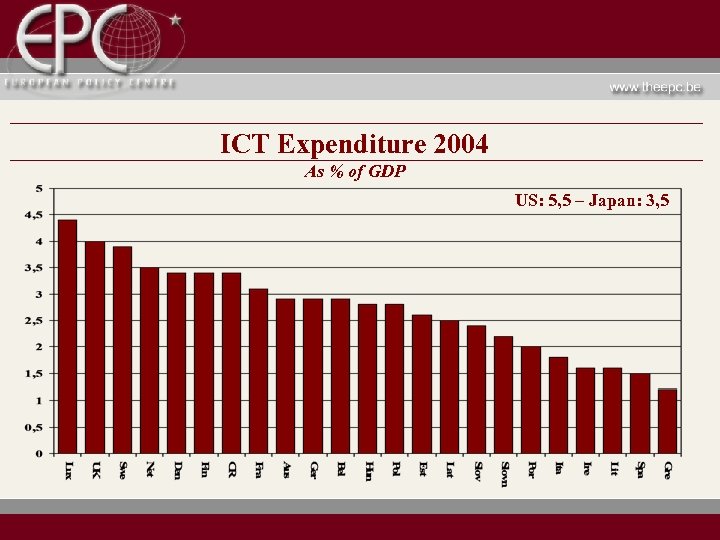
ICT Expenditure 2004 As % of GDP US: 5, 5 – Japan: 3, 5
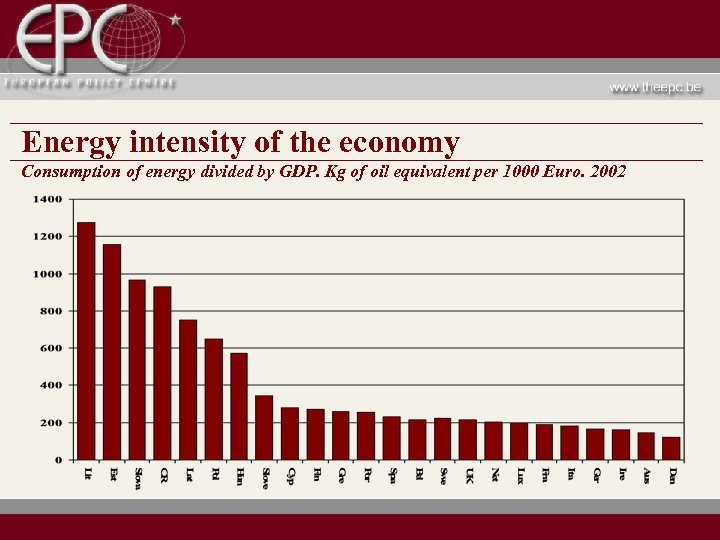
Energy intensity of the economy Consumption of energy divided by GDP. Kg of oil equivalent per 1000 Euro. 2002
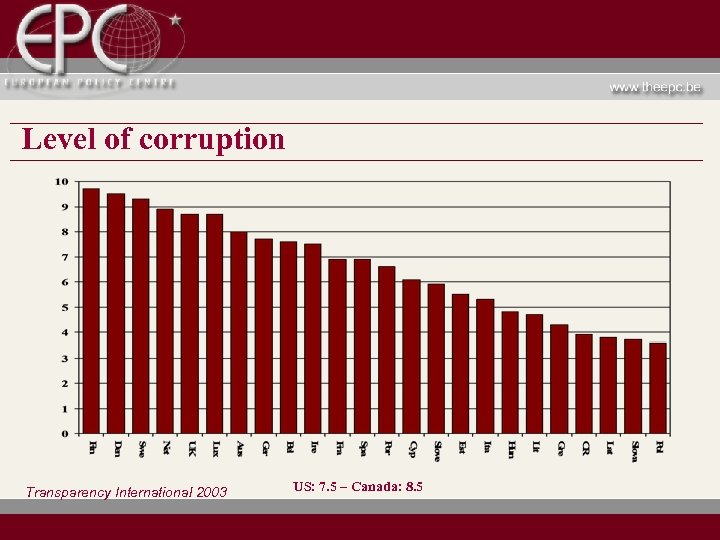
Level of corruption Transparency International 2003 US: 7. 5 – Canada: 8. 5
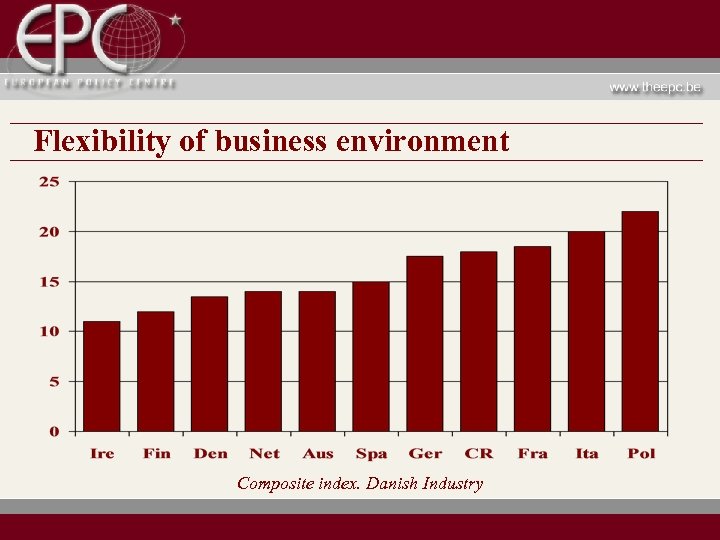
Flexibility of business environment Composite index. Danish Industry
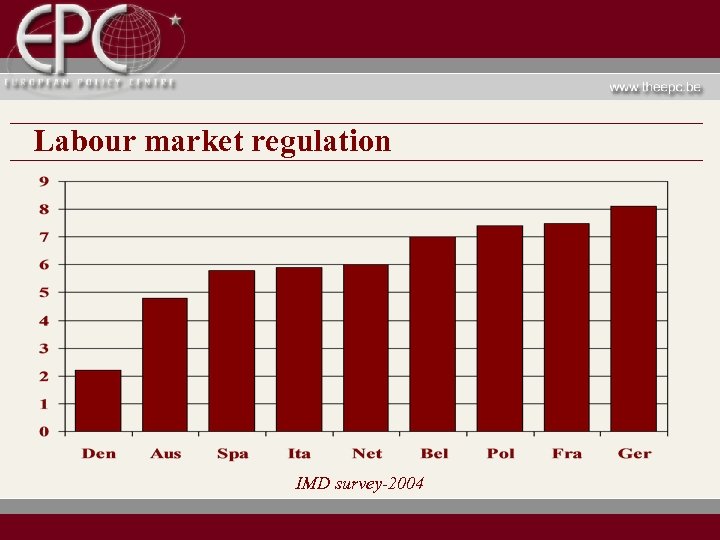
Labour market regulation IMD survey-2004
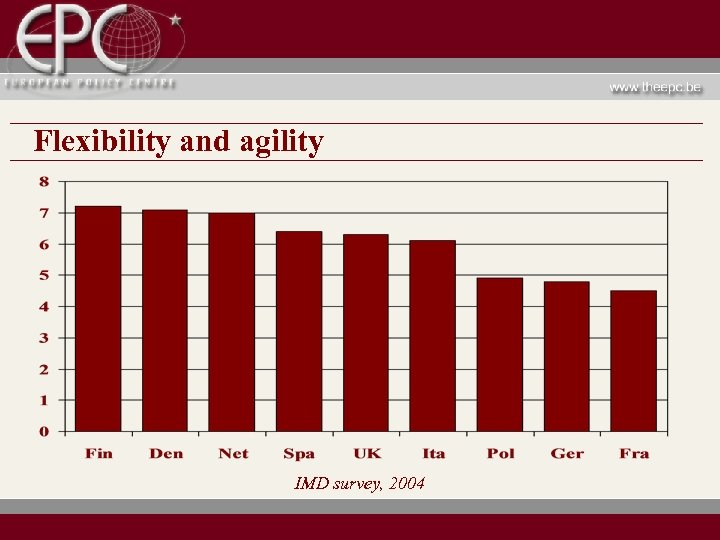
Flexibility and agility IMD survey, 2004
Open method of coordination Are models transferable: No, but solutions are to a large extent Why did France have to go through the No vote to discover the Nordic Model? OMC may now work, but not because of EU or Lisbon, but because of desperate search for models that work!
Скачать презентацию Industrial change and globalisation Challenges for the European
181d6c2cddbf2321d9c214b3869055fb.ppt