


 Скачать презентацию Industrial Analysis The Airline Industry Industrial Evolution
ff304da44844526f910e31444668fa69.ppt
- Количество слайдов: 59
 Industrial Analysis The Airline Industry
 Industrial Evolution • Industry History and American Airlines History • Major Industry Milestones • Future of the Industry
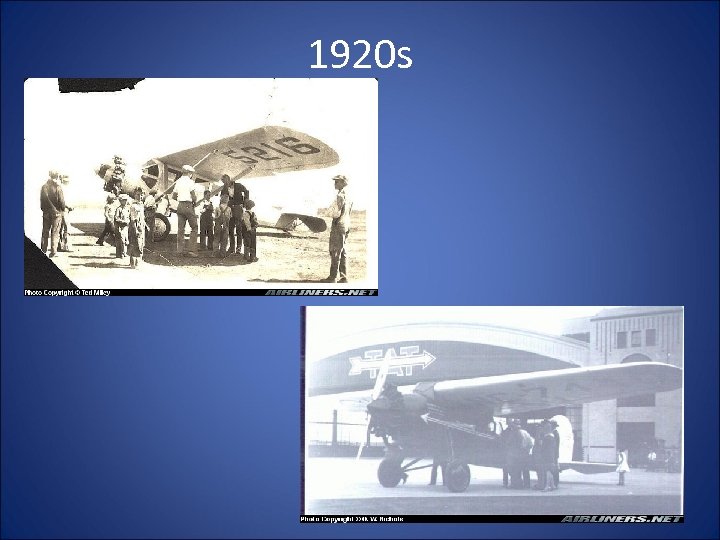
 1920 s • Commercial Aviation begins with mail routes and occasional passenger transport • American Airlines does not exist yet. • Many small airline companies with one to two aircraft fleets operating in an uncoordinated fashion.
 1920 s
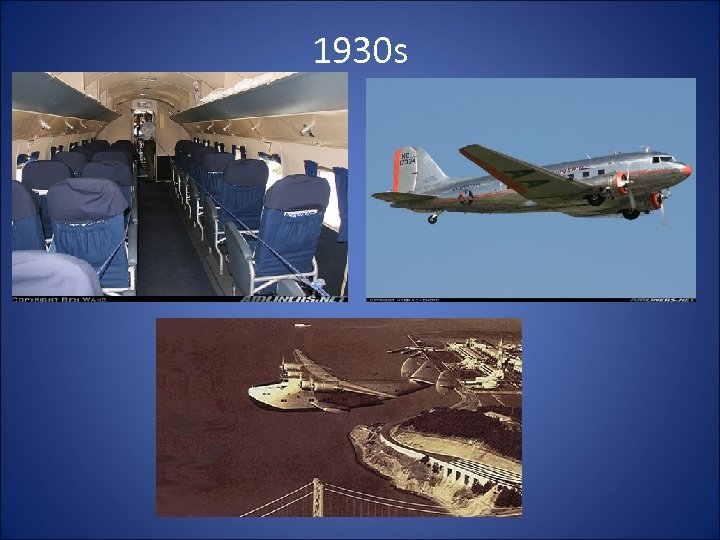
 1930 s • First all metal airliners. Such as the DC-3, Boeing 247, Flying Boats. • Airlines now were able to operate regular and somewhat safer service. • Airlines began to fly to many of the major cities and some overseas destinations. • American Airlines formed in 1930, and were the first airline to begin DC-3 operations on June 25, 1936. • By the end of the decade American was the United States’ number one domestic airline.
 1930 s
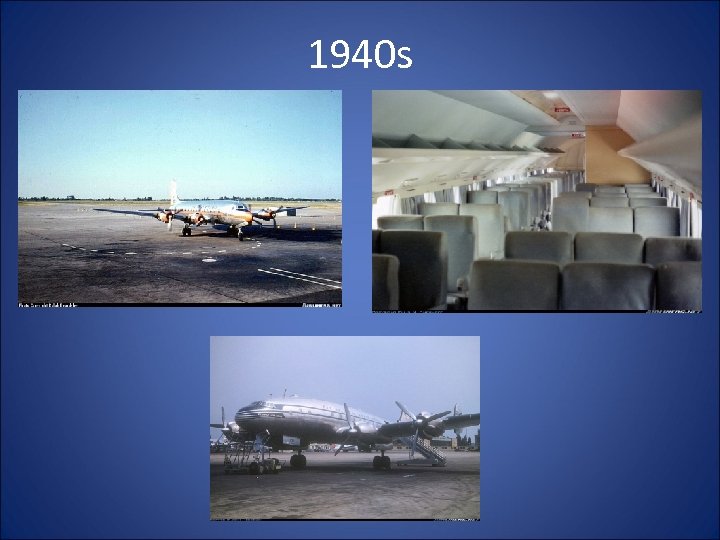
 1940 s • Many advances due to World War II – – Better Radios New radio navigation aids Faster longer range aircraft Many newly build airfields • 1944 American Airlines begins a domestic cargo service • 1945 -1950 American Airlines briefly operated American Overseas Airlines (AOA) to provide overseas flights. AOA merged with Pan American in 1950.
 1940 s
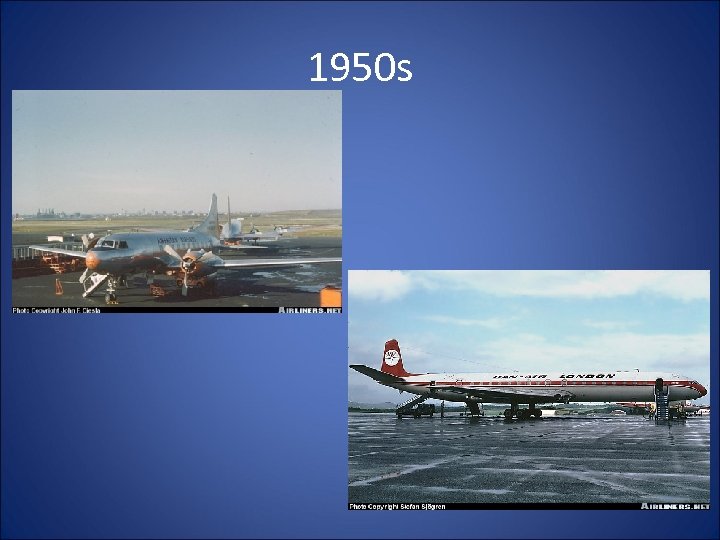
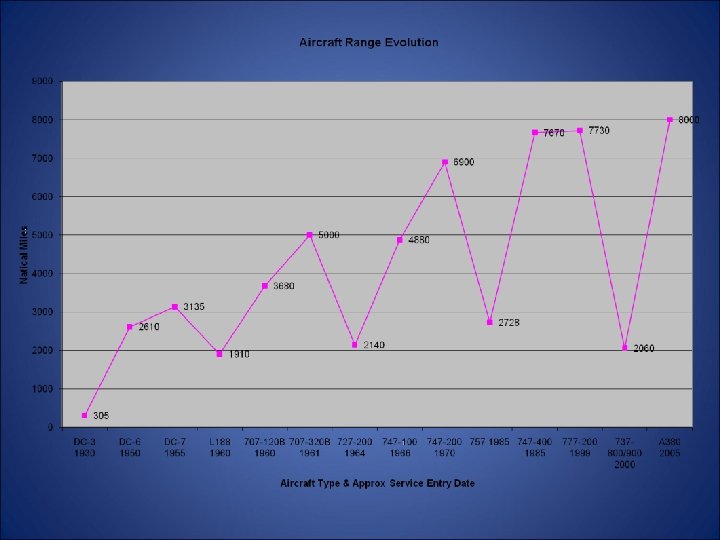
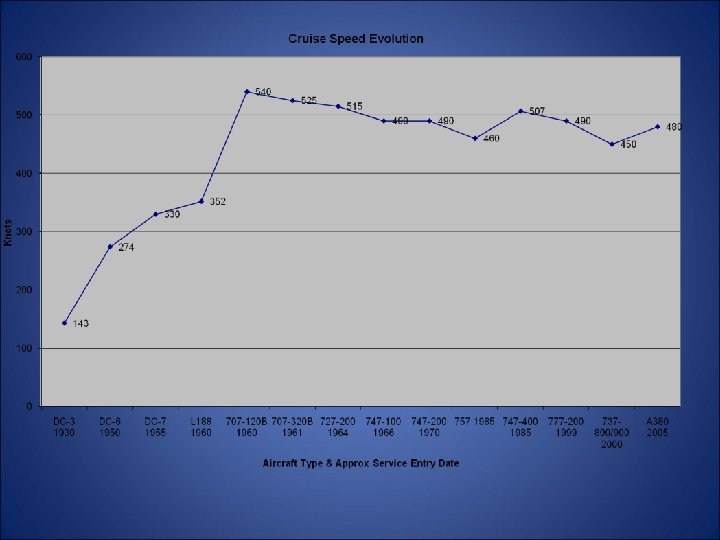
 1950 s • Major advancements in range, speed, navigation, and airport facilities – First jets and turboprops became operational – Airports began to install ILS systems to allow nearly all weather operations. – Airlines began to schedule some of their first non -stop trans continental flights and overseas flights.
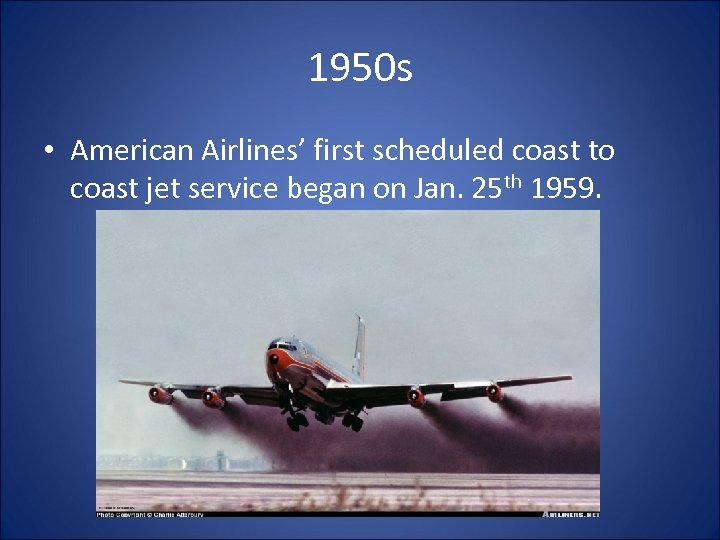 1950 s • American Airlines’ first scheduled coast to coast jet service began on Jan. 25 th 1959.
 1950 s
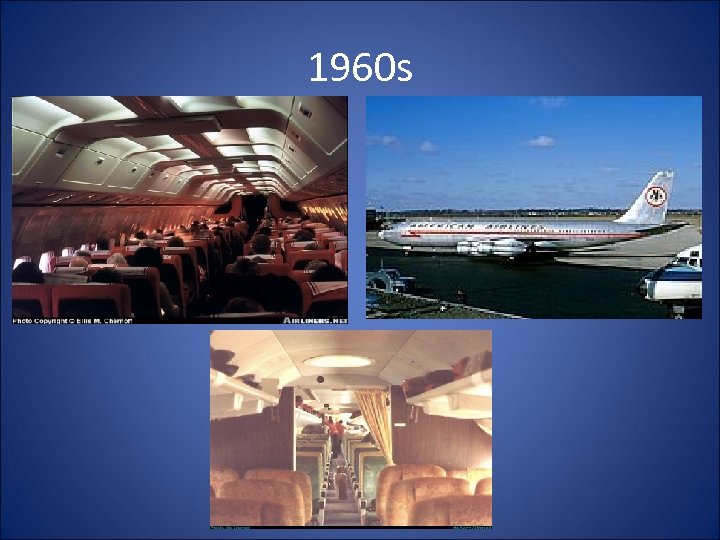
 1960 s • The airlines began to replace their piston airliner fleets with the new jets. • The new jets were able to fly much faster and in some cases farther than the old prop liners. • Air Traffic control was much more organized and began to function and look much like it does today • American Airlines expanded and modernized their fleet thought-out the decade – By the end of the 60 s American had a nearly all turbine fleet.
 1960 s
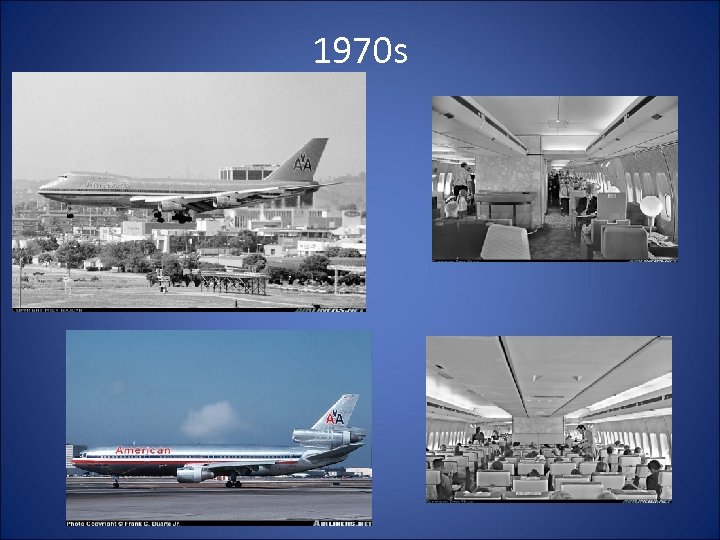
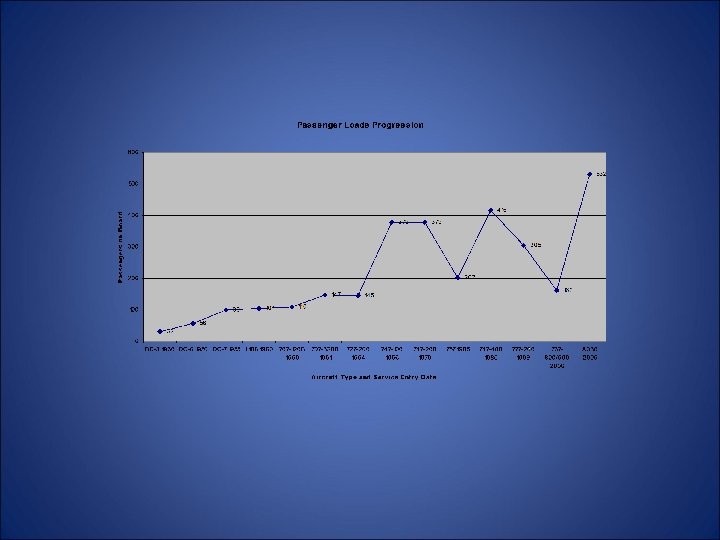
 1970 s • During this decade some of the greatest changes in commercial aviation history occurred. – Widebodys such as the 747, DC-10, L-1011 greatly increased passenger volumes and lower ticket prices. – The aircraft of this era had greatly improved ranges and now were able to fly to many parts of the world. – The first supersonic airliner Concorde entered service. – Near the end of the 70 s the Industry was deregulated
 1970 s • American Airlines expanded their service to many Caribbean, and Mexican destinations. • American initiated their super-saver fair program.
 1970 s
 1980 s-1990 s • Consequences of Deregulation Realized – Less expensive airfares – More vicious competition – Beginning of the end for some old and seemingly invincible airlines that did not adapt to deregulation. • Braniff, Eastern and Pan American by the early 1990 s
 1980 s-1990 s • Airlines begin to focus on greater efficiency – Smaller Jets on domestic routes, and the beginnings of a movement away from tri-jets – Greater use of ETOPS (Extended Twin Operations) • American continued to expand their operations – June 11, 1981 American opened their Dallas Fort Word hub. – In 1984 American started American Eagle their commuter airline. – 1992 American initiated the Value Pricing program
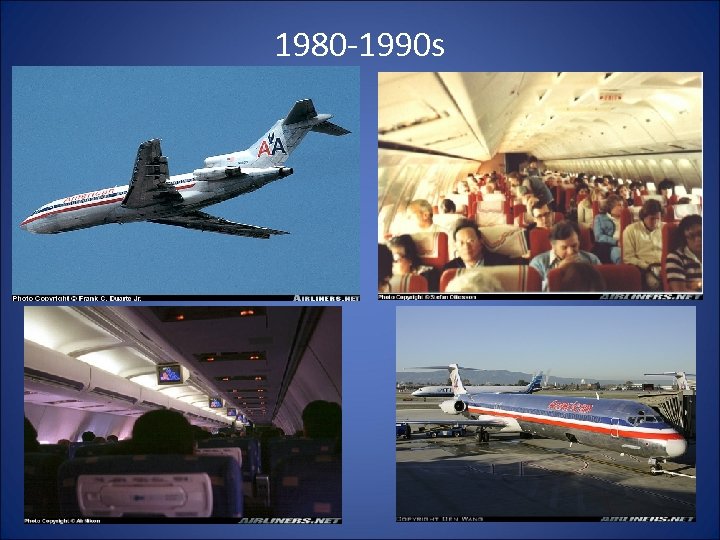 1980 -1990 s
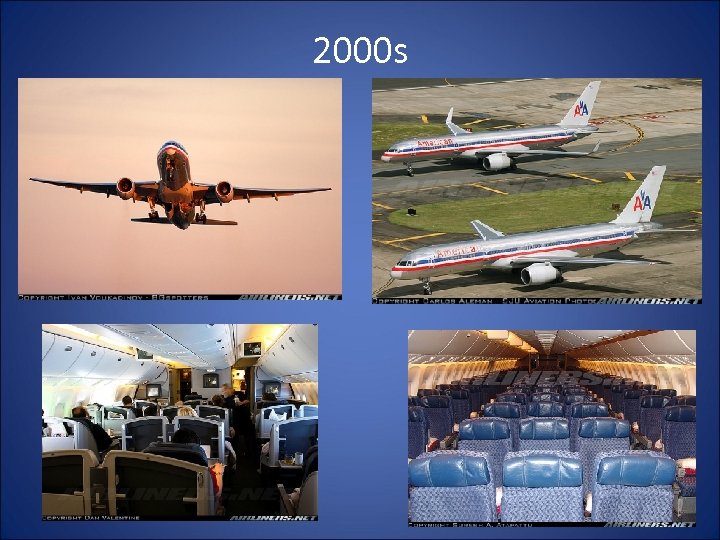
 2000 s • Sept. 11 th 2001 – Higher fuel prices • Forced early retirement of many lesser efficient aircraft • Faster aircraft ideas scrapped in favor of more efficient designs • Many major airlines had to enter bankruptcy • ETOPS use widely expanded • End of many onboard services and amenities • Charges for checked and overweight baggage
 2000 s • American streamlined their fleet – Retired older less efficient aircraft – Purchased new long range more efficient twins like the 777 and new generation 737 s • First U. S. airline begin onboard al carte’ services • Began charging for pillows, blankets, and for the 1 st checked bag
 2000 s
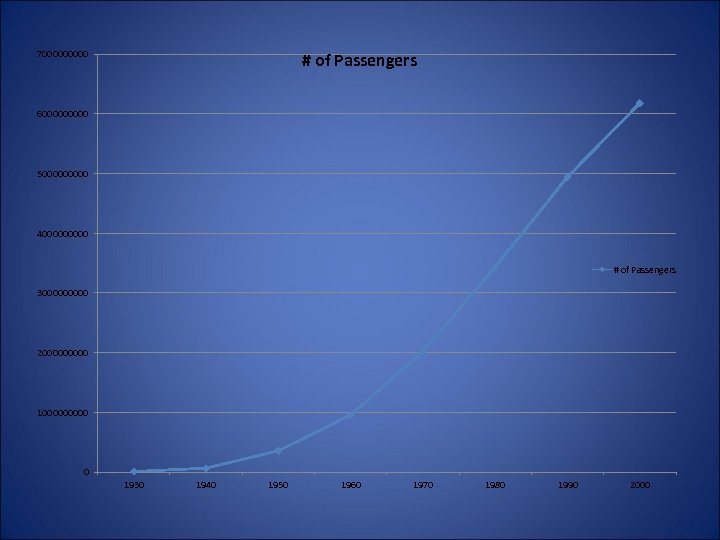 700000 # of Passengers 600000 500000 400000 # of Passengers 300000 200000 100000 0 1930 1940 1950 1960 1970 1980 1990 2000
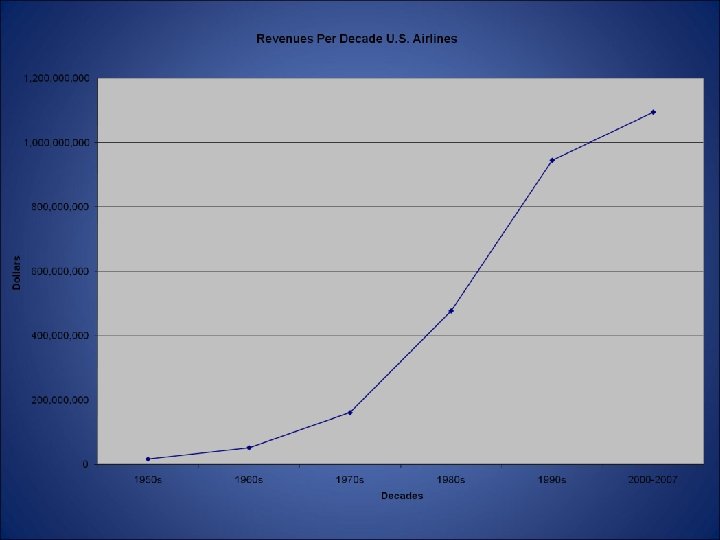
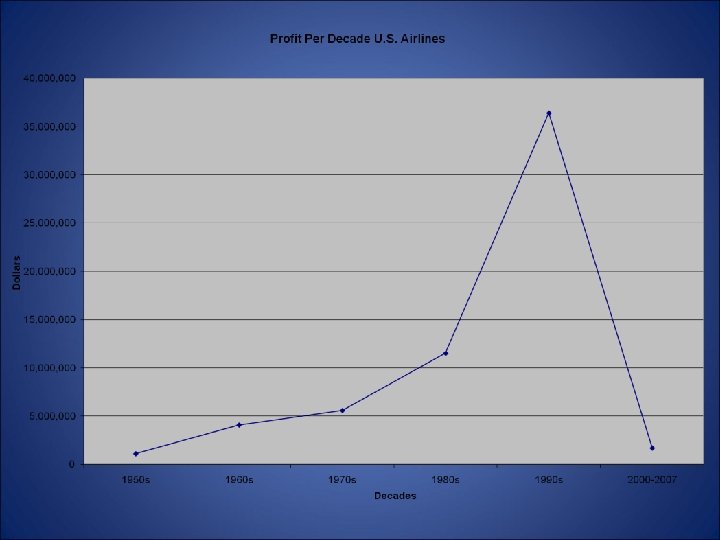
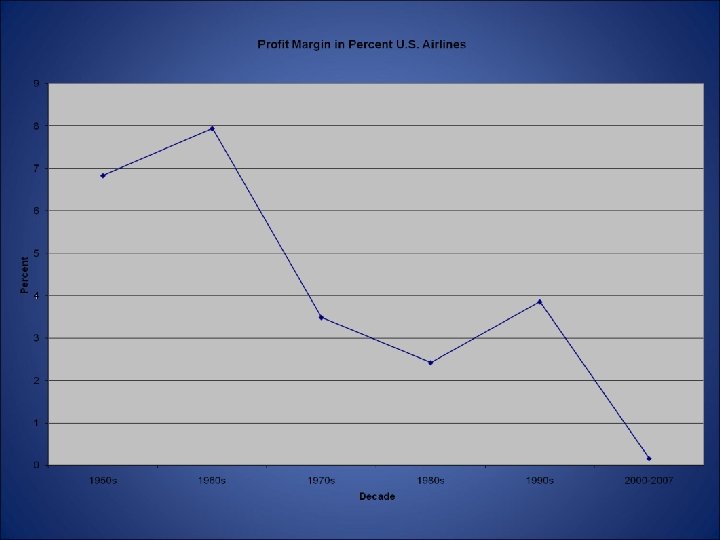
 Conclusions • The Airline industry is in severe trouble. • Even though revenues and passenger numbers are higher than ever. Profit is barely at breakeven. • Reasons: Vicious Competition, and a spike in fuel prices
 The Future • Industry can go in two directions 1. Continuation of status quo • • Continued competition on price will drive profit potential lower More companies will go out of business Niches available for smaller airlines What can American do to survive? 2. Breakout of one Airline with new Strategy • • • New strategy Improved Profitability Creation of a possible Blue Ocean Risky but Rewarding What can American do to be successful?
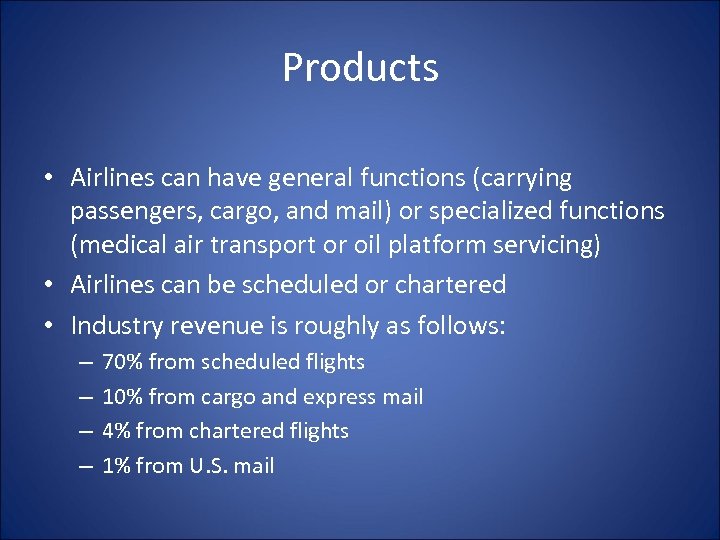 Products • Airlines can have general functions (carrying passengers, cargo, and mail) or specialized functions (medical air transport or oil platform servicing) • Airlines can be scheduled or chartered • Industry revenue is roughly as follows: – – 70% from scheduled flights 10% from cargo and express mail 4% from chartered flights 1% from U. S. mail
 Customers • Majority of flights are within the US and Canada • European flights are increasing due to deregulation • Many airlines use the hub-and-spoke system – Local airports fly to a central airport that offers long distance and international flights
 Customers • Many customers are unhappy with airlines • Airlines have to continually improve on their services – Ticketless travel: reduces time waiting in line – Interactive entertainment systems and Wi-Fi – More comfortable seats for longer flights – Frequent Flyer Programs offer rewards (usually free or discounted flights) for customers that fly often with the same airline
 Customers – American Airlines • AA and its affiliates serve about 250 cities in over 40 countries with at least 3, 400 flights daily • AA’s network of flights covers North America, Europe, Latin America, the Caribbean, and the Pacific
 Customers – American Airlines • AA offers different seats for different flights – Domestic flights have first class and main cabin • First class on most flights get complimentary meals • Main cabin can purchase food – Long International flights have first class (flat beds), business class (lie-flat seats), and main cabin – Other International flights have business class (some seats wider than normal, some are lie-flat) and main cabin
 Geography • Airline industry is world wide • Many airlines operate hub-and-spoke systems from large, international airports to small, regional airports • Many flights either arrive or depart from hubs • Flight pattern videos show airline travel directions – Most in North America start in the east or travel east • New York • Florida
 Geography • Flight Pattern
 Strategy • Airline industry is growing, not consolidating – Many are consolidating, but more growth overall • Number of airlines in world has increased by 150% over the last 20 years • Continues to grow 5% per year • Over last 10 years 1, 300 new airlines entered the industry and 850 exited
 Strategy, Cont. • Growth primarily fueled by new business models – Addition of low-cost carriers – Business only airlines – New regional carriers • New business models create additional value for passengers
 Strategy, Cont. • Airlines are looking for new ways to better compete in market since fuel prices are fluctuating and as new competition arises • In the future, innovative airlines will create new business models and new ideas to create constant and continuous growth in the airline industry – Growth brings new ideas, people, and technology
 Geography of American Airlines • American Airlines, American Eagle, and American Connection serves 250 cities in over 40 countries • More than 3, 400 daily flights • Network points include – North America – The Caribbean – Latin America – Europe – The Pacific
 Geography of American Airlines, Cont. • Major hubs at D/FW, Chicago O’Hare, Miami, and St. Louis • About 90% of flights begin or end at hubs • Large presence in other U. S. metropolitan areas – New York (4 airports) – Los Angeles (4 airports) – Boston
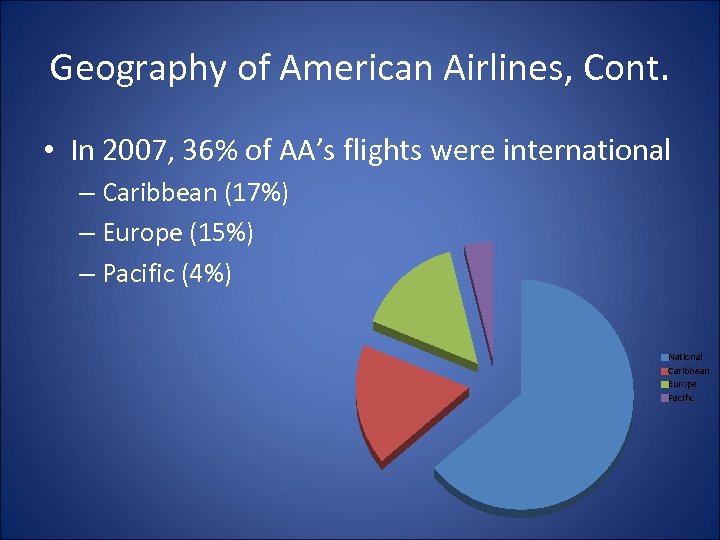 Geography of American Airlines, Cont. • In 2007, 36% of AA’s flights were international – Caribbean (17%) – Europe (15%) – Pacific (4%) National Caribbean Europe Pacific
 Products of American Airlines • Frequent Flyer Program – AAdvantage – Started in 1981 – First airline loyalty program in the world – Offers its members the most innovative ways to earn and redeem miles • Passengers charged $15 for first checked-in items of baggage on domestic flights
 Products of American Airlines, Cont. • Classes of Service – International long hauls • First Class with flat beds • Business Class with lie-flat seats – Other International • Business Class with wide seats and lie-flat seats • Main Cabin – Domestic, American Eagle, and Connection • First Class with complementary meals • Main Cabin with food for sale
 Major Problems - Current • Safety – American Airlines fined $7. 1 billion for safety violations – Many are trying to hide safety violations from FAA • Southwest recently got caught, fined $10. 2 for cracks in skin of airplanes – Very costly to maintain safety of airplanes • American and Delta cancelled flights to check wiring on planes – Lost profits – Lost customers
 Major Problems - Future • Fuel Prices – Many airlines have set a fuel price range • Now causing airlines to claim losses due to low fuel prices – Fuel price fluctuation causes problems on scheduling flights in the future and setting ticket prices • Mergers – Discontinuation of departure and arrival cities – Competitive air fares are eliminated – Customer service diminishes
 Major Problems – Future, Cont. • Bankruptcy – Many airlines are currently filing for bankruptcy – Airline can continue to operate after filing for bankruptcy – Fares, schedules, and destinations after filing are not determined by airline and are subject to the approval of the bankruptcy board – Entire industry will not go bankrupt
 Powerful Suppliers and buyers
 Suppliers and Negotiating Power • “The airline supply business is mainly dominated by Boeing and Airbus. For this reason, there isn't a lot of cutthroat competition among suppliers. Also, the likelihood of a supplier integrating vertically isn't very likely. In other words, you probably won't see suppliers starting to offer flight service on top of building airlines. ” • The airline industry overwhelmingly participates in the Supplier Diversity Program.
 American Airlines & Boeing • Contract Agreement: – “During 2008, the Company continued its fleet renewal strategy as it entered into amendments to its purchase agreement with the Boeing Company. Giving effect to the amendments and considering the impact of delays caused by the recent machinist strike at Boeing, the Company is now committed to take delivery of a total of 29 737 -800 aircraft in 2009, 39 737 -800 aircraft in 2010 and eight 737 -800 aircraft in 2011. In addition to these aircraft, the Company has firm commitments for eleven 737 -800 aircraft and seven Boeing 777 aircraft scheduled to be delivered in 2013 - 2016. Under the Boeing 737 -800 and Boeing 777 -200 aircraft purchase agreements, payments for the related aircraft purchase commitments will be approximately $1. 0 billion in 2009, $1. 1 billion in 2010, $355 million in 2011, $218 million in 2012, $417 million in 2013 and $584 million for 2014 and beyond. These amounts are net of purchase deposits currently held by the manufacturer. Any incremental firm aircraft orders will increase the Company’s commitments. ”
 The Supplier Diversity Program • This program is designed to support the small, minorityowned, or woman-owned business. • These businesses compete, or bid, to be the supplier of various products for the airlines like seat covers, custodial services, food and beverage services, etc… • For a small business to qualify to be a supplier for the airlines industry the business must be at least 51% owned, controlled and operated by an African American, Asian American, Hispanic American, Women, Native American, or a small disabled individual’s business.
 Who are the suppliers in the Supplier Diversity Program? • • The suppliers in this program are confidential since they make bids for a chance to be a supplier. I emailed the manager of the program and this is her reply: “Thanks for your email…. the information that we share on our Supplier Diversity website at www. aa. com/supplierdiversity is the information we share publicly about our Supplier Diversity Program. Due to the confidential nature, we do not share additional information about our suppliers. If you would like, I will be glad to mail you one of our Supplier Diversity brochures which shares information about our Program and the types of products and services we procure. If you would like a brochure, please send me your address. Thanks. ” Make it a great day! Sherri Macko American Airlines Manager, Supplier Diversity
 Buyers • In the airline industry the biggest buyer is the frequent flyer. • Other big buyers, or customers, are occasional flyers, cargo transportation (if it’s a cargo airline), big business executives, etc…
 Negotiating Power • The negotiating, or bargaining power of buyers is very low because the switching costs are on the average high and can potentially be astronomically high.
 Buyers continued… • American Airlines and other airline carriers also provide services that are not like the traditional ones from the previous slide. • For example, AA provides not only training for their flight attendants, but also provides other kinds of training for all kinds of companies.
 AA Training Center • “Through the years, the Center’s role has evolved dramatically. Still American’s base for training flight attendants, the Training and Conference Center is now also designed to encourage learning and professional growth without distraction for companies and organizations of all kinds. The Center is available for conferences, team-building programs and catered events. ”
 References • American Airlines’ Website. Feb. 2009. http: //www. aa. com/content/amrcorp/corporat e. Information/facts/amr. jhtml • American Airlines’ Website. Feb. 2009. http: //www. aa. com/aa/i 18 n. Forward. do? p=/ab out. Us/supplier. Diversity/americanairlines. jsp • Investopedia’s Website. “The Industry Handbook: The Airline Industry”. Feb. 2009. https: //www. investopedia. com%2 ffeatures%2 fi ndustryhandbook%2 fairline. asp