


 Скачать презентацию Indonesian-German Technical Cooperation PACA A Participatory Planning
ef8bdf23536b2ef49150c2ce42e7108d.ppt
- Количество слайдов: 26
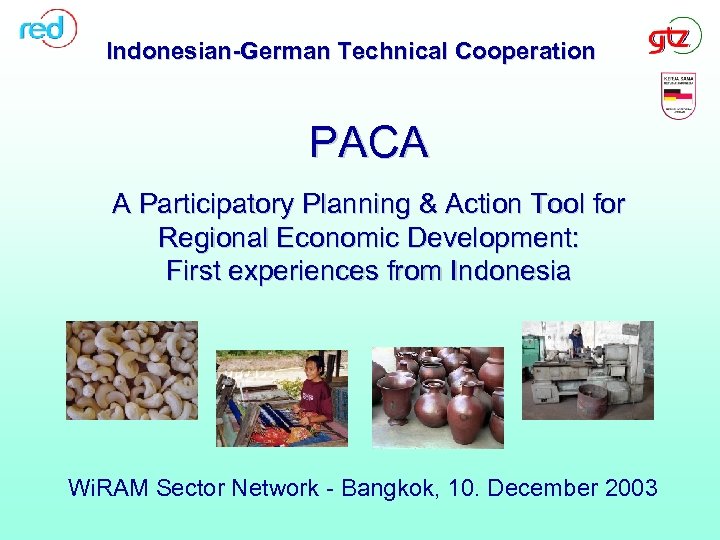 Indonesian-German Technical Cooperation PACA A Participatory Planning & Action Tool for Regional Economic Development: First experiences from Indonesia Wi. RAM Sector Network - Bangkok, 10. December 2003
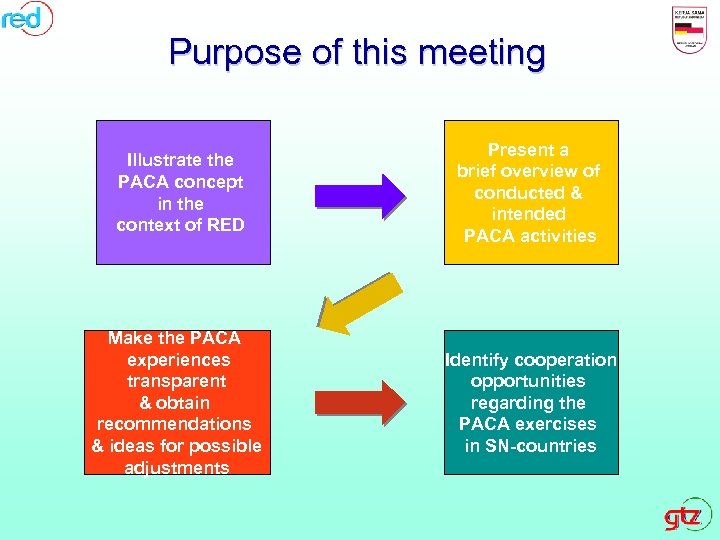 Purpose of this meeting Illustrate the PACA concept in the context of RED Present a brief overview of conducted & intended PACA activities Make the PACA experiences transparent & obtain recommendations & ideas for possible adjustments Identify cooperation opportunities regarding the PACA exercises in SN-countries
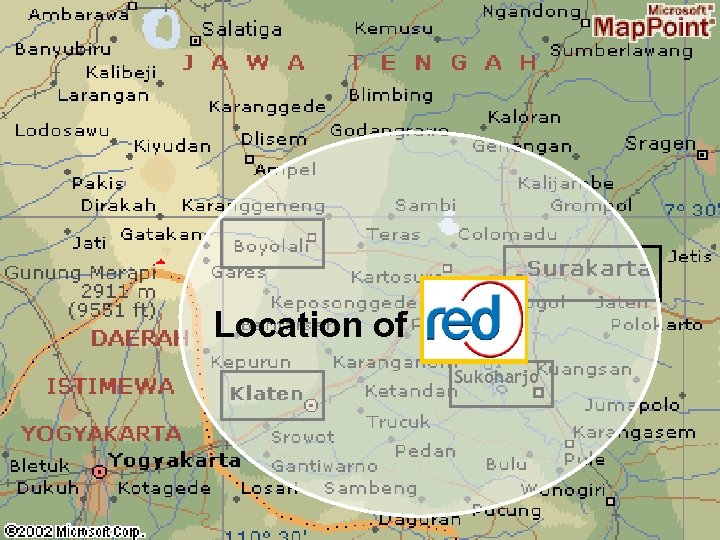 Location of Sukoharjo
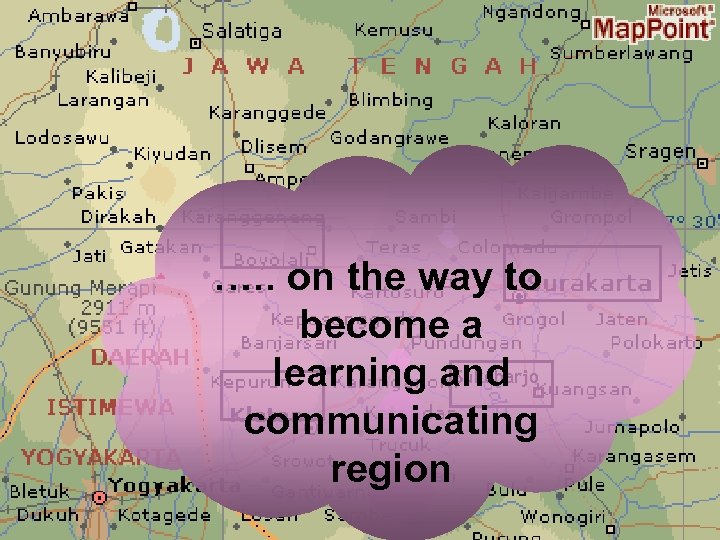 …. . on the way to become a Sukoharjo learning and communicating region
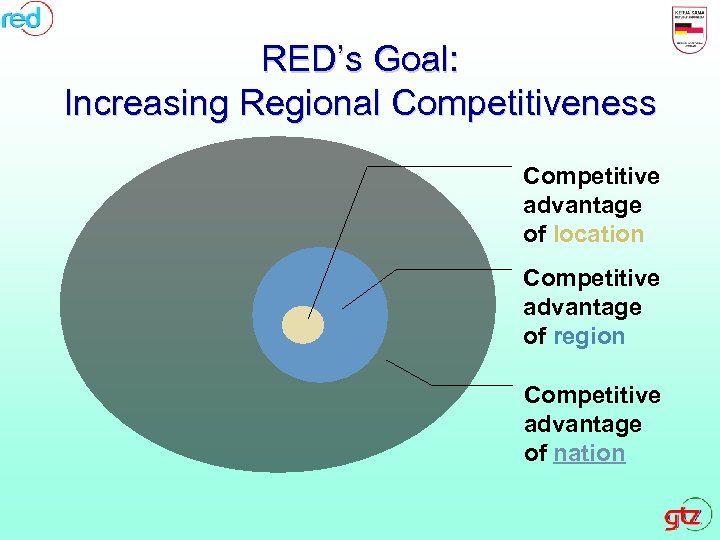 RED’s Goal: Increasing Regional Competitiveness Competitive advantage of location Competitive advantage of region Competitive advantage of nation
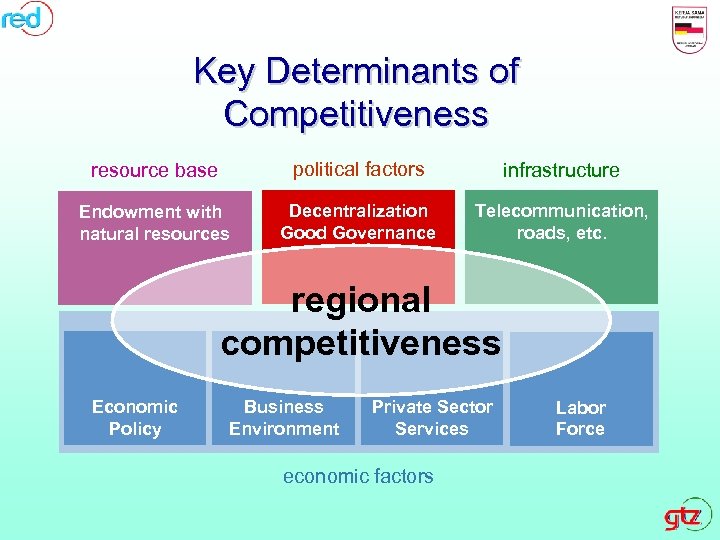 Key Determinants of Competitiveness resource base political factors infrastructure Endowment with natural resources Decentralization Good Governance Telecommunication, roads, etc. regional competitiveness Economic Policy Business Environment Private Sector Services economic factors Labor Force
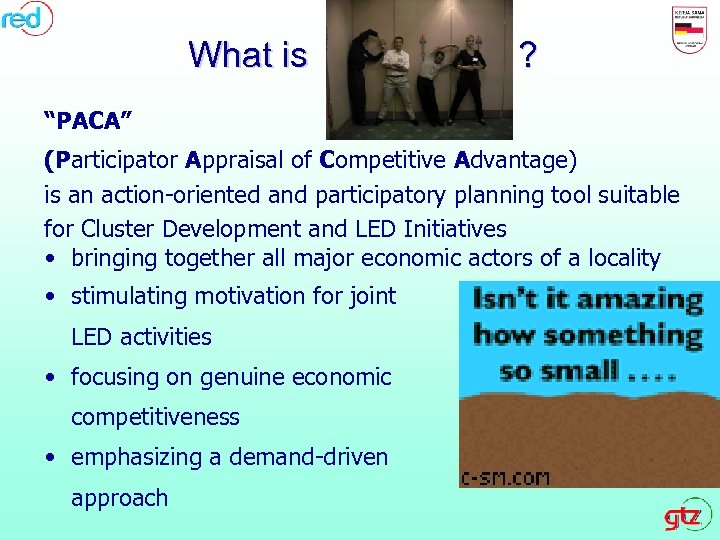 What is ? “PACA” (Participator Appraisal of Competitive Advantage) is an action-oriented and participatory planning tool suitable for Cluster Development and LED Initiatives • bringing together all major economic actors of a locality • stimulating motivation for joint LED activities • focusing on genuine economic competitiveness • emphasizing a demand-driven approach
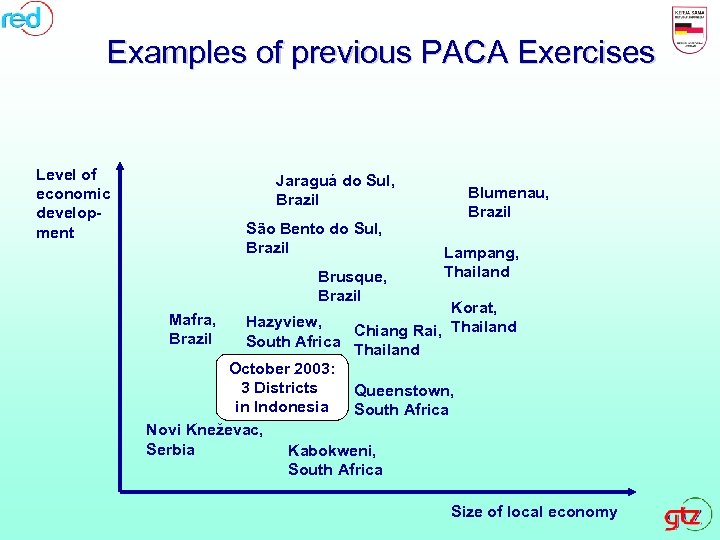 Examples of previous PACA Exercises Level of economic development Jaraguá do Sul, Brazil São Bento do Sul, Brazil Brusque, Brazil Blumenau, Brazil Lampang, Thailand Korat, Hazyview, Chiang Rai, Thailand South Africa Thailand October 2003: Kundasale, 3 Districts Queenstown, Sri Lanka in Indonesia South Africa Novi Kneževac, Serbia Kabokweni, South Africa Mafra, Brazil Size of local economy
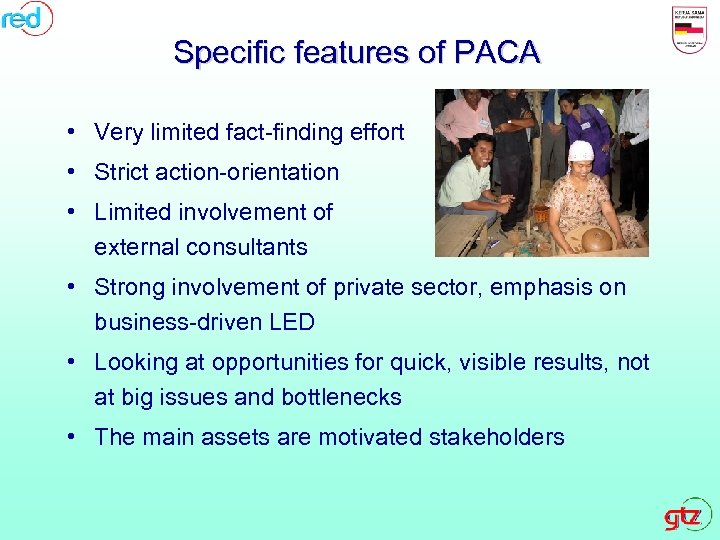 Specific features of PACA • Very limited fact-finding effort • Strict action-orientation • Limited involvement of external consultants • Strong involvement of private sector, emphasis on business-driven LED • Looking at opportunities for quick, visible results, not at big issues and bottlenecks • The main assets are motivated stakeholders
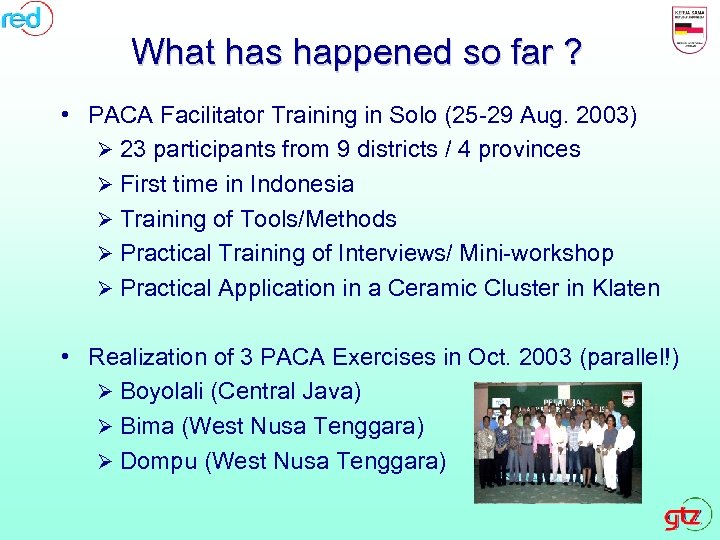 What has happened so far ? • PACA Facilitator Training in Solo (25 -29 Aug. 2003) Ø 23 participants from 9 districts / 4 provinces Ø First time in Indonesia Ø Training of Tools/Methods Ø Practical Training of Interviews/ Mini-workshop Ø Practical Application in a Ceramic Cluster in Klaten • Realization of 3 PACA Exercises in Oct. 2003 (parallel!) Ø Boyolali (Central Java) Ø Bima (West Nusa Tenggara) Ø Dompu (West Nusa Tenggara)
 Who is involved in a PACA ? • A “Champion” who suggests and coordinates the PACA – provincial or local government agency, Chamber, NGO, donor agency (e. g. GTZ) • The PACA Team • Other Local Organizations who take an active role in – financing – making staff available for the PACA Team • Various Local Stakeholders who participate in the kickoff workshop, interviews, mini-workshops and the presentation
 What is the PACA Team ? • 1 - 2 External Consultants who are familiar with the PACA method and LED – to introduce a fresh view at the local reality – to transfer their know-how to local members of the team • 3 - 5 Local Facilitators – for instance: professionals from the local business promotion agency, the local Chamber, the local university – not too young, too junior – with experience in economic promotion and in dealing with private business
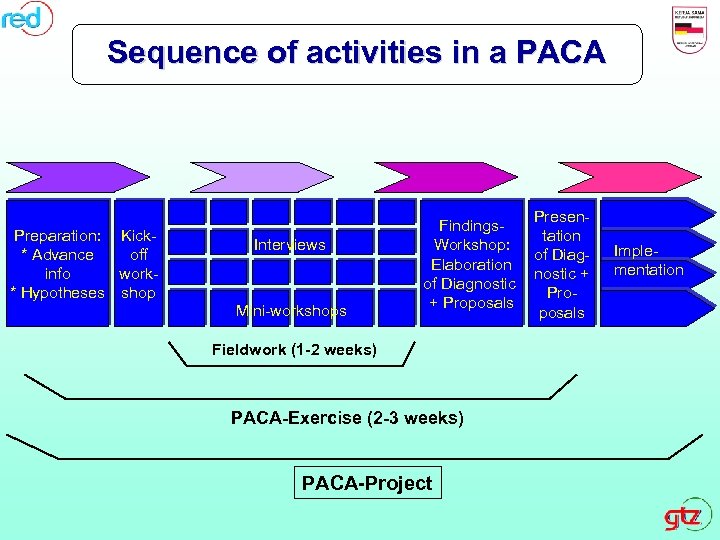 Sequence of activities in a PACA Preparation: Kick* Advance off info work* Hypotheses shop Interviews Mini-workshops Findings. Workshop: Elaboration of Diagnostic + Proposals Fieldwork (1 -2 weeks) PACA-Exercise (2 -3 weeks) PACA-Project Presentation of Diagnostic + Proposals Implementation
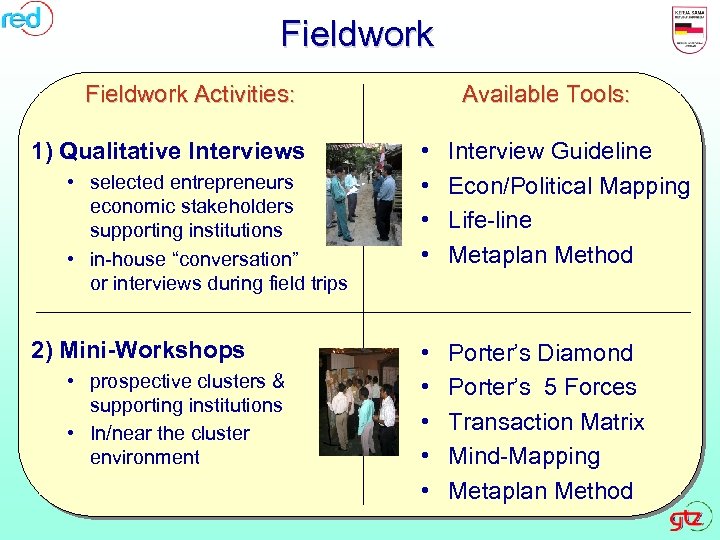 Fieldwork Activities: 1) Qualitative Interviews • selected entrepreneurs economic stakeholders supporting institutions • in-house “conversation” or interviews during field trips 2) Mini-Workshops • prospective clusters & supporting institutions • In/near the cluster environment Available Tools: • • Interview Guideline Econ/Political Mapping Life-line Metaplan Method • • • Porter’s Diamond Porter’s 5 Forces Transaction Matrix Mind-Mapping Metaplan Method
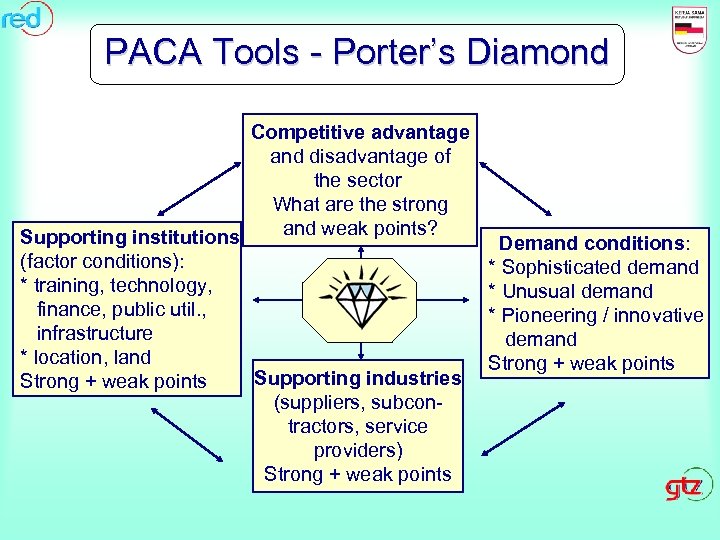 PACA Tools - Porter’s Diamond Competitive advantage and disadvantage of the sector What are the strong and weak points? Supporting institutions (factor conditions): * training, technology, finance, public util. , infrastructure * location, land Supporting industries Strong + weak points (suppliers, subcontractors, service providers) Strong + weak points Demand conditions: * Sophisticated demand * Unusual demand * Pioneering / innovative demand Strong + weak points
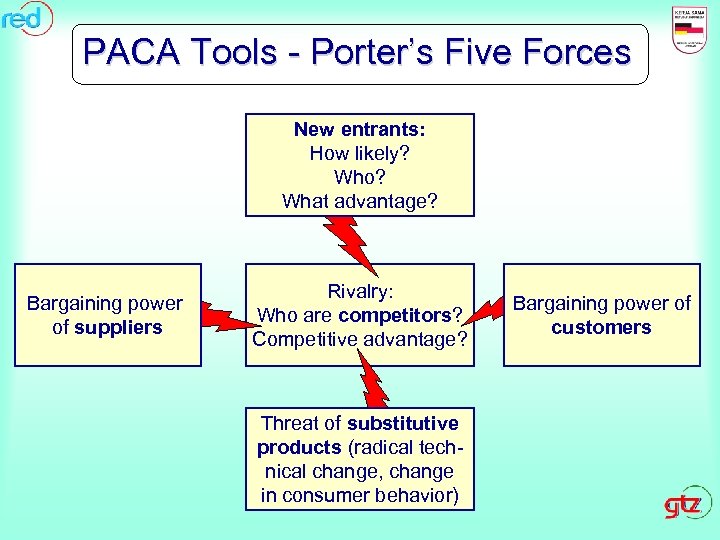 PACA Tools - Porter’s Five Forces New entrants: How likely? Who? What advantage? Bargaining power of suppliers Rivalry: Who are competitors? Competitive advantage? Threat of substitutive products (radical technical change, change in consumer behavior) Bargaining power of customers
 How was the process of the PACA exercise (1)? The clusters were selected by the local/regional partners in a scoring process. Selected clusters in Boyolali: Ø Furniture Ø Milk Ø Tourism Ø Metal (copper) production
 How was the process of the PACA exercise (2)? Then the preparation of the PACA exercise took place Which persons should be involved? How can the logistic be arranged? Information about the schedule Preparing information and marketing material Etc. Assistance of national and international advisors and the PACA team Realization of the fieldwork, analyzing and presenting proposals
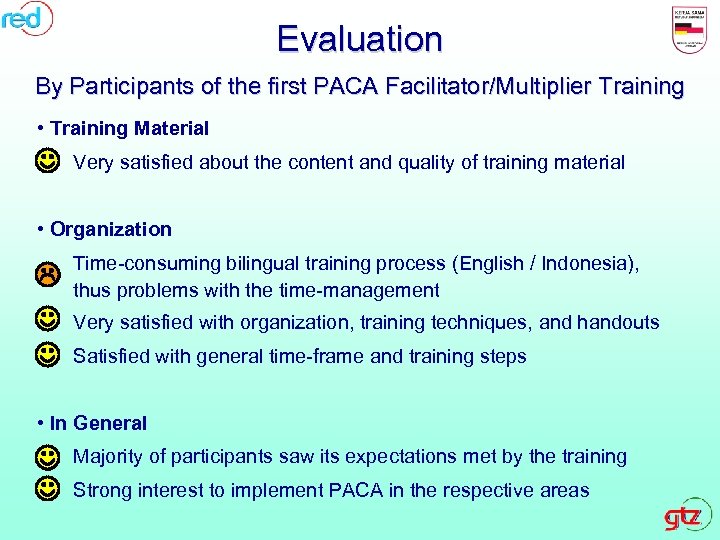 Evaluation By Participants of the first PACA Facilitator/Multiplier Training • Training Material Very satisfied about the content and quality of training material • Organization Time-consuming bilingual training process (English / Indonesia), thus problems with the time-management Very satisfied with organization, training techniques, and handouts Satisfied with general time-frame and training steps • In General Majority of participants saw its expectations met by the training Strong interest to implement PACA in the respective areas
 Aspects to consider (1) PACA requires intensive resources in preparation, realization and to maintain the follow up assistance Local/regional relevant partners should be early involved in the process, esp. those which can play in the future a driving and supportive role External expertise is still necessary PACA is cost intensive and therefore it is the question if local partners can replicate it in the same quality with their own funds – but: trained partners can use their know how for further replication Be aware to assist the follow up process, otherwise You loose the PACA spirit Continuation needs budget!
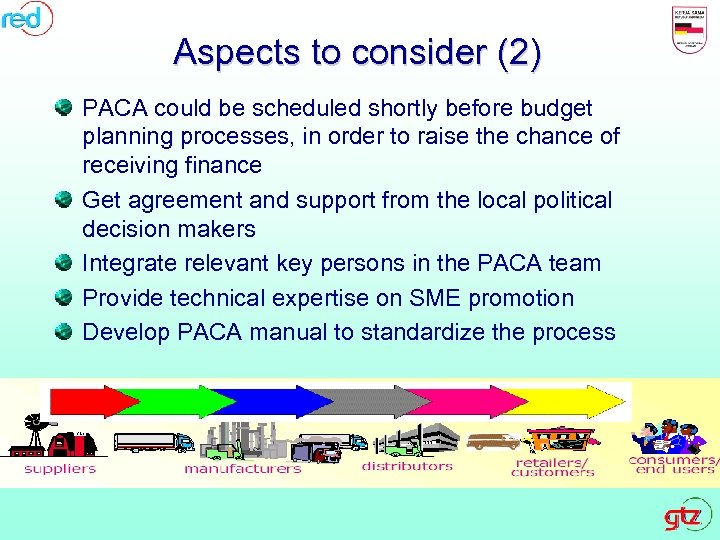 Aspects to consider (2) PACA could be scheduled shortly before budget planning processes, in order to raise the chance of receiving finance Get agreement and support from the local political decision makers Integrate relevant key persons in the PACA team Provide technical expertise on SME promotion Develop PACA manual to standardize the process
 Lessons learnt (1) PACA is very time consuming and needs an intensive preparation Before the realization marketing for the process in the location is essential It is very positive to have all the material in the local language (flyer, checklists, guidebook: how to realize a PACA-exercise, book of concepts, handouts etc. ) PACA is a powerful tool to have a relevant impact in a short time in a region Not more than 2 clusters shall be analyzed at one time
 Lessons learnt (2) Marketing of the experiences is very important – other institutions have a high demand therefore PACA is just a start for a longer development process. It is not a mystic tool – the main resource of the process is the spirit and the motivation of the people!
 Outlook In 2004 in other districts a PACA exercise shall be realized – the interest is already expressed! The PACA methodology seems to be suitable to analyze a district as a whole and to intensify communicating processes (Indonesian adaptation)
 …. and now – the Indonesian PACA film:
 Thank you very much For your kind attention !