


 Скачать презентацию Indirect and Direct Effects of Climate Change on
5ffc4d15fdc3f63542286feff2b57f35.ppt
- Количество слайдов: 59
 Indirect and Direct Effects of Climate Change on Forest Carbon Cycling What observations and models tell us about the future of land carbon dioxide uptake and why it matters for future climate change Ankur Desai, Atmospheric & Oceanic Sci. , UW-Madison University of Wisconsin Forest and Wildlife Ecology Seminar April 20, 2011
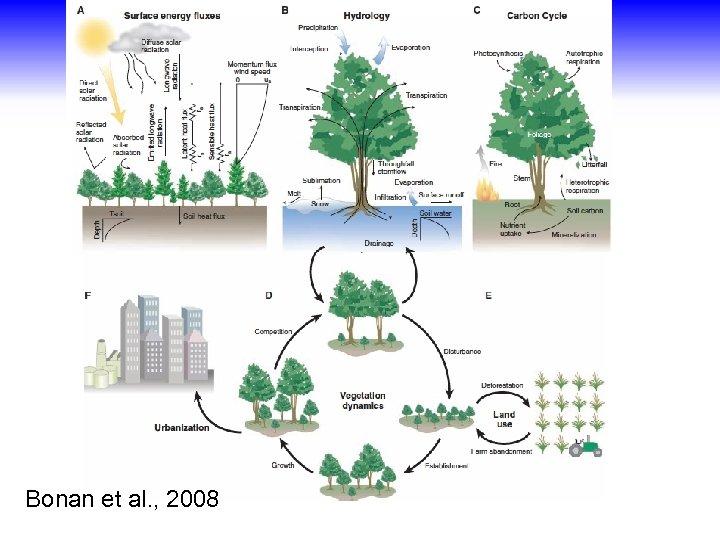
 Forests in the Earth System • Climate system is driven by – Forcings that impact the energy budget, water cycle, or trace gas and aerosol composition of atmosphere – Feedbacks that reverse, limit, or enhance these forcings • Forests have low albedo, moderate evapotranspiration rates, and high carbon stores. They also cover a significant area of the global land surface – Consequently, forcings and feedbacks imposed by forests are worth considering!
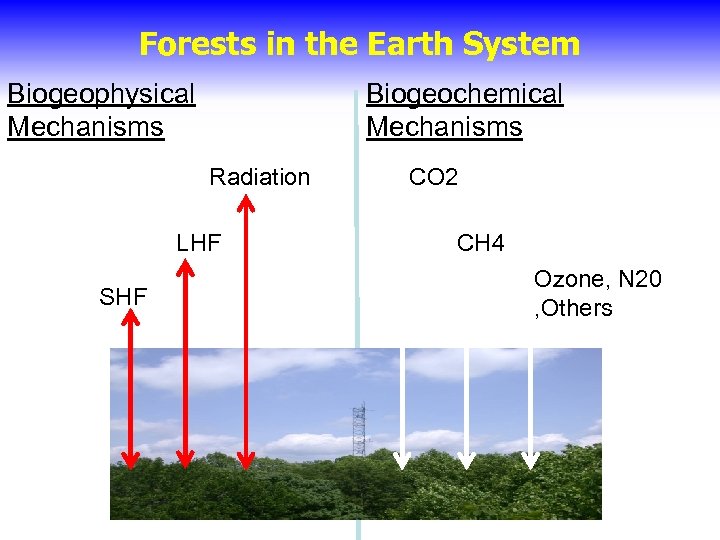 Forests in the Earth System Biogeophysical Mechanisms Biogeochemical Mechanisms Radiation LHF SHF CO 2 CH 4 Ozone, N 20 , Others
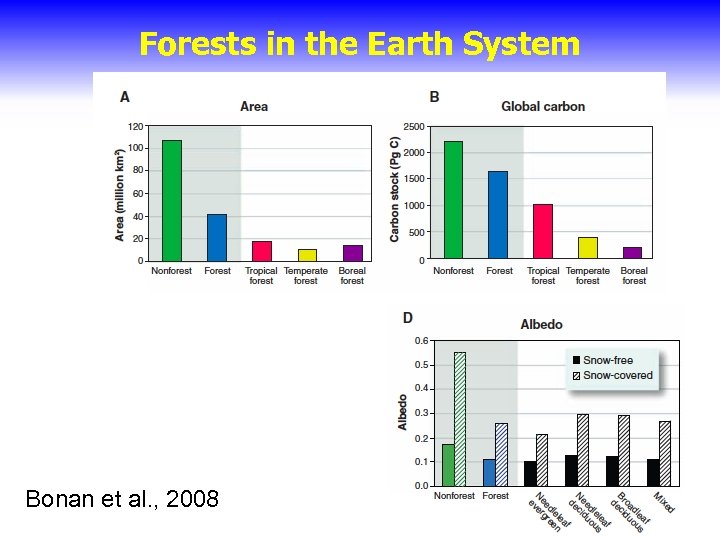 Forests in the Earth System Bonan et al. , 2008
 Bonan et al. , 2008
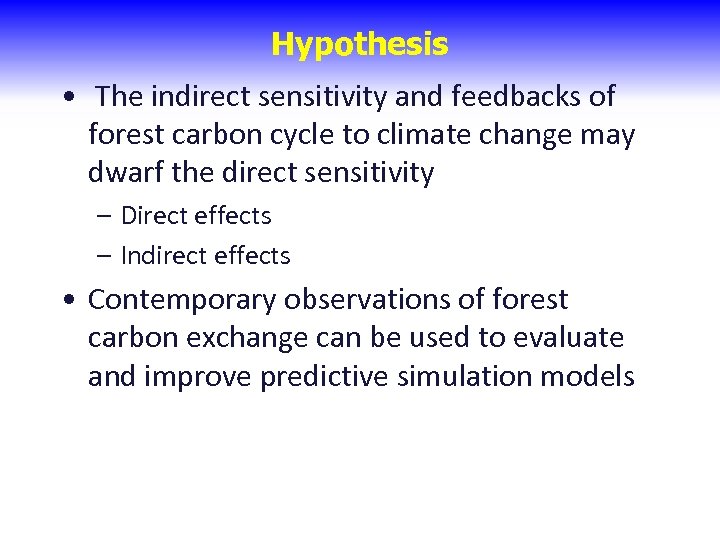 Hypothesis • The indirect sensitivity and feedbacks of forest carbon cycle to climate change may dwarf the direct sensitivity – Direct effects – Indirect effects • Contemporary observations of forest carbon exchange can be used to evaluate and improve predictive simulation models
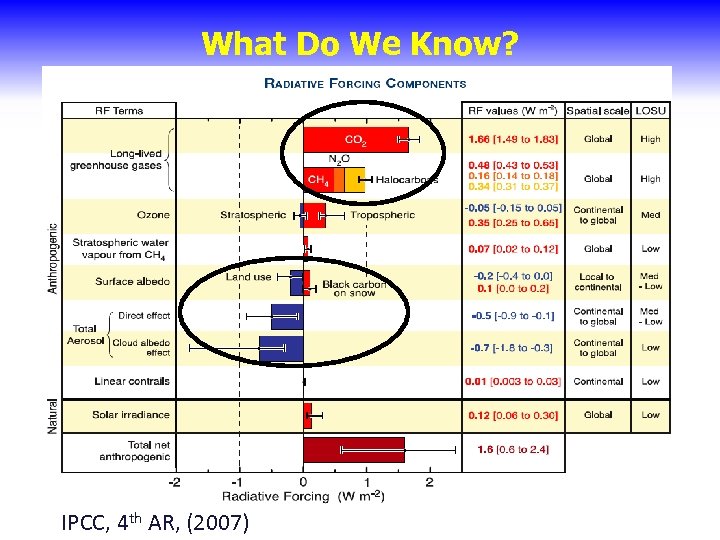 What Do We Know? IPCC, 4 th AR, (2007)
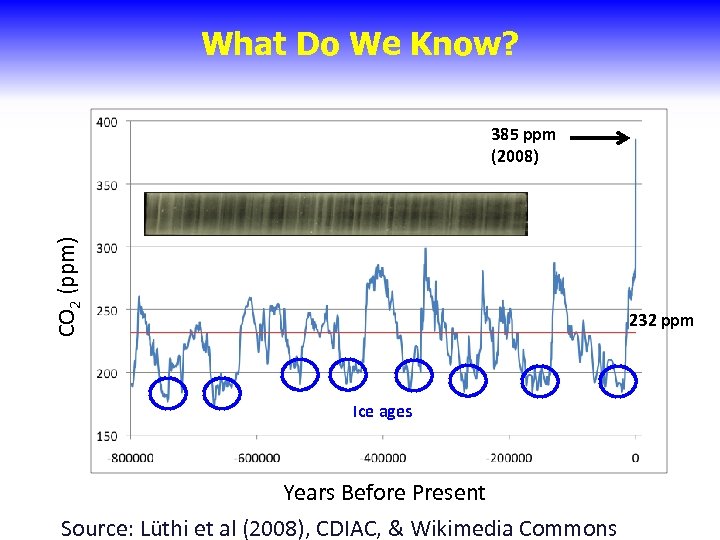 What Do We Know? CO 2 (ppm) 385 ppm (2008) 232 ppm Ice ages Years Before Present Source: Lüthi et al (2008), CDIAC, & Wikimedia Commons
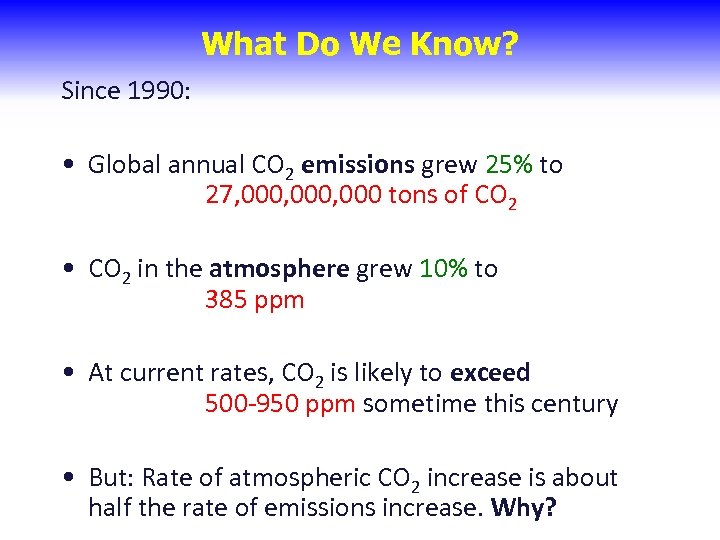 What Do We Know? Since 1990: • Global annual CO 2 emissions grew 25% to 27, 000, 000 tons of CO 2 • CO 2 in the atmosphere grew 10% to 385 ppm • At current rates, CO 2 is likely to exceed 500 -950 ppm sometime this century • But: Rate of atmospheric CO 2 increase is about half the rate of emissions increase. Why?
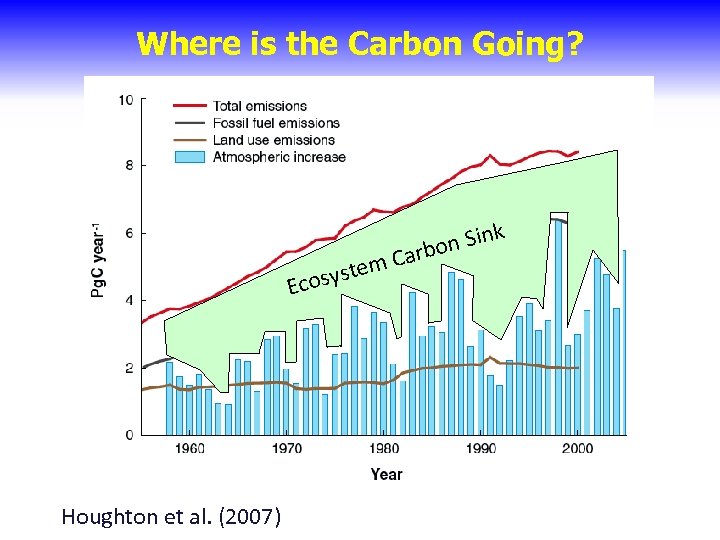 Where is the Carbon Going? k te n on Si Carb m s Ecosy Houghton et al. (2007)
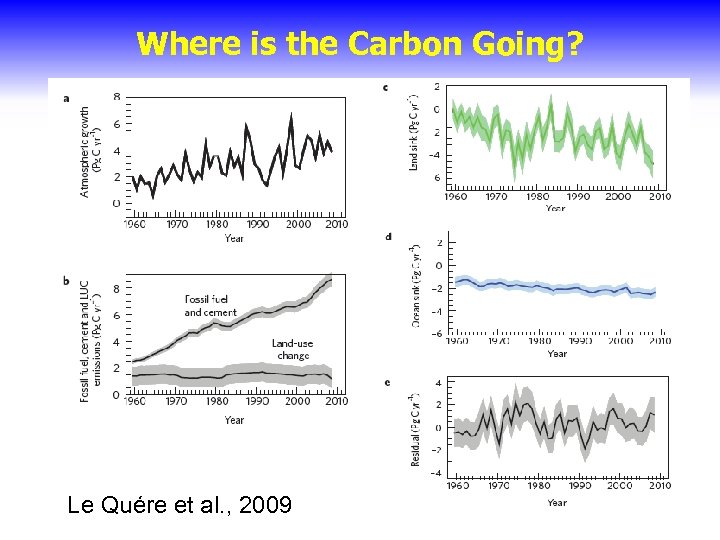 Where is the Carbon Going? Le Quére et al. , 2009
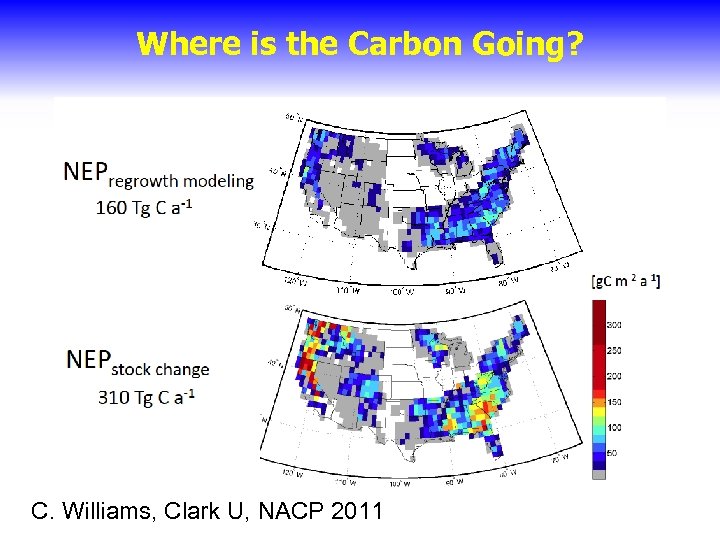 Where is the Carbon Going? C. Williams, Clark U, NACP 2011
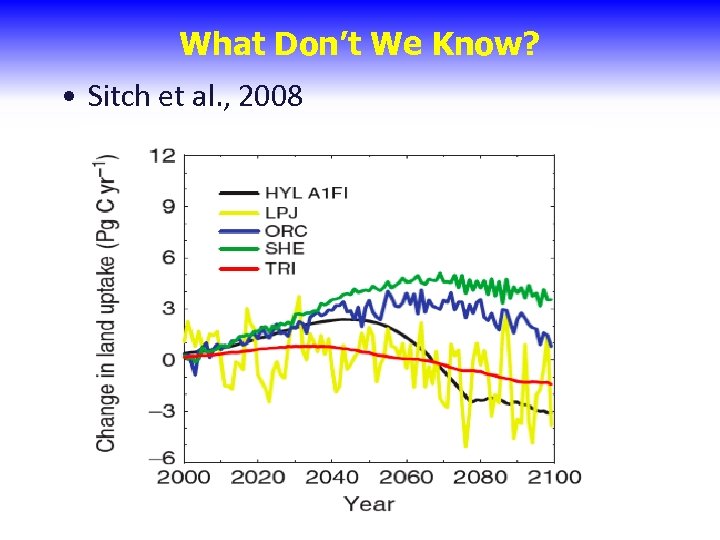 What Don’t We Know? • Sitch et al. , 2008
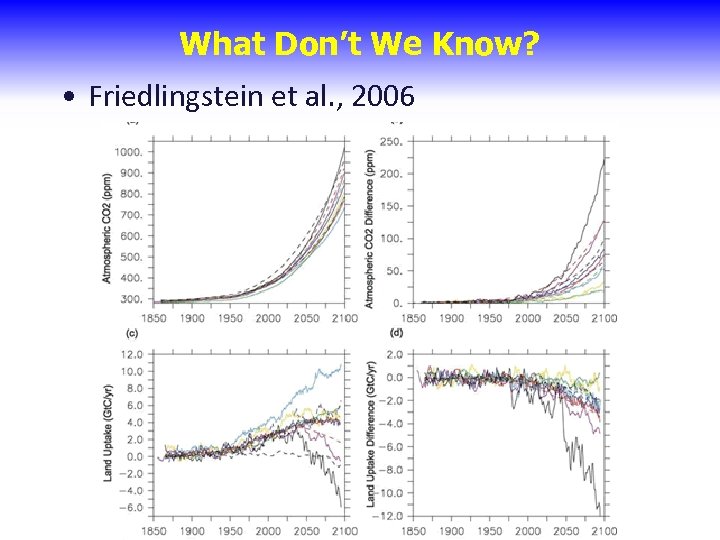 What Don’t We Know? • Friedlingstein et al. , 2006
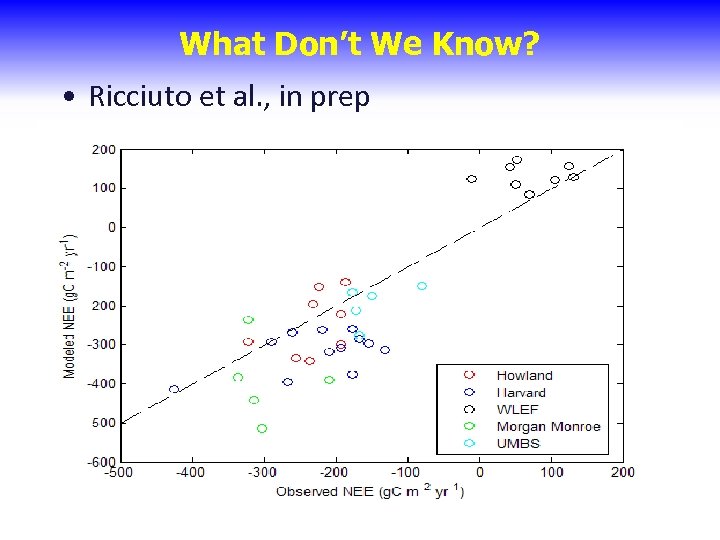 What Don’t We Know? • Ricciuto et al. , in prep Ricciuto et al. , Ph. D dissertation
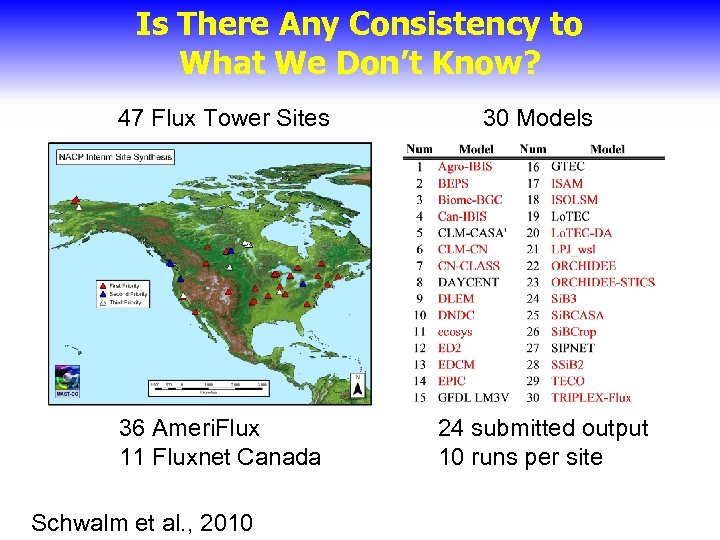 Is There Any Consistency to What We Don’t Know? 47 Flux Tower Sites 30 Models 36 Ameri. Flux 11 Fluxnet Canada 24 submitted output 10 runs per site Schwalm et al. , 2010
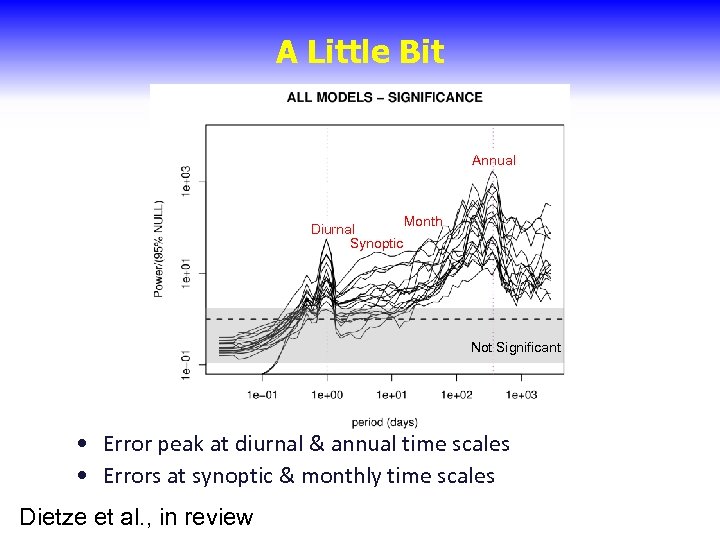 A Little Bit Annual Diurnal Synoptic Month Not Significant • Error peak at diurnal & annual time scales • Errors at synoptic & monthly time scales Dietze et al. , in review
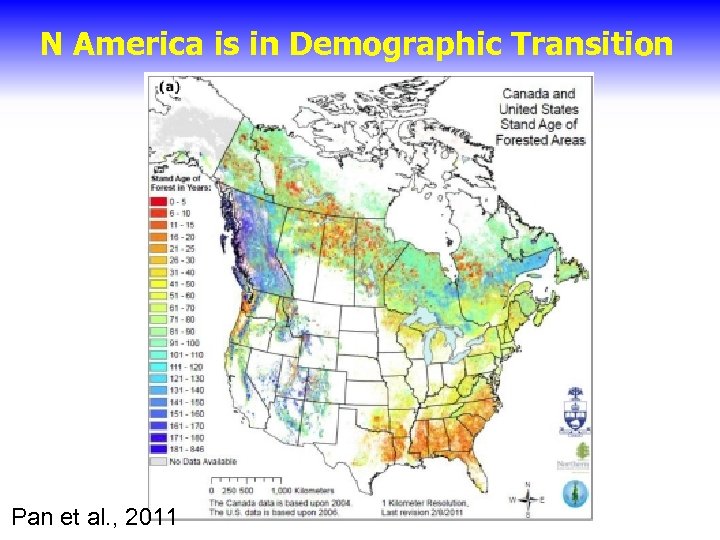 N America is in Demographic Transition Pan et al. , 2011
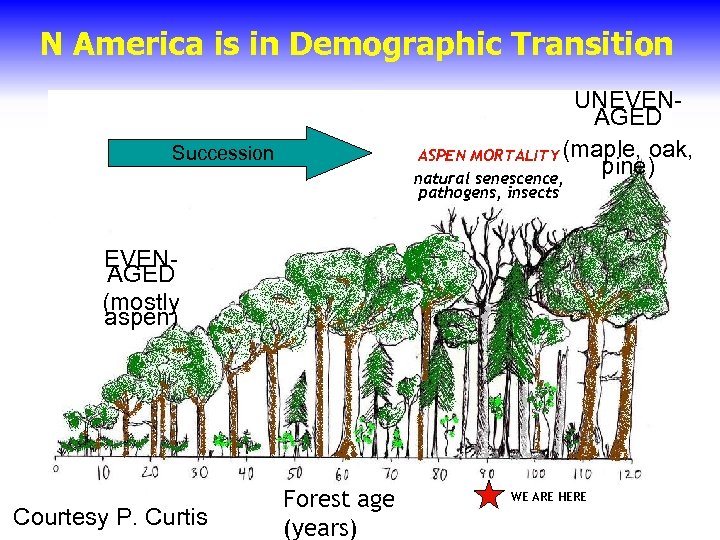 N America is in Demographic Transition UNEVENAGED ASPEN MORTALITY (maple, oak, pine) natural senescence, Succession pathogens, insects EVENAGED (mostly aspen) Courtesy P. Curtis Forest age (years) WE ARE HERE
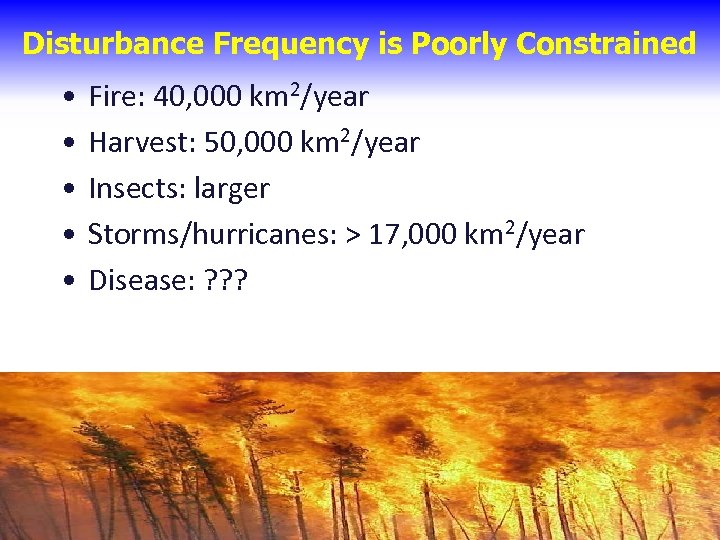 Disturbance Frequency is Poorly Constrained • • • Fire: 40, 000 km 2/year Harvest: 50, 000 km 2/year Insects: larger Storms/hurricanes: > 17, 000 km 2/year Disease: ? ? ?
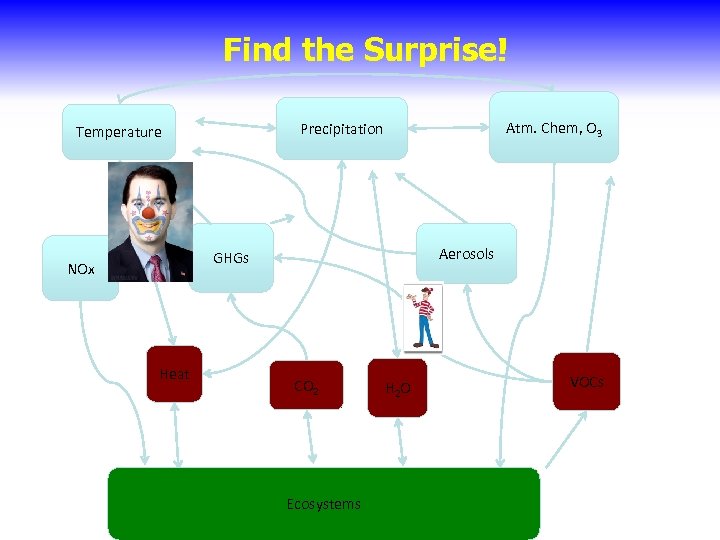 Find the Surprise! Atm. Chem, O 3 Precipitation Temperature Aerosols GHGs NOx Heat CO 2 Ecosystems H 2 O VOCs
![Direct Effects • Gross Primary Productivity (GPP) – PAR, VPD, T, Qsoil, [CO 2],](https://present5.com/presentation/5ffc4d15fdc3f63542286feff2b57f35/image-22.jpg "Direct Effects • Gross Primary Productivity (GPP) – PAR, VPD, T, Qsoil, [CO 2],") Direct Effects • Gross Primary Productivity (GPP) – PAR, VPD, T, Qsoil, [CO 2], Navail • Ecosystem Respiration (ER) – T, Qsoil, C: N
Direct Effects • Gross Primary Productivity (GPP) – PAR, VPD, T, Qsoil, [CO 2], Navail • Ecosystem Respiration (ER) – T, Qsoil, C: N
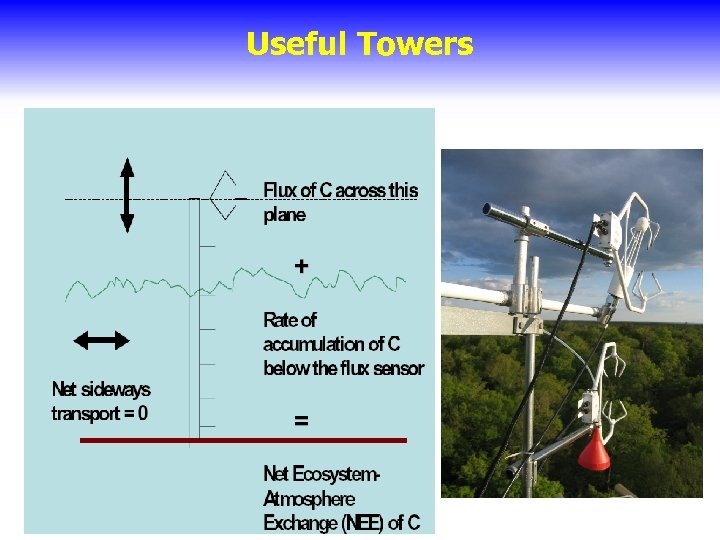 Useful Towers
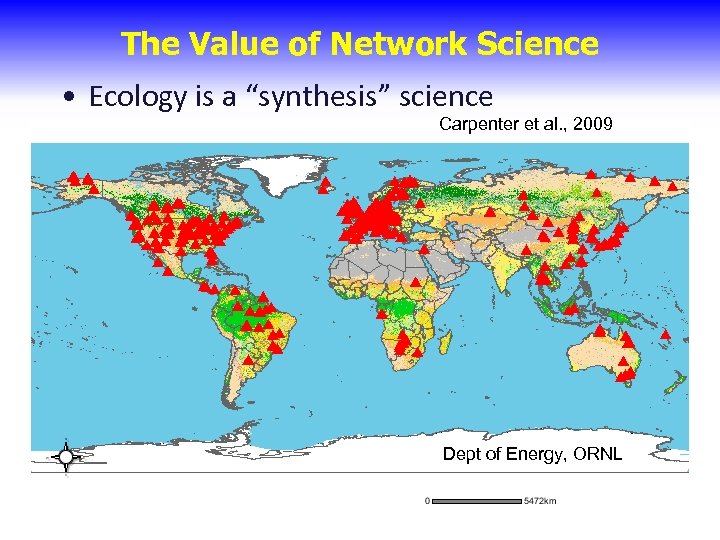 The Value of Network Science • Ecology is a “synthesis” science Carpenter et al. , 2009 Dept of Energy, ORNL
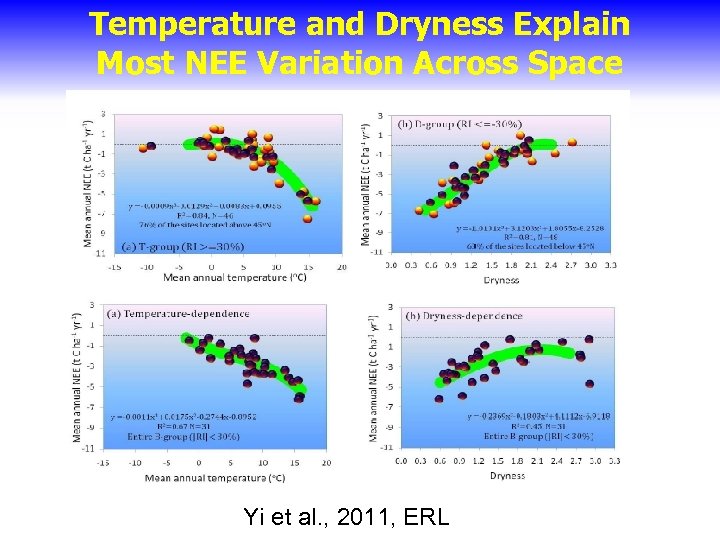 Temperature and Dryness Explain Most NEE Variation Across Space Yi et al. , 2011, ERL
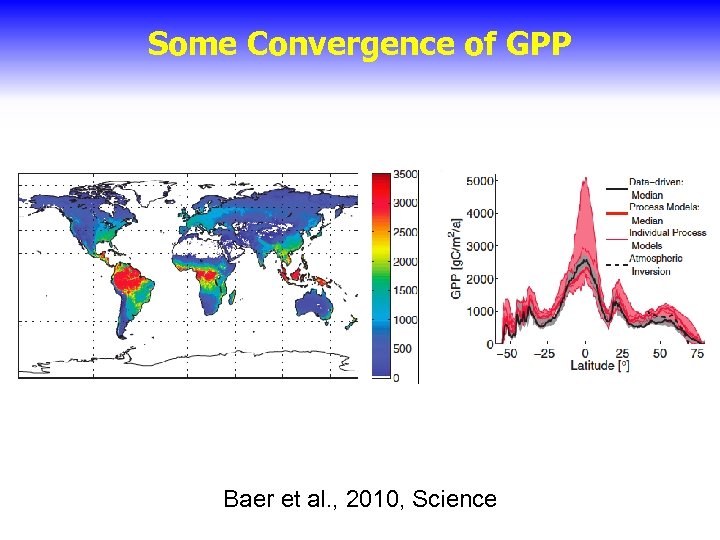 Some Convergence of GPP Baer et al. , 2010, Science
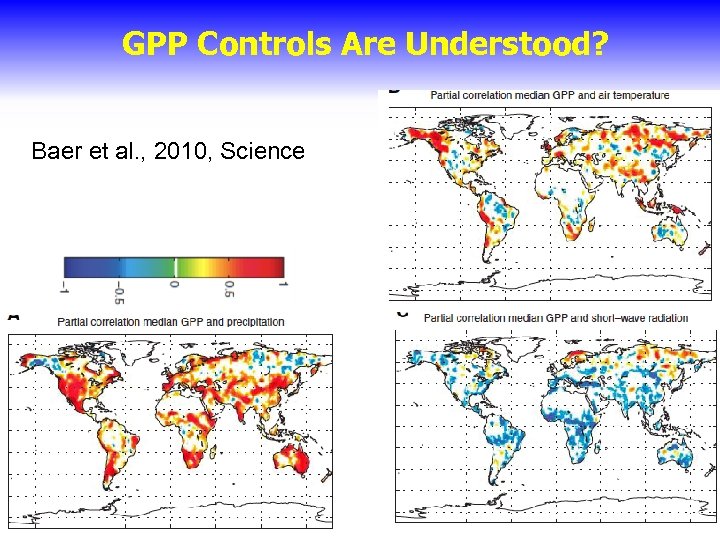 GPP Controls Are Understood? Baer et al. , 2010, Science
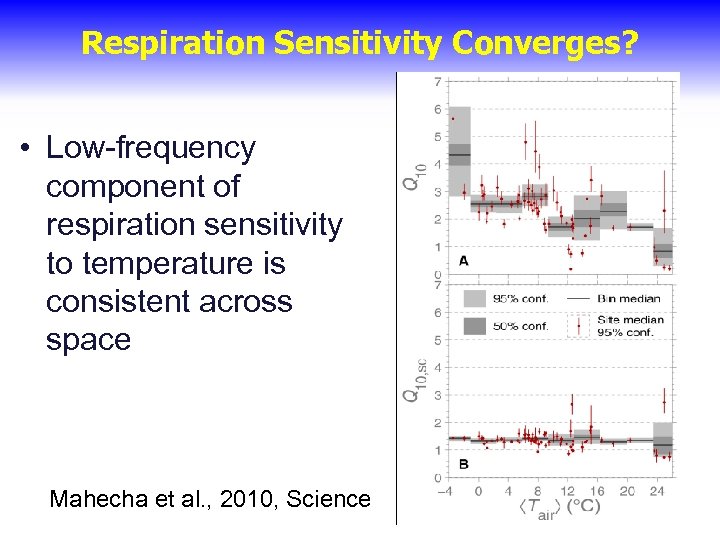 Respiration Sensitivity Converges? • Low-frequency component of respiration sensitivity to temperature is consistent across space Mahecha et al. , 2010, Science
 Indirect Effects • Lagged or coupled responses of climate to carbon uptake – Temporal/spatial lags: Phenology, hydrology – Forest dynamics (recruitment, mortality, growth): Successional trajectory – Disturbance frequency/intensity
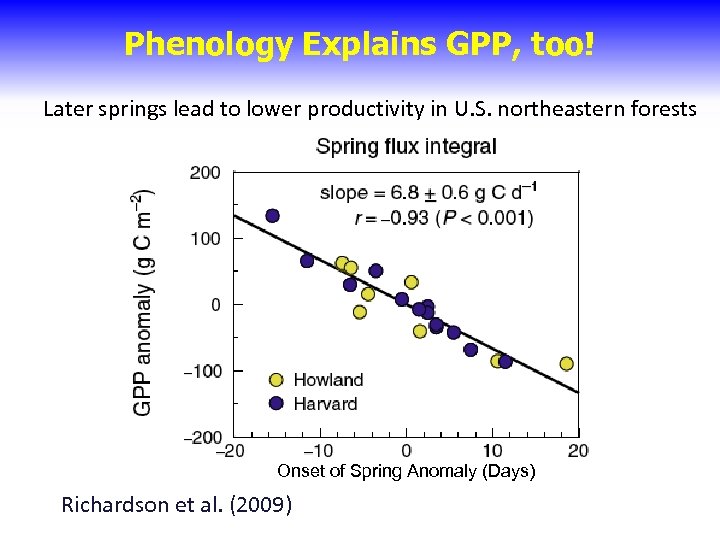 Phenology Explains GPP, too! Later springs lead to lower productivity in U. S. northeastern forests Onset of Spring Anomaly (Days) Richardson et al. (2009)
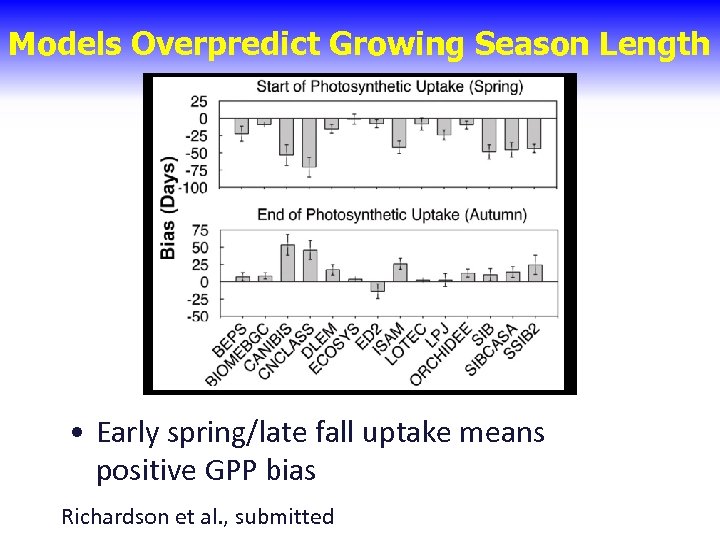 Models Overpredict Growing Season Length • Early spring/late fall uptake means positive GPP bias Richardson et al. , submitted
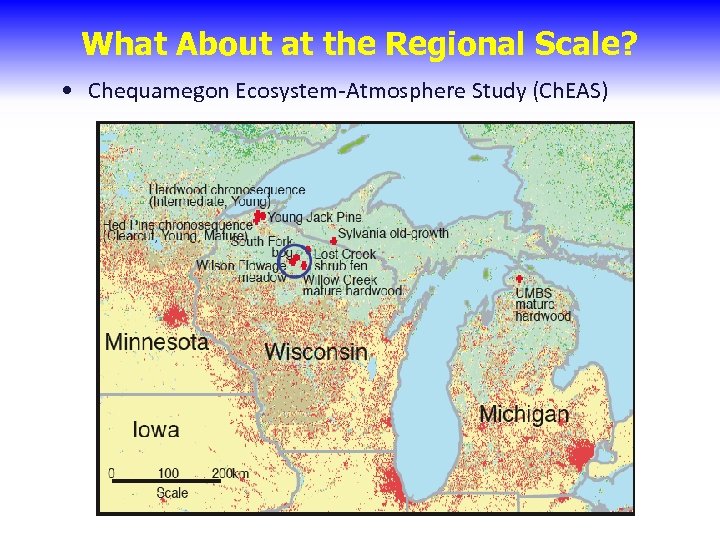 What About at the Regional Scale? • Chequamegon Ecosystem-Atmosphere Study (Ch. EAS)
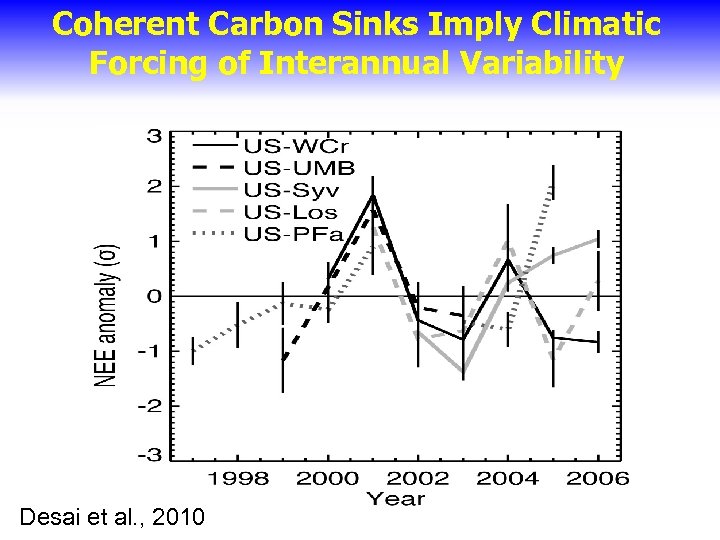 Coherent Carbon Sinks Imply Climatic Forcing of Interannual Variability Desai et al. , 2010
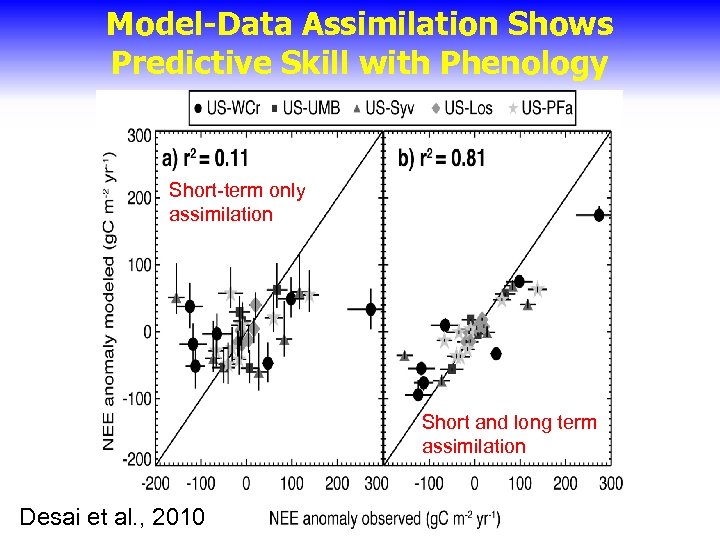 Model-Data Assimilation Shows Predictive Skill with Phenology Short-term only assimilation Short and long term assimilation Desai et al. , 2010
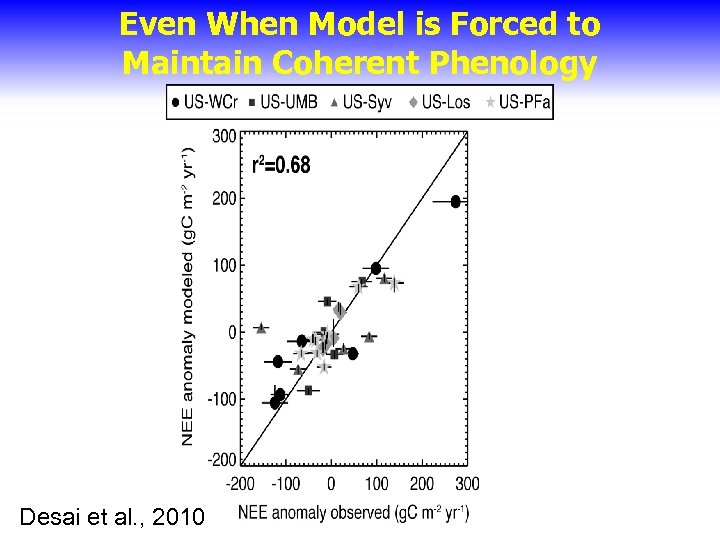 Even When Model is Forced to Maintain Coherent Phenology Desai et al. , 2010
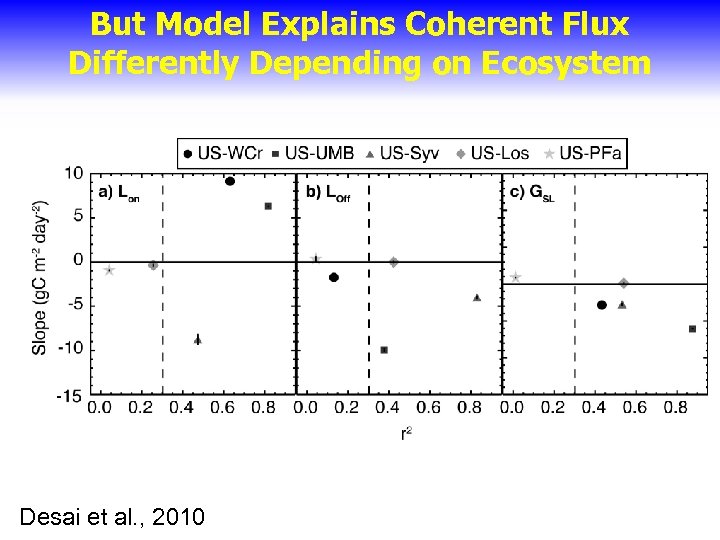 But Model Explains Coherent Flux Differently Depending on Ecosystem Desai et al. , 2010
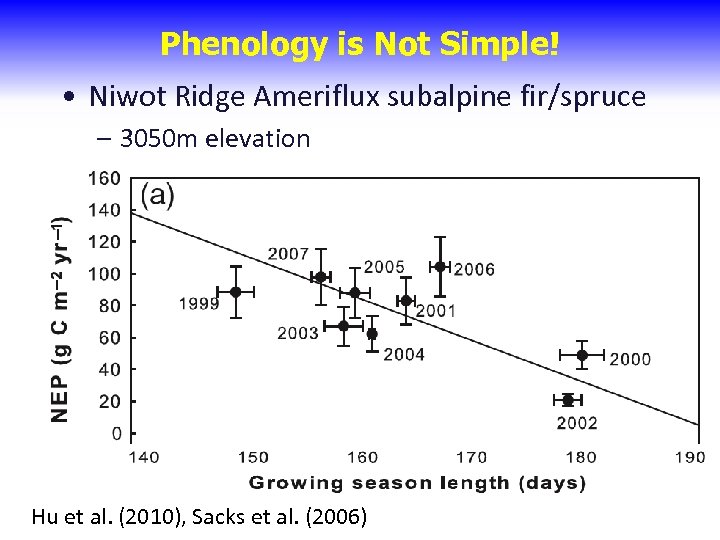 Phenology is Not Simple! • Niwot Ridge Ameriflux subalpine fir/spruce – 3050 m elevation Hu et al. (2010), Sacks et al. (2006)
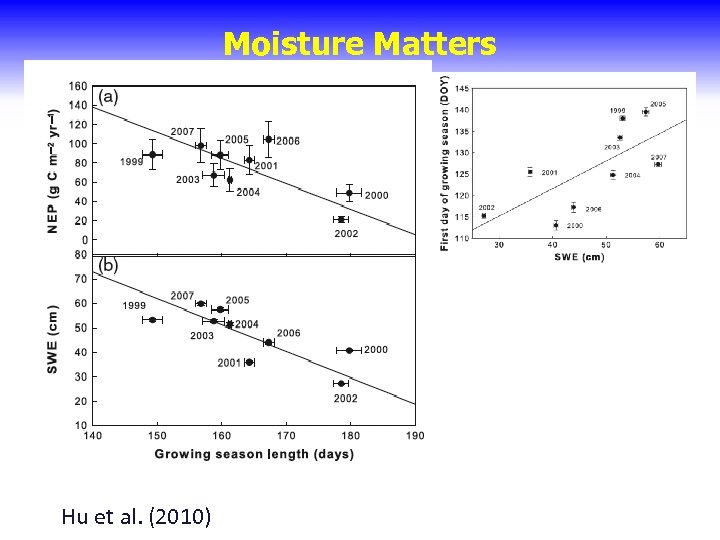 Moisture Matters Hu et al. (2010)
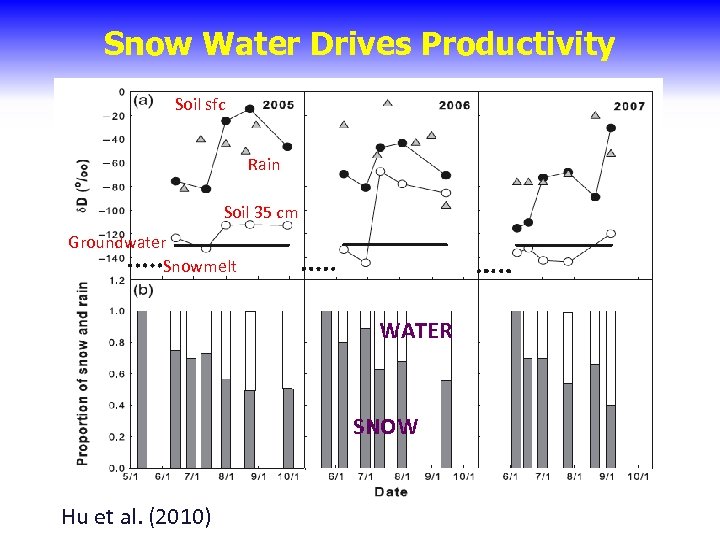 Snow Water Drives Productivity Soil sfc Rain Soil 35 cm Groundwater Snowmelt WATER SNOW Hu et al. (2010)
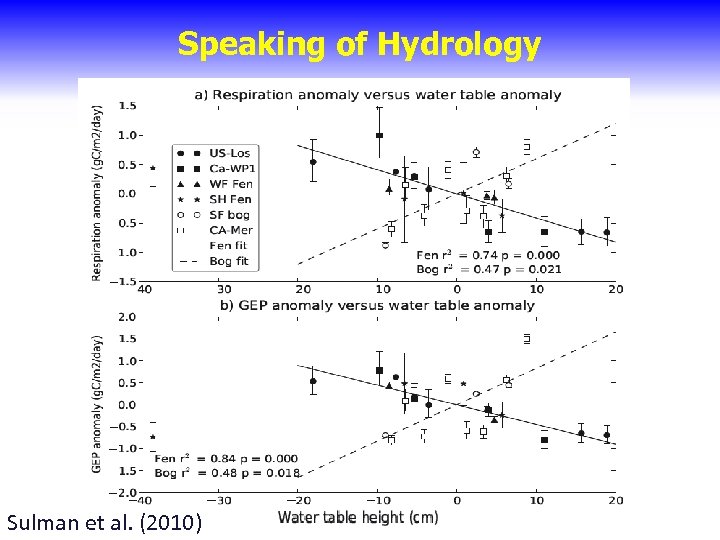 Speaking of Hydrology Sulman et al. (2010)
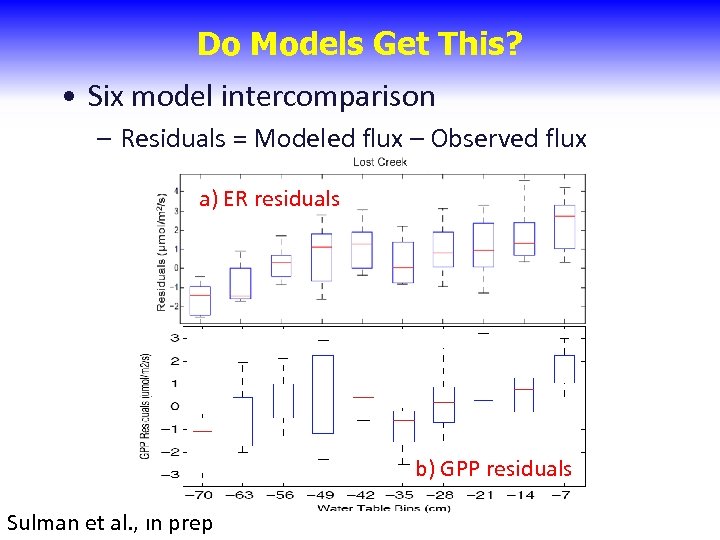 Do Models Get This? • Six model intercomparison – Residuals = Modeled flux – Observed flux a) ER residuals b) GPP residuals Sulman et al. , in prep
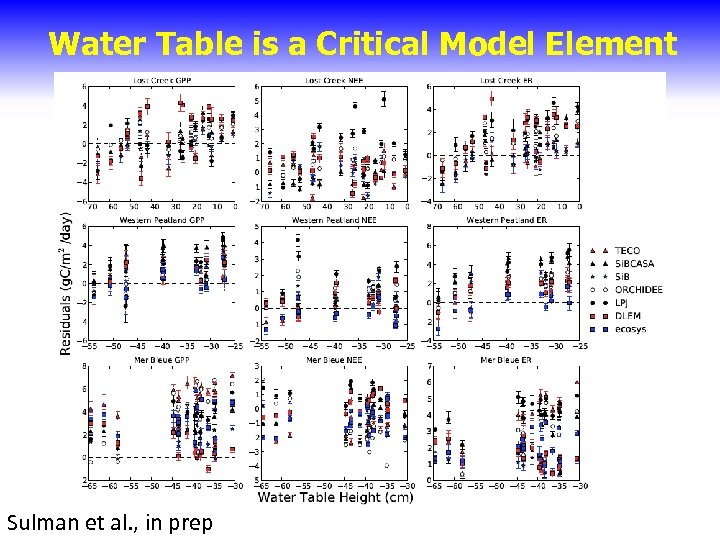 Water Table is a Critical Model Element Sulman et al. , in prep
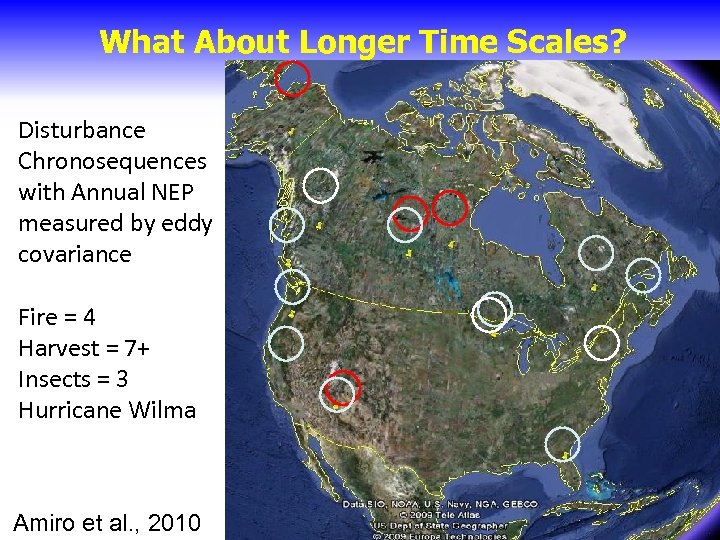 What About Longer Time Scales? Disturbance Chronosequences with Annual NEP measured by eddy covariance Fire = 4 Harvest = 7+ Insects = 3 Hurricane Wilma Amiro et al. , 2010
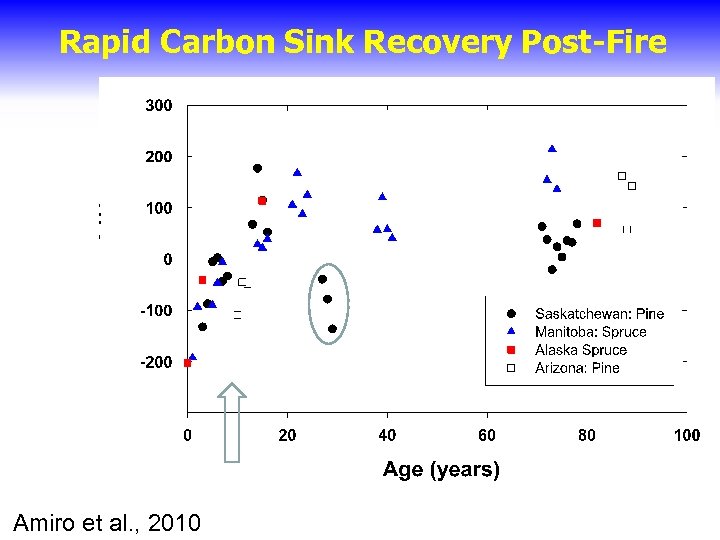 Rapid Carbon Sink Recovery Post-Fire Amiro et al. , 2010
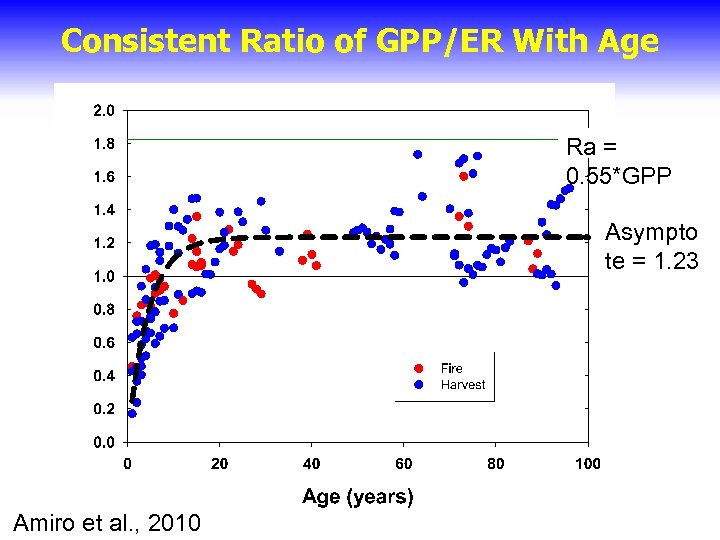 Consistent Ratio of GPP/ER With Age Ra = 0. 55*GPP Asympto te = 1. 23 Amiro et al. , 2010
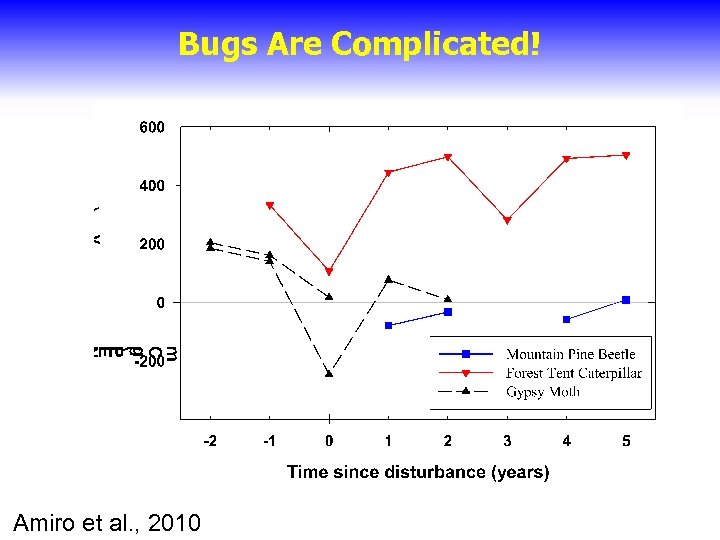 Bugs Are Complicated! Amiro et. CFS web 2010 al. , page
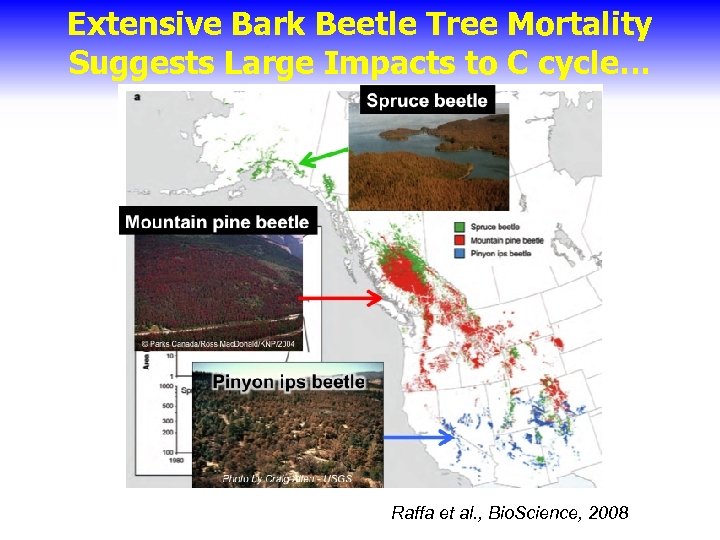 Extensive Bark Beetle Tree Mortality Suggests Large Impacts to C cycle… Raffa et al. , Bio. Science, 2008
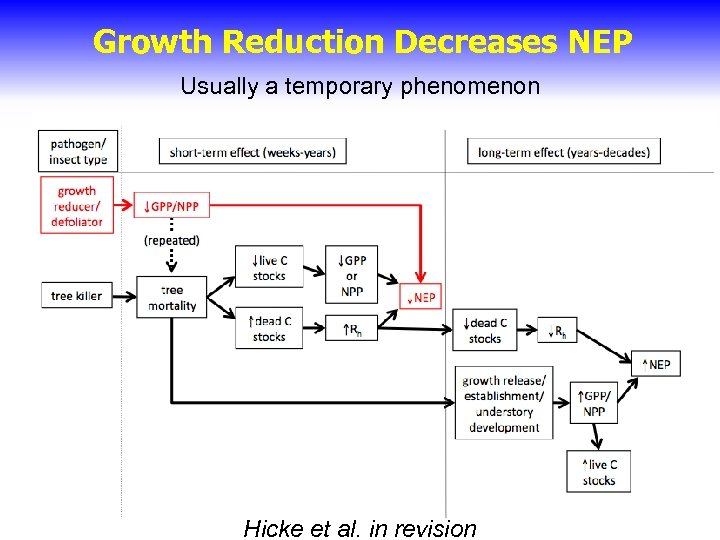 Growth Reduction Decreases NEP Usually a temporary phenomenon Hicke et al. in revision
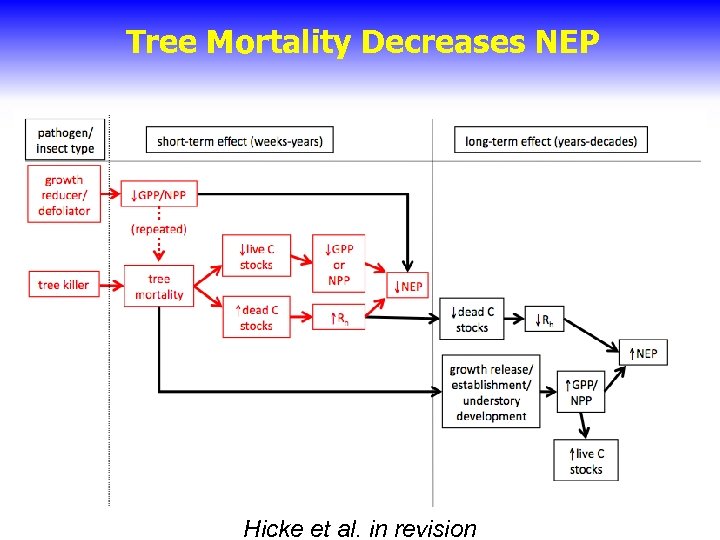 Tree Mortality Decreases NEP Hicke et al. in revision
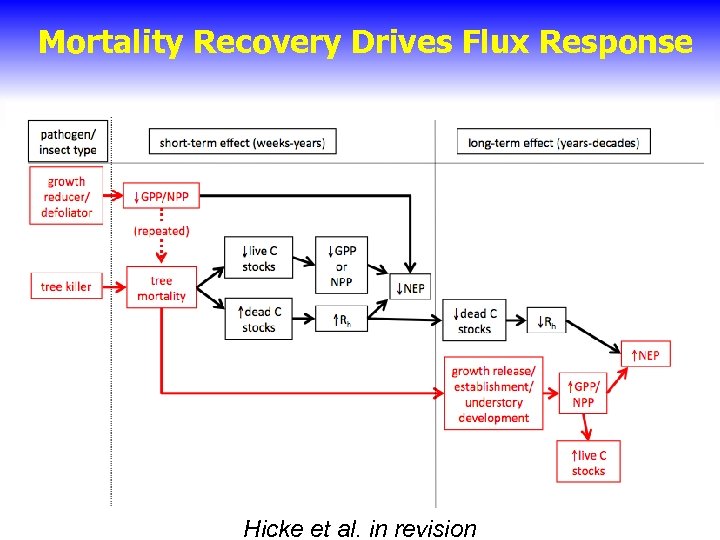 Mortality Recovery Drives Flux Response Hicke et al. in revision
 Where Do We Go From Here? • More model intercomparison and benchmakring (Ms. TMIP, C-LAMB) • Long-term carbon-cycle observatories (Fluxnet/Ameriflux, NEON, Inventory) • Remote-sensing of disturbance (LEDAPS) • Large and small scale manipulative experiments (FASET, ABo. VE, Mn. SPRUCE) • Theoretical advancement • Vegetation dynamics in IPCC models: Phenology, large-scale episodic disturbance, succession, wetland hydrology
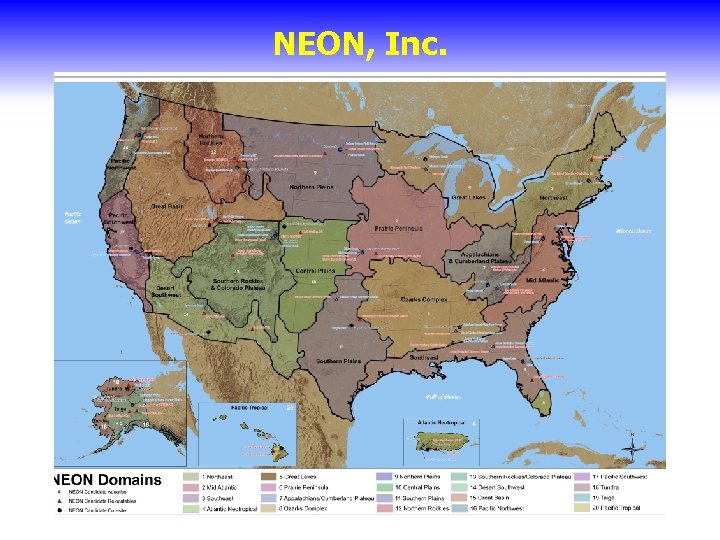 NEON, Inc.
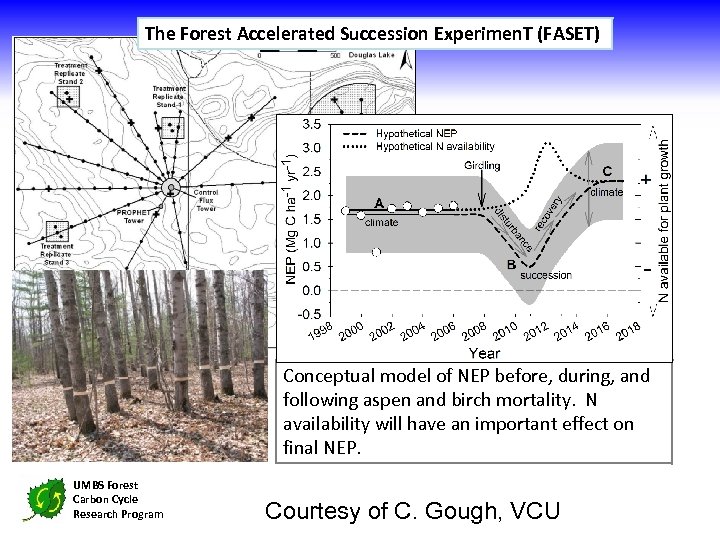 The Forest Accelerated Succession Experimen. T (FASET) Conceptual model of NEP before, during, and following aspen and birch mortality. N availability will have an important effect on final NEP. UMBS Forest Carbon Cycle Research Program Courtesy of C. Gough, VCU
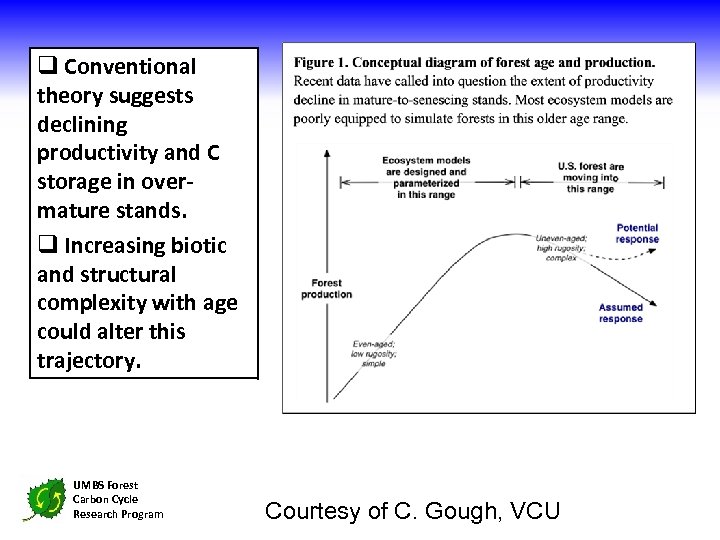 q Conventional theory suggests declining productivity and C storage in overmature stands. q Increasing biotic and structural complexity with age could alter this trajectory. UMBS Forest Carbon Cycle Research Program Courtesy of C. Gough, VCU
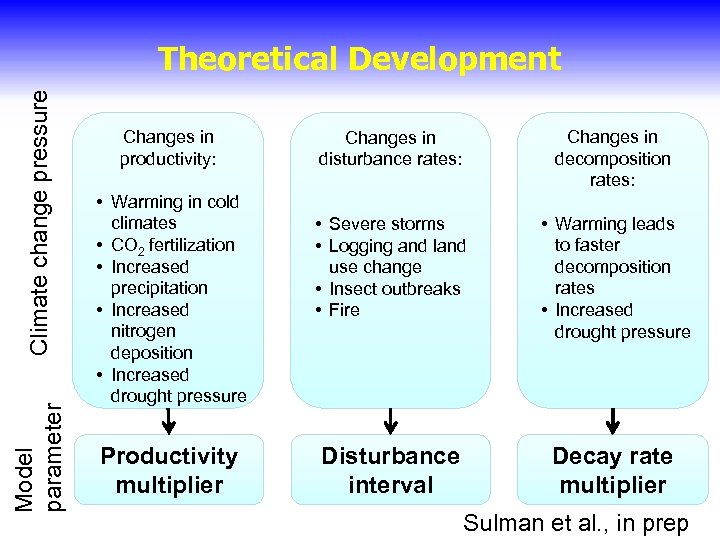 Model parameter Climate change pressure Theoretical Development Changes in productivity: • Warming in cold climates • CO 2 fertilization • Increased precipitation • Increased nitrogen deposition • Increased drought pressure Productivity multiplier Changes in disturbance rates: Changes in decomposition rates: • Severe storms • Logging and land use change • Insect outbreaks • Fire • Warming leads to faster decomposition rates • Increased drought pressure Disturbance interval Decay rate multiplier Sulman et al. , in prep
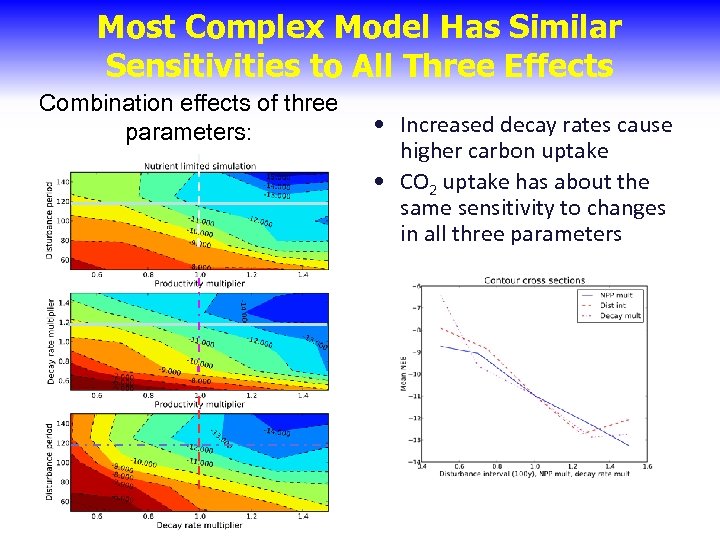 Most Complex Model Has Similar Sensitivities to All Three Effects Combination effects of three parameters: • Increased decay rates cause higher carbon uptake • CO 2 uptake has about the same sensitivity to changes in all three parameters
 Conclusions • Multi-year multi-site flux-tower observations provide evidence for mechanisms that link phenology, hydrology, and biotic disturbance to carbon cycle • Ecosystem models need continued “acid tests” to constrain and select optimal model structure and parameters • Things I didn’t talk about: – – – – Plant and microbial adaptation Invasive species, herbivory, population dynamics Rapid climate change Nutrient cycling Aquatic-terrestrial linkages Coupled water/carbon cycle and boundary layer feedbacks Lots of things!
 Thanks! • Desai Ecometeorology Lab (flux. aos. wisc. edu): • Funding partners: UW Graduate school, NSF, UCAR, NOAA, USDA NRS, NASA, DOE NICCR, WI Focus on Energy
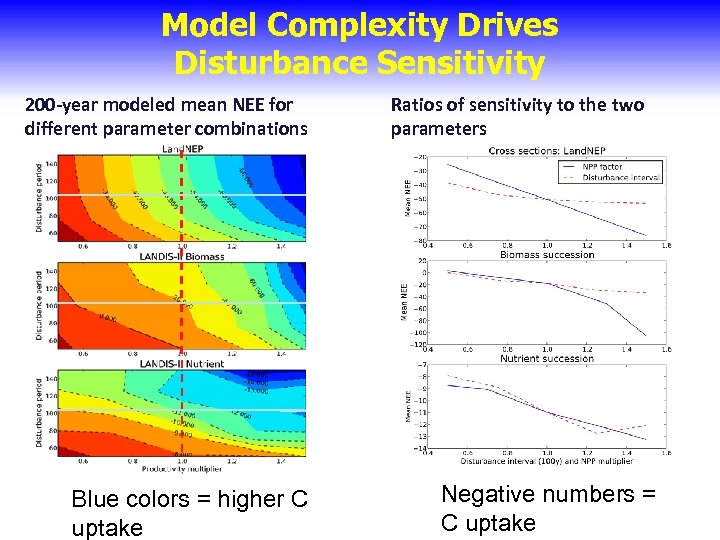 Model Complexity Drives Disturbance Sensitivity 200 -year modeled mean NEE for different parameter combinations Blue colors = higher C uptake Ratios of sensitivity to the two parameters Negative numbers = C uptake