


 Скачать презентацию INDICATORS OF ECONOMIC EFFICIENCY How do we measure
5 Indicators of economic efficiency.pptx
- Количество слайдов: 24
 INDICATORS OF ECONOMIC EFFICIENCY How do we measure the health of our economy?
 Gross Domestic Product § market value of all final goods and services produced within a country in a year § Final goods are purchased by the last user and will not be resold or used to produce anything else
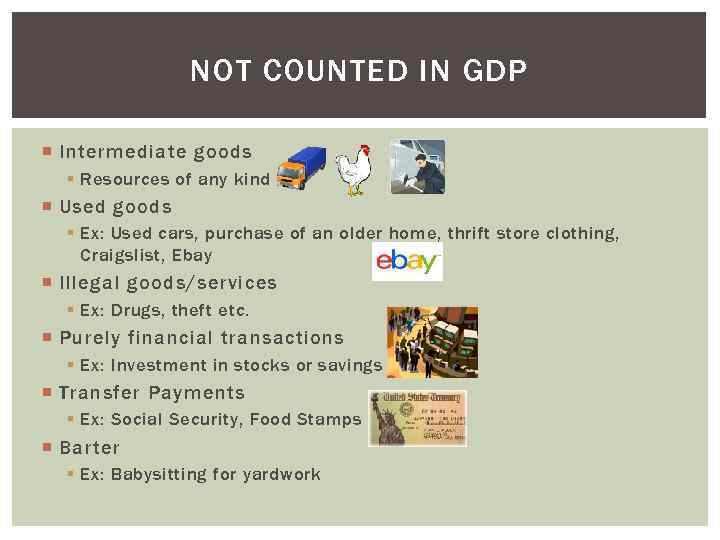 NOT COUNTED IN GDP Intermediate goods § Resources of any kind Used goods § Ex: Used cars, purchase of an older home, thrift store clothing, Craigslist, Ebay Illegal goods/services § Ex: Drugs, theft etc. Purely financial transactions § Ex: Investment in stocks or savings Transfer Payments § Ex: Social Security, Food Stamps Barter § Ex: Babysitting for yardwork
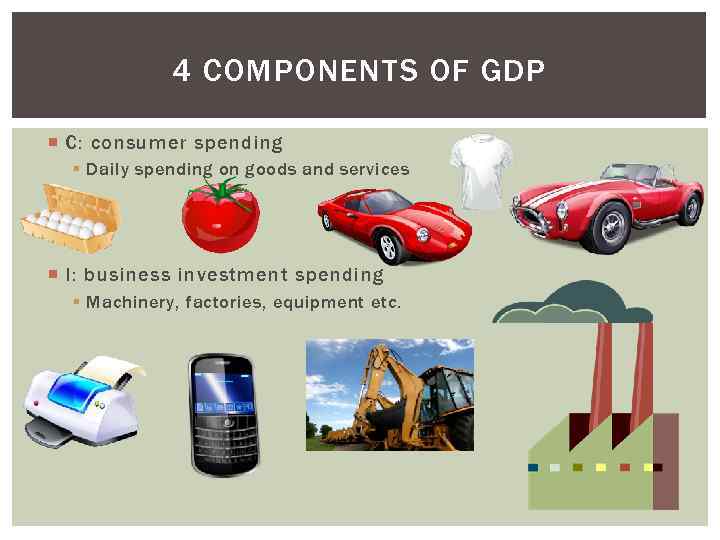 4 COMPONENTS OF GDP C: consumer spending § Daily spending on goods and services I: business investment spending § Machinery, factories, equipment etc.
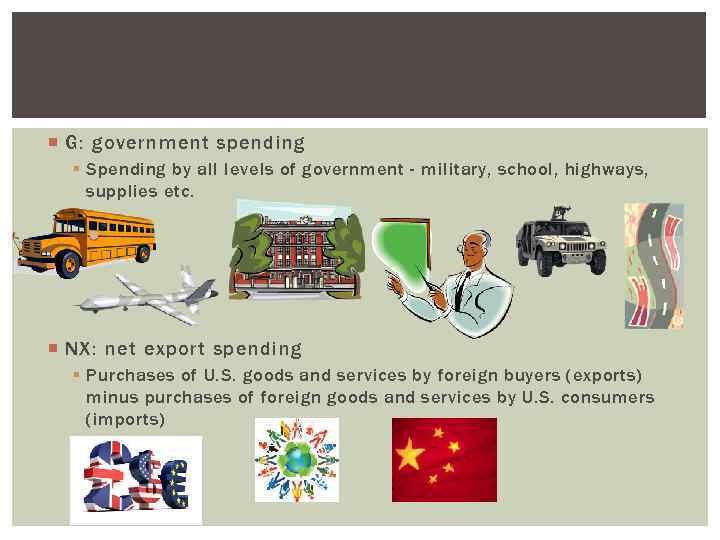 G: government spending § Spending by all levels of government - military, school, highways, supplies etc. NX: net export spending § Purchases of U. S. goods and services by foreign buyers (exports) minus purchases of foreign goods and services by U. S. consumers (imports)
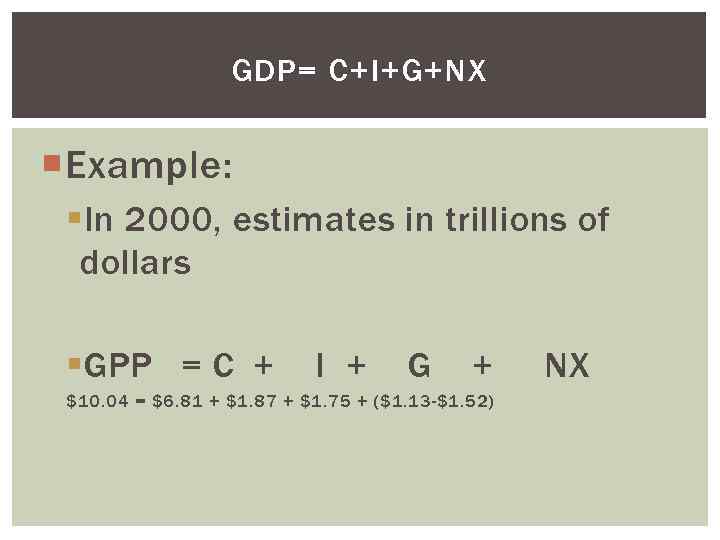 GDP= C+I+G+NX Example: §In 2000, estimates in trillions of dollars §GPP = C + I + G + $10. 04 = $6. 81 + $1. 87 + $1. 75 + ($1. 13 -$1. 52) NX
 Unemployment Rate § Percentage of labor force who is not working § Labor Force: everyone 16 – 65 who is working or actively looking for work § 3 types of unemployment
 FRICTIONAL People are out of work temporarily § Seasonal work § Changing jobs § Looking for 1 st job This is acceptable unemployment
 STRUCTURAL Unemployment because your job skills are no longer needed § Ex. Technology replaces workers so people are laid off People can go back to school and learn new skills
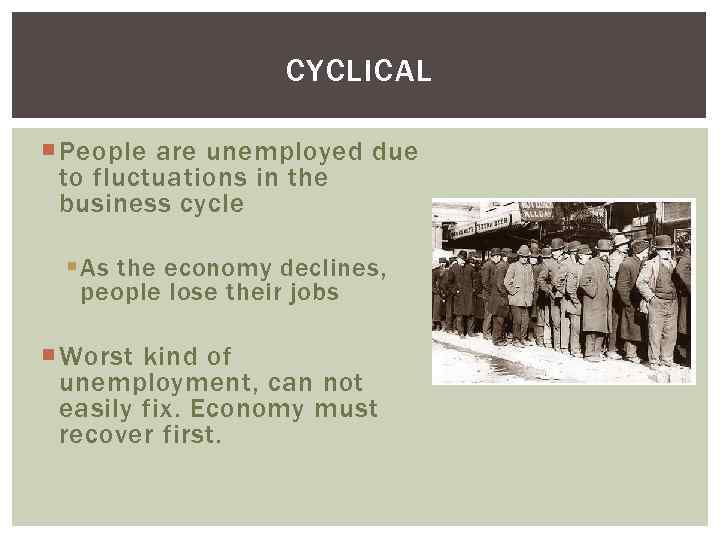 CYCLICAL People are unemployed due to fluctuations in the business cycle § As the economy declines, people lose their jobs Worst kind of unemployment, can not easily fix. Economy must recover first.
 Consumer Price Index § Index of all goods and services produced in a country § Measured by a market “basket” of all goods and services that are commonly bought year after year by the typical urban household
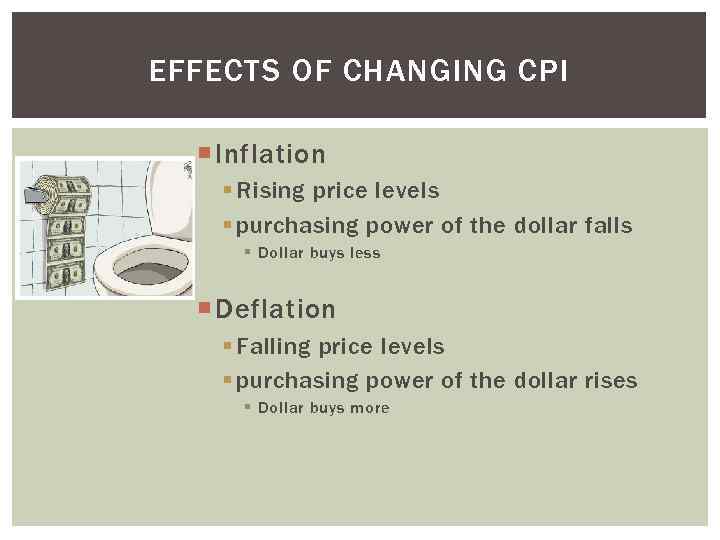 EFFECTS OF CHANGING CPI Inflation § Rising price levels § purchasing power of the dollar falls § Dollar buys less Deflation § Falling price levels § purchasing power of the dollar rises § Dollar buys more
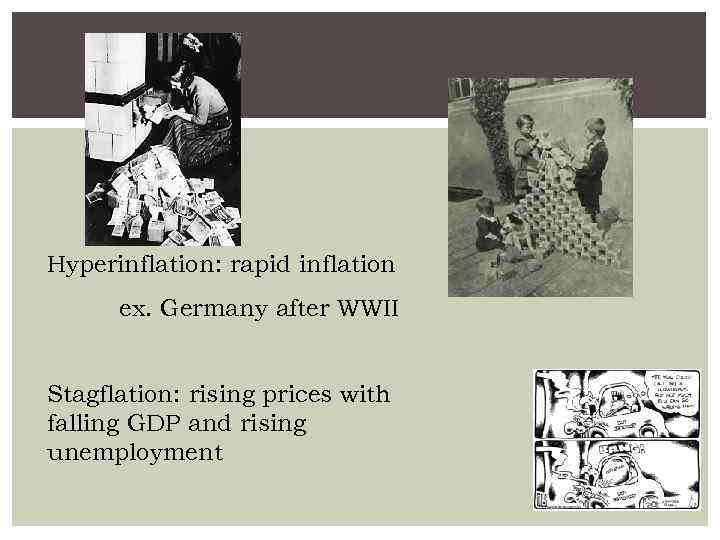 Hyperinflation: rapid inflation ex. Germany after WWII Stagflation: rising prices with falling GDP and rising unemployment
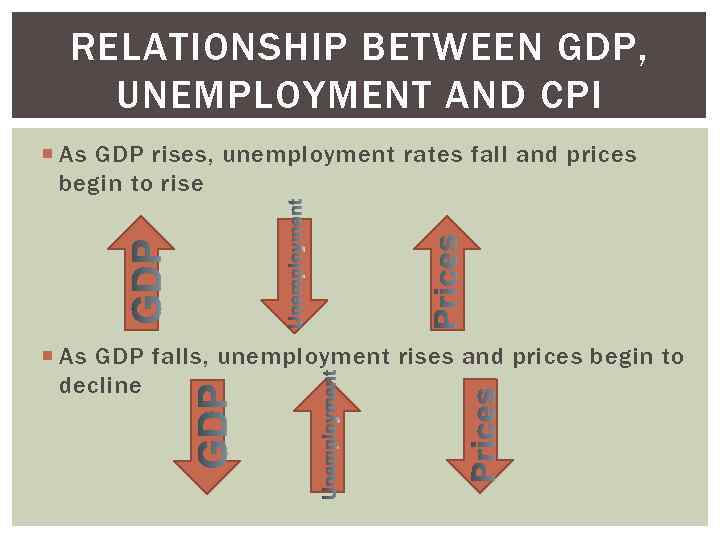 RELATIONSHIP BETWEEN GDP, UNEMPLOYMENT AND CPI As GDP rises, unemployment rates fall and prices begin to rise As GDP falls, unemployment rises and prices begin to decline
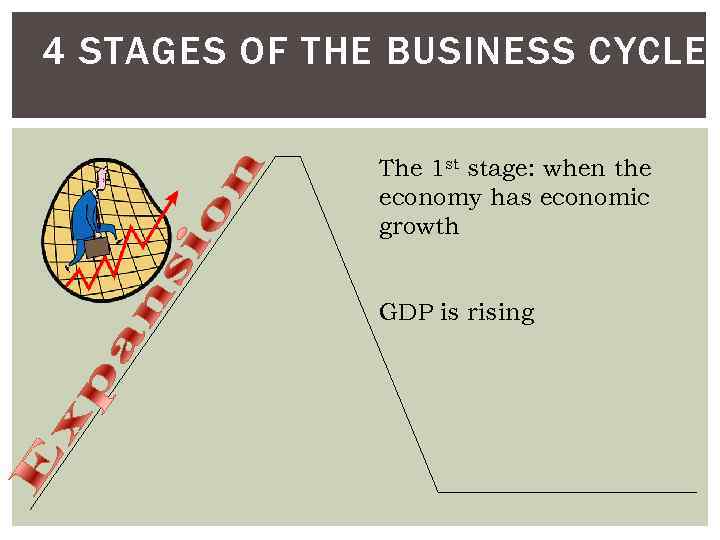 4 STAGES OF THE BUSINESS CYCLE The 1 st stage: when the economy has economic growth GDP is rising
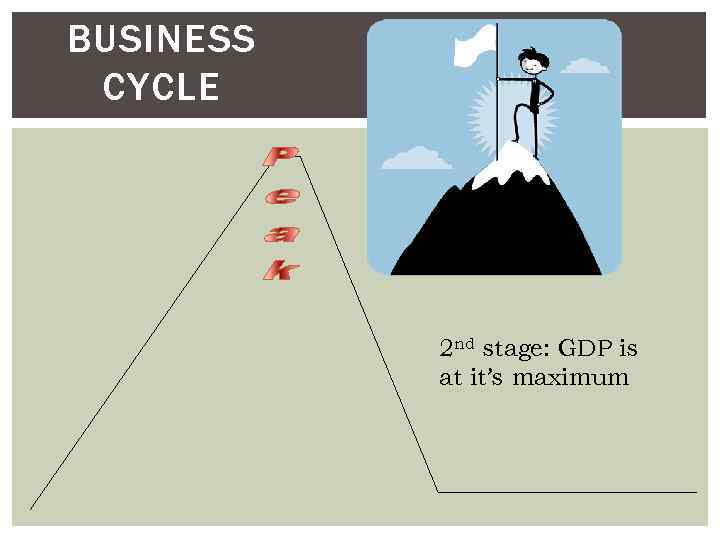 BUSINESS CYCLE 2 nd stage: GDP is at it’s maximum
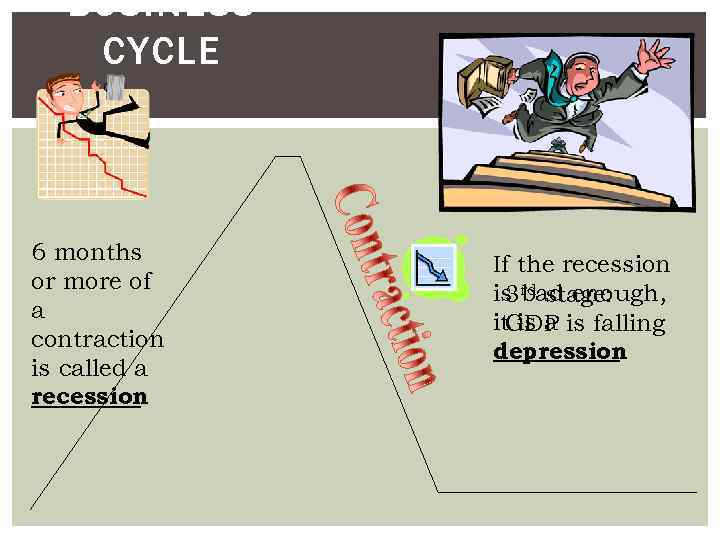 BUSINESS CYCLE 6 months or more of a contraction is called a recession If the recession is rd stage: 3 bad enough, it. GDP is falling is a depression
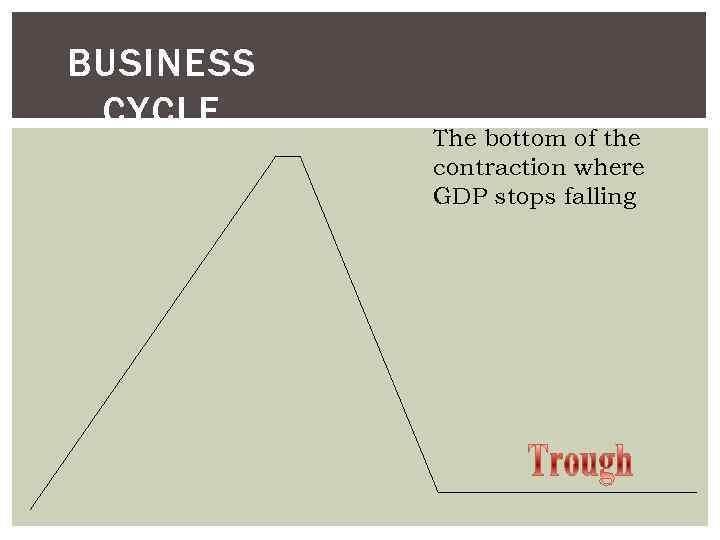 BUSINESS CYCLE The bottom of the contraction where GDP stops falling
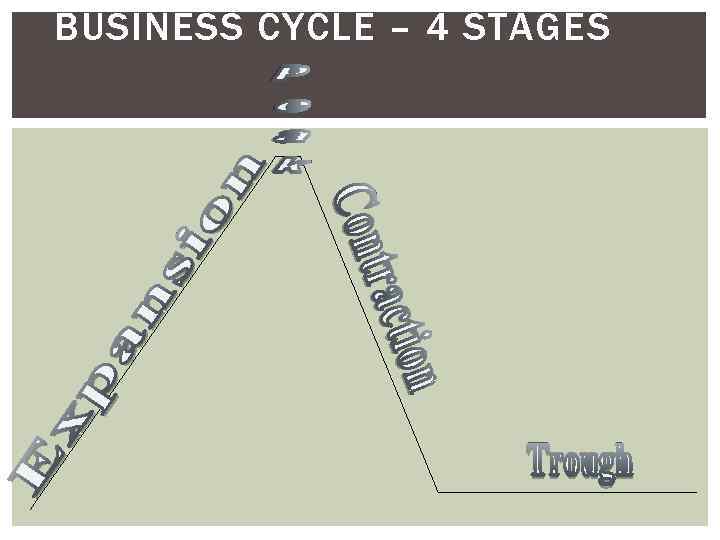 BUSINESS CYCLE – 4 STAGES
 Aggregate Demand Aggregate means “total” Total demand for ALL FINAL goods and services in the economy §from all people in the economy §for all prices levels
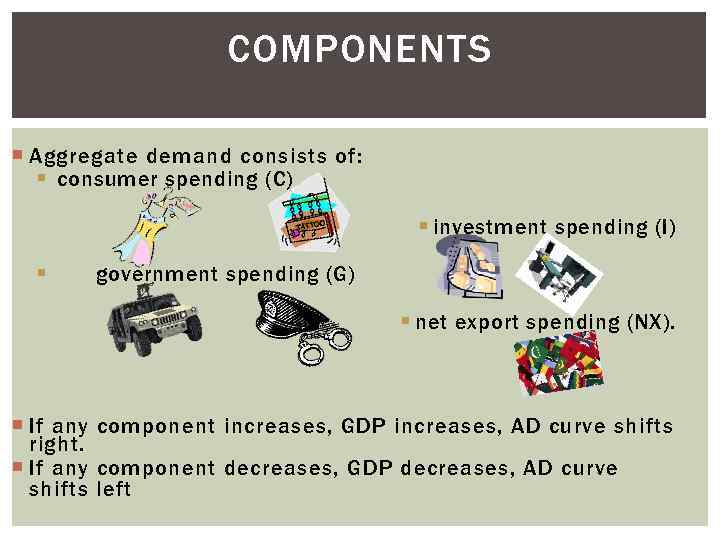 COMPONENTS Aggregate demand consists of: § consumer spending (C) § investment spending (I) § government spending (G) § net export spending (NX). If any component increases, GDP increases, AD curve shifts right. If any component decreases, GDP decreases, AD curve shifts left
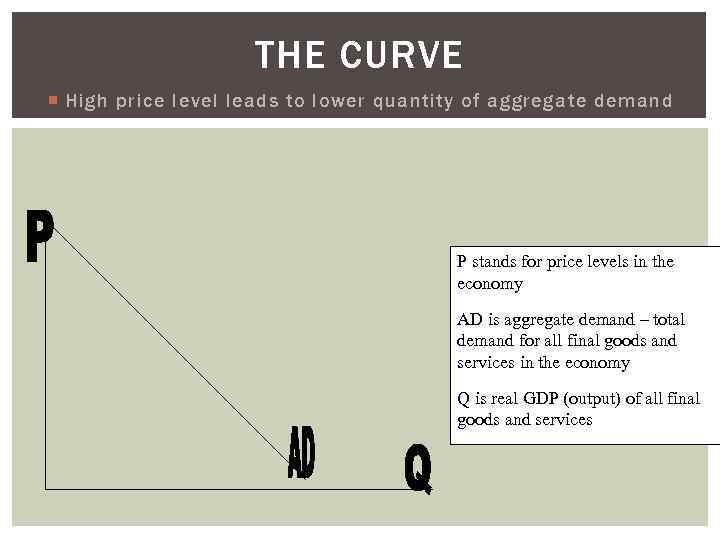 THE CURVE High price level leads to lower quantity of aggregate demand P stands for price levels in the economy AD is aggregate demand – total demand for all final goods and services in the economy Q is real GDP (output) of all final goods and services
 AGGREGATE SUPPLY Total production of ALL FINAL goods and services in the economy §from all poducers in the economy §for all prices levels