


 Скачать презентацию India Water Week 2016 Water for all
29f0927d6616371706dc6b8dda073671.ppt
- Количество слайдов: 27
 India Water Week 2016 Water for all : Striving together New Delhi, 4 April 2016 Building a Sustainable Water Security System M S Swaminathan
 Universities and Sustainability Science o Conservation of the Ganga o Himalayan Eco-development o Western Ghats Development NSS volunteers to be involved in mobilising public understanding and involvement in Ganga protection.
 Climate Change : Beyond Paris The Paris Climate consensus essentially restores the status quo with reference to the implementation of the provisions of the 1992 framework convention on climate change. There is a commitment to limit temperature rise to 1. 5 degree centigrade. Even this amount of increase will lead to the loss of 6 to 7 million tonnes of wheat in the Punjab, Haryana area. Countries in the Northern latitudes will however benefit because of increased crop duration.
 Building a Sustainable Water Security System Pathways o Supply augmentation o Demand management o Quality monitoring and improvement o Harnessing new technologies a. Desalination b. Breeding for abiotic stresses (Mendelian and Molecular approaches) c. Bioremediation d. Precision farming, fertigation and green house horticulture e. Information and Communication technologies for launching a Water Literacy Movement
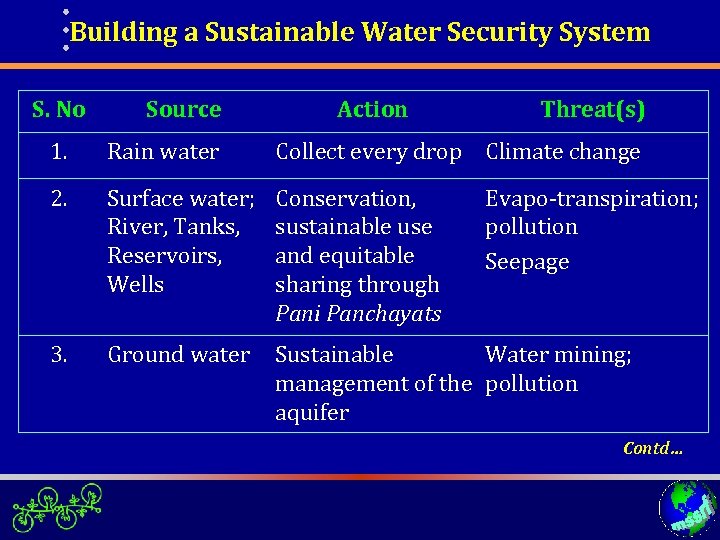 Building a Sustainable Water Security System S. No Source Action Threat(s) 1. Rain water Collect every drop Climate change 2. Surface water; River, Tanks, Reservoirs, Wells Conservation, sustainable use and equitable sharing through Pani Panchayats 3. Ground water Sustainable Water mining; management of the pollution aquifer Evapo-transpiration; pollution Seepage Contd…
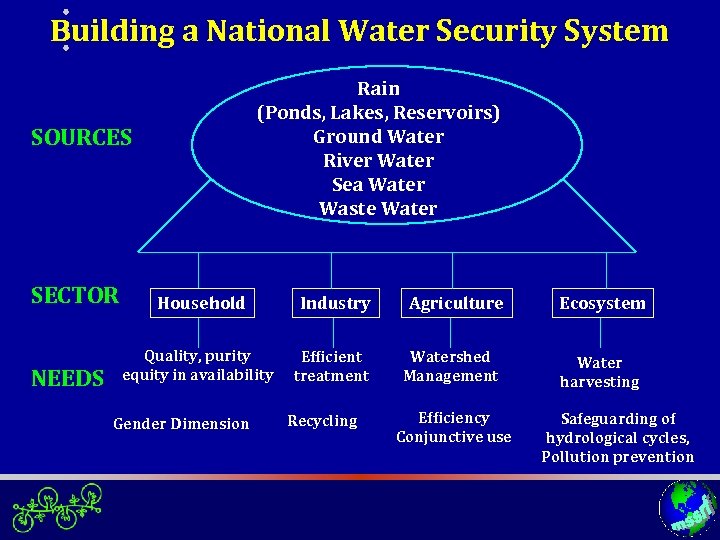 Building a National Water Security System Rain (Ponds, Lakes, Reservoirs) Ground Water River Water Sea Water Waste Water SOURCES SECTOR NEEDS Household Industry Quality, purity equity in availability Efficient treatment Gender Dimension Recycling Agriculture Watershed Management Efficiency Conjunctive use Ecosystem Water harvesting Safeguarding of hydrological cycles, Pollution prevention
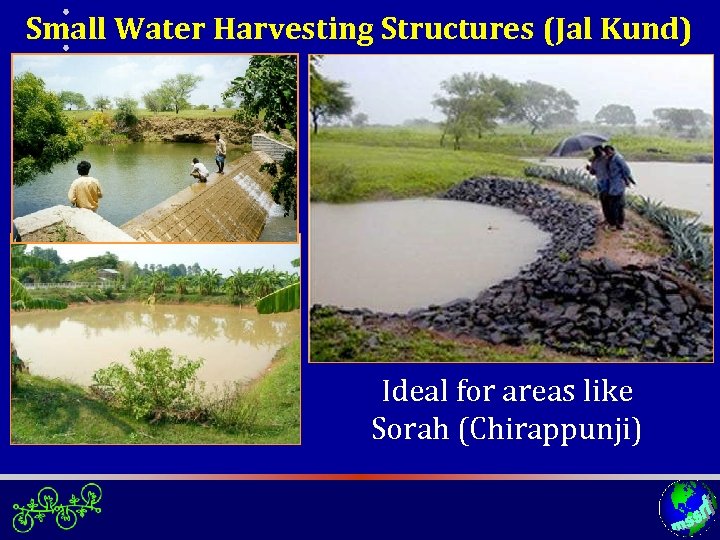 Small Water Harvesting Structures (Jal Kund) Ideal for areas like Sorah (Chirappunji)
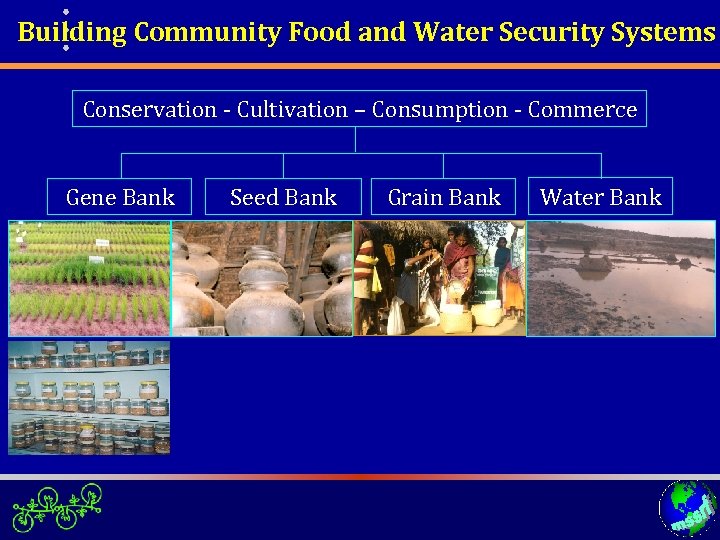 Building Community Food and Water Security Systems Conservation - Cultivation – Consumption - Commerce Gene Bank Seed Bank Grain Bank Water Bank
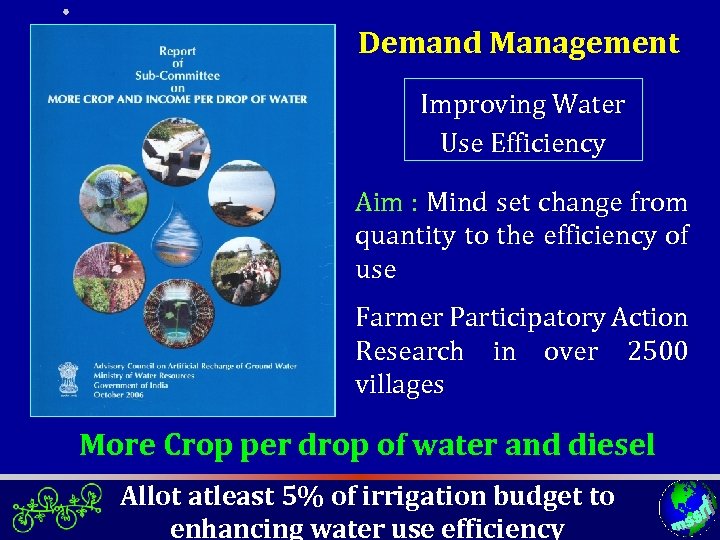 Demand Management Improving Water Use Efficiency Aim : Mind set change from quantity to the efficiency of use Farmer Participatory Action Research in over 2500 villages More Crop per drop of water and diesel Allot atleast 5% of irrigation budget to enhancing water use efficiency
 More Crop and Income per Drop of Water Movement in India Technologies and Interventions Used o System of Rice Intensification o Micro Irrigation with Fertigation o Protected Agriculture o Promotion of Integrated Crop-livestock Farming System o Crop diversification and multiple uses of water o Weather based crop insurance programs o Convergence of Credit, insurance and market
 Weather Information for All Agro-met station and Climate Risk Managers o Village level agro-met stations will be useful to take weather based farm decisions. Mini agro-met station can be built in each village with basic instruments to measure temperature, rainfall, wind speed and RH o Climate Risk Managers are trained on data collection, interpretation and assist farmers to take timely location specific decisions
 WAR for Water (DST) (Winning, Augmentation and Renovation) Components o Rain Water Harvesting and Storage o Recycling of wastewater o Conjunctive use of water o Technologies for desalination o Providing safe drinking water for rural and remote areas
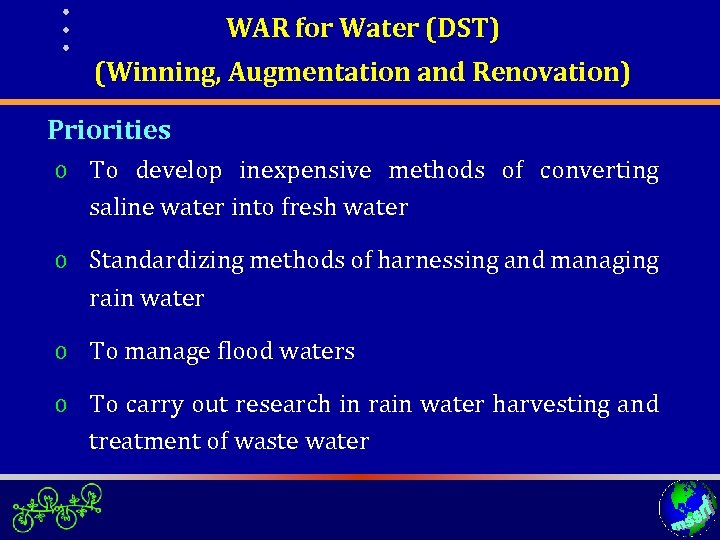 WAR for Water (DST) (Winning, Augmentation and Renovation) Priorities o To develop inexpensive methods of converting saline water into fresh water o Standardizing methods of harnessing and managing rain water o To manage flood waters o To carry out research in rain water harvesting and treatment of waste water
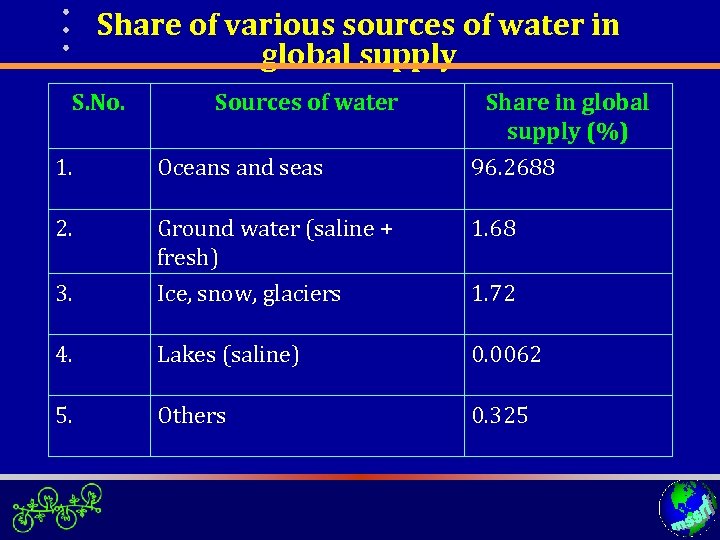 Share of various sources of water in global supply S. No. Sources of water Share in global supply (%) 96. 2688 1. Oceans and seas 2. 1. 68 3. Ground water (saline + fresh) Ice, snow, glaciers 4. Lakes (saline) 0. 0062 5. Others 0. 325 1. 72
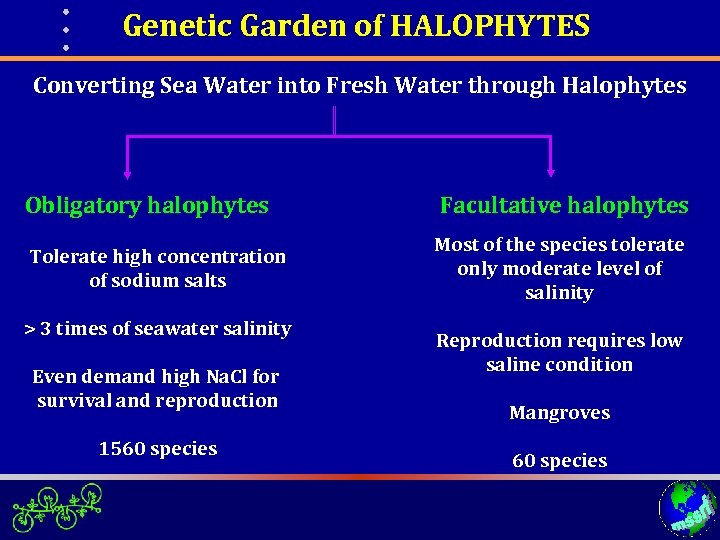 Genetic Garden of HALOPHYTES Converting Sea Water into Fresh Water through Halophytes Obligatory halophytes Facultative halophytes Tolerate high concentration of sodium salts Most of the species tolerate only moderate level of salinity > 3 times of seawater salinity Even demand high Na. Cl for survival and reproduction 1560 species Reproduction requires low saline condition Mangroves 60 species
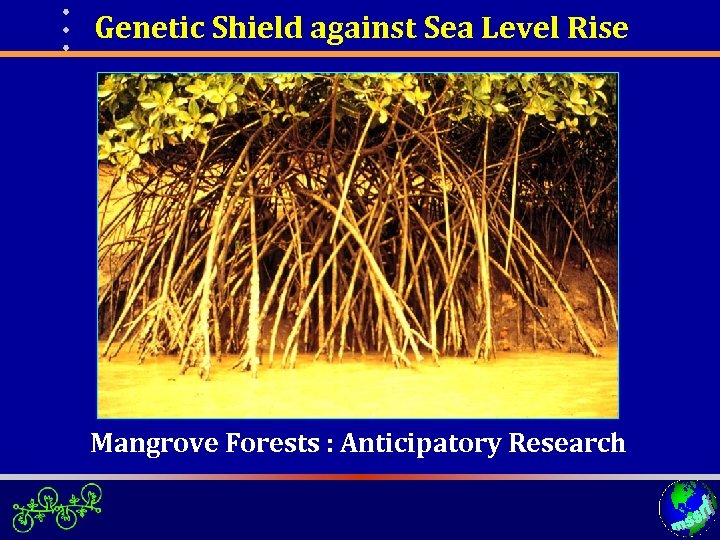 Genetic Shield against Sea Level Rise Mangrove Forests : Anticipatory Research
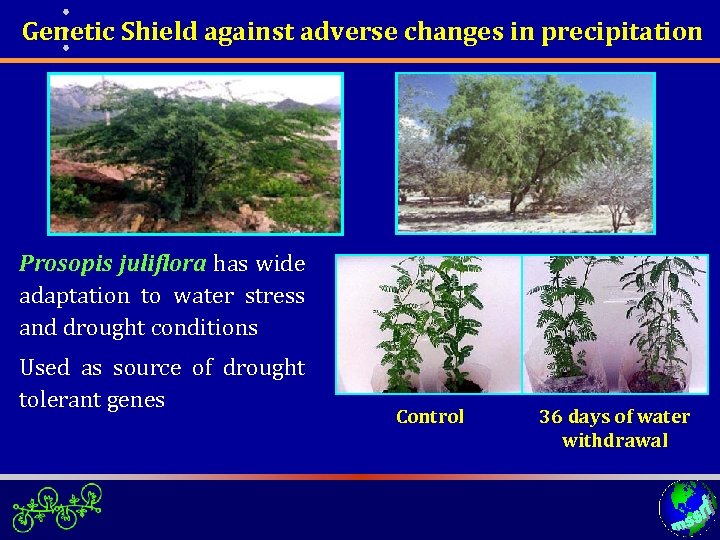 Genetic Shield against adverse changes in precipitation Prosopis juliflora has wide adaptation to water stress and drought conditions Used as source of drought tolerant genes Control 36 days of water withdrawal
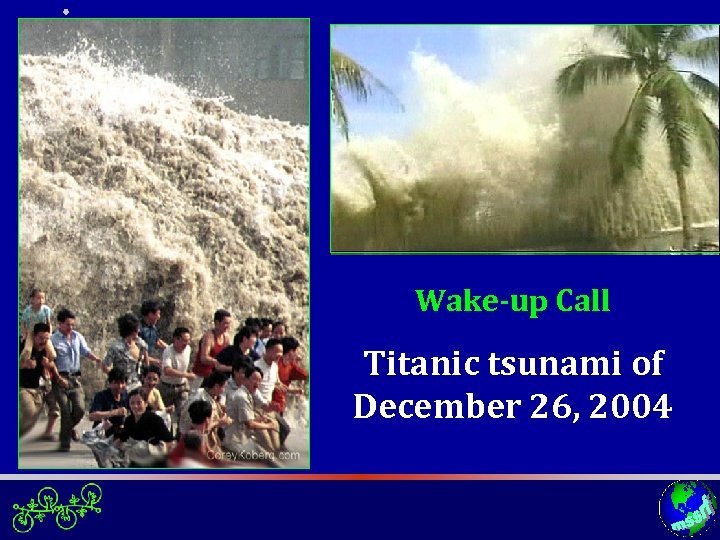 Wake-up Call Titanic tsunami of December 26, 2004
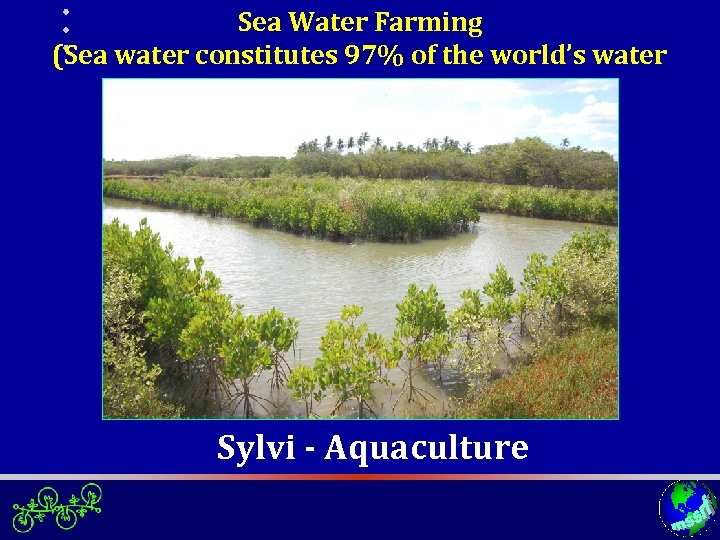 Sea Water Farming (Sea water constitutes 97% of the world’s water resource) Sylvi - Aquaculture
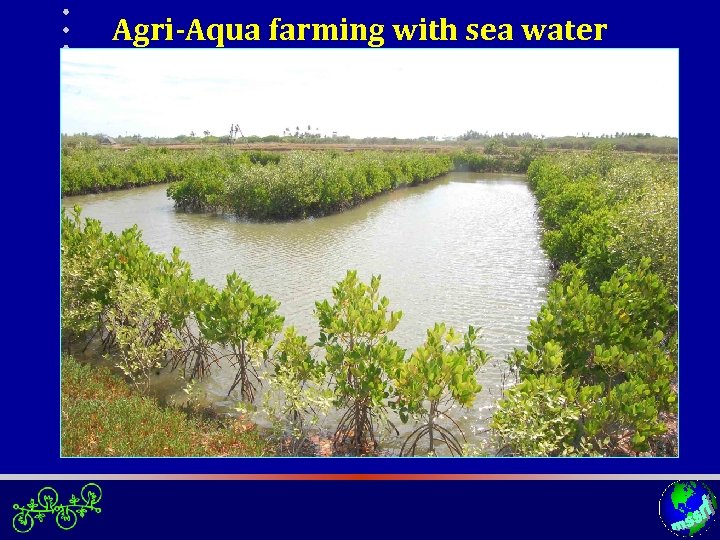 Agri-Aqua farming with sea water
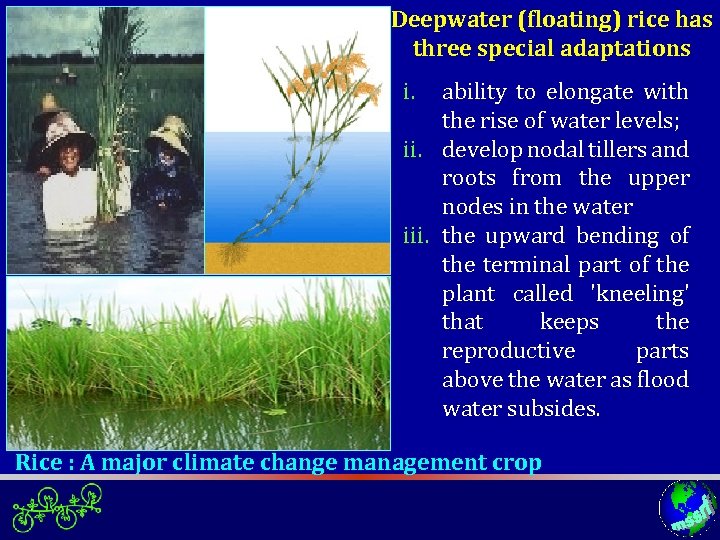 Deepwater (floating) rice has three special adaptations i. ability to elongate with the rise of water levels; ii. develop nodal tillers and roots from the upper nodes in the water iii. the upward bending of the terminal part of the plant called 'kneeling' that keeps the reproductive parts above the water as flood water subsides. Rice : A major climate change management crop
 Gene Banks for a Warming Planet The Global Biodiversity Convention (CBD) that was adopted at Rio de Janeiro in 1992 calls for the conservation and sustainable and equitable use of biodiversity. However, the extinction of species and erosion of genes continue to occur at an alarming rate. The agro-biodiversity conservation model of mobilizing the power of partnership may be useful for achieving the goals of the CBD. Science – Vol. 325, 31 JULY 2009
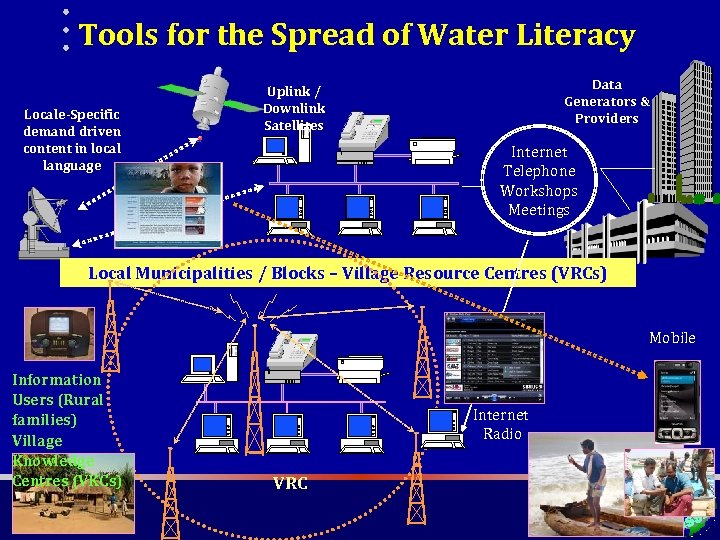 Tools for the Spread of Water Literacy Locale-Specific demand driven content in local language Data Generators & Providers Uplink / Downlink Satellites Internet Telephone Workshops Meetings Local Municipalities / Blocks – Village Resource Centres (VRCs) Mobile Information Users (Rural families) Village Knowledge Centres (VKCs) Internet Radio VRC
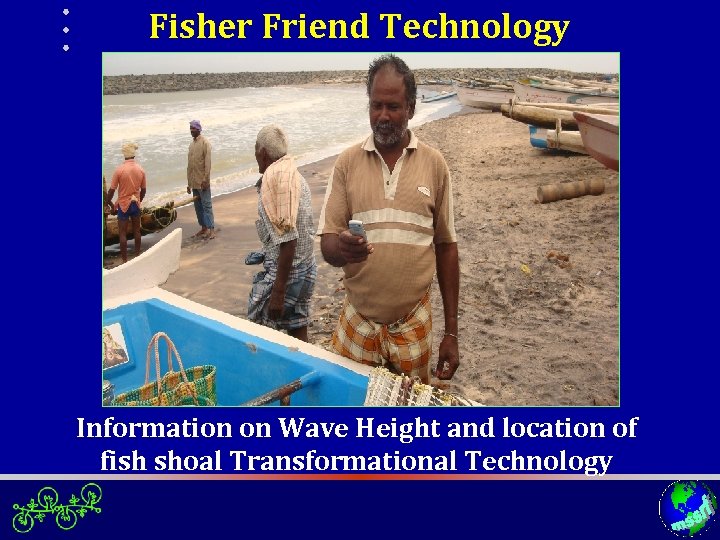 Fisher Friend Technology Information on Wave Height and location of fish shoal Transformational Technology
 Six Steps for Sustainable Water Security o Augment supplies through mandatory water harvesting and conservation o Give attention to demand management by eliminating all sources of unsustainable use of water and promoting “more crop and income per drop” methodologies of crop cultivation o Harness new technologies relating to improving domestic water use efficiency, de-salination of sea water, breeding of drought and salinity tolerant crop varieties, bioremediation, etc.
 Six Steps for Sustainable Water Security o Develop in each agro-climatic area in the country a sustainable water security system with community involvement. o Promote seawater farming through integrated agroforestry and aquaculture production systems in coastal areas. o Pay attention to water quality. Equal attention should be paid to the improvement of drinking water quality and quantity of water supplies. Bioremediation techniques will have to be used for removing arsenic and heavy metals from tube well water.
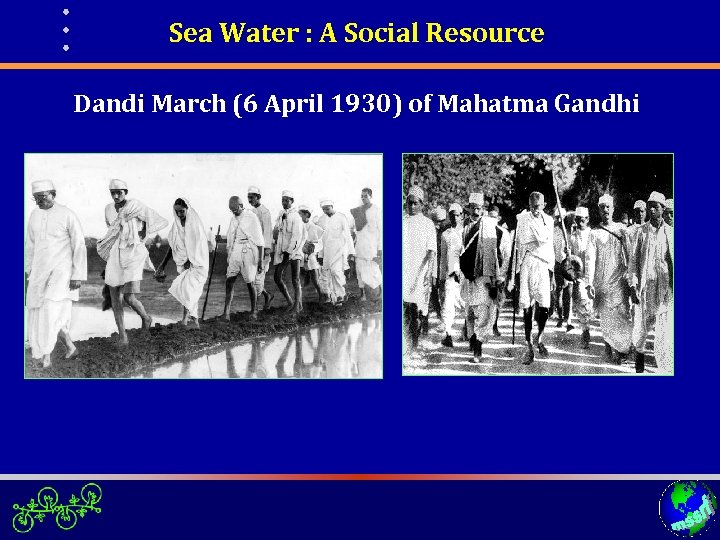 Sea Water : A Social Resource Dandi March (6 April 1930) of Mahatma Gandhi