


 Скачать презентацию india s emerging consumers How do we presently
cd267780b82ae3464bf811db0f256e2f.ppt
- Количество слайдов: 16
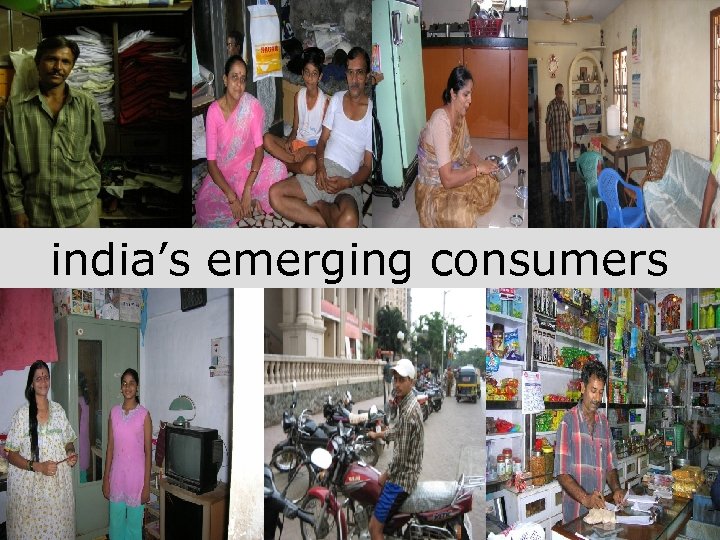 india’s emerging consumers
 How do we presently look at Emerging Markets (EMs)? Emerging markets are where 84% of the world lives. – By 2008 they will contain 67% of Internet users and 68% of cell phone users. – By 2010, the number of installed PCs in the world will double to 1. 3 B worldwide. 70% of the new PCs in this statistic will come from what are considered “emerging markets”. (Forrester Research) • Segmentations – Income classes; annual household income • Low
 What is the best way to segment/ understand India in the context of its booming economy? Ø Are currently used broad income segments sufficiently accurate predictors of household preferences in EMs? Ø How does one best categorize the consumption behaviour of Indian households – particularly with respect to technology?
 Can we create consumer portraits from a single segment considering… Ø Multiple personas Ø Following diversities Ø Registering varying attitudes
 Study sample & methodology • Ethnographic study covering 70 urban households • Income group: Rs. 9000 – 22000 per month (~2500 -6000 USD per annum) • Joint/ nuclear families with children • All in Mumbai • Diverse ethnic groups • All evidence domestic ITC ownership
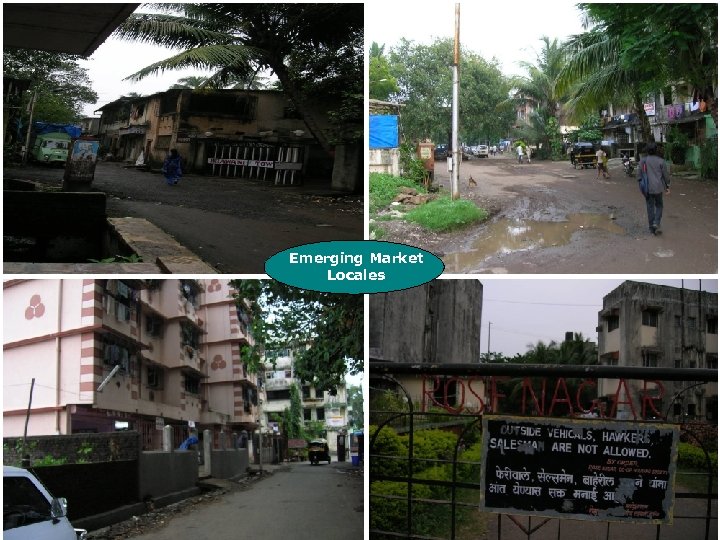 Emerging Market Locales
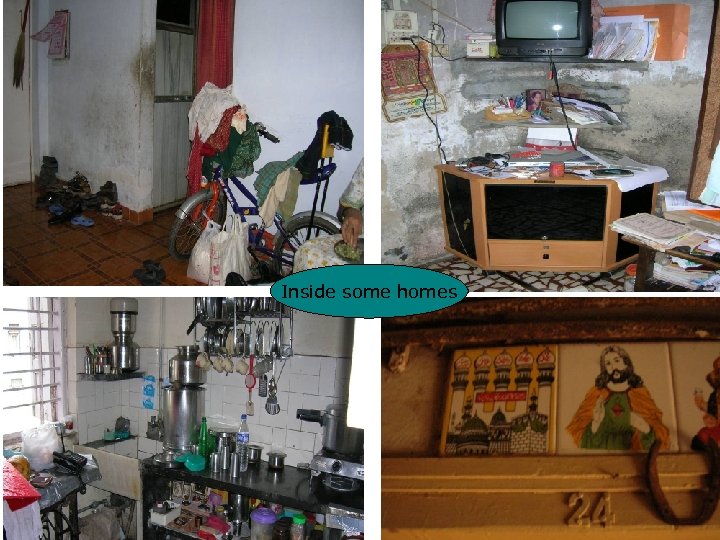 Inside some homes
 Consumer Portraits… • Anjali • Creates a particular moral universe about consumption, conservative and puritanical • Pallavi • Consumption posing a dilemma: Attracted and repelled • Subrata • Strong utilitarian notions of consumption • Bhavna • Represents an energetic consumer
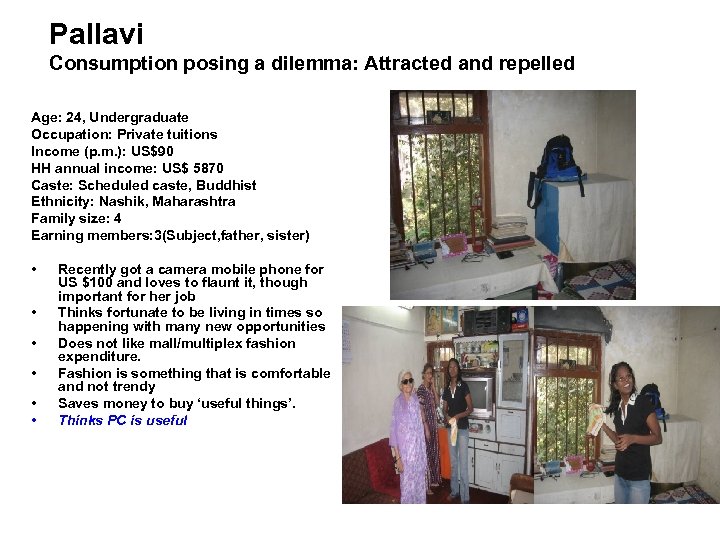 Pallavi Consumption posing a dilemma: Attracted and repelled Age: 24, Undergraduate Occupation: Private tuitions Income (p. m. ): US$90 HH annual income: US$ 5870 Caste: Scheduled caste, Buddhist Ethnicity: Nashik, Maharashtra Family size: 4 Earning members: 3(Subject, father, sister) • • • Recently got a camera mobile phone for US $100 and loves to flaunt it, though important for her job Thinks fortunate to be living in times so happening with many new opportunities Does not like mall/multiplex fashion expenditure. Fashion is something that is comfortable and not trendy Saves money to buy ‘useful things’. Thinks PC is useful
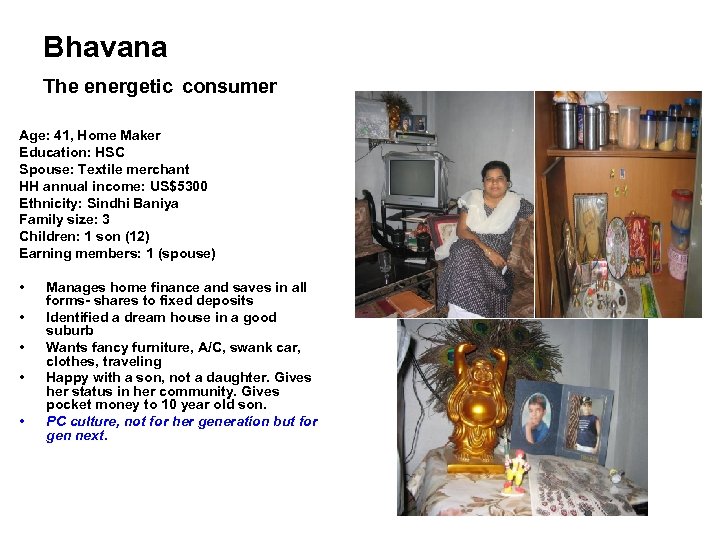 Bhavana The energetic consumer Age: 41, Home Maker Education: HSC Spouse: Textile merchant HH annual income: US$5300 Ethnicity: Sindhi Baniya Family size: 3 Children: 1 son (12) Earning members: 1 (spouse) • • • Manages home finance and saves in all forms- shares to fixed deposits Identified a dream house in a good suburb Wants fancy furniture, A/C, swank car, clothes, traveling Happy with a son, not a daughter. Gives her status in her community. Gives pocket money to 10 year old son. PC culture, not for her generation but for gen next.
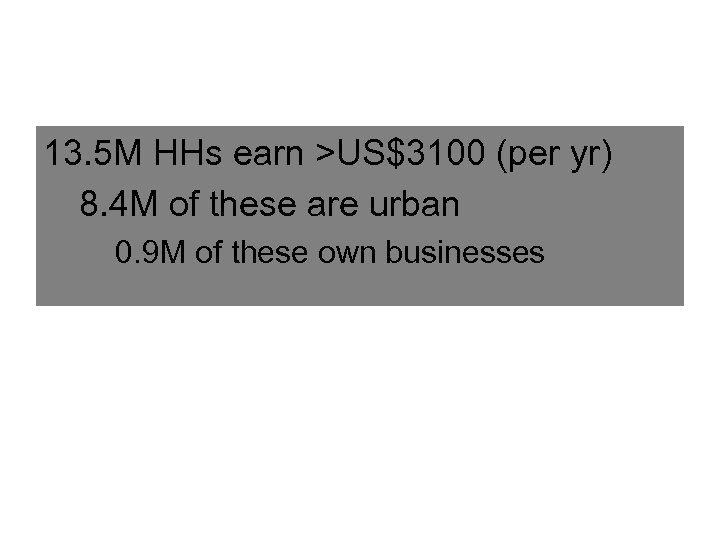 13. 5 M HHs earn >US$3100 (per yr) 8. 4 M of these are urban 0. 9 M of these own businesses
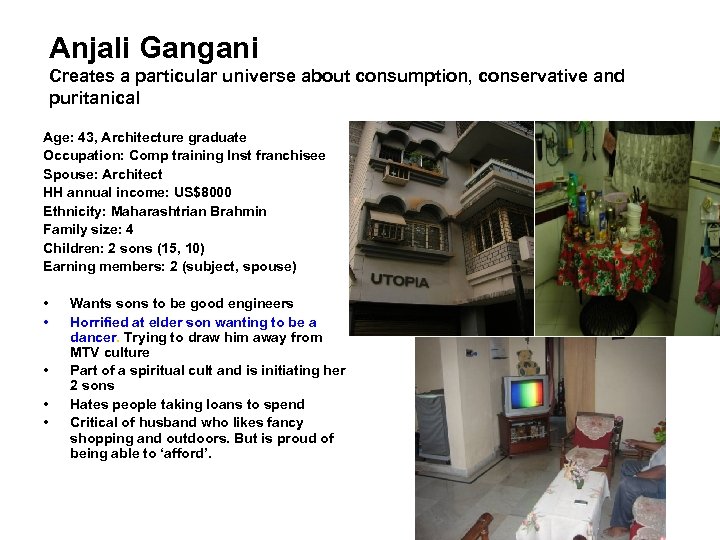 Anjali Gangani Creates a particular universe about consumption, conservative and puritanical Age: 43, Architecture graduate Occupation: Comp training Inst franchisee Spouse: Architect HH annual income: US$8000 Ethnicity: Maharashtrian Brahmin Family size: 4 Children: 2 sons (15, 10) Earning members: 2 (subject, spouse) • • • Wants sons to be good engineers Horrified at elder son wanting to be a dancer. Trying to draw him away from MTV culture Part of a spiritual cult and is initiating her 2 sons Hates people taking loans to spend Critical of husband who likes fancy shopping and outdoors. But is proud of being able to ‘afford’.
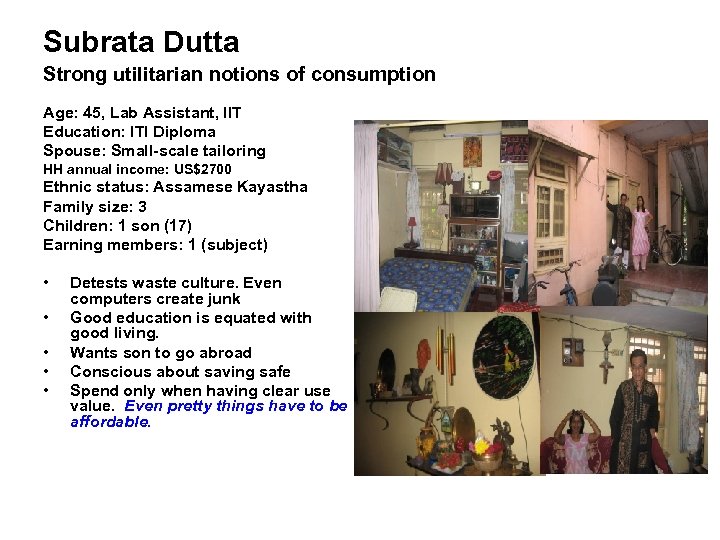 Subrata Dutta Strong utilitarian notions of consumption Age: 45, Lab Assistant, IIT Education: ITI Diploma Spouse: Small-scale tailoring HH annual income: US$2700 Ethnic status: Assamese Kayastha Family size: 3 Children: 1 son (17) Earning members: 1 (subject) • • • Detests waste culture. Even computers create junk Good education is equated with good living. Wants son to go abroad Conscious about saving safe Spend only when having clear use value. Even pretty things have to be affordable.
 14 M HHs earn US$2300 -3100 (per yr) 7. 5 M of these are urban 3. 8 M of these are salaried
 Accommodating ambivalent Portraits… • Pull factors – Good education – Rush to learn computing skills – Embracing new opportunities – Glamour of global spaces • Push factors – History of a saving ethic opposing consumerism – Threatened by open sexuality. Children: Emerge as the driving force and the symbol of this aspirational economy.
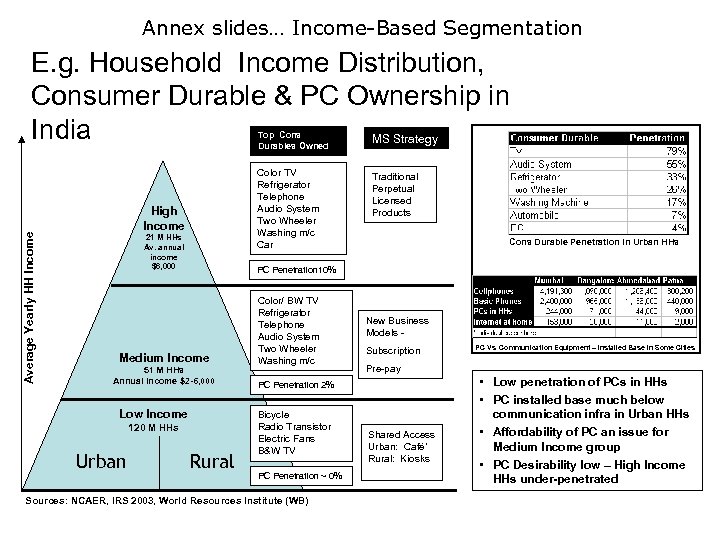 Annex slides… Income-Based Segmentation E. g. Household Income Distribution, Consumer Durable & PC Ownership in India MS Strategy Average Yearly HH Income Top Cons Durables Owned Color TV Refrigerator Telephone Audio System Two Wheeler Washing m/c Car High Income 21 M HHs Av. annual income $6, 000 Cons Durable Penetration in Urban HHs PC Penetration 10% Medium Income 51 M HHs Annual Income $2 -6, 000 Low Income 120 M HHs Urban Traditional Perpetual Licensed Products Rural Color/ BW TV Refrigerator Telephone Audio System Two Wheeler Washing m/c New Business Models Subscription Pre-pay PC Penetration 2% Bicycle Radio Transistor Electric Fans B&W TV PC Penetration ~ 0% PC Vs. Communication Equipment – Installed Base in Some Cities Shared Access Urban: Café’ Rural: Kiosks • Low penetration of PCs in HHs • PC installed base much below communication infra in Urban HHs • Affordability of PC an issue for Medium Income group • PC Desirability low – High Income HHs under-penetrated Sources: NCAER, IRS 2003, World Resources Institute (WB) Microsoft internal use only | March 2, 2006