 Скачать презентацию Increasing Creditworthiness of the Poor by Strengthening GAC
6ecba2c9091c10abbea9a3118a743f63.ppt
- Количество слайдов: 9



Increasing Creditworthiness of the Poor by Strengthening GAC Mechanisms: Case of Andhra Pradesh Rural Poverty Reduction Project, India Parmesh Shah Open GAC Council Meeting April 21, 2009
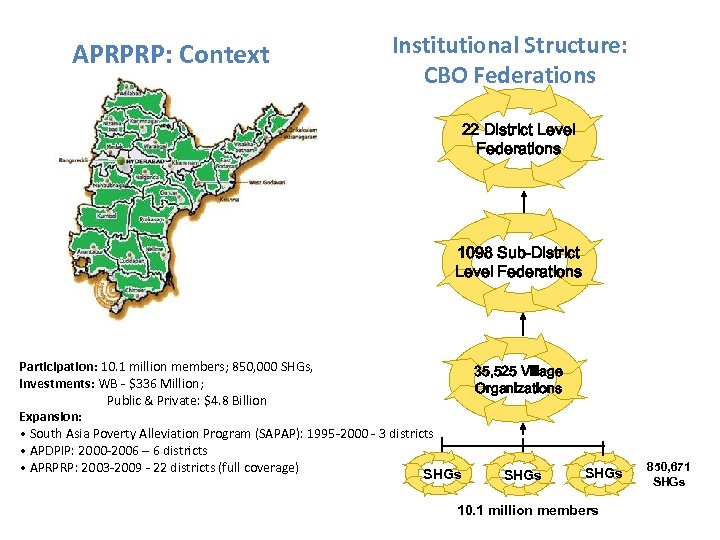
APRPRP: Context Institutional Structure: CBO Federations 22 District Level Federations 1098 Sub-District Level Federations Participation: 10. 1 million members; 850, 000 SHGs, 35, 525 Village Investments: WB - $336 Million; Organizations Public & Private: $4. 8 Billion Expansion: • South Asia Poverty Alleviation Program (SAPAP): 1995 -2000 - 3 districts • APDPIP: 2000 -2006 – 6 districts • APRPRP: 2003 -2009 - 22 districts (full coverage) SHGs 10. 1 million members 850, 671 SHGs
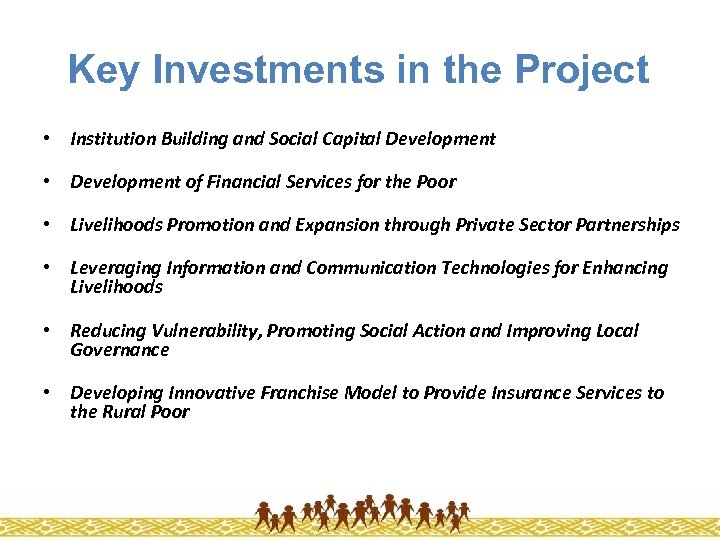
Key Investments in the Project • Institution Building and Social Capital Development • Development of Financial Services for the Poor • Livelihoods Promotion and Expansion through Private Sector Partnerships • Leveraging Information and Communication Technologies for Enhancing Livelihoods • Reducing Vulnerability, Promoting Social Action and Improving Local Governance • Developing Innovative Franchise Model to Provide Insurance Services to the Rural Poor
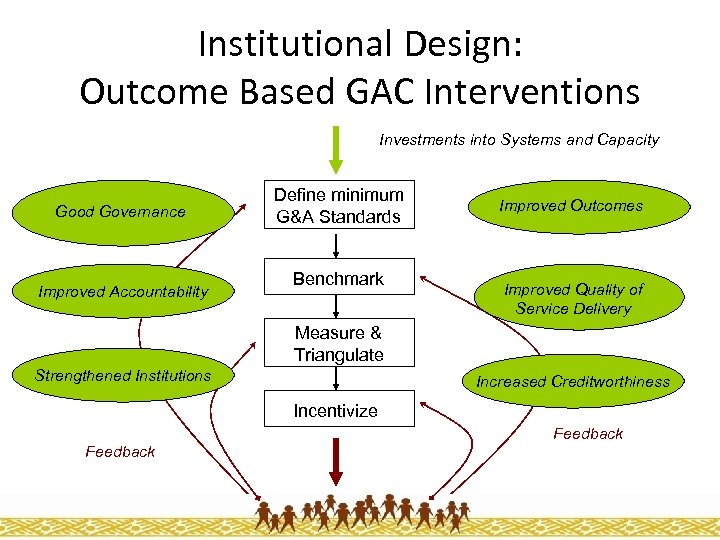
Institutional Design: Outcome Based GAC Interventions Investments into Systems and Capacity Good Governance Improved Accountability Define minimum G&A Standards Benchmark Improved Outcomes Improved Quality of Service Delivery Measure & Triangulate Strengthened Institutions Increased Creditworthiness Incentivize Feedback
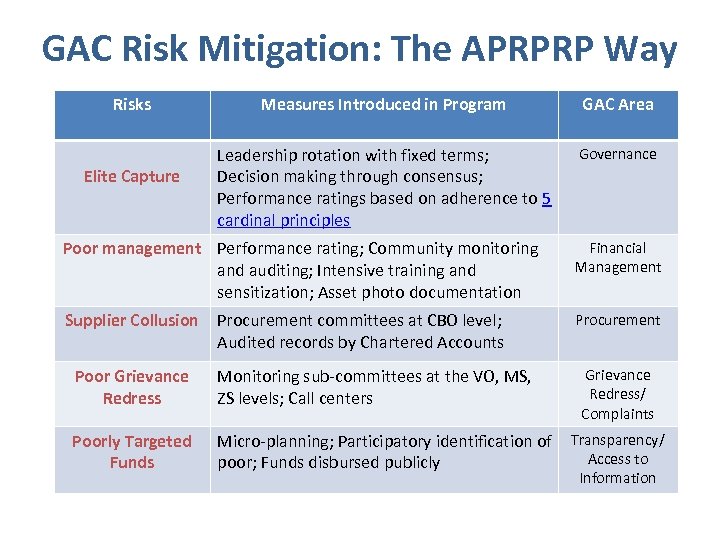
GAC Risk Mitigation: The APRPRP Way Risks Elite Capture Measures Introduced in Program GAC Area Leadership rotation with fixed terms; Decision making through consensus; Performance ratings based on adherence to 5 cardinal principles Governance Poor management Performance rating; Community monitoring and auditing; Intensive training and sensitization; Asset photo documentation Financial Management Supplier Collusion Procurement committees at CBO level; Audited records by Chartered Accounts Poor Grievance Redress Monitoring sub-committees at the VO, MS, ZS levels; Call centers Poorly Targeted Funds Micro-planning; Participatory identification of poor; Funds disbursed publicly Grievance Redress/ Complaints Transparency/ Access to Information
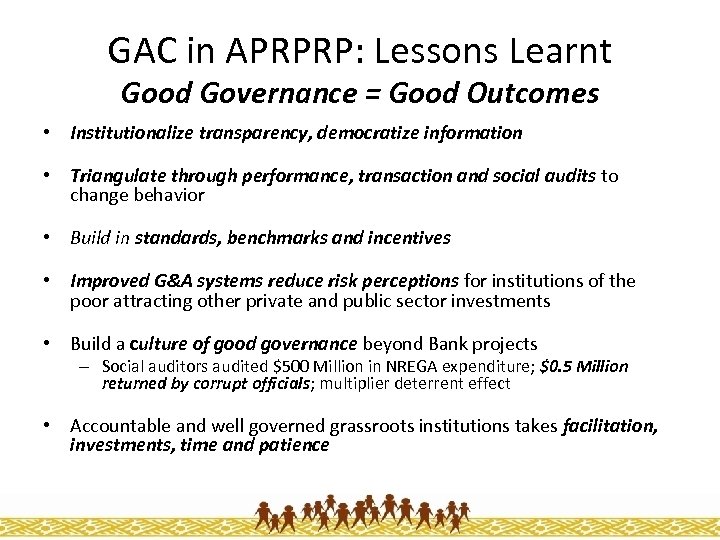
GAC in APRPRP: Lessons Learnt Good Governance = Good Outcomes • Institutionalize transparency, democratize information • Triangulate through performance, transaction and social audits to change behavior • Build in standards, benchmarks and incentives • Improved G&A systems reduce risk perceptions for institutions of the poor attracting other private and public sector investments • Build a culture of good governance beyond Bank projects – Social auditors audited $500 Million in NREGA expenditure; $0. 5 Million returned by corrupt officials; multiplier deterrent effect • Accountable and well governed grassroots institutions takes facilitation, investments, time and patience
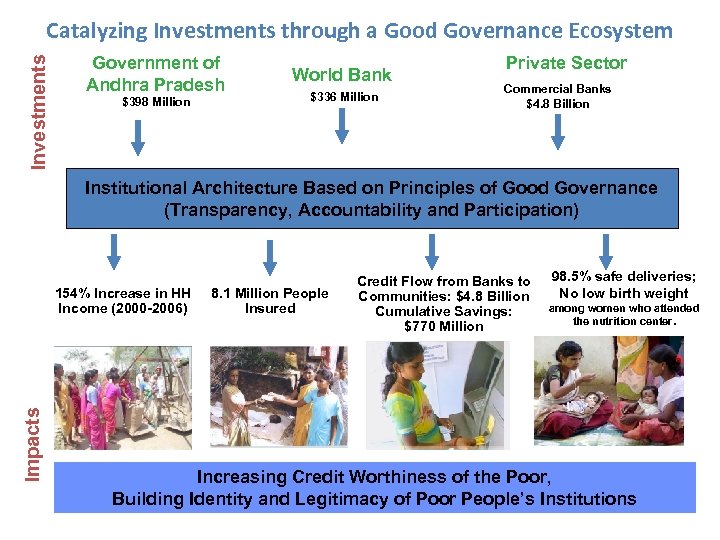
Investments Catalyzing Investments through a Good Governance Ecosystem Government of Andhra Pradesh $398 Million World Bank $336 Million Private Sector Commercial Banks $4. 8 Billion Institutional Architecture Based on Principles of Good Governance (Transparency, Accountability and Participation) Impacts 154% Increase in HH Income (2000 -2006) 8. 1 Million People Insured Credit Flow from Banks to Communities: $4. 8 Billion Cumulative Savings: $770 Million 98. 5% safe deliveries; No low birth weight among women who attended the nutrition center. Increasing Credit Worthiness of the Poor, Building Identity and Legitimacy of Poor People’s Institutions
THANK YOU
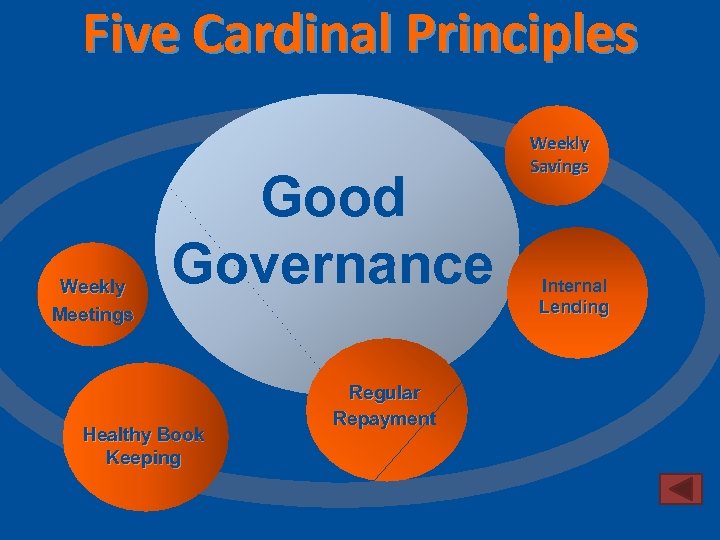
Five Cardinal Principles Weekly Meetings Good Governance Healthy Book Keeping Regular Repayment Weekly Savings Internal Lending
Скачать презентацию Increasing Creditworthiness of the Poor by Strengthening GAC
6ecba2c9091c10abbea9a3118a743f63.ppt