


 Скачать презентацию Increased Prevalence and diversity of VTEC in Ireland
158aab943709d891c55e4419d13751f5.ppt
- Количество слайдов: 28
 Increased Prevalence and diversity of VTEC in Ireland: Fact of Artifact? Dr Anne Carroll Dr Eleanor Mc. Namara HSE-PHL-Dublin
 PHL Scope n Official testing laboratory, Food and water (S. I. 85 of 1998 and S. I. 117 of 2010). n Accredited ISO 17025 n National VTEC diagnostic and typing service (Clinical, foods water environmental) n Clinical diagnostic general microbiology service, hospital/GP HSE-PHL-Dublin
 VTEC Reference Service n National VTEC Service n Stools, Food, Water. n Isolate Confirmation n Accredited n PCR >22, 000 tests n PFGE HSE-PHL-Dublin
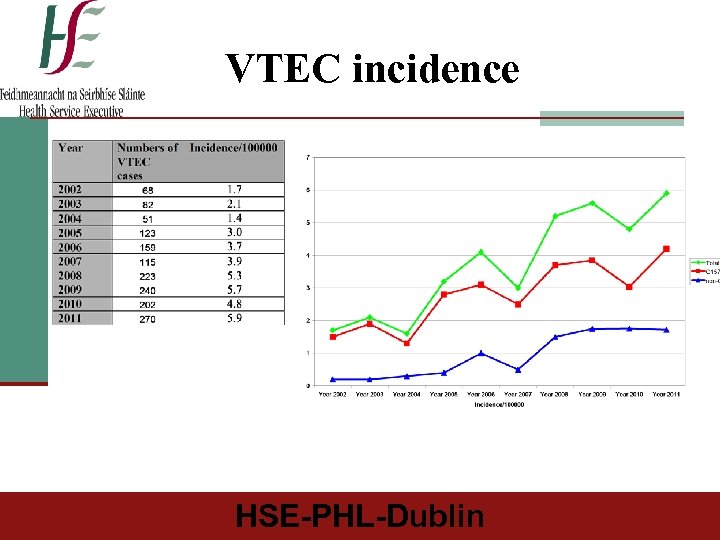
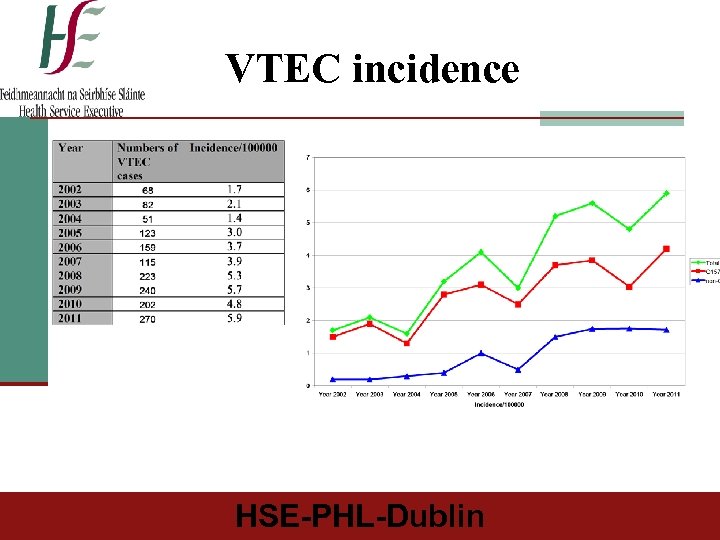 VTEC incidence HSE-PHL-Dublin
 VTEC incidence HSE-PHL-Dublin
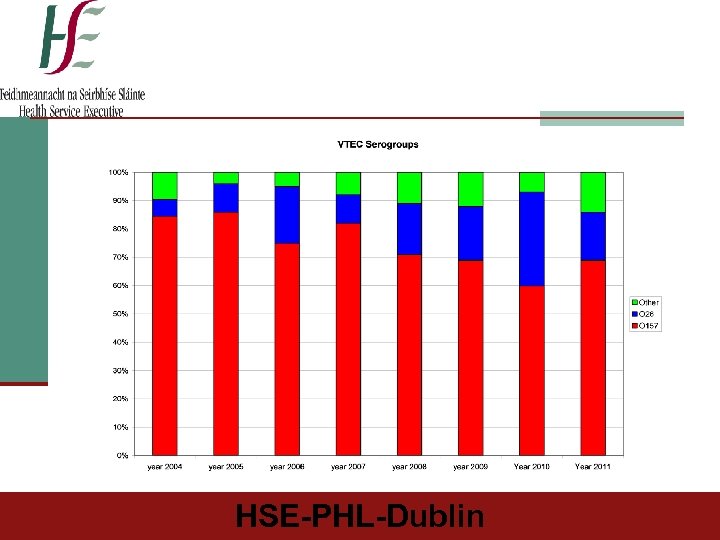 HSE-PHL-Dublin
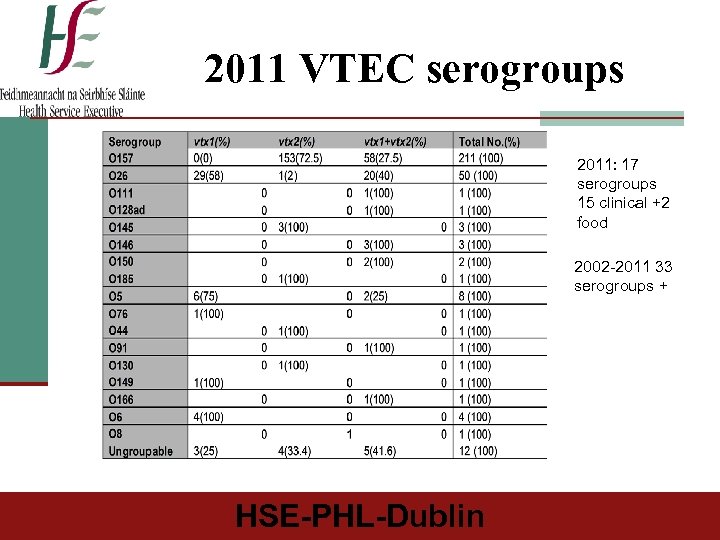 2011 VTEC serogroups 2011: 17 serogroups 15 clinical +2 food 2002 -2011 33 serogroups + HSE-PHL-Dublin
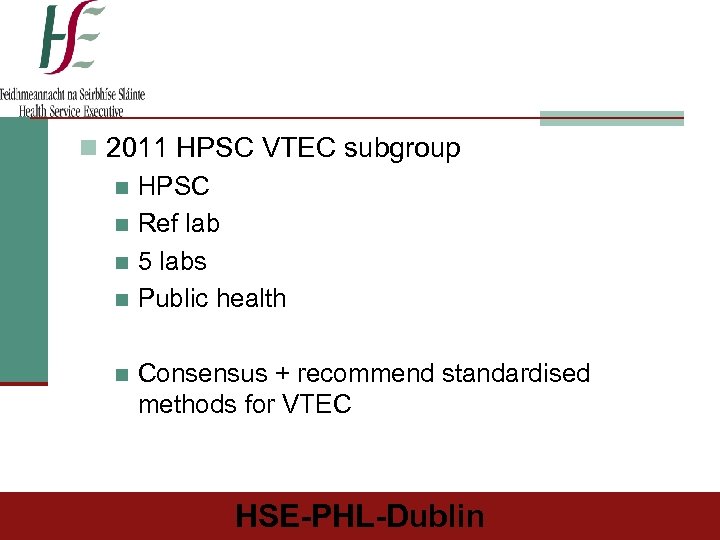 n 2011 HPSC VTEC subgroup n HPSC n Ref lab n 5 labs n Public health n Consensus + recommend standardised methods for VTEC HSE-PHL-Dublin
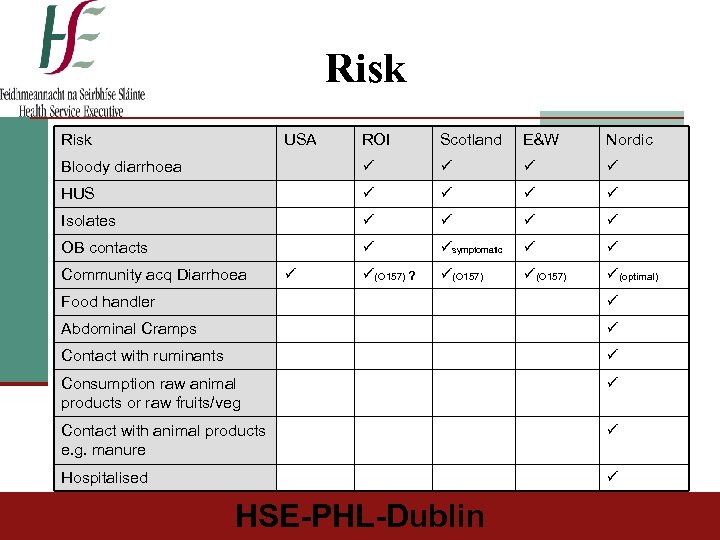 Risk USA ROI Scotland E&W Nordic Bloody diarrhoea HUS Isolates OB contacts symptomatic (O 157) ? (O 157) (optimal) Community acq Diarrhoea Food handler Abdominal Cramps Contact with ruminants Consumption raw animal products or raw fruits/veg Contact with animal products e. g. manure Hospitalised HSE-PHL-Dublin
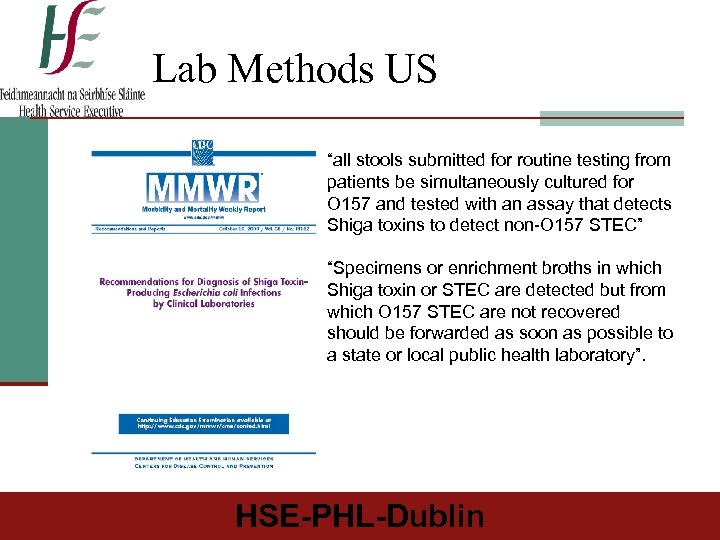 Lab Methods US “all stools submitted for routine testing from patients be simultaneously cultured for O 157 and tested with an assay that detects Shiga toxins to detect non-O 157 STEC” “Specimens or enrichment broths in which Shiga toxin or STEC are detected but from which O 157 STEC are not recovered should be forwarded as soon as possible to a state or local public health laboratory”. HSE-PHL-Dublin
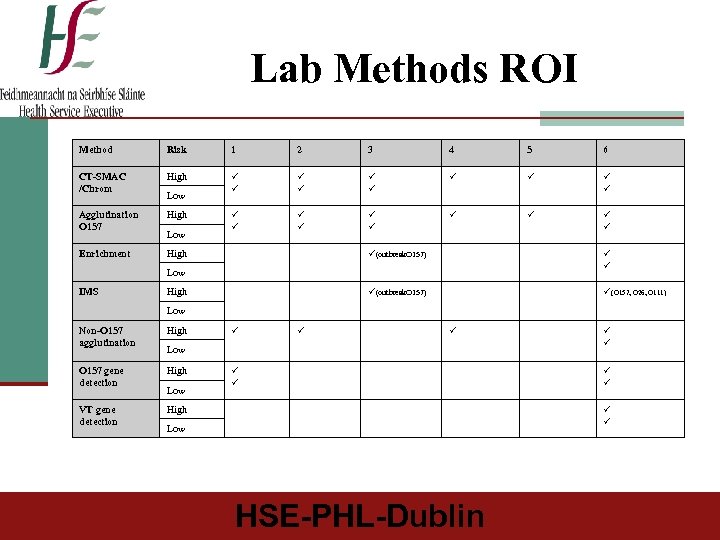 Lab Methods ROI Method Risk 1 2 3 4 5 6 CT-SMAC /Chrom High Agglutination O 157 High Enrichment High Low (outbreak. O 157) (O 157, O 26, O 111) Low IMS High Low Non-O 157 agglutination High O 157 gene detection High VT gene detection High Low Low HSE-PHL-Dublin
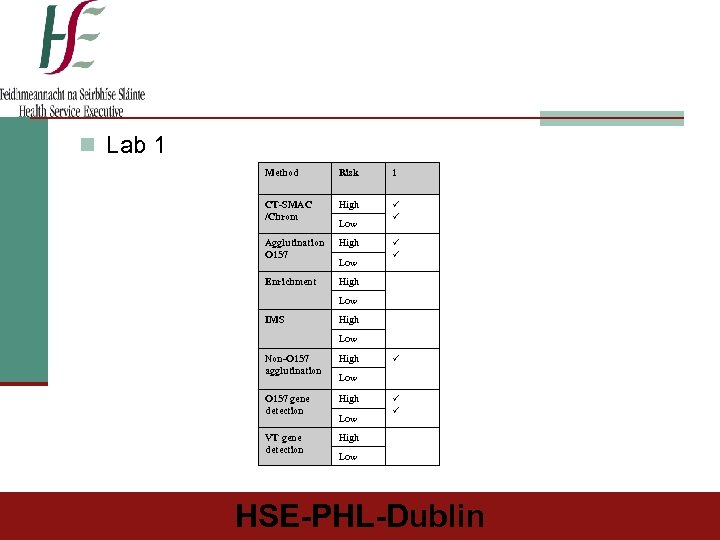 n Lab 1 Method Risk 1 CT-SMAC /Chrom High Agglutination O 157 High Enrichment High Low IMS High Low Non-O 157 agglutination High O 157 gene detection High VT gene detection High Low HSE-PHL-Dublin
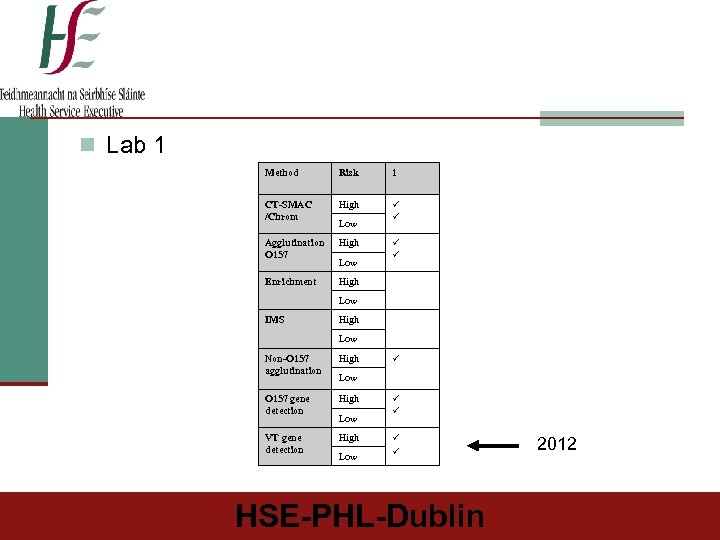 n Lab 1 Method Risk 1 CT-SMAC /Chrom High Agglutination O 157 High Enrichment High Low IMS High Low Non-O 157 agglutination High O 157 gene detection High VT gene detection High Low Low HSE-PHL-Dublin 2012
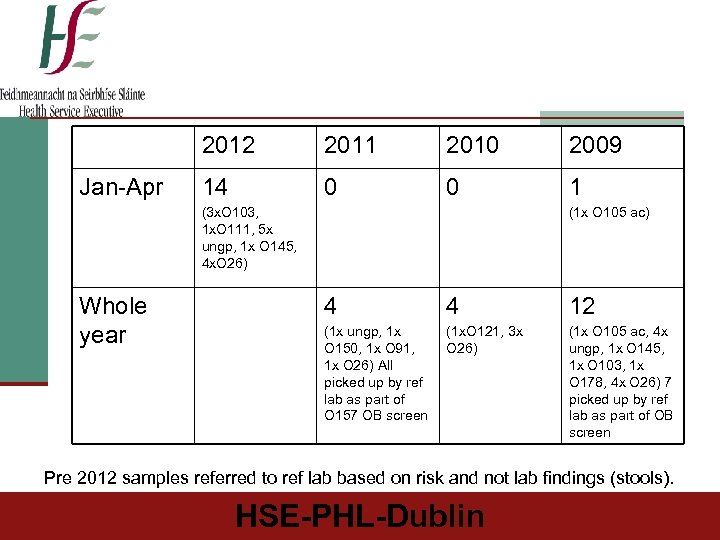 2012 Jan-Apr 2011 2010 2009 14 0 0 1 (3 x. O 103, 1 x. O 111, 5 x ungp, 1 x O 145, 4 x. O 26) Whole year (1 x O 105 ac) 4 4 12 (1 x ungp, 1 x O 150, 1 x O 91, 1 x O 26) All picked up by ref lab as part of O 157 OB screen (1 x. O 121, 3 x O 26) (1 x O 105 ac, 4 x ungp, 1 x O 145, 1 x O 103, 1 x O 178, 4 x O 26) 7 picked up by ref lab as part of OB screen Pre 2012 samples referred to ref lab based on risk and not lab findings (stools). HSE-PHL-Dublin
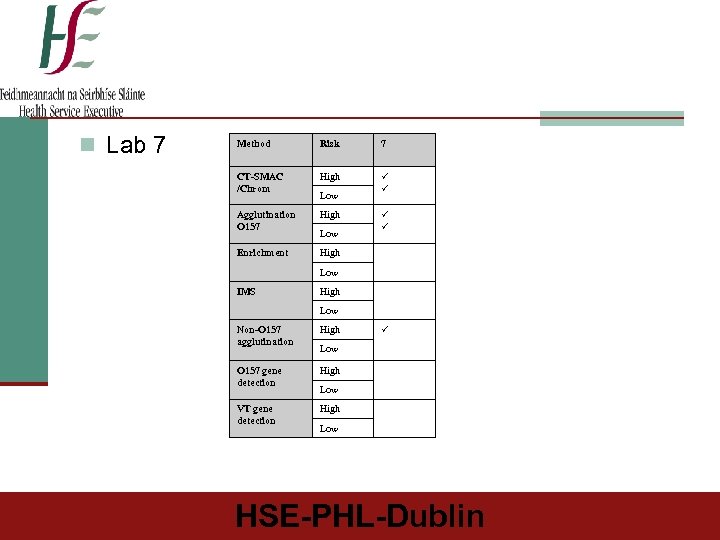 n Lab 7 Method Risk 7 CT-SMAC /Chrom High Agglutination O 157 High Enrichment High Low IMS High Low Non-O 157 agglutination High O 157 gene detection High VT gene detection High Low Low HSE-PHL-Dublin
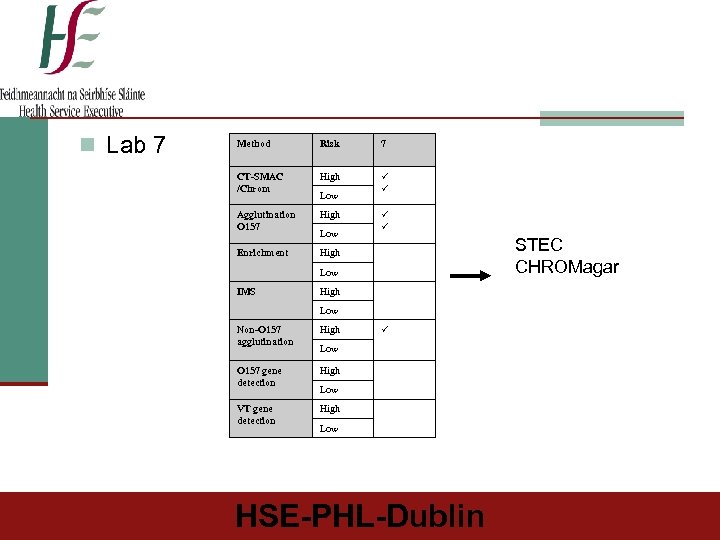 n Lab 7 Method Risk 7 CT-SMAC /Chrom High Agglutination O 157 High Enrichment High Low STEC CHROMagar Low IMS High Low Non-O 157 agglutination High O 157 gene detection High VT gene detection High Low Low HSE-PHL-Dublin
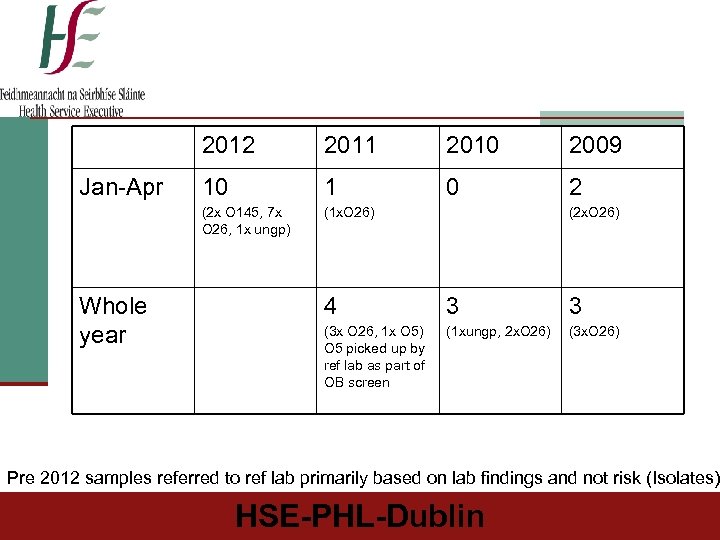 2012 Whole year 2010 2009 10 1 0 2 (2 x O 145, 7 x O 26, 1 x ungp) Jan-Apr 2011 (1 x. O 26) (2 x. O 26) 4 3 3 (3 x O 26, 1 x O 5) O 5 picked up by ref lab as part of OB screen (1 xungp, 2 x. O 26) (3 x. O 26) Pre 2012 samples referred to ref lab primarily based on lab findings and not risk (Isolates) HSE-PHL-Dublin
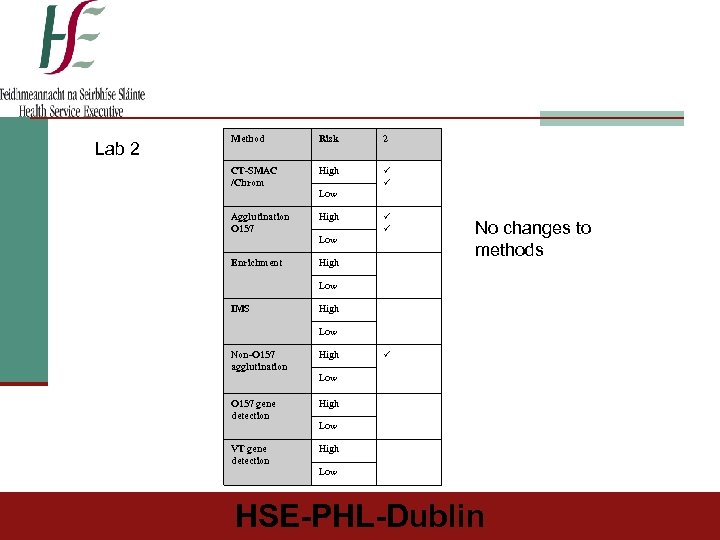 Lab 2 Method Risk 2 CT-SMAC /Chrom High Agglutination O 157 High Enrichment High Low No changes to methods Low IMS High Low Non-O 157 agglutination High O 157 gene detection High VT gene detection High Low Low HSE-PHL-Dublin
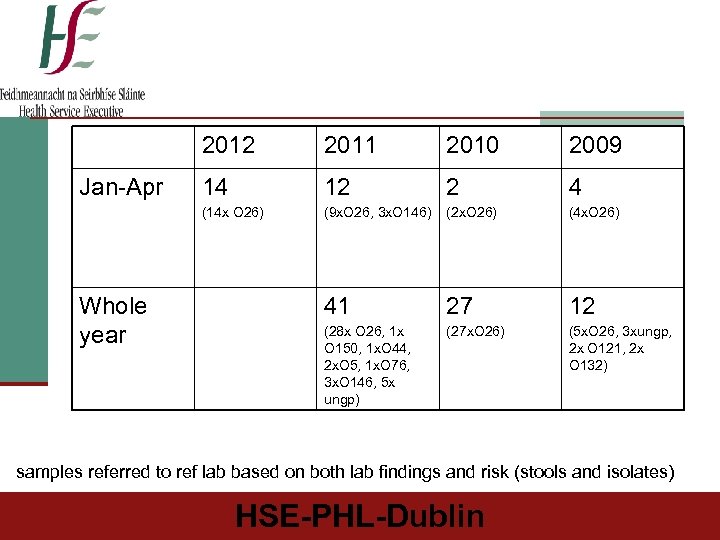 2012 Whole year 2010 2009 14 12 2 4 (14 x O 26) Jan-Apr 2011 (9 x. O 26, 3 x. O 146) (2 x. O 26) (4 x. O 26) 41 27 12 (28 x O 26, 1 x O 150, 1 x. O 44, 2 x. O 5, 1 x. O 76, 3 x. O 146, 5 x ungp) (27 x. O 26) (5 x. O 26, 3 xungp, 2 x O 121, 2 x O 132) samples referred to ref lab based on both lab findings and risk (stools and isolates) HSE-PHL-Dublin
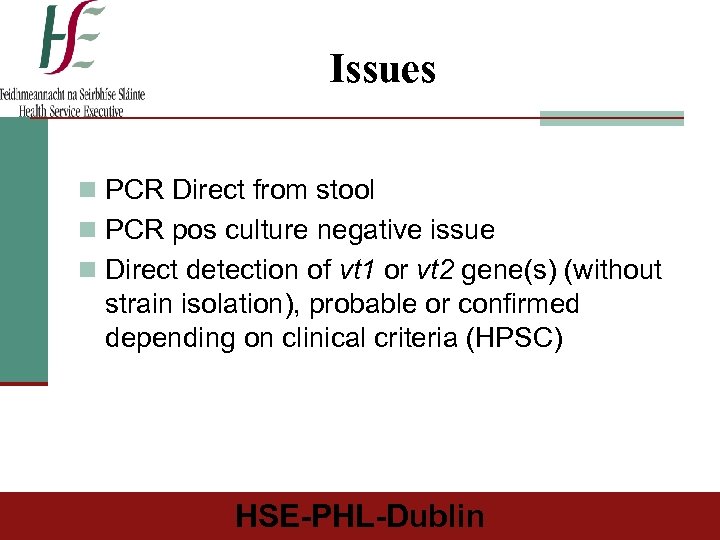 Issues n PCR Direct from stool n PCR pos culture negative issue n Direct detection of vt 1 or vt 2 gene(s) (without strain isolation), probable or confirmed depending on clinical criteria (HPSC) HSE-PHL-Dublin
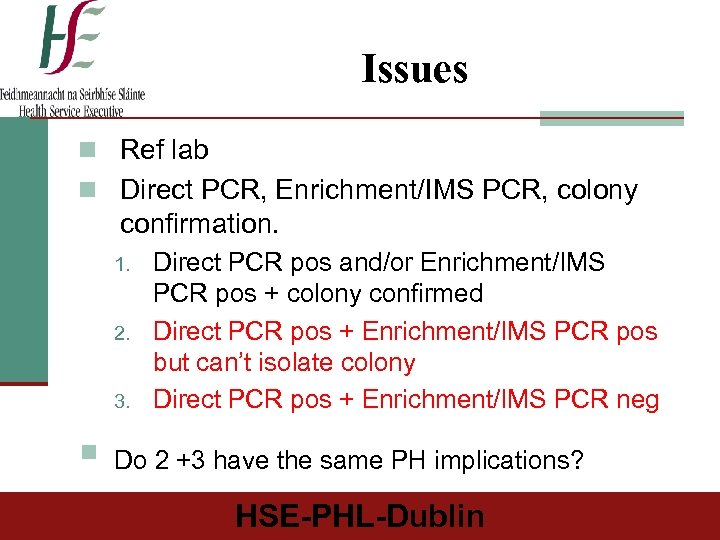 Issues n Ref lab n Direct PCR, Enrichment/IMS PCR, colony confirmation. 1. 2. 3. § Direct PCR pos and/or Enrichment/IMS PCR pos + colony confirmed Direct PCR pos + Enrichment/IMS PCR pos but can’t isolate colony Direct PCR pos + Enrichment/IMS PCR neg Do 2 +3 have the same PH implications? HSE-PHL-Dublin
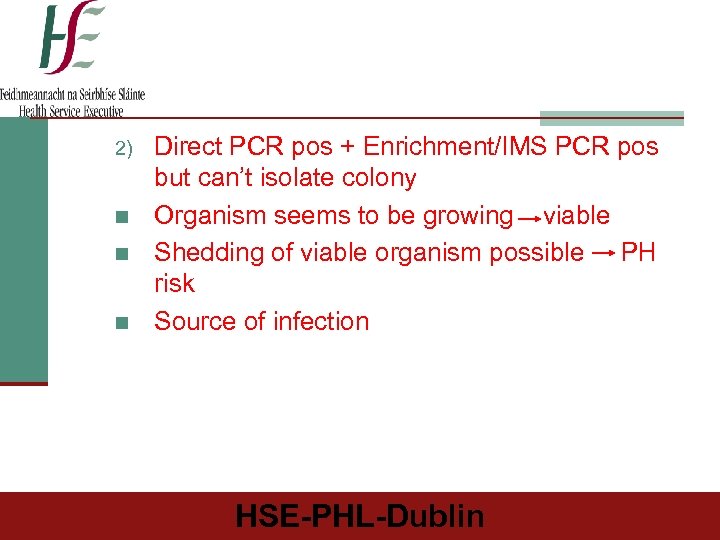 2) n n n Direct PCR pos + Enrichment/IMS PCR pos but can’t isolate colony Organism seems to be growing viable Shedding of viable organism possible PH risk Source of infection HSE-PHL-Dublin
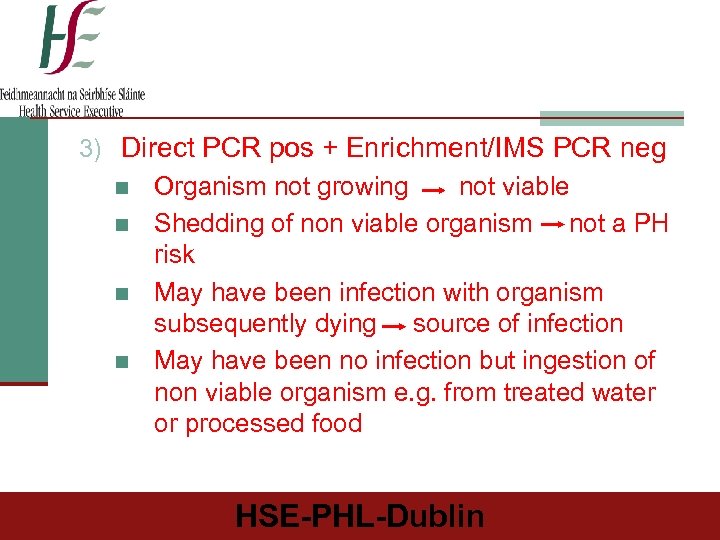 3) Direct PCR pos + Enrichment/IMS PCR neg n Organism not growing not viable n Shedding of non viable organism not a PH risk n May have been infection with organism subsequently dying source of infection n May have been no infection but ingestion of non viable organism e. g. from treated water or processed food HSE-PHL-Dublin
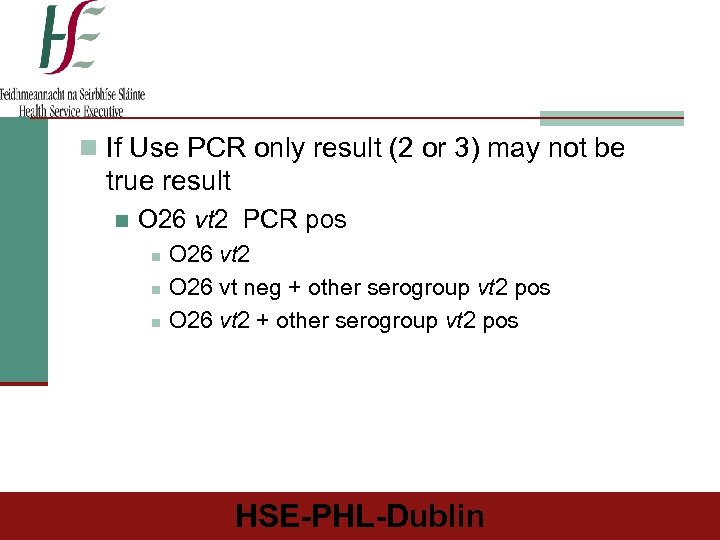 n If Use PCR only result (2 or 3) may not be true result n O 26 vt 2 PCR pos n n n O 26 vt 2 O 26 vt neg + other serogroup vt 2 pos O 26 vt 2 + other serogroup vt 2 pos HSE-PHL-Dublin
 Challenges n Methods n Risk n Transport n Facilities n IT HSE-PHL-Dublin
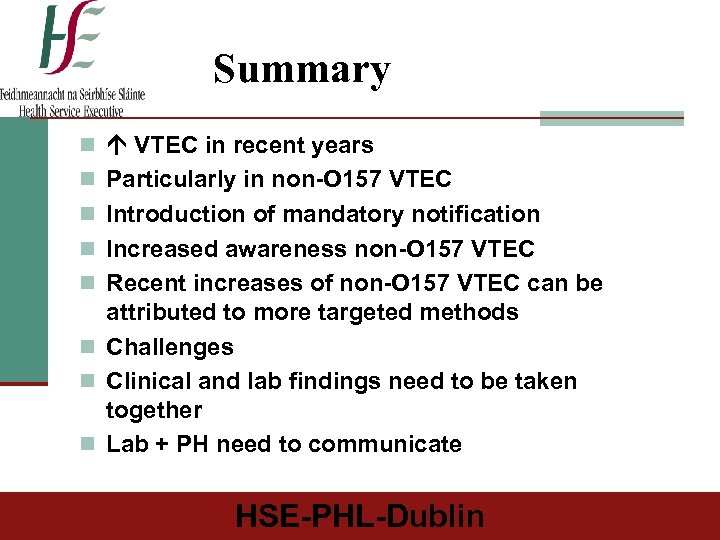 Summary n VTEC in recent years n Particularly in non-O 157 VTEC n Introduction of mandatory notification n Increased awareness non-O 157 VTEC n Recent increases of non-O 157 VTEC can be attributed to more targeted methods n Challenges n Clinical and lab findings need to be taken together n Lab + PH need to communicate HSE-PHL-Dublin
 Thank You Thank you to dedicated PHL Staff HSE-PHL-Dublin
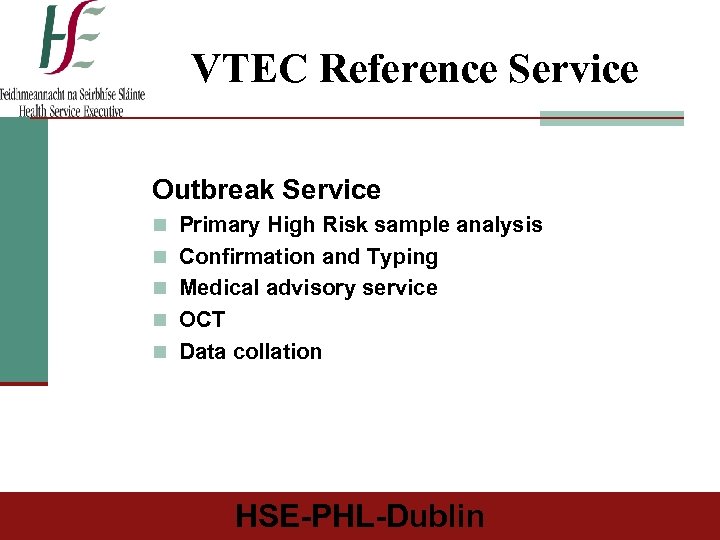 VTEC Reference Service Outbreak Service n Primary High Risk sample analysis n Confirmation and Typing n Medical advisory service n OCT n Data collation HSE-PHL-Dublin