


 Скачать презентацию Incorporation of Genomic Information into Selection Tools Mike
c7f35415af7880603b655ca0713da535.ppt
- Количество слайдов: 49
 Incorporation of Genomic Information into Selection Tools Mike Tess Montana State University
 Outline Where we are p Where we need to go p Efforts to get there p
 Where are we?
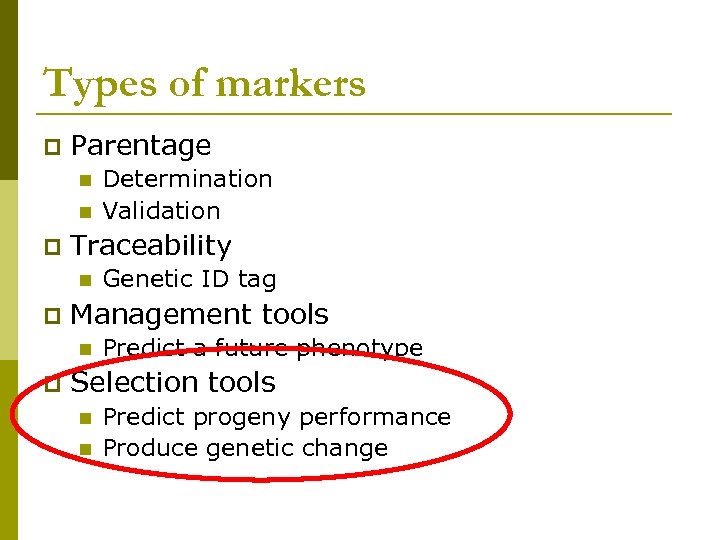 Types of markers p Parentage n n p Traceability n p Genetic ID tag Management tools n p Determination Validation Predict a future phenotype Selection tools n n Predict progeny performance Produce genetic change
 U. S. Genomic Companies Bovigen p Igenity p MMI p
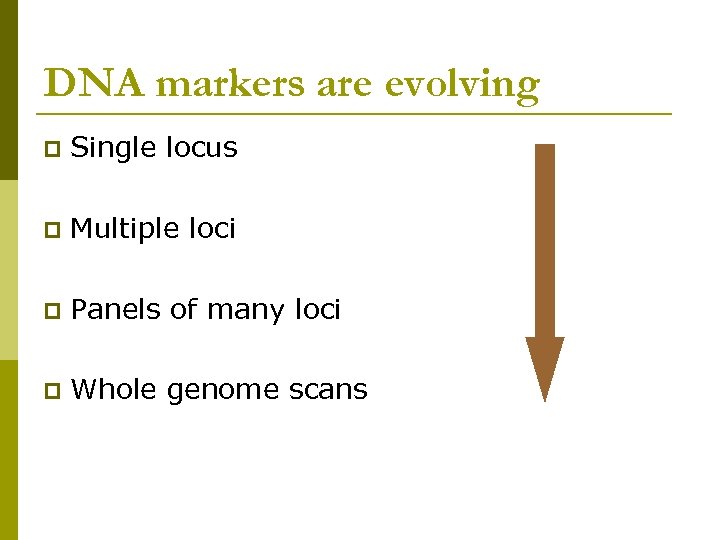 DNA markers are evolving p Single locus p Multiple loci p Panels of many loci p Whole genome scans
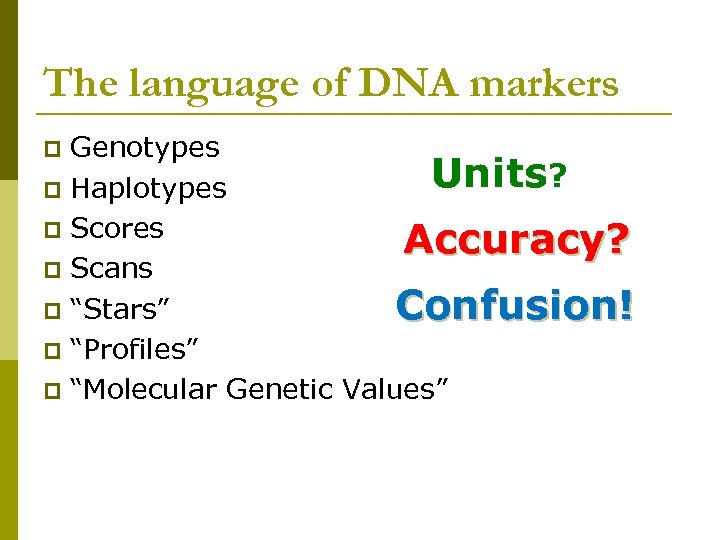 The language of DNA markers Genotypes Units? p Haplotypes p Scores Accuracy? p Scans p “Stars” Confusion! p “Profiles” p “Molecular Genetic Values” p
 Where we need to go
 DNA Technologies and Genetic Improvement p How can we use DNA markers to achieve: n n Maximum speed? Minimum cost? Maximum control? Maximum choice?
 We need a common currency
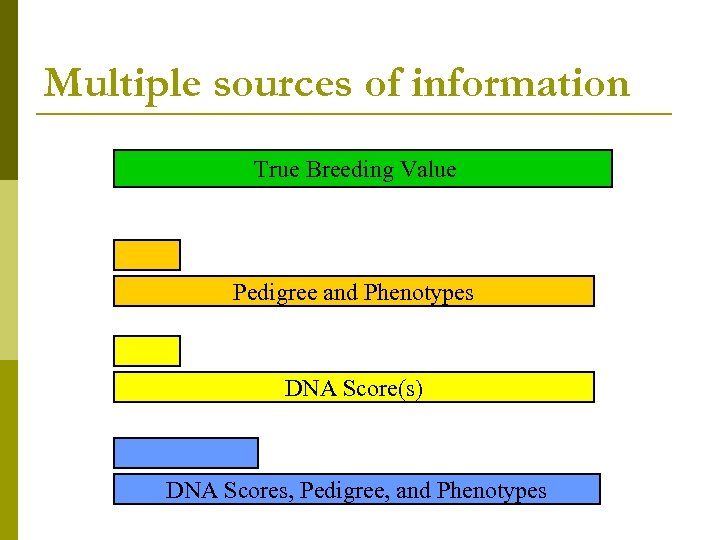 Multiple sources of information True Breeding Value Pedigree and Phenotypes DNA Score(s) DNA Scores, Pedigree, and Phenotypes
 A common currency p SINGLE estimate of breeding value based on all information available n n n p DNA scores Pedigree Phenotypes SINGLE measure of accuracy Higher accuracy earlier in life
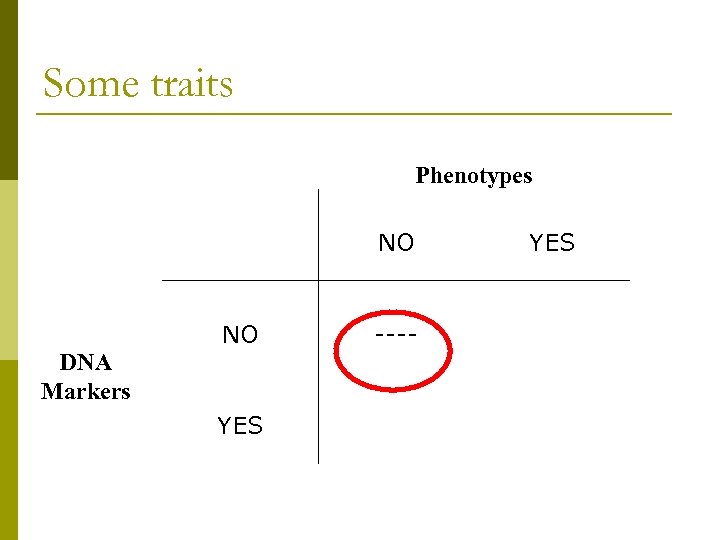 Some traits Phenotypes NO NO DNA Markers YES ---- YES
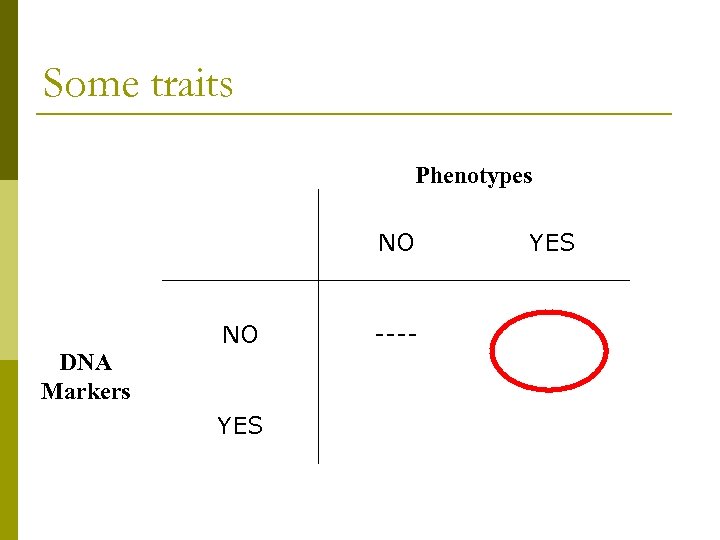 Some traits Phenotypes NO NO DNA Markers YES ---- YES
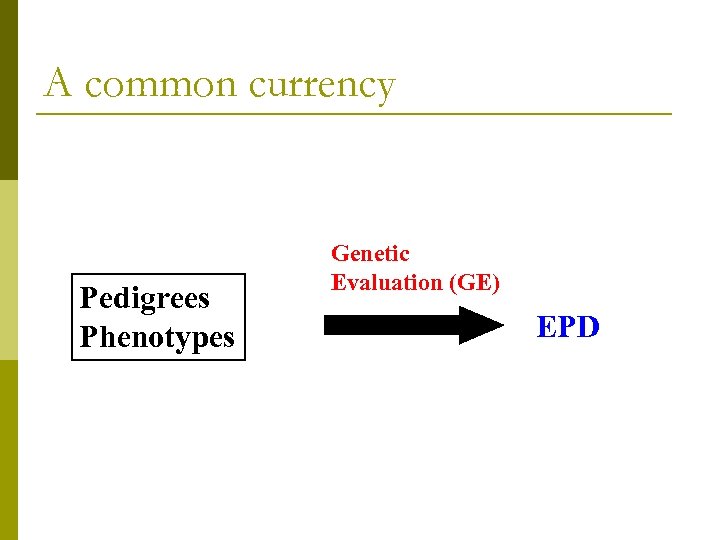 A common currency Pedigrees Phenotypes Genetic Evaluation (GE) EPD
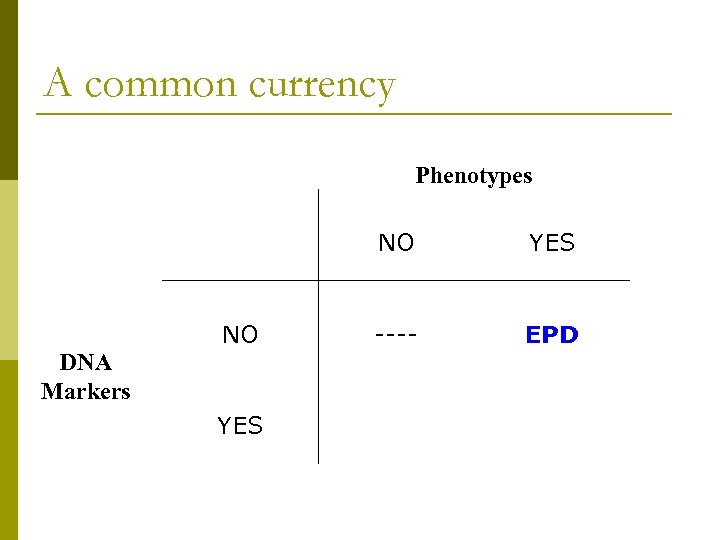 A common currency Phenotypes NO NO DNA Markers YES ---- EPD
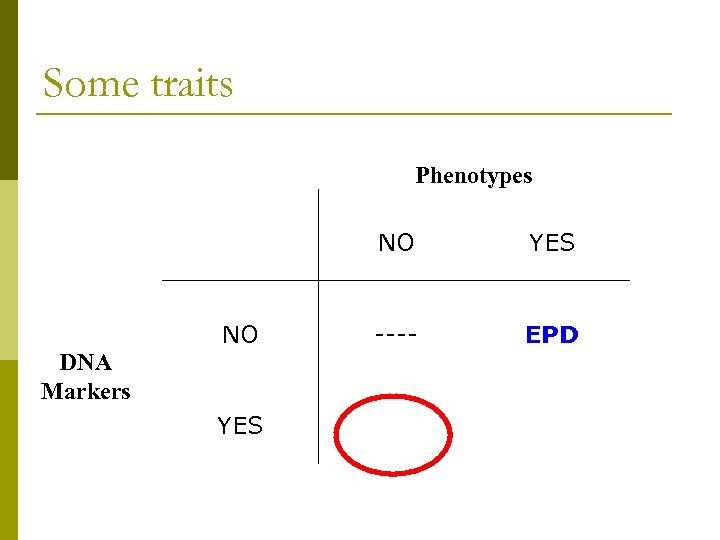 Some traits Phenotypes NO NO DNA Markers YES ---- EPD
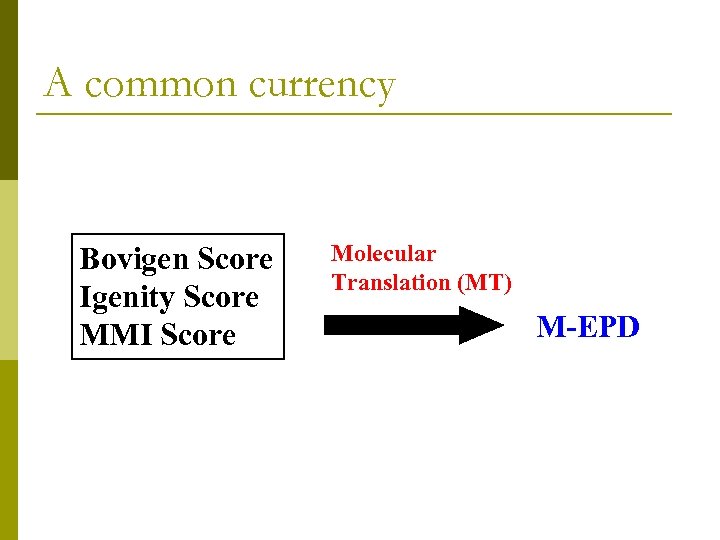 A common currency Bovigen Score Igenity Score MMI Score Molecular Translation (MT) M-EPD
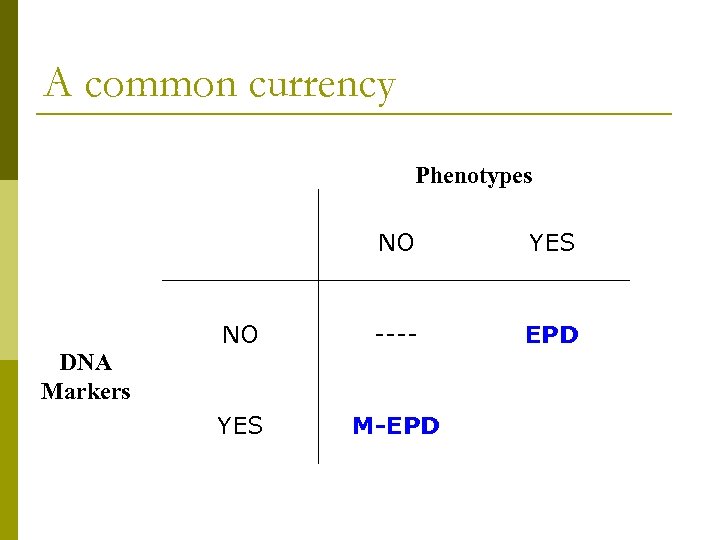 A common currency Phenotypes NO YES NO ---- EPD YES M-EPD DNA Markers
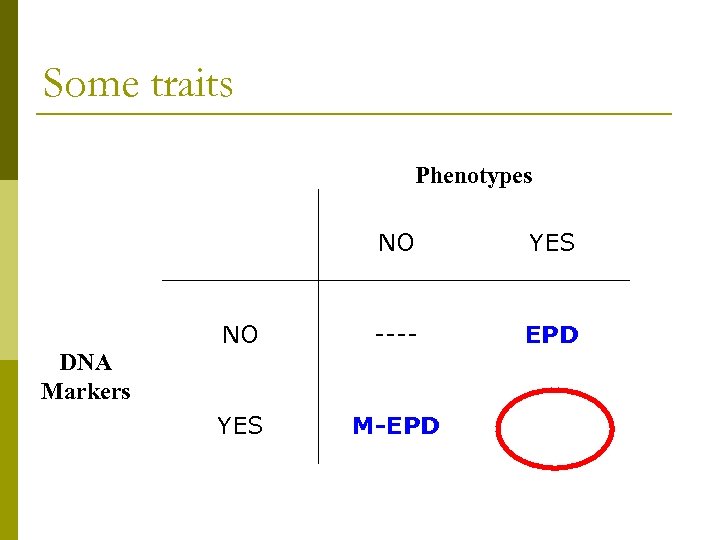 Some traits Phenotypes NO YES NO ---- EPD YES M-EPD DNA Markers
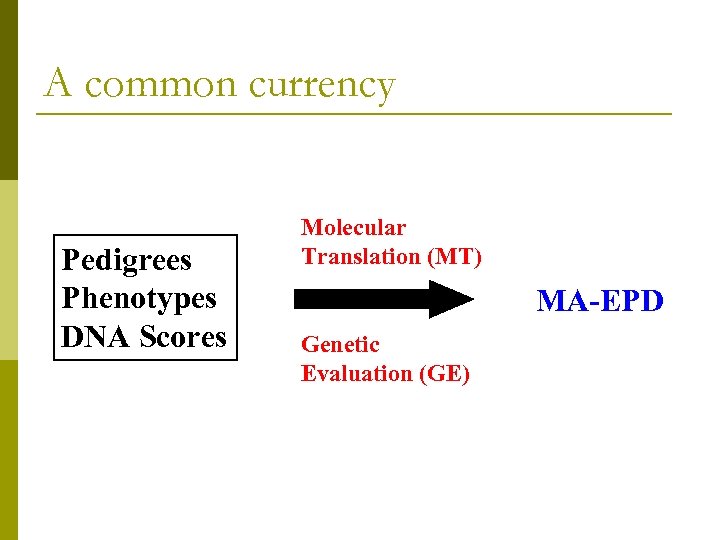 A common currency Pedigrees Phenotypes DNA Scores Molecular Translation (MT) MA-EPD Genetic Evaluation (GE)
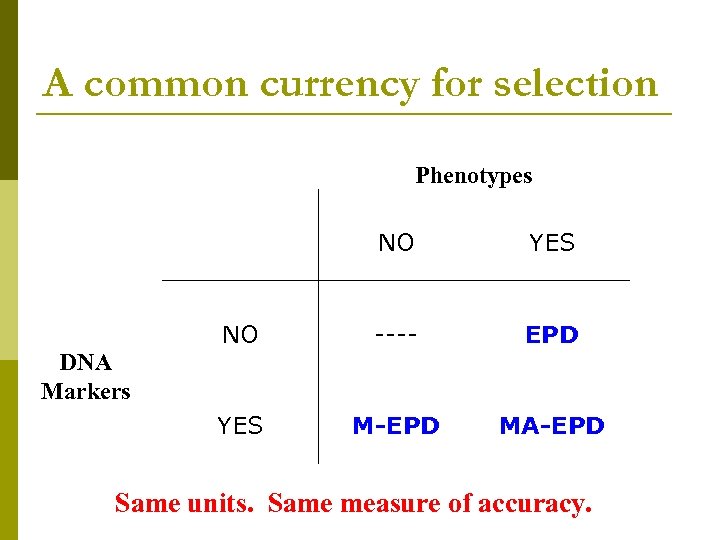 A common currency for selection Phenotypes NO YES NO ---- EPD YES M-EPD MA-EPD DNA Markers Same units. Same measure of accuracy.
 Yearling Bulls p How much would increased accuracy be worth?
 A suggested roadmap. . .
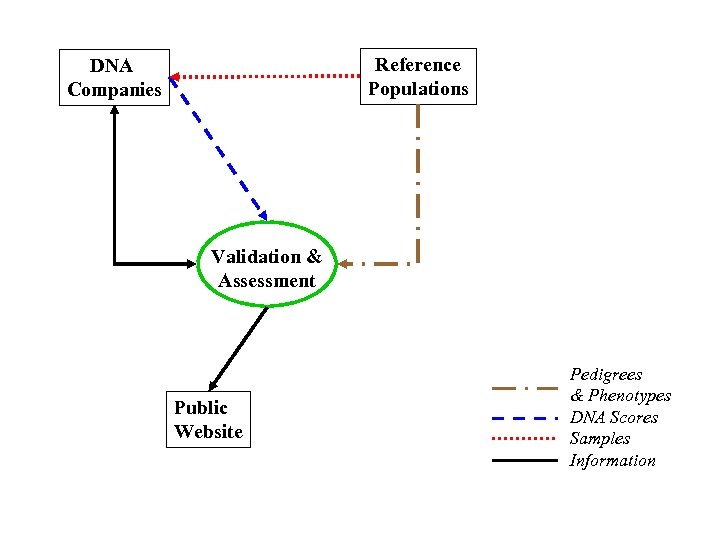 Reference Populations DNA Companies Validation & Assessment Public Website Pedigrees & Phenotypes DNA Scores Samples Information
 Validation and Assessment p Independent verification Does the test work? p What else might change if I select based on this test? p
 Reference Populations p Data = tissue (DNA), pedigrees, and phenotypes n n p Existing data Herds optimally designed and managed for current and future use Representative of: n n Different breeds Different production environments
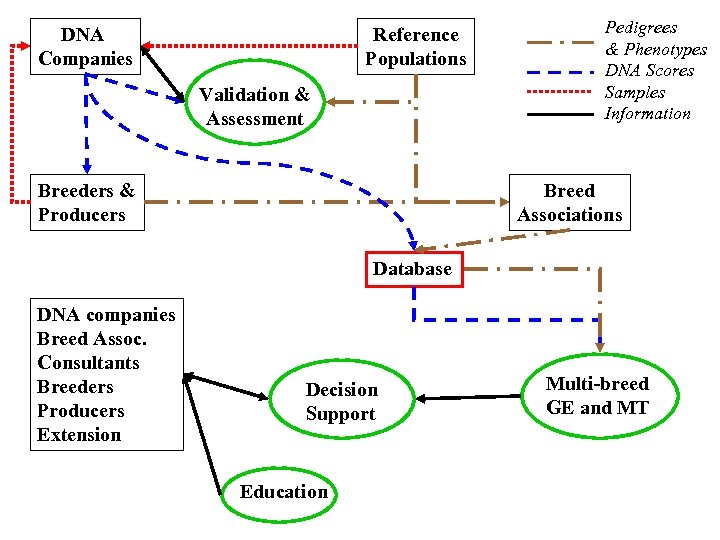 DNA Companies Reference Populations Validation & Assessment Breeders & Producers Pedigrees & Phenotypes DNA Scores Samples Information Breed Associations Database DNA companies Breed Assoc. Consultants Breeders Producers Extension Decision Support Education Multi-breed GE and MT
 Challenges p Multiple companies marketing markers for the same traits. n n Overlapping information Dynamic individual DNA tests Increasing number of loci p Increasing accuracy p p Animals evaluated for the same traits at different points in time
 Challenges p QTL/DNA marker discovery n n n 50 k – 300 k loci chip Statistical procedures Data required
 Challenges p Database n n n Location(s) Access Data p 50 -300 k genotypes?
 Challenges p Validation n n p Definitions Standards Responsible organization International scope Assessment n n Responsible organization Relationship to discovery
 Challenges p Education n n Changing technology Exploding terminology Variation in understanding Multiple industry voices Credibility at risk
 Challenges p Decision Support n Designing breeding plans Bio-economic objectives p Speed versus direction p n Choosing selection tools
 Efforts to get there
 A Team Approach Genomic companies p Breed associations p USDA-ARS p State Experiment Stations p NBCEC p BIF p n Commission
 BIF Commission Ronnie Green – USDA-ARS p Ronnie Silcox – University of Georgia p Darrell Wilkes – ABS Global p Jim Wilton – University of Guelph p Mike Tess – Montana State University p p Bill Bowman – American Angus n Chair BIF Emerging Technologies Committee
 Roles for the Commission Facilitate meetings p Encourage action p Conduit for communication p
 Validation and Assessment p BIF Commission p Responsible organization = NBCEC? p Recommended standards and procedures n n n p p Definitions Multiple sources of information Populations and production/marketing systems BIF Recommendations International collaborations
 Education and Decision Support p BIF Commission n n Assess needs Encourage development of materials and tools
 Reference Populations Breeds p Environments p Production systems p Traits measured p USDA-ARS p Breed Associations p
 Reference Populations Phenotypes p Pedigrees p DNA testing p n n Validation Validated markers p p Key sires Critical link in national cattle evaluation
 Statistics – Commission/NBCEC Rohan Fernando – Iowa State Univ. p Steve Kachman – Univ. Nebraska p Rob Templeman – Michigan State Univ. p Mark Thallman – USMARC p Dick Quass – Cornell Univ. p
 Statistics and Software p Recommended standards for estimating and reporting: n DNA marker effects Units of the trait p Additive genetic value p n p DNA marker accuracy Procedures for mining information from large SNP panels
 Statistics and Software p Procedures for melding information from multiple markers into a single M-EPD with a corresponding accuracy n p Molecular translation Procedures for incorporating M-EPD into national genetic evaluation systems n DNA-markers, phenotypes, pedigree
 Goal p Delivery of M-EPD or MA-EPD to producers soon after completion of DNA tests p Updated as new information is added to the database n n n DNA scores of relatives Individual performance Performance of relatives
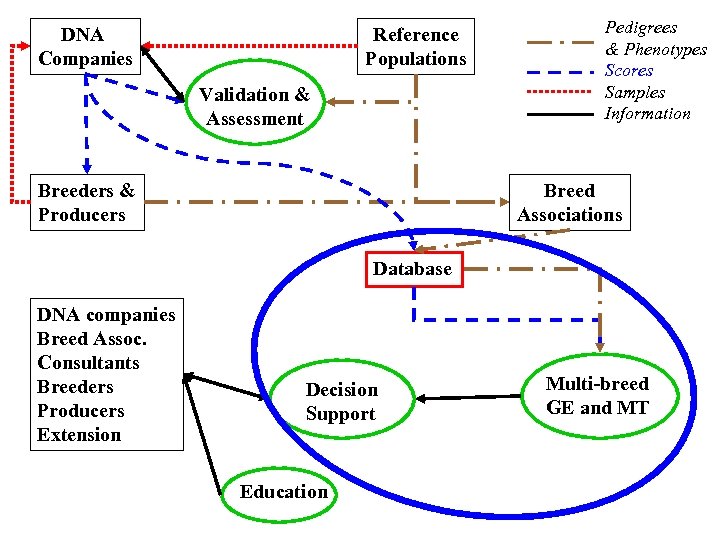 DNA Companies Reference Populations Validation & Assessment Breeders & Producers Pedigrees & Phenotypes Scores Samples Information Breed Associations Database DNA companies Breed Assoc. Consultants Breeders Producers Extension Decision Support Education Multi-breed GE and MT
 In closing. . . …. . p DNA technologies have always offered great promise. . . p DNA is always more complicated than it seems at the time p Confusion within industry is high. . .
 In closing. . . …. . p Credibility of genetic research and genetic tools at risk p Lines between research, technology transfer and education need to blur p We must walk before we can run p Good things are on the horizon