Скачать презентацию Incorporating Erasmus into the curriculum Jim Anderson j
4f8ebbfc91bebabd07835b4191035652.ppt
- Количество слайдов: 19
 Incorporating Erasmus into the curriculum Jim Anderson j. anderson@abdn. ac. uk
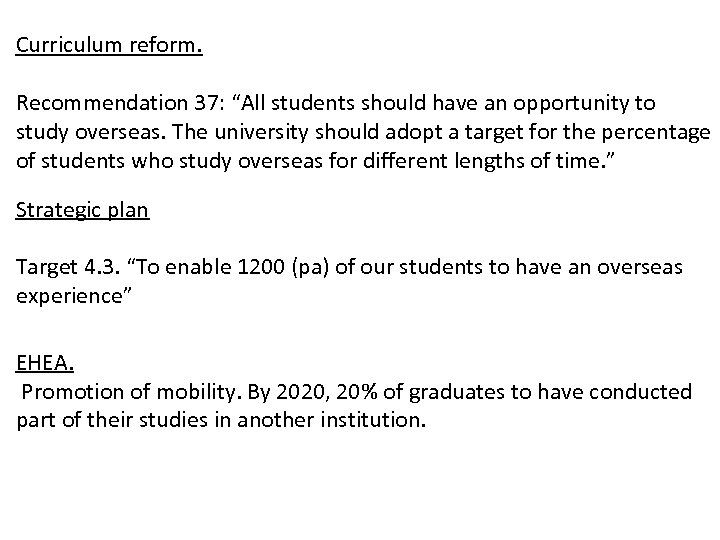 Curriculum reform. Recommendation 37: “All students should have an opportunity to study overseas. The university should adopt a target for the percentage of students who study overseas for different lengths of time. ” Strategic plan Target 4. 3. “To enable 1200 (pa) of our students to have an overseas experience” EHEA. Promotion of mobility. By 2020, 20% of graduates to have conducted part of their studies in another institution.
 Professional body accreditation BSc (Hons): RSC recognised degree, MChem: Accredited by RSC. Level 5 year not to be “bolt-on” Equivalent to MSc (SCQF level 11) Often dealt with as “one year in industry with course work by distance”
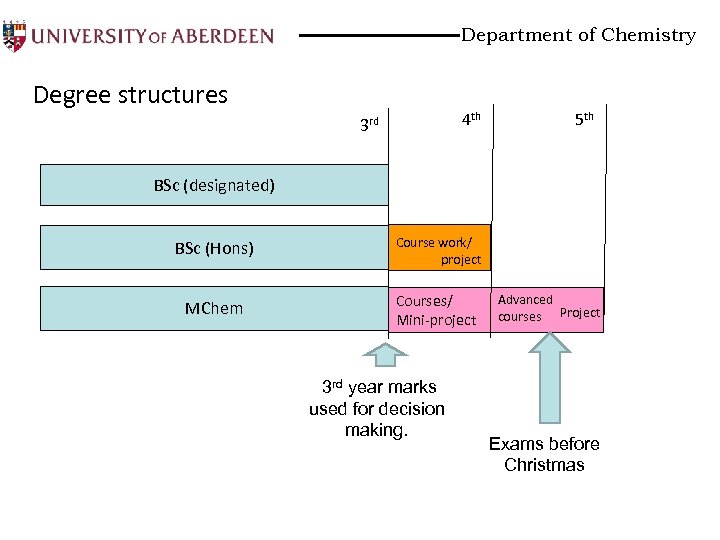 Department of Chemistry Degree structures 4 th 3 rd 5 th BSc (designated) BSc (Hons) Course work/ project MChem Courses/ Mini-project 3 rd year marks used for decision making. Advanced courses Project Exams before Christmas
 Level 5 project 4. 5 months duration (minimum placement length 3 months) 60 credits (30 ECTS), 50% of final year marks. Can be done in house, in industry, or in another UK university, but…. .
 Opportunity to embed Erasmus into the programme • Receive financial support from EU (based on number of outgoing students) • Gain transferable credits (1 ECTS = 2 Aberdeen credits). • Funding for monitoring visits
 Schedule: • Discuss potential placements with Aberdeen supervisor. • Identify project @ end of 4 th year • Oct-Dec. (yr 5) literature review. • Jan – May: project placement. • March: Monitoring visit by Aberdeen supervisor* • May: submit project report in English and defend @ UA. * Fortnightly communication (e-mail with report) with Abdn supervisor
 Assessment Overseas host completes pro forma assessment based on: level of commitment, organisational skills and ability in the lab, ability to interpret your data, and ability to integrate into the research environment (including health & safety) CM 5505 module weightings: literature review 3%, project 18%, oral presentation 9%.
 Monitoring visit • Provide Shona with approx budget for travel etc. • Travel to institute (usually March) • Visit structure. Meet student (alone) Meet supervisor/student together Visit labs Student talk Often invited to give seminar/colloquium
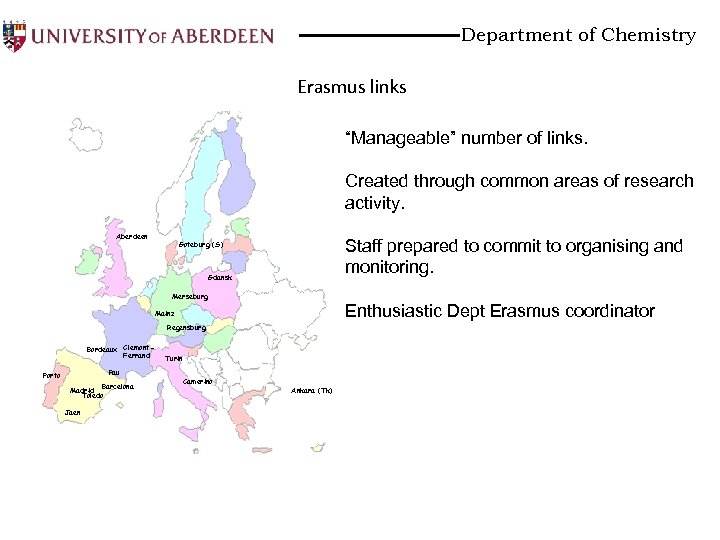 Department of Chemistry Erasmus links “Manageable” number of links. Created through common areas of research activity. Aberdeen Staff prepared to commit to organising and monitoring. Goteburg (S) Gdansk Merseburg Enthusiastic Dept Erasmus coordinator Mainz Regensburg Bordeaux Clemont. Ferrand Pau Porto Madrid Barcelona Toledo Jaen Turin Camerino Ankara (Tk)
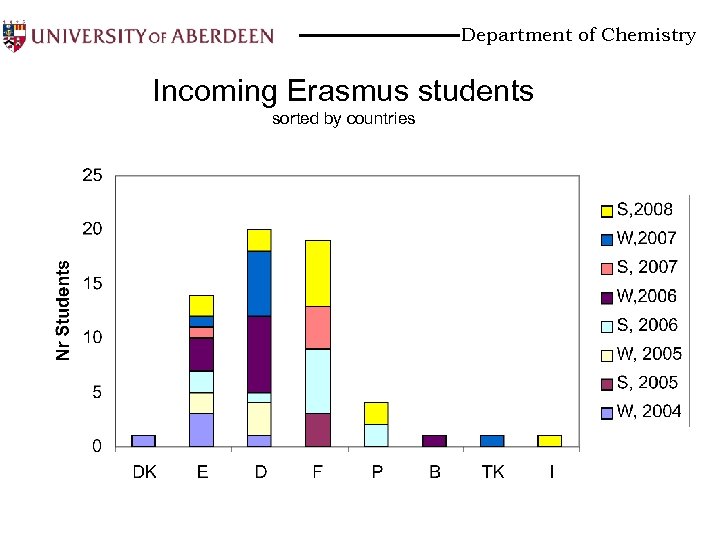 Department of Chemistry Incoming Erasmus students sorted by countries
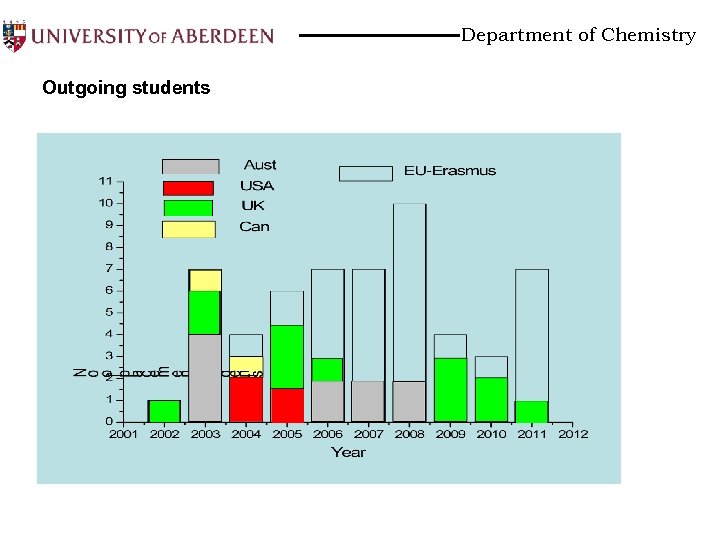 Department of Chemistry Outgoing students
 Provides opportunities to achieve many of the “graduate attributes. ” Students well-prepared for further PG study (Ph. D). Student are noticeably more mature and independent.
 Department of Chemistry Other Advantages of studying in Europe Gentle introduction to a new language Experience of a new culture Enhanced employability.
 Student testaments Janine Montero: (Universita Degli Studi in Turin, Italy). I had an amazing time! The staff in the Chemistry Department made me feel at home from the moment I arrived, helping me find my feet and settle in quickly. The atmosphere in the laboratories was also fantastic and the students I worked with were extremely friendly and supportive. In fact, I’m still in contact with several of those colleagues. . . even though it’s been four years since my exchange! Susanne Muller (Chambers, Gothenburg, Sweden) “I enjoyed EVERY aspect of my time abroad – it was the best time of my life and an experience I wouldn’t have want to miss. Studying abroad was the best decision of my life – meeting new people from different cultures, researching in a top-class research centre and living in a exciting city, what more could I want from an Erasmus exchange? It is a Once-In-A-Lifetime opportunity NOT to miss and I would highly recommend it to anyone. ” Laura Scott (Universitè de Bordeaux, France) I spent 5 months in 2006 as part of the research group of Dr Brigitte Bibal. Having gone with very little French I improved immensely in the time I was there and the experience of living in a different country always provides a talking point on my CV.
 INTERNAL TEACHING REVIEW, April 2010 The Department was commended for the placements undertaken from January to May of level 5 of the MChem degree programmes. It was clear that academic staff took care to prepare students for the placements by requiring them to do a literature review in the first half-session of the year. A member of staff, normally the student’s supervisor, visited the student on site during the placement. The level of support offered to the students was good and staff reported that students derived considerable benefit from the experience. That view was confirmed by students who had clearly valued the opportunity to gain experience in a different laboratory.
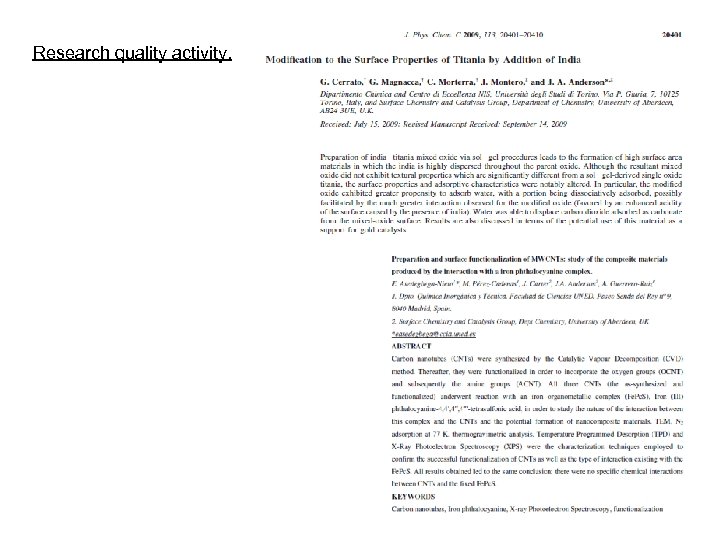 Research quality activity.
 Positives so far. . . Programme functions smoothly and is recognised in a positive manner by assessors, students and accrediting bodies. Managed to convince students of advantages of placement in Europe cf USA etc Contributes (in a small way) to university targets. Still to be done. . Increase proportion of MChem : BSc (Hons) students without compromising quality