


 Скачать презентацию Inclusive City Services Using GIS and Community Planning
16b0e90a28247680285c30d61b91c31e.ppt
- Количество слайдов: 19
 Inclusive City Services: Using GIS and Community Planning World Urban Forum Rio de Janeiro March, 2010 Brian English Country Director CHF International-India
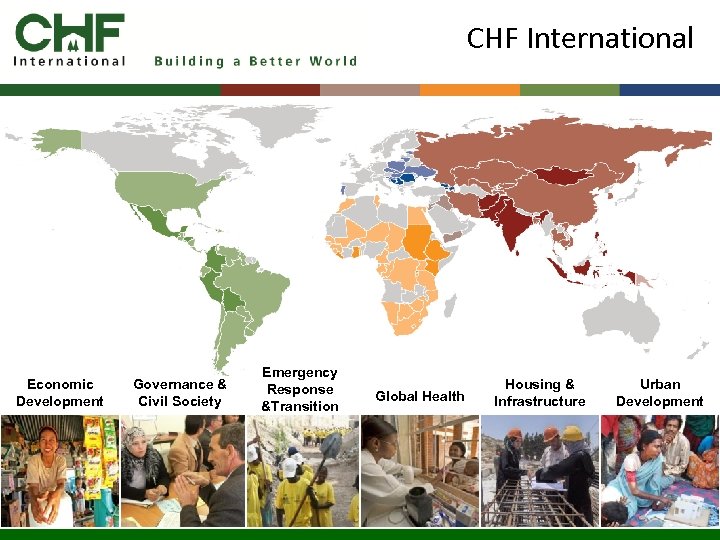 CHF International Economic Development Governance & Civil Society Emergency Response &Transition Global Health Housing & Infrastructure Urban Development
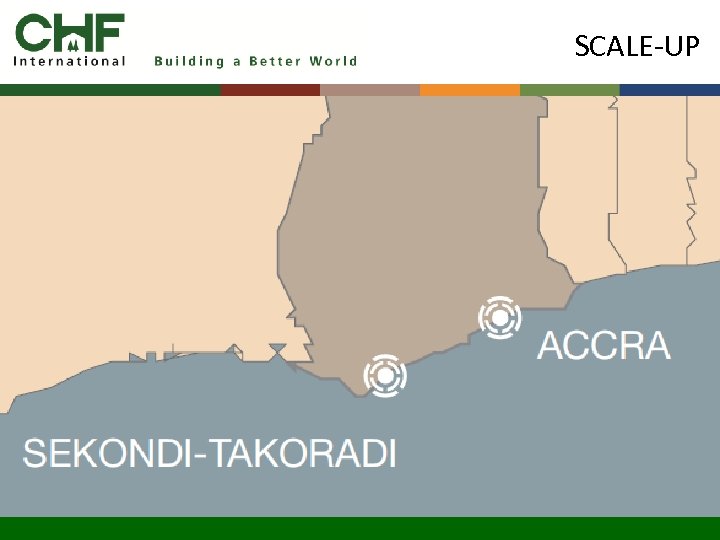 SCALE-UP
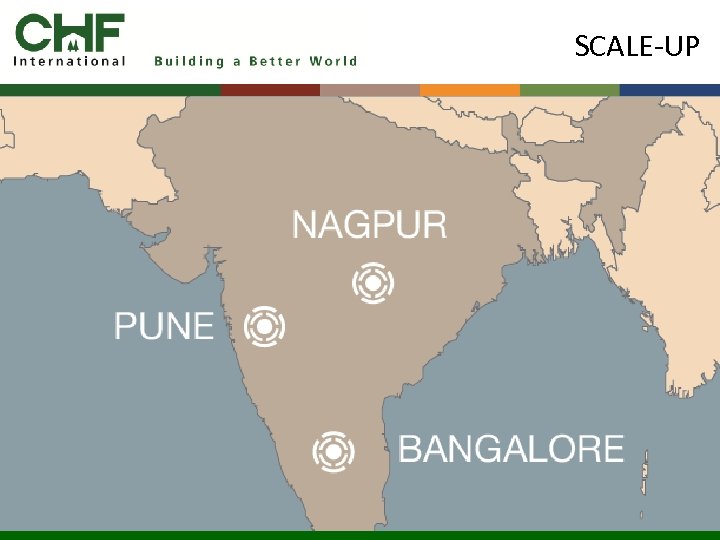 SCALE-UP
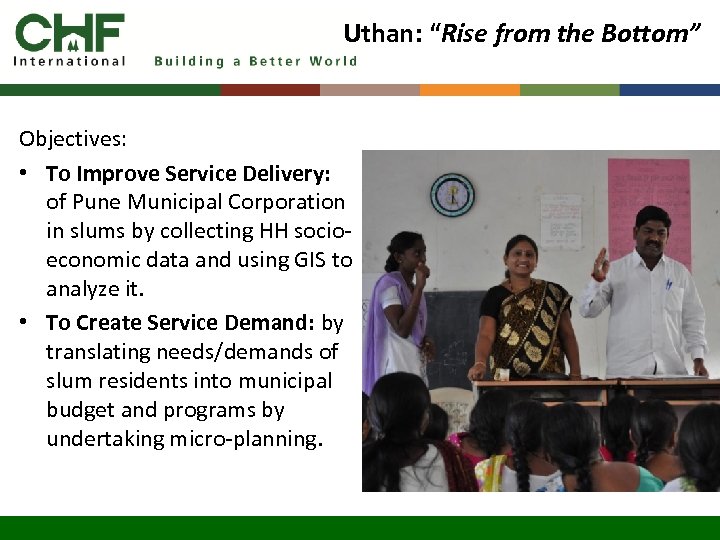 Uthan: “Rise from the Bottom” Objectives: • To Improve Service Delivery: of Pune Municipal Corporation in slums by collecting HH socioeconomic data and using GIS to analyze it. • To Create Service Demand: by translating needs/demands of slum residents into municipal budget and programs by undertaking micro-planning.
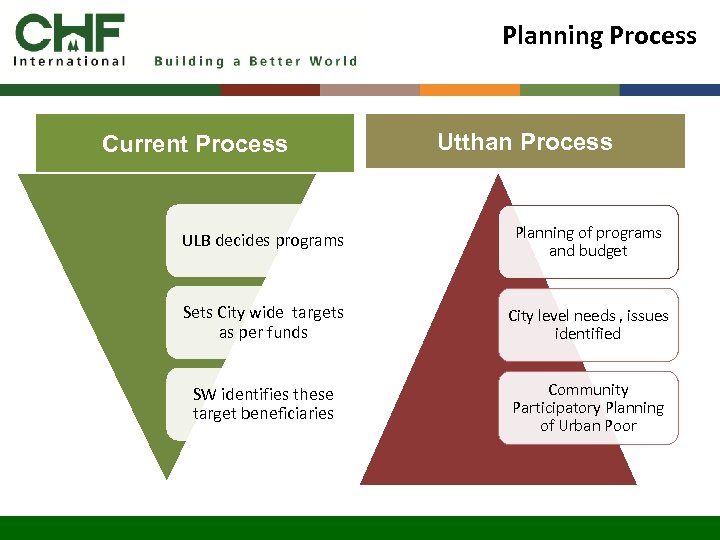 Planning Process Current Process Utthan Process ULB decides programs Planning of programs and budget Sets City wide targets as per funds City level needs , issues identified SW identifies these target beneficiaries Community Participatory Planning of Urban Poor
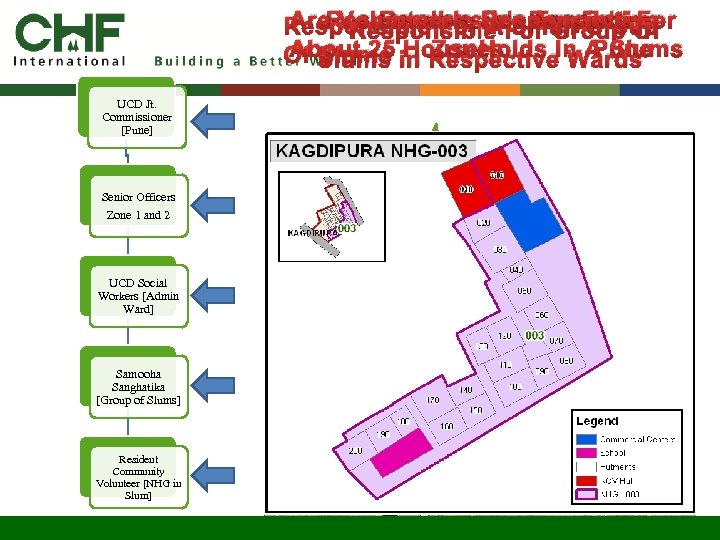 Are. Responsible Of Volunteers, A For Group For Responsible For Group Responsible For Respective Responsible Small Entire About 25 House. Holds Wards Zones Pune Of Slums in Respective. In A Slums UCD Jt. Commissioner [Pune] Senior Officers Zone 1 and 2 UCD Social Workers [Admin Ward] Samooha Sanghatika [Group of Slums] Resident Community Volunteer [NHG in Slum] Zone 1 Zone 2
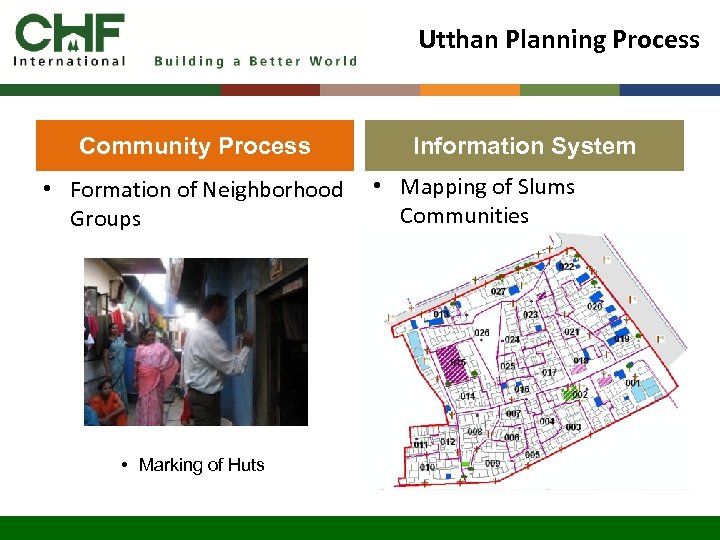 Utthan Planning Process Community Process • Formation of Neighborhood Groups • Marking of Huts Information System • Mapping of Slums Communities
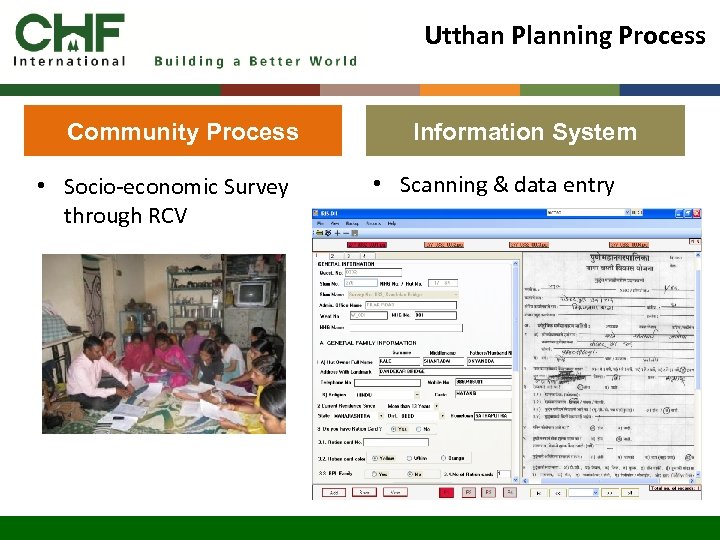 Utthan Planning Process Community Process • Socio-economic Survey through RCV Information System • Scanning & data entry
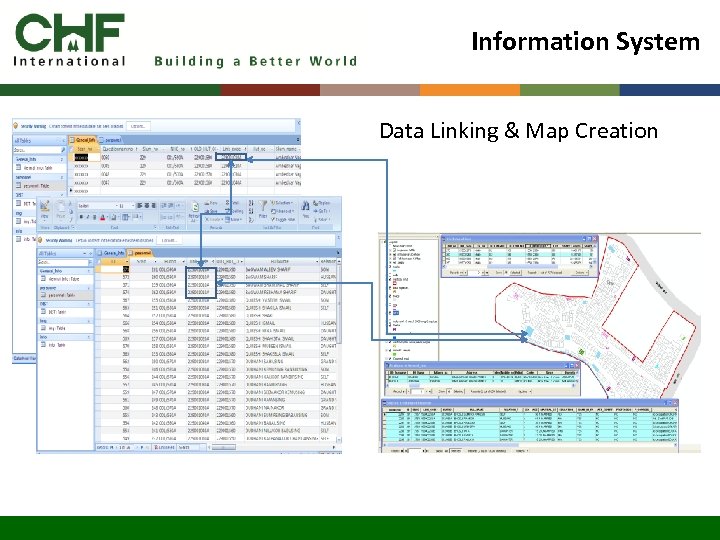 Information System Data Linking & Map Creation
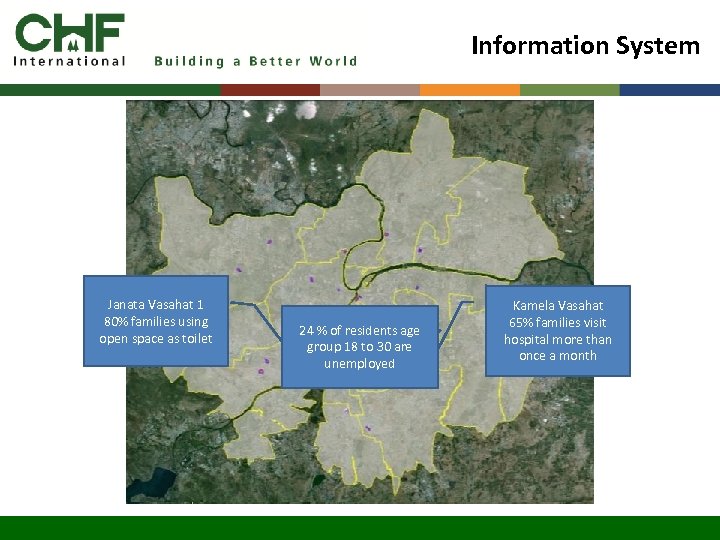 Information System Janata Vasahat 1 80% families using open space as toilet 24 % of residents age group 18 to 30 are unemployed Kamela Vasahat 65% families visit hospital more than once a month
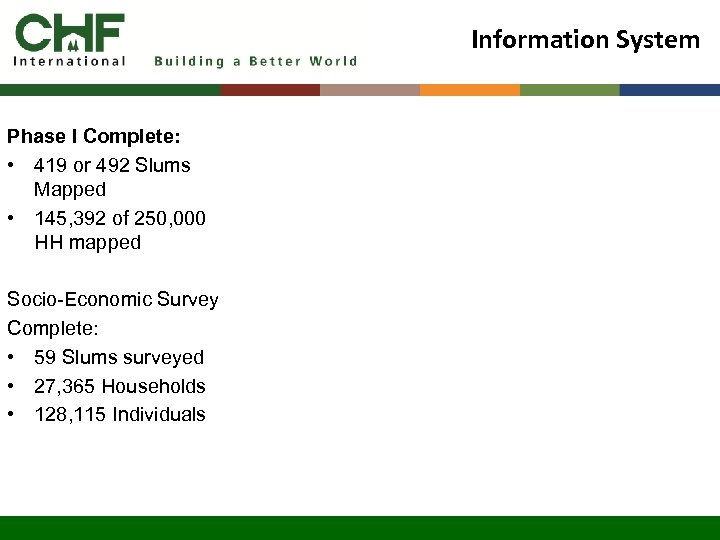 Information System Phase I Complete: • 419 or 492 Slums Mapped • 145, 392 of 250, 000 HH mapped Socio-Economic Survey Complete: • 59 Slums surveyed • 27, 365 Households • 128, 115 Individuals
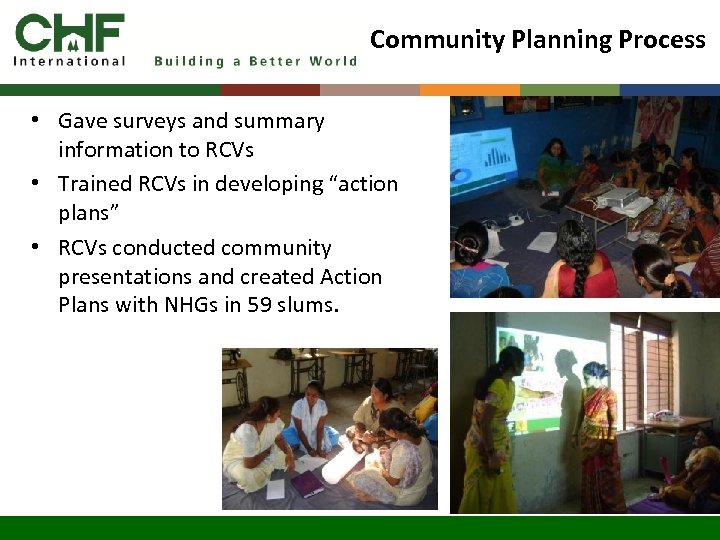 Community Planning Process • Gave surveys and summary information to RCVs • Trained RCVs in developing “action plans” • RCVs conducted community presentations and created Action Plans with NHGs in 59 slums.
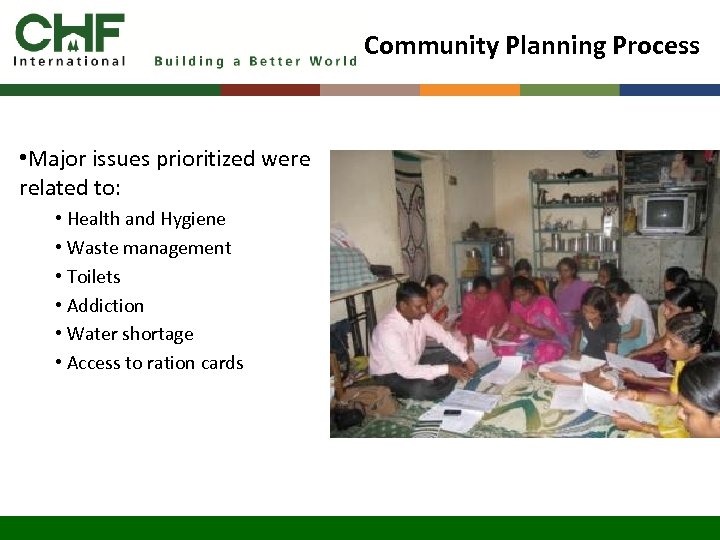 Community Planning Process • Major issues prioritized were related to: • Health and Hygiene • Waste management • Toilets • Addiction • Water shortage • Access to ration cards
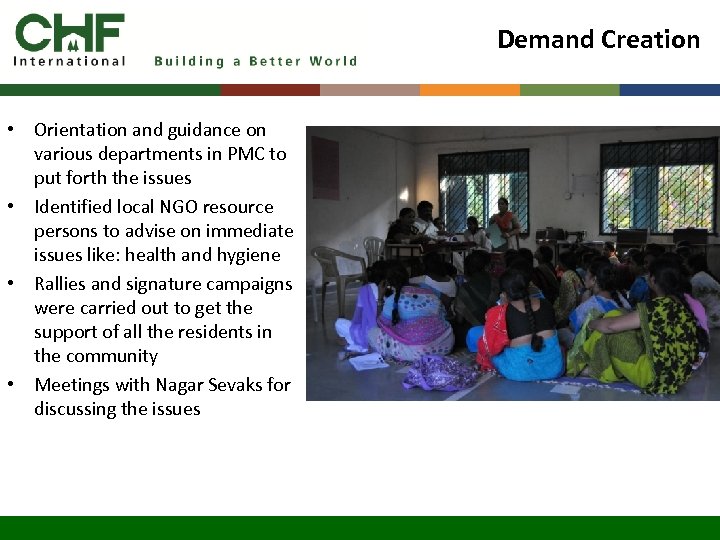 Demand Creation • Orientation and guidance on various departments in PMC to put forth the issues • Identified local NGO resource persons to advise on immediate issues like: health and hygiene • Rallies and signature campaigns were carried out to get the support of all the residents in the community • Meetings with Nagar Sevaks for discussing the issues
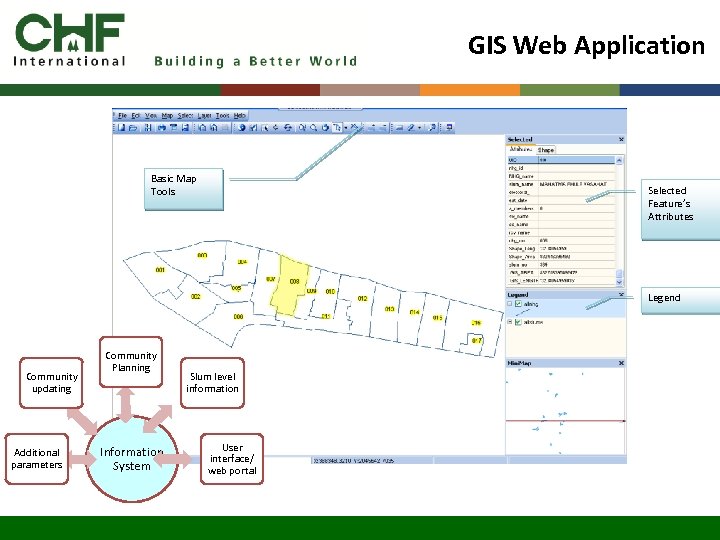 GIS Web Application Basic Map Tools Selected Feature’s Attributes Legend Community updating Additional parameters Community Planning Information System Slum level information User interface/ web portal
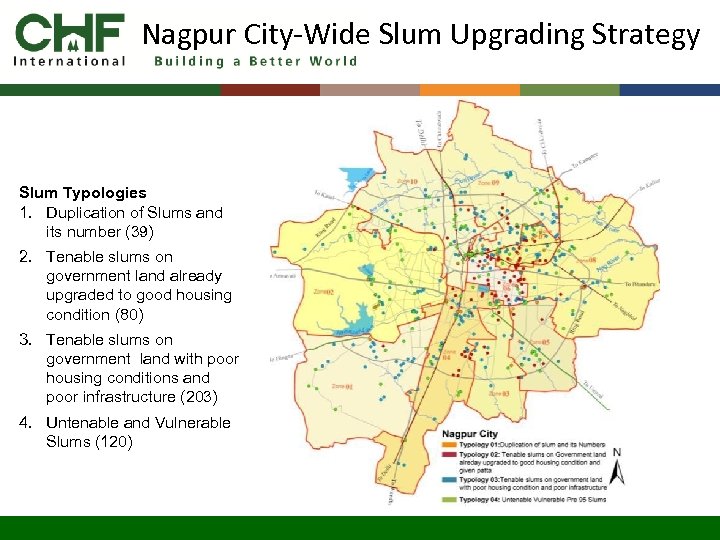 Nagpur City-Wide Slum Upgrading Strategy Slum Typologies 1. Duplication of Slums and its number (39) 2. Tenable slums on government land already upgraded to good housing condition (80) 3. Tenable slums on government land with poor housing conditions and poor infrastructure (203) 4. Untenable and Vulnerable Slums (120)
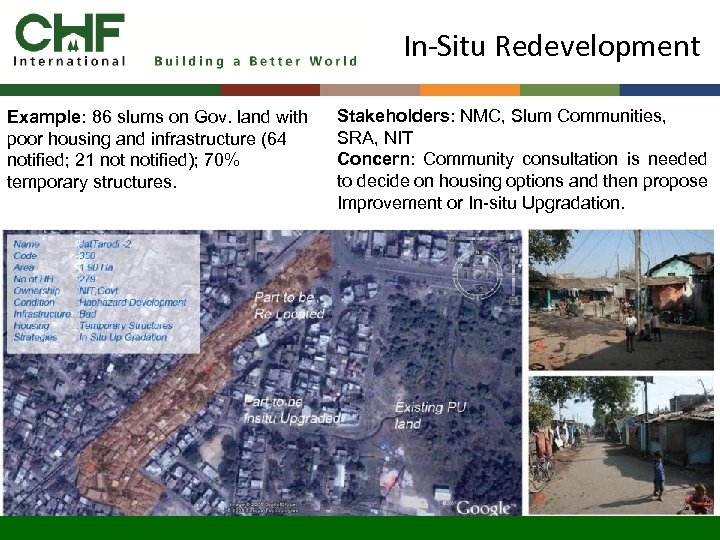 In-Situ Redevelopment Example: 86 slums on Gov. land with poor housing and infrastructure (64 notified; 21 notified); 70% temporary structures. Stakeholders: NMC, Slum Communities, SRA, NIT Concern: Community consultation is needed to decide on housing options and then propose Improvement or In-situ Upgradation.
 Thank You