


 Скачать презентацию INAIL- Department of Occupational and Environmental Medicine Epidemiology
837da5c7bb106443ec49c6ff9017ad4c.ppt
- Количество слайдов: 22
 INAIL- Department of Occupational and Environmental Medicine, Epidemiology and Hygiene. Monte Porzio Catone - Rome - Italy Urine sediment as DNA source in the study of susceptibility biomarkers Pieranna Chiarella, Ph. D
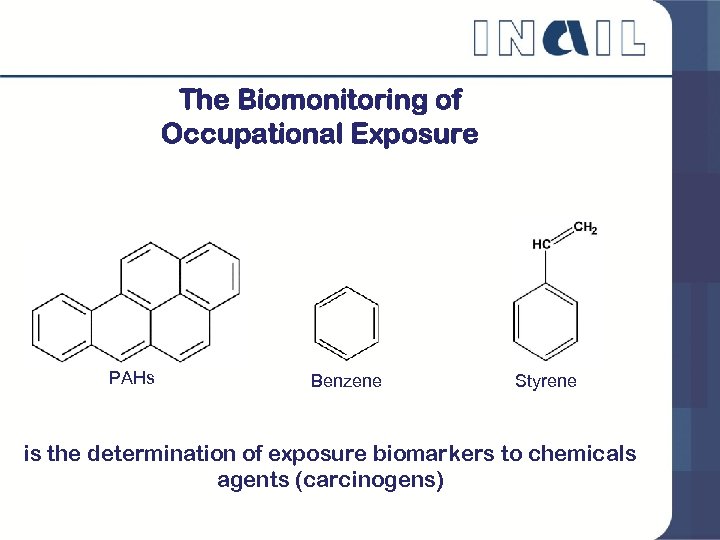 The Biomonitoring of Occupational Exposure PAHs Benzene Styrene is the determination of exposure biomarkers to chemicals agents (carcinogens)
 Human Biomonitoring & Biomarkers Risk assessment is based mainly on the measure of dose biomarker, supported by effect and susceptibility biomarkers. 1. dose biomarkers (metabolites) 2. effect biomarkers (genotoxicity) 3. susceptibility biomarkers (gene polymorphisms)
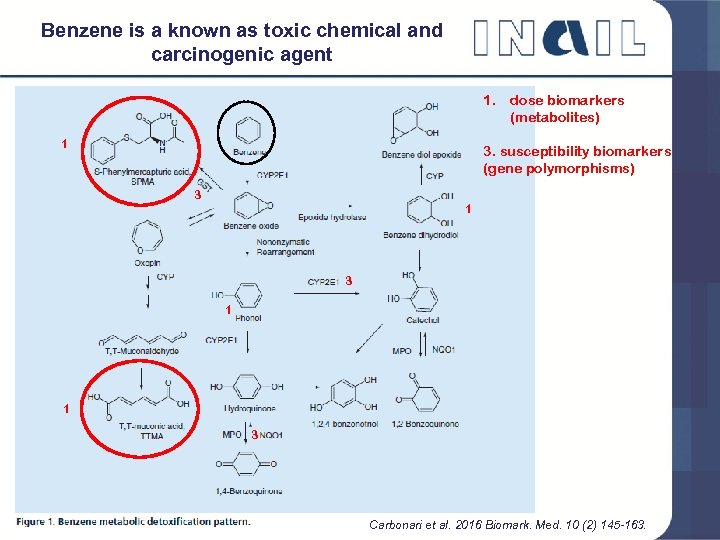 Benzene is a known as toxic chemical and carcinogenic agent 1. dose biomarkers (metabolites) 1 3. susceptibility biomarkers (gene polymorphisms) 3 1 1 3 Carbonari et al. 2016 Biomark. Med. 10 (2) 145 -163.
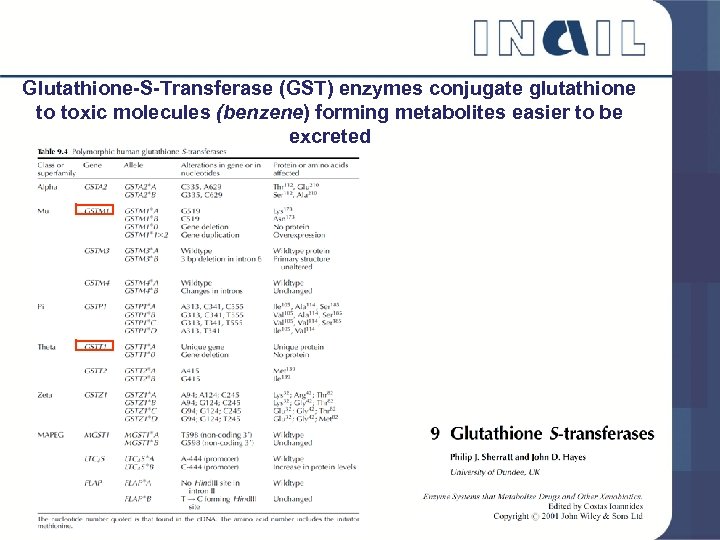 Glutathione-S-Transferase (GST) enzymes conjugate glutathione to toxic molecules (benzene) forming metabolites easier to be excreted
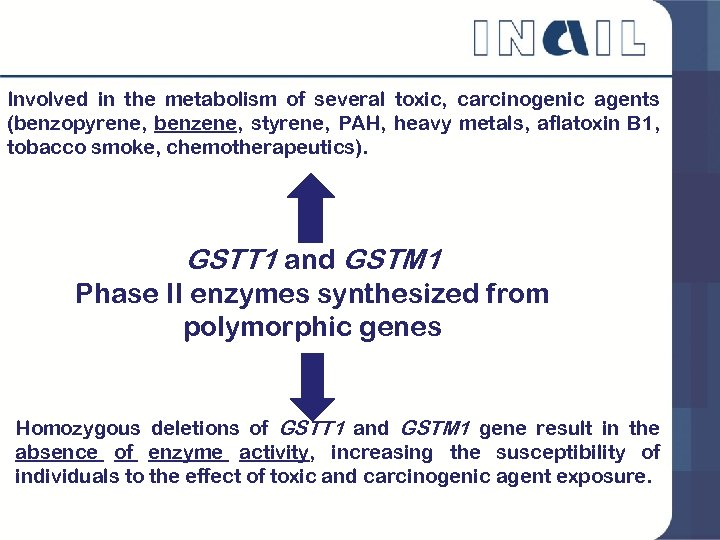 Involved in the metabolism of several toxic, carcinogenic agents (benzopyrene, benzene, styrene, PAH, heavy metals, aflatoxin B 1, tobacco smoke, chemotherapeutics). GSTT 1 and GSTM 1 Phase II enzymes synthesized from polymorphic genes Homozygous deletions of GSTT 1 and GSTM 1 gene result in the absence of enzyme activity, increasing the susceptibility of individuals to the effect of toxic and carcinogenic agent exposure.
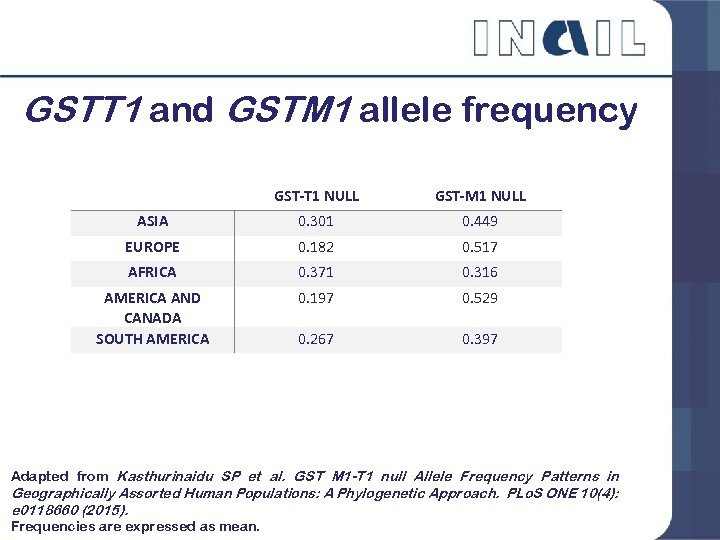 GSTT 1 and GSTM 1 allele frequency GST-T 1 NULL GST-M 1 NULL ASIA 0. 301 0. 449 EUROPE 0. 182 0. 517 AFRICA 0. 371 0. 316 AMERICA AND CANADA SOUTH AMERICA 0. 197 0. 529 0. 267 0. 397 Adapted from Kasthurinaidu SP et al. GST M 1 -T 1 null Allele Frequency Patterns in Geographically Assorted Human Populations: A Phylogenetic Approach. PLo. S ONE 10(4): e 0118660 (2015). Frequencies are expressed as mean.
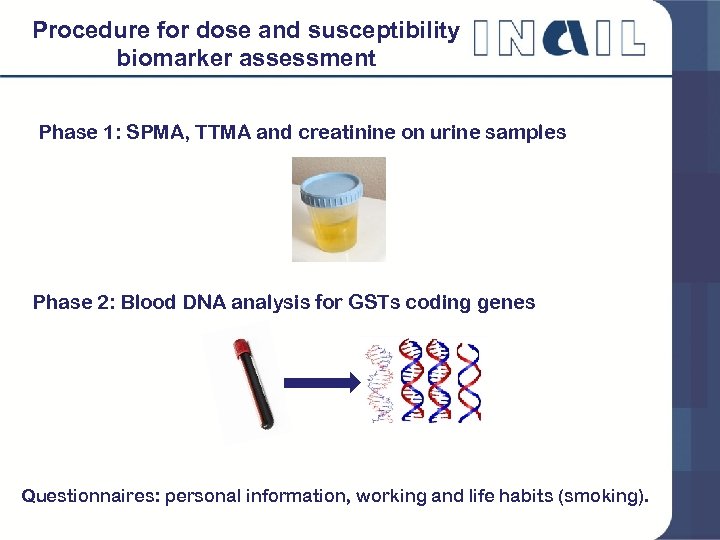 Procedure for dose and susceptibility biomarker assessment Phase 1: SPMA, TTMA and creatinine on urine samples Phase 2: Blood DNA analysis for GSTs coding genes Questionnaires: personal information, working and life habits (smoking).
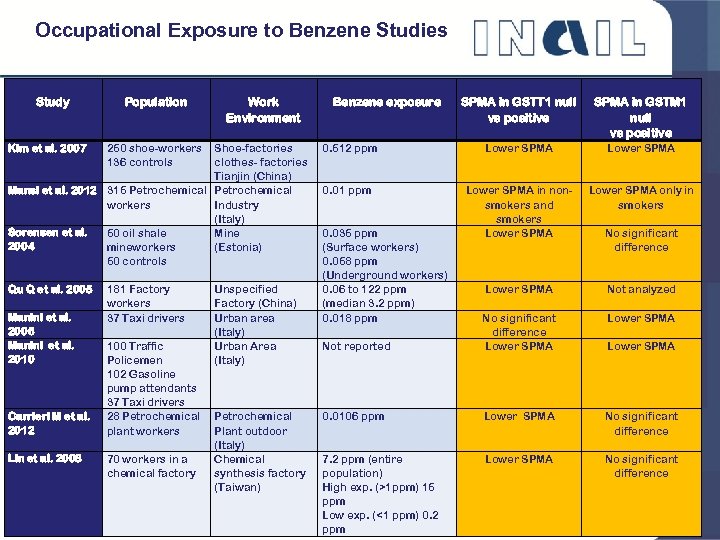 Occupational Exposure to Benzene Studies Study Kim et al. 2007 Population Work Environment Shoe-factories clothes- factories Tianjin (China) Mansi et al. 2012 315 Petrochemical workers Industry (Italy) Sorensen et al. 50 oil shale Mine 2004 mineworkers (Estonia) 50 controls Qu Q et al. 2005 Manini et al. 2006 Manini et al. 2010 Carrieri M et al. 2012 Lin et al. 2008 250 shoe-workers 136 controls 181 Factory workers 37 Taxi drivers 100 Traffic Policemen 102 Gasoline pump attendants 37 Taxi drivers 28 Petrochemical plant workers 70 workers in a chemical factory Unspecified Factory (China) Urban area (Italy) Urban Area (Italy) Petrochemical Plant outdoor (Italy) Chemical synthesis factory (Taiwan) Benzene exposure SPMA in GSTT 1 null vs positive SPMA in GSTM 1 null vs positive 0. 512 ppm Lower SPMA 0. 01 ppm Lower SPMA in nonsmokers and smokers Lower SPMA only in smokers Lower SPMA Not analyzed Lower SPMA Not reported No significant difference Lower SPMA 0. 0106 ppm Lower SPMA No significant difference 7. 2 ppm (entire population) High exp. (>1 ppm) 15 ppm Low exp. (<1 ppm) 0. 2 ppm Lower SPMA No significant difference 0. 035 ppm (Surface workers) 0. 058 ppm (Underground workers) 0. 06 to 122 ppm (median 3. 2 ppm) 0. 018 ppm No significant difference Lower SPMA
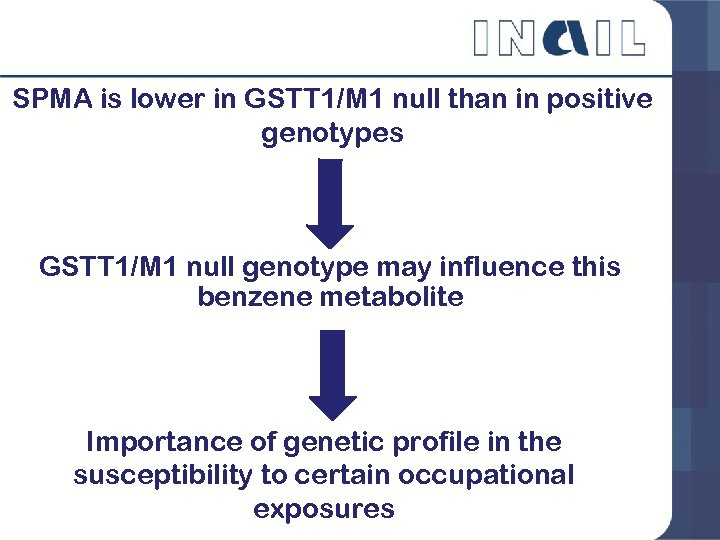 SPMA is lower in GSTT 1/M 1 null than in positive genotypes GSTT 1/M 1 null genotype may influence this benzene metabolite Importance of genetic profile in the susceptibility to certain occupational exposures
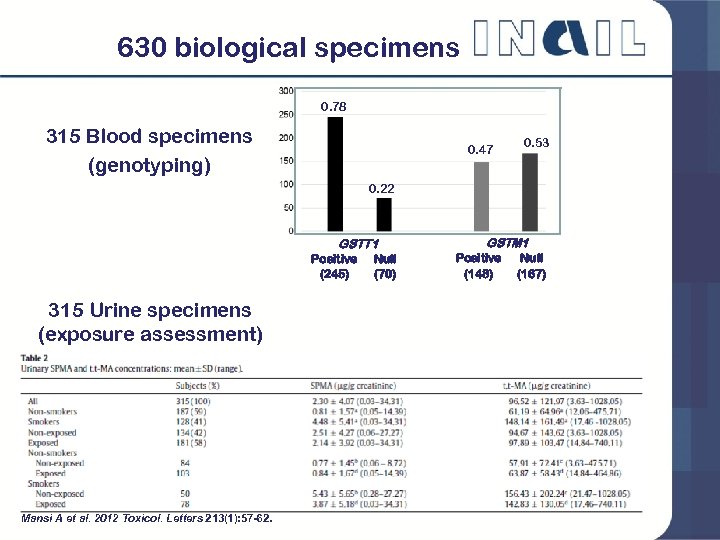 630 biological specimens 0. 78 315 Blood specimens (genotyping) 0. 47 0. 53 0. 22 GSTT 1 Positive (245) 315 Urine specimens (exposure assessment) Mansi A et al. 2012 Toxicol. Letters 213(1): 57 -62. Null (70) GSTM 1 Positive (148) Null (167)
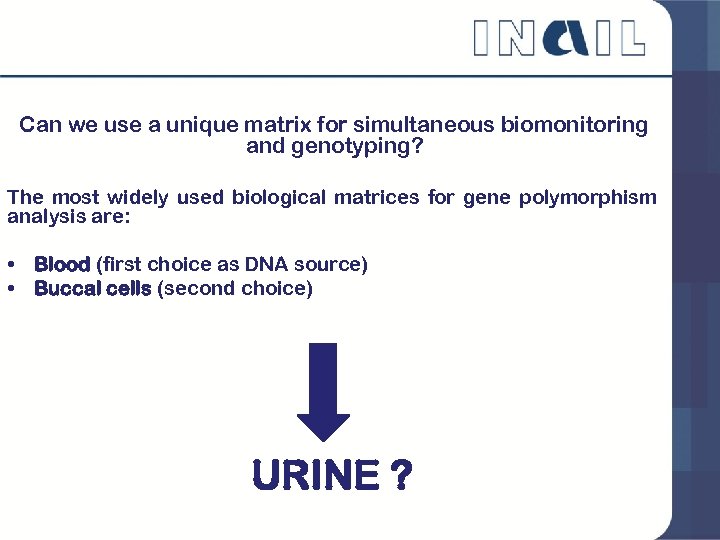 Can we use a unique matrix for simultaneous biomonitoring and genotyping? The most widely used biological matrices for gene polymorphism analysis are: • Blood (first choice as DNA source) • Buccal cells (second choice) URINE ?
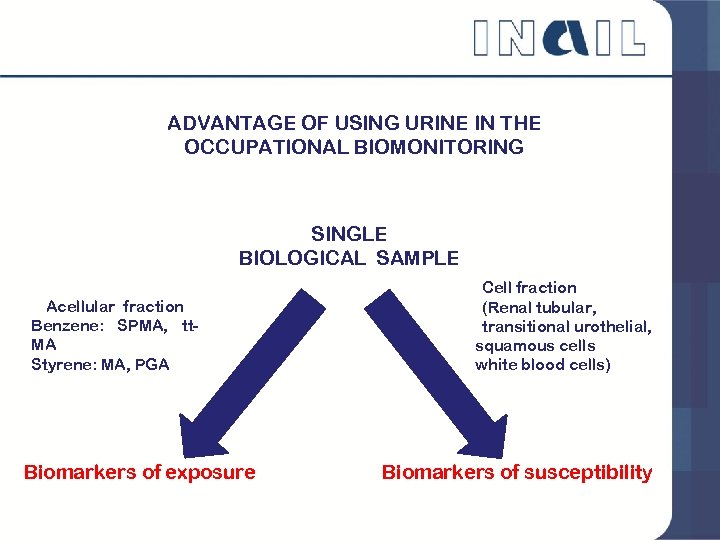 ADVANTAGE OF USING URINE IN THE OCCUPATIONAL BIOMONITORING SINGLE BIOLOGICAL SAMPLE Acellular fraction Benzene: SPMA, tt. MA Styrene: MA, PGA Biomarkers of exposure Cell fraction (Renal tubular, transitional urothelial, squamous cells white blood cells) Biomarkers of susceptibility
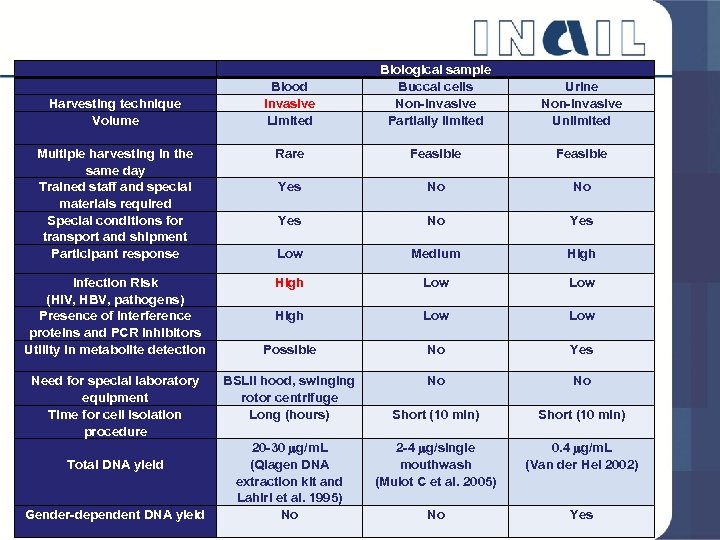 Blood Invasive Limited Biological sample Buccal cells Non-invasive Partially limited Urine Non-invasive Unlimited Multiple harvesting in the same day Trained staff and special materials required Special conditions for transport and shipment Participant response Rare Feasible Yes No No Yes Low Medium High Infection Risk (HIV, HBV, pathogens) Presence of interference proteins and PCR inhibitors Utility in metabolite detection High Low Low Possible No Yes BSLII hood, swinging rotor centrifuge Long (hours) No No Short (10 min) 2 -4 mg/single mouthwash (Mulot C et al. 2005) 0. 4 mg/m. L (Van der Hel 2002) No Yes Harvesting technique Volume Need for special laboratory equipment Time for cell isolation procedure Total DNA yield Gender-dependent DNA yield 20 -30 mg/m. L (Qiagen DNA extraction kit and Lahiri et al. 1995) No
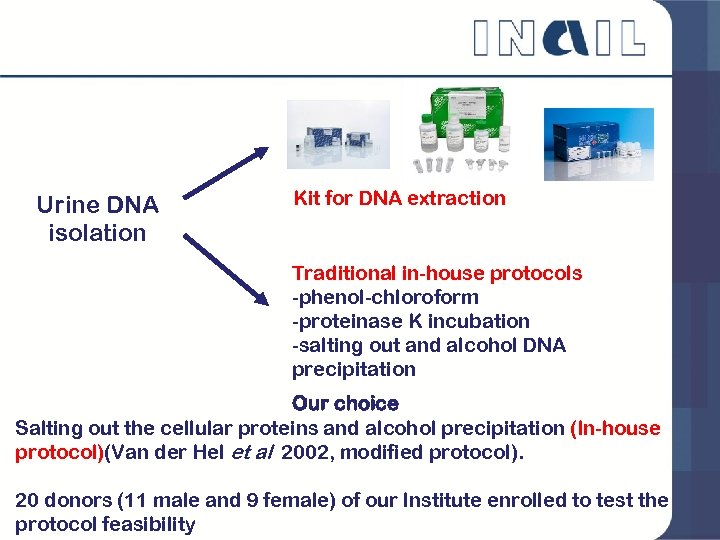 Urine DNA isolation Kit for DNA extraction Traditional in-house protocols -phenol-chloroform -proteinase K incubation -salting out and alcohol DNA precipitation Our choice Salting out the cellular proteins and alcohol precipitation (In-house protocol)(Van der Hel et al 2002, modified protocol). 20 donors (11 male and 9 female) of our Institute enrolled to test the protocol feasibility
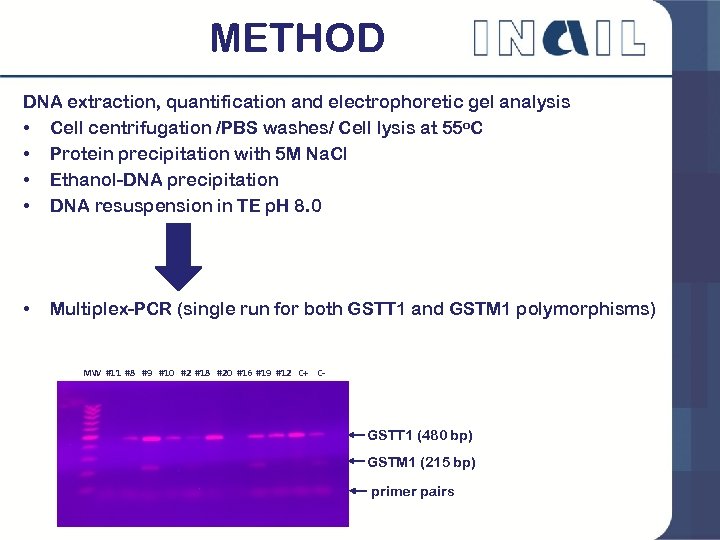 METHOD DNA extraction, quantification and electrophoretic gel analysis • Cell centrifugation /PBS washes/ Cell lysis at 55 o. C • Protein precipitation with 5 M Na. Cl • Ethanol-DNA precipitation • DNA resuspension in TE p. H 8. 0 • Multiplex-PCR (single run for both GSTT 1 and GSTM 1 polymorphisms) MW #11 #8 #9 #10 #2 #18 #20 #16 #19 #12 C+ C- GSTT 1 (480 bp) GSTM 1 (215 bp) primer pairs
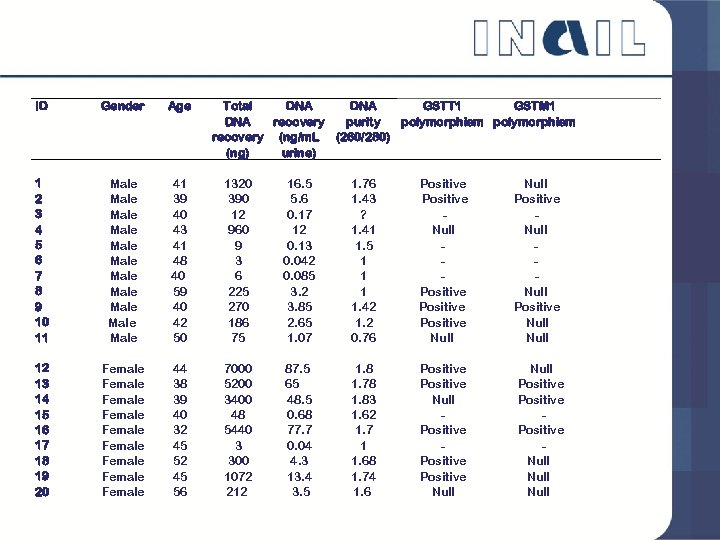 ID Gender Age 1 2 3 4 5 6 7 8 9 10 11 12 13 14 15 16 17 18 19 20 Male Male Male Female Female Female 41 39 40 43 41 48 40 59 40 42 50 44 38 39 40 32 45 56 Total DNA GSTT 1 GSTM 1 DNA recovery purity polymorphism recovery (ng/m. L (260/280) (ng) urine) 1320 16. 5 1. 76 Positive Null 390 5. 6 1. 43 Positive 12 0. 17 ? 960 12 1. 41 Null 9 0. 13 1. 5 - 3 0. 042 1 - 6 0. 085 1 225 3. 2 1 Positive Null 270 3. 85 1. 42 Positive 186 2. 65 1. 2 Positive Null 75 1. 07 0. 76 Null 7000 87. 5 1. 8 Positive Null 5200 65 1. 78 Positive 3400 48. 5 1. 83 Null Positive 48 0. 68 1. 62 5440 77. 7 1. 7 Positive 3 0. 04 1 300 4. 3 1. 68 Positive Null 1072 13. 4 1. 74 Positive Null 212 3. 5 1. 6 Null
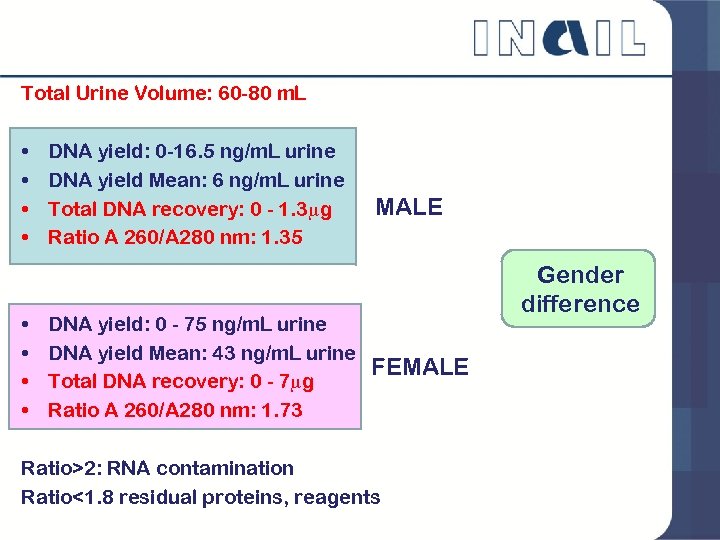 Total Urine Volume: 60 -80 m. L • • DNA yield: 0 -16. 5 ng/m. L urine DNA yield Mean: 6 ng/m. L urine Total DNA recovery: 0 - 1. 3 mg Ratio A 260/A 280 nm: 1. 35 DNA yield: 0 - 75 ng/m. L urine DNA yield Mean: 43 ng/m. L urine Total DNA recovery: 0 - 7 mg Ratio A 260/A 280 nm: 1. 73 MALE Gender difference FEMALE Ratio>2: RNA contamination Ratio<1. 8 residual proteins, reagents
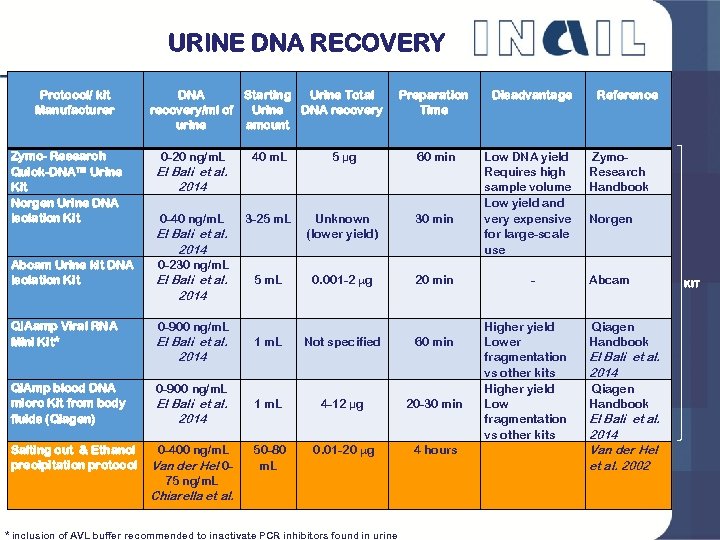 URINE DNA RECOVERY Protocol/ kit Manufacturer Zymo- Research Quick-DNA™ Urine Kit Norgen Urine DNA Isolation Kit DNA Starting Urine Total recovery/ml of Urine DNA recovery urine amount 0 -20 ng/m. L Preparation Time 40 m. L 5 μg 60 min 3 -25 m. L Unknown (lower yield) 30 min 5 m. L 0. 001 -2 mg 20 min 1 m. L Not specified 60 min El Bali et al. 2014 0 -40 ng/m. L El Bali et al. 2014 Abcam Urine kit DNA Isolation Kit 0 -230 ng/m. L QIAamp Viral RNA Mini Kit* 0 -900 ng/m. L Qi. Amp blood DNA micro Kit from body fluids (Qiagen) Salting out & Ethanol precipitation protocol 0 -900 ng/m. L El Bali et al. 2014 0 -400 ng/m. L Van der Hel 075 ng/m. L 1 m. L 50 -80 m. L 4 -12 μg 0. 01 -20 mg Chiarella et al. * inclusion of AVL buffer recommended to inactivate PCR inhibitors found in urine 20 -30 min 4 hours Disadvantage Low DNA yield Requires high sample volume Low yield and very expensive for large-scale use - Higher yield Lower fragmentation vs other kits Higher yield Low fragmentation vs other kits Reference Zymo. Research Handbook Norgen Abcam Qiagen Handbook El Bali et al. 2014 Van der Hel et al. 2002 KIT
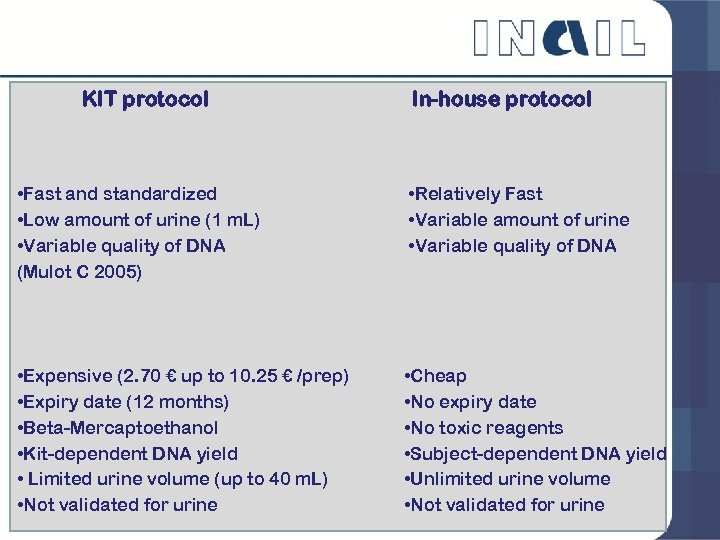 KIT protocol In-house protocol • Fast and standardized • Low amount of urine (1 m. L) • Variable quality of DNA (Mulot C 2005) • Relatively Fast • Variable amount of urine • Variable quality of DNA • Expensive (2. 70 € up to 10. 25 € /prep) • Expiry date (12 months) • Beta-Mercaptoethanol • Kit-dependent DNA yield • Limited urine volume (up to 40 m. L) • Not validated for urine • Cheap • No expiry date • No toxic reagents • Subject-dependent DNA yield • Unlimited urine volume • Not validated for urine
 CONCLUSION √ Urine sample can be used to assess both exposure and susceptibility biomarkers, giving opportunity for large-scale-studies. √ In-house urine DNA extraction protocols can be used as alternative to expensive kit. √ Association of gene polymorphisms with altered metabolite production following exposure to toxic chemicals may help to identify susceptible genotypes and to protect categories of workers with higher exposure risk. In-house protocol Weakness √ Individual and gender variability of DNA √ Low DNA yield/quality in male samples Implementation √ Increase DNA yield -multiple sampling: harvest urine at the start and end of work-shift -pool cell fractions of the same subject √ Possibility of extending the analysis to a wider panel of enzymes and large cohort of workers
 ACKNOWLEDGEMENTS Carbonari D, Capone P, Cavallo D, Iavicoli S , Mansi A, Sisto R, Tranfo G. INAIL DIMEILA Research Staff Members