 Скачать презентацию in the Roaring Twenties 1919 -1929 Urban
80a121970c97298850059fa71942dabc.ppt
- Количество слайдов: 68



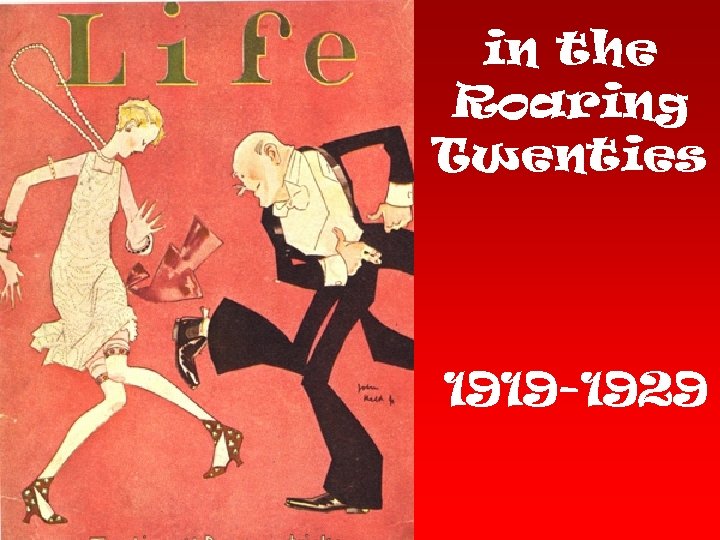
in the Roaring Twenties 1919 -1929
Urban Growth • Urban growth drove up land values and reshaped the skyline of America’s cities; forced architects to build “up” • Launched first great era of skyscrapers • By 1929, U. S. had more than 377 buildings with 20 or more floors • 1920 Census: more Americans lived in cities than rural areas for first time • 3. 2 million immigrants poured into the country and cities between 1919 and 1921
Urban Growth • Racial composition of cities also changed: – 1910: 75% of African Americans lived on farms and 90% lived in the South – Great Migration during World War I – 1. 5 million moved to cities during 1920 s to escape sharecropping and debt peonage – Most settled in New York, Philadelphia, Cleveland (307%), Detroit (611%), and Chicago (148%)

Urban Growth
Urban Growth • Competition for housing became a major source of friction; cities passed municipal residential segregation ordinances, white realtors refused to show houses in white areas to African Americans, and “neighborhood improvement associations” formed • Supreme Court ruled municipal resident segregation ordinances were unconstitutional in 1917 • Whites resorted to the restrictive covenant; struck down by Supreme Court in 1948 • Zoning laws offered a more subtle way of segregating cities; segregated on the basis of wealth
Urban Growth • “Black metropolises” or cities within cities began to emerge in American cities; Harlem, NYC • Racial prejudice made it impossible for African Americans to escape these new “ghettoes” • Many white middle-class, white-collar workers began moving to the suburbs made possible by streetcars and the automobile • City congestion remained a serious problem • Federal Highway Act of 1916 • Traffic signals, traffic circles, divided dual highways, cloverleaf interchanges all introduced during 1920 s
Consumer Economy
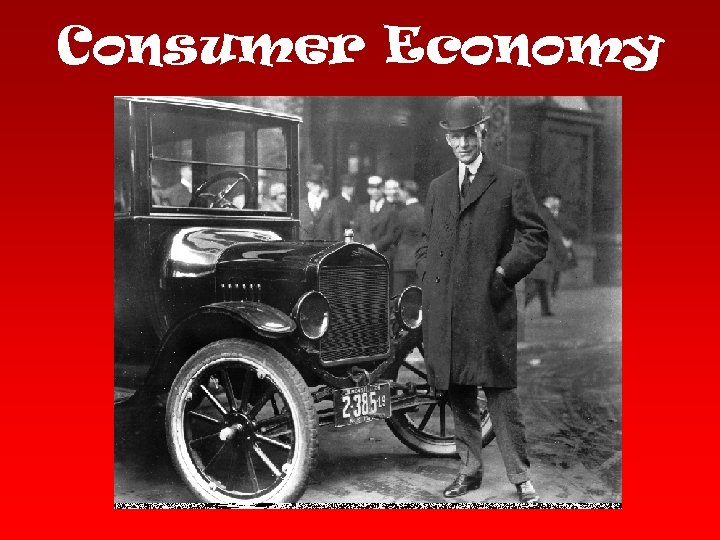
Consumer Economy • Henry Ford – Introduced automated assembly line to cars in 1913; cut production time from 12. 5 hours to 1. 5 hours per car – He also cut prices six times between 1921 and 1925; a new Model T only cost $290 in 1925 – To increase productivity, he introduced a minimum daily wage of $5 and shortened the workday to 8 hours in 1914 – In 1926, he shortened the workweek to 5 days – Logic of mass production: expanded production allows manufacturers to reduce costs and therefore increase the number of products sold, and higher wages allow workers to buy more products
Consumer Economy
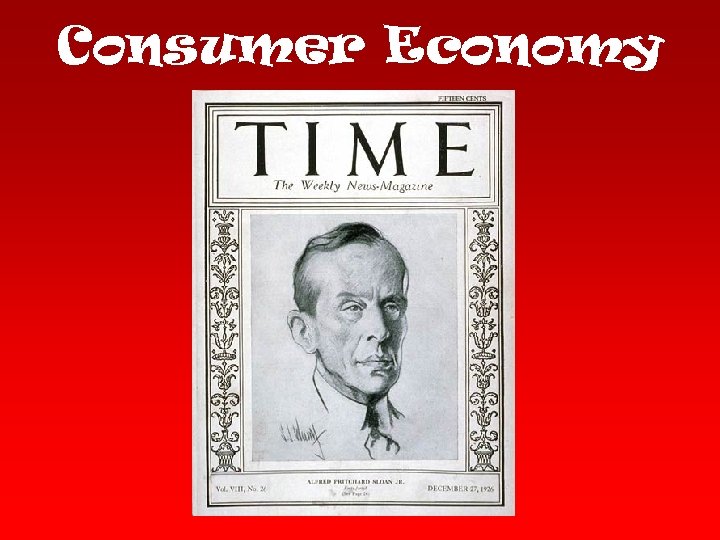
Consumer Economy • Alfred Sloan, president of General Motors (1923 -41) – “The primary object of the corporation was to make money, not just make cars. ” – Was convinced Americans were willing to pay extra for luxury and prestige – Advertised cars as symbols of wealth and status; introduced yearly model change in 1927 – Developed a series of divisions that were differienteated by status, price, and level of luxury: Chevrolet to Buick to Cadillac – Set up nation’s first national consumer credit agency, 1919 – Revealed the importance of merchandising in a modern consumer economy
Consumer Economy • Cars were the symbol of the new consumer society: – 1919, 6. 7 million cars on American roads – 1929, 27 million cars on American roads – 60% purchased cars on credit with interest rates of 30% or more • Cars revolutionized American way of life – Promoted family togetherness? – Created conflict between parents and teenagers? – “portable bedrooms”?
Consumer Economy • Automobiles also transformed American landscape – Roads and highways doubled during 1920 s – Increased government spending; $2 billion/year – Increased pollution; 30, 000 annual traffic deaths • Automobile industry stimulated national economy – By 1929 produced 12. 7 percent of manufacturing output and employed 1 of every 12 workers – Stimulated growth of steel, glass, rubber industries and gasoline stations, motor lodges, campgrounds, and hotdog stands
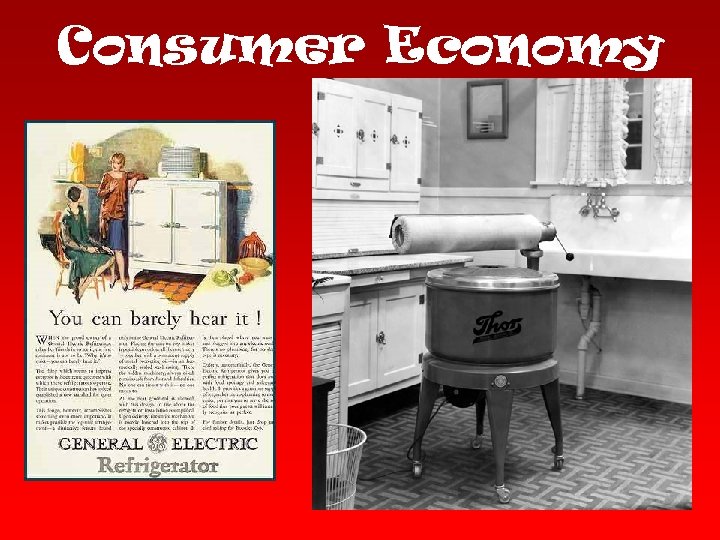
Consumer Economy • Other emblems of the consumer economy included the telephone and electricity; electrical appliances became more common in American homes (refrigerators, washing machines, vacuum cleaners, toasters, etc. ) • “Labor-saving” appliances increased standards of cleanliness and imposed new pressures on housewives • Ready-to-wear clothing was another important innovation in the consumer economy; standard sizes defined by government in World War I
Consumer Economy
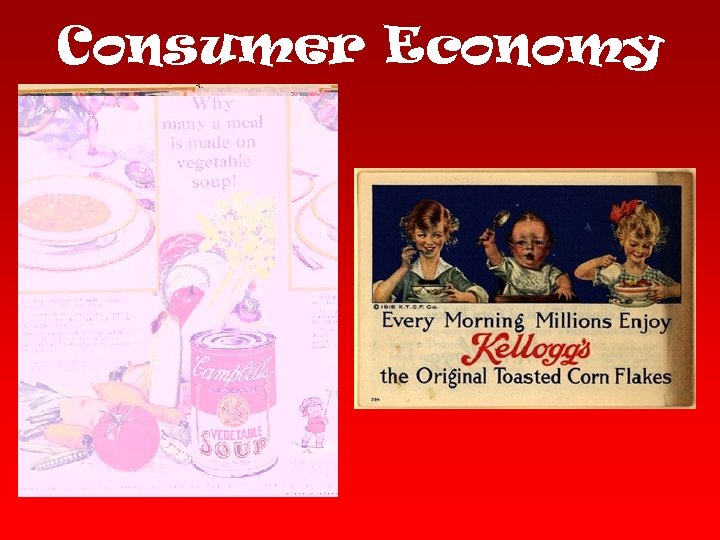
Consumer Economy • Eating habits also underwent a shift from starches (bread and potatoes) to more fruit and sugar • More processed foods; canning and freezing innovations during World War I – saved homemakers enormous amounts of time • To stimulate sales and increase profits, businesses expanded advertising, offered installment credit, and created the nation’s first regional and national chains
Consumer Economy
Consumer Economy • Advertising agencies hired psychologists – Built up name-brand identification – Created memorable slogans – Manipulated endorsements by doctors or celebrities – Appealed to consumers’ desire for prestige and status – By 1929, American companies were spending $3 billion a year on advertising – Uneeda Biscuits, first million-dollar advertising campaign
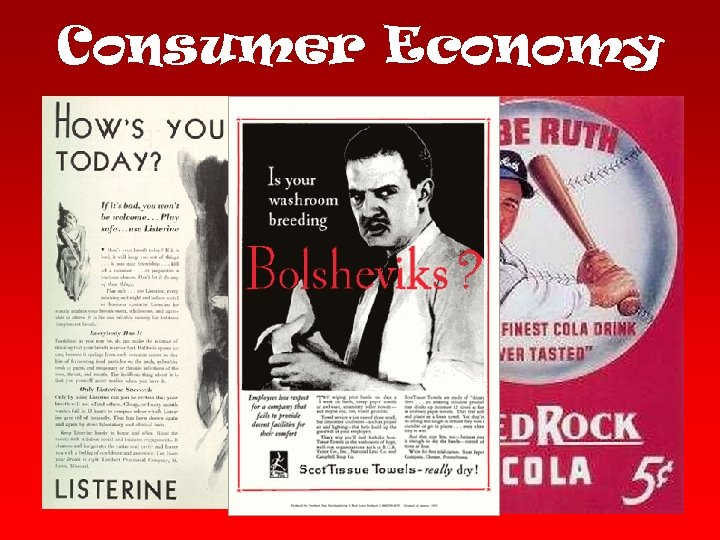
Consumer Economy
Consumer Economy • Use of installment credit soared during 1920 s: – Banks offered home mortgages for first time – 60% of all furniture and 75% of all radios were purchased on credit – New consumer society emphasized spending and borrowing over thrift and saving • Nation’s families spent a declining proportion of income on necessities, more on appliances, recreation • Older industries (textiles, railroads, steel) declined and newer industries (appliances, automobiles, aviation, chemicals, entertainment, and processed foods) surged ahead
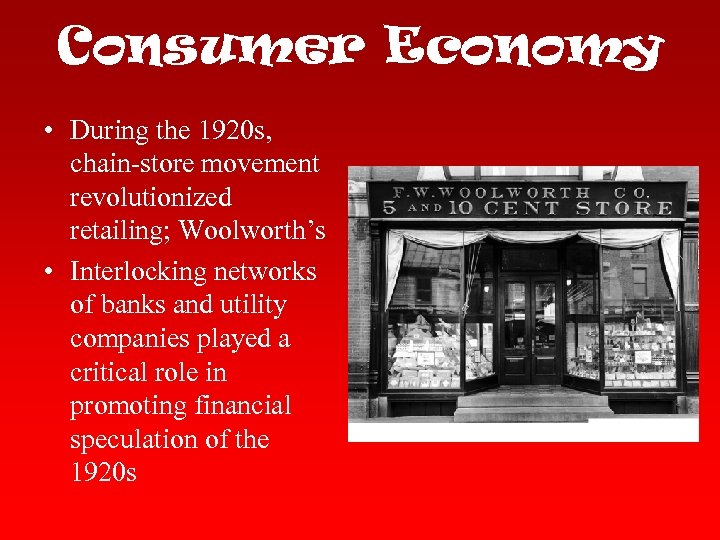
Consumer Economy • During the 1920 s, chain-store movement revolutionized retailing; Woolworth’s • Interlocking networks of banks and utility companies played a critical role in promoting financial speculation of the 1920 s
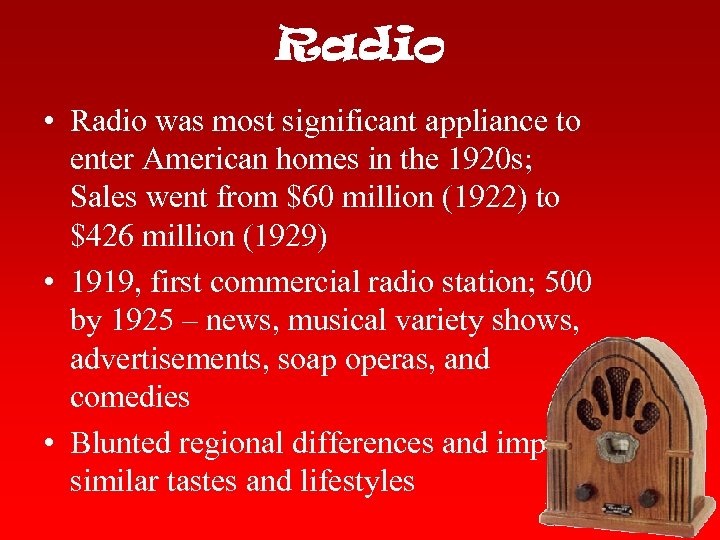
Radio • Radio was most significant appliance to enter American homes in the 1920 s; Sales went from $60 million (1922) to $426 million (1929) • 1919, first commercial radio station; 500 by 1925 – news, musical variety shows, advertisements, soap operas, and comedies • Blunted regional differences and imposed similar tastes and lifestyles
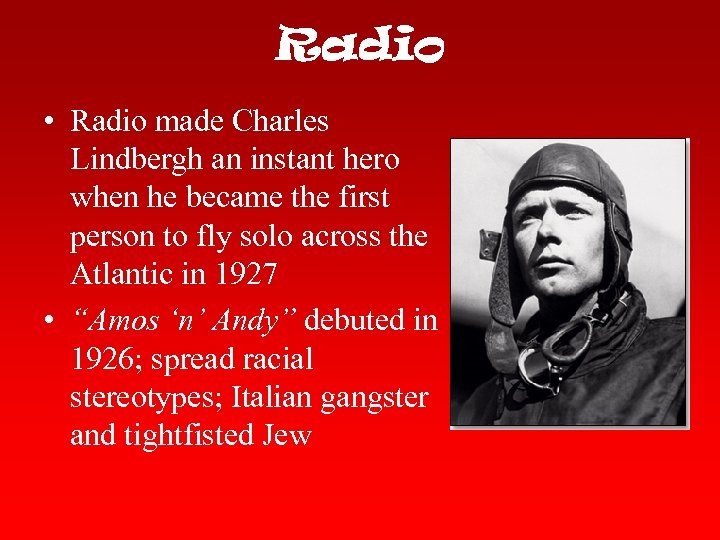
Radio • Radio made Charles Lindbergh an instant hero when he became the first person to fly solo across the Atlantic in 1927 • “Amos ‘n’ Andy” debuted in 1926; spread racial stereotypes; Italian gangster and tightfisted Jew
Phonograph • Phonograph sales surged from 190, 000 in 1923 to 5 million in 1929; replaced piano in many homes • Fueled by popularity of jazz, blues, and “hillbilly” music • “Fiddlin’ John” Carson broke “hillbilly” music into popular culture in 1923 • F. Scott Fitzgerald called the 1920 s, the “Jazz Age”
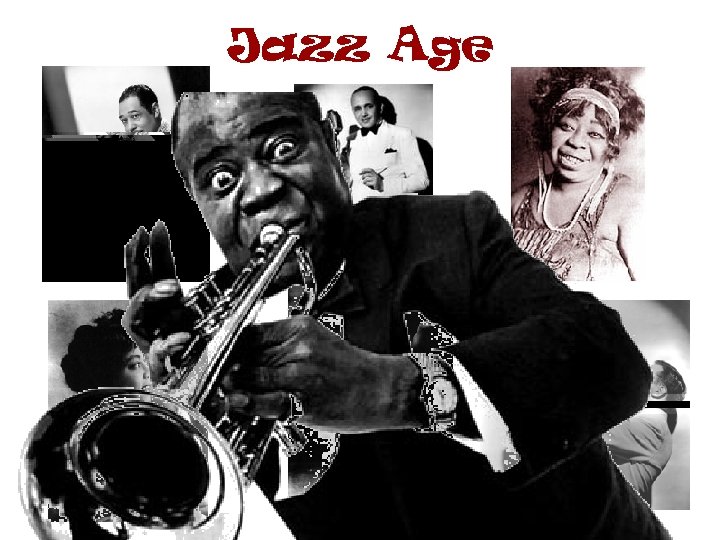
Jazz Age
Movies • Single most significant instrument of mass entertainment was the movies • Movie attendance grew from 50 million patrons a week in 1920 to 90 million a week in 1920; Americans spent 83 cents of every entertainment dollar at the movies and 75% of the population went to a movie theater each week • By the 1920 s, the film industry had relocated to Hollywood; ideal climate and cheap labor
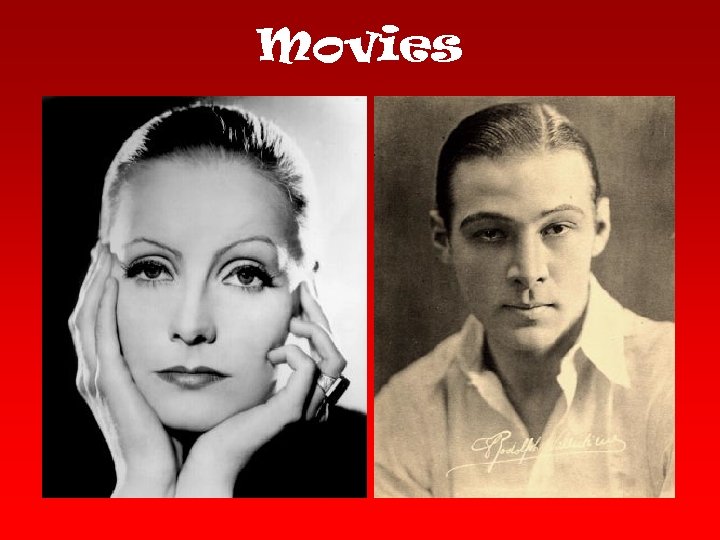
Movies • Hollywood released 700 movies each year and dominated worldwide film production • A small group of companies controlled the film industry: Paramount, 20 th-Century Fox, and MGM; kept actors, directors, and screenwriters under contract • Movies in the 1920 s introduced the sex appeal; Greta Garbo and Rudolph Valentino • Hollywood also reinforced stereotypes
Movies
Spectator Sports
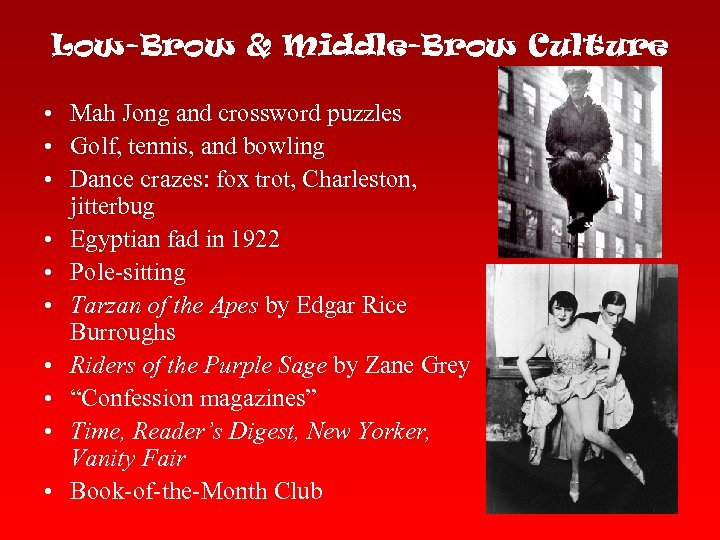
Low-Brow & Middle-Brow Culture • Mah Jong and crossword puzzles • Golf, tennis, and bowling • Dance crazes: fox trot, Charleston, jitterbug • Egyptian fad in 1922 • Pole-sitting • Tarzan of the Apes by Edgar Rice Burroughs • Riders of the Purple Sage by Zane Grey • “Confession magazines” • Time, Reader’s Digest, New Yorker, Vanity Fair • Book-of-the-Month Club
Avant Garde • Playwright Eugene O’Neill • Writers William Faulkner, Ernest Hemingway, F. Scott Fitzgerald, and Thomas Wolfe published their first novels • Poets Hart Crane, e. e. cummings, Countee Cullen, Langston Hughes, Edna St. Vincent Millay, and Wallace Stevens • Artists Charles Demuth, Georgia O’Keeffe, and Joseph Stella pioneered nonrepresentational and expressionist art forms
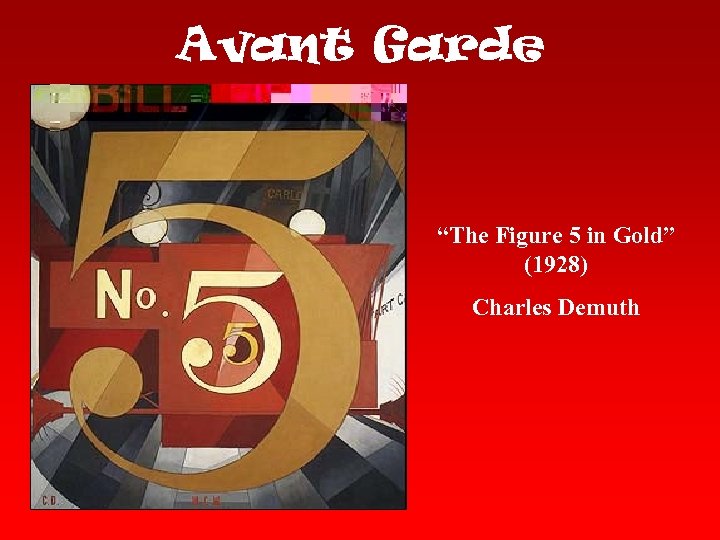
Avant Garde “The Figure 5 in Gold” (1928) Charles Demuth

Avant Garde “My Egypt” (1927) Charles Demuth

Avant Garde “Brooklyn Bridge” (1919 -20) Joseph Stella
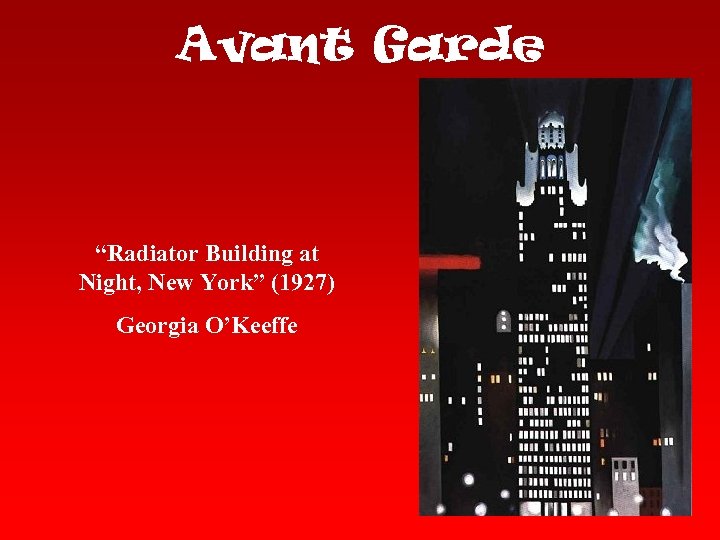
Avant Garde “Radiator Building at Night, New York” (1927) Georgia O’Keeffe
Avant Garde • The 1920 s marked America’s entry into the world of serious music: – 50 symphony orchestras founded – Julliard, Eastman, and Curtis music conservatories founded – Aaron Copeland Charles Ives – George Gershwin

Avant Garde • World War I left many American intellectuals and artists disillusioned and alienated; saw the war as a senseless mistake • T. S. Eliot called the United States a “wasteland” • Sinclair Lewis critized American middle class in Main Street (1920) and Babbit (1922) – Won Nobel Prize for Literature • H. L. Mencken
“Lost Generation” • Gertrude Stein, Ernest Hemingway, F. Scott Fitzgerald • Existentialism – maintains that life has no transcendent purpose and that each individual must salvage personal meaning from the void – The Sun Also Rises (1926) – A Farewell to Arms (1929) – The Great Gatsby (1925) – “so we beat on, boats against the current, borne back ceaselessly into the past. ”
The Sex Debate • “If all girls at the Yale prom were laid end to end… I wouldn’t be surprised. ” Dorothy Parker • Practically every newspaper featured articles on prostitution, venereal disease, sex education, birth control, and the rising divorce rate. • City life nurtured new sexual attitudes; end of courtships, rise of dating • Sigmund Freud • Increase in premarital sex after 1900; especially generation that reached maturity in 1920 s • Margaret Sanger vs. Comstock Law (1873)
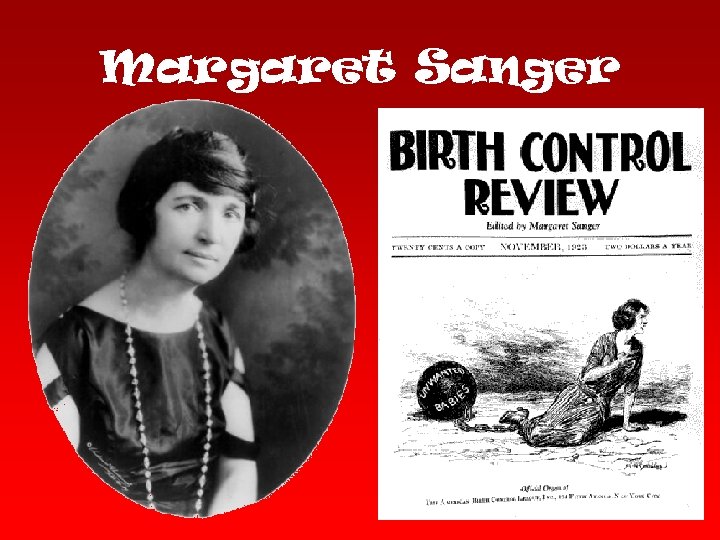
Margaret Sanger
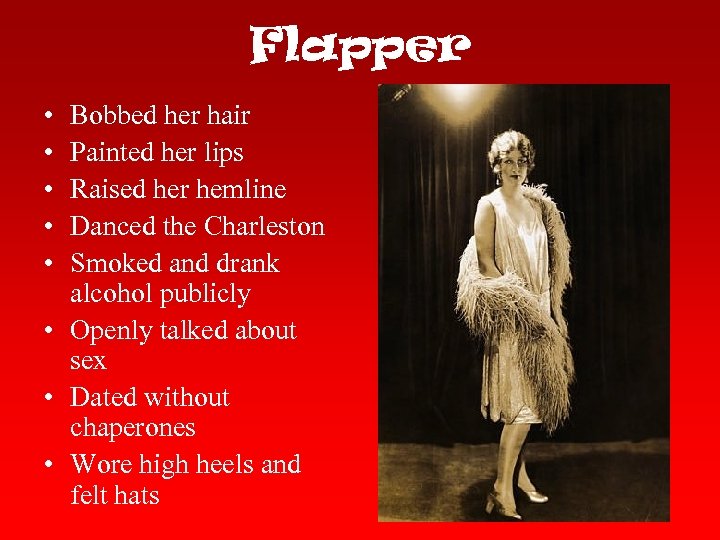
Flapper • • • Bobbed her hair Painted her lips Raised her hemline Danced the Charleston Smoked and drank alcohol publicly • Openly talked about sex • Dated without chaperones • Wore high heels and felt hats In reality, womens’ sexual experiences were typically limited to one or two partners, one of whom she married. This narrowed the gap between men and women and moved society towards a single standard of morality.
The Clash of Cultures The 1920 s was a decade of intense cultural conflict, the Protestant culture of rural America was being undermined by the secular values of an urban society: – – – Country vs. City Native vs. Immigrant Protestant vs. Catholic and Jew Fundamentalist vs. Liberal and Science Conservative vs. Progressive Wet vs. Dry The chief battlegrounds in this “culture war” were gender, immigration, prohibition, and evolution in public schools.
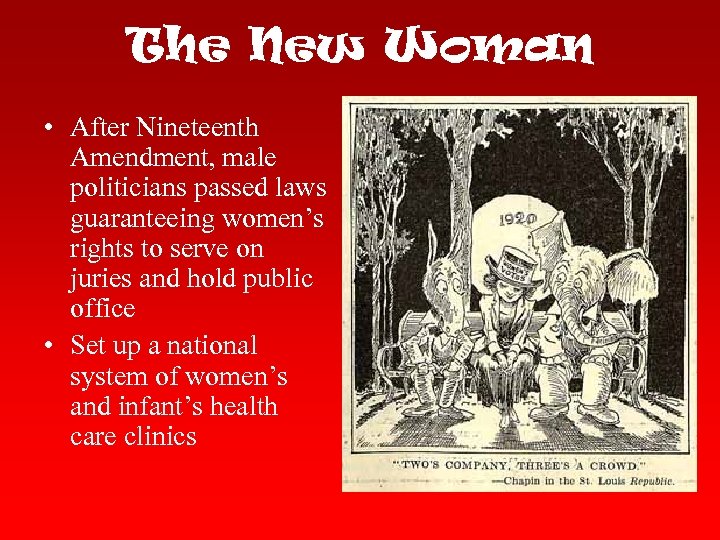
The New Woman • After Nineteenth Amendment, male politicians passed laws guaranteeing women’s rights to serve on juries and hold public office • Set up a national system of women’s and infant’s health care clinics
The New Woman • Women’s movement divided in the 1920 s over the Equal Rights Amendment – Pitted professional women against working-class women • Women’s movement also faced opposition from federal government; “Spider Web” chart • Adkins v. Children’s Hospital (1923) • Women did not win new opportunities in the workplace; confined to traditional “female jobs” and professionals consistently received less pay than their male counterparts
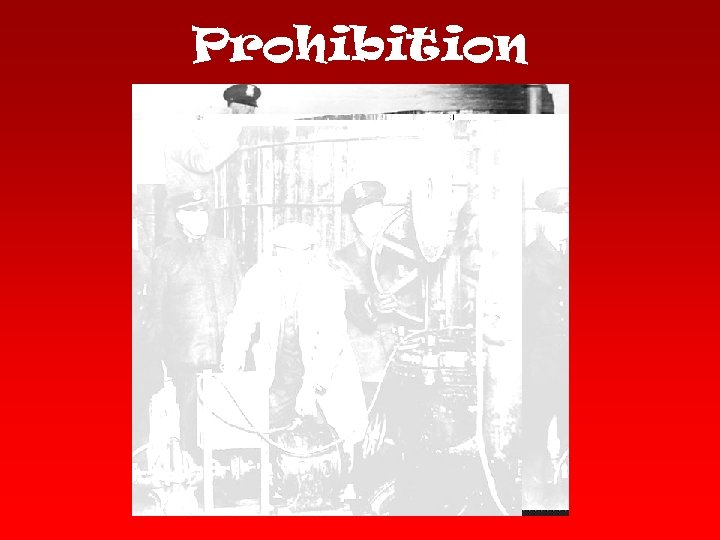
Prohibition • Initial compliance had more to do with supply and demand than respect for the law; private enterprise filled the void • Smugglers, bootleggers, and moonshiners • Neither federal nor state authorities had enough funds to enforce prohibition • Lax enforcement and huge profits enticed organized crime to enter bootlegging; by late 1920 s, liquor sales generated $2 billion annually – Al Capone
Prohibition
Prohibition • In large cities, people openly defied the law; 17 convictions of 7, 000 arrests in New York City; President Harding • In 1923, New York became the first state to repeal its enforcement law; by 1930 six more states had followed suit • Congress repealed Prohibition in 1933 with the 21 st Amendment • National Anti-Cigarette League, 1903; by 1923, 14 states had outlawed cigarettes
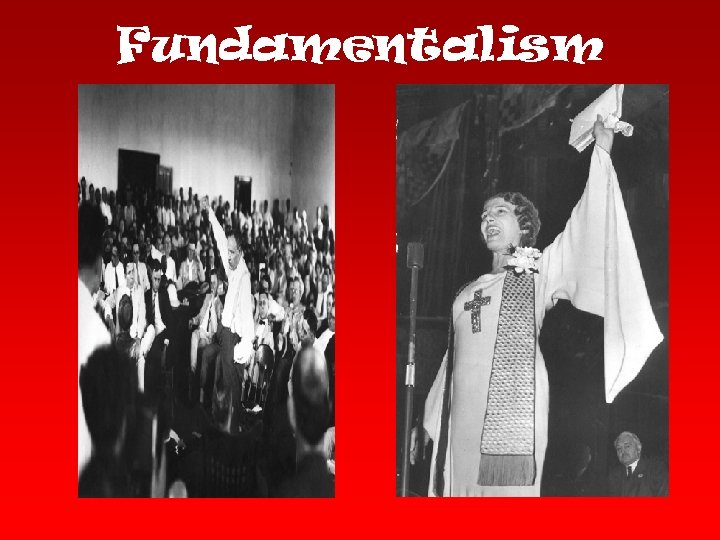
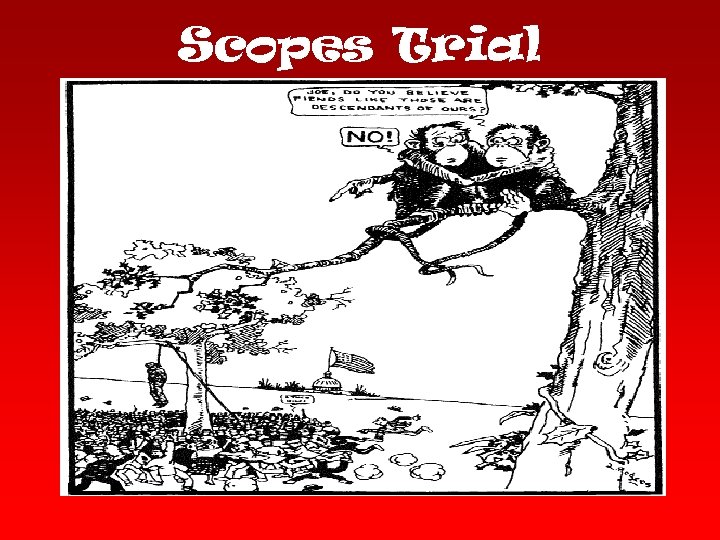
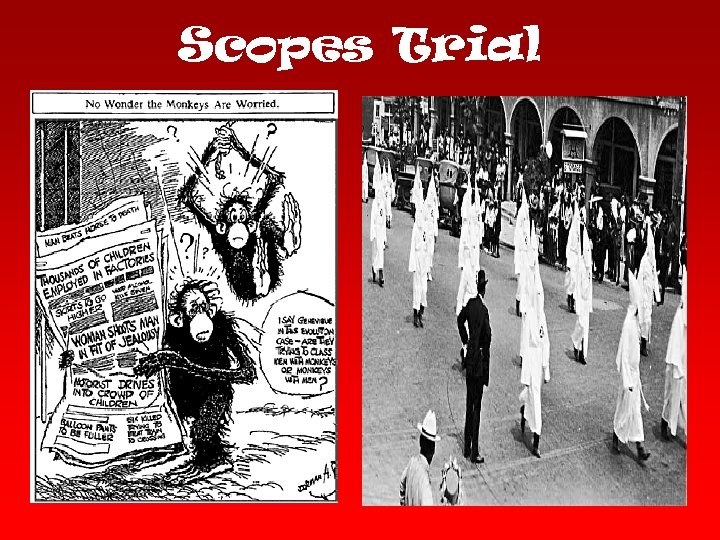
Fundamentalism • Charles Darwin’s theory of evolution caused a split in American Protestantism: Fundamentalists vs. Liberals • Rise of Pentecostalism in early 1900 s; The Fundamentals (1910 -1915) • Religious revivals in West, South – Billy Sunday – Aimee Semple Mc. Pherson
Fundamentalism
Scopes Trial
Scopes Trial

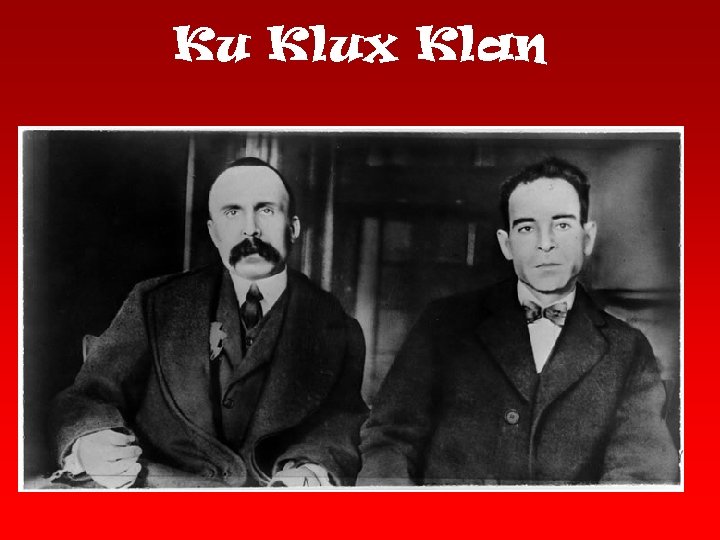
Xenophobia • Emergency Quota Act, 1921 • National Origins Act of 1924 • Sacco & Vanzetti Case, 1921
Ku Klux Klan • The KKK experienced a rebirth in the 1920 s under the leadership of Col. William Joseph Simmons; “ 100 percent pure Americanism” • Hired advertising agency to boost membership; 5 million members by 1925 • Powerful political force; influenced governors and state legislatures • Continued to intimidate African Americans, immigrants, Catholics, Jews and others who violated moral standards (wife-beaters, drunkards, bootleggers, gamblers, etc. ) • A series of sex scandals and increasing violence decreased power of the Klan by late 1920 s
Ku Klux Klan
African American Protests • After facing discrimination and segregation in World War I and race riots in 1919 -1920, African Americans were more determined to fight discrimination • National Urban League, 1911 – focused on economic issues (Washington) • NAACP, 1909 – focused on civil rights and legal action (Du Bois)
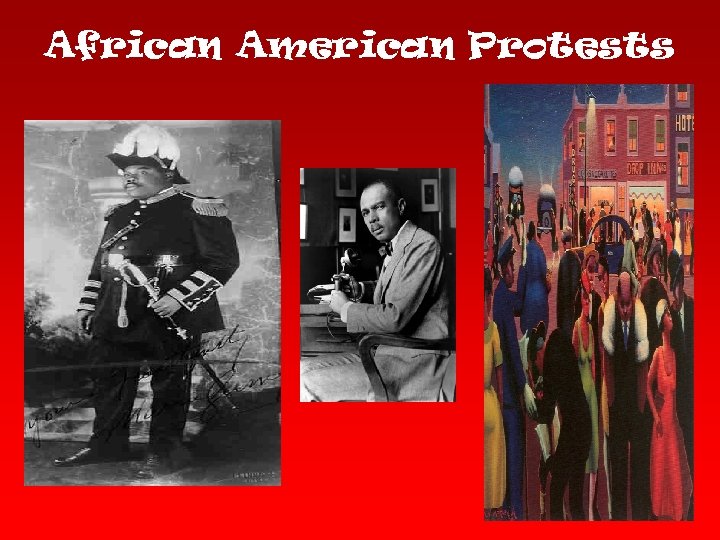
African American Protests • Supreme Court ruled against “grandfather clause” (1915) and segregation ordinances (1917) • NAACP also fought against school segregation in North and for federal anti-lynching bill under James Weldon Johnson • A. Philip Randolph – “New Negro” • Marcus Garvey – Universal Negro Improvement Association, 1917
African American Protests
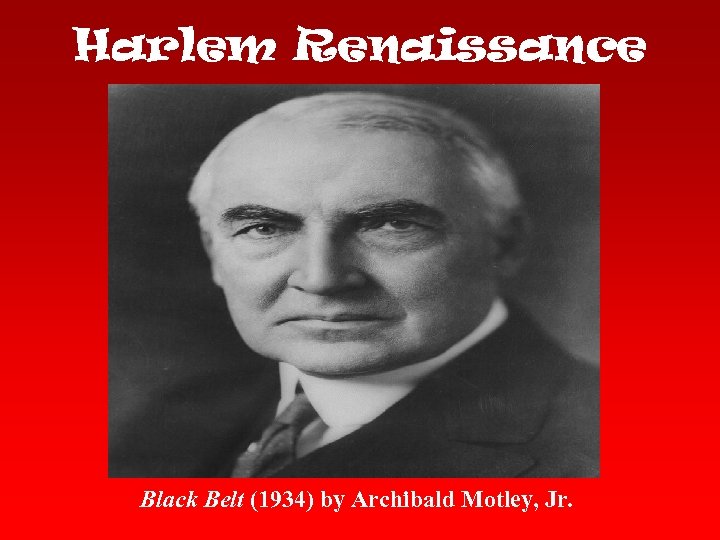
Harlem Renaissance Black Belt (1934) by Archibald Motley, Jr.
Harlem Renaissance • Increasing interest in African American History and Culture; W. E. B. Du Bois • Fisk University Jubilee Singers • American Negro Academy, 1897 • Negro dolls and all-Negro towns • African Americans newspapers and magazines appeared in 1910 s • Association for the Study of Negro Life and History – Carter Woodson, 1919
Harlem Renaissance • Harlem became the center of African American cultural expression • Poets Countee Cullen, Claude Mc. Kay and Langston Hughes • Novelist Zora Neale Hurston • Performer Paul Robeson • “If we must die—oh let us nobly die. . . dying, but fighting back!”
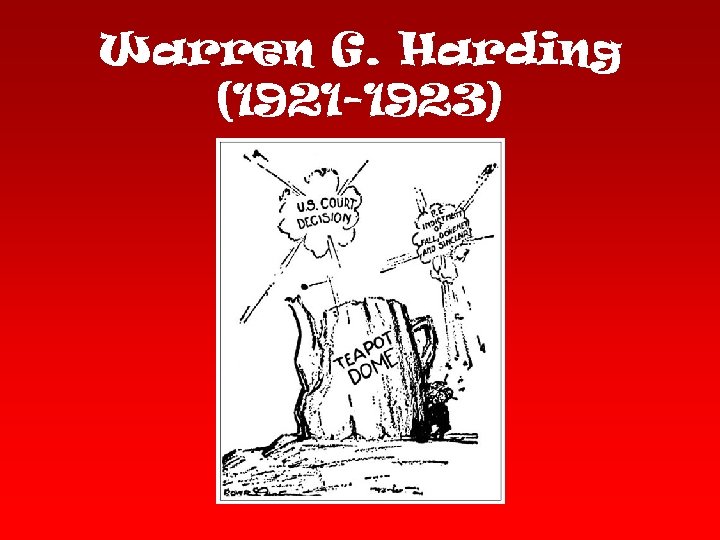
Warren G. Harding (1921 -1923)
Return to “Normalcy” • Americans wanted a partnership between government and industry, instead of trustbusting in the 1920 s; Republicans offered the conservative choice • Supreme Court, under Chief Justice William Howard Taft, outlawed picketing, overturned national child labor laws, and abolished minimum wage laws for women; states were responsible for protecting individual citizens • Secretary of Commerce Herbert Hoover proposed to eliminate competition and waste in the economy through “associationism”; 2000 trade associations by 1929
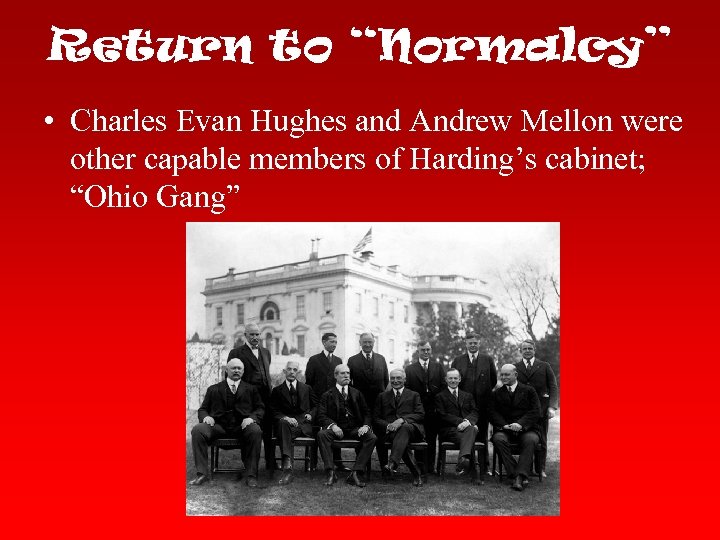
Return to “Normalcy” • Charles Evan Hughes and Andrew Mellon were other capable members of Harding’s cabinet; “Ohio Gang”
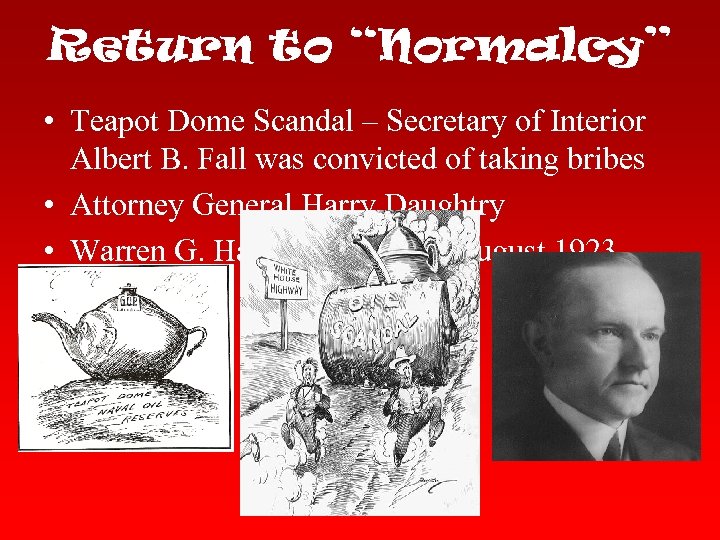
Return to “Normalcy” • Teapot Dome Scandal – Secretary of Interior Albert B. Fall was convicted of taking bribes • Attorney General Harry Daughtry • Warren G. Harding died on 2 August 1923
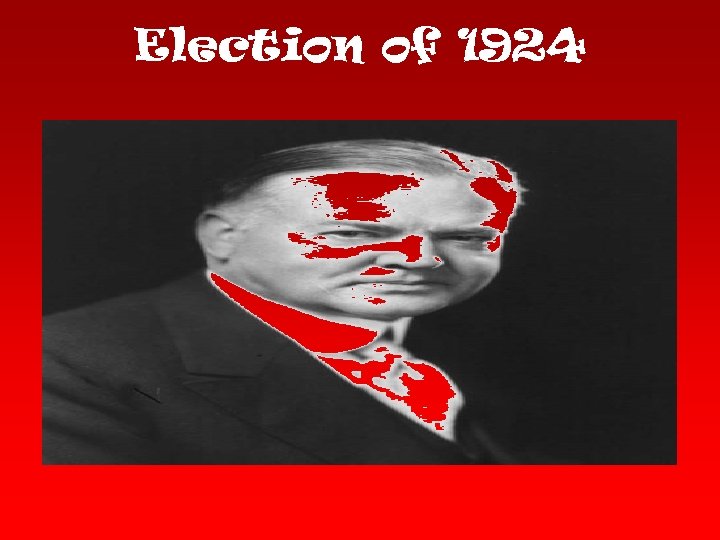
Election of 1924
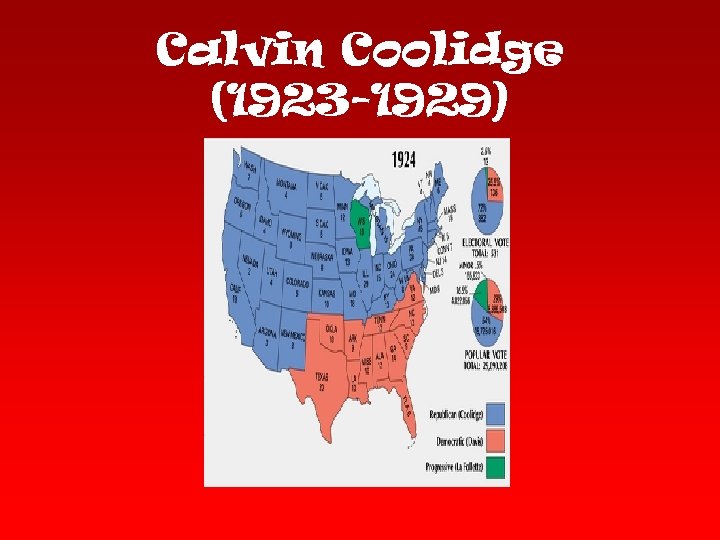
Calvin Coolidge (1923 -1929)
Twilight of Progressivism • Coolidge had no desire to be a strong president and believed that government should do everything in its power to promote business interests; “the business of America is business” • The government’s tilt toward business signaled a retreat from progressivism • Robert La Follette (WI) and George Norris (NB) tried to keep progressivism alive in Congress; had better luck at state and local level • By 1930, 43 states had passed laws providing assistance to women with dependent children and 34 states had workers’ compensation laws; NY Governor Alfred E. Smith
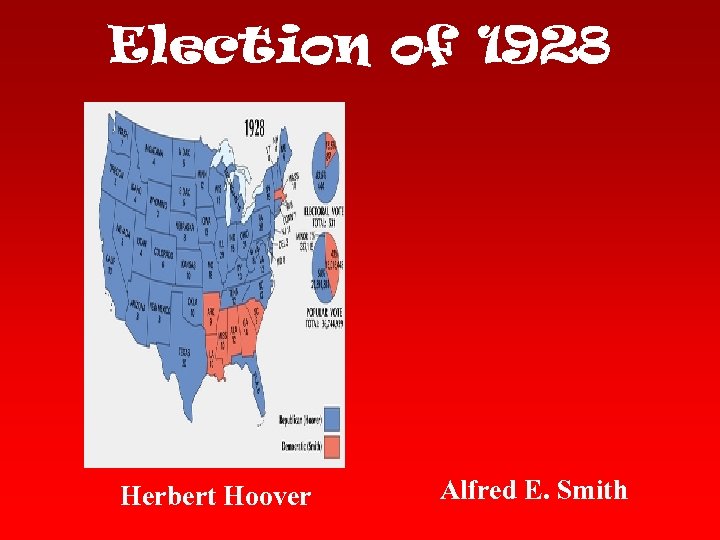
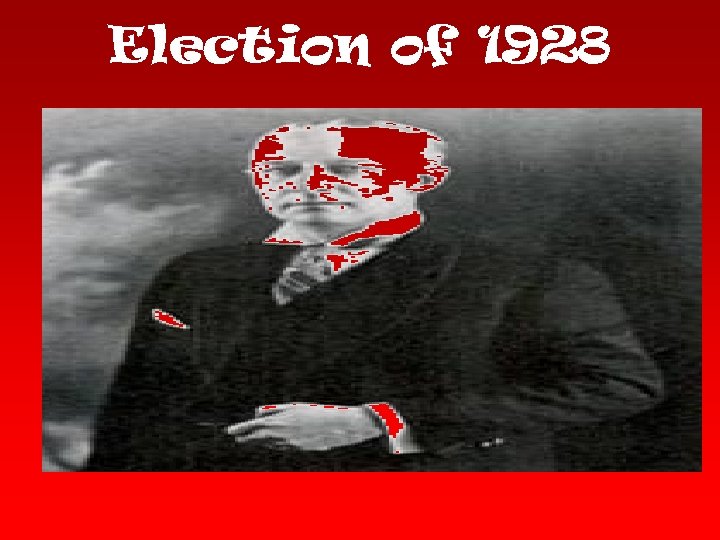
Election of 1928 Herbert Hoover Alfred E. Smith
Election of 1928
Скачать презентацию in the Roaring Twenties 1919 -1929 Urban
80a121970c97298850059fa71942dabc.ppt