



 ( in the early 1900 s )
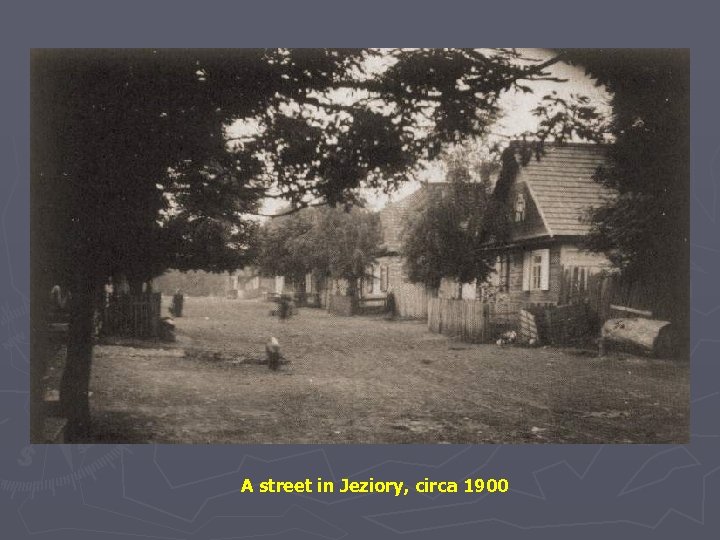 A street in Jeziory, circa 1900
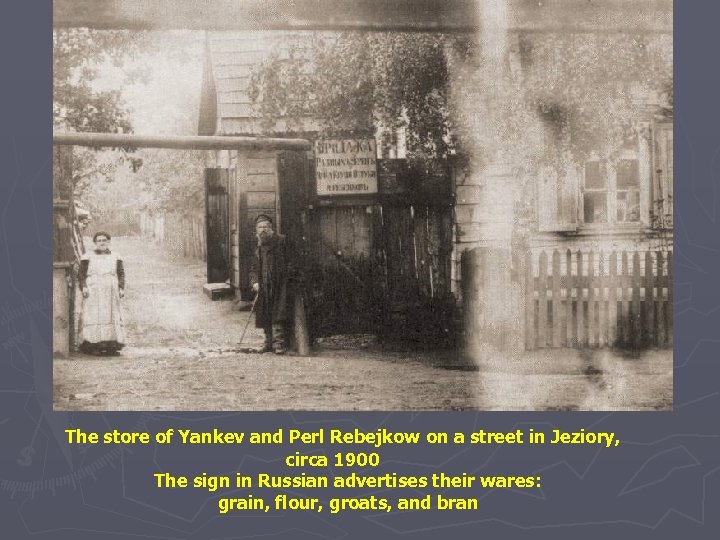 The store of Yankev and Perl Rebejkow on a street in Jeziory, circa 1900 The sign in Russian advertises their wares: grain, flour, groats, and bran
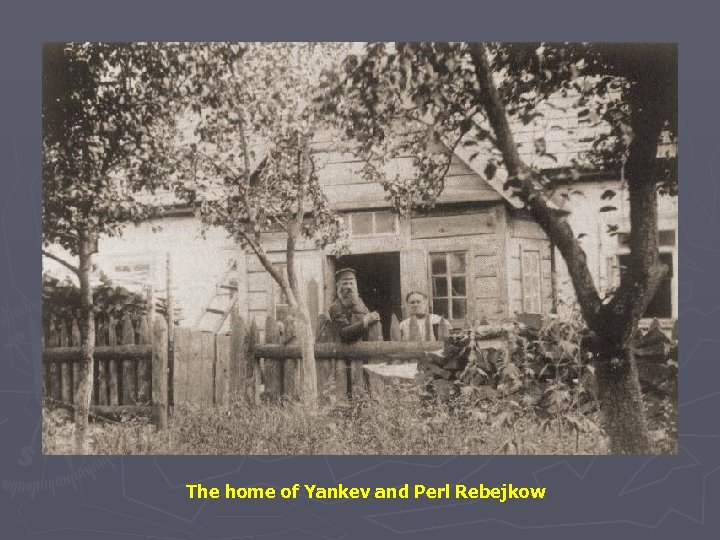 The home of Yankev and Perl Rebejkow
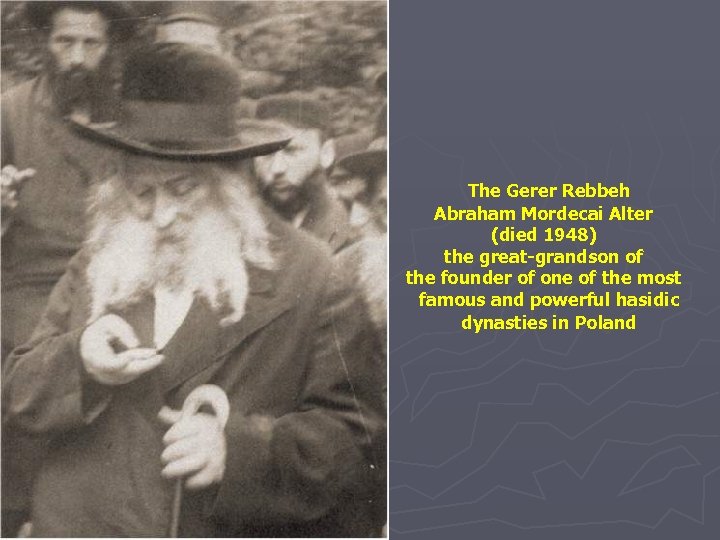 The Gerer Rebbeh Abraham Mordecai Alter (died 1948) the great-grandson of the founder of one of the most famous and powerful hasidic dynasties in Poland
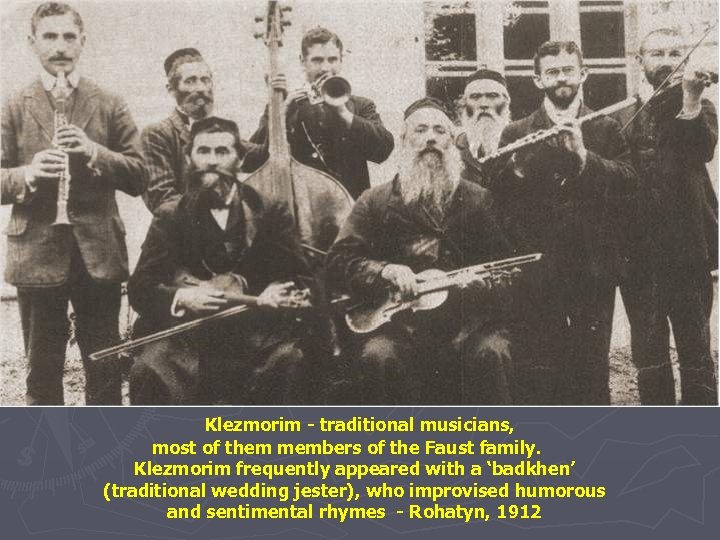 Klezmorim - traditional musicians, most of them members of the Faust family. Klezmorim frequently appeared with a ‘badkhen’ (traditional wedding jester), who improvised humorous and sentimental rhymes - Rohatyn, 1912
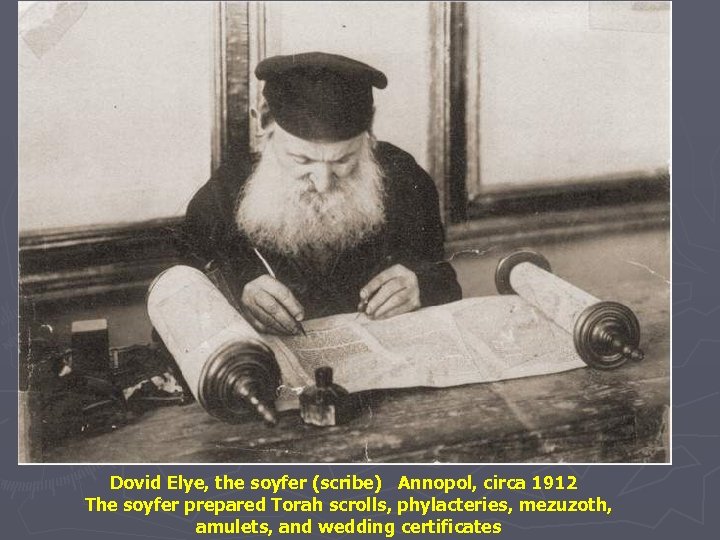 Dovid Elye, the soyfer (scribe) Annopol, circa 1912 The soyfer prepared Torah scrolls, phylacteries, mezuzoth, amulets, and wedding certificates
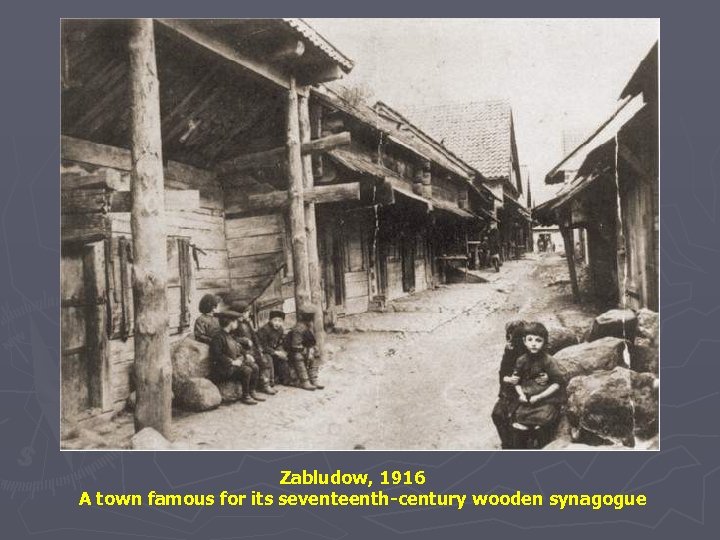 Zabludow, 1916 A town famous for its seventeenth-century wooden synagogue
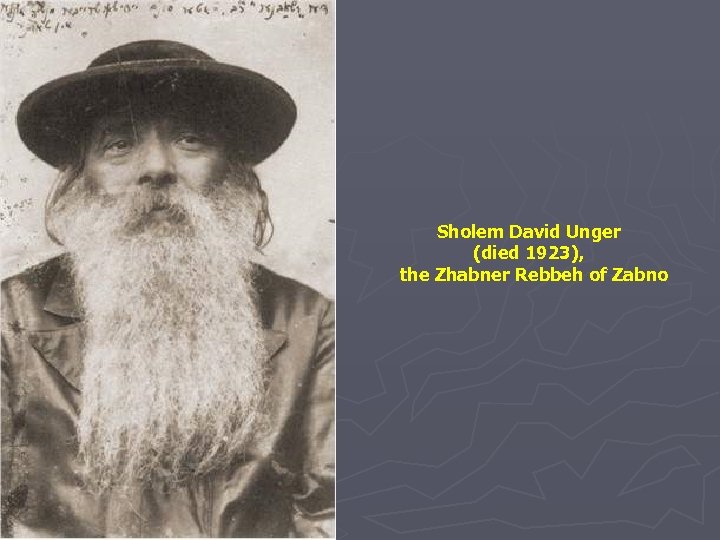 Sholem David Unger (died 1923), the Zhabner Rebbeh of Zabno
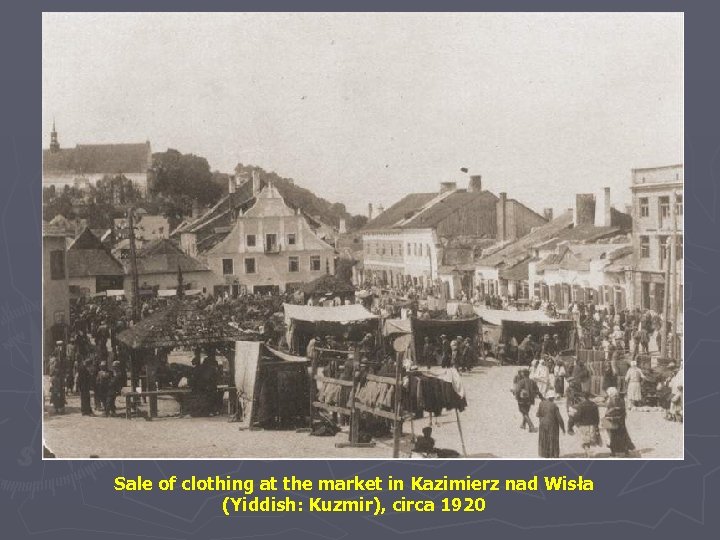 Sale of clothing at the market in Kazimierz nad Wisła (Yiddish: Kuzmir), circa 1920
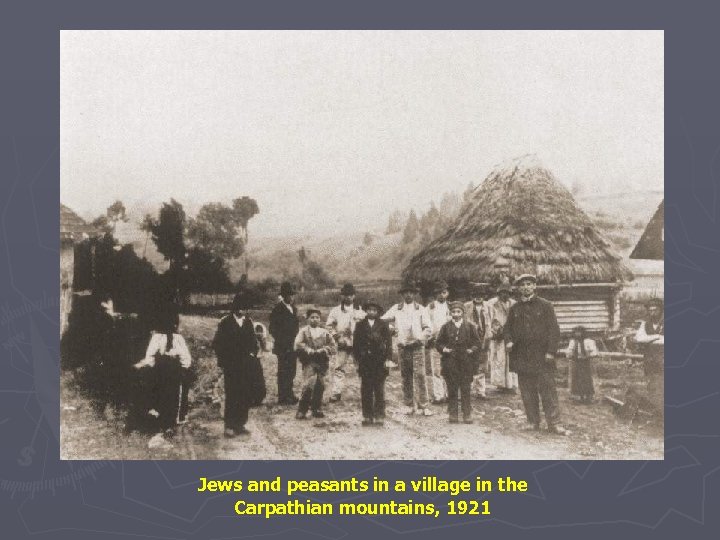 Jews and peasants in a village in the Carpathian mountains, 1921
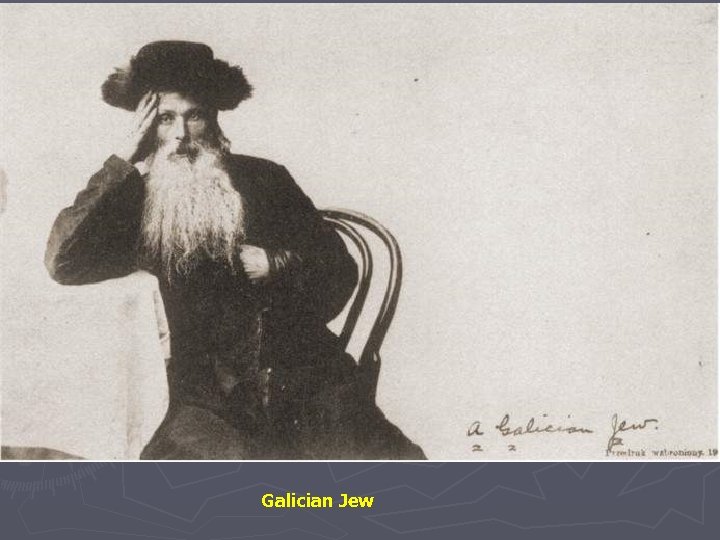 Galician Jew
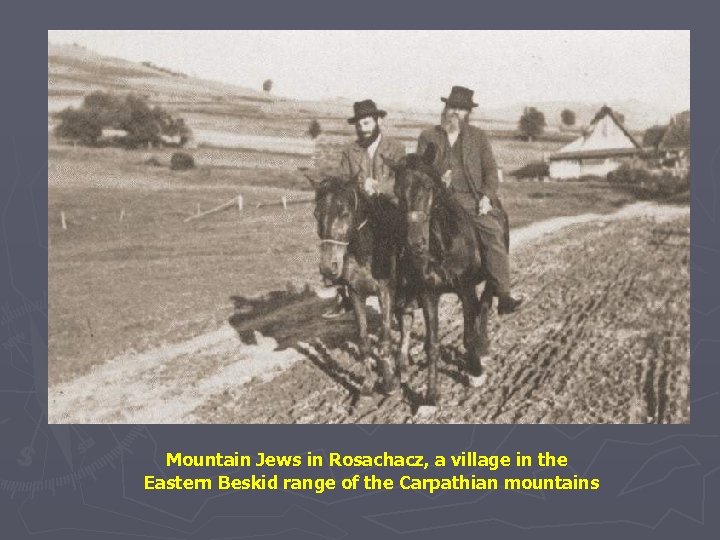 Mountain Jews in Rosachacz, a village in the Eastern Beskid range of the Carpathian mountains
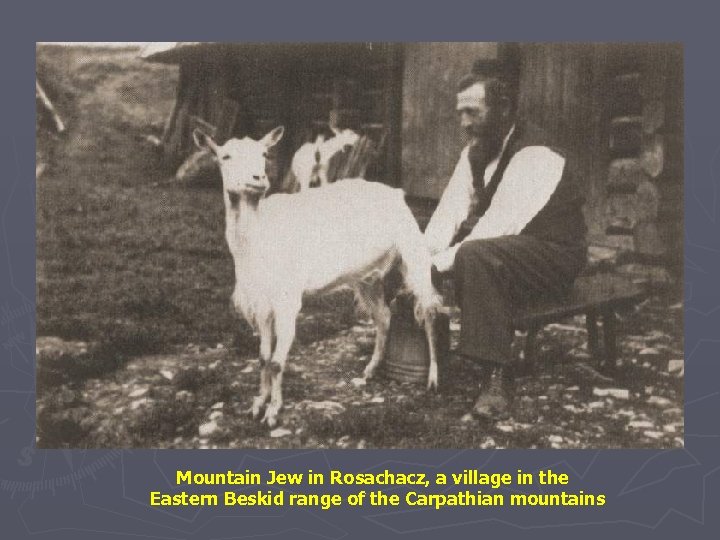 Mountain Jew in Rosachacz, a village in the Eastern Beskid range of the Carpathian mountains
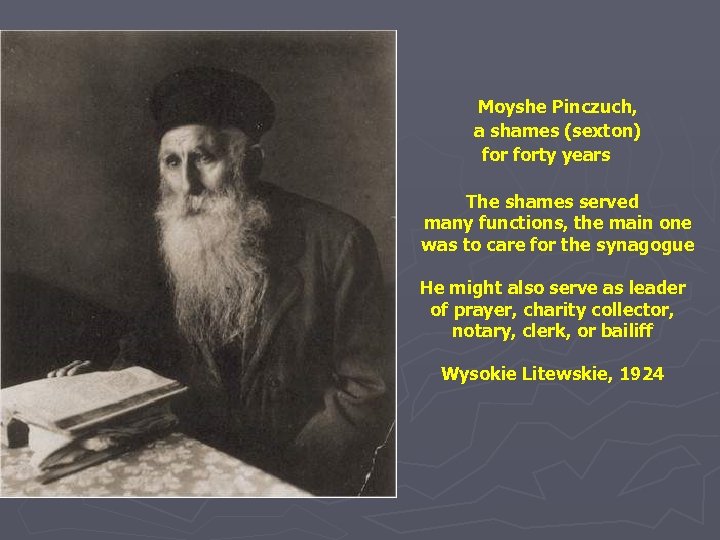 Moyshe Pinczuch, a shames (sexton) forty years The shames served many functions, the main one was to care for the synagogue He might also serve as leader of prayer, charity collector, notary, clerk, or bailiff Wysokie Litewskie, 1924
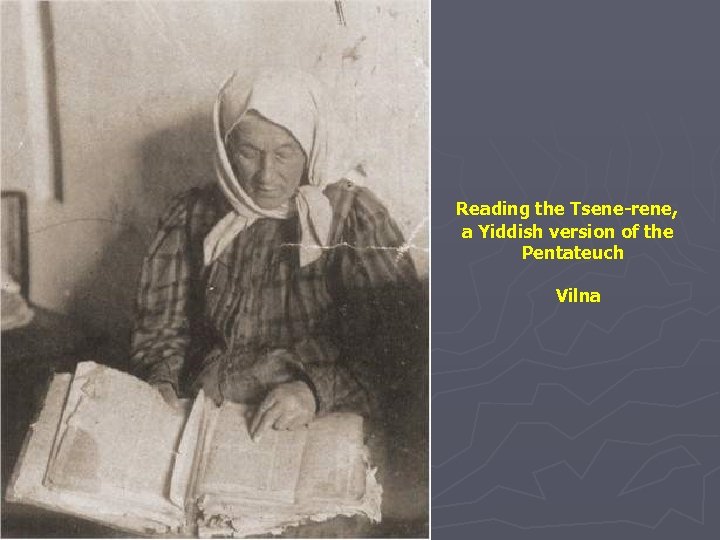 Reading the Tsene-rene, a Yiddish version of the Pentateuch Vilna
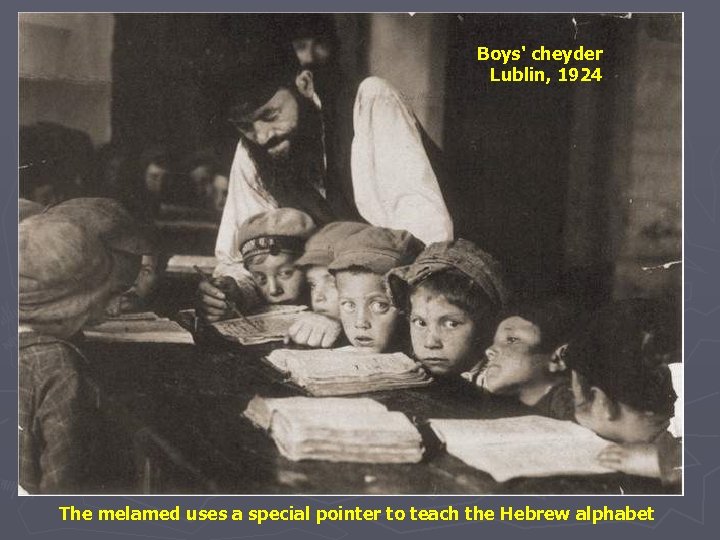 Boys' cheyder Lublin, 1924 The melamed uses a special pointer to teach the Hebrew alphabet
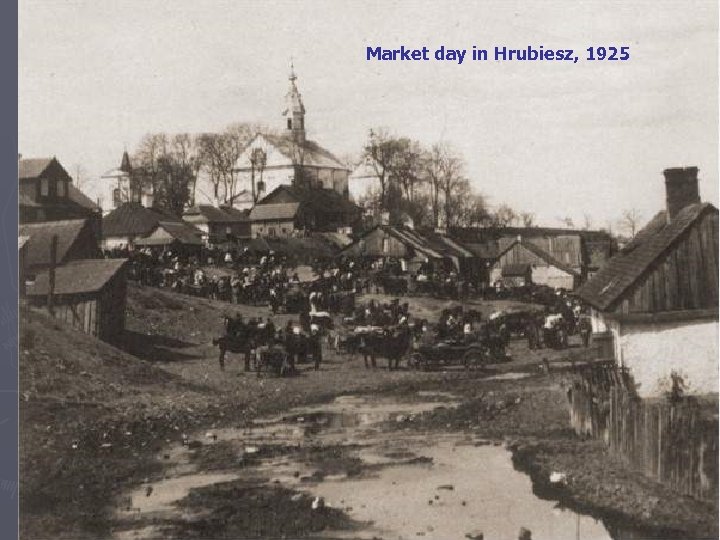 Market day in Hrubiesz, 1925
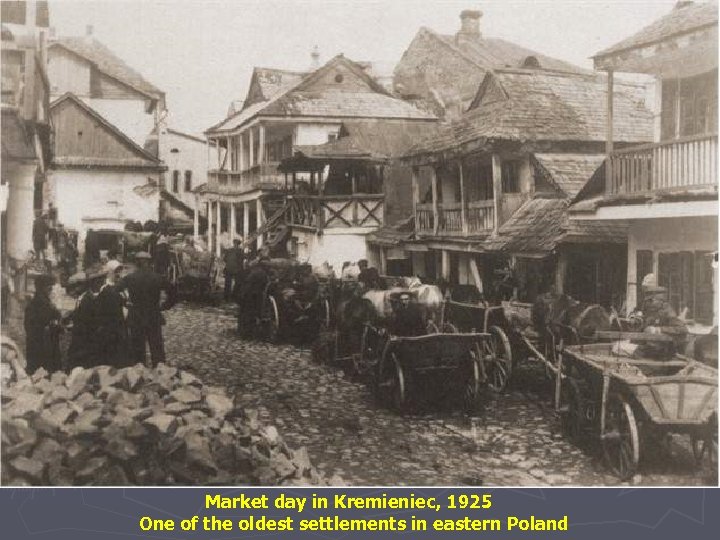 Market day in Kremieniec, 1925 One of the oldest settlements in eastern Poland
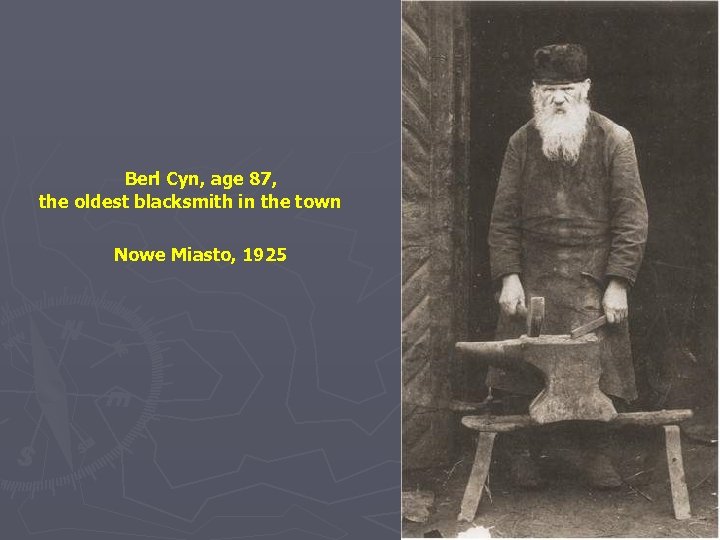 Berl Cyn, age 87, the oldest blacksmith in the town Nowe Miasto, 1925
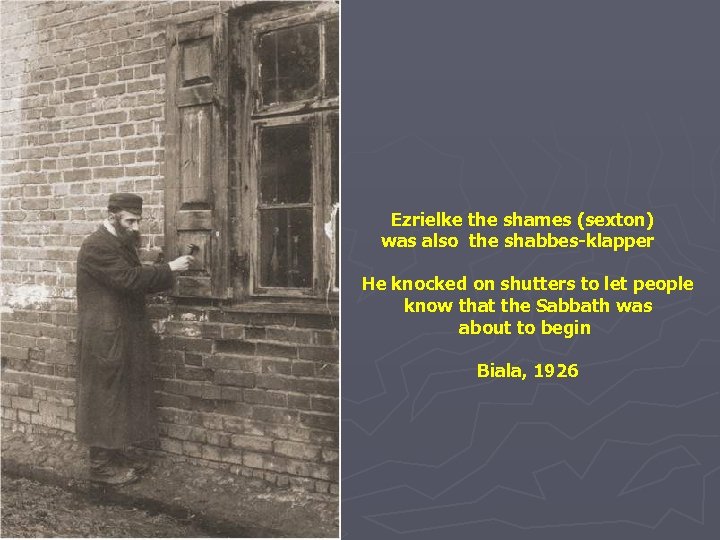 Ezrielke the shames (sexton) was also the shabbes-klapper He knocked on shutters to let people know that the Sabbath was about to begin Biala, 1926
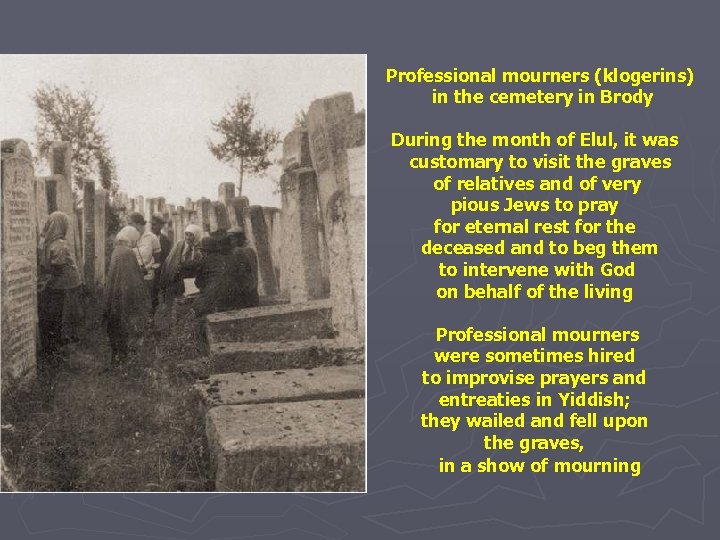 Professional mourners (klogerins) in the cemetery in Brody During the month of Elul, it was customary to visit the graves of relatives and of very pious Jews to pray for eternal rest for the deceased and to beg them to intervene with God on behalf of the living Professional mourners were sometimes hired to improvise prayers and entreaties in Yiddish; they wailed and fell upon the graves, in a show of mourning
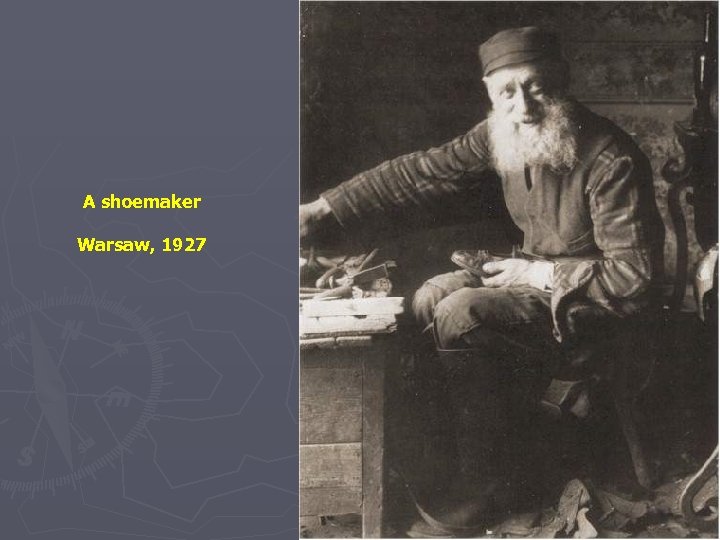 A shoemaker Warsaw, 1927
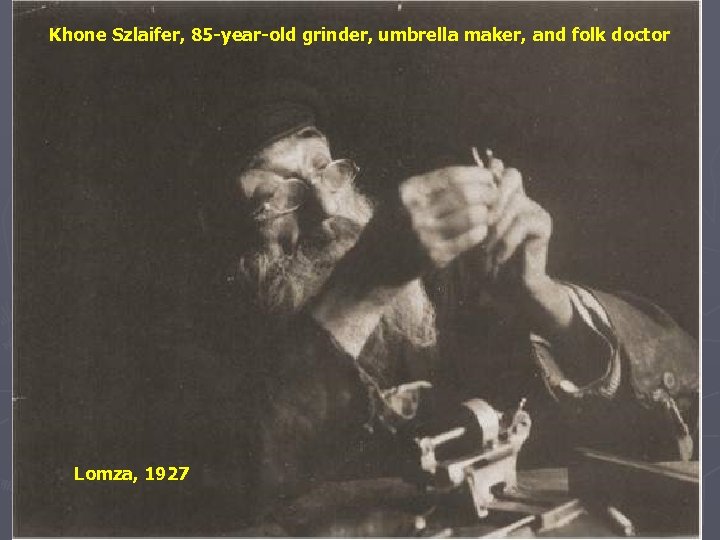 Khone Szlaifer, 85 -year-old grinder, umbrella maker, and folk doctor Lomza, 1927
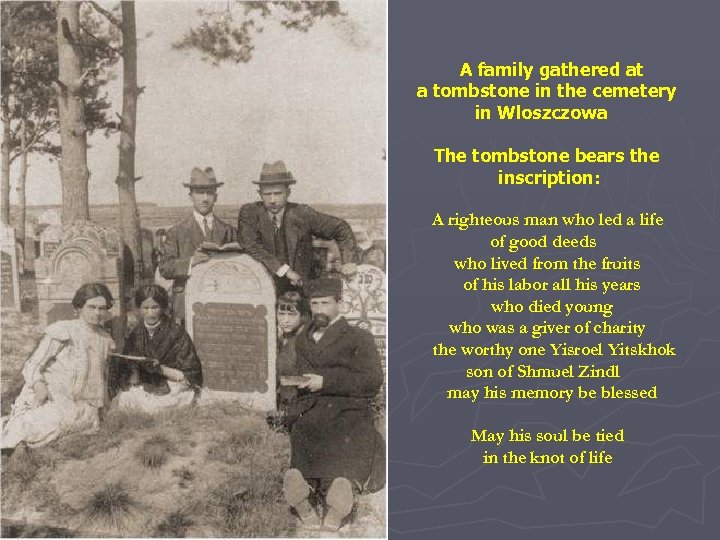 A family gathered at a tombstone in the cemetery in Wloszczowa The tombstone bears the inscription: A righteous man who led a life of good deeds who lived from the fruits of his labor all his years who died young who was a giver of charity the worthy one Yisroel Yitskhok son of Shmuel Zindl may his memory be blessed May his soul be tied in the knot of life
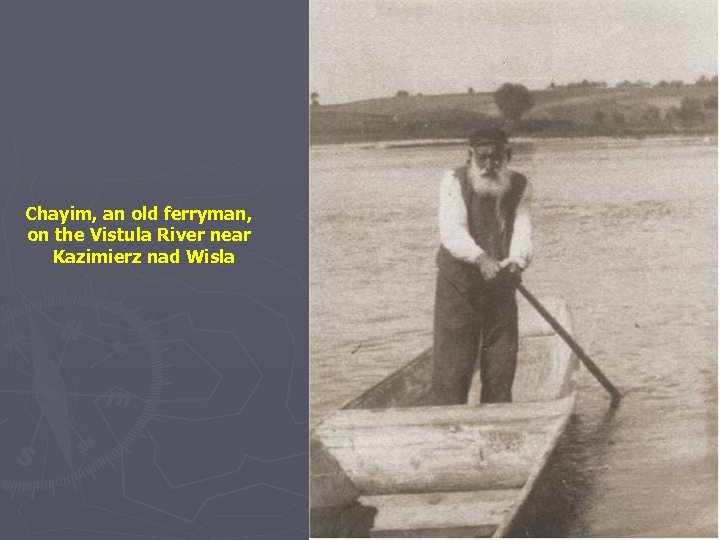 Chayim, an old ferryman, on the Vistula River near Kazimierz nad Wisla
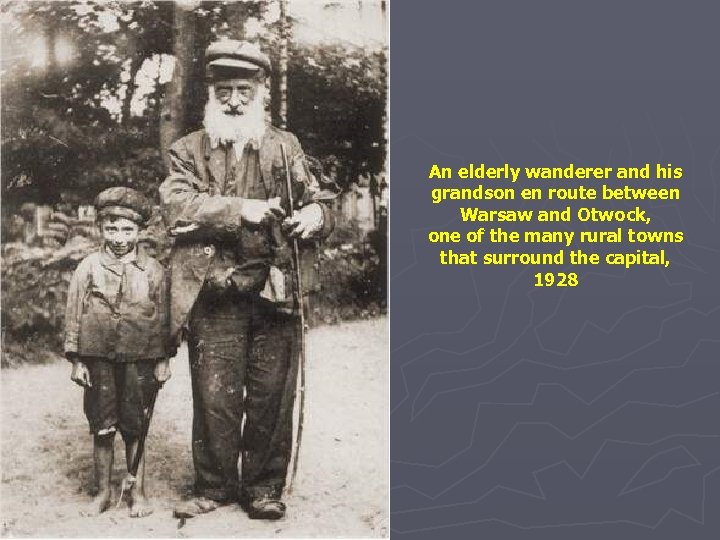 An elderly wanderer and his grandson en route between Warsaw and Otwock, one of the many rural towns that surround the capital, 1928
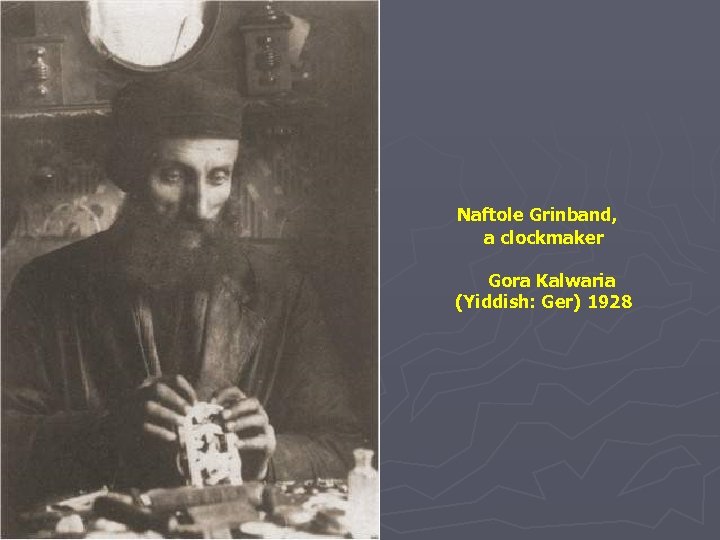 Naftole Grinband, a clockmaker Gora Kalwaria (Yiddish: Ger) 1928
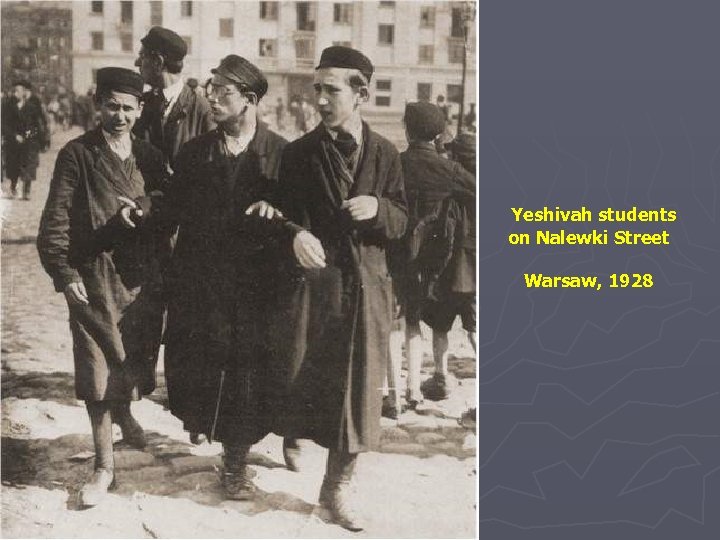 Yeshivah students on Nalewki Street Warsaw, 1928
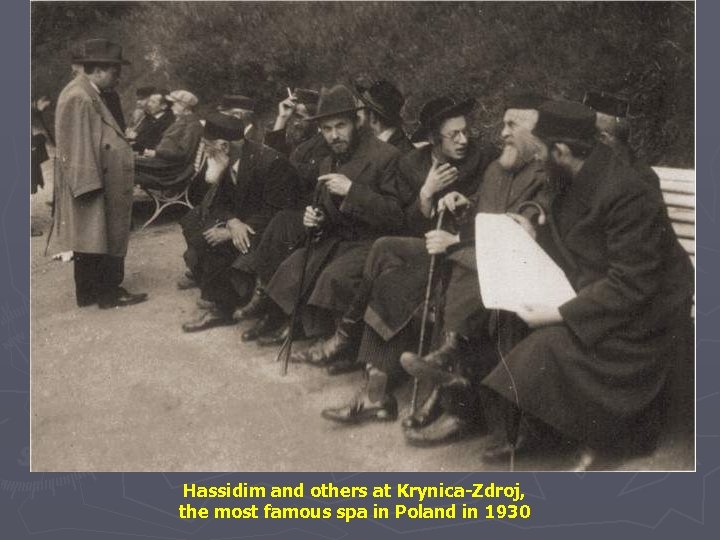 Hassidim and others at Krynica-Zdroj, the most famous spa in Poland in 1930
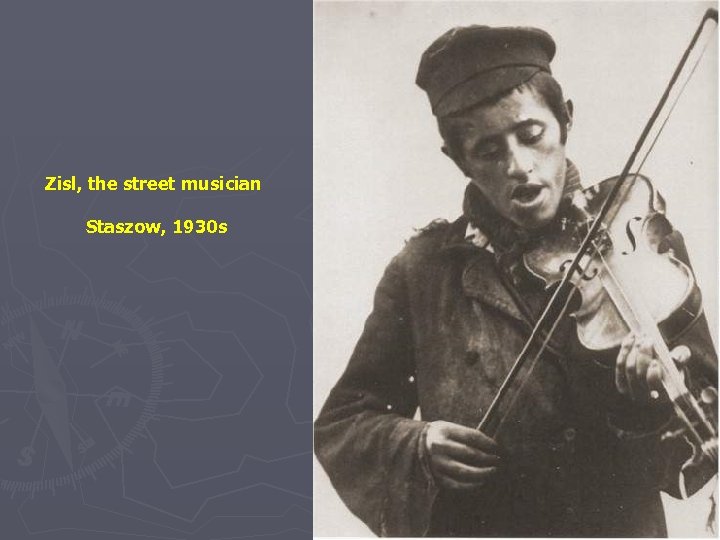 Zisl, the street musician Staszow, 1930 s
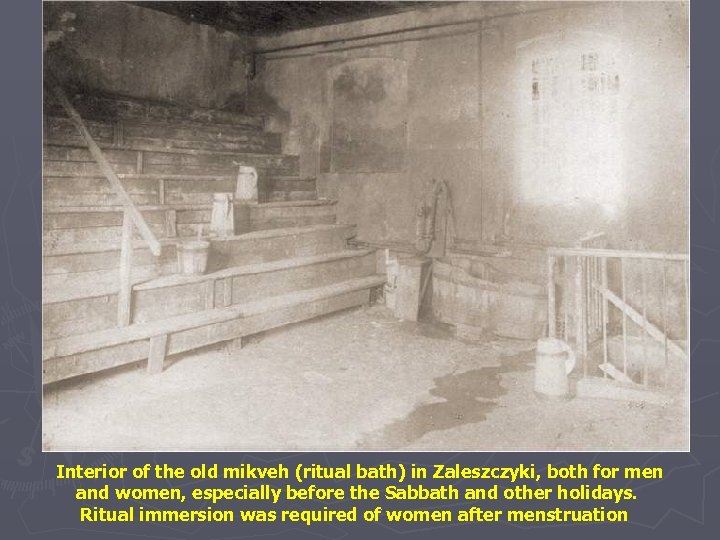 Interior of the old mikveh (ritual bath) in Zaleszczyki, both for men and women, especially before the Sabbath and other holidays. Ritual immersion was required of women after menstruation
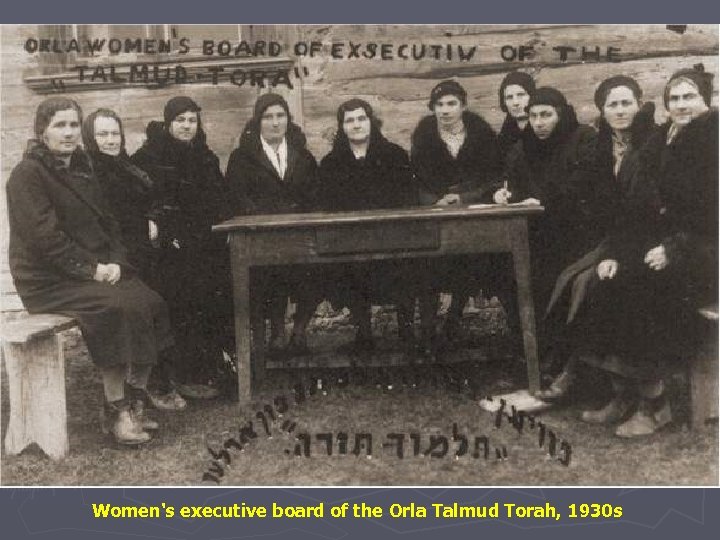 Women's executive board of the Orla Talmud Torah, 1930 s
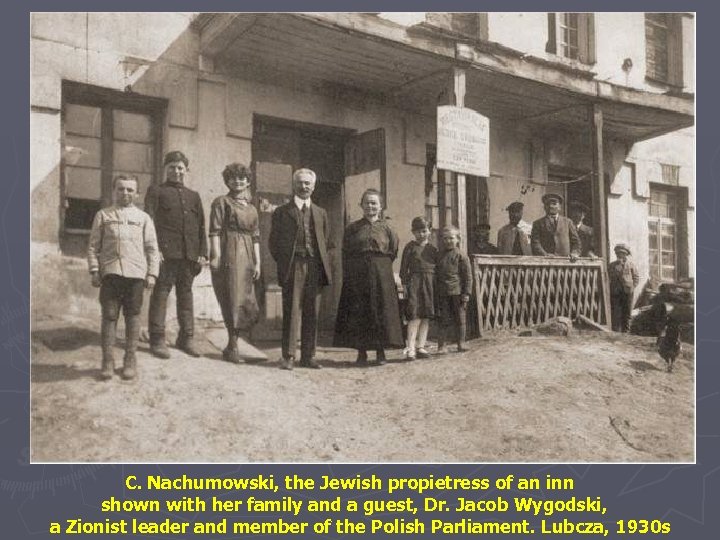 C. Nachumowski, the Jewish propietress of an inn shown with her family and a guest, Dr. Jacob Wygodski, a Zionist leader and member of the Polish Parliament. Lubcza, 1930 s
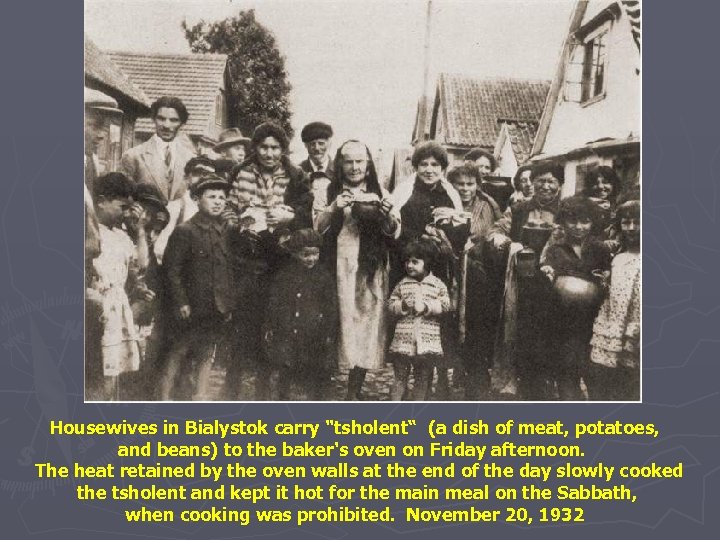 Housewives in Bialystok carry "tsholent“ (a dish of meat, potatoes, and beans) to the baker's oven on Friday afternoon. The heat retained by the oven walls at the end of the day slowly cooked the tsholent and kept it hot for the main meal on the Sabbath, when cooking was prohibited. November 20, 1932
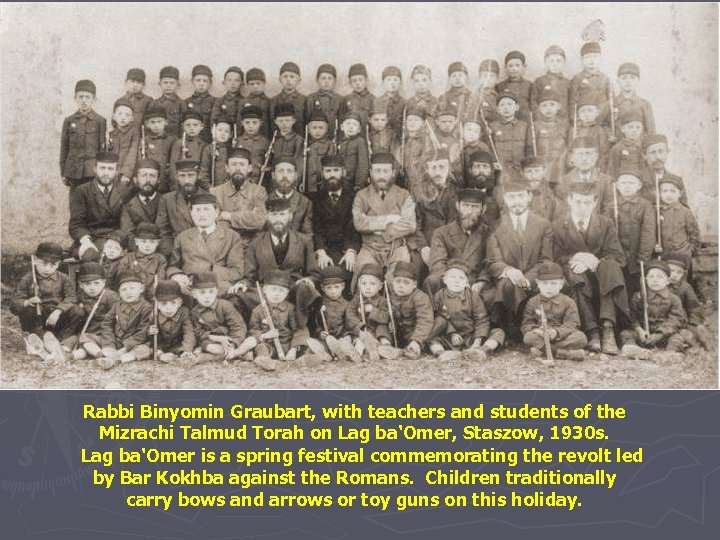 Rabbi Binyomin Graubart, with teachers and students of the Mizrachi Talmud Torah on Lag ba'Omer, Staszow, 1930 s. Lag ba'Omer is a spring festival commemorating the revolt led by Bar Kokhba against the Romans. Children traditionally carry bows and arrows or toy guns on this holiday.
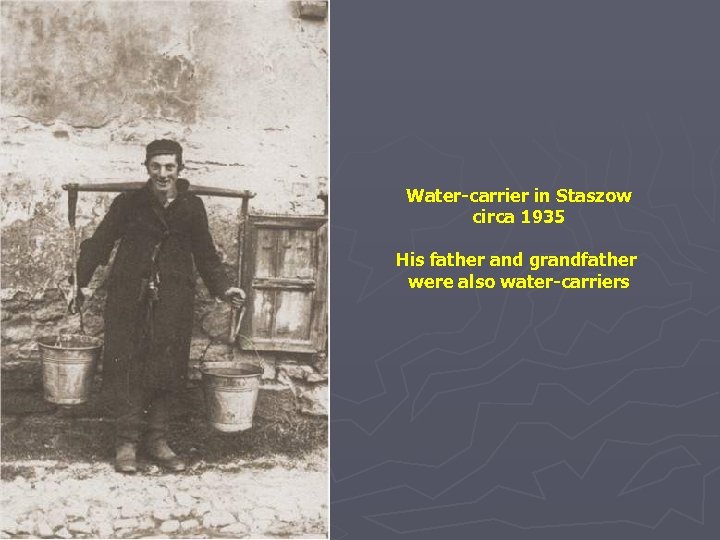 Water-carrier in Staszow circa 1935 His father and grandfather were also water-carriers
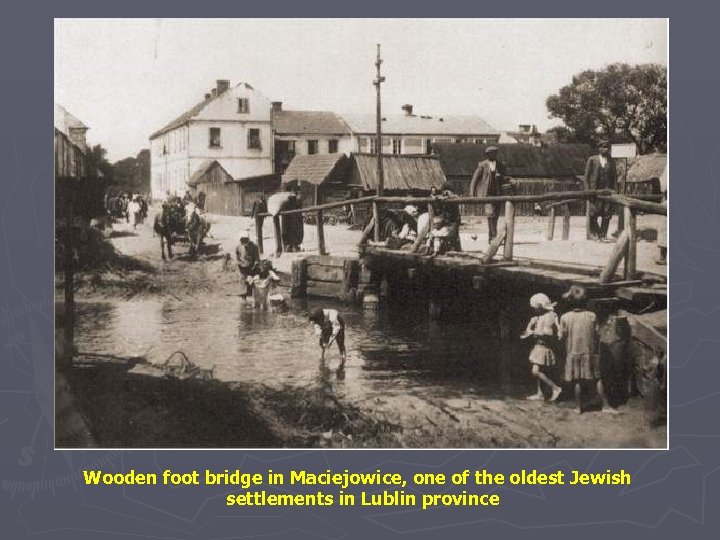 Wooden foot bridge in Maciejowice, one of the oldest Jewish settlements in Lublin province
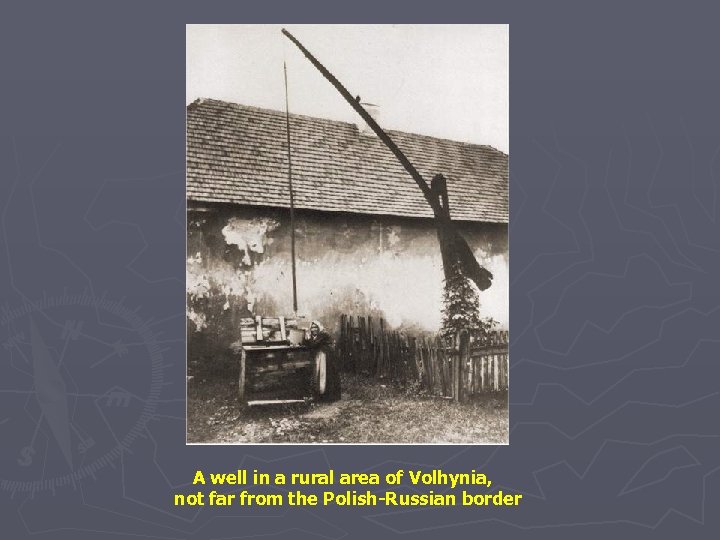 A well in a rural area of Volhynia, not far from the Polish-Russian border
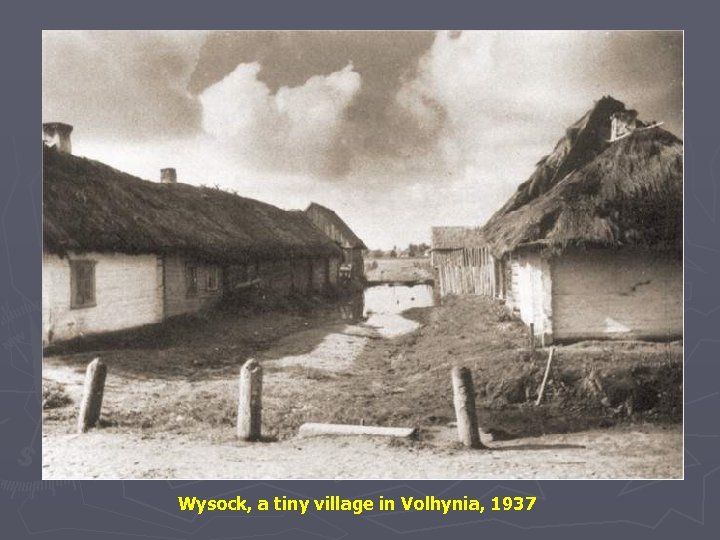 Wysock, a tiny village in Volhynia, 1937
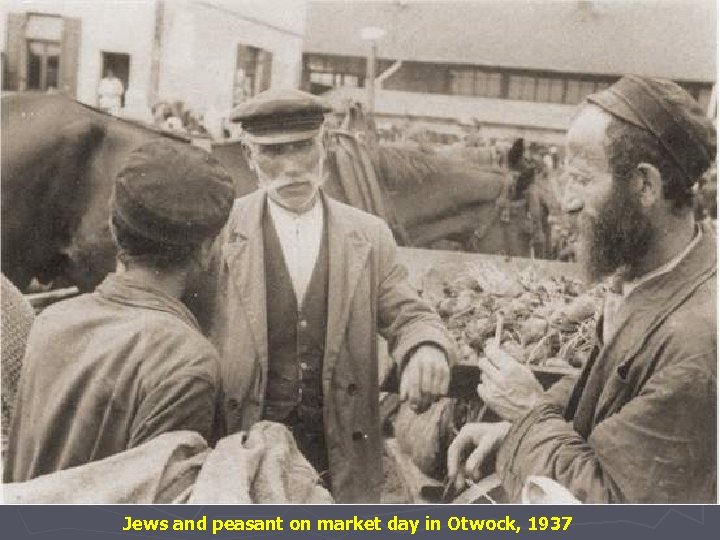 Jews and peasant on market day in Otwock, 1937
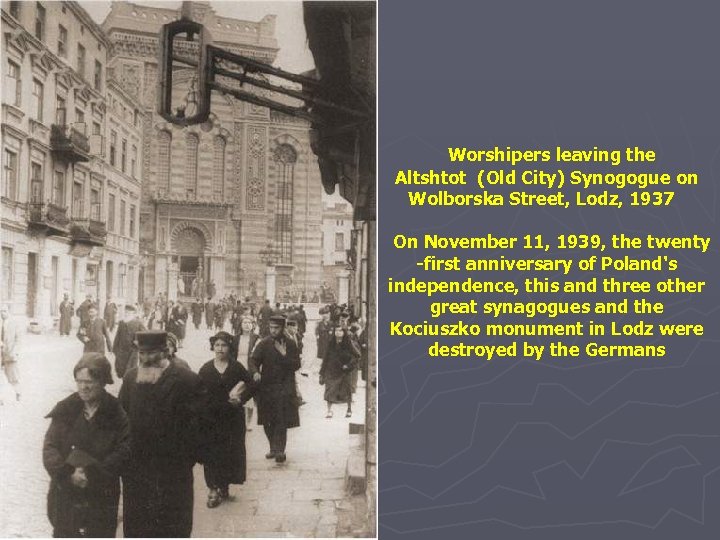 Worshipers leaving the Altshtot (Old City) Synogogue on Wolborska Street, Lodz, 1937 On November 11, 1939, the twenty -first anniversary of Poland's independence, this and three other great synagogues and the Kociuszko monument in Lodz were destroyed by the Germans
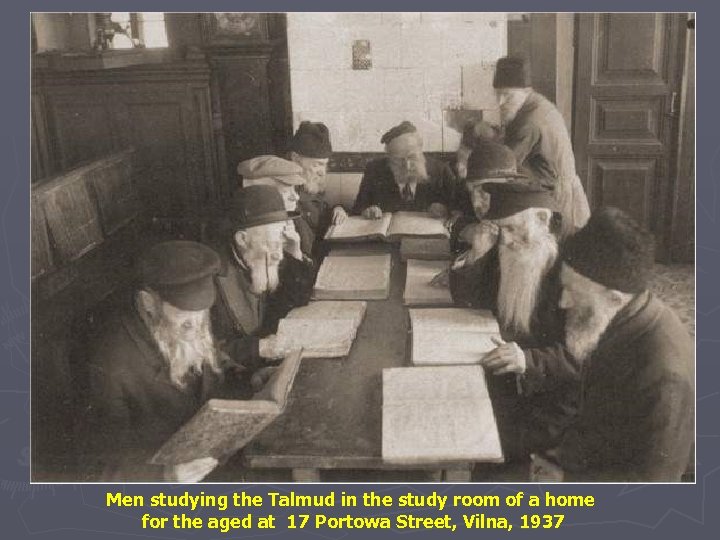 Men studying the Talmud in the study room of a home for the aged at 17 Portowa Street, Vilna, 1937
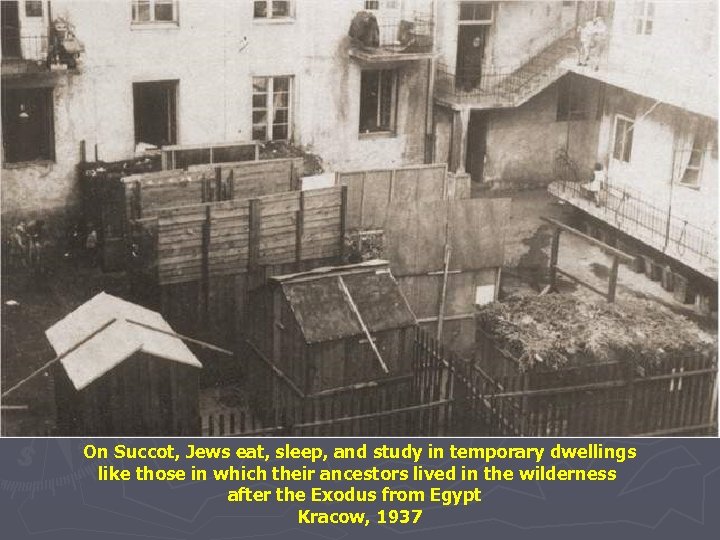 On Succot, Jews eat, sleep, and study in temporary dwellings like those in which their ancestors lived in the wilderness after the Exodus from Egypt Kracow, 1937
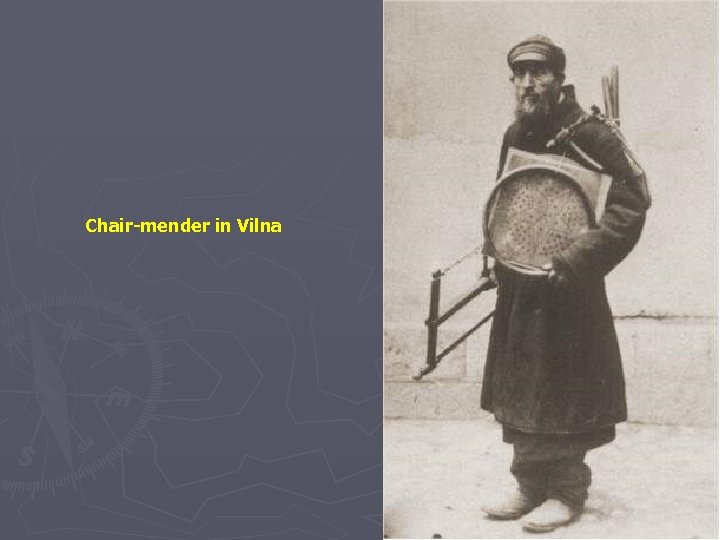 Chair-mender in Vilna
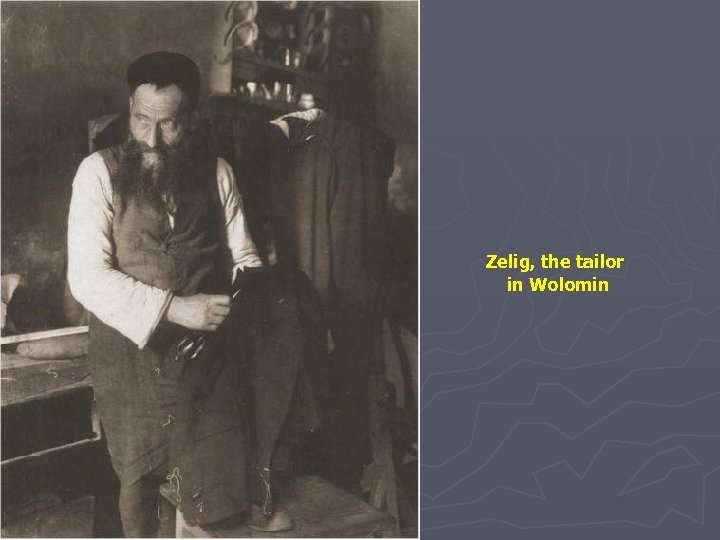 Zelig, the tailor in Wolomin
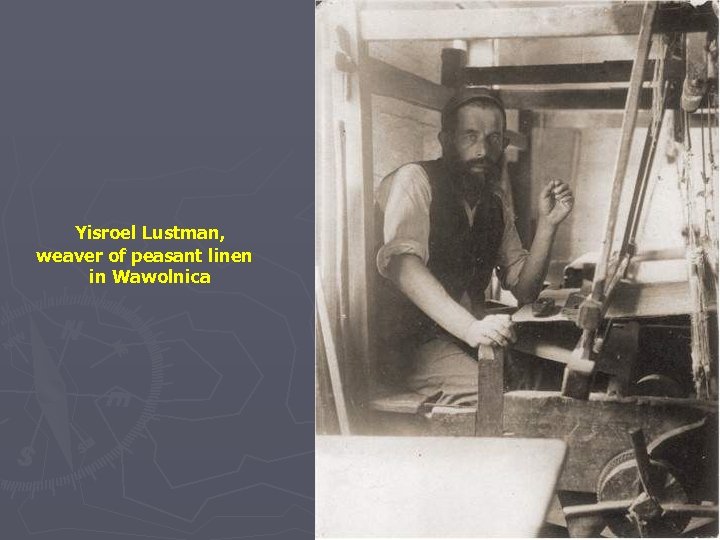 Yisroel Lustman, weaver of peasant linen in Wawolnica
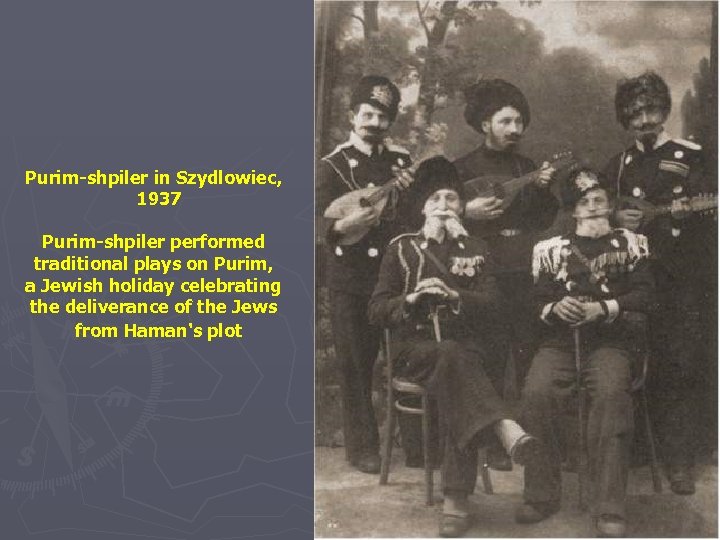 Purim-shpiler in Szydlowiec, 1937 Purim-shpiler performed traditional plays on Purim, a Jewish holiday celebrating the deliverance of the Jews from Haman's plot
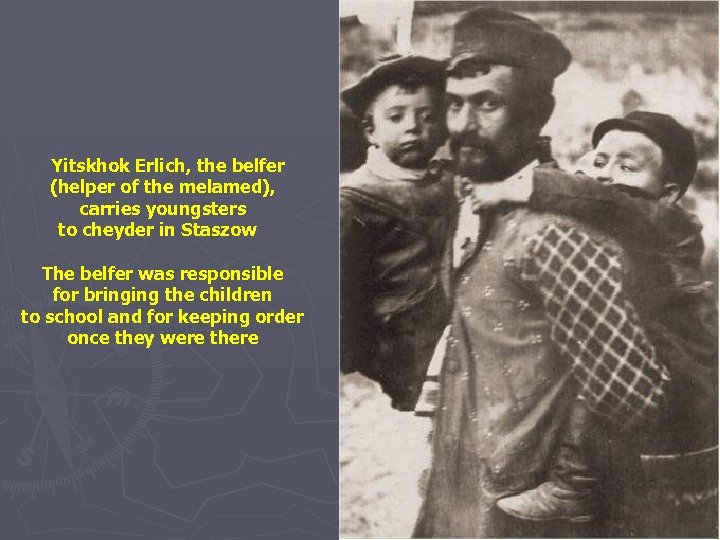 Yitskhok Erlich, the belfer (helper of the melamed), carries youngsters to cheyder in Staszow The belfer was responsible for bringing the children to school and for keeping order once they were there
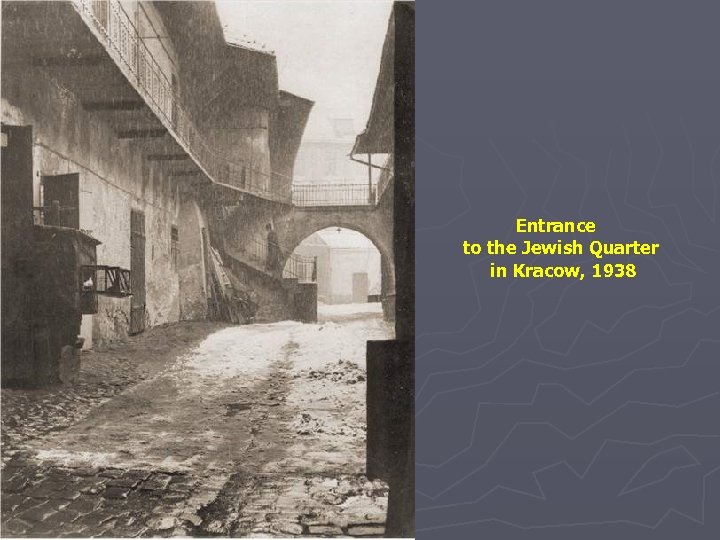 Entrance to the Jewish Quarter in Kracow, 1938
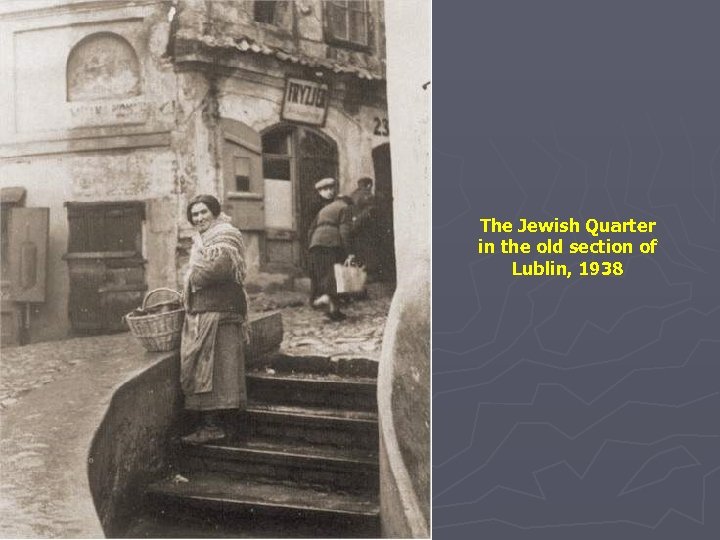 The Jewish Quarter in the old section of Lublin, 1938
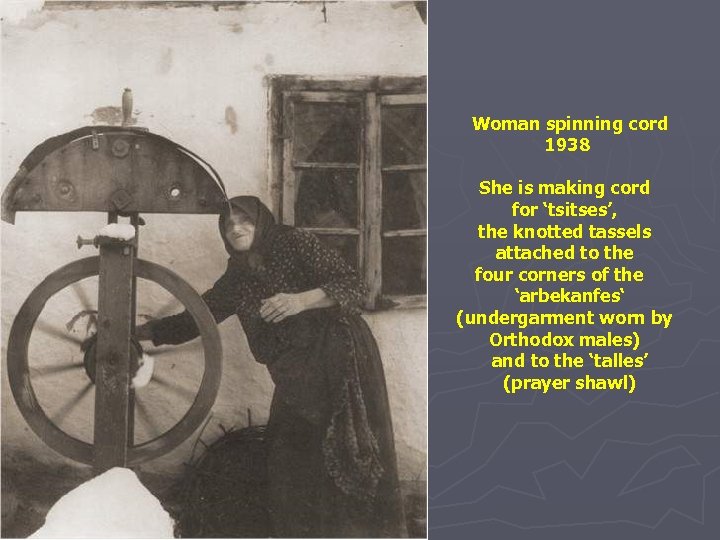 Woman spinning cord 1938 She is making cord for ‘tsitses’, the knotted tassels attached to the four corners of the ‘arbekanfes‘ (undergarment worn by Orthodox males) and to the ‘talles’ (prayer shawl)
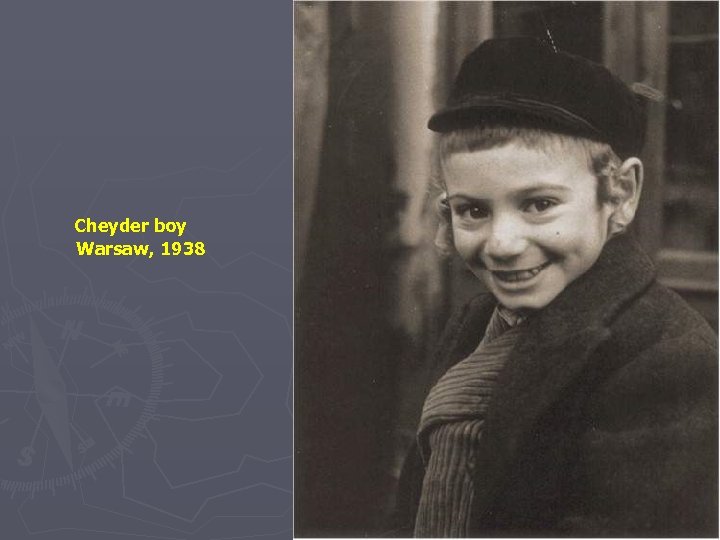 Cheyder boy Warsaw, 1938
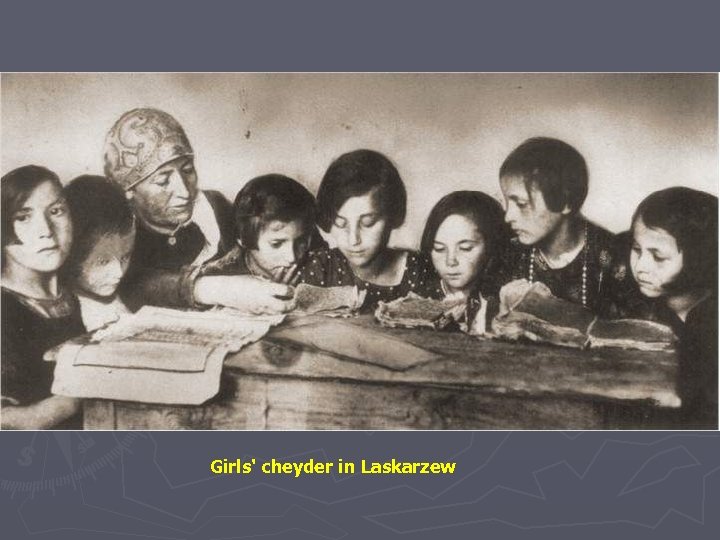 Girls' cheyder in Laskarzew
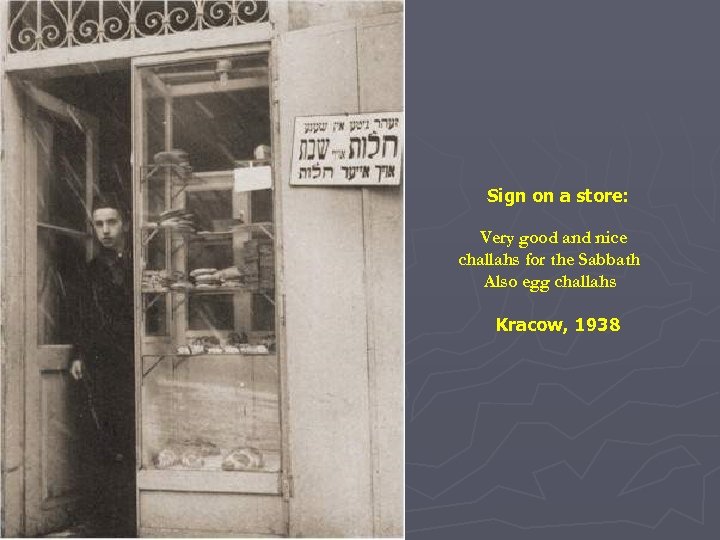 Sign on a store: Very good and nice challahs for the Sabbath Also egg challahs Kracow, 1938
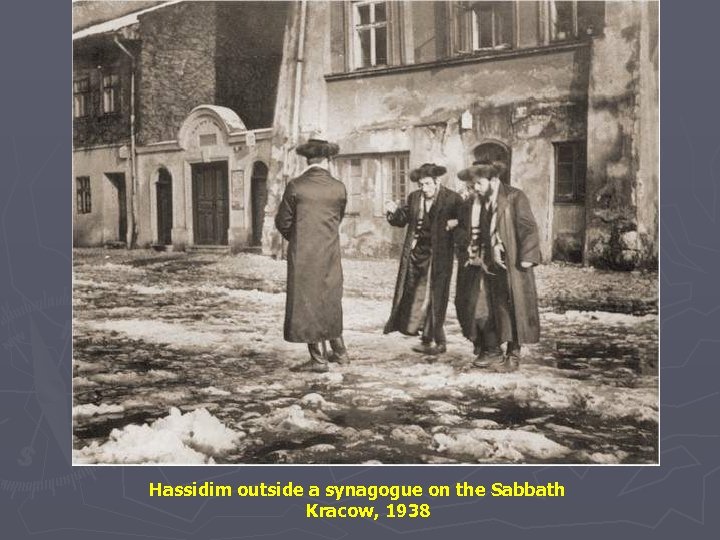 Hassidim outside a synagogue on the Sabbath Kracow, 1938
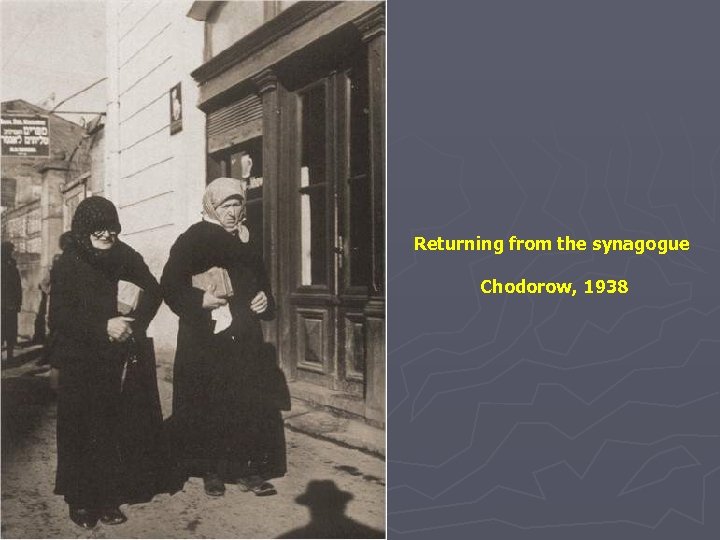 Returning from the synagogue Chodorow, 1938
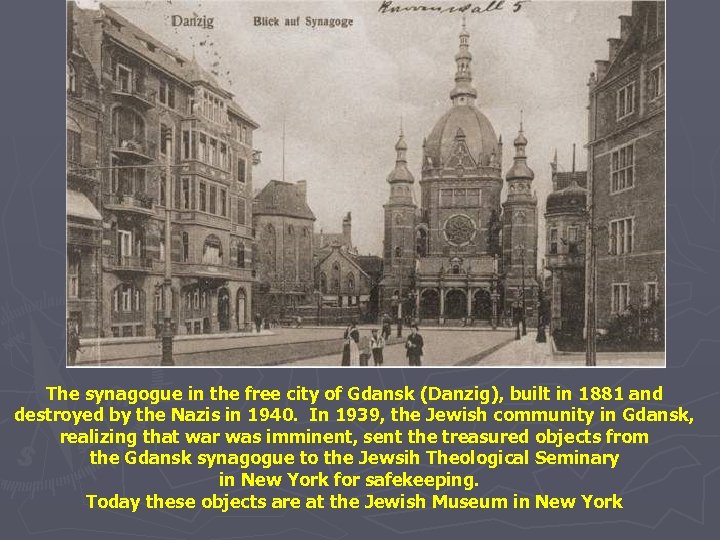 The synagogue in the free city of Gdansk (Danzig), built in 1881 and destroyed by the Nazis in 1940. In 1939, the Jewish community in Gdansk, realizing that war was imminent, sent the treasured objects from the Gdansk synagogue to the Jewsih Theological Seminary in New York for safekeeping. Today these objects are at the Jewish Museum in New York
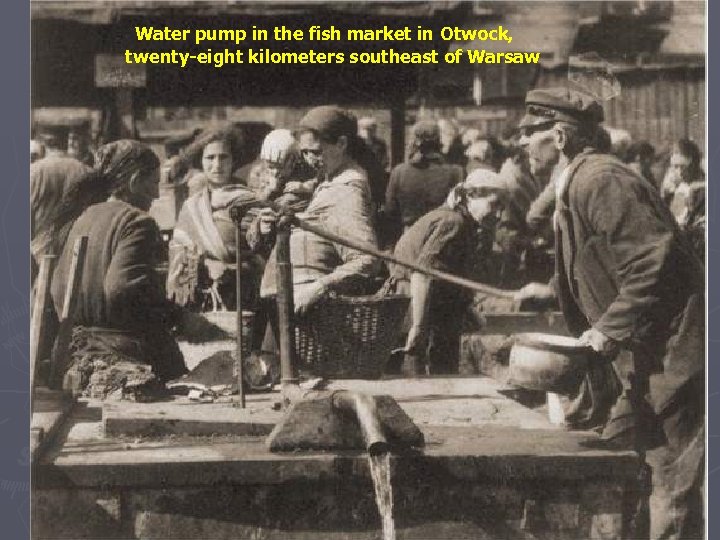 Water pump in the fish market in Otwock, twenty-eight kilometers southeast of Warsaw
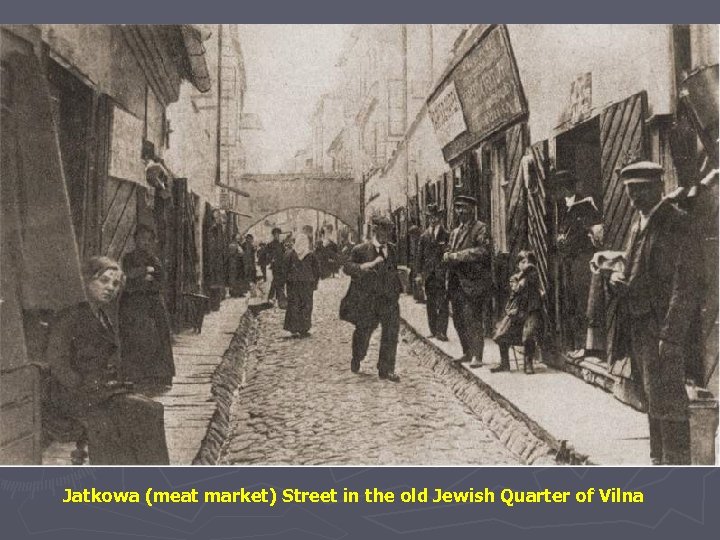 Jatkowa (meat market) Street in the old Jewish Quarter of Vilna
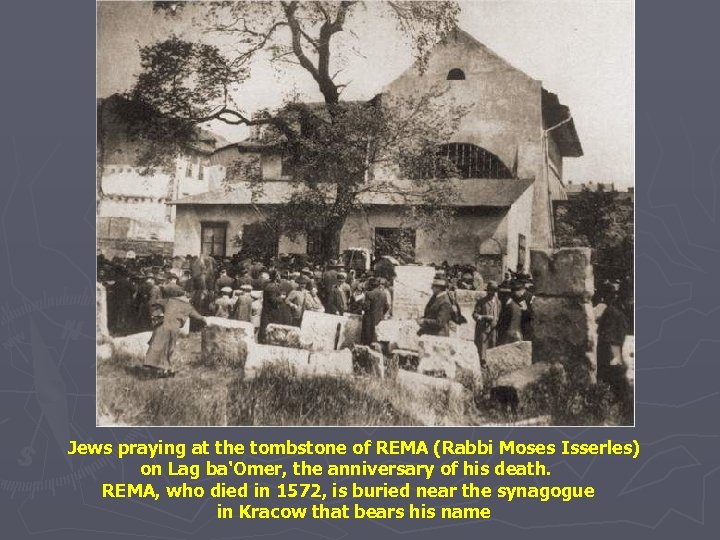 Jews praying at the tombstone of REMA (Rabbi Moses Isserles) on Lag ba'Omer, the anniversary of his death. REMA, who died in 1572, is buried near the synagogue in Kracow that bears his name
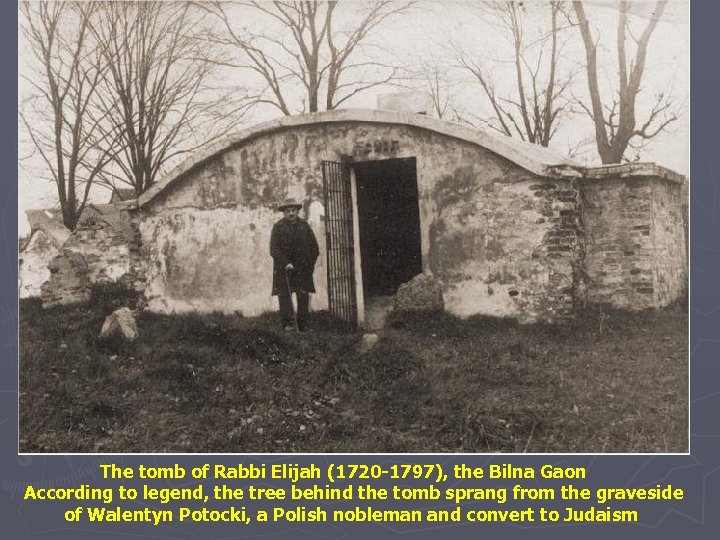 The tomb of Rabbi Elijah (1720 -1797), the Bilna Gaon According to legend, the tree behind the tomb sprang from the graveside of Walentyn Potocki, a Polish nobleman and convert to Judaism
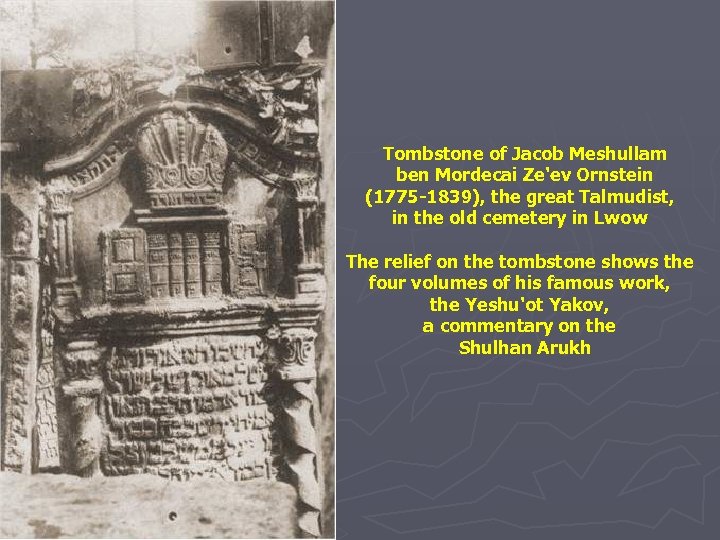 Tombstone of Jacob Meshullam ben Mordecai Ze'ev Ornstein (1775 -1839), the great Talmudist, in the old cemetery in Lwow The relief on the tombstone shows the four volumes of his famous work, the Yeshu'ot Yakov, a commentary on the Shulhan Arukh
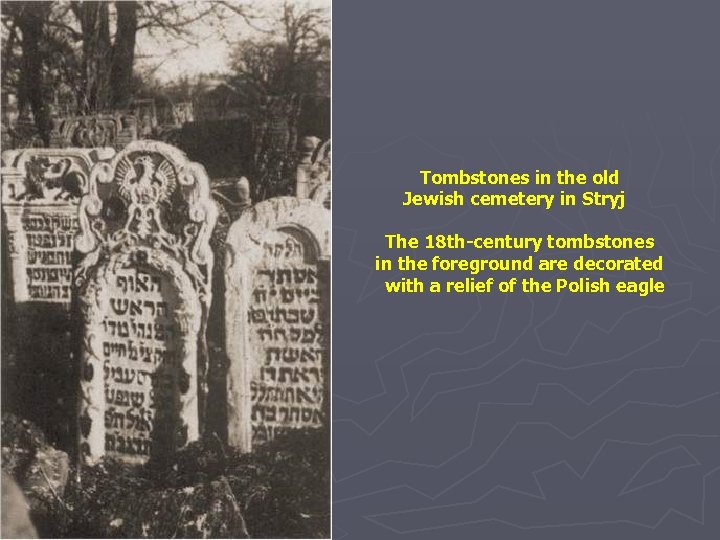 Tombstones in the old Jewish cemetery in Stryj The 18 th-century tombstones in the foreground are decorated with a relief of the Polish eagle
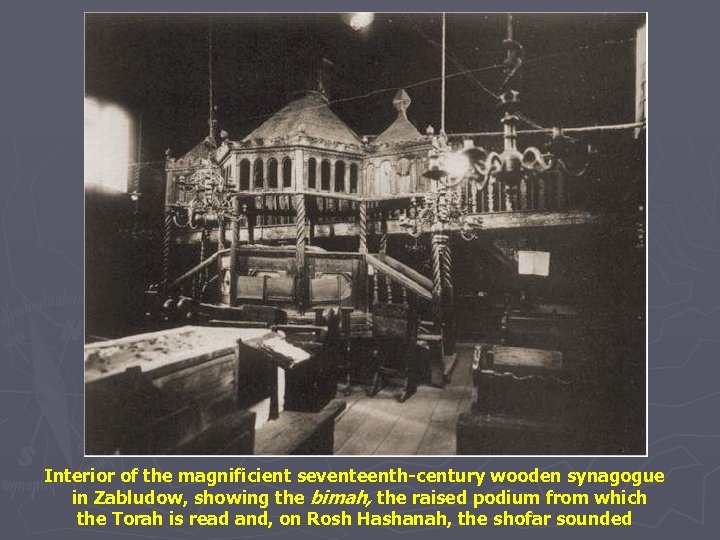 Interior of the magnificient seventeenth-century wooden synagogue in Zabludow, showing the bimah, the raised podium from which the Torah is read and, on Rosh Hashanah, the shofar sounded
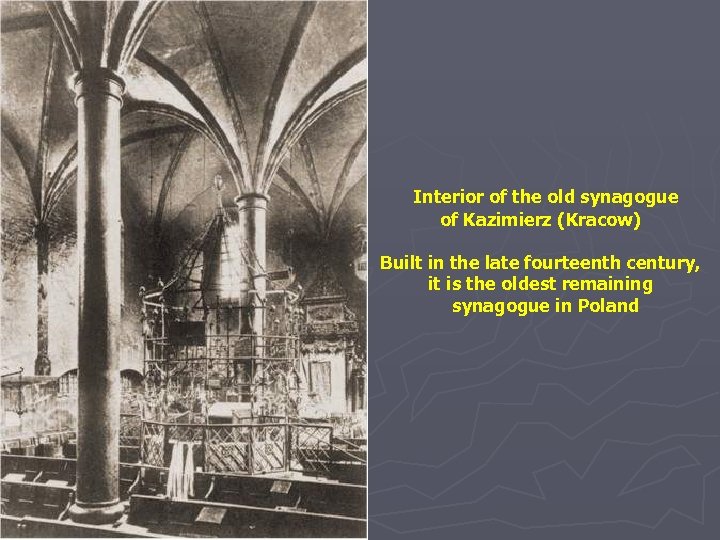 Interior of the old synagogue of Kazimierz (Kracow) Built in the late fourteenth century, it is the oldest remaining synagogue in Poland
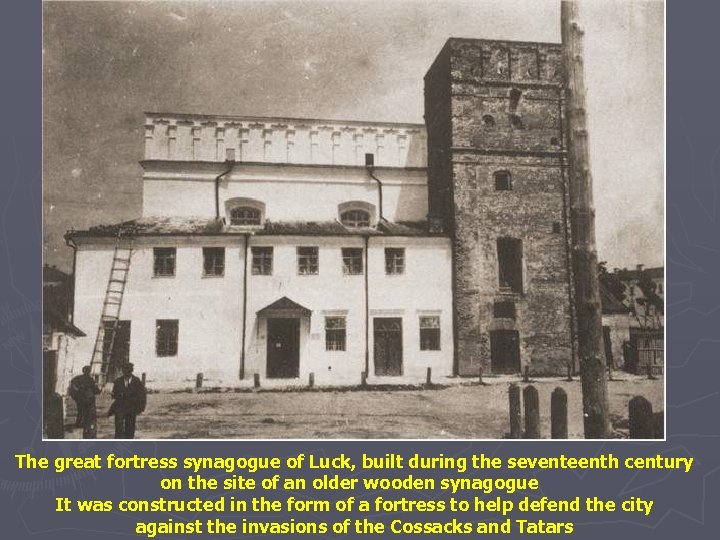 The great fortress synagogue of Luck, built during the seventeenth century on the site of an older wooden synagogue It was constructed in the form of a fortress to help defend the city against the invasions of the Cossacks and Tatars
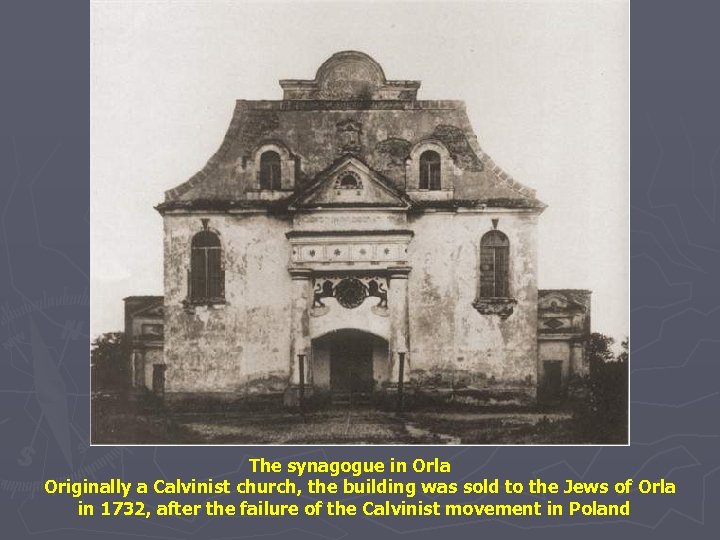 The synagogue in Orla Originally a Calvinist church, the building was sold to the Jews of Orla in 1732, after the failure of the Calvinist movement in Poland
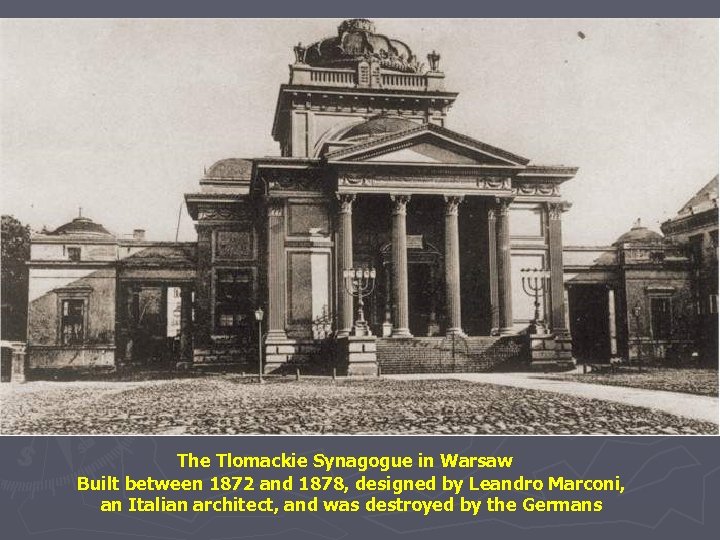 The Tlomackie Synagogue in Warsaw Built between 1872 and 1878, designed by Leandro Marconi, an Italian architect, and was destroyed by the Germans
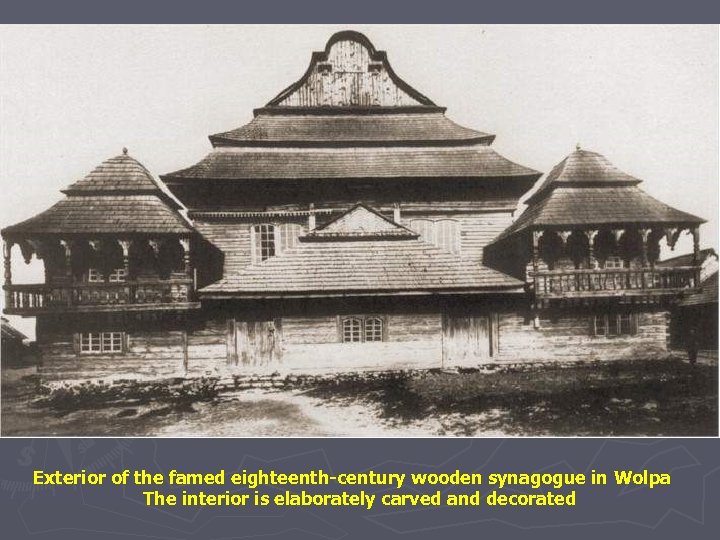 Exterior of the famed eighteenth-century wooden synagogue in Wolpa The interior is elaborately carved and decorated
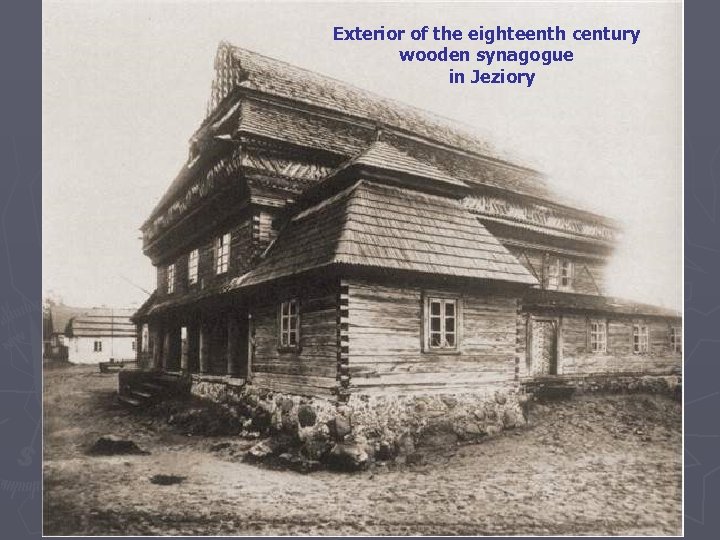 Exterior of the eighteenth century wooden synagogue in Jeziory
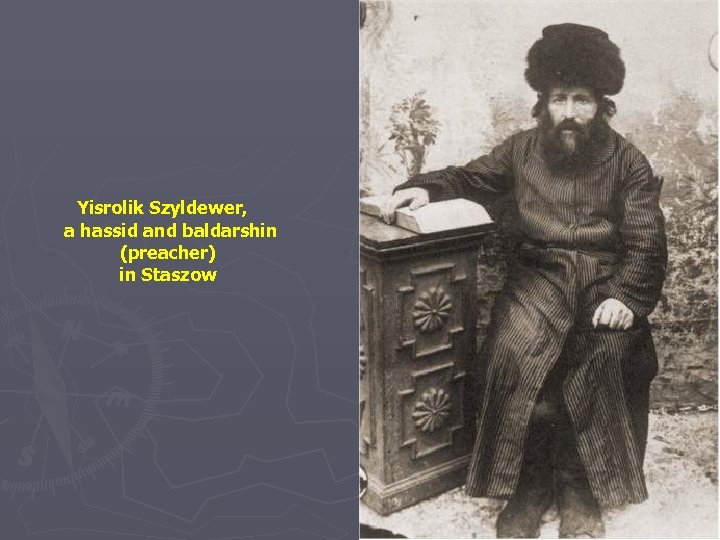 Yisrolik Szyldewer, a hassid and baldarshin (preacher) in Staszow
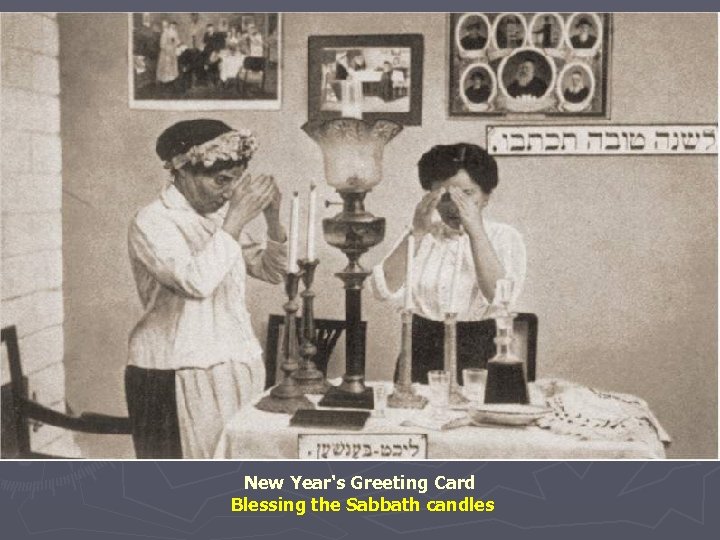 New Year's Greeting Card Blessing the Sabbath candles
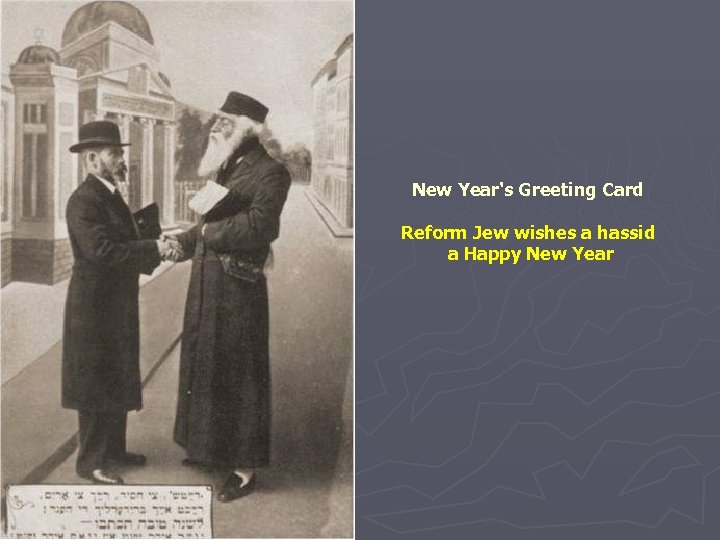 New Year's Greeting Card Reform Jew wishes a hassid a Happy New Year
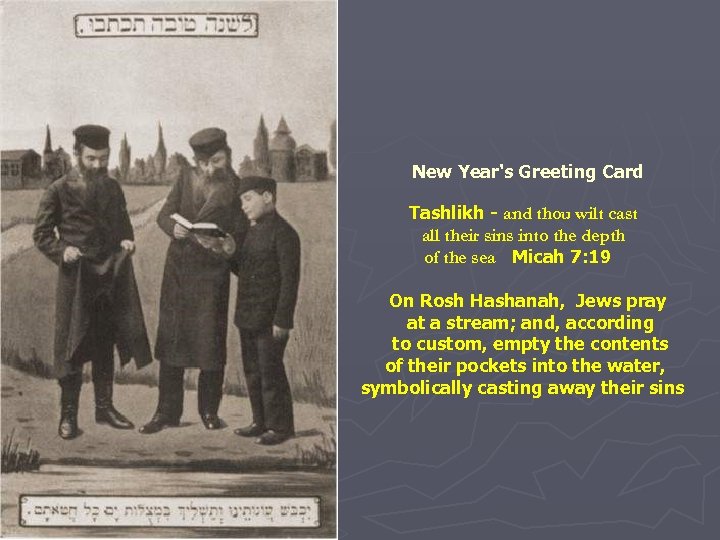 New Year's Greeting Card Tashlikh - and thou wilt cast all their sins into the depth of the sea Micah 7: 19 On Rosh Hashanah, Jews pray at a stream; and, according to custom, empty the contents of their pockets into the water, symbolically casting away their sins
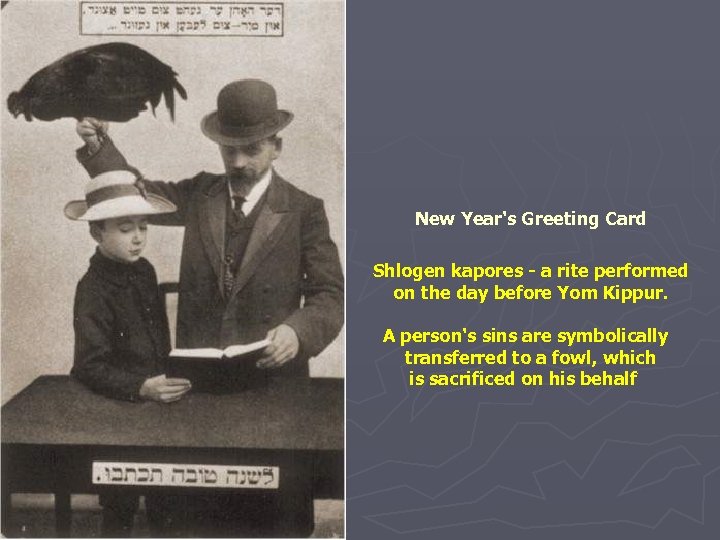 New Year's Greeting Card Shlogen kapores - a rite performed on the day before Yom Kippur. A person's sins are symbolically transferred to a fowl, which is sacrificed on his behalf
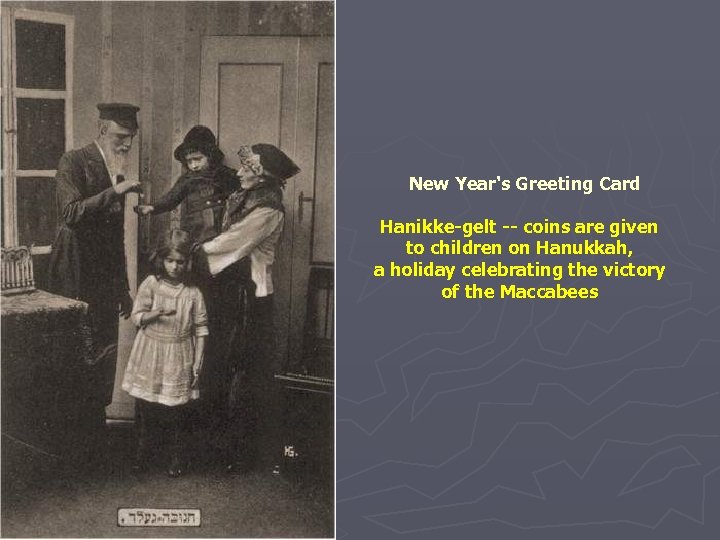 New Year's Greeting Card Hanikke-gelt -- coins are given to children on Hanukkah, a holiday celebrating the victory of the Maccabees
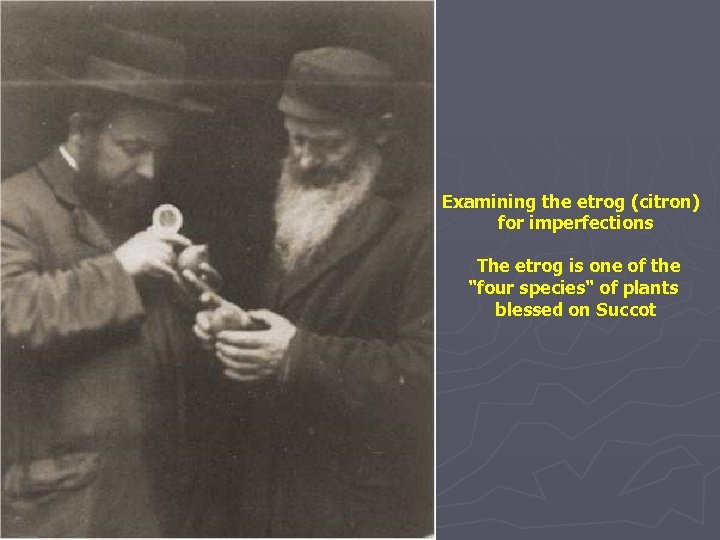 Examining the etrog (citron) for imperfections The etrog is one of the "four species" of plants blessed on Succot
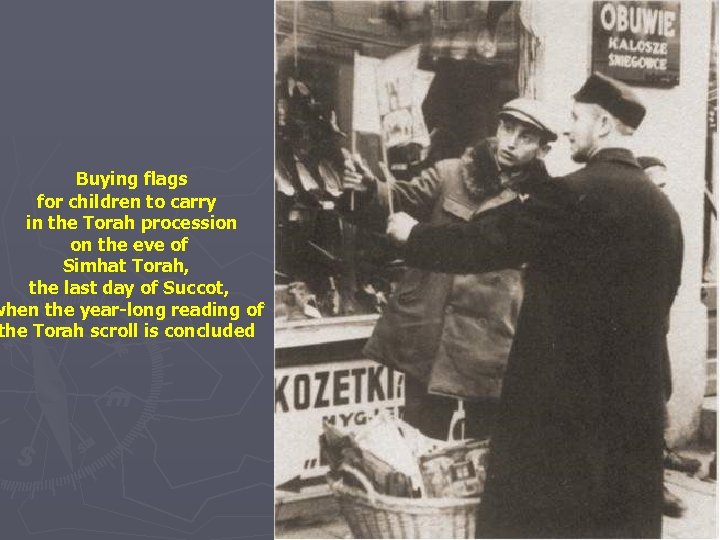 Buying flags for children to carry in the Torah procession on the eve of Simhat Torah, the last day of Succot, when the year-long reading of the Torah scroll is concluded
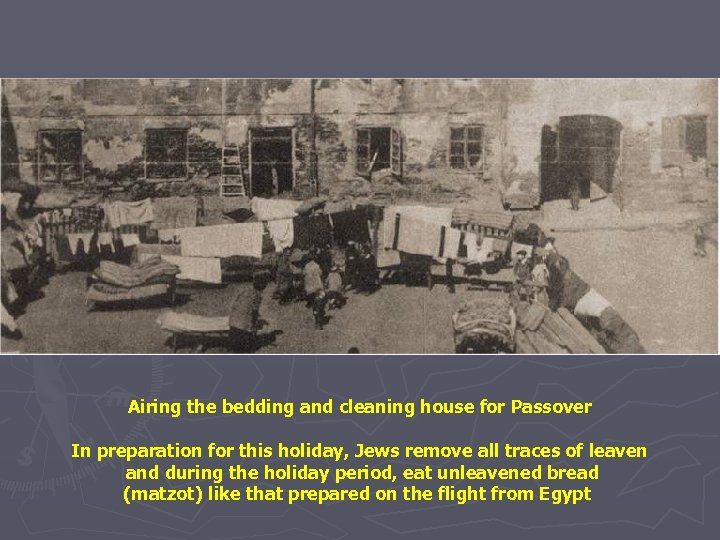 Airing the bedding and cleaning house for Passover In preparation for this holiday, Jews remove all traces of leaven and during the holiday period, eat unleavened bread (matzot) like that prepared on the flight from Egypt
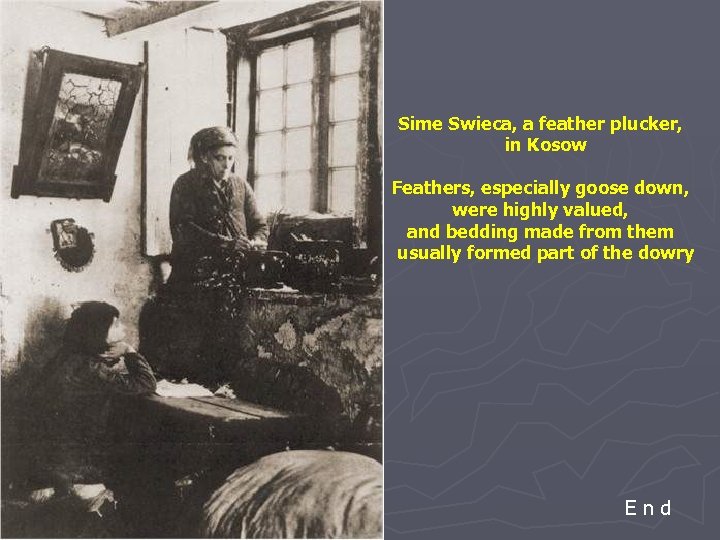 Sime Swieca, a feather plucker, in Kosow Feathers, especially goose down, were highly valued, and bedding made from them usually formed part of the dowry End