


 Скачать презентацию In-Situ Spectrophotometry and Mass Spectrometry for Measurement of
f93520fa7c2c8cbd7e78ae651c70c32e.ppt
- Количество слайдов: 25
 In-Situ Spectrophotometry and Mass Spectrometry for Measurement of Trace Metals, Nutrients and Dissolved Gases Robert H. Byrne 1, Eric A. Kaltenbacher 2 and Timothy Short 2 1 College of Marine Science and 2 Center for Ocean Technology University of South Florida, St. Petersburg FL
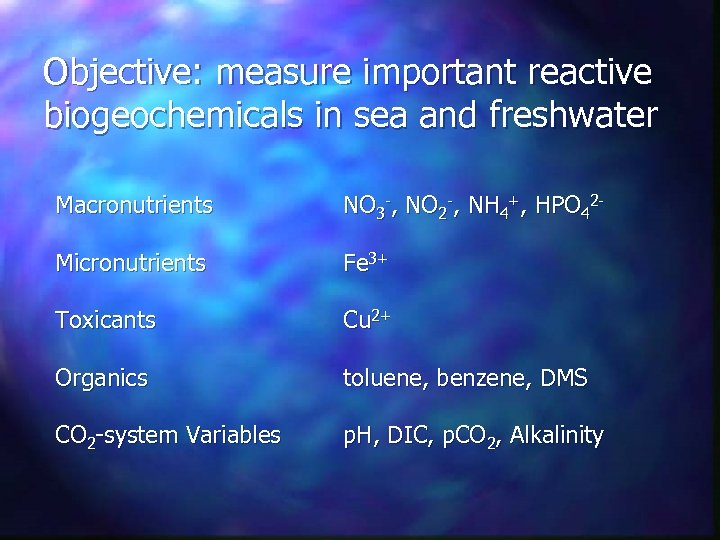 Objective: measure important reactive biogeochemicals in sea and freshwater Macronutrients NO 3 -, NO 2 -, NH 4+, HPO 42 - Micronutrients Fe 3+ Toxicants Cu 2+ Organics toluene, benzene, DMS CO 2 -system Variables p. H, DIC, p. CO 2, Alkalinity
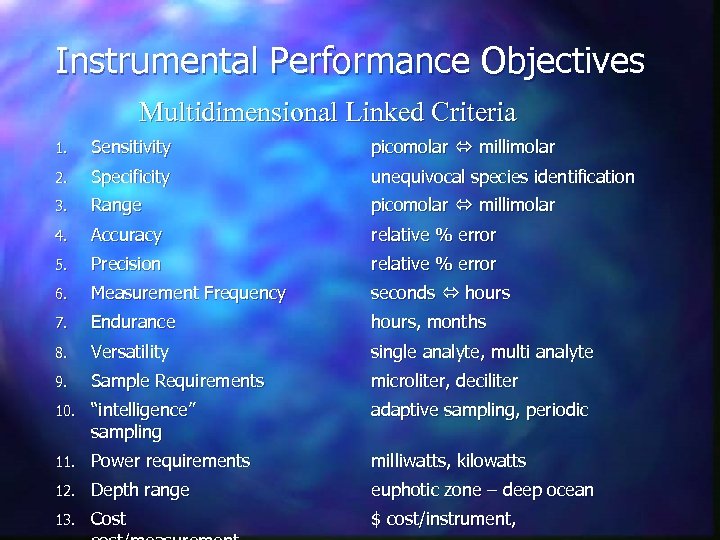 Instrumental Performance Objectives Multidimensional Linked Criteria 1. Sensitivity picomolar millimolar 2. Specificity unequivocal species identification 3. Range picomolar millimolar 4. Accuracy relative % error 5. Precision relative % error 6. Measurement Frequency seconds hours 7. Endurance hours, months 8. Versatility single analyte, multi analyte 9. Sample Requirements microliter, deciliter 10. “intelligence” sampling adaptive sampling, periodic 11. Power requirements milliwatts, kilowatts 12. Depth range euphotic zone – deep ocean 13. Cost $ cost/instrument,
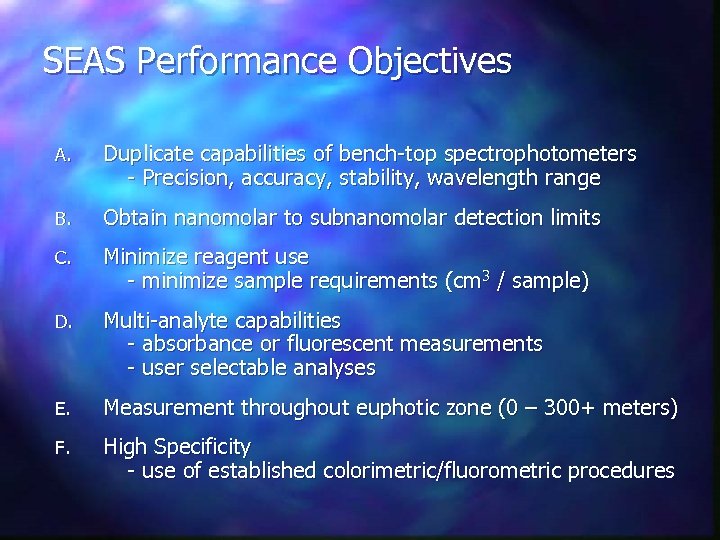 SEAS Performance Objectives A. Duplicate capabilities of bench-top spectrophotometers - Precision, accuracy, stability, wavelength range B. Obtain nanomolar to subnanomolar detection limits C. Minimize reagent use - minimize sample requirements (cm 3 / sample) D. Multi-analyte capabilities - absorbance or fluorescent measurements - user selectable analyses E. Measurement throughout euphotic zone (0 – 300+ meters) F. High Specificity - use of established colorimetric/fluorometric procedures
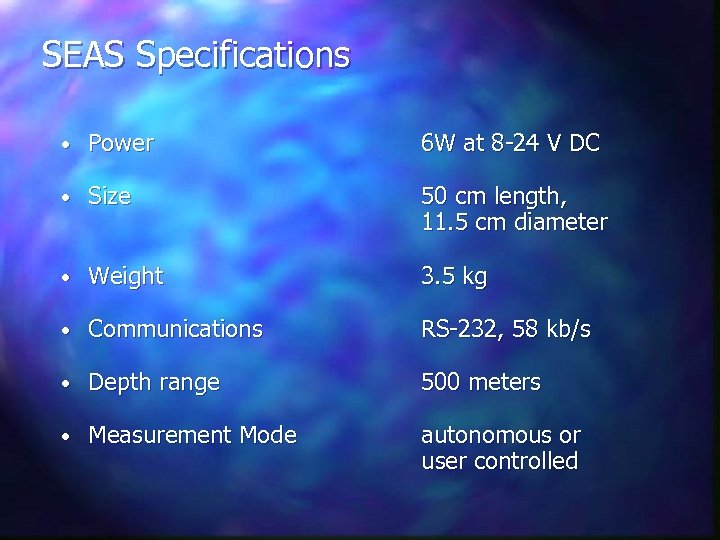 SEAS Specifications • Power 6 W at 8 -24 V DC • Size 50 cm length, 11. 5 cm diameter • Weight 3. 5 kg • Communications RS-232, 58 kb/s • Depth range 500 meters • Measurement Mode autonomous or user controlled
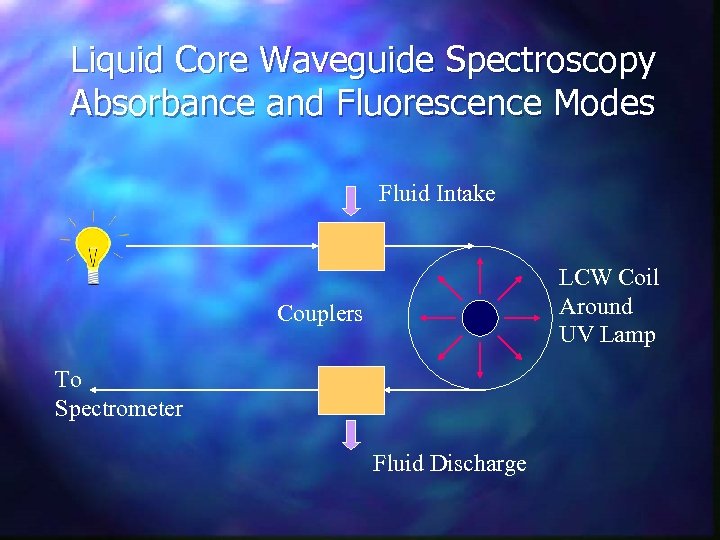 Liquid Core Waveguide Spectroscopy Absorbance and Fluorescence Modes Fluid Intake LCW Coil Around UV Lamp Couplers To Spectrometer Fluid Discharge
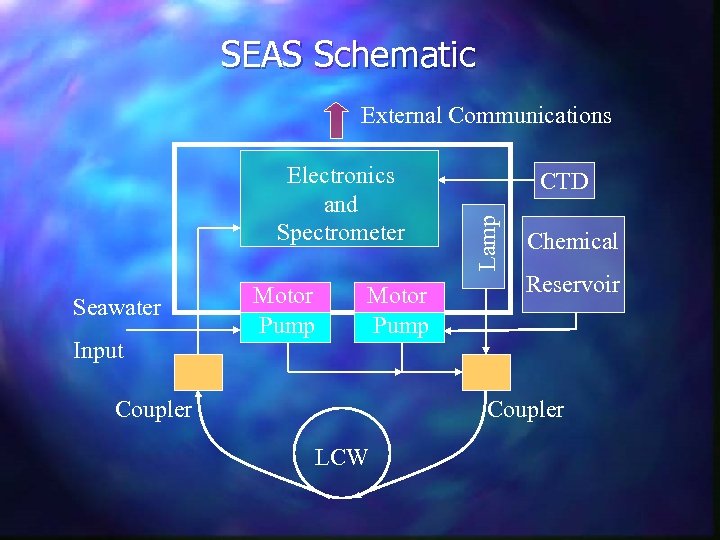 SEAS Schematic External Communications Seawater Input Motor Pump Coupler CTD Lamp Electronics and Spectrometer Chemical Reservoir Coupler LCW
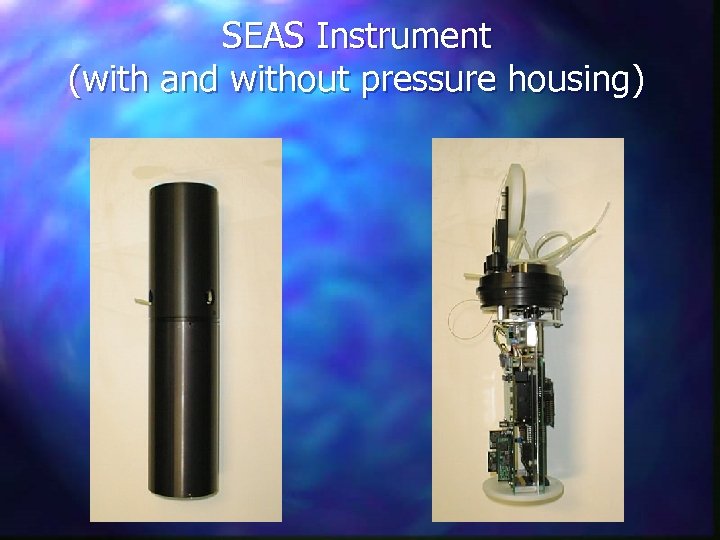 SEAS Instrument (with and without pressure housing)
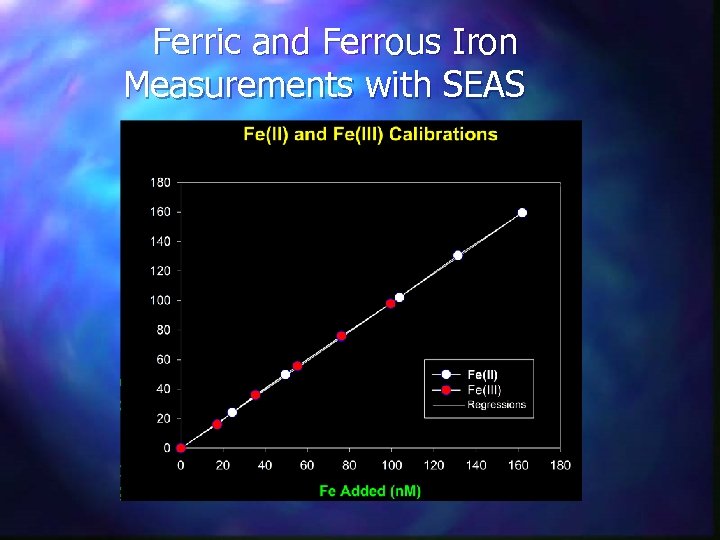 Ferric and Ferrous Iron Measurements with SEAS
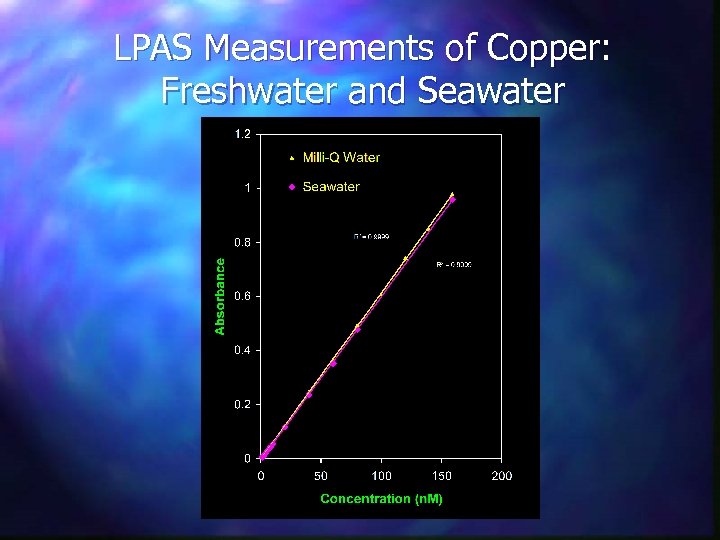 LPAS Measurements of Copper: Freshwater and Seawater
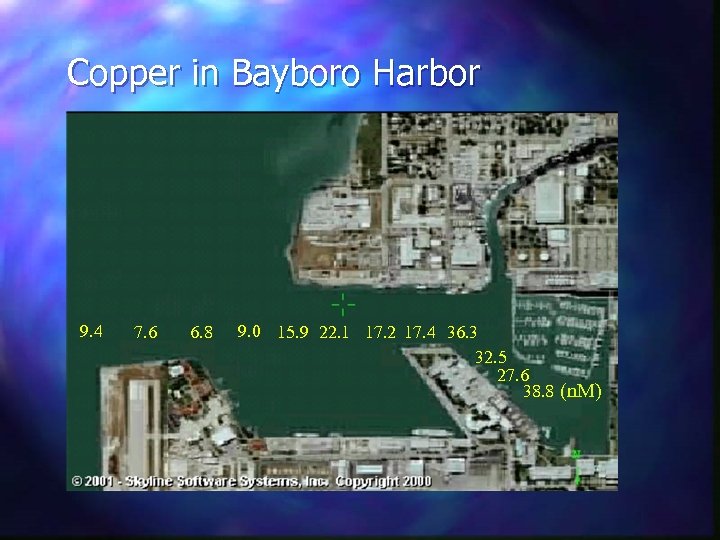 Copper in Bayboro Harbor 9. 4 7. 6 6. 8 9. 0 15. 9 22. 1 17. 2 17. 4 36. 3 32. 5 27. 6 38. 8 (n. M)
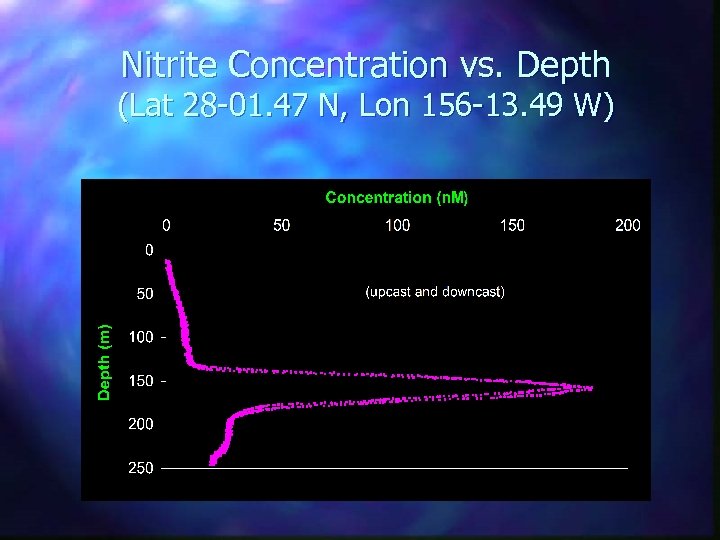 Nitrite Concentration vs. Depth (Lat 28 -01. 47 N, Lon 156 -13. 49 W)
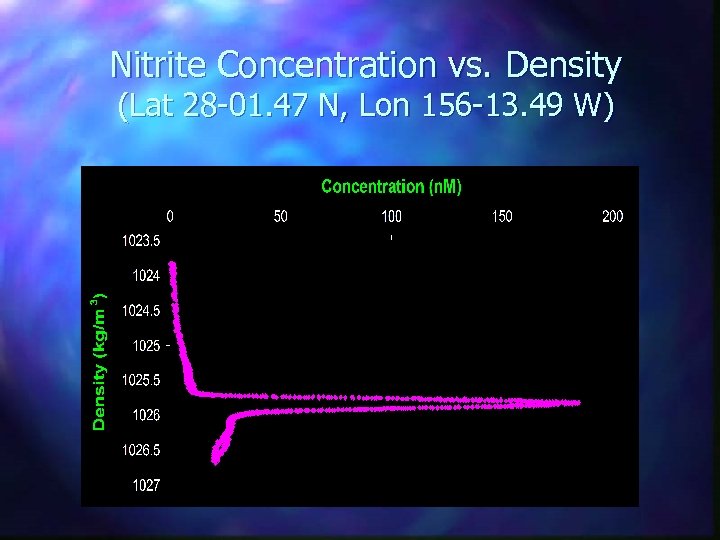 Nitrite Concentration vs. Density (Lat 28 -01. 47 N, Lon 156 -13. 49 W)
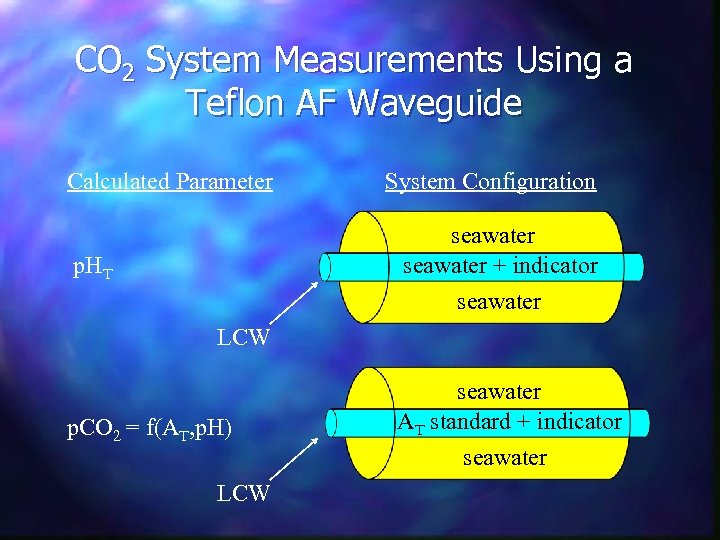 CO 2 System Measurements Using a Teflon AF Waveguide Calculated Parameter System Configuration seawater + indicator seawater p. HT LCW p. CO 2 = f(AT, p. H) LCW seawater AT standard + indicator seawater
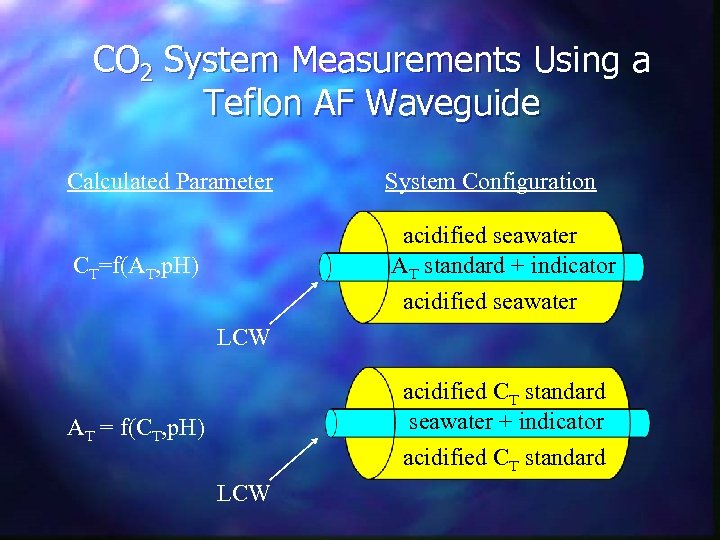 CO 2 System Measurements Using a Teflon AF Waveguide Calculated Parameter System Configuration CT=f(AT, p. H) acidified seawater AT standard + indicator acidified seawater LCW acidified CT standard seawater + indicator acidified CT standard AT = f(CT, p. H) LCW
 Underwater Mass Spectrometry Objectives: Long term – measurement of ions, gases and semi-volatile organics Short term – measurement of volatile organics and gases
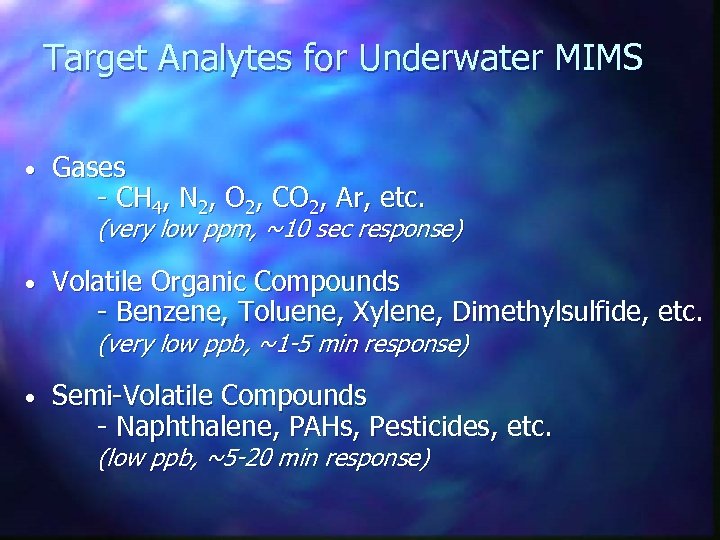 Target Analytes for Underwater MIMS • Gases - CH 4, N 2, O 2, CO 2, Ar, etc. (very low ppm, ~10 sec response) • Volatile Organic Compounds - Benzene, Toluene, Xylene, Dimethylsulfide, etc. (very low ppb, ~1 -5 min response) • Semi-Volatile Compounds - Naphthalene, PAHs, Pesticides, etc. (low ppb, ~5 -20 min response)
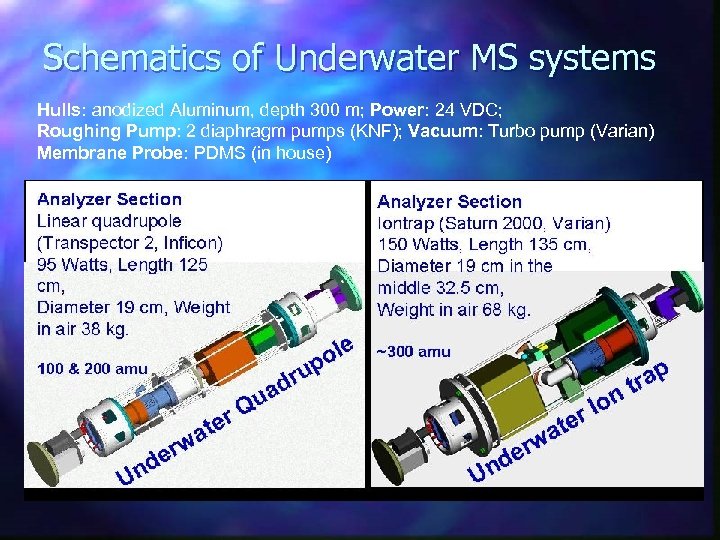 Schematics of Underwater MS systems Hulls: anodized Aluminum, depth 300 m; Power: 24 VDC; Roughing Pump: 2 diaphragm pumps (KNF); Vacuum: Turbo pump (Varian) Membrane Probe: PDMS (in house)
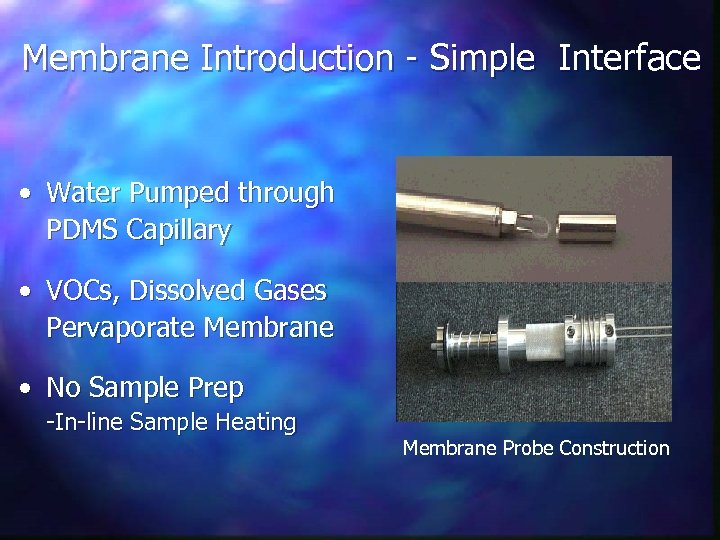 Membrane Introduction - Simple Interface • Water Pumped through PDMS Capillary • VOCs, Dissolved Gases Pervaporate Membrane • No Sample Prep -In-line Sample Heating Membrane Probe Construction
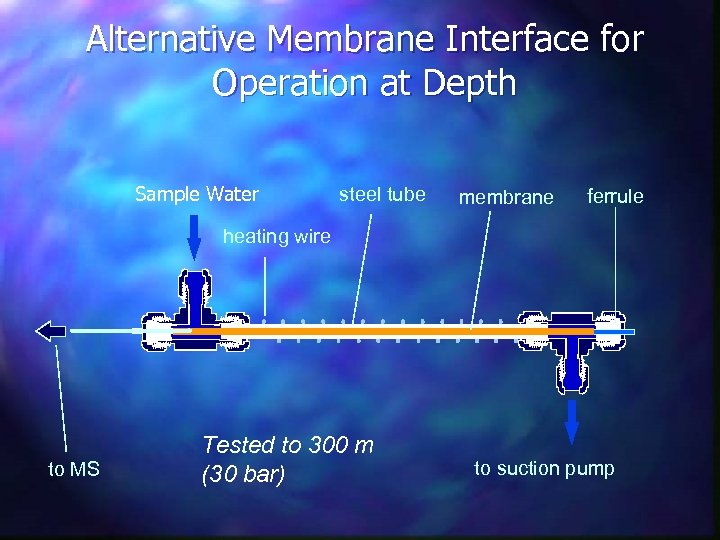 Alternative Membrane Interface for Operation at Depth Sample Water steel tube membrane ferrule heating wire to MS Tested to 300 m (30 bar) to suction pump
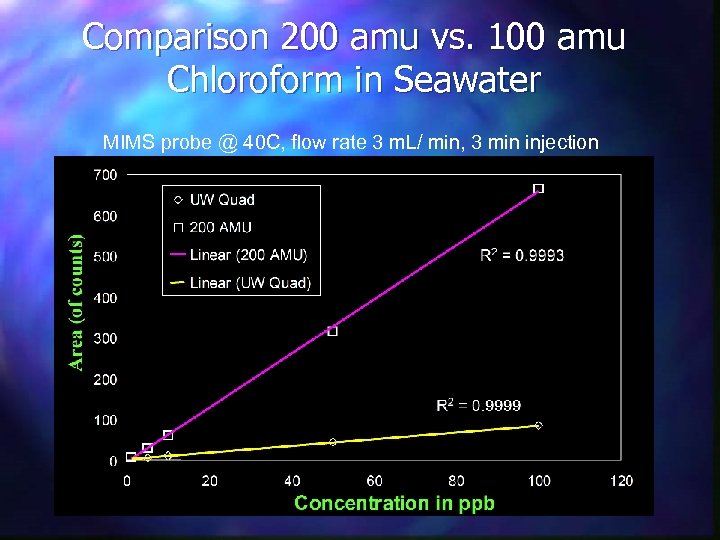 Comparison 200 amu vs. 100 amu Chloroform in Seawater MIMS probe @ 40 C, flow rate 3 m. L/ min, 3 min injection
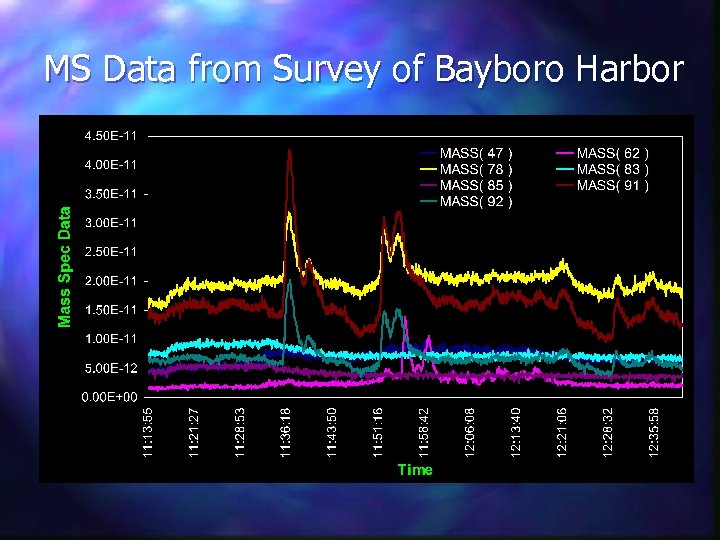 MS Data from Survey of Bayboro Harbor
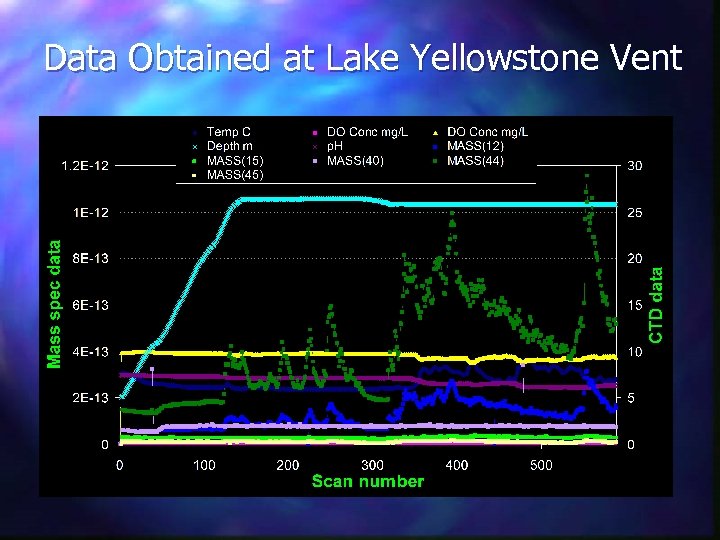 Data Obtained at Lake Yellowstone Vent
 Future Development Plans • Alternative Sampling Interfaces - solid phase extraction - electrospray • Autonomous Adaptive sampling - autonomous vehicles - intelligent algorithms • Anthropogenic Chemicals - oil related - herbicides, pesticides
 Acknowledgements • Funding from the Office of Naval Research (ONR) N 00014 -96 -1 -5011 N 00014 -02 -1 -0823 N 00014 -98 -1 -0154 • CICEET (Cooperative Institute for Coastal and Estuarine Environmental Technologies) NA 17 OR 1401 • Lori Adornato, Ryan Bell, Michael Callahan, Xuewu Liu, Eric Steimle, Peter Wenner