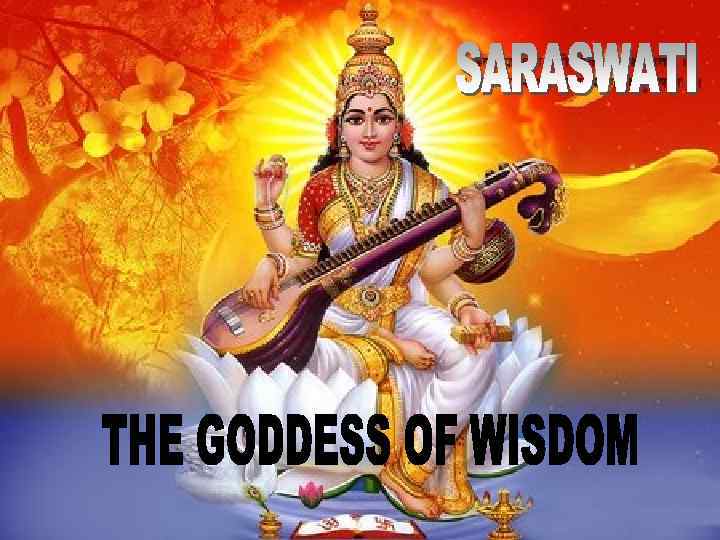
 • In India the Guru or the teacher is held in high esteem. • Indeed, there is an understanding that if the devotee were presented with the guru and God, first he would pay respect to the guru, since the guru had been instrumental in leading him to God.
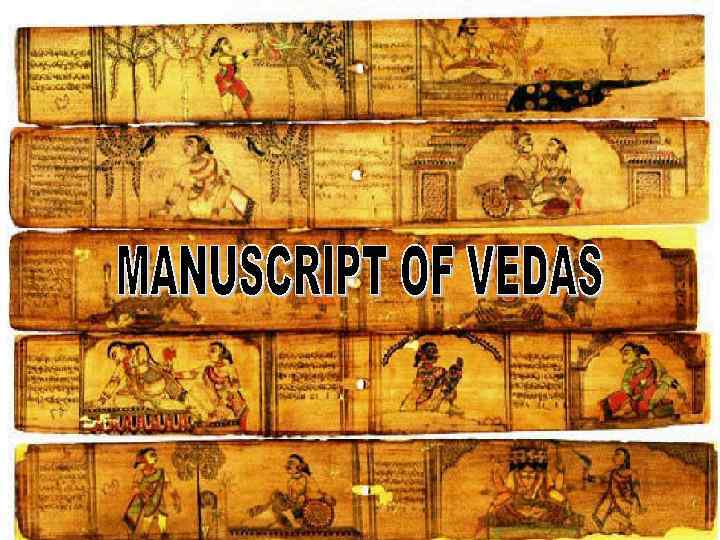
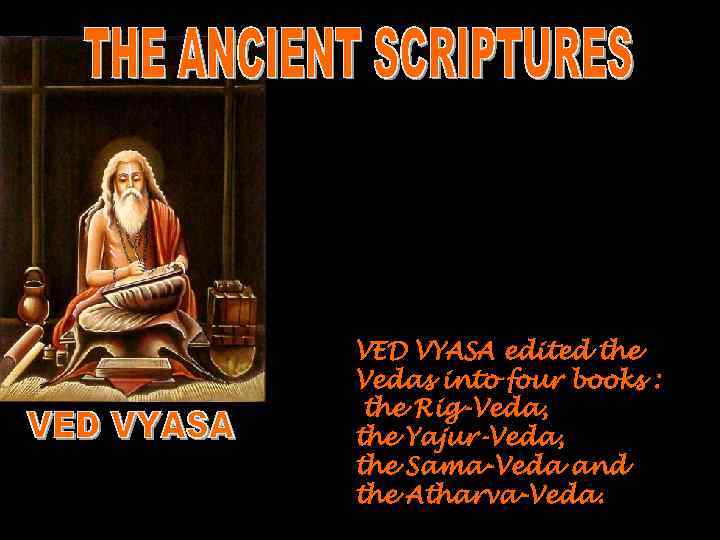 VED VYASA edited the Vedas into four books : the Rig-Veda, the Yajur-Veda, the Sama-Veda and the Atharva-Veda.
 The Vedas are a large body of texts originating in ancient India. Composed in Vedic Sanskrit, the texts constitutes the oldest layer of Sanskrit literature and the oldest scriptures of Hinduism. Scholars have determined that the Rig Veda, the oldest of the four Vedas, was composed about 1500 B. C.
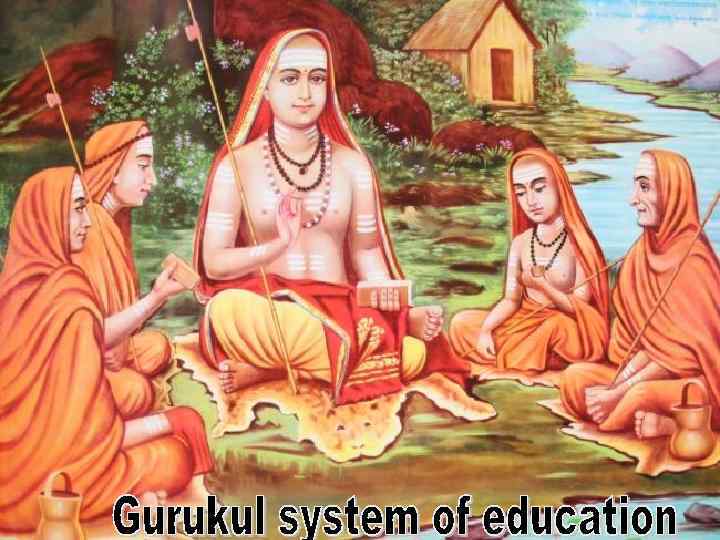
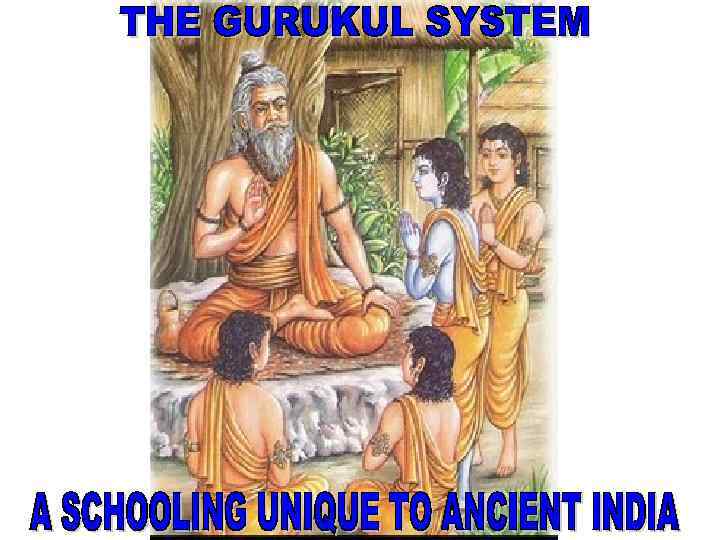
 Gurukul was a type of school in India, residential in nature, with pupils living in proximity to the guru. In a gurukul, students resided together as equals, irrespective of their social standing, learnt from the guru and helped the guru in his day-to-day life. At the end of his studies, the pupil offered dakshina (fees) to the guru. The gurudakshina is a traditional gesture of acknowledgment, respect and thanks.
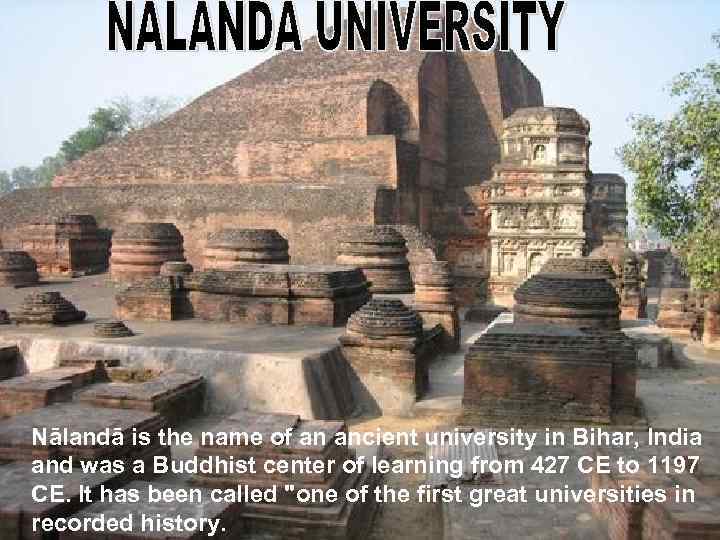 Nālandā is the name of an ancient university in Bihar, India and was a Buddhist center of learning from 427 CE to 1197 CE. It has been called "one of the first great universities in recorded history.
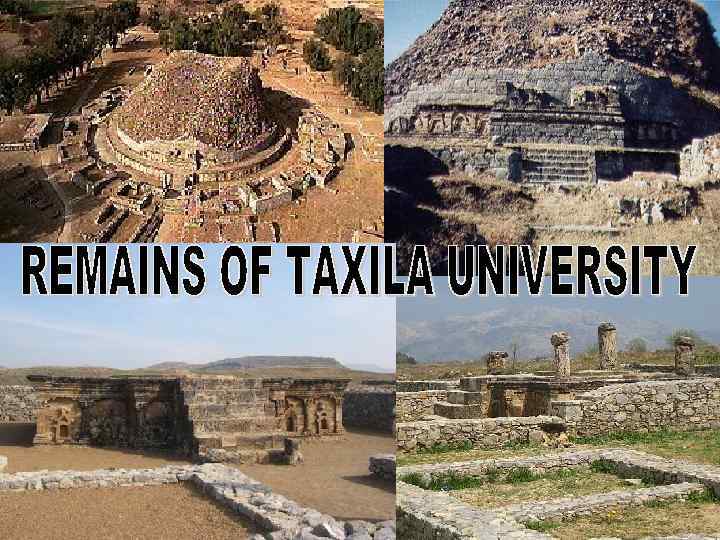
 There were universities like Taxila, Ujjain, Kanchi etc. for medicine and learning including mathematics and astronomy.
 • • Established a Department of Public Instruction in each province of British India. Established teacher-training schools for all levels of instruction. Increased the number of Government colleges , vernacular schools and high-schools. The Department of Public Instruction was in place by 1855. By 1857 a number of universities were established modeled on the University of London. Educational reforms in the early 20 th century led towards the nationalisation of many universities.
 The Indian government lays great emphasis to primary education up to the age of fourteen years (referred to as Elementary Education in India. ) The Indian government has also banned child labour in order to ensure that the children do not enter unsafe working conditions.
 Education has also been made free for children from six to sixteen years of age. The District Primary Education Programme (DPEP) was launched in 1994 with an aim to universalize primary education in India by reforming and vitalizing the existing primary education system
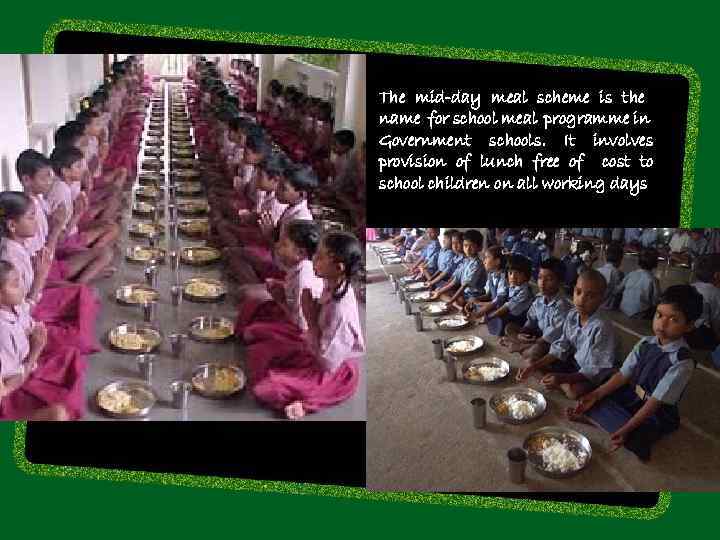 The mid-day meal scheme is the name for school meal programme in Government schools. It involves provision of lunch free of cost to school children on all working days
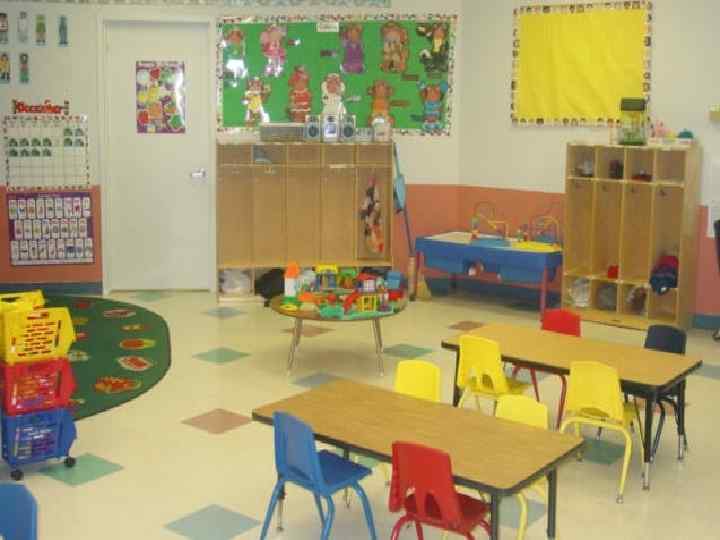
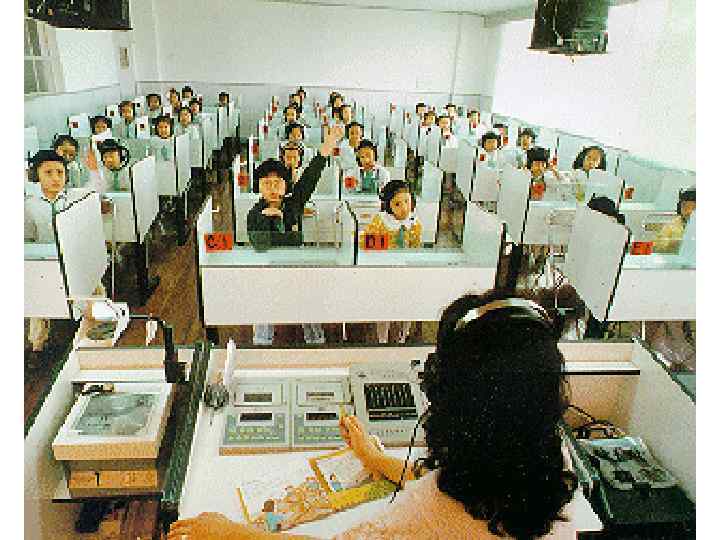
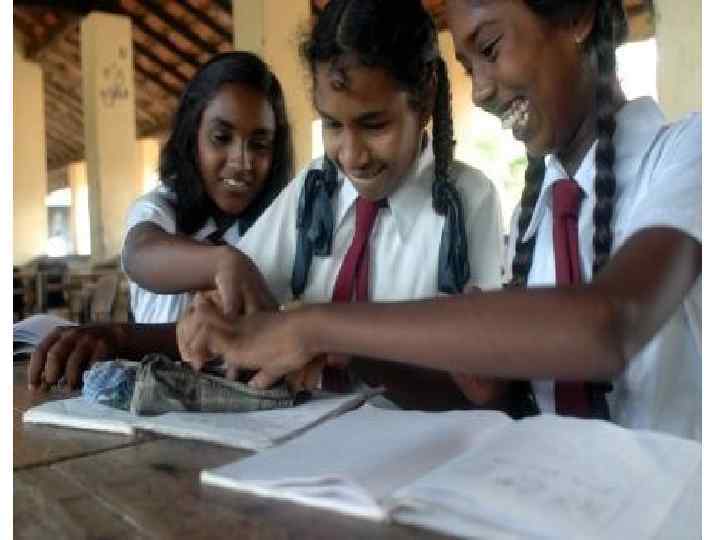
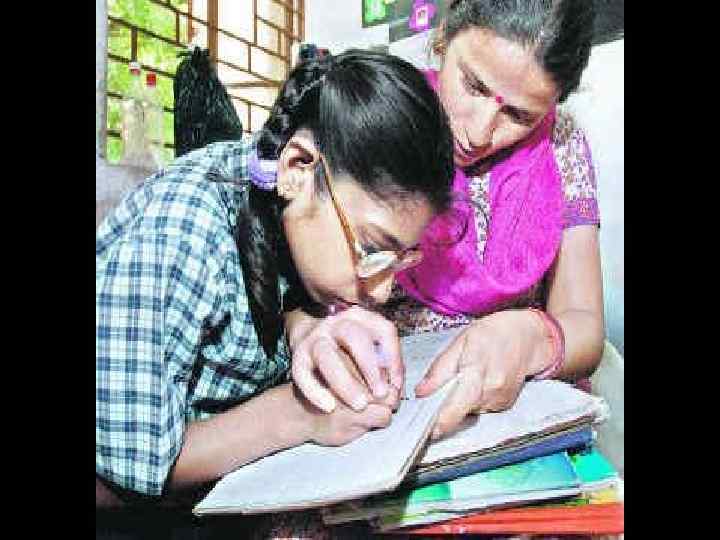
 There is a common educational structure (10+2+3) followed across the country.
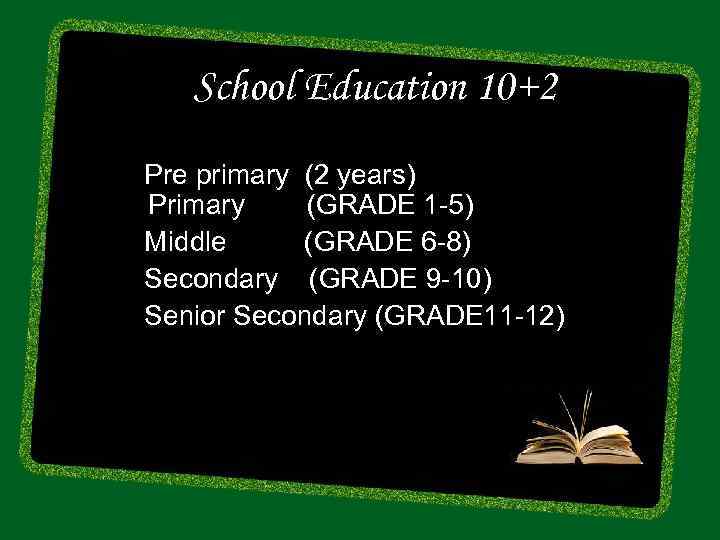 School Education 10+2 Pre primary (2 years) Primary (GRADE 1 -5) Middle (GRADE 6 -8) Secondary (GRADE 9 -10) Senior Secondary (GRADE 11 -12)
 Significant feature of India's secondary school system is the emphasis on inclusion of the disadvantaged sections of the society. Another feature of India's secondary school system is its emphasis on profession based vocational training to help students attain skills for finding a vocation of his/her choosing.
 The Secondary education is supported by the following organizations under the administrative control of the Union Department of Education: Some of the institutes are: National Council of Education Research & Training (NCERT) Central Board of Secondary Education (CBSE) National Institute of Open Schooling (NIOS)
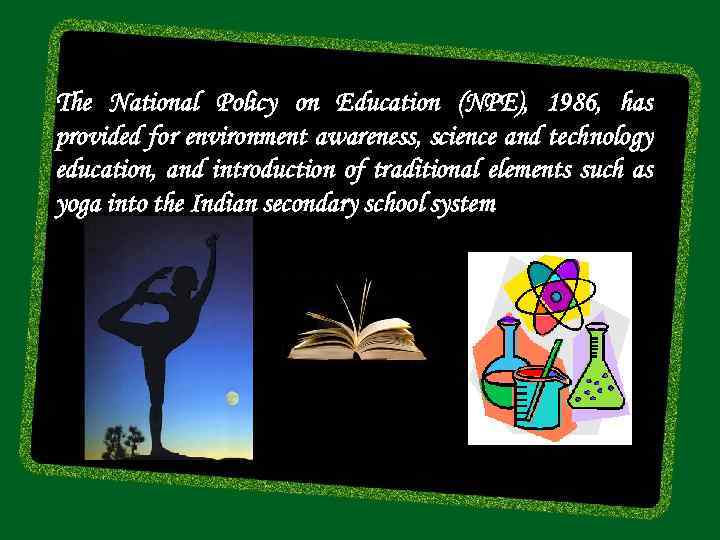 The National Policy on Education (NPE), 1986, has provided for environment awareness, science and technology education, and introduction of traditional elements such as yoga into the Indian secondary school system
 The CBSE was set up by a special resolution of the Government of India in 1929 at Ajmer with a view to play a useful role in the field of Secondary Education and to raise its standard.
 NCERT is an autonomous body fully funded by the Ministry of Human Resource and Development (MHRD) The NCERT was established in 1961. It functions as a resource centre in the field of school education and teacher education. Publication of school textbooks and other educational material like teachers’ guides/manuals etc. are its major functions. It aims at making environmental education an integral part of curriculum in school education.
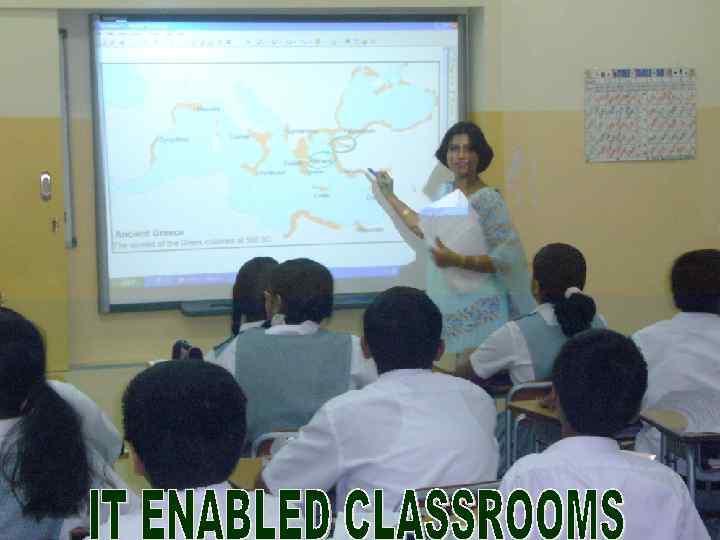
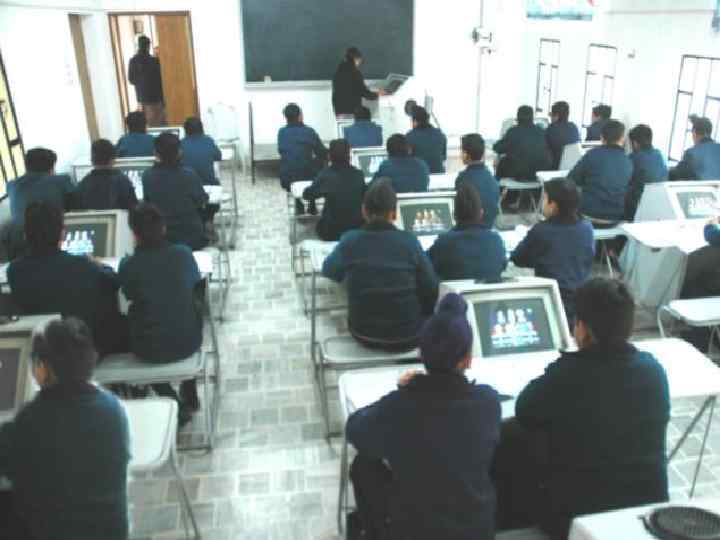
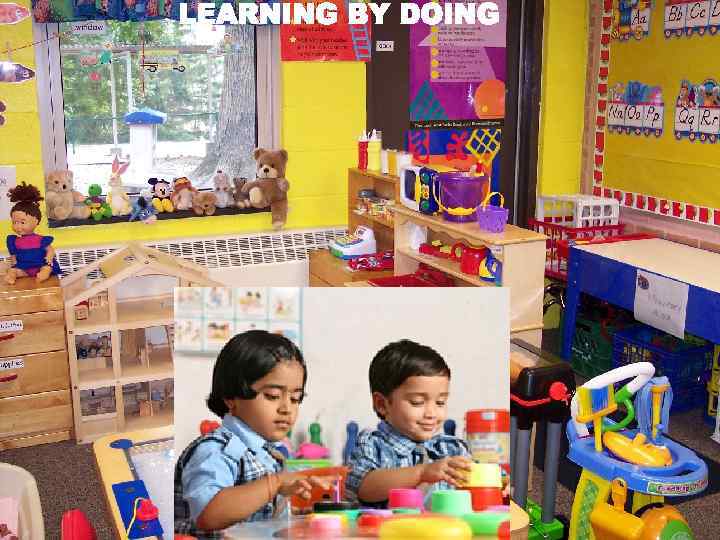
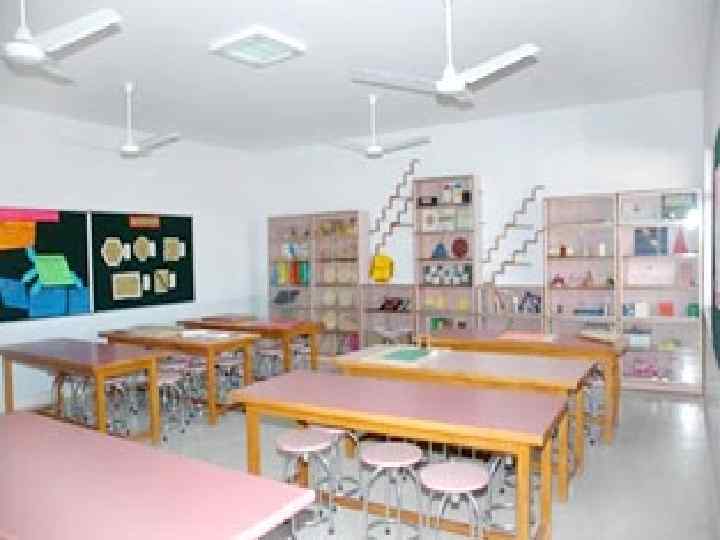
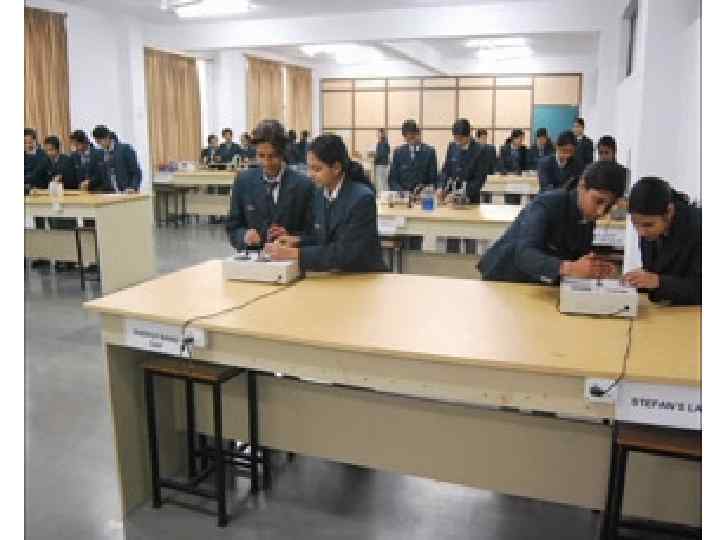
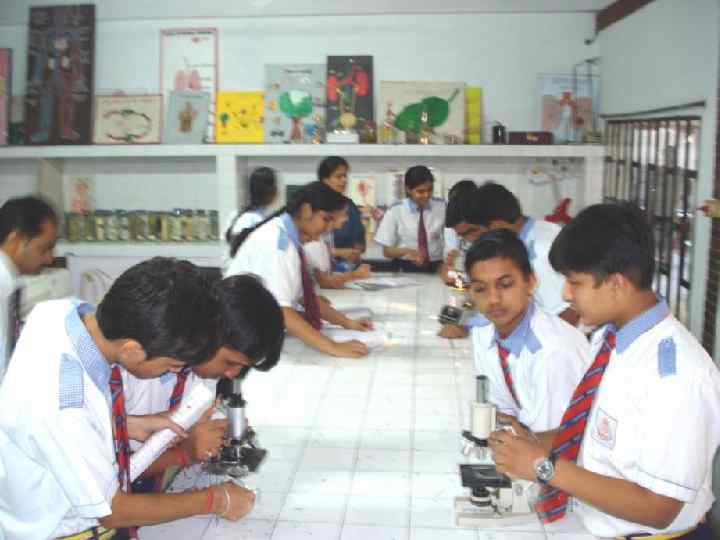
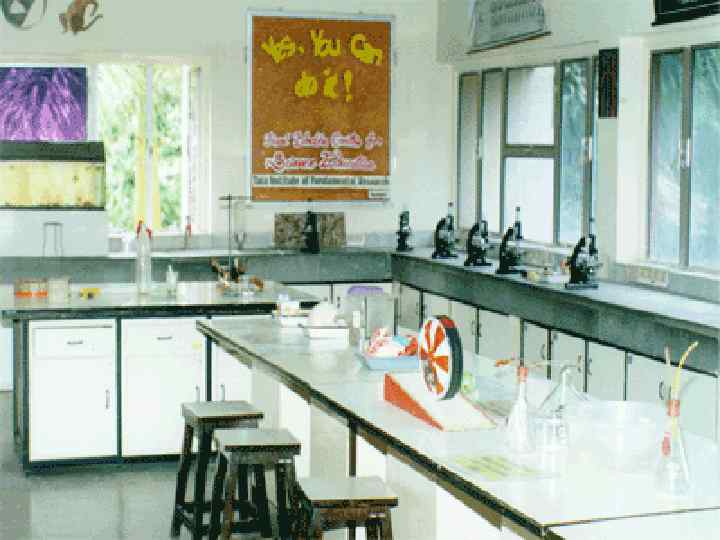
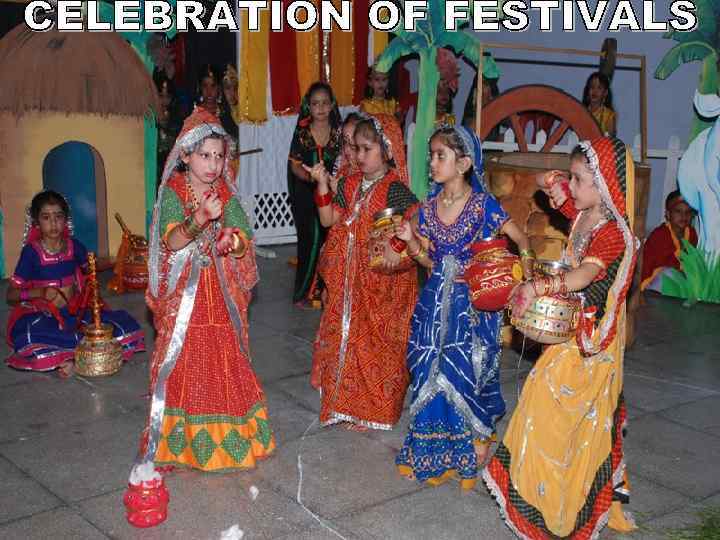
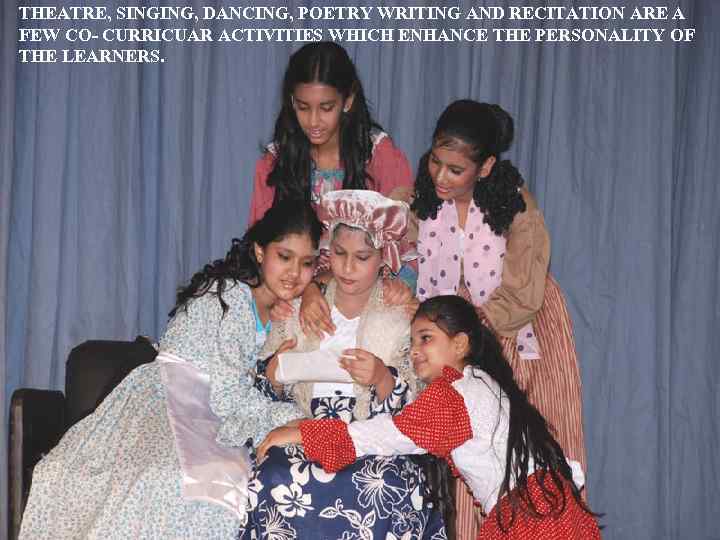 THEATRE, SINGING, DANCING, POETRY WRITING AND RECITATION ARE A FEW CO- CURRICUAR ACTIVITIES WHICH ENHANCE THE PERSONALITY OF THE LEARNERS.