


 Скачать презентацию In house training at the OAG of Norway
e0b0891a8693fccff8c4150aa1b4031d.ppt
- Количество слайдов: 10
 In house training at the OAG of Norway Øivind Berg Larsen, Deputy Director General
 Our challenge • A large number of our new staff comes from an educational background with no public auditing focus • We perform three distict Audit Functions: – Financial audit (incuding compliance) – Performance auditing – Corporate control • There is a need to ensure that the right training activities take place at the right time
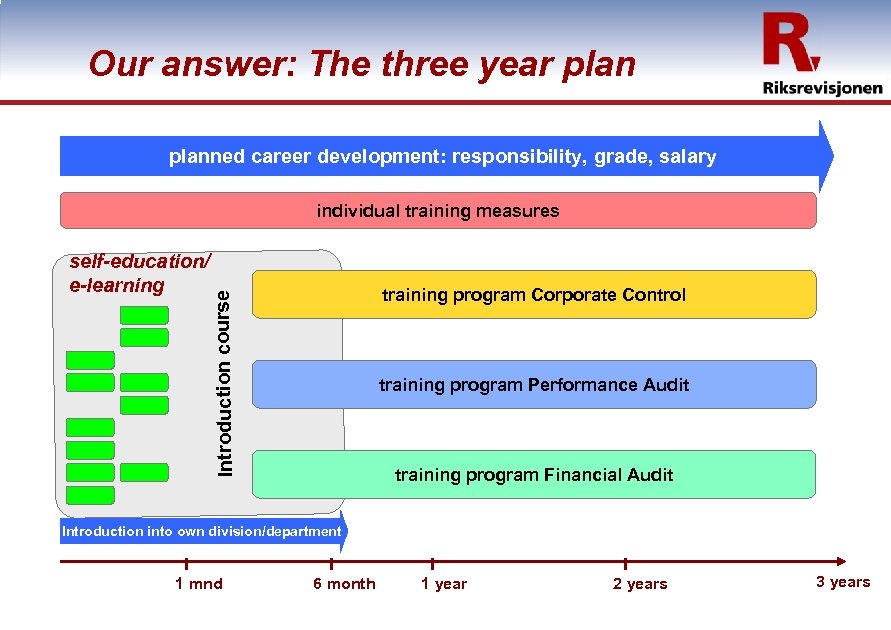 Our answer: The three year planned career development: responsibility, grade, salary individual training measures training program Corporate Control Introduction course self-education/ e-learning training program Performance Audit training program Financial Audit Introduction into own division/department 1 mnd 6 month 1 year 2 years 3 years
 Individual training plans • varying training needs • individual training plans are the core of know-how development • individual training plans are drafted when appointed and updated in an yearly formal interview with the section head • new appointees can be excepted from training measures if they already posess certain competencies • competence requirements include all employees • existing staff will have to update their know-how according to the new plans and requirements
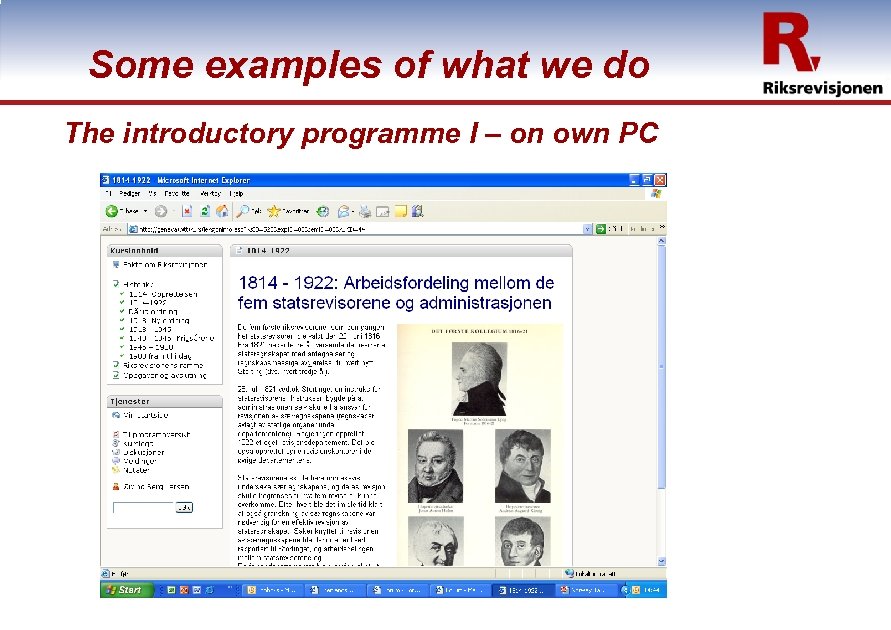 Some examples of what we do The introductory programme I – on own PC
 Some examples of what we do The introductory programme II Classroom Introduction Course: • Core values • Administrative routines • Introduction to all types of audit • Social programme and visit to Parliament
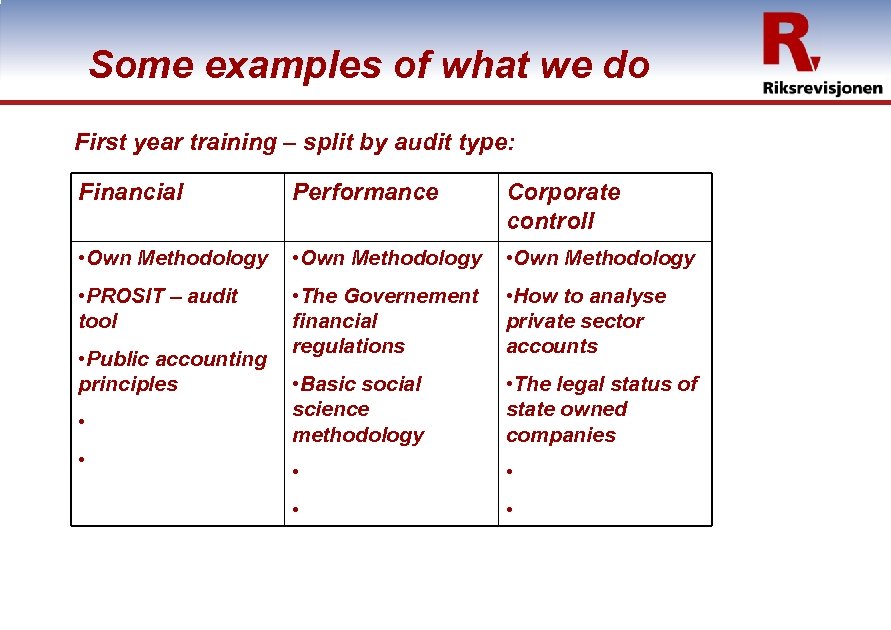 Some examples of what we do First year training – split by audit type: Financial Performance Corporate controll • Own Methodology • PROSIT – audit tool • The Governement financial regulations • How to analyse private sector accounts • Basic social science methodology • The legal status of state owned companies • • • Public accounting principles • •
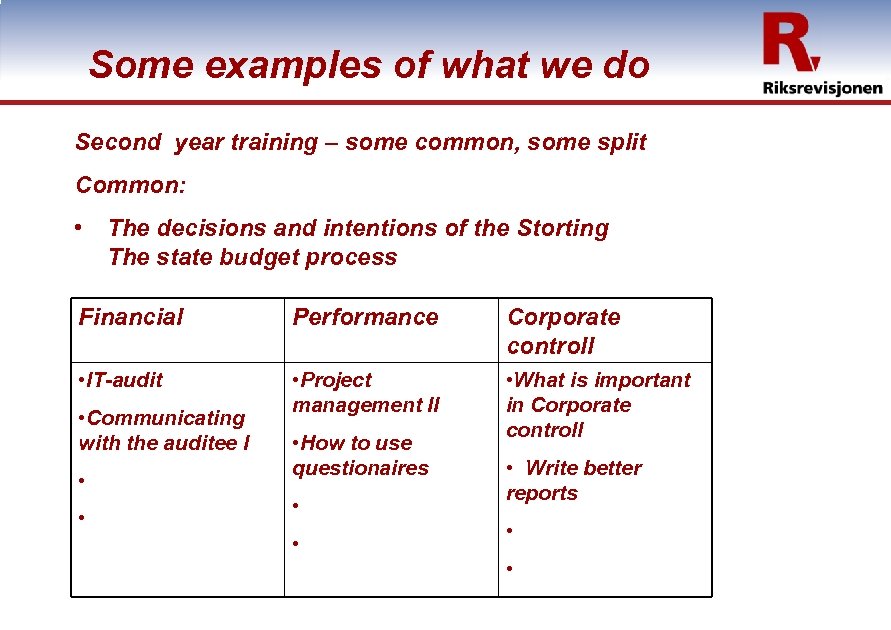 Some examples of what we do Second year training – some common, some split Common: • The decisions and intentions of the Storting The state budget process Financial Performance Corporate controll • IT-audit • Project management II • What is important in Corporate controll • Communicating with the auditee I • • • How to use questionaires • • • Write better reports • •
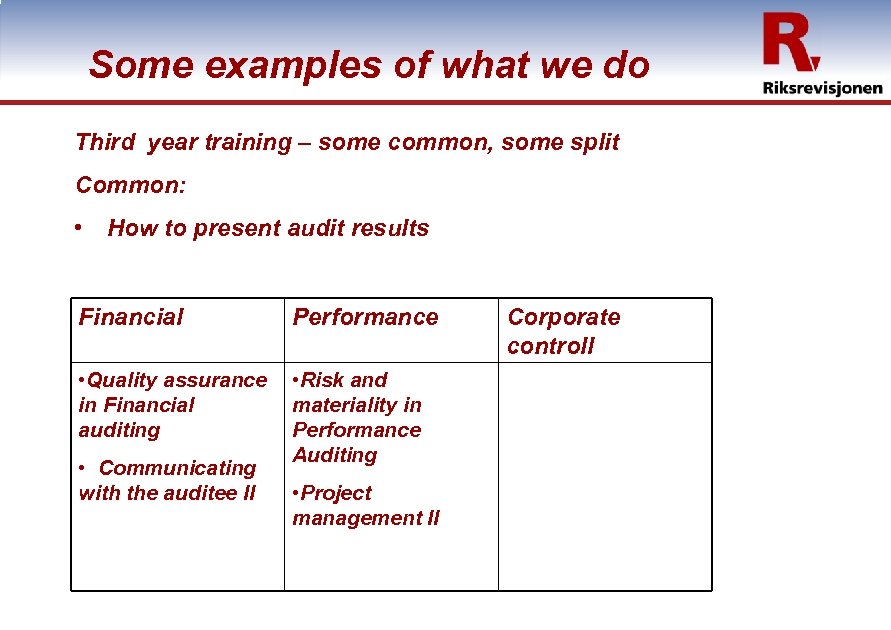 Some examples of what we do Third year training – some common, some split Common: • How to present audit results Financial Performance • Quality assurance in Financial auditing • Risk and materiality in Performance Auditing • Communicating with the auditee II • Project management II Corporate controll
 Conclusion: In house training has been usefull and necessary! See also: www. riksrevisjonen. no/en/Methodology/