 Скачать презентацию Improving Soil Moisture Conservation By Using Vermicompost
f702006f24ec626ff9134a7cd1fa3380.ppt
- Количество слайдов: 29



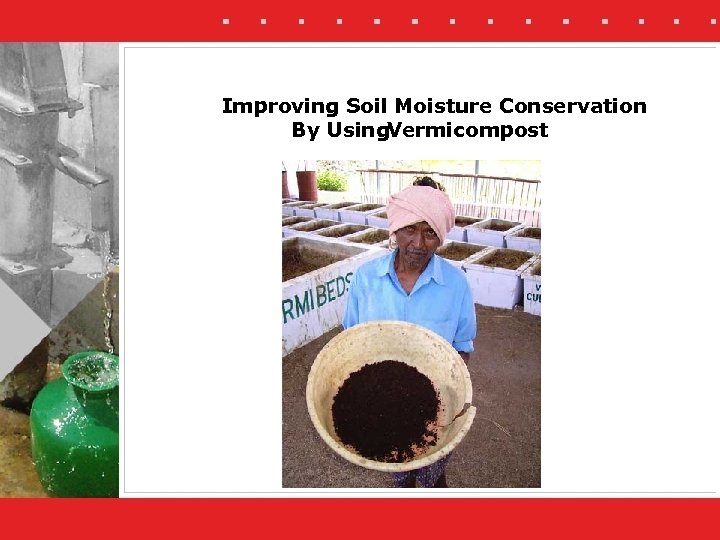
Improving Soil Moisture Conservation By Using. Vermicompost
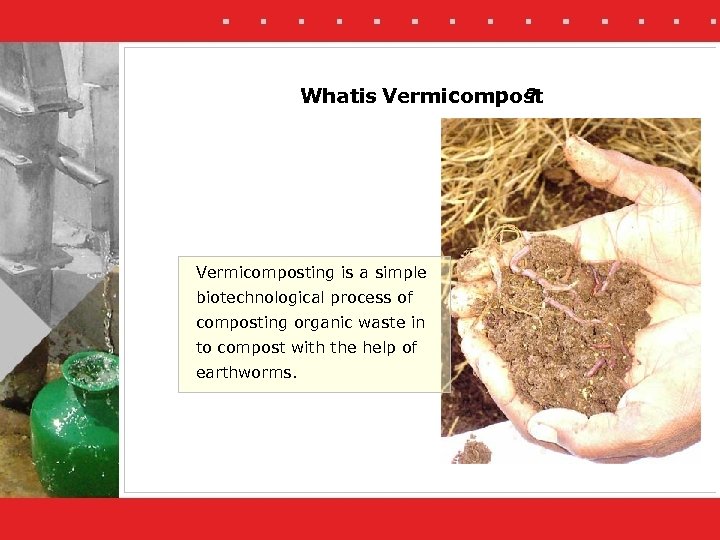
Whatis Vermicompost ? Vermicomposting is a simple biotechnological process of composting organic waste in to compost with the help of earthworms.
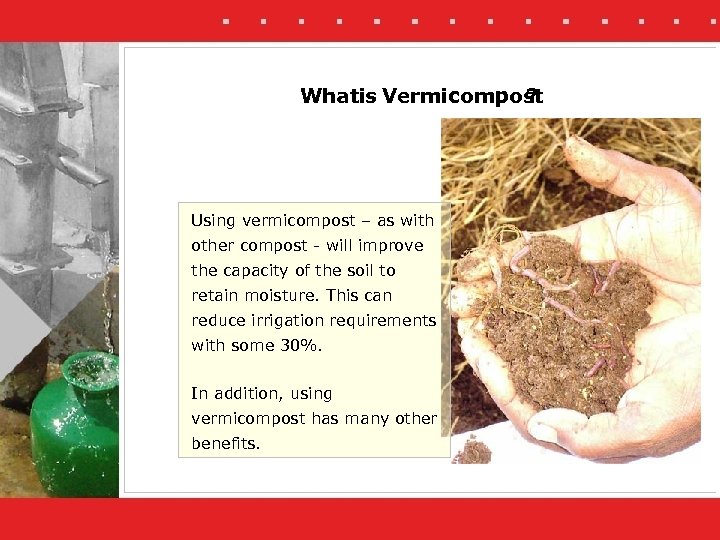
Whatis Vermicompost ? Using vermicompost – as with other compost - will improve the capacity of the soil to retain moisture. This can reduce irrigation requirements with some 30%. In addition, using vermicompost has many other benefits.
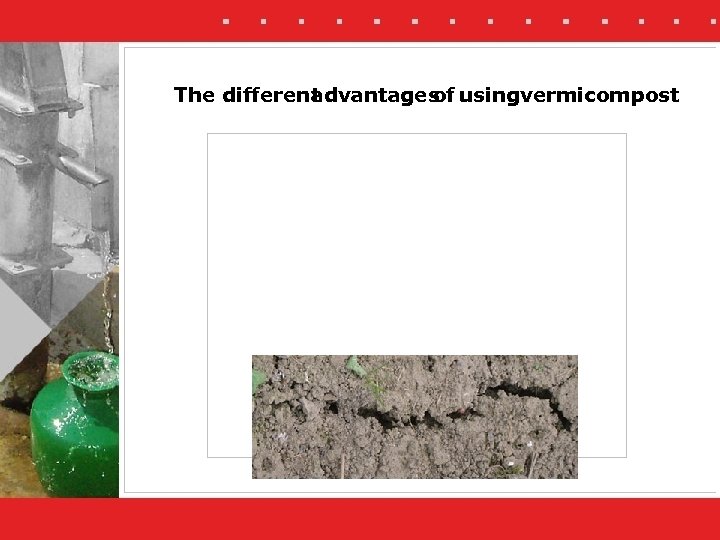
The different advantages usingvermicompost of
Moreadvantages …

How to produce vermicompost ?
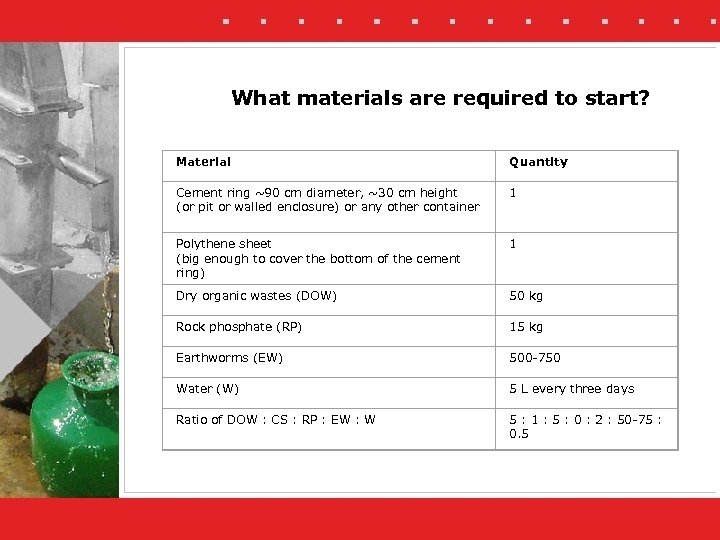
What materials are required to start? Material Quantity Cement ring ~90 cm diameter, ~30 cm height (or pit or walled enclosure) or any other container 1 Polythene sheet (big enough to cover the bottom of the cement ring) 1 Dry organic wastes (DOW) 50 kg Rock phosphate (RP) 15 kg Earthworms (EW) 500 -750 Water (W) 5 L every three days Ratio of DOW : CS : RP : EW : W 5 : 1 : 5 : 0 : 2 : 50 -75 : 0. 5
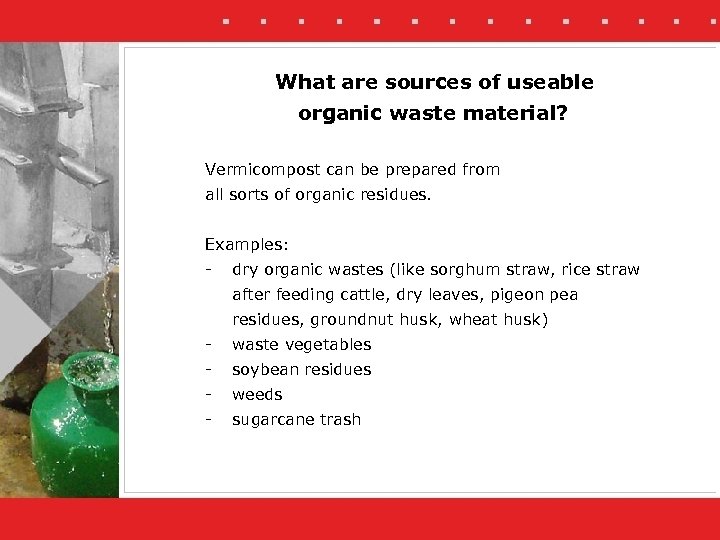
What are sources of useable organic waste material? Vermicompost can be prepared from all sorts of organic residues. Examples: - dry organic wastes (like sorghum straw, rice straw after feeding cattle, dry leaves, pigeon pea residues, groundnut husk, wheat husk) - waste vegetables - soybean residues - weeds - sugarcane trash
More sources of material. . - Sericultural residues from silk production - Animal manures - Dairy and poultry wastes - Food industry wastes - Municipal solid wastes - Biogas sludge - Bagasse from sugarcane factories
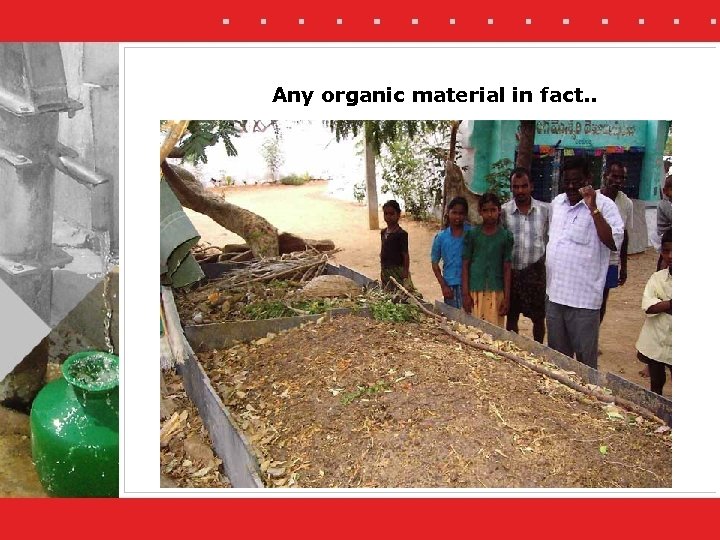
Any organic material in fact. .
What worms are good for vermicomposting ? Non-burrowing types (Eisenia spp, Eudrilis spp) are used for vermicomposting. They are red or purple, live on the soil surface and help digest 90% organic waste materials. Don’t use the palecoloured ones that live inside the soil and are generally seen in rice fields. These are the burrowing types (Pertima spp), which are not used for vermicomposting since they eat 90% soil.
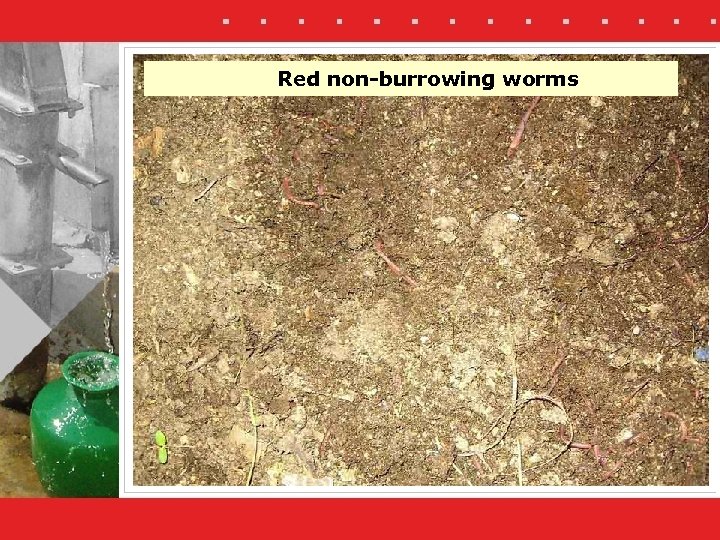
Red non-burrowing worms
Where can one start vermicompost a ? What are suitable containers or places? Vermicompost can be prepared in different places/containers in a shady area. Some suggested places include: - Above ground - in cement rings (~90 cm diameter, ~30 cm height) - Above ground - commercial model - Below ground – in pits 1 meter deep
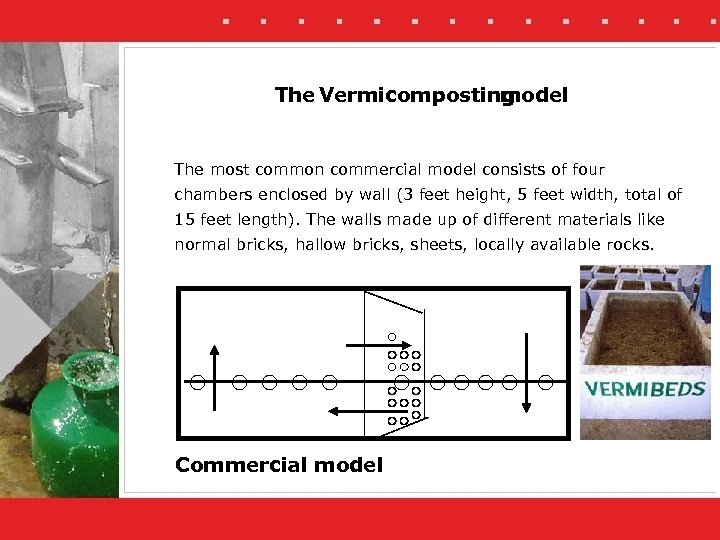
The Vermicomposting model The most common commercial model consists of four chambers enclosed by wall (3 feet height, 5 feet width, total of 15 feet length). The walls made up of different materials like normal bricks, hallow bricks, sheets, locally available rocks. Commercial model
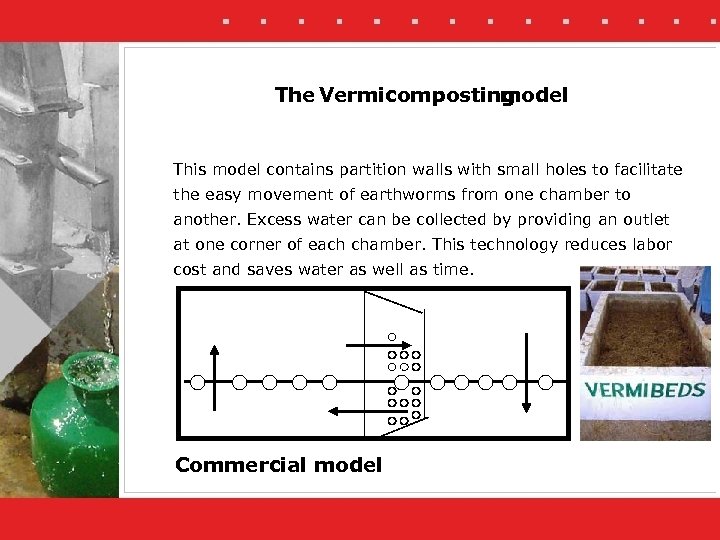
The Vermicomposting model This model contains partition walls with small holes to facilitate the easy movement of earthworms from one chamber to another. Excess water can be collected by providing an outlet at one corner of each chamber. This technology reduces labor cost and saves water as well as time. Commercial model
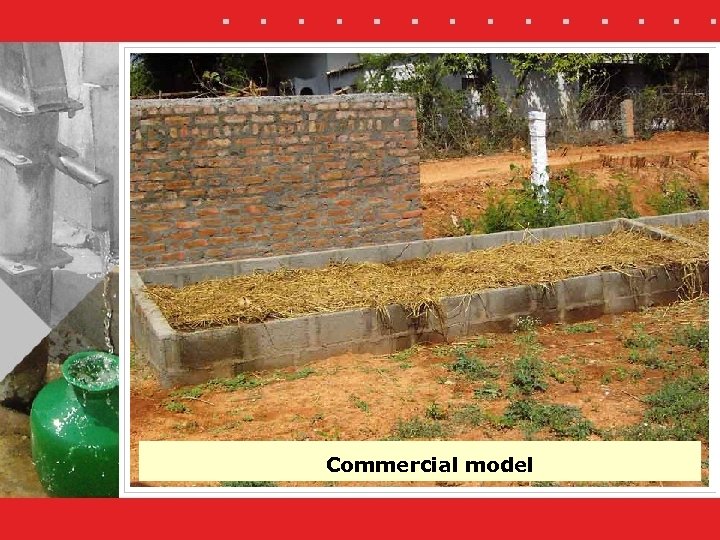
Commercial model
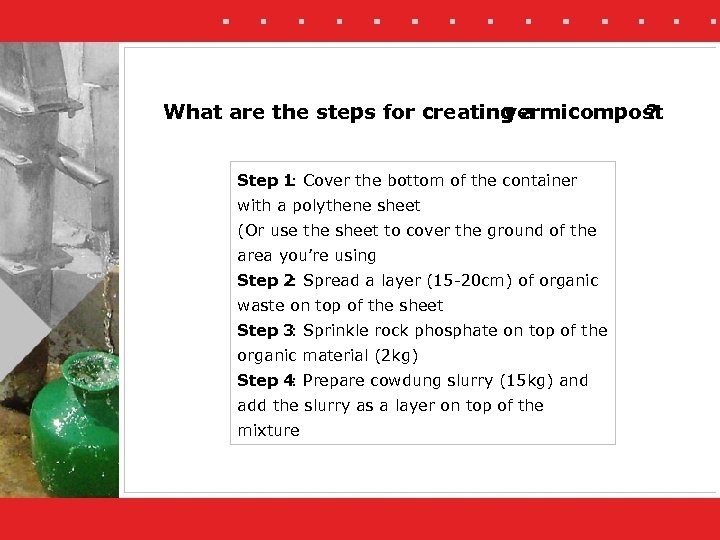
What are the steps for creating a vermicompost ? Step 1 : Cover the bottom of the container with a polythene sheet (Or use the sheet to cover the ground of the area you’re using Step 2 : Spread a layer (15 -20 cm) of organic waste on top of the sheet Step 3 : Sprinkle rock phosphate on top of the organic material (2 kg) Step 4 : Prepare cowdung slurry (15 kg) and add the slurry as a layer on top of the mixture
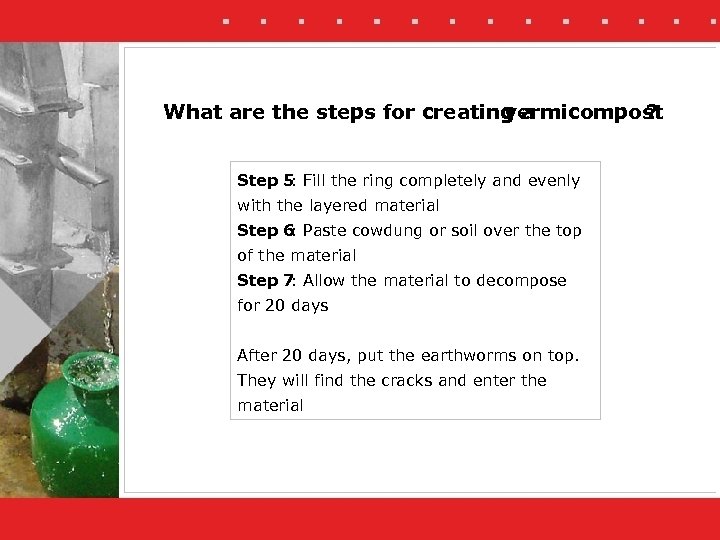
What are the steps for creating a vermicompost ? Step 5 : Fill the ring completely and evenly with the layered material Step 6 : Paste cowdung or soil over the top of the material Step 7 : Allow the material to decompose for 20 days After 20 days, put the earthworms on top. They will find the cracks and enter the material
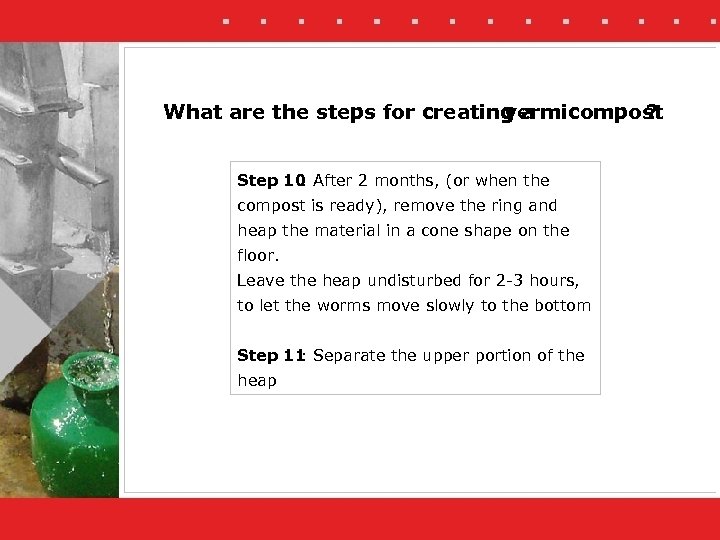
What are the steps for creating a vermicompost ? Step 10 : After 2 months, (or when the compost is ready), remove the ring and heap the material in a cone shape on the floor. Leave the heap undisturbed for 2 -3 hours, to let the worms move slowly to the bottom Step 11 : Separate the upper portion of the heap
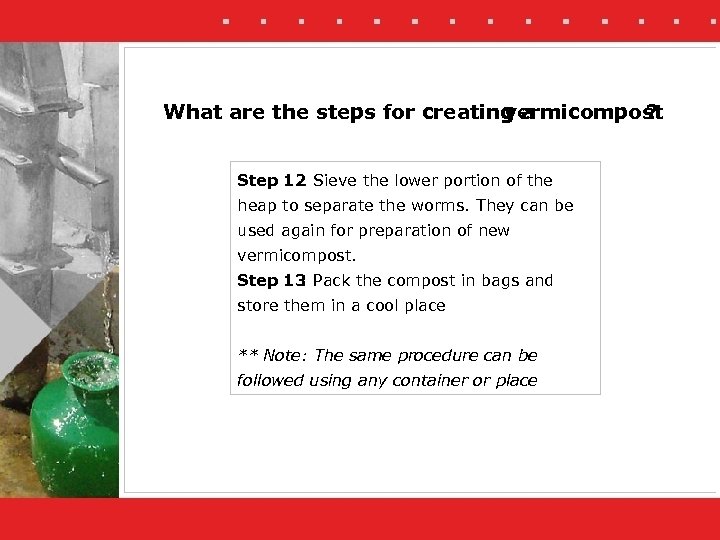
What are the steps for creating a vermicompost ? Step 12 : Sieve the lower portion of the heap to separate the worms. They can be used again for preparation of new vermicompost. Step 13 : Pack the compost in bags and store them in a cool place ** Note: The same procedure can be followed using any container or place
How to use Vermicompost
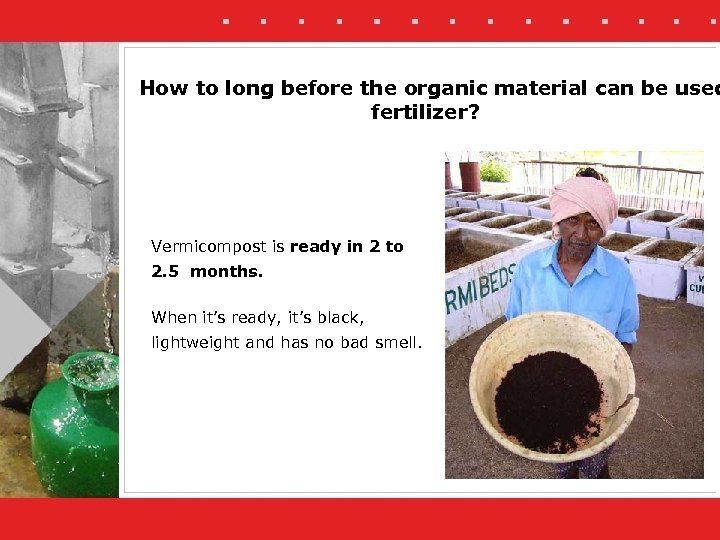
How to long before the organic material can be used fertilizer? Vermicompost is ready in 2 to 2. 5 months. When it’s ready, it’s black, lightweight and has no bad smell.
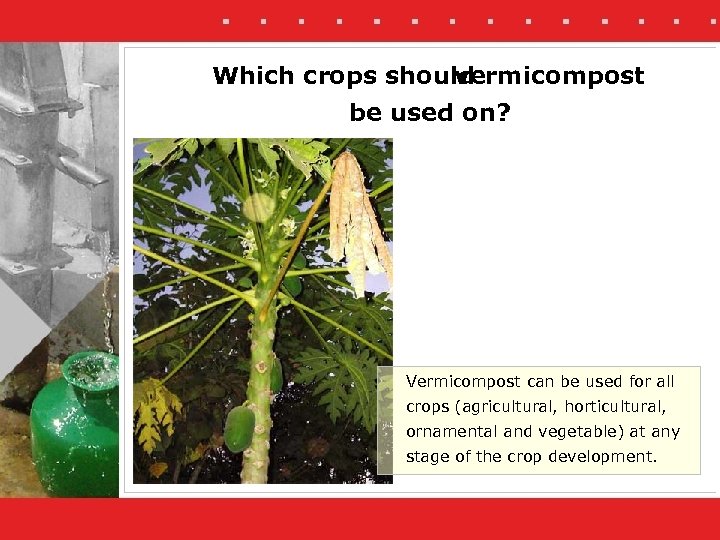
Which crops should vermicompost be used on? Vermicompost can be used for all crops (agricultural, horticultural, ornamental and vegetable) at any stage of the crop development.
When and how should vermicompost applied? be
How much is necessary to use?
What are the additional precautions?
What are the costs? Costs for are quite low. Examples are as follows: Rock Phosphate: 2 Rs. / kg Worms: 50 Rs. / kg * Note: these prices are only a guide and are subject to change.
Acknowledgement This presentation is based on a module provided by: VASAT - Virtual Academy of Semi-Arid Tropics led by ICRISAT http: //www. vusat. org/
Скачать презентацию Improving Soil Moisture Conservation By Using Vermicompost
f702006f24ec626ff9134a7cd1fa3380.ppt