


 Скачать презентацию Improving Patient Safety in Renal Units Haemodialysis associated
1a0c3f4935664608833c6327cca0bfa4.ppt
- Количество слайдов: 45
 Improving Patient Safety in Renal Units Haemodialysis associated haemolysis Dr. Paul Rylance Dr. Henry Brown CD Forum March 2010


 National Patient Safety Agency Patient incidents n 10% of patients in acute hospitals suffer from some kind of patient safety incident n Up to half of these are preventable
 Patient incidents NPSA n Estimated 850, 000 incidents/year harm or nearly harm inpatients in the UK n 44, 000 incidents are fatal n 40 incidents contribute to patient death in every single NHS organisation every year
 NPSA Safer care for the acutely ill patient Recognising and responding to early signs of deterioration NPSA 2007
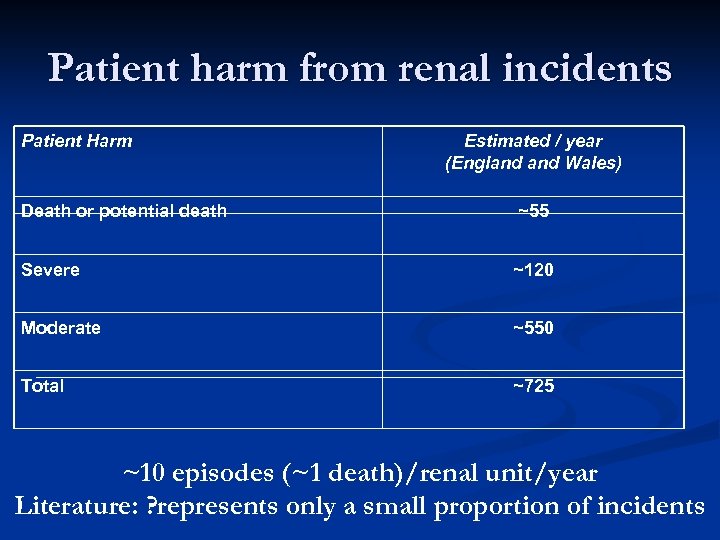 Patient harm from renal incidents Patient Harm Estimated / year (England Wales) Death or potential death ~55 Severe ~120 Moderate ~550 Total ~725 ~10 episodes (~1 death)/renal unit/year Literature: ? represents only a small proportion of incidents
 Renal Association and National Patient Safety Agency (NPSA) Project Formulating and Sharing Solutions to Clinical Incidents and Risk-Prone Situations
 Clinical incidents and risk prone situations Project Lead (PBR) n Project commenced June 2007 n Multi-professional process, involving renal doctors, nurses, renal technologists n n Most incidents involve haemodialysis techniques and equipment
 Methods n Identification of incidents and risk prone situations n n n NPSA from NRLS database Other specialities via NPSA Personal communication to project lead (PBR) NRLS database screened for prevalence of incidents Sharing of solutions n n n email to Clinical Directors (+ reminders) email to renal unit lead nurses + ART website A quarter to a third of CDs open emails in first 24 hours Formulate solutions to incidents from replies from renal units and expert opinion Solutions re-circulated to renal units by email
 Renal Association/NPSA Project Results: June 07 – Feb 10 Circulation of 27 Clinical Incidents and Identified Risks
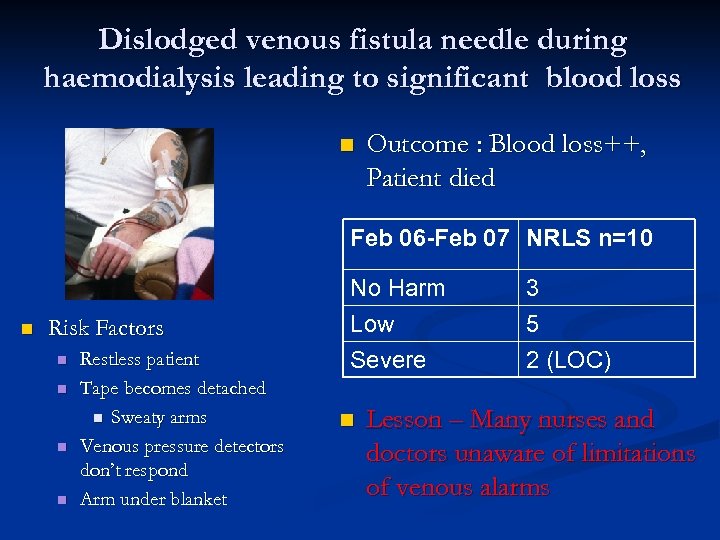 Dislodged venous fistula needle during haemodialysis leading to significant blood loss n Outcome : Blood loss++, Patient died Feb 06 -Feb 07 NRLS n=10 n Risk Factors n n Restless patient Tape becomes detached n Sweaty arms Venous pressure detectors don’t respond Arm under blanket No Harm Low Severe n 3 5 2 (LOC) Lesson – Many nurses and doctors unaware of limitations of venous alarms
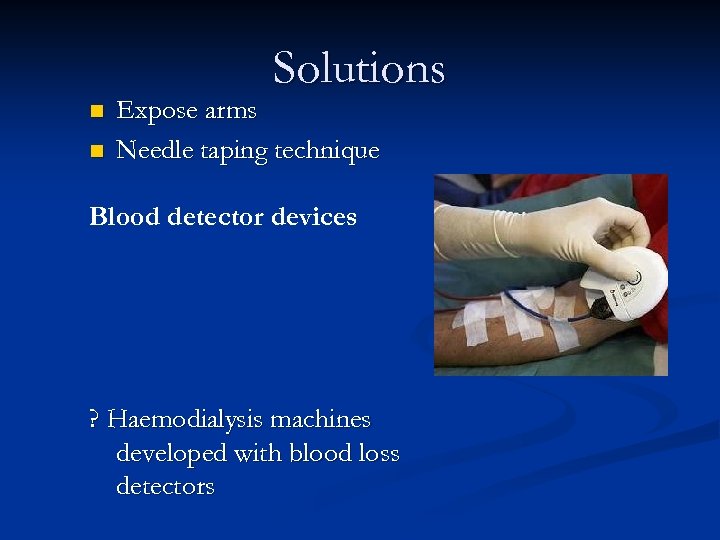 Solutions n n Expose arms Needle taping technique Blood detector devices ? Haemodialysis machines developed with blood loss detectors
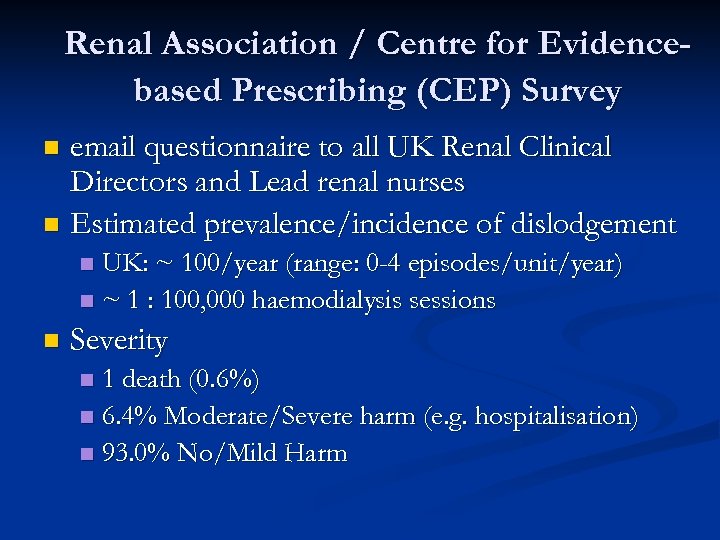 Renal Association / Centre for Evidencebased Prescribing (CEP) Survey email questionnaire to all UK Renal Clinical Directors and Lead renal nurses n Estimated prevalence/incidence of dislodgement n UK: ~ 100/year (range: 0 -4 episodes/unit/year) n ~ 1 : 100, 000 haemodialysis sessions n n Severity 1 death (0. 6%) n 6. 4% Moderate/Severe harm (e. g. hospitalisation) n 93. 0% No/Mild Harm n
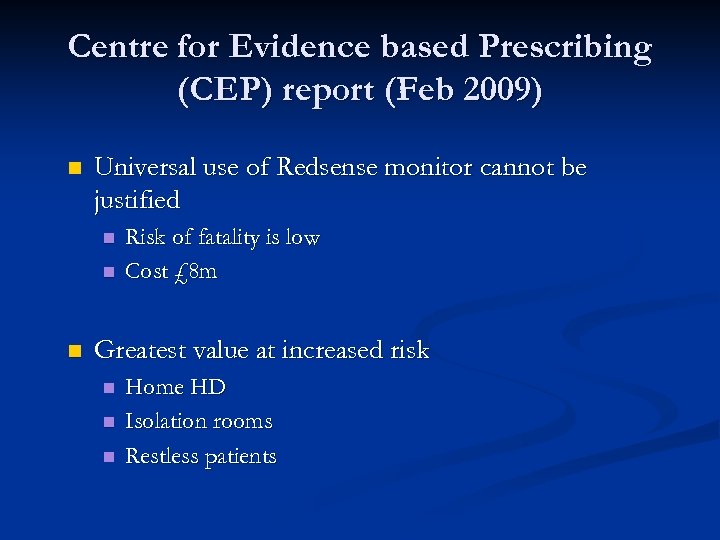 Centre for Evidence based Prescribing (CEP) report (Feb 2009) n Universal use of Redsense monitor cannot be justified n n n Risk of fatality is low Cost £ 8 m Greatest value at increased risk n n n Home HD Isolation rooms Restless patients
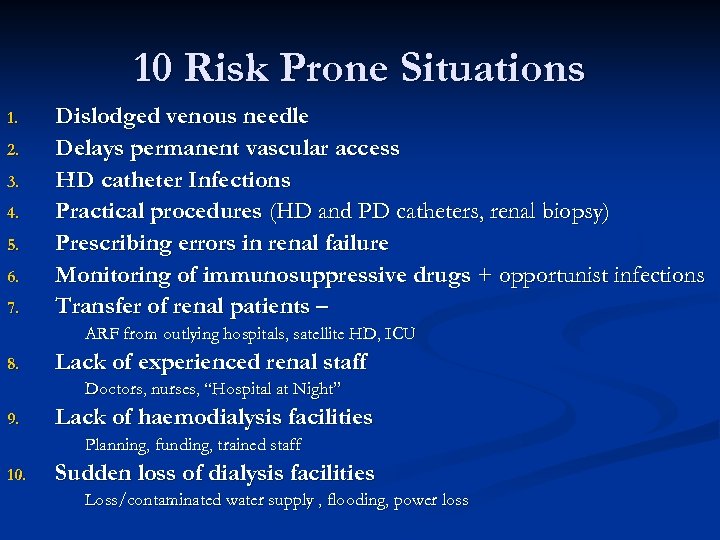 10 Risk Prone Situations 1. 2. 3. 4. 5. 6. 7. Dislodged venous needle Delays permanent vascular access HD catheter Infections Practical procedures (HD and PD catheters, renal biopsy) Prescribing errors in renal failure Monitoring of immunosuppressive drugs + opportunist infections Transfer of renal patients – ARF from outlying hospitals, satellite HD, ICU 8. Lack of experienced renal staff Doctors, nurses, “Hospital at Night” 9. Lack of haemodialysis facilities Planning, funding, trained staff 10. Sudden loss of dialysis facilities Loss/contaminated water supply , flooding, power loss
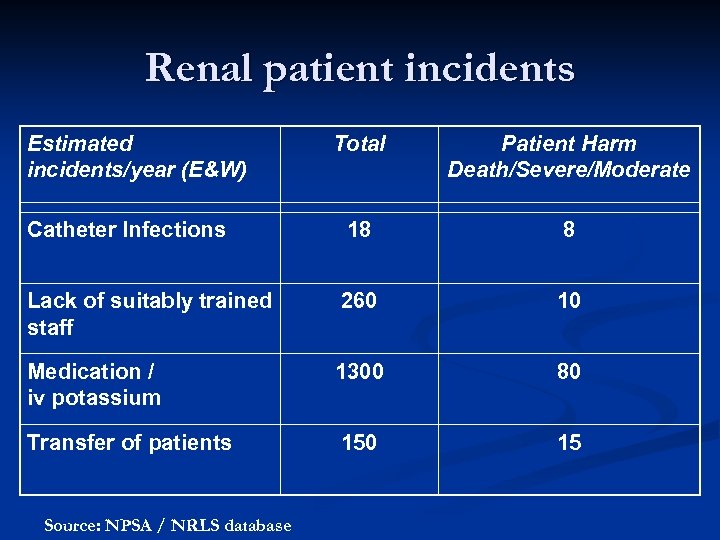 Renal patient incidents Estimated incidents/year (E&W) Total Patient Harm Death/Severe/Moderate Catheter Infections 18 8 Lack of suitably trained staff 260 10 Medication / iv potassium 1300 80 Transfer of patients 150 15 Source: NPSA / NRLS database
 Failure of HD techniques Venous needle dislodgement n Fatal Pulmonary Embolus from an attempt to unblock an occluded arteriovenous fistula n Air embolism from haemodialysis catheter disconnection n Bleeding from an infected fistula needling site n
 Failure to use dialysis equipment correctly Setting excessive ultrafiltration on HD n Lack of mixing of bicarbonate haemofiltration bags (ICU) n Gambro AK 200 set-up failure (increased K) n Nikkiso conductivity setting (Na 170) n Fresenius dialysate line configuration n
 Learning from other specialities Risk of intravenous injection of chlorhexidine during haemodialysis catheter insertion n Risk of injection of incorrect concentration of heparin flush solutions or other drugs mistaken for heparin n Urethral trauma from female urinary catheters used in males n
 Dialysis equipment manufacturing faults PD catheter clamps sold as HD clamps n Failure of Kimal Safety HD needles n Cracking of luer-locks on HD catheters n Breakage of HD catheter clamps n Corrosion of dialysate Line couplings n Percutaneous haemodialysis catheters falling out n n change in cuff manufacture
 MHRA Medical Device Alerts Kimal safety needles n Blood leakage of Braun Haemodialysis lines n Aquarius haemofiltration machines n Haemolysis associated with hydrogen peroxide water sterilisation n
 Renal toxicity Membranous nephropathy caused by mercurycontaining face creams n Risk of harm from oral bowel cleansing solutions n Low molecular weight heparin dosage (in preparation) n
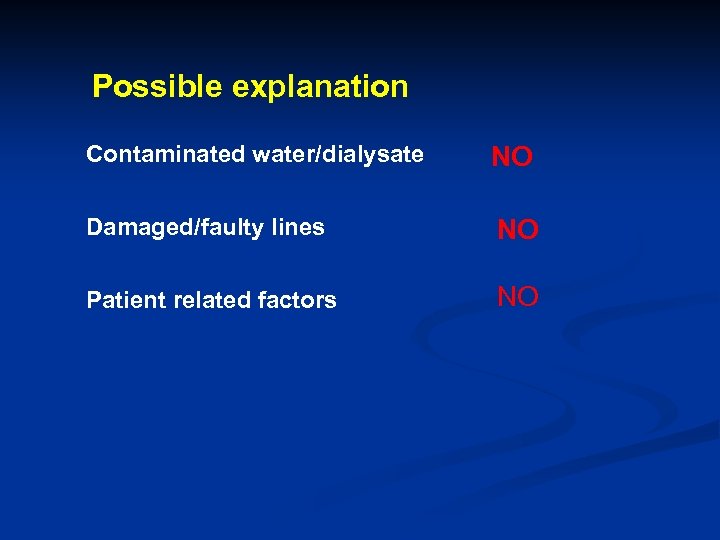
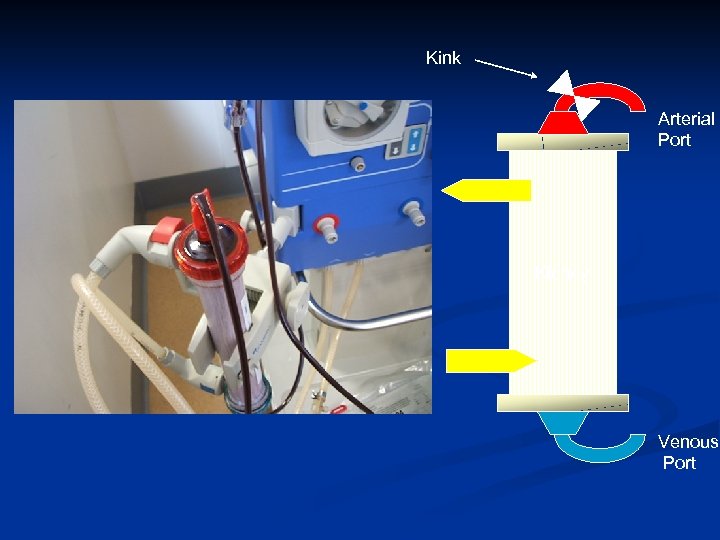
 Haemolysis associated with dialysis n Hydrogen Peroxide n n Hospital Chloramine n Satellite dialysis unit / Water company Patient related factors n Unknown / Kinking of Dialysis lines n n Northern Ireland
 Haemolysis associated with dialysis Potential lessons from the Northern Ireland cluster Dr. Henry Brown
 Background Causes of Haemolysis Dialysate problems eg hypotonicity Water contamination Faulty roller clamps Kinking of Lines Construction faults with lines
 Index Case 44 year old female ESRD 2 o PCKD on haemodialysis for 42 months During routine HD session developed nausea, vomiting, abdominal pain, hypertension Haemolysis – red supernatant, raised LDH, fall in Hb of 3 g/dl Inability of lab to report K+ and other common variables Raised amylase, subsequent radiological evidence of acute pancreatitis Symptoms settled quickly
 Actions taken Internal Review Meeting with Industry & NIAIC Investigation Measures to protect patient safety Search for other cases MHRA visit
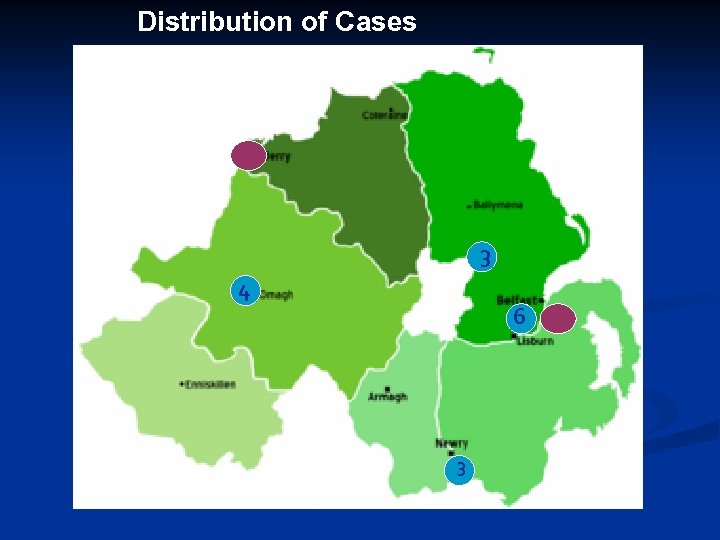
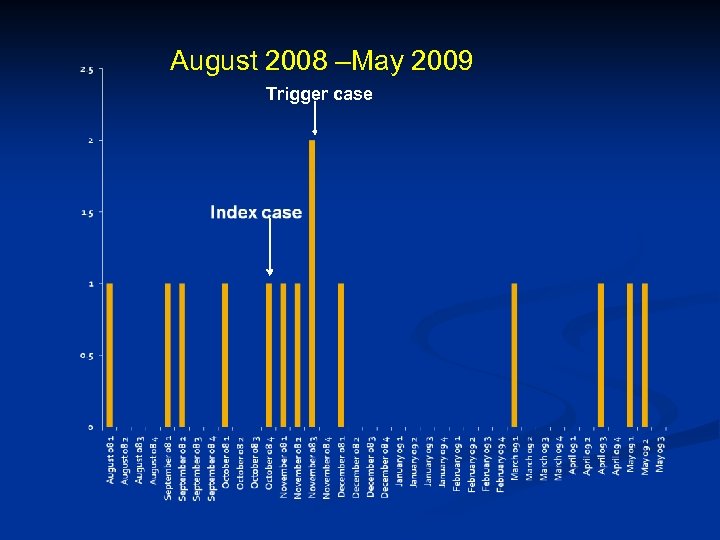 August 2008 –May 2009 Trigger case
 Distribution of Cases 3 4 6 3
 Possible explanation Contaminated water/dialysate NO Damaged/faulty lines NO Patient related factors NO
 Kink Arterial Port Kidney Venous Port
 Learning points § Potential cause of significant morbidity / mortality § May go unrecognised § Haemolysed blood samples may be haemodialysis related, rather than from blood sampling § Aetiology may be difficult to identify § Importance of staff vigilance § Importance and benefit of clinical networks
 Is there any consensus of water sterilising technique in the UK? Chlorine Survey Gerard Boyle, Senior Renal Technologist, St. Georges Hospital, Tooting
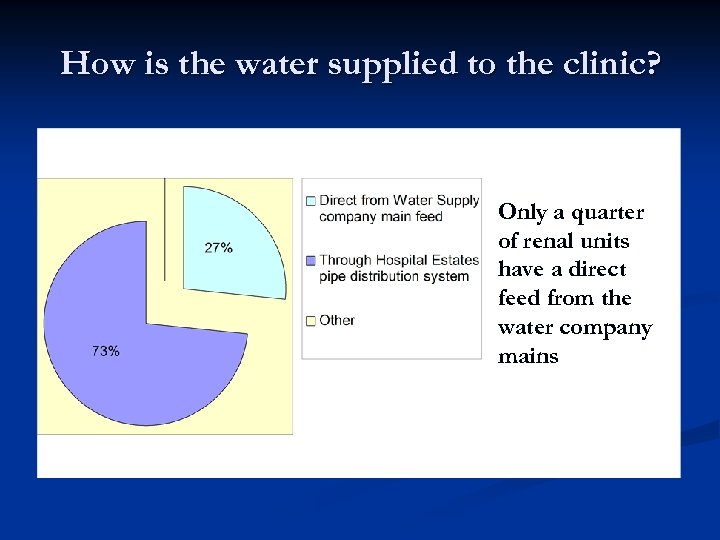 How is the water supplied to the clinic? Only a quarter of renal units have a direct feed from the water company mains
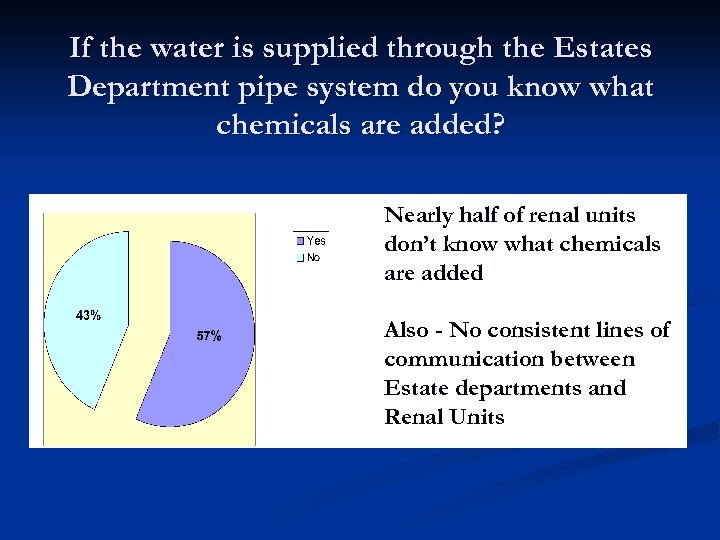 If the water is supplied through the Estates Department pipe system do you know what chemicals are added? 30 of renal units Nearly half Responses don’t know– what chemicals • 17 Yes • 13 are added - No Also - No consistent lines of communication between Estate departments and Renal Units
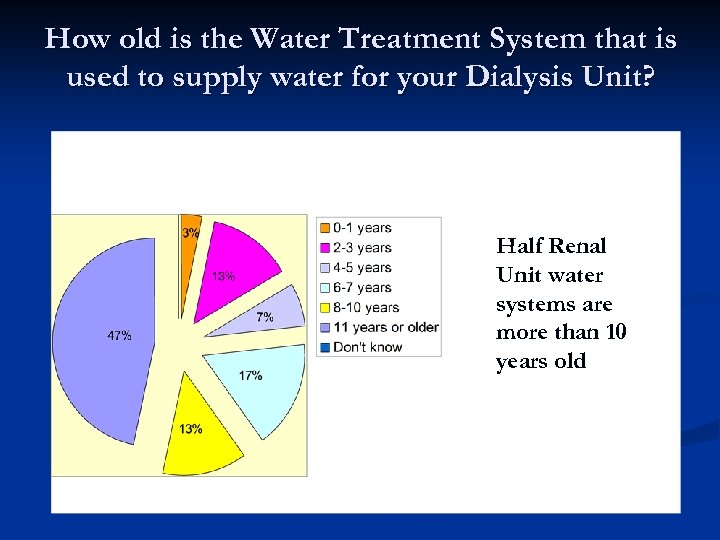 How old is the Water Treatment System that is used to supply water for your Dialysis Unit? Half Renal Unit water systems are more than 10 years old
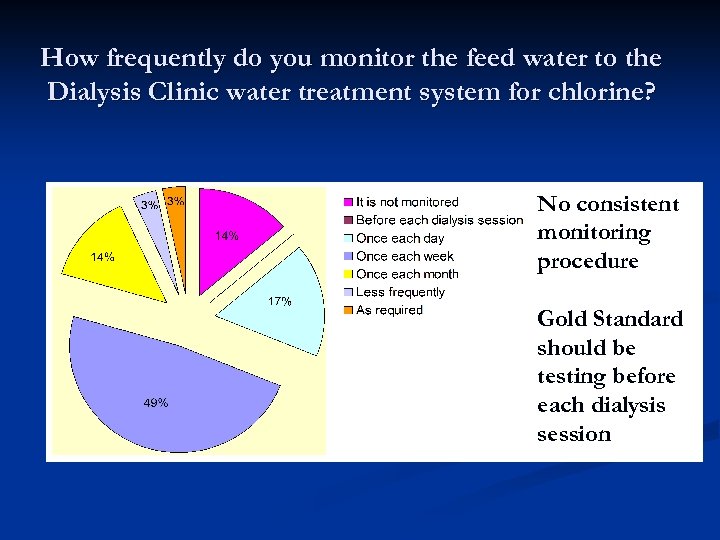 How frequently do you monitor the feed water to the Dialysis Clinic water treatment system for chlorine? No consistent monitoring procedure Gold Standard should be testing before each dialysis session
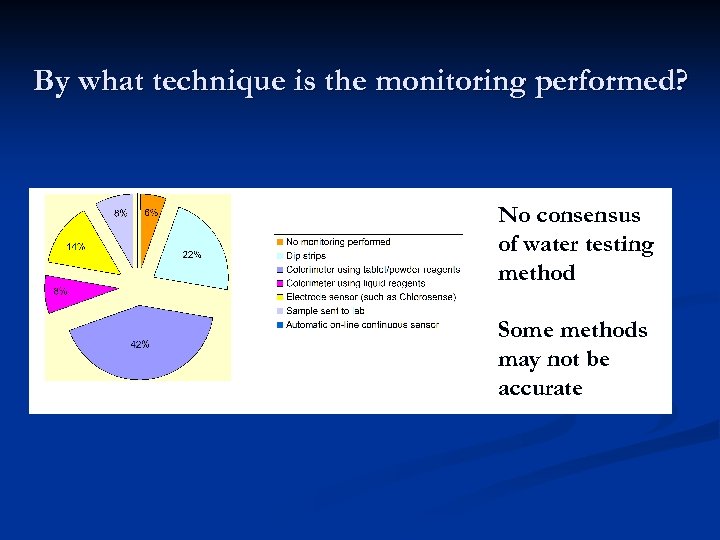 By what technique is the monitoring performed? No consensus of water testing method Some methods may not be accurate
 Clear guidelines / standards are needed for renal unit / hospital water supplies and sterilisation • Communication and clearly defined lines of responsibility from the Water companies, through the estates departments to the dialysis clinic technical departments • Re-examination of existing chlorine removal arrangements • Plan B for when chlorine breakthrough occurs • Adopt an appropriate testing frequency • Use appropriate testing methods.
 Evaluation of the RA/NPSA project n Rapid response has been achieved n n n Quicker with Renal Association badging only Involvement of lead nurses and renal technologists is invaluable Initial Feedback : All positive (one exception) Some email communications not identified from large volume of NHS emails 25% response rate makes evaluation difficult n Other units indicated circulation has occurred within renal unit
 Application to other specialities? n Royal College of Physicians n n Adopted by Medical Specialties Board to develop liaisons with all other medical specialities via the RCP Joint Specialities Committees. Other Specialities? n Specialities with high usage of medical equipment
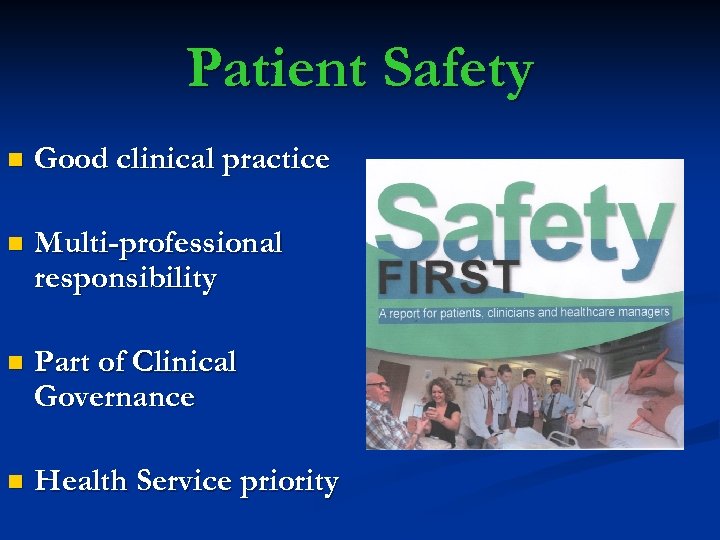 Patient Safety n Good clinical practice n Multi-professional responsibility n Part of Clinical Governance n Health Service priority
 paul. rylance@rwh-tr. nhs. uk paul. rylance@nhs. net (soon)