


 Скачать презентацию Improving Organizational Learning In The Wildland Fire Community
6658c1a7e45a0927832465f1f315af4e.ppt
- Количество слайдов: 13
 Improving Organizational Learning In The Wildland Fire Community 1994 Fire Season 9 years ago Handcrew Member 9 years old
 Learning Organizations ¨ A learning organization is skilled in creating, acquiring, interpreting, transferring, and retaining knowledge, and at purposefully modifying its behavior to reflect new knowledge and insights.
 The Basis of the Learning Organization Strategy ¨ Transfer Knowledge, not just information. ¨ Knowledge leads to better, safer decisions. Better-informed. Knowledgeable. Wiser decisions.
 How do you know if your organization learns?
 A Litmus Test for your Park ¨ Does our organization: – Pursue a defined learning agenda? – Avoid repeated mistakes? – Capture critical knowledge before key people leave? – Act on what it knows?
 After Action Review Developed by US Army Basically, a daily incident review
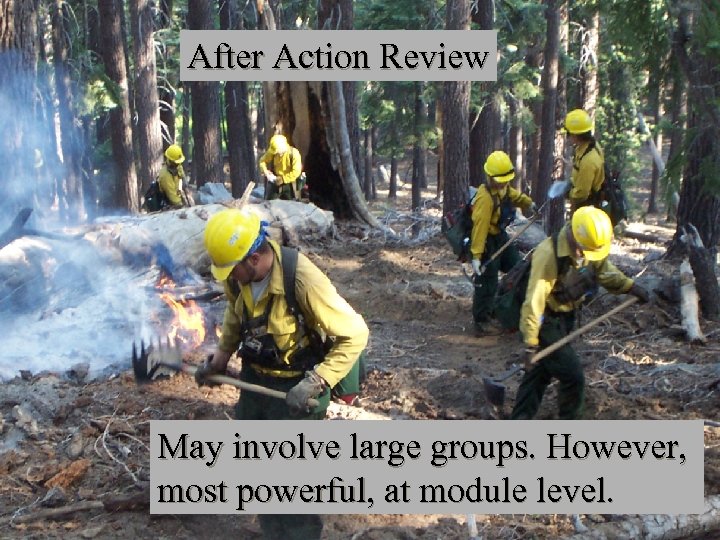 After Action Review May involve large groups. However, most powerful, at module level.
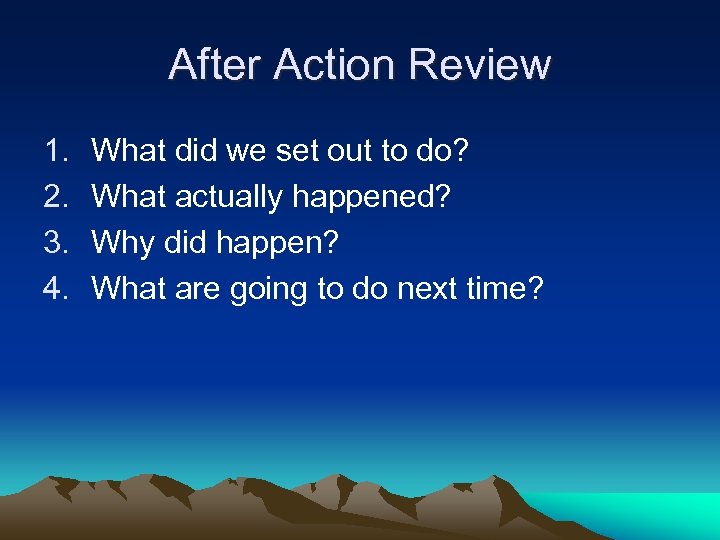 After Action Review 1. 2. 3. 4. What did we set out to do? What actually happened? Why did happen? What are going to do next time?
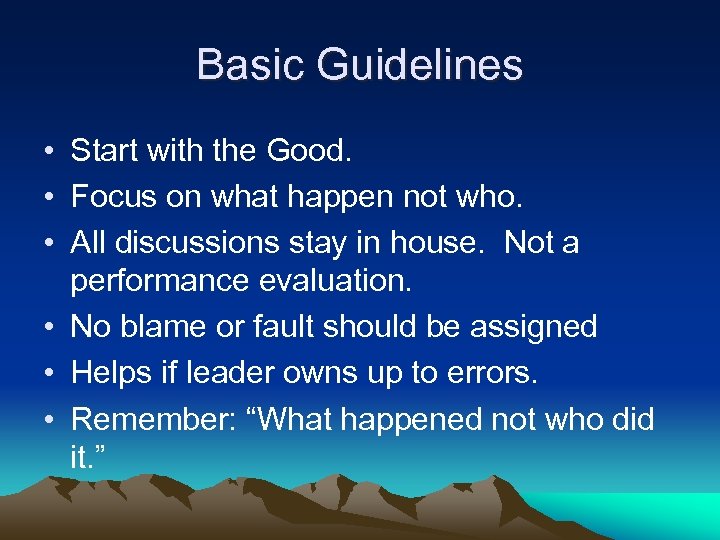 Basic Guidelines • Start with the Good. • Focus on what happen not who. • All discussions stay in house. Not a performance evaluation. • No blame or fault should be assigned • Helps if leader owns up to errors. • Remember: “What happened not who did it. ”
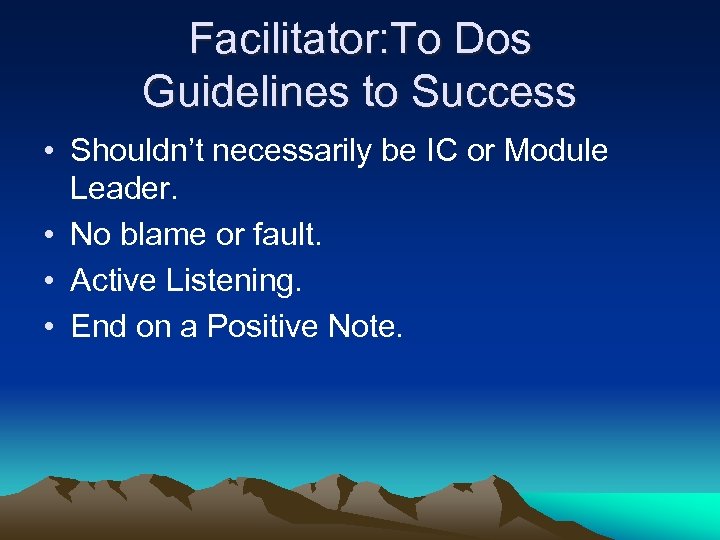 Facilitator: To Dos Guidelines to Success • Shouldn’t necessarily be IC or Module Leader. • No blame or fault. • Active Listening. • End on a Positive Note.
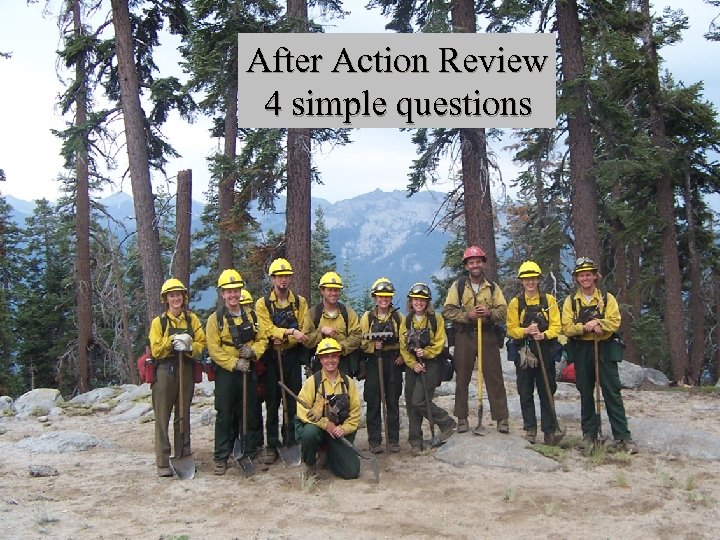 After Action Review 4 simple questions